eLearning Papers
                    Openness and changing world of learning
                                                                                Special edition 2009


 sonal learning environments
       Personal learning environments

 ersonal learning environm
 eracy Openness and learning                                            Openness and learning


ness and learning Digital L
         Open Educational Resources


 Open Educational Resources Person
                           Training and work

                      Personal learning e
                     Digital Literacy

Open Educational Resource
nnovation and creativity       Innovation and creativity
 gital Literacy Training and wor
Digital Literacy Training and wo
      Personal learning envir
onal Resources Digital Literacy
              Innovation and creativity
    http://
      www.elearningpapers.eu
                                 An initiative of the European Commission
eLearning Papers
    Editorial
    Openness and changing world of learning
    Roberto Carneiro and Lluís Tarín ......................................................................................................................................................... 3


    Articles
    Understanding the learning space
    Jean Underwood and Philip E. Banyard ............................................................................................................................................ 4
    Universities and Web 2.0: Institutional challenges
    Juan Freire ..................................................................................................................................................................................................13
    Virtual action learning: What’s going on?
    Mollie Dickenson, Mike Pedler and John Burgoyne....................................................................................................................18
    Reflections on sustaining Open Educational Resources: an institutional case study
    Andy Lane ..................................................................................................................................................................................................25
    Didactic architectures and organization models: a process of mutual adaptation
    Laura Gonella and Eleonora Pantò....................................................................................................................................................34


    eLearning Papers
    eLearning Papers is a digital publication created as part of the elearningeuropa.info portal.
    The portal is an initiative of the European Commission to promote the use of multimedia
    technologies and Internet at the service of education and training.


    Edition and production
    Name of the publication: eLearning Papers
    Edited by: P.A.U. Education, S.L.
    Postal address: P.A.U. Education, C/ Muntaner 262, 3º, 08021 Barcelona, Spain
    Telephone: +34 933 670 400
    Email: editorial@elearningeuropa.info
    Internet: www.elearningpapers.eu


    Legal notice and copyright
    By elearningeuropa.info and eLearning Papers.

    The views expressed are purely those of the authors and may not in any circumstances be regarded as stating an official position of the European
    Commission. Neither the European Commission nor any person acting on its behalf is responsible for the use which might be made of the information
    contained in the present publication. The European Commission is not responsible for the external web sites referred to in the present publication.

    The texts published in this journal, unless otherwise indicated, are subject to a Creative Commons Attribution-Noncommercial-NoDerivativeWorks 2.5
    licence. They may be copied, distributed and broadcast provided that the author and the e-journal that publishes them, eLearning Papers, are cited.
    Commercial use and derivative works are not permitted.


2   eLearning Papers | 2009
Editorial board                                          Submission of articles
Director: Roberto Carneiro, Dean, Institute for          We publish articles provided by the members of the
Distance Learning, Catholic University of Portugal,      elearningeuropa.info. Researchers and e-learning
Portugal                                                 practitioners on every level are invited to submit their
                                                         work to eLearning Papers. Through these articles, the
Lluís Tarín, elearningeuropa.info, content manager,      journal promotes the use of ICT for lifelong learning
Spain                                                    in Europe.
Wojciech Zielinski, President of the Board of MakoLab    The articles will be peer-reviewed and the authors are
Ltd; Secretary of Association of Academic E-learning     informed about the reception and acceptance of their
in Poland, Poland                                        texts.
Ulf-Daniel Ehlers, Director of the European
Foundation for Quality in E-Learning; University of      Article structure
Duisburg-Essen, Germany                                  Language: Full text need to be presented in English.
Richard Straub, Director of Development, European        Title: The title should be no longer than 15 words.
Foundation for Management Development (EFMD);
Secretary General, European Learning Industry Group      Executive summary: Every submission must include
(ELIG), Austria                                          an executive summary of 250-300 words in English.
                                                         The abstract shall present the main points of the
Claire Bélisle, Human and social sciences Research       paper and the author’s conclusions.
Engineer, CNRS (National Scientific Research Center),
in the research unit LIRE (University Lumière Lyon 2),   Keywords: 3-6 descriptive keywords need to be
France                                                   included.

Nicolas Balacheff, Kaleidoscope Scientific Manager;      Full texts: Full texts must be of 2,000-6,000 words
Senior Scientist at CNRS (National Scientific Research   divided into chapters with indicative subtitles. The
Center), France                                          text may be enriched with non-textual data, such as
                                                         pictures, tables and figures.
Jean Underwood, Professor of Psychology,
Nottingham Trent University, UK                          References: All the references need to be cited clearly
                                                         and listed in alphabetical order at the end of the
Antonio Bartolomé, Audiovisual Communication             article
Professor, University of Barcelona, Spain
                                                         Author profile: The authors must provide their full
Tapio Koskinen, Head of R&D, Lifelong Learning           details and a short bio
Institute Dipoli, Helsinki University of Technology,
Finland                                                  Copyright policy and responsibilities: Authors remain
                                                         responsible for the content of what they submit for
Jos Beishuizen, Vrije Ujniversiteit, Amsterdam, The      publication. The editors reserve the right to edit the
Netherlands                                              contents, to publish or reject the material submitted
                                                         and to select the publication time.


                                                         Contact information
                                                         Email: editorial@elearningeuropa.info
                                                         Internet: www.elearningpapers.eu


                                                                                   Openness and changing world of learning   1
Published issues and articles 2008-2009

    April 2008                                                  November 2008
    Openness and learning in today’s world (Nº 8)               Training & Work (Nº 11)
    • Is the World Open?, by Richard Straub                     Guest editor: Alain Nicolas
    • Web 2.0 and New Learning Paradigms, by Antonio            • Microtraining as a support mechanism for informal
      Bartolomé                                                   learning, by Pieter De Vries and Stefan Brall
    • Universities and Web 2.0: Institutional challenges, by    • Enhancing patients’ employability through informal
      Juan Freire                                                 eLearning while at hospital, by Holger Bienzle
    • “Learning is for everyone. Innovating is for everyone”,   • Virtual action learning: What’s going on? by Mollie
      interview with Anna Kirah                                   Dickenson, Mike Pedler and John Burgoyne
    • Grandparents and Grandsons: poetics of an inter-          • Informal learning and the use of Web 2.0 within SME
      generational learning experience, by Aina Chabert           training strategies, by Ileana Hamburg and Timothy
      Ramon and Monica Turrini                                    Hall
                                                                • Need for the qualification of IT competences - the
                                                                  computer and internet Certificates (C2i), by Francis
    June 2008
                                                                  Rogard and Gérard-Michel Cochard
    Personal learning environments (Nº 9)
    Guest editor: Ulf Ehlers
    • Understanding the learning space, by Jean Under-          February 2009
      wood and Philip E. Banyard                                Digital literacy (Nº 12)
    • On the way towards Personal Learning Environ-             Guest editor: Nikitas Kastis
      ments: Seven crucial aspects, by Sandra Schaffert         • Digital Literacy for the Third Age: Sustaining Identity
      and Wolf Hilzensauer                                        in an Uncertain World, by Allan Martin
    • Designing for Change: Mash-Up Personal Learning           • Digital Literacy – A Key Competence in the 21st Cen-
      Environments, by Fridolin Wild, Felix Mödritscher and       tury, by Petra Newrly and Michelle Veugelers
      Steinn E. Sigurdarson                                     • T-learning for social inclusion, by Chiara Sancin,
    • Didactic architectures and organization models: a           Valentina Castello, Vittorio Dell’Aiuto and Daniela Di
      process of mutual adaptation, by Eleonora Pantò and         Genova
      Laura Gonella                                             • A digital literacy proposal in online higher educa-
    • Self-Regulated Personalized Learning (SRPL): Devel-         tion: the UOC scenario, by Montse Guitert and Teresa
      oping iClass’s pedagogical model, by Roni (Aharon)          Romeu
      Aviram, Yael Ronen, Smadar Somekh, Amir Winer and         • Designing e-tivities to increase learning-to-learn
      Ariel Sarid                                                 abilities, by Maria Chiara Pettenati and Maria Elisa-
    • Formative Interfaces for Scaffolding Self-Regulated         betta Cigognini
      Learning in PLEs, by Mustafa Ali Türker and Stefan
      Zingel

    September 2008
    Open Educational Resources (Nº 10)
    Guest editors: Sandra Schaffert and Riina Vuorikari
    • Open Educational Resources for Management Edu-
      cation: Lessons from experience, by Cécile Rébillard,
      Jean-Philippe Rennard and Marc Humbert
    • Reflections on sustaining Open Educational Resourc-
      es: an institutional case study, by Andy Lane
    • OER Models that Build a Culture of Collaboration:
      A Case Exemplified by Curriki, by Barbara (Bobbi)
      Kurshan
    • Simplicity and design as key success factors of the
      OER repository LeMill, by Tarmo Toikkanen
    • Applying Software Development Paradigms to Open
      Educational Resources, by Seth Gurell


2   eLearning Papers | 2009
Editorial
Openness and changing world of learning
In an open world, interactive communication technologies are generating an impact which affects learning processes,
people who learn and organisations that intend to improve and become evermore competitive. We have seen that
“openness” is readily associated with ideas and values such as individual freedom, intercultural cooperation, lifelong
learning, tolerance and innovativeness. This printed issue of eLearning Papers is a showcase of all these aspects,
highlighted in the publication during the past year.
With this special issue we also want to stress the ongoing European Year of Creativity and Innovation, which aims to
raise awareness on the importance of creativity and innovation for personal, social and economic development; to
disseminate good practices; to stimulate education and research; and to promote policy debate on relevant issues. There
is no innovation without creativity, and the latter will not be fully exploited unless the fruits of creative activities are
disseminated and taken into use through business and other societal interactions.
Readers will find in this printed issue articles that we have selected among the ones published in the digital publication;
articles that we believe are the most representative in describing experiences and ideas present in the current debate about
lifelong learning and technology.
Philip Banyard and Jean Underwood address an important question of how schools successfully support the
personalisation of learning through the use of digital technologies. The article explores the relationship between digital
technologies and current moves to provide a more personalised learning experience.
Juan Freire analyses in his article the changes at higher education institutions due to web 2.0. He describes a list of
bottlenecks which constrain the institutional adoption of web 2.0 when universities and their managers assume an active
role to adapt to the new reality. The article concludes pointing out a set of elements for an effective web 2.0 adoption in
universities.
Mollie Dickenson, Mike Pedler and John Burgoyne present their approach to virtual action learning and propose a new
practice of virtual 3D training using avatars, as in Second Life. The paper points out that the blended approach can benefit
from the complementarity of the advantages of each method, but also remarks the need of a more complete research on
the contribution of new technologies.
Andy Lane, in his article about Open Education Resources, shows how first gaining high level policy support within the
institution for the initiative of OER was turned into a sustainable institutional practice.
Laura Gonella and Eleonora Pantò can help to understand whether eLearning 2.0, based on the tools and approaches
typical of web 2.0, can be useful in different frameworks and organisations. The authors present four different
organizational models and the corresponding evolution of didactic architectures.
Enjoy reading this selection of articles, and remember that you may find more online at www.elearningpapers.eu!


Roberto Carneiro,                                                Lluís Tarín,
Director of the Editorial Board, eLearning Papers                Content Manager, elearningeuropa.info


                                                                                              Openness and changing world of learning   3
Understanding the learning space

    Philip Banyard                                                  Jean Underwood
    Senior Lecturer in Psychology                                   Professor of Psychology
    Division of Psychology, Nottingham Trent University, U.K.       Division of Psychology, Nottingham Trent University, U.K.
    phil.banyard@ntu.ac.uk                                          jean.underwood@ntu.ac.uk


      Summary
      How do schools successfully support the personalising of learning though the use of digital technologies? The
      research reported here explores the relationship between digital technologies and current moves to provide a more
      personalised learning experience. Recommendations are made that will encourage a better understanding of the
      learning spaces and the better use of digital technologies.

      We start by presenting a descriptive model of the relationship between learners, the educational spaces they operate
      in and digital technologies. We identify four key spaces (personal learning space, teaching space, school space and
      living space) that have an impact on the educational experience of learners. These spaces are currently not well
      understood and as a result much of the informal and formal learning of children is not acknowledged and not assessed.

      We then test the validity of this model using evidence from several national research projects all of which used a
      mixed-method design collecting qualitative and quantitative data through focus groups, interviews, surveys and
      national data sets of learner performance. The data reported here comes from the case study reports and includes
      classroom observations along with first hand comments from teachers, managers and learners. We consider the
      implications of these data and this model for our understanding of how digital technologies can be used effectively in
      education.

      In the traditional model of education the design of the learning space was mainly under the control of the institution
      and the teacher. The physical characteristics of the personal learning space can still be influenced by teachers and
      institutions, but the design of that space and the uses of the technology are under the control of the learners. To create
      effective learning it is necessary to understand the different spaces in the personalising of learning and to respond to
      the perceptions and behaviours of learners.
      Keywords
      Digital literacy, Learning spaces, Learning, Pedagogy, Research, School, Teacher


    1 Introduction                                                   It will create opportunity for every child, regardless of
                                                                     their background.” (slide 2)
    The problem addressed in this report concerns
    our understanding and conceptualization of how                   There are many ways that digital technologies can
    digital technologies can best be used in education.              support the learner to achieve a more personalised
    We propose and test a model that describes these                 experience. In the Impact 2007 report (Underwood
    processes and allows identification of issues to                 et al., 2008a) we found two trends: the rise of the
    be addressed in order to make best use of digital                learner as not only recipient but also shaper of the
    technologies. In doing so we conceptualise                       educational experience; this was coupled with growth
    personalising learning, the foundation of a key policy           in the range and availability of user-centred, mobile
    objective of the UK government, and investigate how              digital technologies. The synergy between these
    personalising learning interacts with the use of digital         two developments has the potential to extend the
    technologies.                                                    range and access to learning experiences allowing
                                                                     the delivery of the curriculum in more imaginative
    The UK Department of Education and Skills (DfES,
                                                                     and flexible ways. However, digital technologies do
    2006) sees personalization of the learner’s educational
                                                                     not lead to a more personalised learning experience.
    experience as “the key to tackling the persistent
                                                                     Indeed Impact 2007 showed a complex relationship
    achievement gaps between different social and ethnic
                                                                     between the e-Maturity (a measure of the level and
    groups. It means a tailored education for every child
                                                                     effective use of digital resources in a school) and the
    and young person, that gives them strength in the basics,
                                                                     degree to which a more personalised agenda was
    stretches their aspirations, and builds their life chances.
                                                                     perceived by pupils to be operating in their schools.

4   eLearning Papers | 2009
2 Developing a Model of the Ef-                               There have been three iterations of the model to date. In
                                                              the first iteration the nested model views the learners’
fective use of digital technologies                           experience as being structured by the teachers who
                                                              are themselves working with and contributing to the
for the personalising of learning                             culture of the school. However, on reflection, it is more
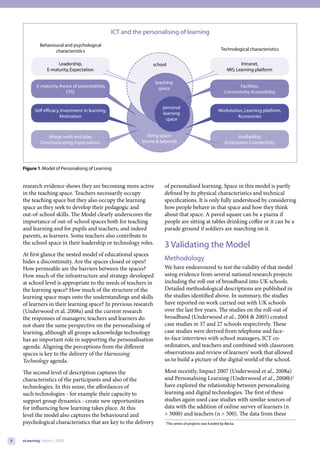
The model presented here was generated from a wide-           helpful to consider the personal learning space that
ranging review of literature, as well as our own project      the learner occupies rather than the learner himself
research data. We have drawn on materials in the public       or herself. Put simply, the personal learning space is
domain as well as detailed classroom observations             the space in which learning takes place. This has some
conducted under Impact 2007 (Underwood et al.,                obvious physical characteristics (such as the technical
2008a) and earlier work from the Broadband Projects           facilities that are available) but crucially it also refers
(Underwood et al., 2004 & 2005). The model is a               to the cognitive space in which the learner operates.
description of the interrelationships between core            This cognitive space includes the learners’ investment
actors (the institution, the staff and the learner) and the   in learning, their sense of efficacy and their motivation
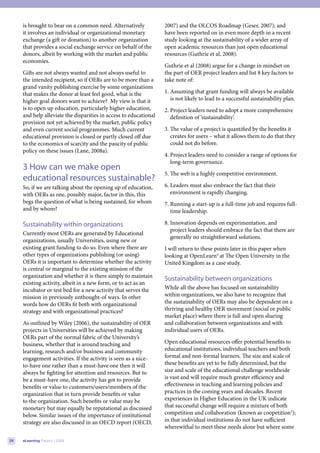
functional spaces which they inhabit (Figure 1).              to learn In the same way, it is helpful to consider the
                                                              teaching space rather than the teacher. The teaching
A number of assumptions underpin this model:
                                                              space includes the physical environment of the
1. The educational process is a dynamic system                classroom and the cognitive structures that generate
   governed by a complex set of interrelationships.           the learning environment. In the case of teachers the
                                                              additional cognitive features include their awareness of
2. Learning occurs both in informal as well as formal         the potential of digital technologies and their own level
   settings and, after a period in the Twentieth Century      of e-Maturity.
   when formal education dominated, the rise of digital
   learning spaces has rebalanced the importance              In the third and current iteration of the Model (Figure
   of informal versus formal learning. Learners               1) the space beyond the school also becomes significant.
   increasingly acquire not only ‘street’ knowledge           This living space provides a further input to the learning
   but also ‘academic’ knowledge from outside of the          space and teaching space. Teachers create some of their
   classroom. In particular their technological world is      teaching materials outside the school using resources
   likely to be richer outside the school than it is inside   that might not be available within the school. They
   the school. As a result they have access to a range of     might also belong to networks of teachers from other
   resources and functionalities that allow for new ways      schools who are sharing good practice. Similarly the
   of learning. These technological skills and new ways       learners’ personal learning space is not limited to the
   of learning can then be brought into the school and        school. They might have access to other technical and
   formal learning.                                           social resources outside the school.

3. Technological advancements such as simulations,            The second level of description captures the
   virtual reality and multi-agent systems have been not      characteristics of the participants and also of the
   only a stimulus but also a driver of a more flexible       technologies. In this sense the affordances of the
   and social conceptualisation of learning. This is          technology introduce further enhancements, such as
                                                              the capacity to support group dynamics.
   captured in the moves towards just-in-time learning,
   constructivism, student-centered and collaborative         The living space that most commonly provides support
   learning.                                                  for learning is the home, but opportunities for learning
                                                              go much further than this. With regard to the home, the
4. A fourth assumption is that across the educational
                                                              affordances of digital technologies create a reciprocal
   space there is the potential for children to take on
                                                              traffic with the school so that just as the school can now
   multiple roles, which may include learner, mentor,
                                                              be in the living room, the people in the living room can
   tutor and in some cases assessor. Equally the teacher
                                                              look into and affect the school. Digital technologies
   or tutor is also a learner in some contexts. While
                                                              have helped blur distinctions between work and play
   parents and guardians have their central role they
                                                              and now with increasing links between school and
   are also tutors and learners. Each of these roles is
                                                              home they are also blurring the distinctions between
   important, as is evidenced from the Test Bed Project
                                                              leisure and learning.
   (Underwood, Dillon & Twining, 2007) where
   teachers’ skills development was shown to be an            In the Model, the first level of description focuses
   important positive correlate of school performance.        on four educational spaces: the school environment
   In contrast, Lim, Lee, and Richards (2006) have            including aspects such as culture and affluence of the
   reported reduced usage of technology by pupils in          institution; the teaching space; the personal learning
   classes where the teacher was uncomfortable with           space and the living space. While pupils as learners
   technology.                                                find a natural home in the personal learning space, the

                                                                                         Openness and changing world of learning   5
ICT and the personalising of learning
             Behavioural and psychological
                    characteristics                                                                           Technological characteristics


                      Leadership,                                 school                                                 Intranet,
                 E-maturity, Expectation                                                                          MIS, Learning platform

                                                                   teaching
           E-maturity, Aware of potentialities,                      space                                             Facilities,
                         CPD                                                                                    Connectivity, Accessibility


                                                                       personal
          Self efficacy, Investment in learning,                                                            Workstation, Learning platform,
                                                                       learning
                        Motivation                                                                                   Accessories
                                                                         space


                Merge work and play,                             living space                                         Availability,
             Communicating, Expectations                      (home & beyond)                                   Accessories, Connectivity


    Figure 1. Model of Personalising of Learning


    research evidence shows they are becoming more active              of personalised learning. Space in this model is partly
    in the teaching space. Teachers necessarily occupy                 defined by its physical characteristics and technical
    the teaching space but they also occupy the learning               specifications. It is only fully understood by considering
    space as they seek to develop their pedagogic and                  how people behave in that space and how they think
    out-of-school skills. The Model clearly underscores the            about that space. A paved square can be a piazza if
    importance of out-of-school spaces both for teaching               people are sitting at tables drinking coffee or it can be a
    and learning and for pupils and teachers, and indeed               parade ground if soldiers are marching on it.
    parents, as learners. Some teachers also contribute to
    the school space in their leadership or technology roles.          3 Validating the Model
    At first glance the nested model of educational spaces
    hides a discontinuity. Are the spaces closed or open?              Methodology
    How permeable are the barriers between the spaces?                 We have endeavoured to test the validity of that model
    How much of the infrastructure and strategy developed              using evidence from several national research projects
    at school level is appropriate to the needs of teachers in         including the roll out of broadband into UK schools.
    the learning space? How much of the structure of the               Detailed methodological descriptions are published in
    learning space maps onto the understandings and skills             the studies identified above. In summary, the studies
    of learners in their learning space? In previous research          have reported on work carried out with UK schools
    (Underwood et al. 2008a) and the current research                  over the last five years. The studies on the roll-out of
    the responses of managers; teachers and learners do                broadband (Underwood et al., 2004 & 2005) created
    not share the same perspective on the personalising of             case studies in 37 and 27 schools respectively. These
    learning, although all groups acknowledge technology               case studies were derived from telephone and face-
    has an important role in supporting the personalisation            to-face interviews with school managers, ICT co-
    agenda. Aligning the perceptions from the different                ordinators, and teachers and combined with classroom
    spaces is key to the delivery of the Harnessing                    observations and review of learners’ work that allowed
    Technology agenda.                                                 us to build a picture of the digital world of the school.

    The second level of description captures the                       Most recently, Impact 2007 (Underwood et al., 2008a)
    characteristics of the participants and also of the                and Personalising Learning (Underwood et al., 2008b)1
    technologies. In this sense, the affordances of                    have explored the relationship between personalising
    such technologies - for example their capacity to                  learning and digital technologies. The first of these
    support group dynamics - create new opportunities                  studies again used case studies with similar sources of
    for influencing how learning takes place. At this                  data with the addition of online survey of learners (n
    level the model also captures the behavioural and                  > 3000) and teachers (n > 500). The data from these
    psychological characteristics that are key to the delivery         1
                                                                           This series of projects was funded by Becta.


6   eLearning Papers | 2009
surveys are reported elsewhere. The second project             peoples’ questions, share resources etc. Teachers monitor it
again developed case studies in 30 schools (primary and        and also pose additional questions.
secondary) and used focus groups with teachers and
learners in addition to the interviews with managers           Many of our observations show the interplay of intra
and ICT co-ordinators.                                         and internet use and confirms that there is a growing
                                                               ICT skills base and a sophisticated etiquette of working
In addition to the field data these projects analysed          among pupils in ICT rich environments.
demographic data and national academic performance
data (reported elsewhere).                                     A girl entered the classroom and logged onto the school
                                                               intranet to continue working on a project which she began
The findings below are drawn from the reports and              by reviewing her progress to date. She then logged onto
illustrate the emerging themes that we observed.               the internet and, using a search engine, located a short list
Examples are included from case study reports and              of useful sites. One particularly useful site contained some
from interviews and focus groups.                              audio content and, not wishing to disturb other pupils she
                                                               obtained a set of headphones from a technician. Having
How might the technology help?                                 made notes from the audio files she then used these as a
                                                               basis for her work, drafting and re-drafting appropriately,
Digital technology was seen as a central support for a
                                                               saving her work to her personal folder on the intranet.
more personalised learning experience but the nature
                                                               Adjacent to her sat a boy who had also entered the room
of that support can differ greatly. For some schools the
                                                               carrying no work materials. He immediately logged onto
technology is being used to provide detailed feedback
                                                               the intranet, checked his in-box and located the comments
to pupils, staff and parents. Such feedback, not just on
                                                               and suggestions that his teacher had provided. Having
academic performance but also behaviour, supports
                                                               accessed his previous work he now made a number of
pupils in their attempts to self-regulate their learning.
                                                               alterations, building upon the advice received. He saved
At one secondary school SAM Learning (a UK exam                the revised version to his folder. He then began work on
revision service for schoolchildren) and ‘P by P’              the new task that he had received from his teacher. He
(personalisation by pieces) schemes foster group activities,   too logged on to the internet and copy and pasted various
independent learning and encourages pupils to present          items from a chosen range of web sites. He saved this
and discuss work in a positive way. The “P by P scheme”        as a rough draft in his personal folder and e-mailed his
is fairly new but allows pupils to set their own goals, find   teacher to confirm that he had completed the work set.
evidence to build skill sets and are assessed by mentors
                                                               This school, among a number of others in our samples,
and other peers (2 years above them) from other parts of
                                                               uses proprietal software (on the Digital Brain portal) to
the country
                                                               organise work. This software monitors students’ activity,
The motivational power of technology is clearly                sending an email from the student to the subject
recognised by teachers.                                        teacher, when new work has been submitted into the
                                                               ‘folder’ from which the teacher can collect it. Feedback
ICT enthuses and excites children; electronic tasks seem       is then emailed back to the student.
more exciting and stimulating in many cases. Although
a good mix of computer activities and practical activities
                                                               The boundary between teaching space and
works best!
                                                               personal learning space
The teachers all felt that much of the children’s work         Teachers and learners engage with technology
was better when a smartboard was used for teaching.            in different ways. While teachers see the value of
They reported higher motivation and levels of interest.        technology they are not necessarily comfortable with
They gave examples of individual children such as L,           the technology. For example, Sandford et al. (2006)
who usually needed extension activities to stretch him,        found a significant majority of teachers (72%) do not
easily done on a computer. Using a computer gave the           play computer games for leisure, which they suggest
opportunity of presenting one idea in a wide variety of        highlights a generational gap between teacher and
ways, this way the teachers were able to ensure practice       student. However, Taylor (2003) and the ESA (2005)
without the children feeling that they were doing the same     suggest that this as more a life-style choice, that is many
thing every time.                                              teachers choose not to play games, while peers in other
However, other schools use the technology in a more            occupations do. Equally teachers also appear to have a
communal way as in this next example.                          different understanding of personalised learning to the
                                                               one held by learners. Preliminary data analyses confirm
The school uses software called ‘question wall’ which is       the fractured nature of the understanding of this core
used outside of lessons to support understanding. For          educational concept; while both staff and pupils may
example, in a project on religion a question wall was          see personalisation of learning as good practice and
set up on which pupils can pose questions, answer other        a goal to be strived for, pupils often do not recognise

                                                                                           Openness and changing world of learning   7
staff efforts to deliver on this concept. This perceptual
    discontinuity can in part be explained by pupils
    equating personalisation with ‘me time’ but we also
    have evidence that some teachers, while accepting the
    personalisation agenda, are still operating a controlling
    model of education.
    That said many of our teachers equated personalisation
    with pupil voice and choice. They also linked this to the
    need for a curriculum that engaged pupils and for many
    this was not the National Curriculum.
    − The teachers were particularly clear that
      personalisation was not individualisation – targeting
                                                                                                                                

      every child’s individual needs because this is unrealistic.
      It’s a more rounded approach.
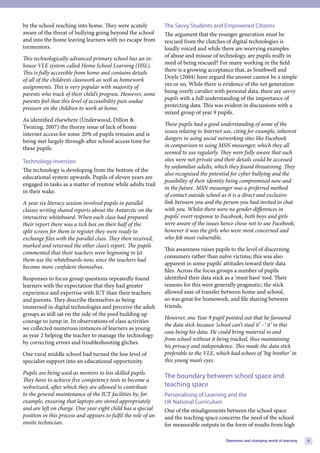
                                                                    Figure 2. Technology worlds at home and at school
    − Personalisation was seen as something that good
      teachers had been actively involved in for decades. The
      key issues are meeting individual needs and offering          pupils. In those cases where it was seen necessary,
      differentiated learning programmes. The problem with          heads indicated that they were considering a number
      the rhetoric around Personalising Learning is that            of solutions to ameliorate this problem. These included
      it implies that each child should have an individual          opening the school after hours to those who do not
      learning programme and this is not possible in a class of     have quality access at home; targeting out of school
      35 children.                                                  internet skills lessons to those without home access;
                                                                    loaning laptops to pupils and providing laptops for
    − P-learning is a two way process (between student and          teachers, often through the ‘laptops for teachers’
      teacher), not something you can just ‘do to kids’, they       scheme. The case study reports suggest this has been a
      have to be involved in it too.                                positive move.
                                                                    In this large, well resourced primary school all staff
    The boundary between school space
                                                                    have been provided with an email address which is
    and living space                                                also accessible from their homes. The school has placed
    Effective home school links through digital                     all formal school documentation online and staff have
    technologies are seen as central to the implementation          a communal on-line diary and message board on the
    of the personalisation agenda. Indeed Green et                  web site. Through the web site, schemes of work and
    al. (2005) argue that the challenges posed by the               lessons plans can be shared by all staff, whether at
    Personalising Learning agenda may prove difficult to            home or at school. Teachers report that it is easier to
    meet without digital technologies as there will be a            use the material in school, however, since few of them
    specific requirement for “the communication, archiving          have broadband access at home, which is confirmation
    and multimedia affordances of digital resources” (Green         of the head teachers’ perceptions reported earlier. The
    et al., 2005 p. 5).                                             availability of this resource has resulted in teachers at
                                                                    this school staying later and doing more preparation on
    Schools are being encouraged to reach out into the
                                                                    site.
    home and, to a lesser extent, the home is reaching
    into the school. Many homes are rich in technology.             Teachers selecting to work in the school rather than
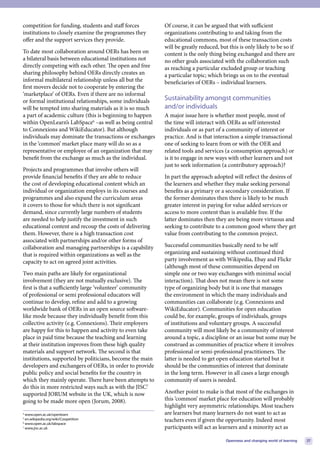
    Figure 2 is a visual representations of secondary school        at home is a finding contrary to that of the iSociety
    pupils’ active use of a variety of technologies at home         (Crabtree & Roberts, 2003). Their study found that
    and school. The data are taken from the Personalising           teachers were downloading through a home broadband
    Learning Project focus group interviews (Underwood              link because the school net was too slow, but with our
    et al., 2008b) and they clearly show the richness of the        schools the quality of the school provision outstripped
    home as compared to the school digital world. This              many teachers’ homes (Underwood, et al., 2005). In
    suggests that linking the school and home digitally is          contrast most learners appear to live in a technology
    eminently doable. However, not all of homes will have           rich world.
    the necessary facilities at an appropriate level, to link to
    the school.                                                     The digital links between school and home are not
                                                                    universally welcomed and some teachers expressed
    Frustration is one outcome of the disparity between             concern that the private space of the school was being
    the quality of home and school connectivity, but heads          eroded, threatening the development of the learners’
    were also concerned about disenfranchising their                independence. The safety of the home was threatened

8   eLearning Papers | 2009
by the school reaching into home. They were acutely             The Savvy Students and Empowered Citizens
aware of the threat of bullying going beyond the school         The argument that the younger generation must be
and into the home leaving learners with no escape from          rescued from the clutches of digital technologies is
tormentors.                                                     loudly voiced and while there are worrying examples
This technologically advanced primary school has an in-         of abuse and misuse of technology, are pupils really in
house VLE system called Home School Learning (HSL).             need of being rescued? For many working in the field
This is fully accessible from home and contains details         there is a growing acceptance that, as Southwell and
of all of the children’s classwork as well as homework          Doyle (2004) have argued the answer cannot be a simple
assignments. This is very popular with majority of              yes or no. While there is evidence of the net generation
parents who track of their child’s progress. However, some      being overly cavalier with personal data, there are savvy
parents feel that this level of accessibility puts undue        pupils with a full understanding of the importance of
pressure on the children to work at home.                       protecting data. This was evident in discussions with a
                                                                mixed group of year 9 pupils.
As identified elsewhere (Underwood, Dillon &
Twining, 2007) the thorny issue of lack of home                 These pupils had a good understanding of some of the
internet access for some 20% of pupils remains and is           issues relating to Internet use, citing for example, inherent
being met largely through after school access time for          dangers in using social networking sites like Facebook
these pupils.                                                   in comparison to using MSN messenger, which they all
                                                                seemed to use regularly. They were fully aware that such
Technology inversion                                            sites were not private and their details could be accessed
                                                                by unfamiliar adults, which they found threatening. They
The technology is developing from the bottom of the
                                                                also recognised the potential for cyber bullying and the
educational system upwards. Pupils of eleven years are
                                                                possibility of their identity being compromised now and
engaged in tasks as a matter of routine while adults trail
                                                                in the future. MSN messenger was a preferred method
in their wake.
                                                                of contact outside school as it is a direct and exclusive
A year six literacy session involved pupils in parallel         link between you and the person you had invited to chat
classes writing shared reports about the Antarctic on the       with you. Whilst there were no gender differences in
interactive whiteboard. When each class had prepared            pupils’ overt response to Facebook, both boys and girls
their report there was a tick box on their half of the          were aware of the issues hence chose not to use Facebook;
split screen for them to register they were ready to            however it was the girls who were most concerned and
exchange files with the parallel class. They then received,     who felt most vulnerable.
marked and returned the other class’s report. The pupils
                                                                This awareness raises pupils to the level of discerning
commented that their teachers were beginning to let
                                                                consumers rather than naïve victims; this was also
them use the whiteboards now, since the teachers had
                                                                apparent in some pupils’ attitudes toward their data
become more confident themselves.
                                                                files. Across the focus groups a number of pupils
Responses to focus group questions repeatedly found             identified their data stick as a ‘must have’ tool. Their
learners with the expectation that they had greater             reasons for this were generally pragmatic; the stick
experience and expertise with ICT than their teachers           allowed ease of transfer between home and school,
and parents. They describe themselves as being                  so was great for homework, and file sharing between
immersed in digital technologies and perceive the adult         friends.
groups as still sat on the side of the pool building up
                                                                However, one Year 9 pupil pointed out that he favoured
courage to jump in. In observations of class activities
                                                                the data stick because ‘school can’t steal it’ –‘ it’ in this
we collected numerous instances of learners as young
                                                                case being his data. He could bring material to and
as year 2 helping the teacher to manage the technology
                                                                from school without it being tracked, thus maintaining
by correcting errors and troubleshooting gliches.
                                                                his privacy and independence. This made the data stick
One rural middle school had turned the low level of             preferable to the VLE, which had echoes of ‘big brother’ in
specialist support into an educational opportunity.             this young man’s eyes.

Pupils are being used as mentors to less skilled pupils.
                                                                The boundary between school space and
They have to achieve five competency tests to become a
webwizard, after which they are allowed to contribute           teaching space
to the general maintenance of the ICT facilities by, for        Personalising of Learning and the
example, ensuring that laptops are stored appropriately         UK National Curriculum
and are left on charge. One year eight child has a special      One of the misalignments between the school space
position in this process and appears to fulfil the role of an   and the teaching space concerns the need of the school
onsite technician.                                              for measurable outputs in the form of results from high

                                                                                            Openness and changing world of learning   9
stakes tests such as SATs and GCSEs and the ambition          development of not only the discerning consumer but
     of teachers to personalise learning for their learners. For   also the discerning citizen.
     some schools the National Curriculum is antithetical to
     the personalising of learning agenda.                         − The pupils who so ably articulated their rejection of
                                                                     Facebook are drawn from a school (secondary: socially
     The National Curriculum needs to be more flexible and           disadvantaged) whose policy is one of openness,
     engaging in order to achieve p-learning. The national           particularly in regard to the Internet and digital
     curriculum causes problems with this (individualised            technologies in general. In the focus group, teachers at
     learning and differentiation) however – personalisation         this school expressed the need for pupils to be exposed
     needs pupils to be engaged and this not always happening        to both the ills as well as the joys of surfing the net
     with the curriculum as it is presently. Further, the            while, they the staff, could provide a positive context in
     National Curriculum is very prescriptive in its outline         which to debate issues.
     and does not always allow teachers to be creative. Needs
     to be more flexible.                                          − In a second school (secondary: socially advantaged)
                                                                     which operated a similar monitoring system, the pupils
     The allocation of children to classes in schools can            viewed this surveillance with equanimity and not as
     create groups who are less focused on SATs and                  an infringement of liberty. However, in this school
     therefore able to work beyond the National Curriculum.          pupils were allowed considerable freedom in their use of
                                                                     digital tools, as exemplified by the school by-passing the
     The unusual mix of years 4 and 5 in this rural primary          local RBC controls to give pupils exposure to the wider
     school provided an opportunity to be more bold with             Internet.
     the curriculum. The teacher chose to design her lessons
     using the ‘Mantle of the Expert’. This is a particular        − A third school (primary: socially advantaged) has
     style of teaching where pupils and teacher use drama            extended this sense of openness in that it declares itself
     and role play to learn together. They learn for a reason,       as a school without rules. Pupils here choose their own
     undertaking shared research to become ‘experts’ in their        learning pathways and modes of working. The pupils
     own right. The class at the time of the visit was focused       have learnt to take responsibility from a very young
     on saving orangutans in Borneo. KORC (Kingabantan               age. The school is successful on all objective measures
     Orangutan Rescue Centre) was led by Anna, played                and the children here are empowered and empowering.
     by the teacher, and the children were scientists and
     volunteers.                                                   Other schools however, operated a policy of
                                                                   containment where social networking software was
     In the previous lesson it had been discovered that KORC       concerned. These schools are in the majority here, a
     impoverished and needed to develop some fundraising           finding mirrored in the Harnessing Technology 2008
     activities to keep the operation going. Different groups      Survey, which showed that “software was not overly
     of children were working mainly in pairs to tackle this       encouraged by teachers in supporting pupils with their
     issue in a wide variety of ways including cooking banana      learning” (Smith & Rudd, 2008, p.30).
     buns, which appear to be an essential part of the diet of
     orangutans and small children.                                4 Reflections
     Inculcating Discerning Consumers                              The data collected here provides a partial validation
                                                                   of the Personalising of Learning Model. By capturing
     Many pupils, it emerges from our learner data, may
                                                                   space, behaviour and opportunity we have been able
     be described as digitally savvy. Are these savvy pupils
                                                                   to describe the ebb and flow of activity between the
     simply street wise, collecting their knowledge from
                                                                   school and home, and teaching and learning. In
     the world beyond the classroom or is there evidence of
                                                                   particular we have highlighted the boundaries between
     schools aiding the development of the critical analysis
                                                                   different digital worlds and shown the potential
     exhibited here? In the descriptive model (Figure1)
                                                                   barriers to effective teaching and learning.
     it was argued that the culture, ethos or vision of a
     school would be an important predictor of educational         Underwood and Banyard (2008) have reported
     outcomes. Is there evidence to support this argument?         that managers, teachers and learners understand
     In the case of the student rejecting the VLE because          personalising learning in different ways. Our analyses
     of its ’big brother’ connotations, it seems unlikely that     confirm the fractured nature of different stakeholders’
     the school has impacted on him in a positive way. The         understanding of this core educational concept: while
     school operates a full digital monitoring programme           both staff and pupils may see the personalising of
     with lesson-by-lesson registration and rapid feedback         learning as good practice and a goal to be strived for,
     to parents. This pupil sought to reduce the school’s          pupils often do not recognise staff efforts to deliver
     data collection on his activities and in this sense we        on this concept. Pupils equating personalisation
     might call him street wise. However, there are schools        with ‘me time’ can in part explain this perceptual
     whose vision and practice have a clear focus on the

10   eLearning Papers | 2009
discontinuity but we also have evidence that some          that teachers had a very real awareness of what the
teachers, while accepting the personalisation agenda,      technology could deliver but were frustrated by the
are still operating a controlling model of education.      current curricula and assessments.
Many teachers, however, equate personalising learning
with pupil voice and choice. They also link this to        Assessment is still largely conducted in the UK
the need for a curriculum that engages pupils and for      using traditional (i.e. pre-digital technologies)
many teachers this is not the UK National Curriculum.      techniques, and focuses on traditional (i.e. pre-
ICT can provide opportunities for developing               digital technologies) academic skills. The origin of
the personalising agenda but it can also provide           these techniques in UK education can be traced
the illusion of individual learning while actually         back through the University of Cambridge Local
restricting innovative work.                               Examinations Syndicate (UCLES) to 1858, when a
                                                           group of academics were invited by some Durham
The people who predominantly occupy the learning,          schools to develop assessment techniques for their
teaching and institutional spaces have very different      pupils. The schools were observed to capture how the
experiences and expectations of digital technologies.      pupils were being taught. Tests were devised to match
The digital world is the norm for pupils, even those       the teaching and learning that was taking place. The
of a very young age, and this is not always recognised     techniques for external examination are largely the
by teachers. It is aspirational and functional, and        same today even though the style of teaching and
is an important way of defining and expressing an          learning has moved on dramatically. There is a clear
individual’s identity. However, learners engage with       need to create assessments that better measure the
digital technologies in ways that are only partially       shifts in learning activities that accompany effective
recognised and explored by schools. Schools have           use of digital technology. For example what form of
very different responses to this digital world. Some       assessment best captures the move from essay to story
schools have policies of containment while others seek     boarding or the rise in visual as opposed to verbal
to engage with pupils and through these burgeoning         presentational skill.
technologies.
                                                           In the traditional model of education the design of the
The digital divide between teachers and pupils remains     learning space was mainly under the control of the
a reality. It can be argued that this is a transient       institution and the teacher. The physical characteristics
problem that will disappear as a new, more e-mature        of the personal learning space can still be influenced
generation of teachers takes its place in the classroom.   by teachers and institutions, but the design of that
However, new technologies continue to evolve and           space and the uses of the technology are under the
change rapidly and early adopters and innovators will      control of the learners. At our university our library
continue to be over-represented in children and young      information services provides academic search
people and under-represented in adults. There are also     facilities and e-learning support but the students
further digital divides between parents and children       choose to Google. To create effective learning it
and it is clear that children are claiming part of this    is necessary to understand the different spaces in
digital world as their own and using it as a vehicle for   the personalising of learning and to respond to the
personal independence.                                     perceptions and behaviours of learners.
As in previous studies there are concerns about home
school links that can be encapsulated first under          5 Recommendations
work-life balance (when do the youngest children get       1. The various stakeholders (managers, teachers,
to play?) and secondly equity issues. Although, in this       learners, parents) should develop better
sample of schools, pupils in socially disadvantaged           understandings of each others’ experience and use of
areas who, it was anticipated, would be technologically       digital technologies.
disadvantaged, still had high access to technology. The
model presented here draws attention to the overlap        2. Curricula need to be adapted to take account of the
of these spaces and challenges schools to respond to          digital technologies to allow for the personalising of
these new ways of learning.                                   learning.

There is a need to create greater alignment between        3. Assessment of learners needs to be reviewed to better
curriculum, assessment and pedagogy for the digital           capture the learning, both formal and informal, that
school. Wood (2006) has argued that the misalignment          is taking place.
of assessment and an ICT rich educational experience       4. Policy makes and managers need to respond to the
requires radical rethinking. Many schools do not grasp        digital divides that exist by age, professional status and
the importance of ICT for assessment and therefore            economic disadvantage.
holistic change (McClusky, 2005). However, the
e-Mature schools within this sample demonstrated

                                                                                       Openness and changing world of learning   11
References
       ➜ Crabtree, J. & Roberts, S. (2003). Fat Pipes, Connected People Rethinking Broadband Britain. London: iSociety.
         http://www.theworkfoundation.com/pdf/fat_pipes.pdf

       ➜ DfES (2006). The Primary National Strategy: Personalisation. London: DFES.
         http://www.standards.dfes.gov.uk/local/ePDs/leading_on_intervention/site/u1/s3/index.htm

       ➜ ESA (2005). Essential Facts about the computer and video game industry
         http://www.theesa.com/files/2005EssentialFacts.pdf

       ➜ Green, H., Facer, K. & Rudd, T (2005). Personalisation and Digital Technologies. Bristol: Futurelab.

       ➜ Lim, C.P., Lee, S.L. & Richards, C. (2006). Developing interactive learning objects for a computing mathematics models.
         International Journal on E-Learning, 5, 221-244.

       ➜ McClusky, A. (2005). Policy Peer reviews: ICT in Schools in Northern Ireland. Brussels EUN Schoolnet.
         http://insight.eun.org/ww/en/pub/insight/policy/peer_reviews/

       ➜ Pollard A & James, M. (2004). Personalised Learning A Commentary by the Teaching and Learning Research
         Programme, London: TLRP.

       ➜ Smith, P. & Rudd, P. (2008). Harnessing Technology: School Survey 2008: Draft Preliminary Report. NFER.

       ➜ Southwell, B.G. & Doyle, K.O. (2004). The Good, the Bad, or the Ugly? A Multilevel Perspective on Electronic Game
         Effects. American Behavioral Scientist, 48, 391-401.

       ➜ Taylor, L. (2003). When seams fall apart: Video game space and the player. Game Studies 3 (2).
         http://www. gamestudies. org/0302/taylor/ (accessed March 31, 2006).

       ➜ Underwood, J., Ault, A., Banyard, P., Bird, K. Dillon, G., Hayes, M., Selwood, I., Somekh, B. & Twining, P. (2005). The Impact
         of Broadband in Schools. Final project report for Becta Coventry.

       ➜ Underwood, J., Ault, A., Banyard, P., Durbin, C., Hayes, M., Selwood, I., et al. (2004a). Connecting with Broadband:
         Evidence from the Field. Coventry: Final project report for Becta.

       ➜ Underwood, J., Baguley, T., Banyard, P. Dillon, G., Farrington Flint, L., Hayes, M., Hick, P., Le Geyt, G., Murphy, J., Selwood,
         I. & Wright, M. (2008b). Personalising of Learning. Unpublished Final Report submitted to BECTA.

       ➜ Underwood, J., Baguley, T., Banyard,P., Coyne, E., Farrington-Flint, L., & Selwood, I. (2008a). Impact 2007: Personalising
         Learning with Technology: Final Report. Coventry: Becta.
         http://partners.becta.org.uk/upload-dir/downloads/page_documents/research/impact_July2007.doc

       ➜ Underwood, J.D.M. & Banyard (2008). Self-regulated learning in a digital world. Technology, Pedagogy and Education.
         Technology, Pedagogy and Education, in press.

       ➜ Underwood, J., Dillon, G. & Twining, P. (2007), Evaluation of the ICT Test Bed Project Questionnaire Data: Summary of
         Findings - Year 4, 2006,Coventry: Becta. http://www.evaluation.icttestbed.org.uk/reports

       ➜ Wood, D.W. (2006). The Think Report. SchoolNet http://eminent.eun.org/THINK_FULL_DRAFT_2pp.doc


12   eLearning Papers | 2009
Universities and Web 2.0: Institutional challenges
Juan Freire
Associate Professor
University of A Coruña, Spain
http://juanfreire.net/


  Summary
  The irruption of the web 2.0 internet in universities does not modify only learning models - organizative models are
  also challenged, creating important fears among the managers of the institutions. Teachers, researchers and students
  started some years ago to use social software tools, but in few cases these experiences have allowed any scaling from
  the individual to the institutional level.

  The promises and potential of web 2.0 in universities need an adequate strategy for their development, which has to
  confront the bottlenecks and fears common in these institutions that could explain the lack of adaptation. Some of
  the bottlenecks highlighted in this paper are: a) the rejection by the users, personnel and students, b) the lack of an
  incentive system, c) the available pre-web 2.0 technology, and d) universities show in some cases a culture of aversion
  to innovation and entrepreneurship.

  The adoption of a web 2.0 approach to learning in universities is a complex process confronting important
  technological, managerial and human barriers. For these reasons, the design of a set of objectives and a strategy
  accepted and promoted by the managers, especially those in charge of knowledge management, is absolutely
  needed. This first step requires in many cases radical cultural changes for people used to work and make decisions in
  a different scenario. The introduction for the web 2.0 approach to learning in universities must be done through an
  adaptive strategy, one that may be designed integrating previous experiences of educational, research and business
  organizations.
  Keywords
  Web 2.0, universities, openness, knowledge, managers, establishment, bottlenecks


1 The promises                                                  OECD 2007). Some of these experiences are successful,
                                                                but in few cases have allowed any scaling from the
and reality of web 2.0                                          individual to the institutional level. Institutional, top-
Web 2.0 could facilitate a change of paradigm in                down, adaptations have been considerably slower or
learning; from a top-down system focused in teachers            absent, widening in many cases the “digital divide”
and established knowledge to a networked approach               between universities and some of their personnel and
where teachers should change their roles to become              among teachers using or not web 2.0 in their work.
coaches and facilitators of the learning process
(Anderson 2007, Brown & Adler 2008, O’Reilly                    2 What is web 2.0? Beyond
2005). The objectives of the new European Space for
Higher Education and the needs of our contemporary              technology; open knowledge and
societies both pay special attention to innovation and          network collaboration
entrepreneurship as basic abilities for the future of our
graduates. Learning by doing and applying methods               Web 2.0 could be defined from a technological point
for collaborative and active learning are essential             of view as a loosely-coupled system of Internet
approaches to attain these objectives, and the web 2.0          applications (Fumero & Roca 2007), but it also
could be an instrumental and strategic tool in their            represents a “Troyan horse” for a new social and
development (Anderson 2006).                                    cultural paradigm (Shirky 2008, Weinberger 2007). In
                                                                this sense it could be defined as technologies for the
However, the irruption of the new internet in                   social creation of knowledge, comprising three main
universities does not modify only learning models.              characteristics:
Organizative models are also challenged causing some
acute crisis in institutions (Brown & Adler 2008). Web           a) Technology: Internet moves from “push” to “pull”;
2.0 has already entered the university walls in a bottom-           from an era 1.0 associated to the old hierarchical
up process. Teachers, researchers and students, in most             portals and a restricted group of content creators
cases without any institutional stimulus, started some              to searching engines, aggregators and user-based
years ago to use social software tools (Anderson 2007,              content typical of the era 2.0.


                                                                                            Openness and changing world of learning   13
b) Knowledge: web 2.0 is challenging copyright (the              is critical to introduce and expand a new knowledge
        strict protection of intellectual property) because           culture based in active users able to create, modify,
        the open source paradigm (open access and creative            search, communicate and share information and
        remix of contents) has demonstrated important                 knowledge. This new role model differs from the
        competitive advantages, allowing for more creativity          conventional students and, in many cases, teachers
        and productivity (Lessig 2004). This new open                 found nowadays at our universities. In any case,
        knowledge paradigm is grounded in the success                 the imminent arrival of the digital natives (Palfrey
        of free software and the old tradition of scientific          & Gasser 2008, Prensky 2001a,b) to university
        communities (Benkler 2006, Weber 2005), and is                could revolutionize this situation, probably making
        characterized by four properties: independent (“free          easier the introduction of web 2.0 approaches but
        speech”), cost of distribution is zero or very low (“free     increasing the cultural gap between students and
        beer”), modularity and generative capacity. In this           teachers.
        sense, the modularity or granularity of open content
        shared in networks allows for the development of            b) Lack of an incentive system or perverse effects.
        the complete creative potential of remix (Baldwin &            This topic has been discussed above in relation to
        Clark 2000, Zittrain 2006).                                    user changes. For instance, sometimes institutional
                                                                       strategies are designed with the goal of a global
     c) Users: the shift from consumers to active users                change, conducting to the adaptation of the complete
        participating as curators and creators that                    university community in the short term. These
        characterize web 2.0 has been sometimes defined                approaches fail due to the institution inertia that
        as the “revenge of amateurs” and modifies the                  impedes to develop adequate incentives with the
        traditional roles of the agents of the chain value of          required timing and/or to the excessive support to
        knowledge creation and consumption.                            the reluctant users, giving a perverse example to the
                                                                       lead users.
     The promises and potential of web 2.0 in universities
     need an adequate strategy for their development                c) Available pre-web 2.0 technology. Universities have
     that have to confront different bottlenecks and fears             made large investments during 1980 and the 90s to
     common in these institutions. In the following sections           develop in-house or buy software platforms. This
     these topics will be analyzed.                                    infrastructure could become a barrier more than an
                                                                       active. Most of this technology is starting a phase of
     3 Bottlenecks for institutional                                   accelerated obsolescence and has to be changed by
                                                                       tools available in the market (and in most cases at a
     adoption of web 2.0                                               very low cost), that have to be configured, integrated
     Universities and their managers, when they assume                 and remixed to create new applications or mashups
     an active role for the adaptation to the new paradigm             adapted to the needs of local users. Low cost is in
     described above, discover a series of internal                    many cases a matter of distrust in the decision-
     bottlenecks:                                                      makers, due to the misunderstandings that the
                                                                       concepts of free software and open source continue to
     a) Rejection by the users, personnel and students.                generate. In many cases the best scenario to introduce
        Many of the users of the tools available in the                web 2.0 could be the lack of technology, and we could
        Internet 1.0 are reluctant and fearful of learning the         paraphrase the classical question of Nicholas Carr
        abilities needed to use new software and change their          (2004), IT doesn’t matter?, at least the traditional
        attitudes about education and knowledge. Also, in              concept of IT.
        most cases, change is a matter of personal interest
        and work without any specific incentive system              d) Universities show in some cases a culture of
        adapted to these objectives.                                   aversion to innovation and entrepreneurship.
                                                                       Bureaucracy, governance, procedures for decision-
        The journal and editorial group Nature is an excellent         making and inertia in large institutions are in many
        example of the users’ bottleneck. This group has               cases the worst environment for inside innovation
        developed in the last years an extremely innovative            and entrepreneurship. However, the adoption of
        and experimental strategy for web publishing                   technology and working methods associated with
        (Hannay 2007). However, some of its projects have              web 2.0 requires a high dose of experimentation and
        been restrained by users (scientists in this case). For        creativity.
        example, the experiment about “open peer review”
        failed due to the lack of interest of the scientific
        community (Nature 2006).                                    4 Institutional fears of web 2.0
                                                                    Besides bottlenecks, web 2.0 challenges the core
        Learning from these experiences, it seems clear that,       structure of universities creating important fears among
        in parallel to the deployment of new technologies, it       the managers of the institutions. Probably, the ultimate

14   eLearning Papers | 2009
causes of these fears are both 1) the implicit criticism to   especially those in charge of knowledge management,
the traditional model of university respect to knowledge      is absolutely needed. This first step requires in many
production and education and 2) the need for control and      cases radical cultural changes for people used to work
power of the IT departments that, as discussed above, are     and make decisions in a different scenario. The strategy
sometimes considered irrelevant in a “world 2.0”.             should be supported for at least some of these elements:
A recent report of Forrester Research (Koplowitz              a) Learning from previous and on-going experiences.
& Young 2007) identifies risks that an organization              Successful uses of web 2.0 are yet an experimental
(the original report refers to enterprises) perceives            field where trial-and-error is the basic approach. A
associated to web 2.0: reliability, security, governance,        considerable base of experience is being developed
compliance and privacy. These risks are associated to            (and shared) by lead users and organizations that
the uncontrolled entry of web 2.0 in institutions giving         could be mined by other interested parties to gain
rise to a growing trend of “unsanctioned employee                efficiency in their processes of adoption. Basically, we
usage” and to some unintended consequences as                    could find two sources of experience:
violations of intellectual property and/or contracts (i.e.,
client, or student, data located outside of institutional       • Lead (or passionate) users inside the organization
firewalls). The response of some companies, establishing          (Young 2007, Von Hippel 2005,). Instead of
web 2.0 policies and usage guidelines could kill the              developing a learning platform with functionalities
opportunities provided by web 2.0, mainly its openness,           defined a priori, universities could let the
producing a perverse effect of the reduction of users’            community (teachers and students) explore, test
innovation.                                                       and adapt tools. The institution should focus in the
                                                                  monitoring of this activity and the integration of
Strategically the fears of web 2.0 illustrate the                 the successful experiences, and associated tools and
confrontation between trust and openness.                         practices, in their platforms and procedures.
Organizations have two competing needs: 1) visibility
that obligates to be open to the exterior (and important        • Other organizations involved in the adoption
efforts are made in marketing, communication and                  of web 2.0 tools and open paradigms, especially
collaboration with external clients and partners) and             other universities and research institutions and
2) security and trust that obligates to restrict most             enterprises. Universities provide some excellent
of management and activities to the interior of the               experiences. To cite only a few: MIT Open
enterprise. Probably, new developments in social                  Course Ware; Stanford on iTunes U; the web
networks based in web 2.0 tools, i.e. Facebook, could be          2.0 experiences of the Harvard Law School or
a potential useful solution to this compromise, because           the University of Warwick; the web 2.0 strategy
they provide the combination of web 2.0 tools used in             and action plan developed in the University of
a controlled environment (allowing a flexible system of           Edinburgh, or the recent proposal of a Harvard
restricting users and content).                                   Open Access Policy. In Spain, some universities
                                                                  are starting to explore the utility web 2.0 tools, but
Finally, web 2.0 posses some important infrastructural            probably the most complete experiences are those
challenges to organizations; another side of the security         of the Universitat Oberta de Catalunya and of some
vs. openness debate. How to provide a trusted system              business schools (for instance the communities of
for key administrative and managerial processes                   blogs and the master programs based in a blended
allowing, at the same time, the exploratory and risky             model using intensively eLearning and web 2.0
use that provides the most rewards with web 2.0?                  tools of the Instituto de Empresa).
(Havenstein 2007). There are different proposals to solve
this paradox with the deployment of a double physical           Institutions involved in research provide other
network: one closed and designed for Internet 1.0 (for          interesting examples with cases as InnoCentive or
critical processes) and other open for web 2.0 allowing         Nature Web Publishing. As explained previously,
the development of social networks and a considerable           in the case of Nature, the world’s most prestigious
dose of experimentation.                                        scientific journal (pertaining to a strong editorial
                                                                group) is at the forefront of the innovative
                                                                experiences in the use of web 2.0 for scientific
5 Elements for a strategy of                                    communication and development of communities of
web 2.0 adoption in universities                                interest.
The adoption of a web 2.0 approach to learning in             b) Open access and use of contents. Web 2.0 is
universities is a complex process confronting important          especially useful and creative when knowledge
technological, managerial and human barriers. For                is digitized, modular and allowed to be used and
these reasons the design of a set of objectives and a            distributed in a flexible way. New models of licences,
strategy accepted and promoted by the managers,                  as Creative Commons or ColorIuris, introduce this

                                                                                         Openness and changing world of learning   15
needed flexibility respect to the absolute restriction     6 Conclusions
        of uses and distribution that characterized copyright.
                                                                   Web 2.0 is an emergent key driver changing learning
        The use of technological and social standards (i.e.,
                                                                   and organizative paradigms at universities. Besides
        formats of databases or the use of tagging to allow the
                                                                   technology, web 2.0 challenges intellectual property and
        discovery of pieces of information) is also especially
                                                                   transforms consumers into active users creating and
        relevant to make the information available in search
                                                                   curating knowledge. However, until now, universities
        engines and aggregators (basic tools to navigate the
                                                                   have not made the needed efforts to adapt to the new
        overabundance of information) and to allow its reuse
                                                                   needs of the network society and digital natives and
        in the different web 2.0 tools (Weinberger 2007).
                                                                   immigrants studying and working there.
     c) Design the organization as an open platform for
                                                                   Different bottlenecks and fears could explain this
        knowledge creation and sharing, both among
                                                                   lack of adaptation. Among the bottlenecks facing the
        members of the internal community and with
                                                                   universities for the integration of web 2.0 are: a) the
        the participation of external users. This proposal
                                                                   rejection by the users, personnel and students, b) the
        is a consequence of the experience of evolving
                                                                   lack of an incentive system, c) the available pre-web 2.0
        organizations, academic, focused on research and
                                                                   technology, and d) universities show in some cases a
        companies (Chesbrough 2003, Tapscott & Williams
                                                                   culture of aversion to innovation and entrepreneurship.
        2006). The experiences with the management of
                                                                   Complimentarily, universities show two main kinds of
        business moving to an open model for innovation
                                                                   fears about the changes needed for web 2.0 adoption:
        (similar to the uses proposed here for web 2.0 in
                                                                   1) the implicit criticism that web 2.0 includes to the
        universities) allow identifying three main benefits:
                                                                   traditional model of university respect to knowledge
        • Lowering costs using crowdsourcing (Freire 2008,         production and education and 2) the need for control
          Howe 2006), i.e., the external development of web        and power of the IT departments that are sometimes
          2.0 tools would reduce considerably the costs of IT      considered irrelevant in a “world 2.0”.
          infrastructure and software.
                                                                   Due to those barriers, the adoption of a web 2.0
        • Accelerating innovation and knowledge creation.          approach to learning in universities is a complex process
          The Internet has produced an exponential growth          confronting important technological, managerial and
          of available information, where the main cost for        human barriers, and an adaptive strategy is needed
          users is the searching and filtering of sources. In      that could be designed from previous experiences of
          parallel, cycles of creation of new products and         educational, research and business organizations. This
          services, marketing and obsolescence are becoming        strategy could include the following lines:
          shorter. An open approach is in many cases the only
                                                                   a) Learning from previous and on-going experiences,
          opportunity to keep both the user of information
                                                                      before developing a priori technology and protocols
          and knowledge and the enterprises in the course
                                                                      inside the institutions. Both lead users inside the
          (The Economist 2006).
                                                                      organization and other organizations adopting web
        • Increasing creativity. The generation of new ideas,         2.0 tools and paradigms should be especially useful.
          one of the main objectives of universities, benefits
                                                                   b) Opening the access and use of contents. Web 2.0
          from open collaboration. Many enterprises have
                                                                      is especially useful and creative when knowledge
          discovered in the last years that this process is more
                                                                      is digitized, modular and allowed to be used and
          creative than the traditional developed inside de
                                                                      distributed in a flexible way.
          R+D departments.
                                                                   c) Designing organizations as open platforms for
     Similarly to the evolutionary path followed by
                                                                      knowledge creation and sharing, both among
     enterprises transforming in open platforms, universities
                                                                      members of the internal community and with the
     approach web 2.0 in the first phase to reduce costs.
                                                                      participation of external users.
     However, successful enterprises enter a second phase
     where they transform in an open platform to increase
     innovation rate and creativity. This trend opens new
     threats: how to manage intellectual property?, how
     to compete being open? or how to manage human
     resources?


16   eLearning Papers | 2009
References
➜ Alexander B (2006). Web 2.0: A new wave of innovation for teaching and learning. EDUCAUSE Review41(2):32–44.
  http://www.educause.edu/apps/er/erm06/erm0621.asp
➜ Anderson, P. (2007). What is Web 2.0? Ideas, technologies and implications for education. JISC Technology and
  Standards Watch, February 2007. Bristol: JISC. http://www.jisc.ac.uk/media/documents/techwatch/tsw0701b.pdf
➜ Benkler Y (2006). The Wealth of Networks: how social production transforms markets and freedom. Yale University
  Press. http://www.benkler.org/wealth_of_networks/index.php/Main_Page
➜ Brown, J. S. & Adler, R. P. (2008). Minds on Fire: Open Education, the Long Tail, and Learning 2.0. Educause Review
  43(1):16–32. http://www.educause.edu/ir/library/pdf/ERM0811.pdf
➜ Baldwin CY & Clark KB (2000). Design Rules, Volume 1: The Power of Modularity. MIT Press.
➜ Carr N (2004). Does IT Matter? Information Technology and the Corrosion of Competitive Advantage. Harvard
  Business School Press.
➜ Chesbrough HW (2003). Open Innovation: The New Imperative for Creating and Profiting from Technology. Harvard
  Business School Press.
➜ Freire J (2008). El crowdsourcing y los modelos abiertos en la era digital. In, El futuro es tuyo. La revolución social de
  las personas. Red.es. http://www.blogbook.es/
➜ Fumero A & G Roca (2007). Web 2.0. Madrid: Fundación Orange.
  http://www.fundacionorange.es/areas/25_publicaciones/WEB_DEF_COMPLETO.pdf
➜ Hannay T (2007). The Web Opportunity. STM News. June’07.
  http://blogs.nature.com/wp/nascent/2007/06/post.html
➜ Havenstein H (2007). IT is a key barrier to corporate Web 2.0 adoption, users say. ComputerWorld.
  http://www.computerworld.com/action/article.do?command=viewArticleBasic&articleId=9034898
➜ Howe J (2006). The Rise of Crowdsourcing. Wired 14-06.
  http://www.wired.com/wired/archive/14.06/crowds.html
➜ Koplowitz R & GO Young (2007). Web 2.0 Social Computing Dresses Up For Business. Forrester Research.
  http://www.forrester.com/Research/Document/Excerpt/0,7211,41867,00.html
➜ Lessig L (2004). Free Culture. Penguin Press.
➜ Nature (2006). Editorial: Peer review and fraud. Nature 444:971-972.
  http://www.nature.com/nature/journal/v444/n7122/full/444971b.html
➜ OECD (2007). Participative Web and User-Created Content. Web 2.0, Wikis, and Social Networking. Paris: OECD.
  http://213.253.134.43/oecd/pdfs/browseit/9307031E.pdf
➜ O’Reilly T (2005). What is Web 2.0: design patterns and business models for the next generation of software.
  http://www.oreillynet.com/go/web2
➜ Palfrey J & U Gasser (2008). Born Digital: Understanding the First Generation of Digital Natives. Basic Books.
➜ Prensky M (2001a). Digital Natives, Digital Immigrants. On the Horizon 9(5).
➜ Prensky M (2001b). Do They Really Think Differently? On the Horizon 9(6).
➜ Shirky C (2008). Here Comes Everybody: The Power of Organizing Without Organizations. Penguin Press.
➜ Tapscott D & AD Williams (2006). Wikinomics: How Mass Collaboration Changes Everything. Portfolio.
➜ The Economist (2006). Special Report. Innovation: Something new under the sun. Oct 11th 2007.
  http://www.economist.com/specialreports/displaystory.cfm?story_id=9928154
➜ Von Hippel E (2005). Democratizing Innovation. MIT Press. http://web.mit.edu/evhippel/www/democ1.htm
➜ Weber S (2005). The Success of Open Source. Harvard University Press.
➜ Weinberger D (2007). Everything Is Miscellaneous: The Power of the New Digital Disorder. Times Books.
➜ Young GO (2007). Passionate Employees: The Gateway To Enterprise Web 2.0 Sales. Forrester Research.
  http://www.forrester.com/Research/Document/Excerpt/0,7211,43106,00.html
➜ Zittrain J (2006). The Generative Internet. Harvard Law Review 119:1974-2040.
  http://www.harvardlawreview.org/issues/119/may06/zittrain.pdf


                                                                                              Openness and changing world of learning   17
Virtual action learning: what is going on?

     Mollie Dickenson                            Mike Pedler                                  John Burgoyne
     Research Project Manager                    Professor of Action Learning                 Professor of Management Learning
     Henley Business School, University of       Henley Business School, University of        Henley Business School, University of
     Reading                                     Reading                                      Reading
     mollie.dickenson@henley.reading.ac.uk


       Summary
       Whilst there is extensive and growing literature in online and networked learning (e.g. McConnell, 2000) and in
       research and practice on face-to-face (f2f ) action learning (AL) (Pedler et al, 2005), there appears to be very little
       reported or anecdotal evidence of the virtual variety. Yet with the development of communication technologies such
       as groupware, videoconferencing and the internet changing working and learning practices, virtual action learning
       (VAL) might have been seen to be flourishing as the natural successor to AL. This paper presents the findings of on-
       going research at Henley Business School which aimed to explore current practice and identify the critical enabling
       factors for this emerging form of action learning.

       At the start of the inquiry, October 2006, existing technologies for VAL seemed very limited in what they could deliver
       and suggested a simple 6-form model of potential ways of VAL. In less than 2 years, there have been considerable
       advances both in technological developments and in the levels of usage. What was cumbersome is becoming more
       accessible, more user-friendly yet sophisticated and is increasingly offering viable alternatives to f2f collaboration.
       However, despite these technological advances, with more examples of VAL practice going on than we thought, simple
       technologies such as e-mail and audio-conferencing are proving successful.

       VAL emerges as a variety of action learning in its own right with its own strengths and weaknesses. The practitioners
       of the various approaches to VAL frequently assert different potential benefits from this way of doing AL. Just as VAL
       should not necessarily be measured against f2f AL, so one must caution against making assumptions that any one form
       is necessarily better than any other, even where communication possibilities appear to be restricted. Opinion is divided
       on whether VAL is a substitute for f2f AL or whether it has advantages that may lead it to being preferred over it. These
       arguments await further research and exploration.
       Keywords
       Case study; collaborative; blended; learning, f2f, virtual action leaning, VAL, second life


     1 Introduction: What do we mean                                     Company in 1975 (Casey & Pearce, 1977). From
                                                                         these origins, AL has proved to be a highly adaptable
     by Virtual Action Learning?                                         philosophy, discipline or approach which has resisted
     Virtual action learning (VAL) is an emerging variety                precise definition whilst generating many variations
     of action learning practice (Pedler et al, 2005). In                in practice in different organizational and educational
     action learning, people come together to share ideas                contexts across the world (e.g. Cusins, 1995; Smith,
     and experiences to help tackle real, work-based                     2001; Marquardt, 2003; Pauleen & Yoong, 2004; Poell et
     problems or issues which can effect change in the                   al, 2005).
     individual and the organisation. An emergent virtual
                                                                         As an emerging variety of AL practice, we define VAL
     variety, with its capability of bringing together
                                                                         as:
     individuals geographically dispersed within and across
     organisations to engage in action learning, has obvious             ‘... action learning which takes place in a virtual
     potential in both educational and organisational                    environment, rather than f2f, via a range of enabling,
     contexts as a means of individual and organisational                interactive and collaborative communication technologies’
     development in the global context.
                                                                         The opportunity for VAL arises from a confluence
     But despite this potential, it appears to be under-                 of three distinct developments: technological
     exploited. In contrast, f2f action learning (AL) has                advances; globalisation; and a shift towards context-
     been a growing influence in management education                    sensitive, work-based approaches to individual and
     and development in the UK since its origins in Revans’              organisational development. Technological advances,
     pioneering approach in the coal industry of the 1940s               particularly the development of interactive and social
     and 50s (Revans, 1982, pp 30 –55) and especially since a            communication technologies, have made virtual
     major initiative undertaken in the UK General Electric              working much easier. The growth in size and extent

18   eLearning Papers | 2009
of global corporations has made virtual team working              2 Varieties of VAL practice
increasingly necessary and common, with a greater
                                                                  Our findings show that VAL is not a single form but a
reliance on virtual teams to solve organisational
                                                                  family of virtual approaches using different technologies
problems (Gill & Birchall, 2004), which is predicted
                                                                  and temporalities, all sharing a common allegiance
to become even more prevalent (Paré & Dubé,
                                                                  to an action learning way of working (Revans, 1998).
1999). VAL can also be seen as emerging in parallel
                                                                  A 6-form model of VAL describes this variety based
with the virtualisation of many aspects of work,
                                                                  upon the communication media used - text, voice or
organisation and life, as an example of Bowles’s (1975)
                                                                  visual - and how the set meeting takes place, either
correspondence theory, which argues that educational
                                                                  synchronously or asynchronously (Figure 1).
practice mirrors the social, cultural and economic
conditions of its era - for example, just as the Victorian        However, a detailed examination of 20 cases found
classroom looked like a room full of clerks’ desks,               soon reveals a complexity beyond the simplicities of
so virtual learning mirrors emerging virtual work                 this model. For example, the three types of media used
practices.                                                        - text, voice and visual – are sometimes used alone and
                                                                  sometimes together; the first two of these can be and
However, whilst technology and educational thinking
                                                                  are often used alone, whereas visual always includes
have developed greatly, educational practice has
                                                                  audio and sometimes text. Similarly, whilst the terms
been slow to adapt to changing ideas about learning,
                                                                  synchronous and asynchronous are apparently well
knowledge and its accessibility (Hodgson, 2000, p 4).
                                                                  understood, the question arises: how synchronous is
A lack of understanding of constructionist theories
                                                                  synchronous? For example, with regard to Form 2, text
in the design of networked learning is compounded
                                                                  messaging, there is the issue of delays in responses.
by lack of experience and training in using new
                                                                  We classed as synchronous all instant messaging and
technologies to support these approaches. The
                                                                  discussion forums where participants were all online
potential of VAL to address these issues, the lack of
                                                                  at the same time and responses were more or less
evidence of its existence, yet anecdotal interest in
                                                                  immediate, whereas, where participants were not
it, present the justification to find out whether it is
                                                                  online at the same time and responses were delayed as
happening and in what way?
                                                                  in e-mail and other forms of threaded text messaging,
The research comprised a literature review, interviews            we classed as asynchronous. Additionally, synchronous
with practitioners and the identification of 20 case              and asynchronous approaches are sometimes used
examples of VAL practice. The findings detail several             in combination; and all forms of VAL can be used in
varieties of VAL practice and a discussion of the skills          combination with or alongside f2f action learning.
and capabilities required in facilitating this form of
                                                                  Nevertheless, despite the complexities, the 6-form
action learning. A 6 -form model of VAL specifies a
                                                                  classification remains useful; first to demonstrate that
range of contexts and frameworks in current use.
                                                                  there is no single VAL practice but many variations;


                                                                        Temporality


 Technology             SYNCHRONOUS                                           ASYNCHRONOUS
 medium                 (participant interaction is simultaneous, i.e         (participant interaction is delayed, i.e. at
                        within the same finite time period)                   different time periods)


 Text                   Form 1:                                               Form 2:
                        Instant messaging e.g online                          E-mail
                                                                              Text messaging in delayed threaded
                                                                              discussions e.g bulletin boards


 Audio                  Form 3:                                               Form 4:
                        Live tele/audio conf                                  Audio recordings, e.g. podcasts and recorded
                        Online discussion forums                              voice messages
                        Online chat rooms


 Visual                 Form 5:                                               Form 6:
                        Video/web-based conferencing                          Video recordings


Figure 1: A 6-Form Model of VAL

                                                                                                 Openness and changing world of learning   19
and also that these categories describe some very           of Second Life, for example, say it engages distance
     distinct alternatives. Just as the efficacy of VAL should   learners in a way that e-mail, instant messaging and
     not necessarily be measured against that of f2f action      chatrooms do not quite manage: “It replaces that
     learning, it should not be assumed, that for example,       sense of immediacy that you have in real life.” (Dr
     Form 5 – Visual/Synchronous - is necessarily better         Rory Ewins, Edinburgh University in an article in
     than Form 3 - Audio Conferencing - or Form 2 - Text         The Guardian by Shepherd, 2007) However, he also
     messaging. As the practitioners of these approaches         notes that “It is early days, and at the moment we are
     frequently assert, there are different potential            comparing it with e-mail communication …rather
     benefits and costs involved, which make such simple         than f2f ”. From the same article, a student of Second
     comparisons invalid.                                        Life says: “It can bring distance learners together in
                                                                 what feels like a closer physical relationship than other
     Our findings also add an additional dimension to the        online technologies. I think that collaborative activities
     model. We found one case – as yet unreported – of a         are possible in Second Life that aren’t in other online
     VAL trial conducted in the 3D virtual world, Second         learning situations”; while one 3D character said:
     Life, in 2007 by a PhD candidate at the University of       “hiding behind your avatar…makes you feel more
     Southern Queensland, which sits outside our 6-form          confident and involved”.
     model. Two further examples have subsequently come
     to light (Sanders & McKeown, 2008; Arrowsmith et
     al, 2003). 3D (three dimensional) virtual worlds are        3 Illustrative Cases of VAL
     computer-simulated environments which attempt to            The twenty cases examples found illustrate the varieties
     follow real world rules such as gravity, topography,        of VAL shown in Table 1.
     locomotion, real-time actions and communication;
     which has until recently been in text only but now          Burns (2001) (Form 3) reports on a ’virtual action
     direct communication is also available using Voice Over     learning set’ using audio-conferencing in British
     Internet Protocol (VOIP). Some, such as Second Life,        Telecom (BT). This comprised 6 facilitated audio-
     enable user interactions through “avatars” (computer-       conferences of up to 2.5 hours in length over a 3-month
     created graphical representations of people).               period. The author suggests that it may be the first
                                                                 recorded example of an action learning set using audio
     Sanders & McKeown (2008) describe a collaboration           conferencing and is one of the first published accounts
     between the University of Southern Queensland and           to use the term VAL.
     the Appalachian State University, USA, which they
     say reconceptualised the teaching of a library sciences     A second, well-articulated case confirms the validity
     course, combining the pedagogy of AL with a 3D virtual      and technological simplicity of the audio-conferencing
     learning environment (Activeworlds, Inc.) in order to       approach. The authors strongly assert the merits of this
     support interaction and reflection. The authors says        approach in its own right and cite various advantages
     ‘the student’s ability to see other avatars and interact    over f2f AL:
     with them encourages serendipitous interactions and         Caulat (interview and see Caulat & De Haan, 2006)
     promotes a greater sense of presence and co-presence        describe their approach as ‘audio action learning’
     than other text-based learning management systems’ (p       for sets which follow f2f programmes at Ashridge
     51).                                                        Management College in the UK, and with sets
     Arrowsmith et al (2003) describe a virtual field trip       comprising globally dispersed clients of Ashridge
     designed for teaching and learning geospatial science       Consulting, participants of which in some instances, but
     at RMIT University, Australia. Using Macromedia             not all, never meet each other or the set facilitator.
     software linked to a distributed learning system built      E-mail (Form 2) is another simple and reliable
     around the Blackboard online platform, interactive          technology that can be used for VAL:
     computer-based exercises are combined with a series
     of embedded interactive questions relating to the           Birch (interview) describes the evolution of action
     learning objectives. They say that this facilitated         learning via e-mail as part of CPD programmes for
     action learning and action research, but qualify their      health professionals run by the University of Brighton.
     interpretation of AL (with reference to Michael &           This case is distinctive because the action learning
     Modell, 2003) as incorporating active learning which        idea was unknown to those concerned when they
     establishes a learning environment which students are       developed the process as a result of trying to deliver
     actively engaged in building, testing and refining mental   CPD programmes remotely to participants in a range
     models.                                                     of countries (UK, Canada, Tokyo, New Zealand and
                                                                 Australia). When the course developers discovered the
     Some views are already being expressed that 3D virtual      idea of action learning, this encouraged then to improve
     worlds offer potential benefits as learning environments    their approach to virtual group working and to be more
     and have some advantages over f2f situations. Fans

20   eLearning Papers | 2009
confident to letting go of control over content. Virtual    − the asynchronous online process allows managers
action learning via e-mail now forms the basis of an          time for to reflection without appearing indecisive
18-month qualification programme. Like Caulat & De
Haan, Birch notes that his participants prefer simpler      − the slower pace enables the questioner to ‘design and
and robust technologies over more sophisticated but           examine the question before submitting it’
less reliable options.                                      − the slower and more measured communication allows
Most case examples of VAL show it as part of a mix or         participants ‘have more time to notice the questions
blend of technologies in use, including f2f AL. There are     being asked, to think, and to write down’
several examples of web-based sets in conjunction with      − it enables individualised attention online from
educational programmes:                                       ‘colleagues’ and the ‘learning coach’
DeWolfe Waddill (2006) describes a web-based                − it may facilitate joint working on tasks - ‘I think it
application on a 5-week course via an e-learning              could be useful to do things graphically on screen
instructional delivery method (“Action E-Learning”). In       together and capture it’
a prescribed format of week-long discussion cycles, each
person posted their issues and put up questions about       − it may promote disciplined turn-taking: ‘I think it can
the other set members’ issues; in the 2nd half of the         work, and may have some special advantages, both
week people responded to their questions and received         practical and in terms of being more disciplined in
more questions. A second week-long cycle followed in          turn taking’
which participants could re-post their issue or reframe
                                                            − participants develop variety of skills in written
it based on what had transpired online. The process
                                                              expression, reflection and question formation
was facilitated by the author asking questions about
learning and supplying resources and information. She       − the process stimulates the virtual workplace and
concludes that this way of doing action learning has          participants learn how to work in a virtual team with
several advantages over f2f meetings.                         agreed norms and netiquette any by asking questions
                                                              before making statements.
One of the most ambitious examples we found
combined f2f action learning with a range of virtual        Some, notably Caulat & De Haan (2006), assert these
support processes and technologies                          advantages more strongly and make out a case for VAL
                                                            as a preferred approach.
Roche & Vernon (2003) describe a pilot project called
‘Electronic Advanced Learning Sets’ designed to create a
virtual learning community for health service managers      5 The facilitation of VAL
distributed around remote areas of Western Australia        The facilitation of VAL emerges as a crucial aspect of
to support service improvement and CPD. Clear               the process in all our cases and is a preoccupation in
preferences again emerged with regard to technologies;      many of the published accounts of VAL. The impression
f2f was preferred to virtual working, and e-mail and        is that facilitation is perhaps more important in VAL
tele-conferencing were preferred to video-conferencing      than in f2f AL, especially in the early stages.
because of access and technology problems.
                                                            Setting up VAL involves both setting up AL and the
                                                            enabling communication technologies that distinguish
4 VAL vs. AL?                                               VAL from AL. Some authors highlight the time and
Opinion is divided on whether VAL is a substitute           effort needed setting up the VAL process, (although
for f2f AL (“the next best thing to f2f ”) where this       this can also be the case in f2f AL). Some authors think
is impossible or too expensive, or whether this is a        that there is no fundamental difference between f2f
new and developing variety of action learning with          and e-facilitation competencies, but most suggest that
characteristic advantages that may lead it to be chosen     special skills are especially in terms of managing the
in preference even when f2f AL is also available.           technology and in managing the AL process within
                                                            the virtual environment, which includes such skills as
Most of our case study respondents could cite certain
                                                            helping participants to:
advantages which they discerned in VAL. These
included:                                                   − understand the expectations regarding collaboration
− “some things work better on the phone if the              − appropriately self-disclose and share confidences
  discipline is there”.                                       online
− “Not having eye contact can help with clarification”      − build the rapport, trust and expertise in the virtual
                                                              environment
− as permitting ‘continuous set meetings’


                                                                                        Openness and changing world of learning   21
− develop virtual communication skills such as higher        This is connected to another finding, that where
       levels of listening, the ability to sense what others      technology is concerned, it is often a case of the simpler
       are feeling without visual clues and the restriction       and more robust the better. This is apparent both from
       on dialogue caused by a lack of non-verbal cues            the literature and from conversations with respondents
       and a reduction in the exchange of socio-emotional         and case accounts, for example with both audio
       information                                                conferencing and text messaging. VAL is not necessarily
                                                                  dependent on more sophisticated or combined
     − develop reflexivity and social knowledge construction      technical solutions because these single technologies
       via unpacking and deconstructing the words develop         have proved effective. As Birch (Case 3 Interview 2007)
       the collective ability to reflect publicly on-line         notes: ‘Compared to other technologies none have
     Given the variety of VAL forms, it is perhaps not            worked anywhere near as well as e-mail” and “it needs
     surprising that some distinctive stances and styles of       to be easy and to be easy quickly”.
     facilitation emerge from this research. Whilst multiple      Another surprise is that, contrary to our expectations
     stances and styles of facilitation also characterise f2f     and much of the literature reviewed, meeting f2f
     AL, the alternative technologies for VAL may amplify         first is not necessarily essential for effective virtual
     these differences. Caulat & De Haan (2006) for example       collaboration. Whilst this must be a very tentative
     teaches her participants specific skills and practices in    finding given the slimness of the evidence available, the
     order that they may work successfully in audio action        cases here where VAL exists without an f2f element,
     learning sets which are sometimes stranger groups            report as much success as those that are supplemented
     without any f2f experience of each other. Burns (2001)       by f2f meetings.
     by contrast, using the same technology but with a group
     who already know each other, takes a more traditional        VAL emerges as a variety of action learning in its own
     f2f AL facilitator role as his model, whilst detailing       right with its own strengths and weaknesses. As noted
     several new skill requirements. DeWolfe Waddill              above, the practitioners of the various approaches to
     (2006) takes a directive and teaching role in a higher       VAL frequently assert different potential benefits from
     education setting whilst Powell (2001) takes on more of      this way of doing AL. Just as VAL should not necessarily
     the initiator role who aims to leave his sets to choose to   be measured against f2f AL, so we must caution against
     continue in a self-supporting mode.                          making assumptions that any one form is necessarily
                                                                  better than any other, even where communication
     6 Conclusion                                                 possibilities appear to be restricted. Opinion is divided
                                                                  on whether VAL is a substitute for f2f AL or whether it
     Given the apparently scarce evidence of VAL practice         has advantages that may lead it to being preferred over
     when we embarked on this enquiry, we have uncovered          f2f AL. These arguments await further research and
     an increasing amount of activity, not all of it called       exploration.
     VAL or set up expressly for the purpose of doing
     action learning virtually. At the start of this research,
     October 2006, existing technologies for Form 5 VAL           7 Prospects
     (synchronous visual) seemed very limited in what they        It is likely that easily available laptop-based netmeeting
     could deliver. At the time of writing (July 2008), there     software will emerge soon, and with it a sustainable
     have been considerable advances both in technological        delivery platform for Form 5 VAL. This could presage
     developments and in the levels of usage. What was            a massive increase in the use of such technologies for
     cumbersome is becoming more accessible, more user-           all sorts of virtual meetings, including VAL. The rapid
     friendly yet sophisticated and is increasingly offering      technological developments suggest that VAL will
     viable alternatives to f2f collaboration.                    flourish in circumstances where f2f AL is difficult or
                                                                  expensive or as an alternative with its own advantages
     From the cases examined, and with the technologies           as claimed by some respondents. However, although
     currently available, VAL is evolving within 4 of our 6       VAL has obvious potential in the global context for
     forms, with the majority of cases occurring in Form          both education and organisational development
     2 – asynchronous text. This is the only asynchronous         programmes, it appears currently under-exploited. One
     form in evidence; perhaps not surprisingly there are no      explanation for this may be found in correspondence
     examples found of Forms 4 and 6 – asynchronous audio         theory (Bowles, 1975), as already mentioned in the
     or visual ie use of recordings. What is surprising is the    Introduction, that educational practice mirrors work
     predominance of asynchronous text amongst our cases,         practices. This leaves the question: which drives which?
     perhaps reflecting the ease of use, the relatively low       Does educational practice change work practices, or
     demands on time and the wide availability of access that     follow it? Although educationalists might like to believe
     this medium allows.                                          the former, if anything, the latter seems more true.


22   eLearning Papers | 2009
In terms of higher education and business schools, the            persist despite growing criticism (Mintzberg, 2004)
possibilities afforded by this confluence of technological        perhaps because Business School staff lack the skills
advances; globalisation; and a shift towards context-             associated with the newer approaches. Whilst some staff
sensitive, work-based approaches to learning, are                 are aware of the newer learning theories that provide
considerable, especially for those who can adapt their            the theoretical underpinning for action learning
teaching and learning approaches. Current trends                  approaches, this is not usually reflected in their practice.
in higher education are moving from more didactic                 (Hodgson, 2000; CEML Reports 2002)
content delivery towards constructionist student-
centred models, with an increasing emphasis on the                A viable VAL model would create a number of
skills that support independent, self-motivated learning          opportunities for commercial and educational providers
(Hobbs et al, 2006): a trend Hobbs says (reported at              as part of the move from disseminational to more
length in the Tavistock report (Cullen et al, 2002))              dialogical approaches to learning. In such contexts, VAL
is increasingly facilitated by dedicated educational              could facilitate various possibilities, for example:
software to create virtual learning environments (VLEs)           − providing an on-the-job link between theory-based
which provide access to online materials as well as                 teaching and the actual business problems faced by
supporting collaborative learning by providing areas                participants
where students can comment, contribute and share
their learning.                                                   − providing in-organisation or consortial cross-
                                                                    organisational learning sets on a local or global basis
For business schools in particular the quality of
the learning experience is a key differentiator in a              − offering Continuing Professional Development (CPD)
global marketplace. Surveys suggest that whilst client
                                                                  − helping organisations develop internal capacity to
organisations increasingly utilise “context specific”
                                                                    deal with problem-solving and innovation.
methods such as action learning, coaching and
mentoring in their own internal development practice,             With increasing numbers of people embracing the
or in the services they buy from consultants, many                internet, and employers wanting informal, flexible
business schools continue to rely upon more traditional           learning experiences for their employees, focusing on
methods (Thomson et al, 1997; Mabey & Thomson,                    the needs of their business, VAL can be a cost-effective
2000; Horne & Steadman Jones, 2001). Such methods                 solution.


  References
  ➜ Arrowsmith, C, Counihan, A and McGreevy, D (2003) Development of a multi-scaled virtual field trip for the teaching
    and learning of geospatial science. International Journal of Education and Development using Information and
    Communication Technology, 1 (3), 42-56.
  ➜ Bowles, S. and Ginnitis, H (1975) Schooling in Capitalist America. London: Routledge.
  ➜ Burns, P (2001) Report on a virtual action learning set. Action Learning News, 20 (2), 2-7.
  ➜ Casey, D and Pearce, E (1977) (eds) More than management development: Action learning at GECI. Aldershot: Gower.
  ➜ Caulat, G and De Haan, E (2006b) Virtual peer consultation: How virtual leaders learn. Organization & People, 13 (4),
    24-32.
  ➜ CEML Reports (2002) http://www.managementandleadershipcouncil.org/
  ➜ Cullen, J, Hadjivassiliou, E, Hamilton, E, Kellerher, J, Sommerlad, E, Stern E (2002) Review of current pedagogic research
    and practice in the fields of post-compulsory education and lifelong learning. Final Report to the Economic and
    Social Research Council by the Tavistock Institute http://www/tlrp.org/pub/acadpub/Tavistockreport.pdf
  ➜ Cusins, P (1995) Action learning revisited. Industrial and Commercial Training. 27(4), pp 3-10.
  ➜ DeWolfe Waddill, D (2006) Action e-learning: an exploratory case study of action learning applied online. Human
    Resource Development International, 9 (2), 157-171.
  ➜ Gill, J and Birchall, D (2004) Trust in virtual teams – a framework for management research and action. HWP 0406,
    Henley Management College.
  ➜ Hobbs, M, Brown, E and Gordon, M (2006) Using a virtual world for transferable skills in gaming education. Virtual
    world environments: http://www.ics.heacacademy.ac.uk
  ➜ Hodgson, V (2000) Changing Concepts of the Boundaries within ODL Paper presented at Networked Learning 2000
    Conference, University of Lancaster.


                                                                                               Openness and changing world of learning   23
➜ Horne, M and Steadman Jones, D (2001) Leadership: the challenge for all? London: Institute of Management &
         Demos.
       ➜ Mabey, C & Thomson, A (2000) The determinants of management development. British Journal of Management (11)
         Special issue 1, S3-S16.
       ➜ Marquardt, M J (2003) Developing global leaders via action learning programs: A case study at Boeing. Thai Journal
         of Public Administration, 3 (3), 133-157.
       ➜ McConnell, D (2000) Implementing Computer Supported Cooperative Learning. 2nd edn. London: Kogan Page.
       ➜ Michael, J A and Modell, H I Active learning in secondary and college science classrooms – a working model for
         helping the learner. Lawrence Erlbaum Ass.
       ➜ Mintzberg, H (2004) Managers Not MBAs. London: Financial Times, Prentice Hall
       ➜ Paré G, and Dubé L (1999) Virtual teams: an exploratory study of key challenges and strategies. Proceedings of the
         20th International Conference on Information Systems, Charlotte, North Carolina, USA.
       ➜ Pauleen, D J and Yoong, P (2004) Studying human-centred IT innovation using a grounded action learning approach.
         The Qualitative Report, 9 (1), 137-160.
       ➜ Pedler, M, Burgoyne J and Brook C (2005) What has action learning learned to become? Action Learning: Research &
         Practice, 2 (1), 49-68.
       ➜ Poell, R, Yorks, L and Marsick, V (2005) Conducting action-learning research from a cross-cultural multi-theory
         perspective: theory and data from the US and the Netherlands. Paper presented at the Academy of Human Resource
         Development, Estes Park, CO, 26 February.
       ➜ Powell, J A (2001) European virtual learning for innovation in small and medium enterprises – a British case study of
         higher education helping small and medium sized contractors. Salford University.
       ➜ Revans, R W (1982) The origins and growth of action learning. Bromley: Chartwell-Bratt Ltd.
       ➜ Revans, R W (1998) ABC of Action Learning. London: Lemos & Crane.
       ➜ Roche, V and Vernon, M (2003) Developing a virtual learning community of managers in rural and remote health
         services. Proceedings of the 7th National Rural Health Conference, Hobart.
       ➜ Sanders, R L and McKeown, L (2008) Promoting reflection through action learning in a 3D virtual world. International
         Journal of Social Sciences, 2 (1), 50-55.
       ➜ Shepherd, J (2007) It’s a world of possibilities. The Guardian, 8 May.
       ➜ Smith, P A C (2001) Action learning and reflective practice in project environments that are related to leadership
         development. Management Learning, 32 (1) pp 31-48.
       ➜ Thomson, A, Storey, J, Mabey, C, Farmer, E and Thomson, R (1997) A Portrait of Management Development London:
         Institute of Management.


24   eLearning Papers | 2009
Reflections on sustaining Open Educational Resources:
an institutional case study
Andy Lane
Director, OpenLearn
The Open University, UK
a.b.lane@open.ac.uk


    Summary
    This paper reviews some of the literature on the sustainability of Open Educational Resources (OER) and what it has
    to say about successful or sustainable open content projects on the internet. It goes on to argue that OER need to be
    considered with respect to the different types of economy – market, public and social – that operate for educational
    materials in particular and education in general. The paper then examines what sustainability means to different actors
    in these economies and the relationships between them, notably within organisations, between organisations and
    amongst communities and individuals, but not within or with political institutions. This is followed by a case study of
    one project within one higher educational organization: OpenLearn at The Open University in the UK.

    The case study outlines the objectives of the OpenLearn project; notes its relationship to The Open University’s mission;
    lists the major internal and external benefits that have arisen from the project and sets out the future directions for the
    project. These traits are then compared with some key factors for successful projects listed in Guthrie et al (2008). The
    paper concludes by looking at the different sources of funding for OER projects and issues of both financial and social
    sustainability. It notes that sustainability for these projects, at least within organizations, depends upon the activity
    fitting closely with the goals of the organization such that most of the activity is absorbed into existing systems and
    practices. It also argues that they can act as a test bed for extending activities and securing a mix of new or improved
    funding streams.
    Keywords
    OER, distance learning, open educational resources, OpenLearn, Open University, content, educational materials


1 Introduction                                                     This paper both reviews and adds to the debate about
                                                                   why OERs need sustaining and what might constitute
Open educational resources (OERs) have become a
                                                                   sustainability with reference to different types of activity
significant feature in discourses about the future of
                                                                   and economies. It will then go on to examine the
education, and higher education in particular (Atkins et
                                                                   strategy for sustainability in a specific higher education
al, 2007; Geser, 2007; OECD, 2007). Many institutions
                                                                   case study, that of OpenLearn at The Open University in
and other organisations have actively created and
                                                                   the United Kingdom, and finish with a wider review of
published such resources over the past few years,
                                                                   the sources of funding available to OER initiatives.
following the lead of the Massachusetts Institute of
Technology with their Open CourseWare initiative
(MIT, 2008) and the prior inception of Creative                    2 Why publish open educational
Commons’ licences1. Currently the majority of OERs                 resources?
are the products of single institutions, such as MIT, but
some are more community based such as Connexions2                  Open educational resources are championed as a
and WikiEducator3, albeit with the publishing                      public good, with those supporting them believing
infrastructure supported by particular institutions. And           that knowledge used for educational purposes should
what nearly all these activities have in common is that            be freely available to all at no or minimal cost (OECD,
they have relied in part on the support of charitable              2007; Hewlett, 2008). This is in contrast to the use of
organisations, most notably The William and Flora                  knowledge and ideas to create products and services
Hewlett Foundation (Hewlett, 2008) to happen. While                that are sold for commercial gain and where there is
charitable organisations are continuing to pump prime              some protection in law to generators of those products
a variety of OER initiatives, they also expect that such           and services about others using their knowledge and
initiatives will have to become self sustaining as they            ideas without due payment. I have argued elsewhere
will not provide recurrent funding, and this issue of              that the former is largely operating in a social economy
sustainability has also been a significant feature of many         and the latter in a market economy, with both being
reports (e.g. Geser, 2007) and papers (e.g. Wiley, 2006).          mediated by a public economy (Lane, 2008a). The social
                                                                   economy usually involves a social exchange rather
1
  www.creativecommons.org
2
  www.cnx.org
                                                                   than a monetary exchange where, most often, it is
3
  www.wikieducator.org                                             people’s time and personal knowledge/experience that

                                                                                                Openness and changing world of learning   25
is brought to bear on a common need. Alternatively            2007) and the OLCOS Roadmap (Geser, 2007); and
     it involves an individual or organizational monetary          have been reported on in even more depth in a recent
     exchange (a gift or donation) to another organization         study looking at the sustainability of a wider array of
     that provides a social exchange service on behalf of the      open academic resources than just open educational
     donors, albeit by working with the market and public          resources (Guthrie et al, 2008).
     economies.
                                                                   Guthrie et al (2008) argue for a change in mindset on
     Gifts are not always wanted and not always useful to          the part of OER project leaders and list 8 key factors to
     the intended recipient, so if OERs are to be more than a      take note of:
     grand vanity publishing exercise by some organizations
     that makes the donor at least feel good, what is the          1. Assuming that grant funding will always be available
     higher goal donors want to achieve? My view is that it           is not likely to lead to a successful sustainability plan.
     is to open up education, particularly higher education,       2. Project leaders need to adopt a more comprehensive
     and help alleviate the disparities in access to educational      definition of ‘sustainability’.
     provision not yet achieved by the market, public policy
     and even current social programmes. Much current              3. The value of a project is quantified by the benefits it
     educational provision is closed or partly closed off due         creates for users – what it allows them to do that they
     to the economics of scarcity and the paucity of public           could not do before.
     policy on these issues (Lane, 2008a).
                                                                   4. Project leaders need to consider a range of options for
                                                                      long-term governance.
     3 How can we make open
                                                                   5. The web is a highly competitive environment.
     educational resources sustainable?
     So, if we are talking about the opening up of education,      6. Leaders must also embrace the fact that their
     with OERs as one, possibly major, factor in this, this           environment is rapidly changing.
     begs the question of what is being sustained, for whom        7. Running a start-up is a full-time job and requires full-
     and by whom?                                                     time leadership.

     Sustainability within organizations                           8. Innovation depends on experimentation, and
                                                                      project leaders should embrace the fact that there are
     Currently most OERs are generated by Educational
                                                                      generally no straightforward solutions.
     organizations, usually Universities, using new or
     existing grant funding to do so. Even where there are         I will return to these points later in this paper when
     other types of organizations publishing (or using)            looking at OpenLearn4 at The Open University in the
     OERs it is important to determine whether the activity        United Kingdom as a case study.
     is central or marginal to the existing mission of the
     organization and whether it is there simply to maintain
                                                                   Sustainability between organizations
     existing activity, albeit in a new form, or to act as an
     incubator or test bed for a new activity that serves the      While all the above has focused on sustainability
     mission in previously unthought-of ways. In other             within organizations, we also have to recognize that
     words how do OERs fit both with organizational                the sustainability of OERs may also be dependent on a
     strategy and with organizational practices?                   thriving and healthy OER movement (social or public
                                                                   market place) where there is full and open sharing
     As outlined by Wiley (2006), the sustainability of OER        and collaboration between organizations and with
     projects in Universities will be achieved by making           individual users of OERs.
     OERs part of the normal fabric of the University’s
     business, whether that is around teaching and                 Open educational resources offer potential benefits to
     learning, research and/or business and community              educational institutions, individual teachers and both
     engagement activities. If the activity is seen as a nice-     formal and non-formal learners. The size and scale of
     to-have one rather than a must-have one then it will          these benefits are yet to be fully determined, but the
     always be fighting for attention and resources. But to        size and scale of the educational challenge worldwide
     be a must-have one, the activity has got to provide           is vast and will require much greater efficiency and
     benefits or value to customers/users/members of the           effectiveness in teaching and learning policies and
     organization that in turn provide benefits or value           practices in the coming years and decades. Recent
     to the organization. Such benefits or value may be            experiences in Higher Education in the UK indicate
     monetary but may equally be reputational as discussed         that successful change will require a mixture of both
     below. Similar issues of the importance of institutional      competition and collaboration (known as coopetition5);
     strategy are also discussed in an OECD report (OECD,          in that individual institutions do not have sufficient
                                                                   wherewithal to meet these needs alone but where some

26   eLearning Papers | 2009
competition for funding, students and staff forces         Of course, it can be argued that with sufficient
institutions to closely examine the programmes they        organizations contributing to and taking from the
offer and the support services they provide.               educational commons, most of these transaction costs
                                                           will be greatly reduced, but this is only likely to be so if
To date most collaboration around OERs has been on         content is the only thing being exchanged and there are
a bilateral basis between educational institutions not     no other goals associated with the collaboration such
directly competing with each other. The open and free      as reaching a particular excluded group or teaching
sharing philosophy behind OERs directly creates an         a particular topic; which brings us on to the eventual
informal multilateral relationship unless all but the      beneficiaries of OERs – individual learners.
first movers decide not to cooperate by entering the
‘marketplace’ of OERs. Even if there are no informal
or formal institutional relationships, some individuals    Sustainability amongst communities
will be tempted into sharing materials as it is so much    and/or individuals
a part of academic culture (this is beginning to happen    A major issue here is whether most people, most of
within OpenLearn’s LabSpace6 –as well as being central     the time will interact with OERs as self interested
to Connexions and WikiEducator). But although              individuals or as part of a community of interest or
individuals may dominate the transactions or exchanges     practice. And is that interaction a simple transactional
in the ‘common’ market place many will do so as a          one of seeking to learn from or with the OER and
representative or employee of an organization that may     related tools and services (a consumption approach) or
benefit from the exchange as much as the individual.       is it to engage in new ways with other learners and not
                                                           just to seek information (a contributory approach)?
Projects and programmes that involve others will
provide financial benefits if they are able to reduce      In part the approach adopted will reflect the desires of
the cost of developing educational content which an        the learners and whether they make seeking personal
individual or organization employs in its courses and      benefits as a primary or a secondary consideration. If
programmes and also expand the curriculum areas            the former dominates then there is likely to be much
it covers to those for which there is not significant      greater interest in paying for value added services or
demand, since currently large numbers of students          access to more content than is available free. If the
are needed to help justify the investment in such          latter dominates then they are being more virtuous and
educational content and recoup the costs of delivering     seeking to contribute to a common good where they get
them. However, there is a high transaction cost            value from contributing to the common project.
associated with partnerships and/or other forms of
collaboration and managing partnerships is a capability    Successful communities basically need to be self
that is required within organizations as well as the       organizing and sustaining without continued third
capacity to act on agreed joint activities.                party involvement as with Wikipedia, Ebay and Flickr
                                                           (although most of these communities depend on
Two main paths are likely for organizational               simple one or two way exchanges with minimal social
involvement (they are not mutually exclusive). The         interaction). That does not mean there is not some
first is that a sufficiently large ‘volunteer’ community   type of organizing body but it is one that manages
of professional or semi professional educators will        the environment in which the many individuals and
continue to develop, refine and add to a growing           communities can collaborate (e.g. Connexions and
worldwide bank of OERs in an open source software-         WikiEducator). Communities for open education
like mode because they individually benefit from this      could be, for example, groups of individuals, groups
collective activity (e.g. Connexions). Their employers     of institutions and voluntary groups. A successful
are happy for this to happen and activity to even take     community will most likely be a community of interest
place in paid time because the teaching and learning       around a topic, a discipline or an issue but some may be
at their institution improves from these high quality      construed as communities of practice where it involves
materials and support network. The second is that          professional or semi-professional practitioners. The
institutions, supported by politicians, become the main    latter is needed to get open education started but it
developers and exchangers of OERs, in order to provide     should be the communities of interest that dominate
public policy and social benefits for the country in       in the long term. However in all cases a large enough
which they mainly operate. There have been attempts to     community of users is needed.
do this in more restricted ways such as with the JISC7
supported JORUM website in the UK, which is now            Another point to make is that most of the exchanges in
going to be made more open (Jorum, 2008).                  this ‘common’ market place for education will probably
                                                           highlight very asymmetric relationships. Most teachers
4
  www.open.ac.uk/openlearn                                 are learners but many learners do not want to act as
5
  en.wikipedia.org/wiki/Coopetition                        teachers even if given the opportunity. Indeed most
6
  www.open.ac.uk/labspace
7
  www.jisc.ac.uk                                           participants will act as learners and a minority act as

                                                                                       Openness and changing world of learning   27
teachers. Few learners will probably produce significant    3. Enhanced knowledge and understanding of OER
     de novo (even remixed) teaching material (in the               delivery, how it can be effective, and the contribution
     sense of being a creator of a sense making narrative)          it can make to further development of e-learning;
     as opposed to augmenting existing materials with
     comments, essays, questions etc (as a co-learner). All      4. Enhanced understanding of sustainable and scalable
     markets and/or commons see variable engagement with            models of OER delivery.
     them on the part of all potential users.                    We could not claim that any of the above aspects of our
                                                                 initiative was unique but it was the combination and
     Sustainability for political institutions                   configuration of them in one project that we believed
     Political institutions can help or hinder economies         was unique at the time. Certainly we could, and do,
     through public funding and/or the regulation of activity.   claim that the OpenLearn initiative is a direct extension
     I will return to the issue of funding later but am not      of our mission:
     going to say much more about regulation as it is not
                                                                 ‘The Open University is open to people, places, methods
     particularly relevant to the case study.
                                                                 and ideas. It promotes educational opportunity and social
                                                                 justice by providing high-quality university education
     4 OpenLearn at The Open                                     to all who wish to realise their ambitions and fulfil
                                                                 their potential. Through academic research, pedagogic
     University: a case study                                    innovation and collaborative partnership it seeks to be
     Following the emergence of OERs as a new activity,          a world leader in the design, content and delivery of
     most notably the launch of MIT’s OpenCourseWare             supported open and distance learning.’
     project supported by The William and Flora Hewlett
     Foundation , strategic discussions were promoted by
     the Vice Chancellor and a Review Group convened to
     assess how the University should adapt to something
     that fits so closely with the University’s mission
     (Gourley and Lane, 2008). The Review Group submitted
     a report to the University’s Academic Board and
     Council in mid 2005, both of which fully supported its
     recommendation to establish a major OER project. A
     Planning Group was then established that devised the
     project proposal that was subsequently submitted to
     The William and Flora Hewlett Foundation8 in early
     2006 (Stage1). The Foundation granted the University a
     substantial sum to establish an Open Content Initiative
                                                                                                                                     

     over 2 years at The Open University, known as Stage
     2 (The Open University, 2006; 2007). We are now in          Figure 1. A screenshot of OpenLearn’s front page highlighting the
     Stage 3, building upon this initial work and using other    buttons through to the distinctive LearningSpace and LabSpace.
     sources of funding.
                                                                 To bring us up to the time of writing this paper in
     This 2 year Stage 2 began in April 2006 and became          mid 2008, while the 2 year start up phase of the
     known as OpenLearn9 (see Figure 1). It was devised as a     project began in April 2006 as noted above, the
     large Institutional project that through action research    website was launched in October 2006 using the open
     would help to answer some fundamental questions             source product Moodle as the basis of the learning
     about the potential role and impact of free educational     environment and with 900 hours of published current
     content and an open, web based, learning environment        content. The project achieved, by the end of April
     on the work of The Open University in particular and        2008, 5,400 hours of current Open University content
     systems of education in general. The major planned          through over 450 Study Units ranging from 1 to 50
     outcomes were:                                              hours in study time from all academic levels in a
                                                                 LearningSpace mainly aimed at learners; that same
     1. Enhanced learning experiences for users of OERs;
                                                                 content plus a further 8,100 hours of archived content
     2. Greater involvement in higher education by under-        of almost complete courses in a LabSpace mainly for
        represented groups and empowerment for various           educators; and an enhanced learning environment
        support networks that work with them;                    with various tools and technologies (e.g. chat, video
                                                                 conferencing, video blogging, knowledge mapping) to
                                                                 support registered users of the site (see Figure 2). By
     8
         www.hewlett.org
                                                                 that same time there was also a further 300 hours of
     9
         www.open.ac.uk/openlearn                                content in the LabSpace that had come from non Open

28   eLearning Papers | 2009
University sources or were user generated modifications                     all this believe that we have achieved the first and third
of Open University Study Units. All the content is                          of our planned outcomes and, as explained below, have
published under a Creative Commons Attribution-                             made a good start on achieving the second and fourth
Non-Commercial-Share Alike 2.0 Licence except for a                         outcomes.
few assets from Third Party sources that still retain a full
copyright licence and cannot be downloaded with the
rest of the content.


                                                                            Figure 3. A screenshot of a study unit on childhood life stories,
                                                                            displaying integrated text, an embedded audio file, an embedded
                                                                        
   PDF of the transcript of the audio file, and embedded images.
Figure 2. A screenshot of the LearningSpace showing social
computing tools on the left, high level details of the Study Units in
                                                                            The sustainability of The Open University’s activities
the middle, and other learning environment features such as tag             using OERs depends mostly upon the overall policy
clouds on the bottom right.                                                 and practice in relation to them within the institution
                                                                            and the identification of funding sources for sustaining
The multimedia content is displayed as text in XML                          that policy and practice; and partly on developments
or occasionally PDFs, embedded audiovisual items as                         externally, in particular the acceptance of OERs in
MP3 files, embedded mages as jpeg files (see Figure                         wider higher education policy and practice.
3) and occasionally Flash animations. The majority
of the content has been taken directly from larger                          We are still exploring in Stage 3 the areas for sustaining
Open University courses and undergone only limited                          the project and/or its activity as outlined in our original
revision under what we have called an Integrity                             bid (The Open University, 2006): namely cost reduction;
model (Lane, 2006). Much of the content is available                        impact on core business; additional services; sharing
in eight alternative formats for downloading/taking                         of materials; and additional external funding. This
away (HTML print, Unit Content XML, Unit Content                            includes its organisational form as either a separate
RSS, OUXML, IMS Content Package, IMS Common                                 project or embedded practices.
Cartridge, Moodle backup, and zip file) by users of
both the LearningSpace and LabSpace with the ability to                     As with all our teaching and learning activities we
upload repurposed content, or even new content, only                        believe it is important to determine the principles upon
to the LabSpace.                                                            which any provision should be based, principles that
                                                                            address a fundamental right of access to education on
By April 2008 there had been 2 million unique visitors                      the part of all. And the most basic principles we believe
from 160 different countries (rising from 100,000 to                        that all education should follow, is that of the primacy
200,000 unique visitors per month, with 35% returning                       of the learner and their context in shaping their learning
at least once) and 60,000 registered users using the                        experiences and the extent of openness in the provision
various social computing tools and technologies to                          that tries to meet those contextual needs.
make forum posts, create knowledge maps, book video
conferences and keep learning journals as well as simply                    The physical nature of much current educational
studying the Units). There have been several thousand                       provision (tied to a particular place such as a classroom
downloads of Study Units each week, with the most                           or lecture hall), bound up in a particular medium
popular format being an HTML print version that                             (such as text or audiovisual asset), and available only
alone accounts for about 10,000 ‘downloads’ per week.                       at pre-defined times (to suit employment norms), has
Understanding what people are doing both on the site                        meant that the locus of control was much more with the
and when they take the content away has been a key                          providers of learning opportunities – the teachers, than
feature of our research and evaluation activities of this                   the users – the learners. Open and distance learning
Open Content Initiative which are variously described
on The Open University’s Knowledge Network10. From                          10
                                                                                 http://kn.open.ac.uk/public/workspace.cfm?wpid=6087


                                                                                                                   Openness and changing world of learning       29
overcomes some of these barriers to learning and               use of technologies devised by our Knowledge Media
     education.                                                     Institute;
     The advent of digital technologies and the internet in       − Supported significant institutional R&D activities
     particular is changing this dynamic because it helps           such as Learning Design for course development and
     overcome more of these barriers, making digital content        helped win substantial new research grants;
     more accessible and available to more people and
     enabling new forms of instantaneous communication            − Enabled regional and enquiry staff to undertake new
     between people in different places and times (there is         and successful forms of information, advice and
     more detail and case studies on this particular topic          guidance, outreach and widening participation;
     in Lane, 2008). However, even more significant than          − Been shown to have played some role in the
     these digital technologies, has been the emergence             recruitment and choice of fee paying courses by over
     of social technologies in new forms of licensing for           6,000 registered students;
     (largely) digital content. This ‘some rights reserved
     open licensing’ (for example the Creative Commons            − Enabled significant testing and evaluation of Search
     licences) placed on new and previously ‘all rights             Engine Optimisation and Social Media Marketing
     reserved’ copyrighted content enables the free copying,        (e.g. linking content to the SkyLearning™ website,
     sharing, reuse and remixing of that content within pre-        placing audiovisual content on YouTube™), enhancing
     defined guidelines. In principle this gives learners (and      our external web presence and e-visibility in mass
     teachers) even more freedoms as they can decide when           market web 2.0 sites.
     to access it, whether they want to alter it, and how they
                                                                  While externally it has:
     learn from it in ways they choose.
                                                                  − Generated substantial international attention for the
     OERs flow naturally from The Open University’s
                                                                    University amongst individuals and institutions, with
     mission but this does not mean that we did not, and do
                                                                    69% of the visitors from outside the UK;
     not, have to carefully examine and assess the impact
     of such a move on current policies and practices and         − Placed the University at the forefront of open
     how they in turn impact on the contexts in which our           education and web based learning through gaining
     learners/students find themselves.                             several awards, positive media coverage, many
                                                                    institutional visits and approaches, book chapters
     Stage 1 of OpenLearn established that OERs fit very
                                                                    and commissioned reports, refereed journal articles
     well with the mission and work of The Open University,
                                                                    and conference papers, and active inclusion in related
     particularly the fact that it already undertakes
                                                                    work instigated by major worldwide consortia;
     substantive educational publication. Stage 2 has been
     a fast track pilot that has enabled the University to        − Enhanced relationships with major strategic
     begin to evaluate the impact on itself, and more widely,       partners in the UK (e.g. National Institute for
     of its particular type of OERs based on open and               Adult Continuing Education, Unionlearn, U3A)
     distance learning materials in a technology supported          and stimulated existing or new partnerships with
     environment that encourages collaboration. While there         international organisations (e.g. Commonwealth of
     is a still a lot to discover from the planned activities       Learning) or organisations in other countries (e.g.
     of Stage 2 and now stage 3 we can already see some             UNISUL in Brazil).
     benefits to existing University activities and pointers to
     new activities.                                              Now that OERs have become an established feature
                                                                  of The Open University and as the nature of their
     In brief, internally it has:                                 impact becomes clearer, the strategy for sustaining
                                                                  the development and use of OERs within The Open
     − Demonstrated that the University can successfully
                                                                  University in Stage 3 is being built upon three strands:
       deliver a large scale cross institutional project in a
       short time scale (useful in itself in understanding how    − The first strand is to embed the development and use
       we can cope with rapid and large scale changes);             of OERs within all our existing activities (and hence
                                                                    existing funding) wherever possible, rather than
     − Shown that it can implement the web 2.0 philosophy
                                                                    commit specialist funding to the activity as has been
       of perpetual beta, release changes often and release
                                                                    the case so far for the start–up phase (this is part of
       early;
                                                                    cost reduction and impact on core business). This has
     − Significantly tested and enhanced its new                    already begun with plans in place to integrate open
       e-Production and publication technologies such as            publication into the standard educational resources
       Moodle, Documentum™ and Structured Content and               planning and production systems and to integrate
       provided a robust platform for wider exposure and            OpenLearn into existing information, advice,
                                                                    guidance, and outreach activities.

30   eLearning Papers | 2009
− The second strand is to secure additional recurrent             well to major University Committees. With greater
  and project grant funding from a variety of sources,            mainstreaming oversight will change and probably
  including public funding from political institutions,           fall solely under existing University Governance
  to build upon this core work and to work with                   mechanisms.
  partners around the World (additional external
  funding). Funding proposals have been developed               −The web is a highly competitive environment – we have
  and submitted and the outcomes are awaited.                    interpreted this as having to compete for people’s
                                                                 attention and time. One of the more significant
− The third strand is to investigate new business                developments of the project has been experimentation
  models and potential revenue streams arising                   with social media marketing.
  from differentiated or disaggregated services that
  support learning and that can be provided to very             − Leaders must also embrace the fact that their
  large numbers of learners using digital technologies            environment is rapidly changing – the project was set
  (additional services and sharing of materials). A start         up because University leaders have acknowledged
  has been made by linking to Amazon.com but this is              this and responded with a number of initiatives to
  the subject of a new strand of activity for The Open            understand the changes afforded by web 2.0 and
  University that also links to its very new presence on          greater internet access, not just OpenLearn.
  YouTube™11 and iTunesU™12.                                    − Running a start-up is a full-time job and requires
We feel confident that in due course the cost savings             full-time leadership – a substantive project team was
created by new and improved working methods                       established with a full time project Director and
for the development of educational materials and                  Project Manager
the promotion of courses and services, as well as               − Innovation depends on experimentation, and project
the additional revenue derived from extra student                 leaders should embrace the fact that there are
enrolments and new or expanded fee paying services                generally no straightforward solutions – I have already
to existing and new clients will offset many of the basic         mentioned how we have made several changes and
costs of running OpenLearn (and related ventures) in              adapted our work as evidence emerged, but equally
the future.                                                       there are many things we have thought we would like
Returning to the 8 factors noted by Guthrie et al (2008)          to do but have not had capacity or necessarily the
I can comment on then as follows with regard to OERs              capability at hand.
at The Open University:                                         OpenLearn therefore does cover all the factors that
− Assuming that grant funding will always be available          Guthrie et al, list but even so it has not yet generated
  is not likely to lead to a successful sustainability plan –   much new income that can be directly, and only,
  from the outset we always saw external Foundation             attributable to its existence and activity (there is much
  funding as start-up investment only.                          evidence to show that it has helped with recruitment of
                                                                some students but is often one of several influences on
− Project leaders need to adopt a more comprehensive            such decisions). So how might OER projects actually
  definition of ‘sustainability’ – as the project leader        make money to cover their costs at worst and provide
  I have helped do this within the Institution and              additional income to the organization at l best?
  explained much of our thinking in this paper.
− The value of a project is quantified by the benefits it       5 Making money out of free stuff
  creates for users – what it allows them to do that they       There is much more complexity to people’s motivations
  could not do before – as with developing courses for          and actions around open educational content and
  distant students we have taken great care to think            education than I have portrayed above. But services or
  about user needs, to make adjustments following               products that are free at the point of use still have to be
  user feedback and to build a significant research and         paid for through somebody’s efforts, paid or unpaid.
  evaluation element into the project budget. That is not
  to say that we have got all this right as some features       If authoring OERs is unpaid, then the sharing of
  have not gone down well with some users.                      effort only makes sense at economies of scale. So
                                                                it may be that if OERs become a successful and
− Project leaders need to consider a range of options for       sustainable activity there will quickly become one
  long-term governance – the centrality of the project          dominant outlet for community authored educational
  to the University was evident through a high level            materials at Higher Education level with all others
  steering group that included 4 members of the Vice            being distant also-rans, just like there is one major
  Chancellor’s Executive with regular reporting as              online encyclopaedia (albeit in different languages)
11
     http://www.youtube.com/theopenuniversity                   that dominates that field. However there are many
12
     http://www.open.ac.uk/itunes/                              difficulties in creating an acceptable common

                                                                                           Openness and changing world of learning   31
curriculum at the higher education level as it is more      6 Conclusions
     changeable and more susceptible to local and factional
                                                                 The sustainability of open educational resources can
     interpretations than lower levels of education. At school
                                                                 be looked at in different ways. There is sustainability
     level there is usually a much greater involvement of
                                                                 within an organisation and sustainability within a
     political institutions in defining curricula as opposed
                                                                 wider market place, whether a market, public or social
     to the relative freedom there is at University level. The
                                                                 economy. There is financial sustainability, where
     style and model of teaching in schools, with common
                                                                 sufficient money is in place at both organisational and
     curricula and common, often national examinations,
                                                                 market level. And there is social sustainability where
     compared to University determined curricula and
                                                                 the social demand and support can drive the activity
     assessment practices, leads to a more restricted view
                                                                 through ‘gifting’ of voluntary services and money only
     and interpretation of topics as represented in major
                                                                 covers certain costs (as happens with many clubs and
     texts and other educational resources. In other words
                                                                 societies). Education and higher education in particular,
     school level content is generally driven towards
                                                                 spans all levels and all economies, meaning that there
     consensus and conservatism, and may be amenable to
                                                                 will be many different ways in which financial and
     substantively similar and larger OERs being used within
                                                                 social sustainability for Open Educational Resources
     and across countries, while much University level
                                                                 will be realised.
     content thrives on differences and novelty that arises
     from research and scholarship and so would trade in         In looking at the many ways to make money on the
     smaller OER elements that encourage greater flexibility.    back of free things then Anderson (2008) sets out the
                                                                 wider possibilities of revenue generation (as opposed
     If efforts to author OERs are paid for, then there are no
                                                                 to relying on recurrent or project grants) for (mainly)
     new sources of money for open educational resources as
                                                                 profit making organizations. The approaches he talks
     compared to closed educational resources, just possibly
                                                                 about have a long history in commerce and have
     new ways to get at those sources of money depending
                                                                 worked across more than just the internet. Meanwhile,
     on whether it a not for profit or profit seeking
                                                                 Guthrie et al (2008) focus on open academic resources
     organization. The sources for largely public institutions
                                                                 for largely public institutions, where profit is not a
     remain (in contrast to commercial operations as
                                                                 primary motive.
     discussed by Anderson, 2008):
                                                                 Nevertheless, both have a clear message: know what it
     − Public grant (recurrent or project based funding from
                                                                 is you are trying to do, make that central to your way of
       taxes);
                                                                 working or business model, understand your users as
     − Individual donations (the goodwill of users and non       fully as possible, and look at more than one source of
       users);                                                   funding to sustain the activity. What is apparent so far
                                                                 is that everyone is still looking for those various sources
     − Organizational donations (philanthropy by                 of funding and that no OER projects have been going
       individuals and organizations);                           long enough to judge whether they are fully sustainable,
     − Advertising (selling space for messages);                 either financially or socially. However, some, like
                                                                 OpenLearn, are doing much of what is thought needed
     − Fees for products or services (i.e. sales or              to become sustainable within an institution but is not
       subscriptions).                                           quite there yet, while there appears to be much further
                                                                 to go to see if there can be sustainable activity between
     All of these sources are being tried by different OER       institutions and with a wider community of groups and
     projects. State funds have been used to initiate Edu.       individuals.
     net in Vietnam (http://edu.net.vn). MIT has received
     individual and organisational donations and gains some
     micro payment revenue from links to books on Amazon
     mentioned on the MIT Open CourseWare site. Selling
     services around free content is a major approach used
     around open source software and is being looked at in
     terms of challenge exams (e.g. Utah State University)
     or eLearning services for organisations (e.g. The Open
     University). What is clear is that this is all very new
     for most higher education institutions and it will take
     time to ascertain the levels of income that might be
     generated.


32   eLearning Papers | 2009
References
➜ Anderson, C (2008) Free! Why $0.00 Is the Future of Business, retrieved August 26, 2008 from
  http://www.wired.com/techbiz/it/magazine/16-03/ff_free.
➜ Atkins, D.E., Seely Brown, J. and Hammond, A.L. (2007) A Review of the Open Educational Resources (OER)
  Movement: Achievements, Challenges, and New Opportunities. Report to The William and Flora Hewlett
  Foundation retrieved August 26, 2008 from http://www.hewlett.org/NR/rdonlyres/5D2E3386-3974-4314-8F67-
  5C2F22EC4F9B/0/AReviewoftheOpenEducationalResourcesOERMovement_BlogLink.pdf.
➜ Geser, G (2007) Open Educational Practices and Resources: OLCOS Roadmap 2012, 150 pp, retrieved August 26, 2008
  from http://www.olcos.org/english/roadmap/.
➜ Gourley, B. and Lane, A. (2008, submitted) Re-invigorating openness at The Open University; the role of Open
  Educational Resources, invited paper for special issue of OpenLearning: The Journal of Open and Distance Learning
  edited by Susan D’Antoni.
➜ Guthrie, K., Griffiths, R. and Maron, N. (2008) Sustainability and Revenue Models for Online Academic Resources: An
  Ithaka Report, 66pp, retrieved August 26, 2008 from
  http://sca.jiscinvolve.org/2008/06/03/download-final-ithaka-report-on-sustainability/
➜ Hewlett (2008) Why are we funding OER? accessed August 26, 2008 from
  http://www.hewlett.org/Programmes/Education/OER/.
➜ Jorum (2008) New services: the plan for the next phase of Jorum, accessed August 26, 2008 at
  http://www.jorum.ac.uk/future_directions.htm
➜ Lane, A.B. (2006) From Pillar to Post: exploring the issues involved in re-purposing distance learning materials for use
  as Open Educational Resources, 25 pp, OpenLearn Working Paper No. 1, retrieved August 26, 2008 from
  http://kn.open.ac.uk/public/document.cfm?docid=9724
➜ Lane, A.B. (2008a) Widening Participation in Education through Open Educational Resources. In Eds Ilyoshi, T. and
  Vijay Kumar, M.S., Opening Up Education: The Collective Advancement of Education through Open Technology,
  Open Content, and Open Knowledge. MIT Press. 2008. ISBN 0-262-03371-2.
➜ Lane, A. B. (2008b) Am I good enough: the mediated use of open educational resources to empower learners in
  excluded communities? 5 pp. Paper given at 5th Pan Commonwealth Forum on Open Learning, London, 14-17 July
  2008, retrieved August 26, 2008 from http://www.wikieducator.org/images/f/f2/PID_405.pdf.
➜ MIT OCW (2008) MIT Open CourseWare – Our History, accessed August 26, 2008 from
  http://ocw.mit.edu/OcwWeb/web/about/history/index.htm.
➜ The Open University (2006) Open Content Initiative: application to the William and Flora Hewlett Foundation, 78 pp,
  retrieved August 26, 2008 from http://www.open.ac.uk/openlearn/__assets/06sngpqpwminsmwxov.pdf.
➜ The Open University (2007). 2nd Year application to the William and Flora Hewlett Foundation, 82 pp, retrieved
  August 26, 2008 from http://www.open.ac.uk/openlearn/__assets/twnvxam0rxsmz5ok8q.pdf.
➜ OECD (2007) Giving Knowledge for Free. The Emergence of Open Educational Resources. Paris, 153 pp, retrieved
  August 26, 2008 from http://213.253.134.43/oecd/pdfs/browseit/9607041E.PDF.
➜ Wiley, D. (2006) On the Sustainability of Open Educational Resource Initiatives in Higher Education, Paris, 9pp,
  retrieved August 26, 2008 from www.oecd.org/edu/oer.


                                                                                           Openness and changing world of learning   33
Didactic architectures and organization models:
     a process of mutual adaptation
     Laura Gonella                                                   Eleonora Pantò
     Consultant/Researcher                                           Knowledge Communities Manager
     CSP-ICT Innovation, Italy                                       CSP-ICT Innovation, Italy
     gonella@csp.it                                                  panto@csp.it


       Summary
       This article aims to establish a parallel between the organizational models and the didactic architectures used by
       businesses to manage internal training. The objective is to understand whether so-called “eLearning 2.0” (eLearning
       based on the tools and approaches typical of web 2.0) can be useful in different frameworks and organisations. In this
       context, the paper looks at whether it is possible to identify a mutual process of adaptation among the organizational
       and training models we term didactic architectures. During the analysis, four different organizational models are
       introduced (industrial society, post-industrial society, enterprise 1.0 and enterprise 2.0), and the corresponding
       evolution of didactic architectures is suggested (web based training, eLearning 1.0, online education, eLearning 2.0).

       In a knowledge society where time to market is fast and competence domains are widened and in rapid evolution,
       organizations are forced to move towards the so called enterprise 2.0 model, characterized by an intensive use of
       blogs, wikis, social bookmarking and RSS. These organizations have a flat structure and are based on the principle of
       autonomy. This article asserts that in these contexts, training and vocational systems based on the same principles -
       namely autonomy, informal style and an open approach - can be implemented. In other more traditional frameworks,
       formal eLearning based on LMS platforms will continue to represent an effective solution: as long as users do not
       become familiar with the functionalities offered by 2.0 technologies and thus become actors of change.

       The document is structured in three parts: The first chapter analyses four different didactic architectures, highlighting
       the differences between eLearning 1.0 and eLearning 2.0; the second chapter describes organizational models
       and introduces the relation with the didactic architectures, and the third chapter highlights the process of mutual
       adaptation between didactic architectures and organization models.
       Keywords
       Informal learning, Training, LMS (Learning Management System), Pedagogy, PLE (Personal Learning Environment),
       eLearning 2.0., didactic architectures, online education, learning platforms


     1 Introduction                                                   2 Didactic architectures
     The analysis carried out in this document focuses on
     web-based distance training and its evolution. The               Web-based training
     survey also compares different didactic architectures,           The name of this didactic architecture recalls the
     considered as models for training activities. Each type          Nineties term for the on-line training programmes
     of didactic architecture is characterized by specific            implemented within the business framework and based
     visions, objectives, technologies, methods and practices,        on the on-line distribution of autonomously-used
     and underpinned by a given pedagogic approach.                   learning materials. The objective was “training” rather
                                                                      than education or learning, terms that today focus
     The analysis carried out in this document looks                  more on the active role of the end user in the learning
     at four didactic architectures: web-based training,              process. This didactic method is nowadays used in
     eLearning 1.0, on-line education and eLearning 2.0.              training programmes that are based on contents, and
     The different architectures are described in terms of            is effective when the objectives are more focused on
     their pedagogic model, type of supported learning,               information acquisition rather than the attainment of
     the tools used and the characteristics of the content.           analytical skills.
     Particular attention is devoted to highlighting the
     differences between LMS-based systems (eLearning                 In general the term WBT (web-based training) covers
     1.0) and web 2.0 service-based systems (wikis, blogs,            the web-based didactic approach, the type of contents
     podcasts, social bookmarking, RSS, etc.). As we will             and the software used to manage them. The contents
     show in the following chapters, the two models are not           consist of a set of multimedia pages for the user to
     only characterized by the use of different technologies          consult autonomously, while web-based software
     but are founded on very different methods and can                delivers additional services. Unlike the current LMS,
     therefore satisfy the demands of different types of              with these systems it is not possible to monitor and
     organizational systems.                                          trace users (eLearning 1.0).


34   eLearning Papers | 2009
The underlying theory is behaviourism, according to                                             whereas cognitivism focuses on how the mind
which our brains, when subjected to a given stimulus,                                           represents knowledge.
produce an answer that is a behaviour. In pedagogic
theory this translates into the assumption that workers                                         Online education
“exposed” to structured learning material learn the
                                                                                                By the end of the 90s, educational practices based on
contents and are able to apply them when working. This is
                                                                                                communication and collaboration, with the use of
known as a transmissive didactic model (Trentin, 2001).
                                                                                                web-based training initiatives, became more and more
                                                                                                frequent. These initiatives, more frequent in academic
eLearning 1.0                                                                                   settings and schools than in the business environment,
The Web Based Training model evolved into the so-                                               were initially based on very simple technologies such
called eLearning 1.0 didactic architecture, which is based                                      as mailing lists and newsgroups, and later on devoted
on eLearning platforms called Learning Management                                               frameworks such as conferencing systems . Together
Systems (LMS) or Learning Content Management                                                    with various types of content proposed by the teacher,
Systems (LCMS). LMS are very effective in supporting                                            not necessarily multimedia (books, lecture notes, etc.),
content delivery, designing training, and registering,                                          there are also activities and discussions which actively
monitoring and certifying users.                                                                involve students and produce output used as learning
                                                                                                material in subsequent courses.
The main strengths of eLearning platforms, especially
those implemented in a business environment, regard                                             The theoretical frame of reference is constructivism,
facilitating the administration and management of a                                             which upholds the importance of the active role of
large number of courses and users. Areas regarding                                              students in the processes of teaching and learning.
communication, collaboration, knowledge creation                                                The construction of new materials and meanings
and active learning receive less attention from both the                                        comes both from materials previously delivered by
producers and users of the platforms. Performance is                                            the teacher or simply from hints and stimuli provided
mainly assessed by means of objective criteria, such as                                         by the teacher or tutor, figures which play a central
the number of pages used and multiple choice tests.                                             role. It is in fact thought that the students have to be
Much attention is devoted to contents, using the model of                                       driven, addressed, involved and stimulated by the
interoperable and re-usable learning objects (SCORM),                                           tutor-moderator. The courses are thus intended as social
while the learning process is given less consideration.                                         processes, because they are implemented by means
                                                                                                of interaction among the different subjects involved:
The didactic model adopted is based on the distribution                                         teacher, tutor and students.
of specific learning material to a high number of users,
while tools to support collaborative work are available,                                        The same approach has been adopted by some open-
but seen as additional elements. In a lot of business                                           source LMS which focuses on communication and
LMS there is no teacher figure to act as a content expert                                       collaboration functions. Atutor, for instance, is a suite
guiding the students. There is a training coordinator who                                       containing specific software to support communication
supervises the course, and a mentor, a kind of tutor who                                        and cooperation (Acollab, Achat, Acomm), integrated
provides help when requested, but does not actively drive                                       with the LMS. Dokeos (www.dokeos.com) includes
the learning process. This didactic model, which closely                                        tools for videoconferencing and the virtual classroom.
resembles the transmissive one, can be defined as assisted
(Trentin, 2001), as most of the learning is self-learning,                                      This model has not been used much in organizations
with minimum support from the tutor.                                                            which started with web-based training systems then
                                                                                                subsequently passed to eLearning 1.0. It is more
The vision which underlies this approach is termed                                              widespread in universities.
“curricular” by Sica and Scotti (Sica & Scotti, 2007), and
is based on planning curricula and didactics in different                                       eLearning 2.0
stages: defining objectives, assessing entry knowledge,
                                                                                                With the diffusion of “social software”, the way we use
breaking down objectives into sub-objectives, etc.
                                                                                                the internet for information and to communicate has
Much attention is devoted to identifying the user’s most
                                                                                                changed greatly. User contributions are no longer
suitable learning path, which is automatically managed
                                                                                                restricted to newsgroups or forums: almost all websites
through skills balances1.
                                                                                                now allow users to upload their own contents: this is
Cognitivism is the theoretical framework. It is                                                 called “user-generated content”. The usage/creation
worth noting that, in terms of learning approaches,                                             process is continuous: multi-channel usage is now a
behaviourism theories stress the incentive-answer,                                              reality, and wireless connections enable us to be online
                                                                                                at all times wherever we are.
1
    A skills balance is a procedure which enables a worker’s skills to be assessed in
    comparison to his or her professional profile. The gap between expected and real skills
    is filled by completing a curriculum or activity plan which includes all the courses that   New practices in web use have further affected the
    the worker attends in order to reach the objectives and eliminate the gap.                  eLearning framework. In order to highlight these

                                                                                                                          Openness and changing world of learning   35
technological and methodological changes, the term            − Learning and knowing are constant, ongoing
     “eLearning 2.0” is frequently used. This term first             processes (not end states or products).
     appeared in an article by Stephen Downes in 2005
     which showed how communities of practice can                  − Ability to see connections and recognize patterns and
     constitute an interesting new learning model (Downes,           make sense between fields, ideas, and concepts is the
     2005).                                                          core skill for individuals today.

     We will now analyse eLearning 2.0 from the pedagogic          − Currency (accurate, up-to-date knowledge) is the
     and technological points of view.                               intent of all connectivist learning activities.
                                                                   − Decision-making is learning. Choosing what to learn
     Definition                                                      and the meaning of incoming information is seen
     This definition of eLearning 2.0 is from Wikipedia:             through the lens of a shifting reality. While there is a
                                                                     right answer now, it may be wrong tomorrow due to
     eLearning 2.0 refers to a second phase of e-Learning
                                                                     alterations in the information climate affecting the
     based on Web 2.0 and emerging trends in eLearning. It
                                                                     decision.
     can include such features as e-Learning where students
     create content, collaborate with peers to form a learning     As effectively explained by Bonaiuti (2006),
     network with distribution of content creation and             “connectivism would like to criticize the main learning
     responsibilities, e-Learning that takes advantage of many     theories, synthetically identifiable as behaviourism,
     sources of content aggregated together into learning          cognitivism and constructivism, as incapable of
     experiences and e-Learning that utilizes various tools        providing a suitable theoretical support to the demands
     including online references, courseware, knowledge            of modern on-line learning modalities. (…) It is not
     management, collaboration and search.                         a matter of considering the learning process as a
                                                                   progressive accumulation of knowledge, but rather as
     The term suggests that the traditional model of eLearning
                                                                   a set of connections which make access to knowledge
     as a type of content, produced by publishers, organized
                                                                   possible.”
     and structured into courses, and consumed by students, is
     reversed; so as that content is used rather than read and     If we consider the type of learning involved, there is
     is more likely to be produced by students than courseware     another substantial difference between eLearning 1.0
     authors.                                                      and eLearning 2.0. While the first is based on formal
                                                                   learning, the second relies predominantly on informal
     Pedagogic Approach                                            processes.
     On a methodological level, the typical eLearning 1.0
     transmissive/assisted learning model is turned round:         − Formal learning is a process developed within a
     with 2.0 tools learning is based on bottom-up contents          structured and organized context (formal school
     and put into relation to forge new meanings. With               education, business training courses) leading to an
     reference to Trentin’s classification (2001), we can define     official acknowledgement (diplomas, qualifications,
     the didactic model as peer to peer, aimed at creating           certificates).
     collaborative groups which share knowledge and                − Informal learning is the result of daily activities
     experience to enable the whole group to grow.                   related to work, the family and leisure time. It is not
     Siemens coined the term connectivism (2005) to                  structured in terms of learning objectives, time and
     define this new way of learning, which is based on the          support, and it does not usually lead to any kind of
     following principles (Siemens, 2006):                           certification.

     − Learning and knowledge require a diversity of               Jay Cross (2003) highlighted the fact that within
       opinions to present the whole…and to permit the             organizations, most of the learning process (around
       selection of the best approach.                             80%) occurs during informal moments:

     − Learning is a network-forming process which                 At work we learn more in the break room than in the
       connects specialized nodes or information sources.          classroom. We discover how to do our jobs through
                                                                   informal learning -- observing others, asking the person
     − Knowledge resides in networks.                              in the next cubicle, calling the help desk, trial-and-error,
                                                                   and simply working with people in the know. Formal
     − Knowledge may reside in non-human appliances, and           learning - classes and workshops and online events - is
       learning is enabled/facilitated by technology.              the source of only 10% to 20% of what we learn at work.
     − Capacity to know more is more critical than what is         (Cross, 2003)
       currently known.


36   eLearning Papers | 2009
services can be “aggregated”, in order to implement an
           The Spending/Outcomes Paradox                            operational and study environment centred on the user
                                                                    and on his or her network of personal resources.
 Formal Learning                              Informal Learning
 Training                                     Day-to-day, on-job
 Formal Education                             Co-workers            As for eLearning, we can talk about PLE (Personal
 Publications                                 Mentor & coaches      learning environments) or eLearning frameworks (Jones,
                                                                    2005). George Siemens (2004) describes a learning
                    Spending      Learning
                                                                    environment as based on decentralized, learner-in-
                                                                    control, piece-it-together tools.

Figure 1. The spending/outcomes paradox in terms of education       Siemens underlines that a single tool cannot do
(source Jay Cross 2003)                                             everything and that it is necessary to connect different
                                                                    functionalities or specializations in a set of tools,
Moreover, Jay Cross draws attention to a sort of paradox            making the user the leading actor in terms of different
between the results of formal learning and related                  areas and personal interests. Some functions are
investments.                                                        also available on the current platforms that Siemens
                                                                    (2004) defines in his article as “the wrong place to start
 As stressed by Bonaiuti (2006), formal education,                  learning”.
workshops and other institutionalised training
initiatives represent a poor alternative in comparison              Attwell (2007) recently analysed the PLE concept,
to natural and spontaneous learning. We could thus                  highlighting its importance from an ethical and
affirm that the model called eLearning 2.0 fosters                  pedagogic point of view. The following is a summary of
informal learning dynamics. The perspective consists                Attwell’s thoughts:
in exploiting and improving the potential of the web’s
                                                                    Personal Learning environments are not an application
informal framework, and practical experience.
                                                                    but rather a new approach to the use of new technologies
Technologies                                                        for learning. (…) PLEs provide learners with their own
                                                                    spaces under their own control to develop and share
The concepts explained above in methodological terms                their ideas. Personal Learning environments are not an
can be implemented in practical terms using the tools               application but rather a new approach to the use of new
offered by web 2.0. Such tools include: blogs, wikis,               technologies for learning. Moreover, PLEs can provide
social bookmarking, podcasts, collaborative conceptual              more holistic learning environments, bringing together
maps, web feeds and tagging. Some of these tools can                sources and contexts for learning hitherto separate. (…)
be integrated into platforms, and the basis of this new
approach consists in using these tools directly online,
exploiting the flexibility of the web.                              A comparison
                                                                    The following chart describes the elements which
In October 2004 Tim O’Reilly began talking about                    constitute and characterize the four didactic
the concept of “the web as platform”, describing a                  architectures mentioned.
scenario where the user is centred with respect to
services (O’Reilly 2005) and can work on-line from                  The first row lists the theoretical approaches which
different places in a kind of virtual office. The different         underpin the didactic models in the second row. The


 DIDACTIC                WEB BASED               ELEARNING 1.0          ONLINE EDUCATION              ELEARNING 2.0
 ARCHITECTURE            TRAINING


 Theoretical             Behaviourism            Cognitivism            Constructivism                Connectivism
 Framework


 Pedagogic               Transmissive            Assisted               Collaborative                 Peer to Peer
 approach                (autonomous)


 Tools                   Web-delivered           LMS                    LMS + collaborative tools     Web as a platform


 Contents                Course-based            Learning objects       Mixed production by           Community based,
                         training                                       teachers and students         user-generated contents

Figure 2. Comparison between didactic architectures

                                                                                                Openness and changing world of learning   37
terms refer to the classification by G. Trentin (2001)                     broken down; didactic activity is designed around the
     that highlights the use of the web to support learning                     cognitive mechanisms of the individual.
     processes. The “tools” row underlines the differences in
     the technologies used, while the bottom row shows the                   − The Post-industrial model: today the value of
     type of content.                                                          organizations is less bound to products and more
                                                                               centred on intellectual capital, i.e. the full set of
     In which contexts or organizational systems is                            intangible assets such as strategic skills, people,
     eLearning 2.0 most effective? Where can eLearning                         background, experiences, traditions and values.
     2.0 be effective? In the following chapter we describe                    Training models are based on an organizational form
     a reference framework which highlights the process of                     of learning, based on the ability to capitalize on the
     mutual adaptation between didactic architectures and                      tacit knowledge produced.
     organizations.
                                                                             Company structures and organizational
     2 Didactic architectures and                                            models
     organizations                                                           Company structures are described in terms of the
                                                                             hierarchic/flat dichotomy, while the classification
     In this chapter the didactic architectures mentioned
                                                                             proposed by Nonaka and Takeuchi (1995) is the
     are compared to organizational systems, namely the
                                                                             basis for the organizational model. They analysed the
     organizational and cultural models that characterize
                                                                             relationship between knowledge management and the
     organizations.
                                                                             administration of production processes, suggesting an
                                                                             interesting classification of the different trends based on
     Organizational systems and training                                     three management models: bottom-up, top-down and
     We shall start by considering Domenico Lipari’s                         middle-up-down. The following paragraphs provide a
     observations on how training has evolved within                         brief description of these.
     organizational systems, together with economic and
     organizational models (Scotti & Sica, 2007). The                        The top-down model
     evolution of organizational systems followed action                     The top-down model regards the classical vertical
     logic and related equipment used in training processes.                 hierarchical model founded on Max Weber’s (1968)
     Lipari identifies three stages:                                         observations on bureaucracy and Frederic Taylor’s
                                                                             (1967) “the scientific organization of work”. This model
     − The Ford model: within the Ford-inspired
                                                                             was systematically elaborated by Herbert Simon and
       organization, the training approach consists in
                                                                             asserts that knowledge creation is a simple matter of
       education, i.e. the transfer of operational notions
                                                                             processing information: the top receives simple and
       to help the worker use machinery and implement
                                                                             selective information from the bottom, and uses it for
       production techniques.
                                                                             planning before returning it to the bottom (Weber,
     − The Taylor model: in the huge international                           1968; Simon, 1967). The information is processed at
       corporations typical of the Taylor model and neo-                     different levels throughout the hierarchical chain: top
       modernism, the training methodology is more                           management defines the basic concepts that become
       structured and involves a number of phases:                           the operating conditions for the middle managers,
       requirement analysis, planning, didactic management,                  who have to choose the tools to implement them. The
       assessment. Learning objectives are codified and                      decisions of middle management in turn determine
                                                                             the operating conditions of the employees applying the


                               Organizational asset       Pedagogic approach           Approach                Logic


      Ford                     Production system          Behaviourism                 Teaching                Training


      Taylor                   Dimension,                 Systemic approach            Instructional design    Individual and
                               marketplace/products                                                            organization
                                                                                                               integration


      Post-industrial          Intellectual capital       Constructivism               Skills and community    Organized learning
                                                                                       management


     Figure 3. The Lipari model of training logic within organizations (Scotti & Sica, 2007 page 41)

38   eLearning Papers | 2009
decisions. At the production line level, the execution       The middle-up-down model is based on analysing
of the operations is mainly routine. The knowledge           the role of middle management, which represents the
produced within this model is predominantly encoded          real structure for the creation and management of
and stored in files or database.                             business knowledge: it represents an interface between
                                                             top management and line operators, because it lies at
This model characterised the large-scale companies of        the intersection between the enterprise’s horizontal
the ‘50s and ‘60s or bureaucracy, which called for clear     and vertical information flows and is able to combine
and precise rules. Nevertheless, less complex forms of       operational demands with business strategy. More in
this model also suit SMEs where the manager is also          detail, the role of the so-called “knowledge manager”
the owner of the firm. In general terms, the top-down        consists in identifying, collecting, synthesizing,
model is the basis for the management of information         organizing and administrating all the information
needed “to define, transmit and achieve assignments;         in his/her possession or belonging to his/her range
to define and transmit rules; to measure and assess          of competences, in order to place it at the company’s
performance” (Shockley & Zalaback, 1991).                    disposal.
Within this model, two different orientations can be         This model, which is based on an analysis of Toyota
identified: top-down task-oriented, as described above,      in the ‘90s - characterized by just-in-time production
and top-down people-oriented, with more attention to         and different operational procedures in comparison
people, roles and individual abilities, albeit still based   to traditional production lines - provides some insight
on a hierarchical model.                                     into, and interesting connections with, knowledge
                                                             management: in fact knowledge circulates within the
The bottom-up model
                                                             whole firm and anyone can contribute to its production
The bottom-up model essentially mirrors the top-down         and development. This process is facilitated by
model, as shown by the schools of human relations            “interface structures”, people and technological tools
(Mayo, 1949) and motivation (Likert, 1961).                  that foster, stimulate and enable the management of
The principles of vertical hierarchy and activity control    knowledge circulation within the company. In the first
are in opposition to autonomy. Instead of a form of          case, as described, this regards middle managers; in the
knowledge created and checked by top management,             second case ICT.
this model represents a knowledge process which
is established and, to a certain extent, also checked        3 Mutual adaptation
from the bottom. The flattening of the hierarchy (by         Here we revisit the Lipari model shown in Figure
eliminating a number of levels) and a reduction in the       3 (Scotti & Sica, 2007) in greater detail in order
division of work shortens the distance between top           to highlight the mutual relationship between
management and the production line to three or four          organizational systems and didactic architectures
managerial levels.                                           (Figure 4).
Bottom-up organization is therefore flat and horizontal.     The four didactic architectures illustrated in the first
As for the managerial behaviour that characterizes this      chapter (Figure 2) are connected to the organizational
type of organization, Likert (1961) came up with the         structures defined in the second chapter: we have added
concept of “participative” leadership: the management        Company Structures and Organizational Models, both
gives few orders and instructions, but contemporarily        described in the previous paragraph.
stimulates collaboration through communicational
channels “from the bottom”, thus exploiting produced         The chart below highlights the existing relationship
knowledge.                                                   between organizational models and didactic
                                                             architectures.
The middle-up-down model
                                                             The white part of the chart shows the characteristics
The middle-up-down model was conceived by Nonaka
                                                             of the organizations: industrial society, post-industrial
and Takeuchi (1995) and aims to merge the advantages
                                                             society, enterprise 1.0 and enterprise 2.0. The four
of the top-down and bottom-up models, as part of that
                                                             models are characterized by different business
body of organization theories defined as post-Fordist.
                                                             structures and different organizational models
Without analysing the various different schools in
                                                             (described in the previous chapter). In the grey part of
depth, post-Fordist theories supersede the Taylorite
                                                             the chart are the didactic architectures described in the
conception of knowledge as a set of practical rules
                                                             first chapter.
for efficient production and emphasise their role as
a resource to increase the value of the business (Di         The analysis of the four models and the mutual relations
Bernardo & Rullani, 1990).                                   follows.


                                                                                        Openness and changing world of learning   39
ORGANIZATIONS              INDUSTRIAL                 ENTERPRISE 1.0                    POST-INDUSTRIAL                     ENTERPRISE 2.0
                                 SOCIETY                                                      SOCIETY


      Production model           Fordism                    Taylorism                         Post-industrial                     Knowledge society


      Company structure          Hierarchical               Hierarchical                      Flat                                Flat/Liquid


      Organizational             Top-down task-             Top-down people-                  Middle-up-down                      Bottom-up
      model                      oriented                   oriented


      Theoretical                Behaviourism               Cognitivism                       Constructivism                      Connectivism
      Framework


      Pedagogic                  Transmissive               Assisted                          Collaborative                       Peer to Peer
      approach                   (autonomous)


      Tools                      Web-delivered              LMS                               LMS + collaborative                 Web as a platform
                                                                                              tools


      Contents                   Course-based               Learning objects                  Mixed production                    Community-based,
                                 training                                                     by teachers and                     user-generated
                                                                                              students                            contents


      DIDACTIC                   WEB BASED                  ELEARNING 1.0                     ONLINE EDUCATION                    ELEARNING 2.0
      ARCHITECTURE               TRAINING


     Figure 4. The relationship between didactic architectures and organizations


     − The industrial society is characterized by a                             activities. Middle management acts as a bridge
       hierarchical, top-down, task-oriented model. Training                    between top management and operators in terms of
       is seen as the transfer of operational instructions to                   organization of work and information flows, as the
       enable workers to use machinery and implement                            tutor is crucial for communications between teacher
       operational techniques. The didactic architecture                        and student in training activities. On a technological
       most suited to this model of enterprise is web-based                     level, the most important systems are those which
       training.                                                                promote and support communication.
     − The so-called enterprise 1.0 model is a very similar                − The fourth column introduces the features of
       organizational model but more people-oriented: the                    the so-called enterprise 2.02, characterized by a
       hierarchy and delegation mechanisms are handled                       bottom-up structure and the intensive use of web
       less rigidly. Communication technologies have an                      2.0 tools and technologies. This kind of company
       important role and business intranets are widely used.                is linked to a productivity model that we define the
       In these organizations both knowledge management                      “knowledge society”, where intellectual capital and
       and the training model are more structured. Didactic                  the competences involved in updating and managing
       activity is organized into stages, by objectives and                  one’s own knowledge are more important than the
       based on the individual’s cognitive mechanisms                        production of goods and services. For the enterprise
       (cognitivism). For these reasons the most appropriate                 2.0 model, the most effective didactic architecture
       didactic architecture is the so-called eLearning 1.0.                 is eLearning 2.0, as this is mostly based on informal
                                                                             learning and contents generated by social processes.
     − The third column of the chart shows the relationship
       between the so-called post-industrial organizational                2
                                                                               The term Enterprise 2.0 was introduced by Andrei McAfee, professor at Harvard Business
       system, based on a middle-up-down model, and the                        School. It refers to the use of blogs and wikis, social bookmarking, RSS and social
       so-called online education didactic architecture.                       networking for connecting people, communications in real time, audio-conferencing
                                                                               and video and virtual environments. These technologies go along with a “philosophy” ,
       Both organizational and training systems are based                      as in the enterprise 2.0 model hierarchies and business schemes fail and a democratic,
                                                                               informal style of communication develops. For further information see the post by
       on intermediate roles: middle management in the                         McAfee, The Impact of Information Technology on Businesses and their Leaders, (March
       business organization and the tutor in the training                     2006) http://blog.hbs.edu/faculty/amcafee/index.php/faculty_amcafee_v3/the_three_
                                                                               trends_underlying_enterprise_20/


40   eLearning Papers | 2009
4 Conclusions                                                  where business culture is still primarily top-down, while
                                                               it is not effective or suitable for the emerging models
This document aims to show how training systems have
                                                               of business organization which characterize companies
to adapt to the emerging demands of different business
                                                               operating in the knowledge society.
contexts, and that such demands are strongly influenced
by the business’s structure and culture. Where business
culture is based on hierarchical principles and production     Acknowledgements
procedures are founded on the scientific organization of       The article is based on the work developed by CSP-
work, a Web-based training architecture is justified.          ICT Innovation for CSI-Piemonte during 2007. We
                                                               would like to thank Marco Grassini, Filippo Ricca,
This model evolved into the so-called eLearning 1.0            Riccarda Cristofanini and Graziella Testaceni from CSI-
system, based on a more attentive management of                Piemonte, for their collaboration.
the training process, which is organized into phases,
modules and units. The technology not only delivers            Special thanks go to Matteo De Simone and Erica
multimedia contents, as in the Web-based training              Lavagno from CSP, for their valuable support.
model, but also covers administrative management and
                                                               We are also grateful to Andrea Demagistris, Michela
the assessment of processes, entailing assistance and
                                                               Garbarini and Claudia Sibilla, who contributed to this
tutoring from trainers. This kind of training model,
                                                               collaborative effort with their valuable suggestions and
based on skills balances and managed by means of
                                                               professional inputs.
learning management systems, is suitable in contexts

 References
 ➜ MIT Bonaiuti, G. (2006). ELearning 2.0, Il futuro dell’apprendimento in rete tra formale e informale, Trento: Erickson.
 ➜ Conner, M. L. (2007). Informal Learning, retrieved March 31, 2008 from
   http://agelesslearner.com/intros/informal.html.
 ➜ Cross, J. (2003). Informal Learning – the other 80%, retrieved March 31, 2008 from
   http://internettime.com/Learning/The%20Other%2080%25.htm
 ➜ Di Bernardo, B. & Rullani E. (1990). Il management e le macchine, Bologna: Il Mulino.
 ➜ Downes, S. (2005), E-learning 2.0. eLearn Magazine. October 17, 2005.
   http://www.elearnmag.org/subpage.cfm?section=articles&article=29-1.
 ➜ Pfeiffer, J. W. & Jones, J. E. (eds.) (1985). A Handbook of Structured Experiences for Human Relations Training, Vols.
   1-10, San Diego: University Associates.
 ➜ Le Boterf, G. (2000). Construire les compétences individuelles et collectives, Paris: Les Editions d’Organisation.
 ➜ Likert, R. (1961). New Patterns of Management, New York: McGraw-Hill.
 ➜ Lombardi, M. M. (2007). Approaches that work: how authentic learning is transforming higher education, ELI Paper
   5:2007, http://www.educause.edu/ir/library/pdf/ELI3013.pdf
 ➜ Mayo, E. (1949). The Social Problems of an Industrial Civilization, London: Routledge and Kegan Paul.
 ➜ Mosher, B. (2004). The Power of Informal Learning, retrieved March 31, 2008 from
   http://www.clomedia.com/content/templates/clo_col_selling.asp?articleid=557&zoneid=48
 ➜ Nonaka, I. & Takeuchi, H. (1995). The Knowledge-Creating Company: How Japanese Companies Create the Dynamics
   of Innovation, Oxford: Oxford University Press.
 ➜ Scotti, E. & Sica, R. (2007). Community Management, Milan: Apogeo.
 ➜ Shockley & Zalaback, P. (1991). Fundamentals of Organizational Communication, New York: Longman.
 ➜ Siemens, G. (2003). Learning Ecology, Communities, and Networks. Extending the classroom, retrieved March 31,
   2008 from http://www.elearnspace.org/Articles/learning_communities.htm
 ➜ Siemens, G. (2004). Learning Management Systems: The wrong place to start learning, retrieved March 31, 2008 from
   http://www.elearnspace.org/Articles/lms.htm.
 ➜ Siemens, G. (2005). Connectivism: A Learning Theory for the Digital Age. International Journal of Instructional
   Technology & Distance Learning, Vol. 2 No. 1, http://www.itdl.org/journal/jan_05/Jan_05.pdf#page=7
 ➜ Simon. H. (1967), Il comportamento amministrativo, Bologna: Il Mulino.
 ➜ Taylor, F. W. (1967). L’organizzazione scientifica del lavoro, Milan: Etas Kompass.
 ➜ Trentin, G. (2001). Dalla formazione a distanza all’apprendimento in rete, Milan: Franco Angeli.
 ➜ Weber, M. (1968). Economy and Society. New York: Bedminister Press.
 ➜ Wegner, E. Communities of practice: a brief introduction, retrieved March 31, 2008 from
   http://www.ewenger.com/theory/


                                                                                           Openness and changing world of learning   41


 Promoting innovation in lifelong learning
 The elearningeuropa.info portal is an initiative of the European Commission’s Directorate-General
 for Education and Culture, aiming to promote the innovative use of ICT for lifelong learning. The
 portal has been serving the eLearning community since 2003 and is currently part of EC’s Lifelong
 Learning Programme.
 The portal offers specific information, tools and resources developed around four main services: Di-
 rectory, Community, Newsletter and the online publication eLearning Papers. elearningeuropa.info
 is an open platform where the education players and communities can obtain information, share
 experiences, present their projects and discuss ideas. The use of the portal services is free of charge
 for all the registered members.


 The services of elearningeuropa.info include:
 The Directory provides a wide range of eLearning materials and information sources from across
 Europe organised by category and interest area. There are ten categories, which currently include
 over 6,500 items. The interest areas are Schools, Higher Education, Training and Work and Learning
 and Society.

 The Newsletter provides registered users information about current issues, open calls, forthcom-
 ing events and eLearning resources. The newsletter is available in 21 languages and it is dissemi-
 nated once a month. It has over 26,000 subscribers.

 The Community is a place for eLearning practitioners to network and post and search for infor-
 mation relevant to their day-to-day tasks and needs. The Community area includes forums, an-
 nouncement boards, user suggestions and public profiles of the portal members.

 eLearning Papers is an open access online publication which offers an executive summary of each
 article in 21 languages and the full texts in English. eLearning Papers is published five times a year
 and it is free of charge to all readers.


http://
  www.elearningeuropa.info

eLearning Papers - Special edition 2009

  • 1.
    eLearning Papers Openness and changing world of learning Special edition 2009 sonal learning environments Personal learning environments ersonal learning environm eracy Openness and learning Openness and learning ness and learning Digital L Open Educational Resources Open Educational Resources Person Training and work Personal learning e Digital Literacy Open Educational Resource nnovation and creativity Innovation and creativity gital Literacy Training and wor Digital Literacy Training and wo Personal learning envir onal Resources Digital Literacy Innovation and creativity http:// www.elearningpapers.eu An initiative of the European Commission
  • 2.
    eLearning Papers Editorial Openness and changing world of learning Roberto Carneiro and Lluís Tarín ......................................................................................................................................................... 3 Articles Understanding the learning space Jean Underwood and Philip E. Banyard ............................................................................................................................................ 4 Universities and Web 2.0: Institutional challenges Juan Freire ..................................................................................................................................................................................................13 Virtual action learning: What’s going on? Mollie Dickenson, Mike Pedler and John Burgoyne....................................................................................................................18 Reflections on sustaining Open Educational Resources: an institutional case study Andy Lane ..................................................................................................................................................................................................25 Didactic architectures and organization models: a process of mutual adaptation Laura Gonella and Eleonora Pantò....................................................................................................................................................34 eLearning Papers eLearning Papers is a digital publication created as part of the elearningeuropa.info portal. The portal is an initiative of the European Commission to promote the use of multimedia technologies and Internet at the service of education and training. Edition and production Name of the publication: eLearning Papers Edited by: P.A.U. Education, S.L. Postal address: P.A.U. Education, C/ Muntaner 262, 3º, 08021 Barcelona, Spain Telephone: +34 933 670 400 Email: editorial@elearningeuropa.info Internet: www.elearningpapers.eu Legal notice and copyright By elearningeuropa.info and eLearning Papers. The views expressed are purely those of the authors and may not in any circumstances be regarded as stating an official position of the European Commission. Neither the European Commission nor any person acting on its behalf is responsible for the use which might be made of the information contained in the present publication. The European Commission is not responsible for the external web sites referred to in the present publication. The texts published in this journal, unless otherwise indicated, are subject to a Creative Commons Attribution-Noncommercial-NoDerivativeWorks 2.5 licence. They may be copied, distributed and broadcast provided that the author and the e-journal that publishes them, eLearning Papers, are cited. Commercial use and derivative works are not permitted. 2 eLearning Papers | 2009
  • 3.
    Editorial board Submission of articles Director: Roberto Carneiro, Dean, Institute for We publish articles provided by the members of the Distance Learning, Catholic University of Portugal, elearningeuropa.info. Researchers and e-learning Portugal practitioners on every level are invited to submit their work to eLearning Papers. Through these articles, the Lluís Tarín, elearningeuropa.info, content manager, journal promotes the use of ICT for lifelong learning Spain in Europe. Wojciech Zielinski, President of the Board of MakoLab The articles will be peer-reviewed and the authors are Ltd; Secretary of Association of Academic E-learning informed about the reception and acceptance of their in Poland, Poland texts. Ulf-Daniel Ehlers, Director of the European Foundation for Quality in E-Learning; University of Article structure Duisburg-Essen, Germany Language: Full text need to be presented in English. Richard Straub, Director of Development, European Title: The title should be no longer than 15 words. Foundation for Management Development (EFMD); Secretary General, European Learning Industry Group Executive summary: Every submission must include (ELIG), Austria an executive summary of 250-300 words in English. The abstract shall present the main points of the Claire Bélisle, Human and social sciences Research paper and the author’s conclusions. Engineer, CNRS (National Scientific Research Center), in the research unit LIRE (University Lumière Lyon 2), Keywords: 3-6 descriptive keywords need to be France included. Nicolas Balacheff, Kaleidoscope Scientific Manager; Full texts: Full texts must be of 2,000-6,000 words Senior Scientist at CNRS (National Scientific Research divided into chapters with indicative subtitles. The Center), France text may be enriched with non-textual data, such as pictures, tables and figures. Jean Underwood, Professor of Psychology, Nottingham Trent University, UK References: All the references need to be cited clearly and listed in alphabetical order at the end of the Antonio Bartolomé, Audiovisual Communication article Professor, University of Barcelona, Spain Author profile: The authors must provide their full Tapio Koskinen, Head of R&D, Lifelong Learning details and a short bio Institute Dipoli, Helsinki University of Technology, Finland Copyright policy and responsibilities: Authors remain responsible for the content of what they submit for Jos Beishuizen, Vrije Ujniversiteit, Amsterdam, The publication. The editors reserve the right to edit the Netherlands contents, to publish or reject the material submitted and to select the publication time. Contact information Email: editorial@elearningeuropa.info Internet: www.elearningpapers.eu Openness and changing world of learning 1
  • 4.
    Published issues andarticles 2008-2009 April 2008 November 2008 Openness and learning in today’s world (Nº 8) Training & Work (Nº 11) • Is the World Open?, by Richard Straub Guest editor: Alain Nicolas • Web 2.0 and New Learning Paradigms, by Antonio • Microtraining as a support mechanism for informal Bartolomé learning, by Pieter De Vries and Stefan Brall • Universities and Web 2.0: Institutional challenges, by • Enhancing patients’ employability through informal Juan Freire eLearning while at hospital, by Holger Bienzle • “Learning is for everyone. Innovating is for everyone”, • Virtual action learning: What’s going on? by Mollie interview with Anna Kirah Dickenson, Mike Pedler and John Burgoyne • Grandparents and Grandsons: poetics of an inter- • Informal learning and the use of Web 2.0 within SME generational learning experience, by Aina Chabert training strategies, by Ileana Hamburg and Timothy Ramon and Monica Turrini Hall • Need for the qualification of IT competences - the computer and internet Certificates (C2i), by Francis June 2008 Rogard and Gérard-Michel Cochard Personal learning environments (Nº 9) Guest editor: Ulf Ehlers • Understanding the learning space, by Jean Under- February 2009 wood and Philip E. Banyard Digital literacy (Nº 12) • On the way towards Personal Learning Environ- Guest editor: Nikitas Kastis ments: Seven crucial aspects, by Sandra Schaffert • Digital Literacy for the Third Age: Sustaining Identity and Wolf Hilzensauer in an Uncertain World, by Allan Martin • Designing for Change: Mash-Up Personal Learning • Digital Literacy – A Key Competence in the 21st Cen- Environments, by Fridolin Wild, Felix Mödritscher and tury, by Petra Newrly and Michelle Veugelers Steinn E. Sigurdarson • T-learning for social inclusion, by Chiara Sancin, • Didactic architectures and organization models: a Valentina Castello, Vittorio Dell’Aiuto and Daniela Di process of mutual adaptation, by Eleonora Pantò and Genova Laura Gonella • A digital literacy proposal in online higher educa- • Self-Regulated Personalized Learning (SRPL): Devel- tion: the UOC scenario, by Montse Guitert and Teresa oping iClass’s pedagogical model, by Roni (Aharon) Romeu Aviram, Yael Ronen, Smadar Somekh, Amir Winer and • Designing e-tivities to increase learning-to-learn Ariel Sarid abilities, by Maria Chiara Pettenati and Maria Elisa- • Formative Interfaces for Scaffolding Self-Regulated betta Cigognini Learning in PLEs, by Mustafa Ali Türker and Stefan Zingel September 2008 Open Educational Resources (Nº 10) Guest editors: Sandra Schaffert and Riina Vuorikari • Open Educational Resources for Management Edu- cation: Lessons from experience, by Cécile Rébillard, Jean-Philippe Rennard and Marc Humbert • Reflections on sustaining Open Educational Resourc- es: an institutional case study, by Andy Lane • OER Models that Build a Culture of Collaboration: A Case Exemplified by Curriki, by Barbara (Bobbi) Kurshan • Simplicity and design as key success factors of the OER repository LeMill, by Tarmo Toikkanen • Applying Software Development Paradigms to Open Educational Resources, by Seth Gurell 2 eLearning Papers | 2009
  • 5.
    Editorial Openness and changingworld of learning In an open world, interactive communication technologies are generating an impact which affects learning processes, people who learn and organisations that intend to improve and become evermore competitive. We have seen that “openness” is readily associated with ideas and values such as individual freedom, intercultural cooperation, lifelong learning, tolerance and innovativeness. This printed issue of eLearning Papers is a showcase of all these aspects, highlighted in the publication during the past year. With this special issue we also want to stress the ongoing European Year of Creativity and Innovation, which aims to raise awareness on the importance of creativity and innovation for personal, social and economic development; to disseminate good practices; to stimulate education and research; and to promote policy debate on relevant issues. There is no innovation without creativity, and the latter will not be fully exploited unless the fruits of creative activities are disseminated and taken into use through business and other societal interactions. Readers will find in this printed issue articles that we have selected among the ones published in the digital publication; articles that we believe are the most representative in describing experiences and ideas present in the current debate about lifelong learning and technology. Philip Banyard and Jean Underwood address an important question of how schools successfully support the personalisation of learning through the use of digital technologies. The article explores the relationship between digital technologies and current moves to provide a more personalised learning experience. Juan Freire analyses in his article the changes at higher education institutions due to web 2.0. He describes a list of bottlenecks which constrain the institutional adoption of web 2.0 when universities and their managers assume an active role to adapt to the new reality. The article concludes pointing out a set of elements for an effective web 2.0 adoption in universities. Mollie Dickenson, Mike Pedler and John Burgoyne present their approach to virtual action learning and propose a new practice of virtual 3D training using avatars, as in Second Life. The paper points out that the blended approach can benefit from the complementarity of the advantages of each method, but also remarks the need of a more complete research on the contribution of new technologies. Andy Lane, in his article about Open Education Resources, shows how first gaining high level policy support within the institution for the initiative of OER was turned into a sustainable institutional practice. Laura Gonella and Eleonora Pantò can help to understand whether eLearning 2.0, based on the tools and approaches typical of web 2.0, can be useful in different frameworks and organisations. The authors present four different organizational models and the corresponding evolution of didactic architectures. Enjoy reading this selection of articles, and remember that you may find more online at www.elearningpapers.eu! Roberto Carneiro, Lluís Tarín, Director of the Editorial Board, eLearning Papers Content Manager, elearningeuropa.info Openness and changing world of learning 3
  • 6.
    Understanding the learningspace Philip Banyard Jean Underwood Senior Lecturer in Psychology Professor of Psychology Division of Psychology, Nottingham Trent University, U.K. Division of Psychology, Nottingham Trent University, U.K. phil.banyard@ntu.ac.uk jean.underwood@ntu.ac.uk Summary How do schools successfully support the personalising of learning though the use of digital technologies? The research reported here explores the relationship between digital technologies and current moves to provide a more personalised learning experience. Recommendations are made that will encourage a better understanding of the learning spaces and the better use of digital technologies. We start by presenting a descriptive model of the relationship between learners, the educational spaces they operate in and digital technologies. We identify four key spaces (personal learning space, teaching space, school space and living space) that have an impact on the educational experience of learners. These spaces are currently not well understood and as a result much of the informal and formal learning of children is not acknowledged and not assessed. We then test the validity of this model using evidence from several national research projects all of which used a mixed-method design collecting qualitative and quantitative data through focus groups, interviews, surveys and national data sets of learner performance. The data reported here comes from the case study reports and includes classroom observations along with first hand comments from teachers, managers and learners. We consider the implications of these data and this model for our understanding of how digital technologies can be used effectively in education. In the traditional model of education the design of the learning space was mainly under the control of the institution and the teacher. The physical characteristics of the personal learning space can still be influenced by teachers and institutions, but the design of that space and the uses of the technology are under the control of the learners. To create effective learning it is necessary to understand the different spaces in the personalising of learning and to respond to the perceptions and behaviours of learners. Keywords Digital literacy, Learning spaces, Learning, Pedagogy, Research, School, Teacher 1 Introduction It will create opportunity for every child, regardless of their background.” (slide 2) The problem addressed in this report concerns our understanding and conceptualization of how There are many ways that digital technologies can digital technologies can best be used in education. support the learner to achieve a more personalised We propose and test a model that describes these experience. In the Impact 2007 report (Underwood processes and allows identification of issues to et al., 2008a) we found two trends: the rise of the be addressed in order to make best use of digital learner as not only recipient but also shaper of the technologies. In doing so we conceptualise educational experience; this was coupled with growth personalising learning, the foundation of a key policy in the range and availability of user-centred, mobile objective of the UK government, and investigate how digital technologies. The synergy between these personalising learning interacts with the use of digital two developments has the potential to extend the technologies. range and access to learning experiences allowing the delivery of the curriculum in more imaginative The UK Department of Education and Skills (DfES, and flexible ways. However, digital technologies do 2006) sees personalization of the learner’s educational not lead to a more personalised learning experience. experience as “the key to tackling the persistent Indeed Impact 2007 showed a complex relationship achievement gaps between different social and ethnic between the e-Maturity (a measure of the level and groups. It means a tailored education for every child effective use of digital resources in a school) and the and young person, that gives them strength in the basics, degree to which a more personalised agenda was stretches their aspirations, and builds their life chances. perceived by pupils to be operating in their schools. 4 eLearning Papers | 2009
  • 7.
    2 Developing aModel of the Ef- There have been three iterations of the model to date. In the first iteration the nested model views the learners’ fective use of digital technologies experience as being structured by the teachers who are themselves working with and contributing to the for the personalising of learning culture of the school. However, on reflection, it is more The model presented here was generated from a wide- helpful to consider the personal learning space that ranging review of literature, as well as our own project the learner occupies rather than the learner himself research data. We have drawn on materials in the public or herself. Put simply, the personal learning space is domain as well as detailed classroom observations the space in which learning takes place. This has some conducted under Impact 2007 (Underwood et al., obvious physical characteristics (such as the technical 2008a) and earlier work from the Broadband Projects facilities that are available) but crucially it also refers (Underwood et al., 2004 & 2005). The model is a to the cognitive space in which the learner operates. description of the interrelationships between core This cognitive space includes the learners’ investment actors (the institution, the staff and the learner) and the in learning, their sense of efficacy and their motivation functional spaces which they inhabit (Figure 1). to learn In the same way, it is helpful to consider the teaching space rather than the teacher. The teaching A number of assumptions underpin this model: space includes the physical environment of the 1. The educational process is a dynamic system classroom and the cognitive structures that generate governed by a complex set of interrelationships. the learning environment. In the case of teachers the additional cognitive features include their awareness of 2. Learning occurs both in informal as well as formal the potential of digital technologies and their own level settings and, after a period in the Twentieth Century of e-Maturity. when formal education dominated, the rise of digital learning spaces has rebalanced the importance In the third and current iteration of the Model (Figure of informal versus formal learning. Learners 1) the space beyond the school also becomes significant. increasingly acquire not only ‘street’ knowledge This living space provides a further input to the learning but also ‘academic’ knowledge from outside of the space and teaching space. Teachers create some of their classroom. In particular their technological world is teaching materials outside the school using resources likely to be richer outside the school than it is inside that might not be available within the school. They the school. As a result they have access to a range of might also belong to networks of teachers from other resources and functionalities that allow for new ways schools who are sharing good practice. Similarly the of learning. These technological skills and new ways learners’ personal learning space is not limited to the of learning can then be brought into the school and school. They might have access to other technical and formal learning. social resources outside the school. 3. Technological advancements such as simulations, The second level of description captures the virtual reality and multi-agent systems have been not characteristics of the participants and also of the only a stimulus but also a driver of a more flexible technologies. In this sense the affordances of the and social conceptualisation of learning. This is technology introduce further enhancements, such as the capacity to support group dynamics. captured in the moves towards just-in-time learning, constructivism, student-centered and collaborative The living space that most commonly provides support learning. for learning is the home, but opportunities for learning go much further than this. With regard to the home, the 4. A fourth assumption is that across the educational affordances of digital technologies create a reciprocal space there is the potential for children to take on traffic with the school so that just as the school can now multiple roles, which may include learner, mentor, be in the living room, the people in the living room can tutor and in some cases assessor. Equally the teacher look into and affect the school. Digital technologies or tutor is also a learner in some contexts. While have helped blur distinctions between work and play parents and guardians have their central role they and now with increasing links between school and are also tutors and learners. Each of these roles is home they are also blurring the distinctions between important, as is evidenced from the Test Bed Project leisure and learning. (Underwood, Dillon & Twining, 2007) where teachers’ skills development was shown to be an In the Model, the first level of description focuses important positive correlate of school performance. on four educational spaces: the school environment In contrast, Lim, Lee, and Richards (2006) have including aspects such as culture and affluence of the reported reduced usage of technology by pupils in institution; the teaching space; the personal learning classes where the teacher was uncomfortable with space and the living space. While pupils as learners technology. find a natural home in the personal learning space, the Openness and changing world of learning 5
  • 8.
    ICT and thepersonalising of learning Behavioural and psychological characteristics Technological characteristics Leadership, school Intranet, E-maturity, Expectation MIS, Learning platform teaching E-maturity, Aware of potentialities, space Facilities, CPD Connectivity, Accessibility personal Self efficacy, Investment in learning, Workstation, Learning platform, learning Motivation Accessories space Merge work and play, living space Availability, Communicating, Expectations (home & beyond) Accessories, Connectivity Figure 1. Model of Personalising of Learning research evidence shows they are becoming more active of personalised learning. Space in this model is partly in the teaching space. Teachers necessarily occupy defined by its physical characteristics and technical the teaching space but they also occupy the learning specifications. It is only fully understood by considering space as they seek to develop their pedagogic and how people behave in that space and how they think out-of-school skills. The Model clearly underscores the about that space. A paved square can be a piazza if importance of out-of-school spaces both for teaching people are sitting at tables drinking coffee or it can be a and learning and for pupils and teachers, and indeed parade ground if soldiers are marching on it. parents, as learners. Some teachers also contribute to the school space in their leadership or technology roles. 3 Validating the Model At first glance the nested model of educational spaces hides a discontinuity. Are the spaces closed or open? Methodology How permeable are the barriers between the spaces? We have endeavoured to test the validity of that model How much of the infrastructure and strategy developed using evidence from several national research projects at school level is appropriate to the needs of teachers in including the roll out of broadband into UK schools. the learning space? How much of the structure of the Detailed methodological descriptions are published in learning space maps onto the understandings and skills the studies identified above. In summary, the studies of learners in their learning space? In previous research have reported on work carried out with UK schools (Underwood et al. 2008a) and the current research over the last five years. The studies on the roll-out of the responses of managers; teachers and learners do broadband (Underwood et al., 2004 & 2005) created not share the same perspective on the personalising of case studies in 37 and 27 schools respectively. These learning, although all groups acknowledge technology case studies were derived from telephone and face- has an important role in supporting the personalisation to-face interviews with school managers, ICT co- agenda. Aligning the perceptions from the different ordinators, and teachers and combined with classroom spaces is key to the delivery of the Harnessing observations and review of learners’ work that allowed Technology agenda. us to build a picture of the digital world of the school. The second level of description captures the Most recently, Impact 2007 (Underwood et al., 2008a) characteristics of the participants and also of the and Personalising Learning (Underwood et al., 2008b)1 technologies. In this sense, the affordances of have explored the relationship between personalising such technologies - for example their capacity to learning and digital technologies. The first of these support group dynamics - create new opportunities studies again used case studies with similar sources of for influencing how learning takes place. At this data with the addition of online survey of learners (n level the model also captures the behavioural and > 3000) and teachers (n > 500). The data from these psychological characteristics that are key to the delivery 1 This series of projects was funded by Becta. 6 eLearning Papers | 2009
  • 9.
    surveys are reportedelsewhere. The second project peoples’ questions, share resources etc. Teachers monitor it again developed case studies in 30 schools (primary and and also pose additional questions. secondary) and used focus groups with teachers and learners in addition to the interviews with managers Many of our observations show the interplay of intra and ICT co-ordinators. and internet use and confirms that there is a growing ICT skills base and a sophisticated etiquette of working In addition to the field data these projects analysed among pupils in ICT rich environments. demographic data and national academic performance data (reported elsewhere). A girl entered the classroom and logged onto the school intranet to continue working on a project which she began The findings below are drawn from the reports and by reviewing her progress to date. She then logged onto illustrate the emerging themes that we observed. the internet and, using a search engine, located a short list Examples are included from case study reports and of useful sites. One particularly useful site contained some from interviews and focus groups. audio content and, not wishing to disturb other pupils she obtained a set of headphones from a technician. Having How might the technology help? made notes from the audio files she then used these as a basis for her work, drafting and re-drafting appropriately, Digital technology was seen as a central support for a saving her work to her personal folder on the intranet. more personalised learning experience but the nature Adjacent to her sat a boy who had also entered the room of that support can differ greatly. For some schools the carrying no work materials. He immediately logged onto technology is being used to provide detailed feedback the intranet, checked his in-box and located the comments to pupils, staff and parents. Such feedback, not just on and suggestions that his teacher had provided. Having academic performance but also behaviour, supports accessed his previous work he now made a number of pupils in their attempts to self-regulate their learning. alterations, building upon the advice received. He saved At one secondary school SAM Learning (a UK exam the revised version to his folder. He then began work on revision service for schoolchildren) and ‘P by P’ the new task that he had received from his teacher. He (personalisation by pieces) schemes foster group activities, too logged on to the internet and copy and pasted various independent learning and encourages pupils to present items from a chosen range of web sites. He saved this and discuss work in a positive way. The “P by P scheme” as a rough draft in his personal folder and e-mailed his is fairly new but allows pupils to set their own goals, find teacher to confirm that he had completed the work set. evidence to build skill sets and are assessed by mentors This school, among a number of others in our samples, and other peers (2 years above them) from other parts of uses proprietal software (on the Digital Brain portal) to the country organise work. This software monitors students’ activity, The motivational power of technology is clearly sending an email from the student to the subject recognised by teachers. teacher, when new work has been submitted into the ‘folder’ from which the teacher can collect it. Feedback ICT enthuses and excites children; electronic tasks seem is then emailed back to the student. more exciting and stimulating in many cases. Although a good mix of computer activities and practical activities The boundary between teaching space and works best! personal learning space The teachers all felt that much of the children’s work Teachers and learners engage with technology was better when a smartboard was used for teaching. in different ways. While teachers see the value of They reported higher motivation and levels of interest. technology they are not necessarily comfortable with They gave examples of individual children such as L, the technology. For example, Sandford et al. (2006) who usually needed extension activities to stretch him, found a significant majority of teachers (72%) do not easily done on a computer. Using a computer gave the play computer games for leisure, which they suggest opportunity of presenting one idea in a wide variety of highlights a generational gap between teacher and ways, this way the teachers were able to ensure practice student. However, Taylor (2003) and the ESA (2005) without the children feeling that they were doing the same suggest that this as more a life-style choice, that is many thing every time. teachers choose not to play games, while peers in other However, other schools use the technology in a more occupations do. Equally teachers also appear to have a communal way as in this next example. different understanding of personalised learning to the one held by learners. Preliminary data analyses confirm The school uses software called ‘question wall’ which is the fractured nature of the understanding of this core used outside of lessons to support understanding. For educational concept; while both staff and pupils may example, in a project on religion a question wall was see personalisation of learning as good practice and set up on which pupils can pose questions, answer other a goal to be strived for, pupils often do not recognise Openness and changing world of learning 7
  • 10.
    staff efforts todeliver on this concept. This perceptual discontinuity can in part be explained by pupils equating personalisation with ‘me time’ but we also have evidence that some teachers, while accepting the personalisation agenda, are still operating a controlling model of education. That said many of our teachers equated personalisation with pupil voice and choice. They also linked this to the need for a curriculum that engaged pupils and for many this was not the National Curriculum. − The teachers were particularly clear that personalisation was not individualisation – targeting 
 every child’s individual needs because this is unrealistic. It’s a more rounded approach. Figure 2. Technology worlds at home and at school − Personalisation was seen as something that good teachers had been actively involved in for decades. The key issues are meeting individual needs and offering pupils. In those cases where it was seen necessary, differentiated learning programmes. The problem with heads indicated that they were considering a number the rhetoric around Personalising Learning is that of solutions to ameliorate this problem. These included it implies that each child should have an individual opening the school after hours to those who do not learning programme and this is not possible in a class of have quality access at home; targeting out of school 35 children. internet skills lessons to those without home access; loaning laptops to pupils and providing laptops for − P-learning is a two way process (between student and teachers, often through the ‘laptops for teachers’ teacher), not something you can just ‘do to kids’, they scheme. The case study reports suggest this has been a have to be involved in it too. positive move. In this large, well resourced primary school all staff The boundary between school space have been provided with an email address which is and living space also accessible from their homes. The school has placed Effective home school links through digital all formal school documentation online and staff have technologies are seen as central to the implementation a communal on-line diary and message board on the of the personalisation agenda. Indeed Green et web site. Through the web site, schemes of work and al. (2005) argue that the challenges posed by the lessons plans can be shared by all staff, whether at Personalising Learning agenda may prove difficult to home or at school. Teachers report that it is easier to meet without digital technologies as there will be a use the material in school, however, since few of them specific requirement for “the communication, archiving have broadband access at home, which is confirmation and multimedia affordances of digital resources” (Green of the head teachers’ perceptions reported earlier. The et al., 2005 p. 5). availability of this resource has resulted in teachers at this school staying later and doing more preparation on Schools are being encouraged to reach out into the site. home and, to a lesser extent, the home is reaching into the school. Many homes are rich in technology. Teachers selecting to work in the school rather than Figure 2 is a visual representations of secondary school at home is a finding contrary to that of the iSociety pupils’ active use of a variety of technologies at home (Crabtree & Roberts, 2003). Their study found that and school. The data are taken from the Personalising teachers were downloading through a home broadband Learning Project focus group interviews (Underwood link because the school net was too slow, but with our et al., 2008b) and they clearly show the richness of the schools the quality of the school provision outstripped home as compared to the school digital world. This many teachers’ homes (Underwood, et al., 2005). In suggests that linking the school and home digitally is contrast most learners appear to live in a technology eminently doable. However, not all of homes will have rich world. the necessary facilities at an appropriate level, to link to the school. The digital links between school and home are not universally welcomed and some teachers expressed Frustration is one outcome of the disparity between concern that the private space of the school was being the quality of home and school connectivity, but heads eroded, threatening the development of the learners’ were also concerned about disenfranchising their independence. The safety of the home was threatened 8 eLearning Papers | 2009
  • 11.
    by the schoolreaching into home. They were acutely The Savvy Students and Empowered Citizens aware of the threat of bullying going beyond the school The argument that the younger generation must be and into the home leaving learners with no escape from rescued from the clutches of digital technologies is tormentors. loudly voiced and while there are worrying examples This technologically advanced primary school has an in- of abuse and misuse of technology, are pupils really in house VLE system called Home School Learning (HSL). need of being rescued? For many working in the field This is fully accessible from home and contains details there is a growing acceptance that, as Southwell and of all of the children’s classwork as well as homework Doyle (2004) have argued the answer cannot be a simple assignments. This is very popular with majority of yes or no. While there is evidence of the net generation parents who track of their child’s progress. However, some being overly cavalier with personal data, there are savvy parents feel that this level of accessibility puts undue pupils with a full understanding of the importance of pressure on the children to work at home. protecting data. This was evident in discussions with a mixed group of year 9 pupils. As identified elsewhere (Underwood, Dillon & Twining, 2007) the thorny issue of lack of home These pupils had a good understanding of some of the internet access for some 20% of pupils remains and is issues relating to Internet use, citing for example, inherent being met largely through after school access time for dangers in using social networking sites like Facebook these pupils. in comparison to using MSN messenger, which they all seemed to use regularly. They were fully aware that such Technology inversion sites were not private and their details could be accessed by unfamiliar adults, which they found threatening. They The technology is developing from the bottom of the also recognised the potential for cyber bullying and the educational system upwards. Pupils of eleven years are possibility of their identity being compromised now and engaged in tasks as a matter of routine while adults trail in the future. MSN messenger was a preferred method in their wake. of contact outside school as it is a direct and exclusive A year six literacy session involved pupils in parallel link between you and the person you had invited to chat classes writing shared reports about the Antarctic on the with you. Whilst there were no gender differences in interactive whiteboard. When each class had prepared pupils’ overt response to Facebook, both boys and girls their report there was a tick box on their half of the were aware of the issues hence chose not to use Facebook; split screen for them to register they were ready to however it was the girls who were most concerned and exchange files with the parallel class. They then received, who felt most vulnerable. marked and returned the other class’s report. The pupils This awareness raises pupils to the level of discerning commented that their teachers were beginning to let consumers rather than naïve victims; this was also them use the whiteboards now, since the teachers had apparent in some pupils’ attitudes toward their data become more confident themselves. files. Across the focus groups a number of pupils Responses to focus group questions repeatedly found identified their data stick as a ‘must have’ tool. Their learners with the expectation that they had greater reasons for this were generally pragmatic; the stick experience and expertise with ICT than their teachers allowed ease of transfer between home and school, and parents. They describe themselves as being so was great for homework, and file sharing between immersed in digital technologies and perceive the adult friends. groups as still sat on the side of the pool building up However, one Year 9 pupil pointed out that he favoured courage to jump in. In observations of class activities the data stick because ‘school can’t steal it’ –‘ it’ in this we collected numerous instances of learners as young case being his data. He could bring material to and as year 2 helping the teacher to manage the technology from school without it being tracked, thus maintaining by correcting errors and troubleshooting gliches. his privacy and independence. This made the data stick One rural middle school had turned the low level of preferable to the VLE, which had echoes of ‘big brother’ in specialist support into an educational opportunity. this young man’s eyes. Pupils are being used as mentors to less skilled pupils. The boundary between school space and They have to achieve five competency tests to become a webwizard, after which they are allowed to contribute teaching space to the general maintenance of the ICT facilities by, for Personalising of Learning and the example, ensuring that laptops are stored appropriately UK National Curriculum and are left on charge. One year eight child has a special One of the misalignments between the school space position in this process and appears to fulfil the role of an and the teaching space concerns the need of the school onsite technician. for measurable outputs in the form of results from high Openness and changing world of learning 9
  • 12.
    stakes tests suchas SATs and GCSEs and the ambition development of not only the discerning consumer but of teachers to personalise learning for their learners. For also the discerning citizen. some schools the National Curriculum is antithetical to the personalising of learning agenda. − The pupils who so ably articulated their rejection of Facebook are drawn from a school (secondary: socially The National Curriculum needs to be more flexible and disadvantaged) whose policy is one of openness, engaging in order to achieve p-learning. The national particularly in regard to the Internet and digital curriculum causes problems with this (individualised technologies in general. In the focus group, teachers at learning and differentiation) however – personalisation this school expressed the need for pupils to be exposed needs pupils to be engaged and this not always happening to both the ills as well as the joys of surfing the net with the curriculum as it is presently. Further, the while, they the staff, could provide a positive context in National Curriculum is very prescriptive in its outline which to debate issues. and does not always allow teachers to be creative. Needs to be more flexible. − In a second school (secondary: socially advantaged) which operated a similar monitoring system, the pupils The allocation of children to classes in schools can viewed this surveillance with equanimity and not as create groups who are less focused on SATs and an infringement of liberty. However, in this school therefore able to work beyond the National Curriculum. pupils were allowed considerable freedom in their use of digital tools, as exemplified by the school by-passing the The unusual mix of years 4 and 5 in this rural primary local RBC controls to give pupils exposure to the wider school provided an opportunity to be more bold with Internet. the curriculum. The teacher chose to design her lessons using the ‘Mantle of the Expert’. This is a particular − A third school (primary: socially advantaged) has style of teaching where pupils and teacher use drama extended this sense of openness in that it declares itself and role play to learn together. They learn for a reason, as a school without rules. Pupils here choose their own undertaking shared research to become ‘experts’ in their learning pathways and modes of working. The pupils own right. The class at the time of the visit was focused have learnt to take responsibility from a very young on saving orangutans in Borneo. KORC (Kingabantan age. The school is successful on all objective measures Orangutan Rescue Centre) was led by Anna, played and the children here are empowered and empowering. by the teacher, and the children were scientists and volunteers. Other schools however, operated a policy of containment where social networking software was In the previous lesson it had been discovered that KORC concerned. These schools are in the majority here, a impoverished and needed to develop some fundraising finding mirrored in the Harnessing Technology 2008 activities to keep the operation going. Different groups Survey, which showed that “software was not overly of children were working mainly in pairs to tackle this encouraged by teachers in supporting pupils with their issue in a wide variety of ways including cooking banana learning” (Smith & Rudd, 2008, p.30). buns, which appear to be an essential part of the diet of orangutans and small children. 4 Reflections Inculcating Discerning Consumers The data collected here provides a partial validation of the Personalising of Learning Model. By capturing Many pupils, it emerges from our learner data, may space, behaviour and opportunity we have been able be described as digitally savvy. Are these savvy pupils to describe the ebb and flow of activity between the simply street wise, collecting their knowledge from school and home, and teaching and learning. In the world beyond the classroom or is there evidence of particular we have highlighted the boundaries between schools aiding the development of the critical analysis different digital worlds and shown the potential exhibited here? In the descriptive model (Figure1) barriers to effective teaching and learning. it was argued that the culture, ethos or vision of a school would be an important predictor of educational Underwood and Banyard (2008) have reported outcomes. Is there evidence to support this argument? that managers, teachers and learners understand In the case of the student rejecting the VLE because personalising learning in different ways. Our analyses of its ’big brother’ connotations, it seems unlikely that confirm the fractured nature of different stakeholders’ the school has impacted on him in a positive way. The understanding of this core educational concept: while school operates a full digital monitoring programme both staff and pupils may see the personalising of with lesson-by-lesson registration and rapid feedback learning as good practice and a goal to be strived for, to parents. This pupil sought to reduce the school’s pupils often do not recognise staff efforts to deliver data collection on his activities and in this sense we on this concept. Pupils equating personalisation might call him street wise. However, there are schools with ‘me time’ can in part explain this perceptual whose vision and practice have a clear focus on the 10 eLearning Papers | 2009
  • 13.
    discontinuity but wealso have evidence that some that teachers had a very real awareness of what the teachers, while accepting the personalisation agenda, technology could deliver but were frustrated by the are still operating a controlling model of education. current curricula and assessments. Many teachers, however, equate personalising learning with pupil voice and choice. They also link this to Assessment is still largely conducted in the UK the need for a curriculum that engages pupils and for using traditional (i.e. pre-digital technologies) many teachers this is not the UK National Curriculum. techniques, and focuses on traditional (i.e. pre- ICT can provide opportunities for developing digital technologies) academic skills. The origin of the personalising agenda but it can also provide these techniques in UK education can be traced the illusion of individual learning while actually back through the University of Cambridge Local restricting innovative work. Examinations Syndicate (UCLES) to 1858, when a group of academics were invited by some Durham The people who predominantly occupy the learning, schools to develop assessment techniques for their teaching and institutional spaces have very different pupils. The schools were observed to capture how the experiences and expectations of digital technologies. pupils were being taught. Tests were devised to match The digital world is the norm for pupils, even those the teaching and learning that was taking place. The of a very young age, and this is not always recognised techniques for external examination are largely the by teachers. It is aspirational and functional, and same today even though the style of teaching and is an important way of defining and expressing an learning has moved on dramatically. There is a clear individual’s identity. However, learners engage with need to create assessments that better measure the digital technologies in ways that are only partially shifts in learning activities that accompany effective recognised and explored by schools. Schools have use of digital technology. For example what form of very different responses to this digital world. Some assessment best captures the move from essay to story schools have policies of containment while others seek boarding or the rise in visual as opposed to verbal to engage with pupils and through these burgeoning presentational skill. technologies. In the traditional model of education the design of the The digital divide between teachers and pupils remains learning space was mainly under the control of the a reality. It can be argued that this is a transient institution and the teacher. The physical characteristics problem that will disappear as a new, more e-mature of the personal learning space can still be influenced generation of teachers takes its place in the classroom. by teachers and institutions, but the design of that However, new technologies continue to evolve and space and the uses of the technology are under the change rapidly and early adopters and innovators will control of the learners. At our university our library continue to be over-represented in children and young information services provides academic search people and under-represented in adults. There are also facilities and e-learning support but the students further digital divides between parents and children choose to Google. To create effective learning it and it is clear that children are claiming part of this is necessary to understand the different spaces in digital world as their own and using it as a vehicle for the personalising of learning and to respond to the personal independence. perceptions and behaviours of learners. As in previous studies there are concerns about home school links that can be encapsulated first under 5 Recommendations work-life balance (when do the youngest children get 1. The various stakeholders (managers, teachers, to play?) and secondly equity issues. Although, in this learners, parents) should develop better sample of schools, pupils in socially disadvantaged understandings of each others’ experience and use of areas who, it was anticipated, would be technologically digital technologies. disadvantaged, still had high access to technology. The model presented here draws attention to the overlap 2. Curricula need to be adapted to take account of the of these spaces and challenges schools to respond to digital technologies to allow for the personalising of these new ways of learning. learning. There is a need to create greater alignment between 3. Assessment of learners needs to be reviewed to better curriculum, assessment and pedagogy for the digital capture the learning, both formal and informal, that school. Wood (2006) has argued that the misalignment is taking place. of assessment and an ICT rich educational experience 4. Policy makes and managers need to respond to the requires radical rethinking. Many schools do not grasp digital divides that exist by age, professional status and the importance of ICT for assessment and therefore economic disadvantage. holistic change (McClusky, 2005). However, the e-Mature schools within this sample demonstrated Openness and changing world of learning 11
  • 14.
    References ➜ Crabtree, J. & Roberts, S. (2003). Fat Pipes, Connected People Rethinking Broadband Britain. London: iSociety. http://www.theworkfoundation.com/pdf/fat_pipes.pdf ➜ DfES (2006). The Primary National Strategy: Personalisation. London: DFES. http://www.standards.dfes.gov.uk/local/ePDs/leading_on_intervention/site/u1/s3/index.htm ➜ ESA (2005). Essential Facts about the computer and video game industry http://www.theesa.com/files/2005EssentialFacts.pdf ➜ Green, H., Facer, K. & Rudd, T (2005). Personalisation and Digital Technologies. Bristol: Futurelab. ➜ Lim, C.P., Lee, S.L. & Richards, C. (2006). Developing interactive learning objects for a computing mathematics models. International Journal on E-Learning, 5, 221-244. ➜ McClusky, A. (2005). Policy Peer reviews: ICT in Schools in Northern Ireland. Brussels EUN Schoolnet. http://insight.eun.org/ww/en/pub/insight/policy/peer_reviews/ ➜ Pollard A & James, M. (2004). Personalised Learning A Commentary by the Teaching and Learning Research Programme, London: TLRP. ➜ Smith, P. & Rudd, P. (2008). Harnessing Technology: School Survey 2008: Draft Preliminary Report. NFER. ➜ Southwell, B.G. & Doyle, K.O. (2004). The Good, the Bad, or the Ugly? A Multilevel Perspective on Electronic Game Effects. American Behavioral Scientist, 48, 391-401. ➜ Taylor, L. (2003). When seams fall apart: Video game space and the player. Game Studies 3 (2). http://www. gamestudies. org/0302/taylor/ (accessed March 31, 2006). ➜ Underwood, J., Ault, A., Banyard, P., Bird, K. Dillon, G., Hayes, M., Selwood, I., Somekh, B. & Twining, P. (2005). The Impact of Broadband in Schools. Final project report for Becta Coventry. ➜ Underwood, J., Ault, A., Banyard, P., Durbin, C., Hayes, M., Selwood, I., et al. (2004a). Connecting with Broadband: Evidence from the Field. Coventry: Final project report for Becta. ➜ Underwood, J., Baguley, T., Banyard, P. Dillon, G., Farrington Flint, L., Hayes, M., Hick, P., Le Geyt, G., Murphy, J., Selwood, I. & Wright, M. (2008b). Personalising of Learning. Unpublished Final Report submitted to BECTA. ➜ Underwood, J., Baguley, T., Banyard,P., Coyne, E., Farrington-Flint, L., & Selwood, I. (2008a). Impact 2007: Personalising Learning with Technology: Final Report. Coventry: Becta. http://partners.becta.org.uk/upload-dir/downloads/page_documents/research/impact_July2007.doc ➜ Underwood, J.D.M. & Banyard (2008). Self-regulated learning in a digital world. Technology, Pedagogy and Education. Technology, Pedagogy and Education, in press. ➜ Underwood, J., Dillon, G. & Twining, P. (2007), Evaluation of the ICT Test Bed Project Questionnaire Data: Summary of Findings - Year 4, 2006,Coventry: Becta. http://www.evaluation.icttestbed.org.uk/reports ➜ Wood, D.W. (2006). The Think Report. SchoolNet http://eminent.eun.org/THINK_FULL_DRAFT_2pp.doc 12 eLearning Papers | 2009
  • 15.
    Universities and Web2.0: Institutional challenges Juan Freire Associate Professor University of A Coruña, Spain http://juanfreire.net/ Summary The irruption of the web 2.0 internet in universities does not modify only learning models - organizative models are also challenged, creating important fears among the managers of the institutions. Teachers, researchers and students started some years ago to use social software tools, but in few cases these experiences have allowed any scaling from the individual to the institutional level. The promises and potential of web 2.0 in universities need an adequate strategy for their development, which has to confront the bottlenecks and fears common in these institutions that could explain the lack of adaptation. Some of the bottlenecks highlighted in this paper are: a) the rejection by the users, personnel and students, b) the lack of an incentive system, c) the available pre-web 2.0 technology, and d) universities show in some cases a culture of aversion to innovation and entrepreneurship. The adoption of a web 2.0 approach to learning in universities is a complex process confronting important technological, managerial and human barriers. For these reasons, the design of a set of objectives and a strategy accepted and promoted by the managers, especially those in charge of knowledge management, is absolutely needed. This first step requires in many cases radical cultural changes for people used to work and make decisions in a different scenario. The introduction for the web 2.0 approach to learning in universities must be done through an adaptive strategy, one that may be designed integrating previous experiences of educational, research and business organizations. Keywords Web 2.0, universities, openness, knowledge, managers, establishment, bottlenecks 1 The promises OECD 2007). Some of these experiences are successful, but in few cases have allowed any scaling from the and reality of web 2.0 individual to the institutional level. Institutional, top- Web 2.0 could facilitate a change of paradigm in down, adaptations have been considerably slower or learning; from a top-down system focused in teachers absent, widening in many cases the “digital divide” and established knowledge to a networked approach between universities and some of their personnel and where teachers should change their roles to become among teachers using or not web 2.0 in their work. coaches and facilitators of the learning process (Anderson 2007, Brown & Adler 2008, O’Reilly 2 What is web 2.0? Beyond 2005). The objectives of the new European Space for Higher Education and the needs of our contemporary technology; open knowledge and societies both pay special attention to innovation and network collaboration entrepreneurship as basic abilities for the future of our graduates. Learning by doing and applying methods Web 2.0 could be defined from a technological point for collaborative and active learning are essential of view as a loosely-coupled system of Internet approaches to attain these objectives, and the web 2.0 applications (Fumero & Roca 2007), but it also could be an instrumental and strategic tool in their represents a “Troyan horse” for a new social and development (Anderson 2006). cultural paradigm (Shirky 2008, Weinberger 2007). In this sense it could be defined as technologies for the However, the irruption of the new internet in social creation of knowledge, comprising three main universities does not modify only learning models. characteristics: Organizative models are also challenged causing some acute crisis in institutions (Brown & Adler 2008). Web a) Technology: Internet moves from “push” to “pull”; 2.0 has already entered the university walls in a bottom- from an era 1.0 associated to the old hierarchical up process. Teachers, researchers and students, in most portals and a restricted group of content creators cases without any institutional stimulus, started some to searching engines, aggregators and user-based years ago to use social software tools (Anderson 2007, content typical of the era 2.0. Openness and changing world of learning 13
  • 16.
    b) Knowledge: web2.0 is challenging copyright (the is critical to introduce and expand a new knowledge strict protection of intellectual property) because culture based in active users able to create, modify, the open source paradigm (open access and creative search, communicate and share information and remix of contents) has demonstrated important knowledge. This new role model differs from the competitive advantages, allowing for more creativity conventional students and, in many cases, teachers and productivity (Lessig 2004). This new open found nowadays at our universities. In any case, knowledge paradigm is grounded in the success the imminent arrival of the digital natives (Palfrey of free software and the old tradition of scientific & Gasser 2008, Prensky 2001a,b) to university communities (Benkler 2006, Weber 2005), and is could revolutionize this situation, probably making characterized by four properties: independent (“free easier the introduction of web 2.0 approaches but speech”), cost of distribution is zero or very low (“free increasing the cultural gap between students and beer”), modularity and generative capacity. In this teachers. sense, the modularity or granularity of open content shared in networks allows for the development of b) Lack of an incentive system or perverse effects. the complete creative potential of remix (Baldwin & This topic has been discussed above in relation to Clark 2000, Zittrain 2006). user changes. For instance, sometimes institutional strategies are designed with the goal of a global c) Users: the shift from consumers to active users change, conducting to the adaptation of the complete participating as curators and creators that university community in the short term. These characterize web 2.0 has been sometimes defined approaches fail due to the institution inertia that as the “revenge of amateurs” and modifies the impedes to develop adequate incentives with the traditional roles of the agents of the chain value of required timing and/or to the excessive support to knowledge creation and consumption. the reluctant users, giving a perverse example to the lead users. The promises and potential of web 2.0 in universities need an adequate strategy for their development c) Available pre-web 2.0 technology. Universities have that have to confront different bottlenecks and fears made large investments during 1980 and the 90s to common in these institutions. In the following sections develop in-house or buy software platforms. This these topics will be analyzed. infrastructure could become a barrier more than an active. Most of this technology is starting a phase of 3 Bottlenecks for institutional accelerated obsolescence and has to be changed by tools available in the market (and in most cases at a adoption of web 2.0 very low cost), that have to be configured, integrated Universities and their managers, when they assume and remixed to create new applications or mashups an active role for the adaptation to the new paradigm adapted to the needs of local users. Low cost is in described above, discover a series of internal many cases a matter of distrust in the decision- bottlenecks: makers, due to the misunderstandings that the concepts of free software and open source continue to a) Rejection by the users, personnel and students. generate. In many cases the best scenario to introduce Many of the users of the tools available in the web 2.0 could be the lack of technology, and we could Internet 1.0 are reluctant and fearful of learning the paraphrase the classical question of Nicholas Carr abilities needed to use new software and change their (2004), IT doesn’t matter?, at least the traditional attitudes about education and knowledge. Also, in concept of IT. most cases, change is a matter of personal interest and work without any specific incentive system d) Universities show in some cases a culture of adapted to these objectives. aversion to innovation and entrepreneurship. Bureaucracy, governance, procedures for decision- The journal and editorial group Nature is an excellent making and inertia in large institutions are in many example of the users’ bottleneck. This group has cases the worst environment for inside innovation developed in the last years an extremely innovative and entrepreneurship. However, the adoption of and experimental strategy for web publishing technology and working methods associated with (Hannay 2007). However, some of its projects have web 2.0 requires a high dose of experimentation and been restrained by users (scientists in this case). For creativity. example, the experiment about “open peer review” failed due to the lack of interest of the scientific community (Nature 2006). 4 Institutional fears of web 2.0 Besides bottlenecks, web 2.0 challenges the core Learning from these experiences, it seems clear that, structure of universities creating important fears among in parallel to the deployment of new technologies, it the managers of the institutions. Probably, the ultimate 14 eLearning Papers | 2009
  • 17.
    causes of thesefears are both 1) the implicit criticism to especially those in charge of knowledge management, the traditional model of university respect to knowledge is absolutely needed. This first step requires in many production and education and 2) the need for control and cases radical cultural changes for people used to work power of the IT departments that, as discussed above, are and make decisions in a different scenario. The strategy sometimes considered irrelevant in a “world 2.0”. should be supported for at least some of these elements: A recent report of Forrester Research (Koplowitz a) Learning from previous and on-going experiences. & Young 2007) identifies risks that an organization Successful uses of web 2.0 are yet an experimental (the original report refers to enterprises) perceives field where trial-and-error is the basic approach. A associated to web 2.0: reliability, security, governance, considerable base of experience is being developed compliance and privacy. These risks are associated to (and shared) by lead users and organizations that the uncontrolled entry of web 2.0 in institutions giving could be mined by other interested parties to gain rise to a growing trend of “unsanctioned employee efficiency in their processes of adoption. Basically, we usage” and to some unintended consequences as could find two sources of experience: violations of intellectual property and/or contracts (i.e., client, or student, data located outside of institutional • Lead (or passionate) users inside the organization firewalls). The response of some companies, establishing (Young 2007, Von Hippel 2005,). Instead of web 2.0 policies and usage guidelines could kill the developing a learning platform with functionalities opportunities provided by web 2.0, mainly its openness, defined a priori, universities could let the producing a perverse effect of the reduction of users’ community (teachers and students) explore, test innovation. and adapt tools. The institution should focus in the monitoring of this activity and the integration of Strategically the fears of web 2.0 illustrate the the successful experiences, and associated tools and confrontation between trust and openness. practices, in their platforms and procedures. Organizations have two competing needs: 1) visibility that obligates to be open to the exterior (and important • Other organizations involved in the adoption efforts are made in marketing, communication and of web 2.0 tools and open paradigms, especially collaboration with external clients and partners) and other universities and research institutions and 2) security and trust that obligates to restrict most enterprises. Universities provide some excellent of management and activities to the interior of the experiences. To cite only a few: MIT Open enterprise. Probably, new developments in social Course Ware; Stanford on iTunes U; the web networks based in web 2.0 tools, i.e. Facebook, could be 2.0 experiences of the Harvard Law School or a potential useful solution to this compromise, because the University of Warwick; the web 2.0 strategy they provide the combination of web 2.0 tools used in and action plan developed in the University of a controlled environment (allowing a flexible system of Edinburgh, or the recent proposal of a Harvard restricting users and content). Open Access Policy. In Spain, some universities are starting to explore the utility web 2.0 tools, but Finally, web 2.0 posses some important infrastructural probably the most complete experiences are those challenges to organizations; another side of the security of the Universitat Oberta de Catalunya and of some vs. openness debate. How to provide a trusted system business schools (for instance the communities of for key administrative and managerial processes blogs and the master programs based in a blended allowing, at the same time, the exploratory and risky model using intensively eLearning and web 2.0 use that provides the most rewards with web 2.0? tools of the Instituto de Empresa). (Havenstein 2007). There are different proposals to solve this paradox with the deployment of a double physical Institutions involved in research provide other network: one closed and designed for Internet 1.0 (for interesting examples with cases as InnoCentive or critical processes) and other open for web 2.0 allowing Nature Web Publishing. As explained previously, the development of social networks and a considerable in the case of Nature, the world’s most prestigious dose of experimentation. scientific journal (pertaining to a strong editorial group) is at the forefront of the innovative experiences in the use of web 2.0 for scientific 5 Elements for a strategy of communication and development of communities of web 2.0 adoption in universities interest. The adoption of a web 2.0 approach to learning in b) Open access and use of contents. Web 2.0 is universities is a complex process confronting important especially useful and creative when knowledge technological, managerial and human barriers. For is digitized, modular and allowed to be used and these reasons the design of a set of objectives and a distributed in a flexible way. New models of licences, strategy accepted and promoted by the managers, as Creative Commons or ColorIuris, introduce this Openness and changing world of learning 15
  • 18.
    needed flexibility respectto the absolute restriction 6 Conclusions of uses and distribution that characterized copyright. Web 2.0 is an emergent key driver changing learning The use of technological and social standards (i.e., and organizative paradigms at universities. Besides formats of databases or the use of tagging to allow the technology, web 2.0 challenges intellectual property and discovery of pieces of information) is also especially transforms consumers into active users creating and relevant to make the information available in search curating knowledge. However, until now, universities engines and aggregators (basic tools to navigate the have not made the needed efforts to adapt to the new overabundance of information) and to allow its reuse needs of the network society and digital natives and in the different web 2.0 tools (Weinberger 2007). immigrants studying and working there. c) Design the organization as an open platform for Different bottlenecks and fears could explain this knowledge creation and sharing, both among lack of adaptation. Among the bottlenecks facing the members of the internal community and with universities for the integration of web 2.0 are: a) the the participation of external users. This proposal rejection by the users, personnel and students, b) the is a consequence of the experience of evolving lack of an incentive system, c) the available pre-web 2.0 organizations, academic, focused on research and technology, and d) universities show in some cases a companies (Chesbrough 2003, Tapscott & Williams culture of aversion to innovation and entrepreneurship. 2006). The experiences with the management of Complimentarily, universities show two main kinds of business moving to an open model for innovation fears about the changes needed for web 2.0 adoption: (similar to the uses proposed here for web 2.0 in 1) the implicit criticism that web 2.0 includes to the universities) allow identifying three main benefits: traditional model of university respect to knowledge • Lowering costs using crowdsourcing (Freire 2008, production and education and 2) the need for control Howe 2006), i.e., the external development of web and power of the IT departments that are sometimes 2.0 tools would reduce considerably the costs of IT considered irrelevant in a “world 2.0”. infrastructure and software. Due to those barriers, the adoption of a web 2.0 • Accelerating innovation and knowledge creation. approach to learning in universities is a complex process The Internet has produced an exponential growth confronting important technological, managerial and of available information, where the main cost for human barriers, and an adaptive strategy is needed users is the searching and filtering of sources. In that could be designed from previous experiences of parallel, cycles of creation of new products and educational, research and business organizations. This services, marketing and obsolescence are becoming strategy could include the following lines: shorter. An open approach is in many cases the only a) Learning from previous and on-going experiences, opportunity to keep both the user of information before developing a priori technology and protocols and knowledge and the enterprises in the course inside the institutions. Both lead users inside the (The Economist 2006). organization and other organizations adopting web • Increasing creativity. The generation of new ideas, 2.0 tools and paradigms should be especially useful. one of the main objectives of universities, benefits b) Opening the access and use of contents. Web 2.0 from open collaboration. Many enterprises have is especially useful and creative when knowledge discovered in the last years that this process is more is digitized, modular and allowed to be used and creative than the traditional developed inside de distributed in a flexible way. R+D departments. c) Designing organizations as open platforms for Similarly to the evolutionary path followed by knowledge creation and sharing, both among enterprises transforming in open platforms, universities members of the internal community and with the approach web 2.0 in the first phase to reduce costs. participation of external users. However, successful enterprises enter a second phase where they transform in an open platform to increase innovation rate and creativity. This trend opens new threats: how to manage intellectual property?, how to compete being open? or how to manage human resources? 16 eLearning Papers | 2009
  • 19.
    References ➜ Alexander B(2006). Web 2.0: A new wave of innovation for teaching and learning. EDUCAUSE Review41(2):32–44. http://www.educause.edu/apps/er/erm06/erm0621.asp ➜ Anderson, P. (2007). What is Web 2.0? Ideas, technologies and implications for education. JISC Technology and Standards Watch, February 2007. Bristol: JISC. http://www.jisc.ac.uk/media/documents/techwatch/tsw0701b.pdf ➜ Benkler Y (2006). The Wealth of Networks: how social production transforms markets and freedom. Yale University Press. http://www.benkler.org/wealth_of_networks/index.php/Main_Page ➜ Brown, J. S. & Adler, R. P. (2008). Minds on Fire: Open Education, the Long Tail, and Learning 2.0. Educause Review 43(1):16–32. http://www.educause.edu/ir/library/pdf/ERM0811.pdf ➜ Baldwin CY & Clark KB (2000). Design Rules, Volume 1: The Power of Modularity. MIT Press. ➜ Carr N (2004). Does IT Matter? Information Technology and the Corrosion of Competitive Advantage. Harvard Business School Press. ➜ Chesbrough HW (2003). Open Innovation: The New Imperative for Creating and Profiting from Technology. Harvard Business School Press. ➜ Freire J (2008). El crowdsourcing y los modelos abiertos en la era digital. In, El futuro es tuyo. La revolución social de las personas. Red.es. http://www.blogbook.es/ ➜ Fumero A & G Roca (2007). Web 2.0. Madrid: Fundación Orange. http://www.fundacionorange.es/areas/25_publicaciones/WEB_DEF_COMPLETO.pdf ➜ Hannay T (2007). The Web Opportunity. STM News. June’07. http://blogs.nature.com/wp/nascent/2007/06/post.html ➜ Havenstein H (2007). IT is a key barrier to corporate Web 2.0 adoption, users say. ComputerWorld. http://www.computerworld.com/action/article.do?command=viewArticleBasic&articleId=9034898 ➜ Howe J (2006). The Rise of Crowdsourcing. Wired 14-06. http://www.wired.com/wired/archive/14.06/crowds.html ➜ Koplowitz R & GO Young (2007). Web 2.0 Social Computing Dresses Up For Business. Forrester Research. http://www.forrester.com/Research/Document/Excerpt/0,7211,41867,00.html ➜ Lessig L (2004). Free Culture. Penguin Press. ➜ Nature (2006). Editorial: Peer review and fraud. Nature 444:971-972. http://www.nature.com/nature/journal/v444/n7122/full/444971b.html ➜ OECD (2007). Participative Web and User-Created Content. Web 2.0, Wikis, and Social Networking. Paris: OECD. http://213.253.134.43/oecd/pdfs/browseit/9307031E.pdf ➜ O’Reilly T (2005). What is Web 2.0: design patterns and business models for the next generation of software. http://www.oreillynet.com/go/web2 ➜ Palfrey J & U Gasser (2008). Born Digital: Understanding the First Generation of Digital Natives. Basic Books. ➜ Prensky M (2001a). Digital Natives, Digital Immigrants. On the Horizon 9(5). ➜ Prensky M (2001b). Do They Really Think Differently? On the Horizon 9(6). ➜ Shirky C (2008). Here Comes Everybody: The Power of Organizing Without Organizations. Penguin Press. ➜ Tapscott D & AD Williams (2006). Wikinomics: How Mass Collaboration Changes Everything. Portfolio. ➜ The Economist (2006). Special Report. Innovation: Something new under the sun. Oct 11th 2007. http://www.economist.com/specialreports/displaystory.cfm?story_id=9928154 ➜ Von Hippel E (2005). Democratizing Innovation. MIT Press. http://web.mit.edu/evhippel/www/democ1.htm ➜ Weber S (2005). The Success of Open Source. Harvard University Press. ➜ Weinberger D (2007). Everything Is Miscellaneous: The Power of the New Digital Disorder. Times Books. ➜ Young GO (2007). Passionate Employees: The Gateway To Enterprise Web 2.0 Sales. Forrester Research. http://www.forrester.com/Research/Document/Excerpt/0,7211,43106,00.html ➜ Zittrain J (2006). The Generative Internet. Harvard Law Review 119:1974-2040. http://www.harvardlawreview.org/issues/119/may06/zittrain.pdf Openness and changing world of learning 17
  • 20.
    Virtual action learning:what is going on? Mollie Dickenson Mike Pedler John Burgoyne Research Project Manager Professor of Action Learning Professor of Management Learning Henley Business School, University of Henley Business School, University of Henley Business School, University of Reading Reading Reading mollie.dickenson@henley.reading.ac.uk Summary Whilst there is extensive and growing literature in online and networked learning (e.g. McConnell, 2000) and in research and practice on face-to-face (f2f ) action learning (AL) (Pedler et al, 2005), there appears to be very little reported or anecdotal evidence of the virtual variety. Yet with the development of communication technologies such as groupware, videoconferencing and the internet changing working and learning practices, virtual action learning (VAL) might have been seen to be flourishing as the natural successor to AL. This paper presents the findings of on- going research at Henley Business School which aimed to explore current practice and identify the critical enabling factors for this emerging form of action learning. At the start of the inquiry, October 2006, existing technologies for VAL seemed very limited in what they could deliver and suggested a simple 6-form model of potential ways of VAL. In less than 2 years, there have been considerable advances both in technological developments and in the levels of usage. What was cumbersome is becoming more accessible, more user-friendly yet sophisticated and is increasingly offering viable alternatives to f2f collaboration. However, despite these technological advances, with more examples of VAL practice going on than we thought, simple technologies such as e-mail and audio-conferencing are proving successful. VAL emerges as a variety of action learning in its own right with its own strengths and weaknesses. The practitioners of the various approaches to VAL frequently assert different potential benefits from this way of doing AL. Just as VAL should not necessarily be measured against f2f AL, so one must caution against making assumptions that any one form is necessarily better than any other, even where communication possibilities appear to be restricted. Opinion is divided on whether VAL is a substitute for f2f AL or whether it has advantages that may lead it to being preferred over it. These arguments await further research and exploration. Keywords Case study; collaborative; blended; learning, f2f, virtual action leaning, VAL, second life 1 Introduction: What do we mean Company in 1975 (Casey & Pearce, 1977). From these origins, AL has proved to be a highly adaptable by Virtual Action Learning? philosophy, discipline or approach which has resisted Virtual action learning (VAL) is an emerging variety precise definition whilst generating many variations of action learning practice (Pedler et al, 2005). In in practice in different organizational and educational action learning, people come together to share ideas contexts across the world (e.g. Cusins, 1995; Smith, and experiences to help tackle real, work-based 2001; Marquardt, 2003; Pauleen & Yoong, 2004; Poell et problems or issues which can effect change in the al, 2005). individual and the organisation. An emergent virtual As an emerging variety of AL practice, we define VAL variety, with its capability of bringing together as: individuals geographically dispersed within and across organisations to engage in action learning, has obvious ‘... action learning which takes place in a virtual potential in both educational and organisational environment, rather than f2f, via a range of enabling, contexts as a means of individual and organisational interactive and collaborative communication technologies’ development in the global context. The opportunity for VAL arises from a confluence But despite this potential, it appears to be under- of three distinct developments: technological exploited. In contrast, f2f action learning (AL) has advances; globalisation; and a shift towards context- been a growing influence in management education sensitive, work-based approaches to individual and and development in the UK since its origins in Revans’ organisational development. Technological advances, pioneering approach in the coal industry of the 1940s particularly the development of interactive and social and 50s (Revans, 1982, pp 30 –55) and especially since a communication technologies, have made virtual major initiative undertaken in the UK General Electric working much easier. The growth in size and extent 18 eLearning Papers | 2009
  • 21.
    of global corporationshas made virtual team working 2 Varieties of VAL practice increasingly necessary and common, with a greater Our findings show that VAL is not a single form but a reliance on virtual teams to solve organisational family of virtual approaches using different technologies problems (Gill & Birchall, 2004), which is predicted and temporalities, all sharing a common allegiance to become even more prevalent (Paré & Dubé, to an action learning way of working (Revans, 1998). 1999). VAL can also be seen as emerging in parallel A 6-form model of VAL describes this variety based with the virtualisation of many aspects of work, upon the communication media used - text, voice or organisation and life, as an example of Bowles’s (1975) visual - and how the set meeting takes place, either correspondence theory, which argues that educational synchronously or asynchronously (Figure 1). practice mirrors the social, cultural and economic conditions of its era - for example, just as the Victorian However, a detailed examination of 20 cases found classroom looked like a room full of clerks’ desks, soon reveals a complexity beyond the simplicities of so virtual learning mirrors emerging virtual work this model. For example, the three types of media used practices. - text, voice and visual – are sometimes used alone and sometimes together; the first two of these can be and However, whilst technology and educational thinking are often used alone, whereas visual always includes have developed greatly, educational practice has audio and sometimes text. Similarly, whilst the terms been slow to adapt to changing ideas about learning, synchronous and asynchronous are apparently well knowledge and its accessibility (Hodgson, 2000, p 4). understood, the question arises: how synchronous is A lack of understanding of constructionist theories synchronous? For example, with regard to Form 2, text in the design of networked learning is compounded messaging, there is the issue of delays in responses. by lack of experience and training in using new We classed as synchronous all instant messaging and technologies to support these approaches. The discussion forums where participants were all online potential of VAL to address these issues, the lack of at the same time and responses were more or less evidence of its existence, yet anecdotal interest in immediate, whereas, where participants were not it, present the justification to find out whether it is online at the same time and responses were delayed as happening and in what way? in e-mail and other forms of threaded text messaging, The research comprised a literature review, interviews we classed as asynchronous. Additionally, synchronous with practitioners and the identification of 20 case and asynchronous approaches are sometimes used examples of VAL practice. The findings detail several in combination; and all forms of VAL can be used in varieties of VAL practice and a discussion of the skills combination with or alongside f2f action learning. and capabilities required in facilitating this form of Nevertheless, despite the complexities, the 6-form action learning. A 6 -form model of VAL specifies a classification remains useful; first to demonstrate that range of contexts and frameworks in current use. there is no single VAL practice but many variations; Temporality Technology SYNCHRONOUS ASYNCHRONOUS medium (participant interaction is simultaneous, i.e (participant interaction is delayed, i.e. at within the same finite time period) different time periods) Text Form 1: Form 2: Instant messaging e.g online E-mail Text messaging in delayed threaded discussions e.g bulletin boards Audio Form 3: Form 4: Live tele/audio conf Audio recordings, e.g. podcasts and recorded Online discussion forums voice messages Online chat rooms Visual Form 5: Form 6: Video/web-based conferencing Video recordings Figure 1: A 6-Form Model of VAL Openness and changing world of learning 19
  • 22.
    and also thatthese categories describe some very of Second Life, for example, say it engages distance distinct alternatives. Just as the efficacy of VAL should learners in a way that e-mail, instant messaging and not necessarily be measured against that of f2f action chatrooms do not quite manage: “It replaces that learning, it should not be assumed, that for example, sense of immediacy that you have in real life.” (Dr Form 5 – Visual/Synchronous - is necessarily better Rory Ewins, Edinburgh University in an article in than Form 3 - Audio Conferencing - or Form 2 - Text The Guardian by Shepherd, 2007) However, he also messaging. As the practitioners of these approaches notes that “It is early days, and at the moment we are frequently assert, there are different potential comparing it with e-mail communication …rather benefits and costs involved, which make such simple than f2f ”. From the same article, a student of Second comparisons invalid. Life says: “It can bring distance learners together in what feels like a closer physical relationship than other Our findings also add an additional dimension to the online technologies. I think that collaborative activities model. We found one case – as yet unreported – of a are possible in Second Life that aren’t in other online VAL trial conducted in the 3D virtual world, Second learning situations”; while one 3D character said: Life, in 2007 by a PhD candidate at the University of “hiding behind your avatar…makes you feel more Southern Queensland, which sits outside our 6-form confident and involved”. model. Two further examples have subsequently come to light (Sanders & McKeown, 2008; Arrowsmith et al, 2003). 3D (three dimensional) virtual worlds are 3 Illustrative Cases of VAL computer-simulated environments which attempt to The twenty cases examples found illustrate the varieties follow real world rules such as gravity, topography, of VAL shown in Table 1. locomotion, real-time actions and communication; which has until recently been in text only but now Burns (2001) (Form 3) reports on a ’virtual action direct communication is also available using Voice Over learning set’ using audio-conferencing in British Internet Protocol (VOIP). Some, such as Second Life, Telecom (BT). This comprised 6 facilitated audio- enable user interactions through “avatars” (computer- conferences of up to 2.5 hours in length over a 3-month created graphical representations of people). period. The author suggests that it may be the first recorded example of an action learning set using audio Sanders & McKeown (2008) describe a collaboration conferencing and is one of the first published accounts between the University of Southern Queensland and to use the term VAL. the Appalachian State University, USA, which they say reconceptualised the teaching of a library sciences A second, well-articulated case confirms the validity course, combining the pedagogy of AL with a 3D virtual and technological simplicity of the audio-conferencing learning environment (Activeworlds, Inc.) in order to approach. The authors strongly assert the merits of this support interaction and reflection. The authors says approach in its own right and cite various advantages ‘the student’s ability to see other avatars and interact over f2f AL: with them encourages serendipitous interactions and Caulat (interview and see Caulat & De Haan, 2006) promotes a greater sense of presence and co-presence describe their approach as ‘audio action learning’ than other text-based learning management systems’ (p for sets which follow f2f programmes at Ashridge 51). Management College in the UK, and with sets Arrowsmith et al (2003) describe a virtual field trip comprising globally dispersed clients of Ashridge designed for teaching and learning geospatial science Consulting, participants of which in some instances, but at RMIT University, Australia. Using Macromedia not all, never meet each other or the set facilitator. software linked to a distributed learning system built E-mail (Form 2) is another simple and reliable around the Blackboard online platform, interactive technology that can be used for VAL: computer-based exercises are combined with a series of embedded interactive questions relating to the Birch (interview) describes the evolution of action learning objectives. They say that this facilitated learning via e-mail as part of CPD programmes for action learning and action research, but qualify their health professionals run by the University of Brighton. interpretation of AL (with reference to Michael & This case is distinctive because the action learning Modell, 2003) as incorporating active learning which idea was unknown to those concerned when they establishes a learning environment which students are developed the process as a result of trying to deliver actively engaged in building, testing and refining mental CPD programmes remotely to participants in a range models. of countries (UK, Canada, Tokyo, New Zealand and Australia). When the course developers discovered the Some views are already being expressed that 3D virtual idea of action learning, this encouraged then to improve worlds offer potential benefits as learning environments their approach to virtual group working and to be more and have some advantages over f2f situations. Fans 20 eLearning Papers | 2009
  • 23.
    confident to lettinggo of control over content. Virtual − the asynchronous online process allows managers action learning via e-mail now forms the basis of an time for to reflection without appearing indecisive 18-month qualification programme. Like Caulat & De Haan, Birch notes that his participants prefer simpler − the slower pace enables the questioner to ‘design and and robust technologies over more sophisticated but examine the question before submitting it’ less reliable options. − the slower and more measured communication allows Most case examples of VAL show it as part of a mix or participants ‘have more time to notice the questions blend of technologies in use, including f2f AL. There are being asked, to think, and to write down’ several examples of web-based sets in conjunction with − it enables individualised attention online from educational programmes: ‘colleagues’ and the ‘learning coach’ DeWolfe Waddill (2006) describes a web-based − it may facilitate joint working on tasks - ‘I think it application on a 5-week course via an e-learning could be useful to do things graphically on screen instructional delivery method (“Action E-Learning”). In together and capture it’ a prescribed format of week-long discussion cycles, each person posted their issues and put up questions about − it may promote disciplined turn-taking: ‘I think it can the other set members’ issues; in the 2nd half of the work, and may have some special advantages, both week people responded to their questions and received practical and in terms of being more disciplined in more questions. A second week-long cycle followed in turn taking’ which participants could re-post their issue or reframe − participants develop variety of skills in written it based on what had transpired online. The process expression, reflection and question formation was facilitated by the author asking questions about learning and supplying resources and information. She − the process stimulates the virtual workplace and concludes that this way of doing action learning has participants learn how to work in a virtual team with several advantages over f2f meetings. agreed norms and netiquette any by asking questions before making statements. One of the most ambitious examples we found combined f2f action learning with a range of virtual Some, notably Caulat & De Haan (2006), assert these support processes and technologies advantages more strongly and make out a case for VAL as a preferred approach. Roche & Vernon (2003) describe a pilot project called ‘Electronic Advanced Learning Sets’ designed to create a virtual learning community for health service managers 5 The facilitation of VAL distributed around remote areas of Western Australia The facilitation of VAL emerges as a crucial aspect of to support service improvement and CPD. Clear the process in all our cases and is a preoccupation in preferences again emerged with regard to technologies; many of the published accounts of VAL. The impression f2f was preferred to virtual working, and e-mail and is that facilitation is perhaps more important in VAL tele-conferencing were preferred to video-conferencing than in f2f AL, especially in the early stages. because of access and technology problems. Setting up VAL involves both setting up AL and the enabling communication technologies that distinguish 4 VAL vs. AL? VAL from AL. Some authors highlight the time and Opinion is divided on whether VAL is a substitute effort needed setting up the VAL process, (although for f2f AL (“the next best thing to f2f ”) where this this can also be the case in f2f AL). Some authors think is impossible or too expensive, or whether this is a that there is no fundamental difference between f2f new and developing variety of action learning with and e-facilitation competencies, but most suggest that characteristic advantages that may lead it to be chosen special skills are especially in terms of managing the in preference even when f2f AL is also available. technology and in managing the AL process within the virtual environment, which includes such skills as Most of our case study respondents could cite certain helping participants to: advantages which they discerned in VAL. These included: − understand the expectations regarding collaboration − “some things work better on the phone if the − appropriately self-disclose and share confidences discipline is there”. online − “Not having eye contact can help with clarification” − build the rapport, trust and expertise in the virtual environment − as permitting ‘continuous set meetings’ Openness and changing world of learning 21
  • 24.
    − develop virtualcommunication skills such as higher This is connected to another finding, that where levels of listening, the ability to sense what others technology is concerned, it is often a case of the simpler are feeling without visual clues and the restriction and more robust the better. This is apparent both from on dialogue caused by a lack of non-verbal cues the literature and from conversations with respondents and a reduction in the exchange of socio-emotional and case accounts, for example with both audio information conferencing and text messaging. VAL is not necessarily dependent on more sophisticated or combined − develop reflexivity and social knowledge construction technical solutions because these single technologies via unpacking and deconstructing the words develop have proved effective. As Birch (Case 3 Interview 2007) the collective ability to reflect publicly on-line notes: ‘Compared to other technologies none have Given the variety of VAL forms, it is perhaps not worked anywhere near as well as e-mail” and “it needs surprising that some distinctive stances and styles of to be easy and to be easy quickly”. facilitation emerge from this research. Whilst multiple Another surprise is that, contrary to our expectations stances and styles of facilitation also characterise f2f and much of the literature reviewed, meeting f2f AL, the alternative technologies for VAL may amplify first is not necessarily essential for effective virtual these differences. Caulat & De Haan (2006) for example collaboration. Whilst this must be a very tentative teaches her participants specific skills and practices in finding given the slimness of the evidence available, the order that they may work successfully in audio action cases here where VAL exists without an f2f element, learning sets which are sometimes stranger groups report as much success as those that are supplemented without any f2f experience of each other. Burns (2001) by f2f meetings. by contrast, using the same technology but with a group who already know each other, takes a more traditional VAL emerges as a variety of action learning in its own f2f AL facilitator role as his model, whilst detailing right with its own strengths and weaknesses. As noted several new skill requirements. DeWolfe Waddill above, the practitioners of the various approaches to (2006) takes a directive and teaching role in a higher VAL frequently assert different potential benefits from education setting whilst Powell (2001) takes on more of this way of doing AL. Just as VAL should not necessarily the initiator role who aims to leave his sets to choose to be measured against f2f AL, so we must caution against continue in a self-supporting mode. making assumptions that any one form is necessarily better than any other, even where communication 6 Conclusion possibilities appear to be restricted. Opinion is divided on whether VAL is a substitute for f2f AL or whether it Given the apparently scarce evidence of VAL practice has advantages that may lead it to being preferred over when we embarked on this enquiry, we have uncovered f2f AL. These arguments await further research and an increasing amount of activity, not all of it called exploration. VAL or set up expressly for the purpose of doing action learning virtually. At the start of this research, October 2006, existing technologies for Form 5 VAL 7 Prospects (synchronous visual) seemed very limited in what they It is likely that easily available laptop-based netmeeting could deliver. At the time of writing (July 2008), there software will emerge soon, and with it a sustainable have been considerable advances both in technological delivery platform for Form 5 VAL. This could presage developments and in the levels of usage. What was a massive increase in the use of such technologies for cumbersome is becoming more accessible, more user- all sorts of virtual meetings, including VAL. The rapid friendly yet sophisticated and is increasingly offering technological developments suggest that VAL will viable alternatives to f2f collaboration. flourish in circumstances where f2f AL is difficult or expensive or as an alternative with its own advantages From the cases examined, and with the technologies as claimed by some respondents. However, although currently available, VAL is evolving within 4 of our 6 VAL has obvious potential in the global context for forms, with the majority of cases occurring in Form both education and organisational development 2 – asynchronous text. This is the only asynchronous programmes, it appears currently under-exploited. One form in evidence; perhaps not surprisingly there are no explanation for this may be found in correspondence examples found of Forms 4 and 6 – asynchronous audio theory (Bowles, 1975), as already mentioned in the or visual ie use of recordings. What is surprising is the Introduction, that educational practice mirrors work predominance of asynchronous text amongst our cases, practices. This leaves the question: which drives which? perhaps reflecting the ease of use, the relatively low Does educational practice change work practices, or demands on time and the wide availability of access that follow it? Although educationalists might like to believe this medium allows. the former, if anything, the latter seems more true. 22 eLearning Papers | 2009
  • 25.
    In terms ofhigher education and business schools, the persist despite growing criticism (Mintzberg, 2004) possibilities afforded by this confluence of technological perhaps because Business School staff lack the skills advances; globalisation; and a shift towards context- associated with the newer approaches. Whilst some staff sensitive, work-based approaches to learning, are are aware of the newer learning theories that provide considerable, especially for those who can adapt their the theoretical underpinning for action learning teaching and learning approaches. Current trends approaches, this is not usually reflected in their practice. in higher education are moving from more didactic (Hodgson, 2000; CEML Reports 2002) content delivery towards constructionist student- centred models, with an increasing emphasis on the A viable VAL model would create a number of skills that support independent, self-motivated learning opportunities for commercial and educational providers (Hobbs et al, 2006): a trend Hobbs says (reported at as part of the move from disseminational to more length in the Tavistock report (Cullen et al, 2002)) dialogical approaches to learning. In such contexts, VAL is increasingly facilitated by dedicated educational could facilitate various possibilities, for example: software to create virtual learning environments (VLEs) − providing an on-the-job link between theory-based which provide access to online materials as well as teaching and the actual business problems faced by supporting collaborative learning by providing areas participants where students can comment, contribute and share their learning. − providing in-organisation or consortial cross- organisational learning sets on a local or global basis For business schools in particular the quality of the learning experience is a key differentiator in a − offering Continuing Professional Development (CPD) global marketplace. Surveys suggest that whilst client − helping organisations develop internal capacity to organisations increasingly utilise “context specific” deal with problem-solving and innovation. methods such as action learning, coaching and mentoring in their own internal development practice, With increasing numbers of people embracing the or in the services they buy from consultants, many internet, and employers wanting informal, flexible business schools continue to rely upon more traditional learning experiences for their employees, focusing on methods (Thomson et al, 1997; Mabey & Thomson, the needs of their business, VAL can be a cost-effective 2000; Horne & Steadman Jones, 2001). Such methods solution. References ➜ Arrowsmith, C, Counihan, A and McGreevy, D (2003) Development of a multi-scaled virtual field trip for the teaching and learning of geospatial science. International Journal of Education and Development using Information and Communication Technology, 1 (3), 42-56. ➜ Bowles, S. and Ginnitis, H (1975) Schooling in Capitalist America. London: Routledge. ➜ Burns, P (2001) Report on a virtual action learning set. Action Learning News, 20 (2), 2-7. ➜ Casey, D and Pearce, E (1977) (eds) More than management development: Action learning at GECI. Aldershot: Gower. ➜ Caulat, G and De Haan, E (2006b) Virtual peer consultation: How virtual leaders learn. Organization & People, 13 (4), 24-32. ➜ CEML Reports (2002) http://www.managementandleadershipcouncil.org/ ➜ Cullen, J, Hadjivassiliou, E, Hamilton, E, Kellerher, J, Sommerlad, E, Stern E (2002) Review of current pedagogic research and practice in the fields of post-compulsory education and lifelong learning. Final Report to the Economic and Social Research Council by the Tavistock Institute http://www/tlrp.org/pub/acadpub/Tavistockreport.pdf ➜ Cusins, P (1995) Action learning revisited. Industrial and Commercial Training. 27(4), pp 3-10. ➜ DeWolfe Waddill, D (2006) Action e-learning: an exploratory case study of action learning applied online. Human Resource Development International, 9 (2), 157-171. ➜ Gill, J and Birchall, D (2004) Trust in virtual teams – a framework for management research and action. HWP 0406, Henley Management College. ➜ Hobbs, M, Brown, E and Gordon, M (2006) Using a virtual world for transferable skills in gaming education. Virtual world environments: http://www.ics.heacacademy.ac.uk ➜ Hodgson, V (2000) Changing Concepts of the Boundaries within ODL Paper presented at Networked Learning 2000 Conference, University of Lancaster. Openness and changing world of learning 23
  • 26.
    ➜ Horne, Mand Steadman Jones, D (2001) Leadership: the challenge for all? London: Institute of Management & Demos. ➜ Mabey, C & Thomson, A (2000) The determinants of management development. British Journal of Management (11) Special issue 1, S3-S16. ➜ Marquardt, M J (2003) Developing global leaders via action learning programs: A case study at Boeing. Thai Journal of Public Administration, 3 (3), 133-157. ➜ McConnell, D (2000) Implementing Computer Supported Cooperative Learning. 2nd edn. London: Kogan Page. ➜ Michael, J A and Modell, H I Active learning in secondary and college science classrooms – a working model for helping the learner. Lawrence Erlbaum Ass. ➜ Mintzberg, H (2004) Managers Not MBAs. London: Financial Times, Prentice Hall ➜ Paré G, and Dubé L (1999) Virtual teams: an exploratory study of key challenges and strategies. Proceedings of the 20th International Conference on Information Systems, Charlotte, North Carolina, USA. ➜ Pauleen, D J and Yoong, P (2004) Studying human-centred IT innovation using a grounded action learning approach. The Qualitative Report, 9 (1), 137-160. ➜ Pedler, M, Burgoyne J and Brook C (2005) What has action learning learned to become? Action Learning: Research & Practice, 2 (1), 49-68. ➜ Poell, R, Yorks, L and Marsick, V (2005) Conducting action-learning research from a cross-cultural multi-theory perspective: theory and data from the US and the Netherlands. Paper presented at the Academy of Human Resource Development, Estes Park, CO, 26 February. ➜ Powell, J A (2001) European virtual learning for innovation in small and medium enterprises – a British case study of higher education helping small and medium sized contractors. Salford University. ➜ Revans, R W (1982) The origins and growth of action learning. Bromley: Chartwell-Bratt Ltd. ➜ Revans, R W (1998) ABC of Action Learning. London: Lemos & Crane. ➜ Roche, V and Vernon, M (2003) Developing a virtual learning community of managers in rural and remote health services. Proceedings of the 7th National Rural Health Conference, Hobart. ➜ Sanders, R L and McKeown, L (2008) Promoting reflection through action learning in a 3D virtual world. International Journal of Social Sciences, 2 (1), 50-55. ➜ Shepherd, J (2007) It’s a world of possibilities. The Guardian, 8 May. ➜ Smith, P A C (2001) Action learning and reflective practice in project environments that are related to leadership development. Management Learning, 32 (1) pp 31-48. ➜ Thomson, A, Storey, J, Mabey, C, Farmer, E and Thomson, R (1997) A Portrait of Management Development London: Institute of Management. 24 eLearning Papers | 2009
  • 27.
    Reflections on sustainingOpen Educational Resources: an institutional case study Andy Lane Director, OpenLearn The Open University, UK a.b.lane@open.ac.uk Summary This paper reviews some of the literature on the sustainability of Open Educational Resources (OER) and what it has to say about successful or sustainable open content projects on the internet. It goes on to argue that OER need to be considered with respect to the different types of economy – market, public and social – that operate for educational materials in particular and education in general. The paper then examines what sustainability means to different actors in these economies and the relationships between them, notably within organisations, between organisations and amongst communities and individuals, but not within or with political institutions. This is followed by a case study of one project within one higher educational organization: OpenLearn at The Open University in the UK. The case study outlines the objectives of the OpenLearn project; notes its relationship to The Open University’s mission; lists the major internal and external benefits that have arisen from the project and sets out the future directions for the project. These traits are then compared with some key factors for successful projects listed in Guthrie et al (2008). The paper concludes by looking at the different sources of funding for OER projects and issues of both financial and social sustainability. It notes that sustainability for these projects, at least within organizations, depends upon the activity fitting closely with the goals of the organization such that most of the activity is absorbed into existing systems and practices. It also argues that they can act as a test bed for extending activities and securing a mix of new or improved funding streams. Keywords OER, distance learning, open educational resources, OpenLearn, Open University, content, educational materials 1 Introduction This paper both reviews and adds to the debate about why OERs need sustaining and what might constitute Open educational resources (OERs) have become a sustainability with reference to different types of activity significant feature in discourses about the future of and economies. It will then go on to examine the education, and higher education in particular (Atkins et strategy for sustainability in a specific higher education al, 2007; Geser, 2007; OECD, 2007). Many institutions case study, that of OpenLearn at The Open University in and other organisations have actively created and the United Kingdom, and finish with a wider review of published such resources over the past few years, the sources of funding available to OER initiatives. following the lead of the Massachusetts Institute of Technology with their Open CourseWare initiative (MIT, 2008) and the prior inception of Creative 2 Why publish open educational Commons’ licences1. Currently the majority of OERs resources? are the products of single institutions, such as MIT, but some are more community based such as Connexions2 Open educational resources are championed as a and WikiEducator3, albeit with the publishing public good, with those supporting them believing infrastructure supported by particular institutions. And that knowledge used for educational purposes should what nearly all these activities have in common is that be freely available to all at no or minimal cost (OECD, they have relied in part on the support of charitable 2007; Hewlett, 2008). This is in contrast to the use of organisations, most notably The William and Flora knowledge and ideas to create products and services Hewlett Foundation (Hewlett, 2008) to happen. While that are sold for commercial gain and where there is charitable organisations are continuing to pump prime some protection in law to generators of those products a variety of OER initiatives, they also expect that such and services about others using their knowledge and initiatives will have to become self sustaining as they ideas without due payment. I have argued elsewhere will not provide recurrent funding, and this issue of that the former is largely operating in a social economy sustainability has also been a significant feature of many and the latter in a market economy, with both being reports (e.g. Geser, 2007) and papers (e.g. Wiley, 2006). mediated by a public economy (Lane, 2008a). The social economy usually involves a social exchange rather 1 www.creativecommons.org 2 www.cnx.org than a monetary exchange where, most often, it is 3 www.wikieducator.org people’s time and personal knowledge/experience that Openness and changing world of learning 25
  • 28.
    is brought tobear on a common need. Alternatively 2007) and the OLCOS Roadmap (Geser, 2007); and it involves an individual or organizational monetary have been reported on in even more depth in a recent exchange (a gift or donation) to another organization study looking at the sustainability of a wider array of that provides a social exchange service on behalf of the open academic resources than just open educational donors, albeit by working with the market and public resources (Guthrie et al, 2008). economies. Guthrie et al (2008) argue for a change in mindset on Gifts are not always wanted and not always useful to the part of OER project leaders and list 8 key factors to the intended recipient, so if OERs are to be more than a take note of: grand vanity publishing exercise by some organizations that makes the donor at least feel good, what is the 1. Assuming that grant funding will always be available higher goal donors want to achieve? My view is that it is not likely to lead to a successful sustainability plan. is to open up education, particularly higher education, 2. Project leaders need to adopt a more comprehensive and help alleviate the disparities in access to educational definition of ‘sustainability’. provision not yet achieved by the market, public policy and even current social programmes. Much current 3. The value of a project is quantified by the benefits it educational provision is closed or partly closed off due creates for users – what it allows them to do that they to the economics of scarcity and the paucity of public could not do before. policy on these issues (Lane, 2008a). 4. Project leaders need to consider a range of options for long-term governance. 3 How can we make open 5. The web is a highly competitive environment. educational resources sustainable? So, if we are talking about the opening up of education, 6. Leaders must also embrace the fact that their with OERs as one, possibly major, factor in this, this environment is rapidly changing. begs the question of what is being sustained, for whom 7. Running a start-up is a full-time job and requires full- and by whom? time leadership. Sustainability within organizations 8. Innovation depends on experimentation, and project leaders should embrace the fact that there are Currently most OERs are generated by Educational generally no straightforward solutions. organizations, usually Universities, using new or existing grant funding to do so. Even where there are I will return to these points later in this paper when other types of organizations publishing (or using) looking at OpenLearn4 at The Open University in the OERs it is important to determine whether the activity United Kingdom as a case study. is central or marginal to the existing mission of the organization and whether it is there simply to maintain Sustainability between organizations existing activity, albeit in a new form, or to act as an incubator or test bed for a new activity that serves the While all the above has focused on sustainability mission in previously unthought-of ways. In other within organizations, we also have to recognize that words how do OERs fit both with organizational the sustainability of OERs may also be dependent on a strategy and with organizational practices? thriving and healthy OER movement (social or public market place) where there is full and open sharing As outlined by Wiley (2006), the sustainability of OER and collaboration between organizations and with projects in Universities will be achieved by making individual users of OERs. OERs part of the normal fabric of the University’s business, whether that is around teaching and Open educational resources offer potential benefits to learning, research and/or business and community educational institutions, individual teachers and both engagement activities. If the activity is seen as a nice- formal and non-formal learners. The size and scale of to-have one rather than a must-have one then it will these benefits are yet to be fully determined, but the always be fighting for attention and resources. But to size and scale of the educational challenge worldwide be a must-have one, the activity has got to provide is vast and will require much greater efficiency and benefits or value to customers/users/members of the effectiveness in teaching and learning policies and organization that in turn provide benefits or value practices in the coming years and decades. Recent to the organization. Such benefits or value may be experiences in Higher Education in the UK indicate monetary but may equally be reputational as discussed that successful change will require a mixture of both below. Similar issues of the importance of institutional competition and collaboration (known as coopetition5); strategy are also discussed in an OECD report (OECD, in that individual institutions do not have sufficient wherewithal to meet these needs alone but where some 26 eLearning Papers | 2009
  • 29.
    competition for funding,students and staff forces Of course, it can be argued that with sufficient institutions to closely examine the programmes they organizations contributing to and taking from the offer and the support services they provide. educational commons, most of these transaction costs will be greatly reduced, but this is only likely to be so if To date most collaboration around OERs has been on content is the only thing being exchanged and there are a bilateral basis between educational institutions not no other goals associated with the collaboration such directly competing with each other. The open and free as reaching a particular excluded group or teaching sharing philosophy behind OERs directly creates an a particular topic; which brings us on to the eventual informal multilateral relationship unless all but the beneficiaries of OERs – individual learners. first movers decide not to cooperate by entering the ‘marketplace’ of OERs. Even if there are no informal or formal institutional relationships, some individuals Sustainability amongst communities will be tempted into sharing materials as it is so much and/or individuals a part of academic culture (this is beginning to happen A major issue here is whether most people, most of within OpenLearn’s LabSpace6 –as well as being central the time will interact with OERs as self interested to Connexions and WikiEducator). But although individuals or as part of a community of interest or individuals may dominate the transactions or exchanges practice. And is that interaction a simple transactional in the ‘common’ market place many will do so as a one of seeking to learn from or with the OER and representative or employee of an organization that may related tools and services (a consumption approach) or benefit from the exchange as much as the individual. is it to engage in new ways with other learners and not just to seek information (a contributory approach)? Projects and programmes that involve others will provide financial benefits if they are able to reduce In part the approach adopted will reflect the desires of the cost of developing educational content which an the learners and whether they make seeking personal individual or organization employs in its courses and benefits as a primary or a secondary consideration. If programmes and also expand the curriculum areas the former dominates then there is likely to be much it covers to those for which there is not significant greater interest in paying for value added services or demand, since currently large numbers of students access to more content than is available free. If the are needed to help justify the investment in such latter dominates then they are being more virtuous and educational content and recoup the costs of delivering seeking to contribute to a common good where they get them. However, there is a high transaction cost value from contributing to the common project. associated with partnerships and/or other forms of collaboration and managing partnerships is a capability Successful communities basically need to be self that is required within organizations as well as the organizing and sustaining without continued third capacity to act on agreed joint activities. party involvement as with Wikipedia, Ebay and Flickr (although most of these communities depend on Two main paths are likely for organizational simple one or two way exchanges with minimal social involvement (they are not mutually exclusive). The interaction). That does not mean there is not some first is that a sufficiently large ‘volunteer’ community type of organizing body but it is one that manages of professional or semi professional educators will the environment in which the many individuals and continue to develop, refine and add to a growing communities can collaborate (e.g. Connexions and worldwide bank of OERs in an open source software- WikiEducator). Communities for open education like mode because they individually benefit from this could be, for example, groups of individuals, groups collective activity (e.g. Connexions). Their employers of institutions and voluntary groups. A successful are happy for this to happen and activity to even take community will most likely be a community of interest place in paid time because the teaching and learning around a topic, a discipline or an issue but some may be at their institution improves from these high quality construed as communities of practice where it involves materials and support network. The second is that professional or semi-professional practitioners. The institutions, supported by politicians, become the main latter is needed to get open education started but it developers and exchangers of OERs, in order to provide should be the communities of interest that dominate public policy and social benefits for the country in in the long term. However in all cases a large enough which they mainly operate. There have been attempts to community of users is needed. do this in more restricted ways such as with the JISC7 supported JORUM website in the UK, which is now Another point to make is that most of the exchanges in going to be made more open (Jorum, 2008). this ‘common’ market place for education will probably highlight very asymmetric relationships. Most teachers 4 www.open.ac.uk/openlearn are learners but many learners do not want to act as 5 en.wikipedia.org/wiki/Coopetition teachers even if given the opportunity. Indeed most 6 www.open.ac.uk/labspace 7 www.jisc.ac.uk participants will act as learners and a minority act as Openness and changing world of learning 27
  • 30.
    teachers. Few learnerswill probably produce significant 3. Enhanced knowledge and understanding of OER de novo (even remixed) teaching material (in the delivery, how it can be effective, and the contribution sense of being a creator of a sense making narrative) it can make to further development of e-learning; as opposed to augmenting existing materials with comments, essays, questions etc (as a co-learner). All 4. Enhanced understanding of sustainable and scalable markets and/or commons see variable engagement with models of OER delivery. them on the part of all potential users. We could not claim that any of the above aspects of our initiative was unique but it was the combination and Sustainability for political institutions configuration of them in one project that we believed Political institutions can help or hinder economies was unique at the time. Certainly we could, and do, through public funding and/or the regulation of activity. claim that the OpenLearn initiative is a direct extension I will return to the issue of funding later but am not of our mission: going to say much more about regulation as it is not ‘The Open University is open to people, places, methods particularly relevant to the case study. and ideas. It promotes educational opportunity and social justice by providing high-quality university education 4 OpenLearn at The Open to all who wish to realise their ambitions and fulfil their potential. Through academic research, pedagogic University: a case study innovation and collaborative partnership it seeks to be Following the emergence of OERs as a new activity, a world leader in the design, content and delivery of most notably the launch of MIT’s OpenCourseWare supported open and distance learning.’ project supported by The William and Flora Hewlett Foundation , strategic discussions were promoted by the Vice Chancellor and a Review Group convened to assess how the University should adapt to something that fits so closely with the University’s mission (Gourley and Lane, 2008). The Review Group submitted a report to the University’s Academic Board and Council in mid 2005, both of which fully supported its recommendation to establish a major OER project. A Planning Group was then established that devised the project proposal that was subsequently submitted to The William and Flora Hewlett Foundation8 in early 2006 (Stage1). The Foundation granted the University a substantial sum to establish an Open Content Initiative 
 over 2 years at The Open University, known as Stage 2 (The Open University, 2006; 2007). We are now in Figure 1. A screenshot of OpenLearn’s front page highlighting the Stage 3, building upon this initial work and using other buttons through to the distinctive LearningSpace and LabSpace. sources of funding. To bring us up to the time of writing this paper in This 2 year Stage 2 began in April 2006 and became mid 2008, while the 2 year start up phase of the known as OpenLearn9 (see Figure 1). It was devised as a project began in April 2006 as noted above, the large Institutional project that through action research website was launched in October 2006 using the open would help to answer some fundamental questions source product Moodle as the basis of the learning about the potential role and impact of free educational environment and with 900 hours of published current content and an open, web based, learning environment content. The project achieved, by the end of April on the work of The Open University in particular and 2008, 5,400 hours of current Open University content systems of education in general. The major planned through over 450 Study Units ranging from 1 to 50 outcomes were: hours in study time from all academic levels in a LearningSpace mainly aimed at learners; that same 1. Enhanced learning experiences for users of OERs; content plus a further 8,100 hours of archived content 2. Greater involvement in higher education by under- of almost complete courses in a LabSpace mainly for represented groups and empowerment for various educators; and an enhanced learning environment support networks that work with them; with various tools and technologies (e.g. chat, video conferencing, video blogging, knowledge mapping) to support registered users of the site (see Figure 2). By 8 www.hewlett.org that same time there was also a further 300 hours of 9 www.open.ac.uk/openlearn content in the LabSpace that had come from non Open 28 eLearning Papers | 2009
  • 31.
    University sources orwere user generated modifications all this believe that we have achieved the first and third of Open University Study Units. All the content is of our planned outcomes and, as explained below, have published under a Creative Commons Attribution- made a good start on achieving the second and fourth Non-Commercial-Share Alike 2.0 Licence except for a outcomes. few assets from Third Party sources that still retain a full copyright licence and cannot be downloaded with the rest of the content. 
 Figure 3. A screenshot of a study unit on childhood life stories, displaying integrated text, an embedded audio file, an embedded 
 PDF of the transcript of the audio file, and embedded images. Figure 2. A screenshot of the LearningSpace showing social computing tools on the left, high level details of the Study Units in The sustainability of The Open University’s activities the middle, and other learning environment features such as tag using OERs depends mostly upon the overall policy clouds on the bottom right. and practice in relation to them within the institution and the identification of funding sources for sustaining The multimedia content is displayed as text in XML that policy and practice; and partly on developments or occasionally PDFs, embedded audiovisual items as externally, in particular the acceptance of OERs in MP3 files, embedded mages as jpeg files (see Figure wider higher education policy and practice. 3) and occasionally Flash animations. The majority of the content has been taken directly from larger We are still exploring in Stage 3 the areas for sustaining Open University courses and undergone only limited the project and/or its activity as outlined in our original revision under what we have called an Integrity bid (The Open University, 2006): namely cost reduction; model (Lane, 2006). Much of the content is available impact on core business; additional services; sharing in eight alternative formats for downloading/taking of materials; and additional external funding. This away (HTML print, Unit Content XML, Unit Content includes its organisational form as either a separate RSS, OUXML, IMS Content Package, IMS Common project or embedded practices. Cartridge, Moodle backup, and zip file) by users of both the LearningSpace and LabSpace with the ability to As with all our teaching and learning activities we upload repurposed content, or even new content, only believe it is important to determine the principles upon to the LabSpace. which any provision should be based, principles that address a fundamental right of access to education on By April 2008 there had been 2 million unique visitors the part of all. And the most basic principles we believe from 160 different countries (rising from 100,000 to that all education should follow, is that of the primacy 200,000 unique visitors per month, with 35% returning of the learner and their context in shaping their learning at least once) and 60,000 registered users using the experiences and the extent of openness in the provision various social computing tools and technologies to that tries to meet those contextual needs. make forum posts, create knowledge maps, book video conferences and keep learning journals as well as simply The physical nature of much current educational studying the Units). There have been several thousand provision (tied to a particular place such as a classroom downloads of Study Units each week, with the most or lecture hall), bound up in a particular medium popular format being an HTML print version that (such as text or audiovisual asset), and available only alone accounts for about 10,000 ‘downloads’ per week. at pre-defined times (to suit employment norms), has Understanding what people are doing both on the site meant that the locus of control was much more with the and when they take the content away has been a key providers of learning opportunities – the teachers, than feature of our research and evaluation activities of this the users – the learners. Open and distance learning Open Content Initiative which are variously described on The Open University’s Knowledge Network10. From 10 http://kn.open.ac.uk/public/workspace.cfm?wpid=6087 Openness and changing world of learning 29
  • 32.
    overcomes some ofthese barriers to learning and use of technologies devised by our Knowledge Media education. Institute; The advent of digital technologies and the internet in − Supported significant institutional R&D activities particular is changing this dynamic because it helps such as Learning Design for course development and overcome more of these barriers, making digital content helped win substantial new research grants; more accessible and available to more people and enabling new forms of instantaneous communication − Enabled regional and enquiry staff to undertake new between people in different places and times (there is and successful forms of information, advice and more detail and case studies on this particular topic guidance, outreach and widening participation; in Lane, 2008). However, even more significant than − Been shown to have played some role in the these digital technologies, has been the emergence recruitment and choice of fee paying courses by over of social technologies in new forms of licensing for 6,000 registered students; (largely) digital content. This ‘some rights reserved open licensing’ (for example the Creative Commons − Enabled significant testing and evaluation of Search licences) placed on new and previously ‘all rights Engine Optimisation and Social Media Marketing reserved’ copyrighted content enables the free copying, (e.g. linking content to the SkyLearning™ website, sharing, reuse and remixing of that content within pre- placing audiovisual content on YouTube™), enhancing defined guidelines. In principle this gives learners (and our external web presence and e-visibility in mass teachers) even more freedoms as they can decide when market web 2.0 sites. to access it, whether they want to alter it, and how they While externally it has: learn from it in ways they choose. − Generated substantial international attention for the OERs flow naturally from The Open University’s University amongst individuals and institutions, with mission but this does not mean that we did not, and do 69% of the visitors from outside the UK; not, have to carefully examine and assess the impact of such a move on current policies and practices and − Placed the University at the forefront of open how they in turn impact on the contexts in which our education and web based learning through gaining learners/students find themselves. several awards, positive media coverage, many institutional visits and approaches, book chapters Stage 1 of OpenLearn established that OERs fit very and commissioned reports, refereed journal articles well with the mission and work of The Open University, and conference papers, and active inclusion in related particularly the fact that it already undertakes work instigated by major worldwide consortia; substantive educational publication. Stage 2 has been a fast track pilot that has enabled the University to − Enhanced relationships with major strategic begin to evaluate the impact on itself, and more widely, partners in the UK (e.g. National Institute for of its particular type of OERs based on open and Adult Continuing Education, Unionlearn, U3A) distance learning materials in a technology supported and stimulated existing or new partnerships with environment that encourages collaboration. While there international organisations (e.g. Commonwealth of is a still a lot to discover from the planned activities Learning) or organisations in other countries (e.g. of Stage 2 and now stage 3 we can already see some UNISUL in Brazil). benefits to existing University activities and pointers to new activities. Now that OERs have become an established feature of The Open University and as the nature of their In brief, internally it has: impact becomes clearer, the strategy for sustaining the development and use of OERs within The Open − Demonstrated that the University can successfully University in Stage 3 is being built upon three strands: deliver a large scale cross institutional project in a short time scale (useful in itself in understanding how − The first strand is to embed the development and use we can cope with rapid and large scale changes); of OERs within all our existing activities (and hence existing funding) wherever possible, rather than − Shown that it can implement the web 2.0 philosophy commit specialist funding to the activity as has been of perpetual beta, release changes often and release the case so far for the start–up phase (this is part of early; cost reduction and impact on core business). This has − Significantly tested and enhanced its new already begun with plans in place to integrate open e-Production and publication technologies such as publication into the standard educational resources Moodle, Documentum™ and Structured Content and planning and production systems and to integrate provided a robust platform for wider exposure and OpenLearn into existing information, advice, guidance, and outreach activities. 30 eLearning Papers | 2009
  • 33.
    − The secondstrand is to secure additional recurrent well to major University Committees. With greater and project grant funding from a variety of sources, mainstreaming oversight will change and probably including public funding from political institutions, fall solely under existing University Governance to build upon this core work and to work with mechanisms. partners around the World (additional external funding). Funding proposals have been developed −The web is a highly competitive environment – we have and submitted and the outcomes are awaited. interpreted this as having to compete for people’s attention and time. One of the more significant − The third strand is to investigate new business developments of the project has been experimentation models and potential revenue streams arising with social media marketing. from differentiated or disaggregated services that support learning and that can be provided to very − Leaders must also embrace the fact that their large numbers of learners using digital technologies environment is rapidly changing – the project was set (additional services and sharing of materials). A start up because University leaders have acknowledged has been made by linking to Amazon.com but this is this and responded with a number of initiatives to the subject of a new strand of activity for The Open understand the changes afforded by web 2.0 and University that also links to its very new presence on greater internet access, not just OpenLearn. YouTube™11 and iTunesU™12. − Running a start-up is a full-time job and requires We feel confident that in due course the cost savings full-time leadership – a substantive project team was created by new and improved working methods established with a full time project Director and for the development of educational materials and Project Manager the promotion of courses and services, as well as − Innovation depends on experimentation, and project the additional revenue derived from extra student leaders should embrace the fact that there are enrolments and new or expanded fee paying services generally no straightforward solutions – I have already to existing and new clients will offset many of the basic mentioned how we have made several changes and costs of running OpenLearn (and related ventures) in adapted our work as evidence emerged, but equally the future. there are many things we have thought we would like Returning to the 8 factors noted by Guthrie et al (2008) to do but have not had capacity or necessarily the I can comment on then as follows with regard to OERs capability at hand. at The Open University: OpenLearn therefore does cover all the factors that − Assuming that grant funding will always be available Guthrie et al, list but even so it has not yet generated is not likely to lead to a successful sustainability plan – much new income that can be directly, and only, from the outset we always saw external Foundation attributable to its existence and activity (there is much funding as start-up investment only. evidence to show that it has helped with recruitment of some students but is often one of several influences on − Project leaders need to adopt a more comprehensive such decisions). So how might OER projects actually definition of ‘sustainability’ – as the project leader make money to cover their costs at worst and provide I have helped do this within the Institution and additional income to the organization at l best? explained much of our thinking in this paper. − The value of a project is quantified by the benefits it 5 Making money out of free stuff creates for users – what it allows them to do that they There is much more complexity to people’s motivations could not do before – as with developing courses for and actions around open educational content and distant students we have taken great care to think education than I have portrayed above. But services or about user needs, to make adjustments following products that are free at the point of use still have to be user feedback and to build a significant research and paid for through somebody’s efforts, paid or unpaid. evaluation element into the project budget. That is not to say that we have got all this right as some features If authoring OERs is unpaid, then the sharing of have not gone down well with some users. effort only makes sense at economies of scale. So it may be that if OERs become a successful and − Project leaders need to consider a range of options for sustainable activity there will quickly become one long-term governance – the centrality of the project dominant outlet for community authored educational to the University was evident through a high level materials at Higher Education level with all others steering group that included 4 members of the Vice being distant also-rans, just like there is one major Chancellor’s Executive with regular reporting as online encyclopaedia (albeit in different languages) 11 http://www.youtube.com/theopenuniversity that dominates that field. However there are many 12 http://www.open.ac.uk/itunes/ difficulties in creating an acceptable common Openness and changing world of learning 31
  • 34.
    curriculum at thehigher education level as it is more 6 Conclusions changeable and more susceptible to local and factional The sustainability of open educational resources can interpretations than lower levels of education. At school be looked at in different ways. There is sustainability level there is usually a much greater involvement of within an organisation and sustainability within a political institutions in defining curricula as opposed wider market place, whether a market, public or social to the relative freedom there is at University level. The economy. There is financial sustainability, where style and model of teaching in schools, with common sufficient money is in place at both organisational and curricula and common, often national examinations, market level. And there is social sustainability where compared to University determined curricula and the social demand and support can drive the activity assessment practices, leads to a more restricted view through ‘gifting’ of voluntary services and money only and interpretation of topics as represented in major covers certain costs (as happens with many clubs and texts and other educational resources. In other words societies). Education and higher education in particular, school level content is generally driven towards spans all levels and all economies, meaning that there consensus and conservatism, and may be amenable to will be many different ways in which financial and substantively similar and larger OERs being used within social sustainability for Open Educational Resources and across countries, while much University level will be realised. content thrives on differences and novelty that arises from research and scholarship and so would trade in In looking at the many ways to make money on the smaller OER elements that encourage greater flexibility. back of free things then Anderson (2008) sets out the wider possibilities of revenue generation (as opposed If efforts to author OERs are paid for, then there are no to relying on recurrent or project grants) for (mainly) new sources of money for open educational resources as profit making organizations. The approaches he talks compared to closed educational resources, just possibly about have a long history in commerce and have new ways to get at those sources of money depending worked across more than just the internet. Meanwhile, on whether it a not for profit or profit seeking Guthrie et al (2008) focus on open academic resources organization. The sources for largely public institutions for largely public institutions, where profit is not a remain (in contrast to commercial operations as primary motive. discussed by Anderson, 2008): Nevertheless, both have a clear message: know what it − Public grant (recurrent or project based funding from is you are trying to do, make that central to your way of taxes); working or business model, understand your users as − Individual donations (the goodwill of users and non fully as possible, and look at more than one source of users); funding to sustain the activity. What is apparent so far is that everyone is still looking for those various sources − Organizational donations (philanthropy by of funding and that no OER projects have been going individuals and organizations); long enough to judge whether they are fully sustainable, − Advertising (selling space for messages); either financially or socially. However, some, like OpenLearn, are doing much of what is thought needed − Fees for products or services (i.e. sales or to become sustainable within an institution but is not subscriptions). quite there yet, while there appears to be much further to go to see if there can be sustainable activity between All of these sources are being tried by different OER institutions and with a wider community of groups and projects. State funds have been used to initiate Edu. individuals. net in Vietnam (http://edu.net.vn). MIT has received individual and organisational donations and gains some micro payment revenue from links to books on Amazon mentioned on the MIT Open CourseWare site. Selling services around free content is a major approach used around open source software and is being looked at in terms of challenge exams (e.g. Utah State University) or eLearning services for organisations (e.g. The Open University). What is clear is that this is all very new for most higher education institutions and it will take time to ascertain the levels of income that might be generated. 32 eLearning Papers | 2009
  • 35.
    References ➜ Anderson, C(2008) Free! Why $0.00 Is the Future of Business, retrieved August 26, 2008 from http://www.wired.com/techbiz/it/magazine/16-03/ff_free. ➜ Atkins, D.E., Seely Brown, J. and Hammond, A.L. (2007) A Review of the Open Educational Resources (OER) Movement: Achievements, Challenges, and New Opportunities. Report to The William and Flora Hewlett Foundation retrieved August 26, 2008 from http://www.hewlett.org/NR/rdonlyres/5D2E3386-3974-4314-8F67- 5C2F22EC4F9B/0/AReviewoftheOpenEducationalResourcesOERMovement_BlogLink.pdf. ➜ Geser, G (2007) Open Educational Practices and Resources: OLCOS Roadmap 2012, 150 pp, retrieved August 26, 2008 from http://www.olcos.org/english/roadmap/. ➜ Gourley, B. and Lane, A. (2008, submitted) Re-invigorating openness at The Open University; the role of Open Educational Resources, invited paper for special issue of OpenLearning: The Journal of Open and Distance Learning edited by Susan D’Antoni. ➜ Guthrie, K., Griffiths, R. and Maron, N. (2008) Sustainability and Revenue Models for Online Academic Resources: An Ithaka Report, 66pp, retrieved August 26, 2008 from http://sca.jiscinvolve.org/2008/06/03/download-final-ithaka-report-on-sustainability/ ➜ Hewlett (2008) Why are we funding OER? accessed August 26, 2008 from http://www.hewlett.org/Programmes/Education/OER/. ➜ Jorum (2008) New services: the plan for the next phase of Jorum, accessed August 26, 2008 at http://www.jorum.ac.uk/future_directions.htm ➜ Lane, A.B. (2006) From Pillar to Post: exploring the issues involved in re-purposing distance learning materials for use as Open Educational Resources, 25 pp, OpenLearn Working Paper No. 1, retrieved August 26, 2008 from http://kn.open.ac.uk/public/document.cfm?docid=9724 ➜ Lane, A.B. (2008a) Widening Participation in Education through Open Educational Resources. In Eds Ilyoshi, T. and Vijay Kumar, M.S., Opening Up Education: The Collective Advancement of Education through Open Technology, Open Content, and Open Knowledge. MIT Press. 2008. ISBN 0-262-03371-2. ➜ Lane, A. B. (2008b) Am I good enough: the mediated use of open educational resources to empower learners in excluded communities? 5 pp. Paper given at 5th Pan Commonwealth Forum on Open Learning, London, 14-17 July 2008, retrieved August 26, 2008 from http://www.wikieducator.org/images/f/f2/PID_405.pdf. ➜ MIT OCW (2008) MIT Open CourseWare – Our History, accessed August 26, 2008 from http://ocw.mit.edu/OcwWeb/web/about/history/index.htm. ➜ The Open University (2006) Open Content Initiative: application to the William and Flora Hewlett Foundation, 78 pp, retrieved August 26, 2008 from http://www.open.ac.uk/openlearn/__assets/06sngpqpwminsmwxov.pdf. ➜ The Open University (2007). 2nd Year application to the William and Flora Hewlett Foundation, 82 pp, retrieved August 26, 2008 from http://www.open.ac.uk/openlearn/__assets/twnvxam0rxsmz5ok8q.pdf. ➜ OECD (2007) Giving Knowledge for Free. The Emergence of Open Educational Resources. Paris, 153 pp, retrieved August 26, 2008 from http://213.253.134.43/oecd/pdfs/browseit/9607041E.PDF. ➜ Wiley, D. (2006) On the Sustainability of Open Educational Resource Initiatives in Higher Education, Paris, 9pp, retrieved August 26, 2008 from www.oecd.org/edu/oer. Openness and changing world of learning 33
  • 36.
    Didactic architectures andorganization models: a process of mutual adaptation Laura Gonella Eleonora Pantò Consultant/Researcher Knowledge Communities Manager CSP-ICT Innovation, Italy CSP-ICT Innovation, Italy gonella@csp.it panto@csp.it Summary This article aims to establish a parallel between the organizational models and the didactic architectures used by businesses to manage internal training. The objective is to understand whether so-called “eLearning 2.0” (eLearning based on the tools and approaches typical of web 2.0) can be useful in different frameworks and organisations. In this context, the paper looks at whether it is possible to identify a mutual process of adaptation among the organizational and training models we term didactic architectures. During the analysis, four different organizational models are introduced (industrial society, post-industrial society, enterprise 1.0 and enterprise 2.0), and the corresponding evolution of didactic architectures is suggested (web based training, eLearning 1.0, online education, eLearning 2.0). In a knowledge society where time to market is fast and competence domains are widened and in rapid evolution, organizations are forced to move towards the so called enterprise 2.0 model, characterized by an intensive use of blogs, wikis, social bookmarking and RSS. These organizations have a flat structure and are based on the principle of autonomy. This article asserts that in these contexts, training and vocational systems based on the same principles - namely autonomy, informal style and an open approach - can be implemented. In other more traditional frameworks, formal eLearning based on LMS platforms will continue to represent an effective solution: as long as users do not become familiar with the functionalities offered by 2.0 technologies and thus become actors of change. The document is structured in three parts: The first chapter analyses four different didactic architectures, highlighting the differences between eLearning 1.0 and eLearning 2.0; the second chapter describes organizational models and introduces the relation with the didactic architectures, and the third chapter highlights the process of mutual adaptation between didactic architectures and organization models. Keywords Informal learning, Training, LMS (Learning Management System), Pedagogy, PLE (Personal Learning Environment), eLearning 2.0., didactic architectures, online education, learning platforms 1 Introduction 2 Didactic architectures The analysis carried out in this document focuses on web-based distance training and its evolution. The Web-based training survey also compares different didactic architectures, The name of this didactic architecture recalls the considered as models for training activities. Each type Nineties term for the on-line training programmes of didactic architecture is characterized by specific implemented within the business framework and based visions, objectives, technologies, methods and practices, on the on-line distribution of autonomously-used and underpinned by a given pedagogic approach. learning materials. The objective was “training” rather than education or learning, terms that today focus The analysis carried out in this document looks more on the active role of the end user in the learning at four didactic architectures: web-based training, process. This didactic method is nowadays used in eLearning 1.0, on-line education and eLearning 2.0. training programmes that are based on contents, and The different architectures are described in terms of is effective when the objectives are more focused on their pedagogic model, type of supported learning, information acquisition rather than the attainment of the tools used and the characteristics of the content. analytical skills. Particular attention is devoted to highlighting the differences between LMS-based systems (eLearning In general the term WBT (web-based training) covers 1.0) and web 2.0 service-based systems (wikis, blogs, the web-based didactic approach, the type of contents podcasts, social bookmarking, RSS, etc.). As we will and the software used to manage them. The contents show in the following chapters, the two models are not consist of a set of multimedia pages for the user to only characterized by the use of different technologies consult autonomously, while web-based software but are founded on very different methods and can delivers additional services. Unlike the current LMS, therefore satisfy the demands of different types of with these systems it is not possible to monitor and organizational systems. trace users (eLearning 1.0). 34 eLearning Papers | 2009
  • 37.
    The underlying theoryis behaviourism, according to whereas cognitivism focuses on how the mind which our brains, when subjected to a given stimulus, represents knowledge. produce an answer that is a behaviour. In pedagogic theory this translates into the assumption that workers Online education “exposed” to structured learning material learn the By the end of the 90s, educational practices based on contents and are able to apply them when working. This is communication and collaboration, with the use of known as a transmissive didactic model (Trentin, 2001). web-based training initiatives, became more and more frequent. These initiatives, more frequent in academic eLearning 1.0 settings and schools than in the business environment, The Web Based Training model evolved into the so- were initially based on very simple technologies such called eLearning 1.0 didactic architecture, which is based as mailing lists and newsgroups, and later on devoted on eLearning platforms called Learning Management frameworks such as conferencing systems . Together Systems (LMS) or Learning Content Management with various types of content proposed by the teacher, Systems (LCMS). LMS are very effective in supporting not necessarily multimedia (books, lecture notes, etc.), content delivery, designing training, and registering, there are also activities and discussions which actively monitoring and certifying users. involve students and produce output used as learning material in subsequent courses. The main strengths of eLearning platforms, especially those implemented in a business environment, regard The theoretical frame of reference is constructivism, facilitating the administration and management of a which upholds the importance of the active role of large number of courses and users. Areas regarding students in the processes of teaching and learning. communication, collaboration, knowledge creation The construction of new materials and meanings and active learning receive less attention from both the comes both from materials previously delivered by producers and users of the platforms. Performance is the teacher or simply from hints and stimuli provided mainly assessed by means of objective criteria, such as by the teacher or tutor, figures which play a central the number of pages used and multiple choice tests. role. It is in fact thought that the students have to be Much attention is devoted to contents, using the model of driven, addressed, involved and stimulated by the interoperable and re-usable learning objects (SCORM), tutor-moderator. The courses are thus intended as social while the learning process is given less consideration. processes, because they are implemented by means of interaction among the different subjects involved: The didactic model adopted is based on the distribution teacher, tutor and students. of specific learning material to a high number of users, while tools to support collaborative work are available, The same approach has been adopted by some open- but seen as additional elements. In a lot of business source LMS which focuses on communication and LMS there is no teacher figure to act as a content expert collaboration functions. Atutor, for instance, is a suite guiding the students. There is a training coordinator who containing specific software to support communication supervises the course, and a mentor, a kind of tutor who and cooperation (Acollab, Achat, Acomm), integrated provides help when requested, but does not actively drive with the LMS. Dokeos (www.dokeos.com) includes the learning process. This didactic model, which closely tools for videoconferencing and the virtual classroom. resembles the transmissive one, can be defined as assisted (Trentin, 2001), as most of the learning is self-learning, This model has not been used much in organizations with minimum support from the tutor. which started with web-based training systems then subsequently passed to eLearning 1.0. It is more The vision which underlies this approach is termed widespread in universities. “curricular” by Sica and Scotti (Sica & Scotti, 2007), and is based on planning curricula and didactics in different eLearning 2.0 stages: defining objectives, assessing entry knowledge, With the diffusion of “social software”, the way we use breaking down objectives into sub-objectives, etc. the internet for information and to communicate has Much attention is devoted to identifying the user’s most changed greatly. User contributions are no longer suitable learning path, which is automatically managed restricted to newsgroups or forums: almost all websites through skills balances1. now allow users to upload their own contents: this is Cognitivism is the theoretical framework. It is called “user-generated content”. The usage/creation worth noting that, in terms of learning approaches, process is continuous: multi-channel usage is now a behaviourism theories stress the incentive-answer, reality, and wireless connections enable us to be online at all times wherever we are. 1 A skills balance is a procedure which enables a worker’s skills to be assessed in comparison to his or her professional profile. The gap between expected and real skills is filled by completing a curriculum or activity plan which includes all the courses that New practices in web use have further affected the the worker attends in order to reach the objectives and eliminate the gap. eLearning framework. In order to highlight these Openness and changing world of learning 35
  • 38.
    technological and methodologicalchanges, the term − Learning and knowing are constant, ongoing “eLearning 2.0” is frequently used. This term first processes (not end states or products). appeared in an article by Stephen Downes in 2005 which showed how communities of practice can − Ability to see connections and recognize patterns and constitute an interesting new learning model (Downes, make sense between fields, ideas, and concepts is the 2005). core skill for individuals today. We will now analyse eLearning 2.0 from the pedagogic − Currency (accurate, up-to-date knowledge) is the and technological points of view. intent of all connectivist learning activities. − Decision-making is learning. Choosing what to learn Definition and the meaning of incoming information is seen This definition of eLearning 2.0 is from Wikipedia: through the lens of a shifting reality. While there is a right answer now, it may be wrong tomorrow due to eLearning 2.0 refers to a second phase of e-Learning alterations in the information climate affecting the based on Web 2.0 and emerging trends in eLearning. It decision. can include such features as e-Learning where students create content, collaborate with peers to form a learning As effectively explained by Bonaiuti (2006), network with distribution of content creation and “connectivism would like to criticize the main learning responsibilities, e-Learning that takes advantage of many theories, synthetically identifiable as behaviourism, sources of content aggregated together into learning cognitivism and constructivism, as incapable of experiences and e-Learning that utilizes various tools providing a suitable theoretical support to the demands including online references, courseware, knowledge of modern on-line learning modalities. (…) It is not management, collaboration and search. a matter of considering the learning process as a progressive accumulation of knowledge, but rather as The term suggests that the traditional model of eLearning a set of connections which make access to knowledge as a type of content, produced by publishers, organized possible.” and structured into courses, and consumed by students, is reversed; so as that content is used rather than read and If we consider the type of learning involved, there is is more likely to be produced by students than courseware another substantial difference between eLearning 1.0 authors. and eLearning 2.0. While the first is based on formal learning, the second relies predominantly on informal Pedagogic Approach processes. On a methodological level, the typical eLearning 1.0 transmissive/assisted learning model is turned round: − Formal learning is a process developed within a with 2.0 tools learning is based on bottom-up contents structured and organized context (formal school and put into relation to forge new meanings. With education, business training courses) leading to an reference to Trentin’s classification (2001), we can define official acknowledgement (diplomas, qualifications, the didactic model as peer to peer, aimed at creating certificates). collaborative groups which share knowledge and − Informal learning is the result of daily activities experience to enable the whole group to grow. related to work, the family and leisure time. It is not Siemens coined the term connectivism (2005) to structured in terms of learning objectives, time and define this new way of learning, which is based on the support, and it does not usually lead to any kind of following principles (Siemens, 2006): certification. − Learning and knowledge require a diversity of Jay Cross (2003) highlighted the fact that within opinions to present the whole…and to permit the organizations, most of the learning process (around selection of the best approach. 80%) occurs during informal moments: − Learning is a network-forming process which At work we learn more in the break room than in the connects specialized nodes or information sources. classroom. We discover how to do our jobs through informal learning -- observing others, asking the person − Knowledge resides in networks. in the next cubicle, calling the help desk, trial-and-error, and simply working with people in the know. Formal − Knowledge may reside in non-human appliances, and learning - classes and workshops and online events - is learning is enabled/facilitated by technology. the source of only 10% to 20% of what we learn at work. − Capacity to know more is more critical than what is (Cross, 2003) currently known. 36 eLearning Papers | 2009
  • 39.
    services can be“aggregated”, in order to implement an The Spending/Outcomes Paradox operational and study environment centred on the user and on his or her network of personal resources. Formal Learning Informal Learning Training Day-to-day, on-job Formal Education Co-workers As for eLearning, we can talk about PLE (Personal Publications Mentor & coaches learning environments) or eLearning frameworks (Jones, 2005). George Siemens (2004) describes a learning Spending Learning environment as based on decentralized, learner-in- control, piece-it-together tools. Figure 1. The spending/outcomes paradox in terms of education Siemens underlines that a single tool cannot do (source Jay Cross 2003) everything and that it is necessary to connect different functionalities or specializations in a set of tools, Moreover, Jay Cross draws attention to a sort of paradox making the user the leading actor in terms of different between the results of formal learning and related areas and personal interests. Some functions are investments. also available on the current platforms that Siemens (2004) defines in his article as “the wrong place to start As stressed by Bonaiuti (2006), formal education, learning”. workshops and other institutionalised training initiatives represent a poor alternative in comparison Attwell (2007) recently analysed the PLE concept, to natural and spontaneous learning. We could thus highlighting its importance from an ethical and affirm that the model called eLearning 2.0 fosters pedagogic point of view. The following is a summary of informal learning dynamics. The perspective consists Attwell’s thoughts: in exploiting and improving the potential of the web’s Personal Learning environments are not an application informal framework, and practical experience. but rather a new approach to the use of new technologies Technologies for learning. (…) PLEs provide learners with their own spaces under their own control to develop and share The concepts explained above in methodological terms their ideas. Personal Learning environments are not an can be implemented in practical terms using the tools application but rather a new approach to the use of new offered by web 2.0. Such tools include: blogs, wikis, technologies for learning. Moreover, PLEs can provide social bookmarking, podcasts, collaborative conceptual more holistic learning environments, bringing together maps, web feeds and tagging. Some of these tools can sources and contexts for learning hitherto separate. (…) be integrated into platforms, and the basis of this new approach consists in using these tools directly online, exploiting the flexibility of the web. A comparison The following chart describes the elements which In October 2004 Tim O’Reilly began talking about constitute and characterize the four didactic the concept of “the web as platform”, describing a architectures mentioned. scenario where the user is centred with respect to services (O’Reilly 2005) and can work on-line from The first row lists the theoretical approaches which different places in a kind of virtual office. The different underpin the didactic models in the second row. The DIDACTIC WEB BASED ELEARNING 1.0 ONLINE EDUCATION ELEARNING 2.0 ARCHITECTURE TRAINING Theoretical Behaviourism Cognitivism Constructivism Connectivism Framework Pedagogic Transmissive Assisted Collaborative Peer to Peer approach (autonomous) Tools Web-delivered LMS LMS + collaborative tools Web as a platform Contents Course-based Learning objects Mixed production by Community based, training teachers and students user-generated contents Figure 2. Comparison between didactic architectures Openness and changing world of learning 37
  • 40.
    terms refer tothe classification by G. Trentin (2001) broken down; didactic activity is designed around the that highlights the use of the web to support learning cognitive mechanisms of the individual. processes. The “tools” row underlines the differences in the technologies used, while the bottom row shows the − The Post-industrial model: today the value of type of content. organizations is less bound to products and more centred on intellectual capital, i.e. the full set of In which contexts or organizational systems is intangible assets such as strategic skills, people, eLearning 2.0 most effective? Where can eLearning background, experiences, traditions and values. 2.0 be effective? In the following chapter we describe Training models are based on an organizational form a reference framework which highlights the process of of learning, based on the ability to capitalize on the mutual adaptation between didactic architectures and tacit knowledge produced. organizations. Company structures and organizational 2 Didactic architectures and models organizations Company structures are described in terms of the hierarchic/flat dichotomy, while the classification In this chapter the didactic architectures mentioned proposed by Nonaka and Takeuchi (1995) is the are compared to organizational systems, namely the basis for the organizational model. They analysed the organizational and cultural models that characterize relationship between knowledge management and the organizations. administration of production processes, suggesting an interesting classification of the different trends based on Organizational systems and training three management models: bottom-up, top-down and We shall start by considering Domenico Lipari’s middle-up-down. The following paragraphs provide a observations on how training has evolved within brief description of these. organizational systems, together with economic and organizational models (Scotti & Sica, 2007). The The top-down model evolution of organizational systems followed action The top-down model regards the classical vertical logic and related equipment used in training processes. hierarchical model founded on Max Weber’s (1968) Lipari identifies three stages: observations on bureaucracy and Frederic Taylor’s (1967) “the scientific organization of work”. This model − The Ford model: within the Ford-inspired was systematically elaborated by Herbert Simon and organization, the training approach consists in asserts that knowledge creation is a simple matter of education, i.e. the transfer of operational notions processing information: the top receives simple and to help the worker use machinery and implement selective information from the bottom, and uses it for production techniques. planning before returning it to the bottom (Weber, − The Taylor model: in the huge international 1968; Simon, 1967). The information is processed at corporations typical of the Taylor model and neo- different levels throughout the hierarchical chain: top modernism, the training methodology is more management defines the basic concepts that become structured and involves a number of phases: the operating conditions for the middle managers, requirement analysis, planning, didactic management, who have to choose the tools to implement them. The assessment. Learning objectives are codified and decisions of middle management in turn determine the operating conditions of the employees applying the Organizational asset Pedagogic approach Approach Logic Ford Production system Behaviourism Teaching Training Taylor Dimension, Systemic approach Instructional design Individual and marketplace/products organization integration Post-industrial Intellectual capital Constructivism Skills and community Organized learning management Figure 3. The Lipari model of training logic within organizations (Scotti & Sica, 2007 page 41) 38 eLearning Papers | 2009
  • 41.
    decisions. At theproduction line level, the execution The middle-up-down model is based on analysing of the operations is mainly routine. The knowledge the role of middle management, which represents the produced within this model is predominantly encoded real structure for the creation and management of and stored in files or database. business knowledge: it represents an interface between top management and line operators, because it lies at This model characterised the large-scale companies of the intersection between the enterprise’s horizontal the ‘50s and ‘60s or bureaucracy, which called for clear and vertical information flows and is able to combine and precise rules. Nevertheless, less complex forms of operational demands with business strategy. More in this model also suit SMEs where the manager is also detail, the role of the so-called “knowledge manager” the owner of the firm. In general terms, the top-down consists in identifying, collecting, synthesizing, model is the basis for the management of information organizing and administrating all the information needed “to define, transmit and achieve assignments; in his/her possession or belonging to his/her range to define and transmit rules; to measure and assess of competences, in order to place it at the company’s performance” (Shockley & Zalaback, 1991). disposal. Within this model, two different orientations can be This model, which is based on an analysis of Toyota identified: top-down task-oriented, as described above, in the ‘90s - characterized by just-in-time production and top-down people-oriented, with more attention to and different operational procedures in comparison people, roles and individual abilities, albeit still based to traditional production lines - provides some insight on a hierarchical model. into, and interesting connections with, knowledge management: in fact knowledge circulates within the The bottom-up model whole firm and anyone can contribute to its production The bottom-up model essentially mirrors the top-down and development. This process is facilitated by model, as shown by the schools of human relations “interface structures”, people and technological tools (Mayo, 1949) and motivation (Likert, 1961). that foster, stimulate and enable the management of The principles of vertical hierarchy and activity control knowledge circulation within the company. In the first are in opposition to autonomy. Instead of a form of case, as described, this regards middle managers; in the knowledge created and checked by top management, second case ICT. this model represents a knowledge process which is established and, to a certain extent, also checked 3 Mutual adaptation from the bottom. The flattening of the hierarchy (by Here we revisit the Lipari model shown in Figure eliminating a number of levels) and a reduction in the 3 (Scotti & Sica, 2007) in greater detail in order division of work shortens the distance between top to highlight the mutual relationship between management and the production line to three or four organizational systems and didactic architectures managerial levels. (Figure 4). Bottom-up organization is therefore flat and horizontal. The four didactic architectures illustrated in the first As for the managerial behaviour that characterizes this chapter (Figure 2) are connected to the organizational type of organization, Likert (1961) came up with the structures defined in the second chapter: we have added concept of “participative” leadership: the management Company Structures and Organizational Models, both gives few orders and instructions, but contemporarily described in the previous paragraph. stimulates collaboration through communicational channels “from the bottom”, thus exploiting produced The chart below highlights the existing relationship knowledge. between organizational models and didactic architectures. The middle-up-down model The white part of the chart shows the characteristics The middle-up-down model was conceived by Nonaka of the organizations: industrial society, post-industrial and Takeuchi (1995) and aims to merge the advantages society, enterprise 1.0 and enterprise 2.0. The four of the top-down and bottom-up models, as part of that models are characterized by different business body of organization theories defined as post-Fordist. structures and different organizational models Without analysing the various different schools in (described in the previous chapter). In the grey part of depth, post-Fordist theories supersede the Taylorite the chart are the didactic architectures described in the conception of knowledge as a set of practical rules first chapter. for efficient production and emphasise their role as a resource to increase the value of the business (Di The analysis of the four models and the mutual relations Bernardo & Rullani, 1990). follows. Openness and changing world of learning 39
  • 42.
    ORGANIZATIONS INDUSTRIAL ENTERPRISE 1.0 POST-INDUSTRIAL ENTERPRISE 2.0 SOCIETY SOCIETY Production model Fordism Taylorism Post-industrial Knowledge society Company structure Hierarchical Hierarchical Flat Flat/Liquid Organizational Top-down task- Top-down people- Middle-up-down Bottom-up model oriented oriented Theoretical Behaviourism Cognitivism Constructivism Connectivism Framework Pedagogic Transmissive Assisted Collaborative Peer to Peer approach (autonomous) Tools Web-delivered LMS LMS + collaborative Web as a platform tools Contents Course-based Learning objects Mixed production Community-based, training by teachers and user-generated students contents DIDACTIC WEB BASED ELEARNING 1.0 ONLINE EDUCATION ELEARNING 2.0 ARCHITECTURE TRAINING Figure 4. The relationship between didactic architectures and organizations − The industrial society is characterized by a activities. Middle management acts as a bridge hierarchical, top-down, task-oriented model. Training between top management and operators in terms of is seen as the transfer of operational instructions to organization of work and information flows, as the enable workers to use machinery and implement tutor is crucial for communications between teacher operational techniques. The didactic architecture and student in training activities. On a technological most suited to this model of enterprise is web-based level, the most important systems are those which training. promote and support communication. − The so-called enterprise 1.0 model is a very similar − The fourth column introduces the features of organizational model but more people-oriented: the the so-called enterprise 2.02, characterized by a hierarchy and delegation mechanisms are handled bottom-up structure and the intensive use of web less rigidly. Communication technologies have an 2.0 tools and technologies. This kind of company important role and business intranets are widely used. is linked to a productivity model that we define the In these organizations both knowledge management “knowledge society”, where intellectual capital and and the training model are more structured. Didactic the competences involved in updating and managing activity is organized into stages, by objectives and one’s own knowledge are more important than the based on the individual’s cognitive mechanisms production of goods and services. For the enterprise (cognitivism). For these reasons the most appropriate 2.0 model, the most effective didactic architecture didactic architecture is the so-called eLearning 1.0. is eLearning 2.0, as this is mostly based on informal learning and contents generated by social processes. − The third column of the chart shows the relationship between the so-called post-industrial organizational 2 The term Enterprise 2.0 was introduced by Andrei McAfee, professor at Harvard Business system, based on a middle-up-down model, and the School. It refers to the use of blogs and wikis, social bookmarking, RSS and social so-called online education didactic architecture. networking for connecting people, communications in real time, audio-conferencing and video and virtual environments. These technologies go along with a “philosophy” , Both organizational and training systems are based as in the enterprise 2.0 model hierarchies and business schemes fail and a democratic, informal style of communication develops. For further information see the post by on intermediate roles: middle management in the McAfee, The Impact of Information Technology on Businesses and their Leaders, (March business organization and the tutor in the training 2006) http://blog.hbs.edu/faculty/amcafee/index.php/faculty_amcafee_v3/the_three_ trends_underlying_enterprise_20/ 40 eLearning Papers | 2009
  • 43.
    4 Conclusions where business culture is still primarily top-down, while it is not effective or suitable for the emerging models This document aims to show how training systems have of business organization which characterize companies to adapt to the emerging demands of different business operating in the knowledge society. contexts, and that such demands are strongly influenced by the business’s structure and culture. Where business culture is based on hierarchical principles and production Acknowledgements procedures are founded on the scientific organization of The article is based on the work developed by CSP- work, a Web-based training architecture is justified. ICT Innovation for CSI-Piemonte during 2007. We would like to thank Marco Grassini, Filippo Ricca, This model evolved into the so-called eLearning 1.0 Riccarda Cristofanini and Graziella Testaceni from CSI- system, based on a more attentive management of Piemonte, for their collaboration. the training process, which is organized into phases, modules and units. The technology not only delivers Special thanks go to Matteo De Simone and Erica multimedia contents, as in the Web-based training Lavagno from CSP, for their valuable support. model, but also covers administrative management and We are also grateful to Andrea Demagistris, Michela the assessment of processes, entailing assistance and Garbarini and Claudia Sibilla, who contributed to this tutoring from trainers. This kind of training model, collaborative effort with their valuable suggestions and based on skills balances and managed by means of professional inputs. learning management systems, is suitable in contexts References ➜ MIT Bonaiuti, G. (2006). ELearning 2.0, Il futuro dell’apprendimento in rete tra formale e informale, Trento: Erickson. ➜ Conner, M. L. (2007). Informal Learning, retrieved March 31, 2008 from http://agelesslearner.com/intros/informal.html. ➜ Cross, J. (2003). Informal Learning – the other 80%, retrieved March 31, 2008 from http://internettime.com/Learning/The%20Other%2080%25.htm ➜ Di Bernardo, B. & Rullani E. (1990). Il management e le macchine, Bologna: Il Mulino. ➜ Downes, S. (2005), E-learning 2.0. eLearn Magazine. October 17, 2005. http://www.elearnmag.org/subpage.cfm?section=articles&article=29-1. ➜ Pfeiffer, J. W. & Jones, J. E. (eds.) (1985). A Handbook of Structured Experiences for Human Relations Training, Vols. 1-10, San Diego: University Associates. ➜ Le Boterf, G. (2000). Construire les compétences individuelles et collectives, Paris: Les Editions d’Organisation. ➜ Likert, R. (1961). New Patterns of Management, New York: McGraw-Hill. ➜ Lombardi, M. M. (2007). Approaches that work: how authentic learning is transforming higher education, ELI Paper 5:2007, http://www.educause.edu/ir/library/pdf/ELI3013.pdf ➜ Mayo, E. (1949). The Social Problems of an Industrial Civilization, London: Routledge and Kegan Paul. ➜ Mosher, B. (2004). The Power of Informal Learning, retrieved March 31, 2008 from http://www.clomedia.com/content/templates/clo_col_selling.asp?articleid=557&zoneid=48 ➜ Nonaka, I. & Takeuchi, H. (1995). The Knowledge-Creating Company: How Japanese Companies Create the Dynamics of Innovation, Oxford: Oxford University Press. ➜ Scotti, E. & Sica, R. (2007). Community Management, Milan: Apogeo. ➜ Shockley & Zalaback, P. (1991). Fundamentals of Organizational Communication, New York: Longman. ➜ Siemens, G. (2003). Learning Ecology, Communities, and Networks. Extending the classroom, retrieved March 31, 2008 from http://www.elearnspace.org/Articles/learning_communities.htm ➜ Siemens, G. (2004). Learning Management Systems: The wrong place to start learning, retrieved March 31, 2008 from http://www.elearnspace.org/Articles/lms.htm. ➜ Siemens, G. (2005). Connectivism: A Learning Theory for the Digital Age. International Journal of Instructional Technology & Distance Learning, Vol. 2 No. 1, http://www.itdl.org/journal/jan_05/Jan_05.pdf#page=7 ➜ Simon. H. (1967), Il comportamento amministrativo, Bologna: Il Mulino. ➜ Taylor, F. W. (1967). L’organizzazione scientifica del lavoro, Milan: Etas Kompass. ➜ Trentin, G. (2001). Dalla formazione a distanza all’apprendimento in rete, Milan: Franco Angeli. ➜ Weber, M. (1968). Economy and Society. New York: Bedminister Press. ➜ Wegner, E. Communities of practice: a brief introduction, retrieved March 31, 2008 from http://www.ewenger.com/theory/ Openness and changing world of learning 41
  • 44.
    
 Promoting innovationin lifelong learning The elearningeuropa.info portal is an initiative of the European Commission’s Directorate-General for Education and Culture, aiming to promote the innovative use of ICT for lifelong learning. The portal has been serving the eLearning community since 2003 and is currently part of EC’s Lifelong Learning Programme. The portal offers specific information, tools and resources developed around four main services: Di- rectory, Community, Newsletter and the online publication eLearning Papers. elearningeuropa.info is an open platform where the education players and communities can obtain information, share experiences, present their projects and discuss ideas. The use of the portal services is free of charge for all the registered members. The services of elearningeuropa.info include: The Directory provides a wide range of eLearning materials and information sources from across Europe organised by category and interest area. There are ten categories, which currently include over 6,500 items. The interest areas are Schools, Higher Education, Training and Work and Learning and Society. The Newsletter provides registered users information about current issues, open calls, forthcom- ing events and eLearning resources. The newsletter is available in 21 languages and it is dissemi- nated once a month. It has over 26,000 subscribers. The Community is a place for eLearning practitioners to network and post and search for infor- mation relevant to their day-to-day tasks and needs. The Community area includes forums, an- nouncement boards, user suggestions and public profiles of the portal members. eLearning Papers is an open access online publication which offers an executive summary of each article in 21 languages and the full texts in English. eLearning Papers is published five times a year and it is free of charge to all readers. http:// www.elearningeuropa.info