Applying Emotional Intelligence:
The More Effective Project Manager
Michael R. Van Dyke, PMP
SERENGETI ENTERPRISES, LLC
(703) 850-1951 * (540) 554-4533
info@SerengetiEnterprises.net
Objectives
 Examine Emotional Intelligence (EI)
Frameworks
 Explore the benefits of high EI
 Identify the characteristics of high EI
 Examine three core competencies that
support high EI
 Develop strategies to encourage high EI
Foundation
 The focus of this presentation is YOU
 Role Model for team
 Demonstrate individual mastery
 Follow-up with Team and Stakeholders
 Coaching others
 Provide training opportunities
 Make EI part of ongoing team conversation
A Working Definition
 The ability to recognize your own
emotions
 Awareness
 Combined with the ability to manage
your behavior in relationship to others
 Discipline
Benefits of High EI
 Being wise in relationships encourages the
best performance people have to offer
 Enhances communication quality
 Reduces conflict – frequency and intensity
 Eases “difficult” conversations
 Moves PM from reactive tactical manager
to proactive strategic leader
What is Emotional
Intelligence (EI)?
 IQ versus EQ
 Theory of Multiple Intelligences
 EQ related to EI
 Many voices:
 John Meyer, Peter Salovey
 Daniel Goleman 1995, 2000
 Travis Bradberry and Jean Greaves
 Anthony Mersino
EI Model Common
Components
 Personal Competencies
 Self-awareness
 Self-regulation
 Social Competencies
 Social Awareness (empathy)
 Relationship Management
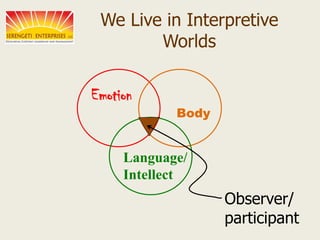
We Live in Interpretive
Worlds
Language/
Intellect
Emotion
Body
Observer/
participant
Refined Definition
 The ability to recognize and understand
your own emotions
 As well as the ability to recognize the
emotions of others
 And estimate the impact of emotions in
the situation
 Combined with the ability to manage
yourself in relationship with others
Activity
Identify Characteristics of High
Emotional Intelligence
Three Core Competencies
 Communication
 90% of PM hours
 “Knowledge Work” Outcomes
 Conflict Management
 Positive versus Destructive Conflict
 Establishing and Maintaining Positive
Working Relationships
 People do work, not roles
Communication
 Two Skills
 Forming and Sending (Encoding)
 Receiving and Interpreting (Decoding)
 Appropriate info at the appropriate time
 Consideration of culture
 Generation
 Gender
 Culture of Origin
 Self-talk
Conflict Resolution
 Recognize Levels of Conflict
 Constructive to Destructive
 Conflict Resolution vs Conflict
Management
 Personal Conflict Style and Preference
 Establish and Maintain Boundaries
 The Power of a Positive No – William Ury
 Negotiation Style and Skill
Establishing Positive
Relationships
 Cultivating Working Relationships
 Choice
 Grow Individual and Team Capacity
 Assess Results
 Positive Interactions
 3:1 Ratio
 Strengths-based Approach
 Appreciative Inquiry
Your Next Steps
List three actions you can implement
on your current project
Beyond EI
 Goleman: Social Intelligence, 2007
 Emerging field of social neuroscience
 Headline: Human brains are wired to connect
 Continued exploration from individual
Emotional Intelligence
 Measuring interactions between people
 Non-conscious, non-verbal “WiFi”
Contact Information
Michael R. Van Dyke
SERENGETI ENTERPRISES, LLC
(703) 850-1951 * (540) 554-4533
info@SerengetiEnterprises.net
www.SerengetiEnterprises.net
Blog: Everyday Leadership and Management
http://teambuilderybu.wordpress.com

Michael R. Van Dyke: Applying Emotional Intelligence

  • 1.
    Applying Emotional Intelligence: TheMore Effective Project Manager Michael R. Van Dyke, PMP SERENGETI ENTERPRISES, LLC (703) 850-1951 * (540) 554-4533 info@SerengetiEnterprises.net
  • 2.
    Objectives  Examine EmotionalIntelligence (EI) Frameworks  Explore the benefits of high EI  Identify the characteristics of high EI  Examine three core competencies that support high EI  Develop strategies to encourage high EI
  • 3.
    Foundation  The focusof this presentation is YOU  Role Model for team  Demonstrate individual mastery  Follow-up with Team and Stakeholders  Coaching others  Provide training opportunities  Make EI part of ongoing team conversation
  • 4.
    A Working Definition The ability to recognize your own emotions  Awareness  Combined with the ability to manage your behavior in relationship to others  Discipline
  • 5.
    Benefits of HighEI  Being wise in relationships encourages the best performance people have to offer  Enhances communication quality  Reduces conflict – frequency and intensity  Eases “difficult” conversations  Moves PM from reactive tactical manager to proactive strategic leader
  • 6.
    What is Emotional Intelligence(EI)?  IQ versus EQ  Theory of Multiple Intelligences  EQ related to EI  Many voices:  John Meyer, Peter Salovey  Daniel Goleman 1995, 2000  Travis Bradberry and Jean Greaves  Anthony Mersino
  • 7.
    EI Model Common Components Personal Competencies  Self-awareness  Self-regulation  Social Competencies  Social Awareness (empathy)  Relationship Management
  • 8.
    We Live inInterpretive Worlds Language/ Intellect Emotion Body Observer/ participant
  • 9.
    Refined Definition  Theability to recognize and understand your own emotions  As well as the ability to recognize the emotions of others  And estimate the impact of emotions in the situation  Combined with the ability to manage yourself in relationship with others
  • 10.
    Activity Identify Characteristics ofHigh Emotional Intelligence
  • 11.
    Three Core Competencies Communication  90% of PM hours  “Knowledge Work” Outcomes  Conflict Management  Positive versus Destructive Conflict  Establishing and Maintaining Positive Working Relationships  People do work, not roles
  • 12.
    Communication  Two Skills Forming and Sending (Encoding)  Receiving and Interpreting (Decoding)  Appropriate info at the appropriate time  Consideration of culture  Generation  Gender  Culture of Origin  Self-talk
  • 13.
    Conflict Resolution  RecognizeLevels of Conflict  Constructive to Destructive  Conflict Resolution vs Conflict Management  Personal Conflict Style and Preference  Establish and Maintain Boundaries  The Power of a Positive No – William Ury  Negotiation Style and Skill
  • 14.
    Establishing Positive Relationships  CultivatingWorking Relationships  Choice  Grow Individual and Team Capacity  Assess Results  Positive Interactions  3:1 Ratio  Strengths-based Approach  Appreciative Inquiry
  • 15.
    Your Next Steps Listthree actions you can implement on your current project
  • 16.
    Beyond EI  Goleman:Social Intelligence, 2007  Emerging field of social neuroscience  Headline: Human brains are wired to connect  Continued exploration from individual Emotional Intelligence  Measuring interactions between people  Non-conscious, non-verbal “WiFi”
  • 17.
    Contact Information Michael R.Van Dyke SERENGETI ENTERPRISES, LLC (703) 850-1951 * (540) 554-4533 info@SerengetiEnterprises.net www.SerengetiEnterprises.net Blog: Everyday Leadership and Management http://teambuilderybu.wordpress.com