1
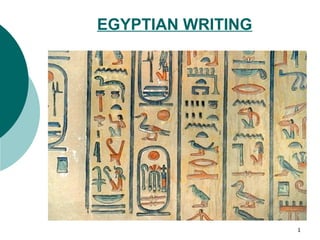
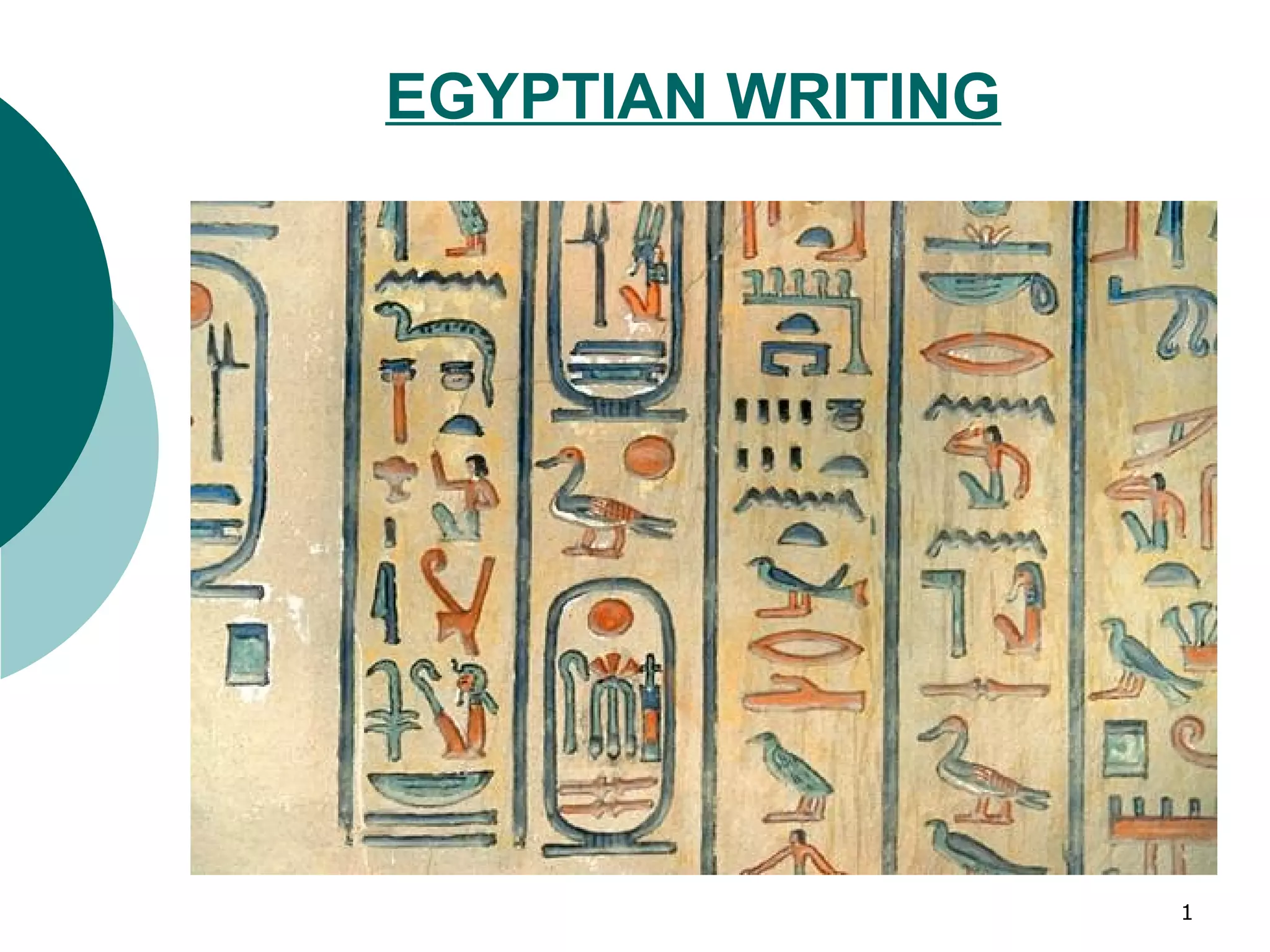
EGYPTIAN WRITING
2
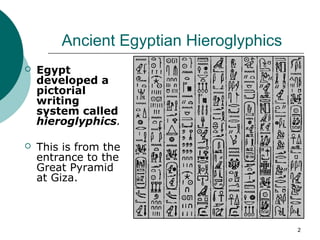
Ancient Egyptian Hieroglyphics
 Egypt
developed a
pictorial
writing
system called
hieroglyphics.
 This is from the
entrance to the
Great Pyramid
at Giza.
3
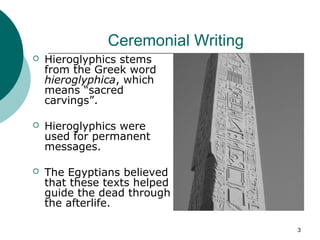
Ceremonial Writing
 Hieroglyphics stems
from the Greek word
hieroglyphica, which
means “sacred
carvings”.
 Hieroglyphics were
used for permanent
messages.
 The Egyptians believed
that these texts helped
guide the dead through
the afterlife.
4
Ceremonial Writing
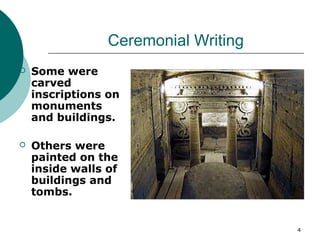
 Some were
carved
inscriptions on
monuments
and buildings.
 Others were
painted on the
inside walls of
buildings and
tombs.
5
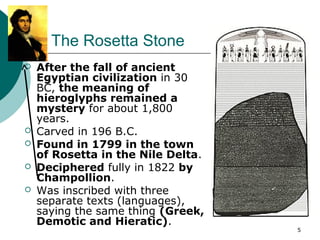
The Rosetta Stone
 After the fall of ancient
Egyptian civilization in 30
BC, the meaning of
hieroglyphs remained a
mystery for about 1,800
years.
 Carved in 196 B.C.
 Found in 1799 in the town
of Rosetta in the Nile Delta.
 Deciphered fully in 1822 by
Champollion.
 Was inscribed with three
separate texts (languages),
saying the same thing (Greek,
Demotic and Hieratic).
6
The Rosetta Stone
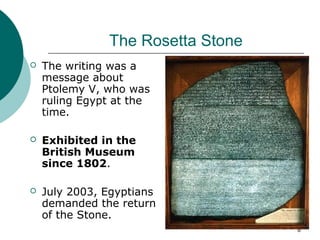
 The writing was a
message about
Ptolemy V, who was
ruling Egypt at the
time.
 Exhibited in the
British Museum
since 1802.
 July 2003, Egyptians
demanded the return
of the Stone.
7
Hieroglyphic writing
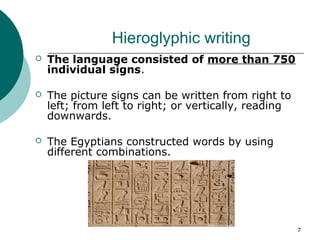
 The language consisted of more than 750
individual signs.
 The picture signs can be written from right to
left; from left to right; or vertically, reading
downwards.
 The Egyptians constructed words by using
different combinations.
8
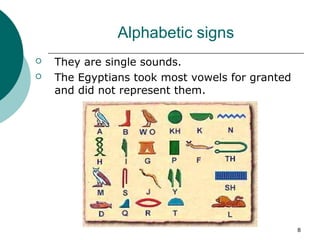
Alphabetic signs
 They are single sounds.
 The Egyptians took most vowels for granted
and did not represent them.
9
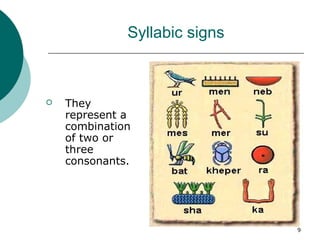
Syllabic signs
 They
represent a
combination
of two or
three
consonants.
10
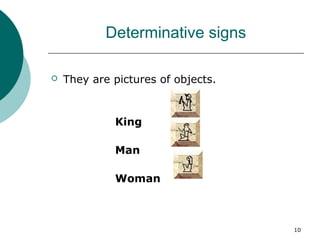
Determinative signs
 They are pictures of objects.
King
Man
Woman
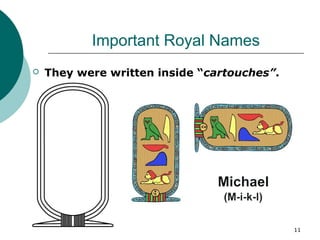
Important Royal Names
11
 They were written inside “cartouches”.
12
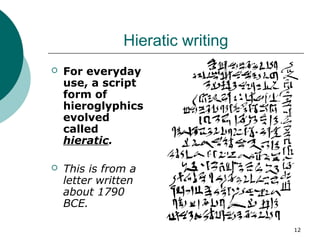
Hieratic writing
 For everyday
use, a script
form of
hieroglyphics
evolved
called
hieratic.
 This is from a
letter written
about 1790
BCE.
13
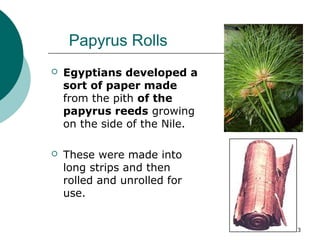
Papyrus Rolls
 Egyptians developed a
sort of paper made
from the pith of the
papyrus reeds growing
on the side of the Nile.
 These were made into
long strips and then
rolled and unrolled for
use.
14
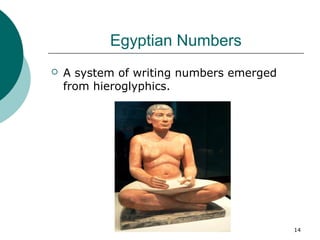
Egyptian Numbers
 A system of writing numbers emerged
from hieroglyphics.
15
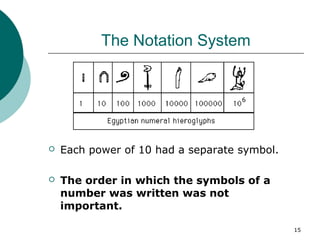
The Notation System
 Each power of 10 had a separate symbol.
 The order in which the symbols of a
number was written was not
important.

Egyptian writing

  • 1.
  • 2.
    2 Ancient Egyptian Hieroglyphics Egypt developed a pictorial writing system called hieroglyphics.  This is from the entrance to the Great Pyramid at Giza.
  • 3.
    3 Ceremonial Writing  Hieroglyphicsstems from the Greek word hieroglyphica, which means “sacred carvings”.  Hieroglyphics were used for permanent messages.  The Egyptians believed that these texts helped guide the dead through the afterlife.
  • 4.
    4 Ceremonial Writing  Somewere carved inscriptions on monuments and buildings.  Others were painted on the inside walls of buildings and tombs.
  • 5.
    5 The Rosetta Stone After the fall of ancient Egyptian civilization in 30 BC, the meaning of hieroglyphs remained a mystery for about 1,800 years.  Carved in 196 B.C.  Found in 1799 in the town of Rosetta in the Nile Delta.  Deciphered fully in 1822 by Champollion.  Was inscribed with three separate texts (languages), saying the same thing (Greek, Demotic and Hieratic).
  • 6.
    6 The Rosetta Stone The writing was a message about Ptolemy V, who was ruling Egypt at the time.  Exhibited in the British Museum since 1802.  July 2003, Egyptians demanded the return of the Stone.
  • 7.
    7 Hieroglyphic writing  Thelanguage consisted of more than 750 individual signs.  The picture signs can be written from right to left; from left to right; or vertically, reading downwards.  The Egyptians constructed words by using different combinations.
  • 8.
    8 Alphabetic signs  Theyare single sounds.  The Egyptians took most vowels for granted and did not represent them.
  • 9.
    9 Syllabic signs  They representa combination of two or three consonants.
  • 10.
    10 Determinative signs  Theyare pictures of objects. King Man Woman
  • 11.
    Important Royal Names 11 They were written inside “cartouches”.
  • 12.
    12 Hieratic writing  Foreveryday use, a script form of hieroglyphics evolved called hieratic.  This is from a letter written about 1790 BCE.
  • 13.
    13 Papyrus Rolls  Egyptiansdeveloped a sort of paper made from the pith of the papyrus reeds growing on the side of the Nile.  These were made into long strips and then rolled and unrolled for use.
  • 14.
    14 Egyptian Numbers  Asystem of writing numbers emerged from hieroglyphics.
  • 15.
    15 The Notation System Each power of 10 had a separate symbol.  The order in which the symbols of a number was written was not important.