Writing By Jocelyne De Jesus Ancient Egypt
Table of contents Heiroglyphics Papyrus Scribes Where writing was used: Scribe School In the Fields In the Tombs In the Army In the Government In the Temples Rosetta Stone Eye of Horus Bibliography
Heiroglyphics form of writing used by the ancient Egyptians.  1 word is called 'hieroglyphs‘ Its was how the ancient egyptians got to record they’re information. signs are divided into three major categories, logograms, signs that write out morphemes; phonograms, signs that represent one or more sounds; and determinatives, signs that denote neither morpheme or sound but help with the meaning of a group of signs that are after them. this writing uses more than 2,000 hieroglyphic characters and our alpahbet uses only 26 letter-characters
Papyrus reed that grew in ancient Egypt . was cut into strips, pressed together, pounded, and dried to make sheets which were written on. Also known as paper. First used in ancient egypt since the first dynasty Made into reed pencils or into papyrus paper
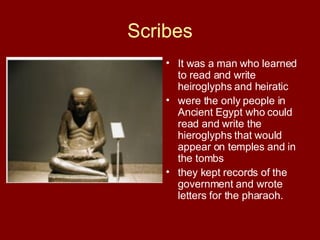
Scribes It was a man who learned to read and write heiroglyphs and heiratic were the only people in Ancient Egypt who could read and write the hieroglyphs that would appear on temples and in the tombs  they kept records of the government and wrote letters for the pharaoh.
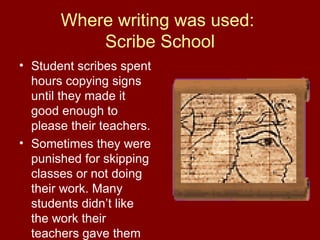
Where writing was used:  Scribe School Student scribes spent hours copying signs until they made it good enough to please their teachers.  Sometimes they were punished for skipping classes or not doing their work. Many students didn’t like the work their teachers gave them
In the fields the first jobs that scribes might have after they were done school was working in the fields counting crops or animals.
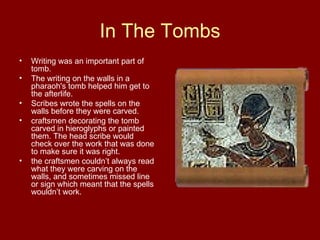
In The Tombs Writing was an important part of tomb. The writing on the walls in a pharaoh's tomb helped him get to the afterlife.  Scribes wrote the spells on the walls before they were carved. craftsmen decorating the tomb carved in hieroglyphs or painted them. The head scribe would check over the work that was done to make sure it was right.  the craftsmen couldn’t always read what they were carving on the walls, and sometimes missed line or sign which meant that the spells wouldn’t work.
In the Army When they went to battle against their enemies they used writing to communicate with each other.  Military leaders were first trained as a scribe, so they could read the messages that were sent to them.
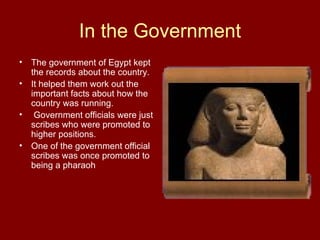
In the Government The government of Egypt kept the records about the country.  It helped them work out the important facts about how the country was running. Government officials were just scribes who were promoted to higher positions.  One of the government official scribes was once promoted to being a pharaoh
In the temples Temples were the houses of gods and goddesses.  walls decorated with writing and pictures that showed the pharaoh's  respect  for gods and goddesses.  The priests that worked in the temples were scribes The priests were the people who performed the sacred  rituals  that were supposed to keep the gods and goddesses happy
Bibliography http://www.ancientegypt.co.uk/writing/home.html http://www.ancientscripts.com/egyptian.html http://www.greatscott.com/hiero/hiero_over.html

Ancient Egypt Writing

  • 1.
    Writing By JocelyneDe Jesus Ancient Egypt
  • 2.
    Table of contentsHeiroglyphics Papyrus Scribes Where writing was used: Scribe School In the Fields In the Tombs In the Army In the Government In the Temples Rosetta Stone Eye of Horus Bibliography
  • 3.
    Heiroglyphics form ofwriting used by the ancient Egyptians. 1 word is called 'hieroglyphs‘ Its was how the ancient egyptians got to record they’re information. signs are divided into three major categories, logograms, signs that write out morphemes; phonograms, signs that represent one or more sounds; and determinatives, signs that denote neither morpheme or sound but help with the meaning of a group of signs that are after them. this writing uses more than 2,000 hieroglyphic characters and our alpahbet uses only 26 letter-characters
  • 4.
    Papyrus reed thatgrew in ancient Egypt . was cut into strips, pressed together, pounded, and dried to make sheets which were written on. Also known as paper. First used in ancient egypt since the first dynasty Made into reed pencils or into papyrus paper
  • 5.
    Scribes It wasa man who learned to read and write heiroglyphs and heiratic were the only people in Ancient Egypt who could read and write the hieroglyphs that would appear on temples and in the tombs they kept records of the government and wrote letters for the pharaoh.
  • 6.
    Where writing wasused: Scribe School Student scribes spent hours copying signs until they made it good enough to please their teachers. Sometimes they were punished for skipping classes or not doing their work. Many students didn’t like the work their teachers gave them
  • 7.
    In the fieldsthe first jobs that scribes might have after they were done school was working in the fields counting crops or animals.
  • 8.
    In The TombsWriting was an important part of tomb. The writing on the walls in a pharaoh's tomb helped him get to the afterlife. Scribes wrote the spells on the walls before they were carved. craftsmen decorating the tomb carved in hieroglyphs or painted them. The head scribe would check over the work that was done to make sure it was right. the craftsmen couldn’t always read what they were carving on the walls, and sometimes missed line or sign which meant that the spells wouldn’t work.
  • 9.
    In the ArmyWhen they went to battle against their enemies they used writing to communicate with each other. Military leaders were first trained as a scribe, so they could read the messages that were sent to them.
  • 10.
    In the GovernmentThe government of Egypt kept the records about the country. It helped them work out the important facts about how the country was running. Government officials were just scribes who were promoted to higher positions. One of the government official scribes was once promoted to being a pharaoh
  • 11.
    In the templesTemples were the houses of gods and goddesses. walls decorated with writing and pictures that showed the pharaoh's respect for gods and goddesses. The priests that worked in the temples were scribes The priests were the people who performed the sacred rituals that were supposed to keep the gods and goddesses happy
  • 12.