1. Introduction
2. Pillars of e-governance
3. E-governance models
4. Goals and Benefit
5. E-governance in India
6. Limitations
7. Challenges
8. Suggestions
9. Conclusion
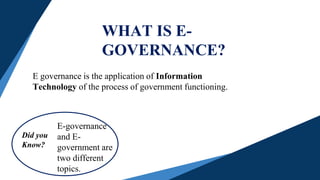
E governance is the application of Information
Technology of the process of government functioning.
WHAT IS E-
GOVERNANCE?
E-governance
and E-
government are
two different
topics.
Did you
Know?
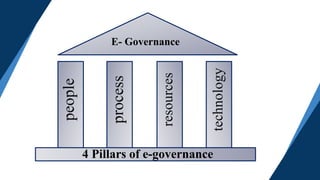
E- Governance
people
process
resources
technology
4 Pillars of e-governance
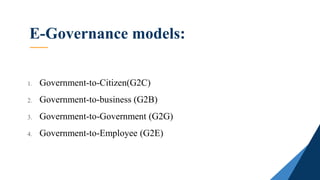
E-Governance models:
1. Government-to-Citizen(G2C)
2. Government-to-business (G2B)
3. Government-to-Government (G2G)
4. Government-to-Employee (G2E)
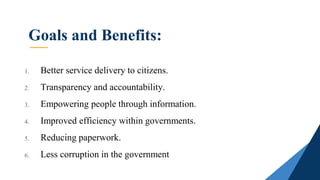
Goals and Benefits:
1. Better service delivery to citizens.
2. Transparency and accountability.
3. Empowering people through information.
4. Improved efficiency within governments.
5. Reducing paperwork.
6. Less corruption in the government
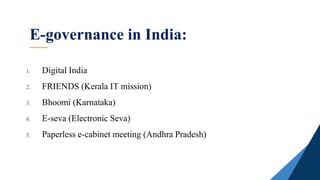
1. Digital India
2. FRIENDS (Kerala IT mission)
3. Bhoomi (Karnataka)
4. E-seva (Electronic Seva)
5. Paperless e-cabinet meeting (Andhra Pradesh)
E-governance in India:
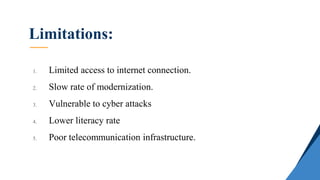
Limitations:
1. Limited access to internet connection.
2. Slow rate of modernization.
3. Vulnerable to cyber attacks
4. Lower literacy rate
5. Poor telecommunication infrastructure.
1. Manipulation and organization of huge amount of data.
2. Data security.
3. Funding
4. Standardization
5. To notify people about the service
Challenges:
Suggestions:
1. Technology improvement.
2. Training of government officials.
3. Sensitize people about e-governance.
4. Smooth transactions of processes.
5. Internet governance to regulate internet and safe usage is
required.
6. Increase internet penetration with technology, increased
speed, decrease rates.
Conclusion:
1. e-governance is a style where the work of government is
done digitally.
2. Work becomes smooth, fast and citizens are aware of
procedures.
3. There is always a risk of cyber attacks along with low
internet connectivity and low sensitivity about digital
procedures.
4. Digital locker, e-challan, e-wallet, are a few examples of
successful recent initiatives.
1. https://unacademy.com/lesson/goals-and-pillars-of-e-governance/DDTN0IUS
2. https://byjus.com/free-ias-prep/significance-of-e-governance
3. https://www.civilsdaily.com/challenges-to-e-governance-and-requirements-
for-successful-implementation
4. https://www.civilsdaily.com/challenges-to-e-governance-and-requirements-
for-successful-implementation
References:

E-Governance

  • 2.
    1. Introduction 2. Pillarsof e-governance 3. E-governance models 4. Goals and Benefit 5. E-governance in India 6. Limitations 7. Challenges 8. Suggestions 9. Conclusion
  • 3.
    E governance isthe application of Information Technology of the process of government functioning. WHAT IS E- GOVERNANCE? E-governance and E- government are two different topics. Did you Know?
  • 4.
  • 5.
    E-Governance models: 1. Government-to-Citizen(G2C) 2.Government-to-business (G2B) 3. Government-to-Government (G2G) 4. Government-to-Employee (G2E)
  • 6.
    Goals and Benefits: 1.Better service delivery to citizens. 2. Transparency and accountability. 3. Empowering people through information. 4. Improved efficiency within governments. 5. Reducing paperwork. 6. Less corruption in the government
  • 7.
    1. Digital India 2.FRIENDS (Kerala IT mission) 3. Bhoomi (Karnataka) 4. E-seva (Electronic Seva) 5. Paperless e-cabinet meeting (Andhra Pradesh) E-governance in India:
  • 8.
    Limitations: 1. Limited accessto internet connection. 2. Slow rate of modernization. 3. Vulnerable to cyber attacks 4. Lower literacy rate 5. Poor telecommunication infrastructure.
  • 9.
    1. Manipulation andorganization of huge amount of data. 2. Data security. 3. Funding 4. Standardization 5. To notify people about the service Challenges:
  • 10.
    Suggestions: 1. Technology improvement. 2.Training of government officials. 3. Sensitize people about e-governance. 4. Smooth transactions of processes. 5. Internet governance to regulate internet and safe usage is required. 6. Increase internet penetration with technology, increased speed, decrease rates.
  • 11.
    Conclusion: 1. e-governance isa style where the work of government is done digitally. 2. Work becomes smooth, fast and citizens are aware of procedures. 3. There is always a risk of cyber attacks along with low internet connectivity and low sensitivity about digital procedures. 4. Digital locker, e-challan, e-wallet, are a few examples of successful recent initiatives.
  • 12.
    1. https://unacademy.com/lesson/goals-and-pillars-of-e-governance/DDTN0IUS 2. https://byjus.com/free-ias-prep/significance-of-e-governance 3.https://www.civilsdaily.com/challenges-to-e-governance-and-requirements- for-successful-implementation 4. https://www.civilsdaily.com/challenges-to-e-governance-and-requirements- for-successful-implementation References: