Efficient Energy Management System for
Domestic Load using Fuzzy Logic
Control
Group members
Talha Mujahid
Naveed Amin
Awais Azeem
Muneeb Zahid
Supervisor: Engr. Waheed Aftab Khan
1
Project Outline
1. Introduction
2. Needs and problems
3. Existing Technique
4. Proposed Block Diagram
5. Deliverables & Objectives
6. Project Work Flow
7. References
2
Introduction
 Micro Grid collection of several micro sources
 Renewable energy resources widely available
 Energy management system controls through a set of algorithms
3
Introduction
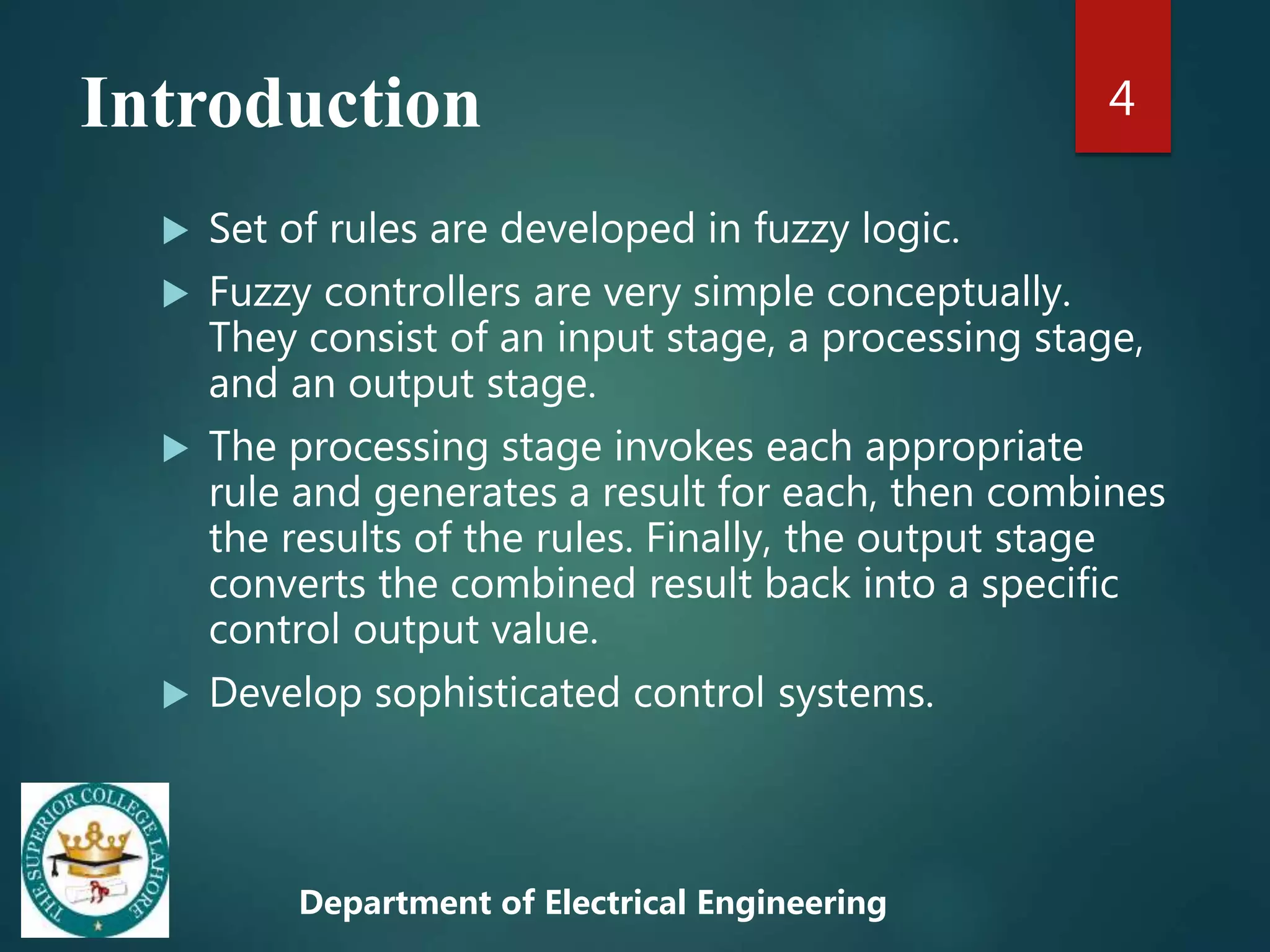
 Set of rules are developed in fuzzy logic.
 Fuzzy controllers are very simple conceptually.
They consist of an input stage, a processing stage,
and an output stage.
 The processing stage invokes each appropriate
rule and generates a result for each, then combines
the results of the rules. Finally, the output stage
converts the combined result back into a specific
control output value.
 Develop sophisticated control systems.
4
Department of Electrical Engineering
Introduction
5
Needs and Problems
• Electricity shortfall
• Excessive amount of Inrush current/transient power.
• Expensive and short lifetime of batteries
• High tariff rates
• National grid uses fossil fuels that are decreasing day
by day
• MG generation is free of cost
Introduction
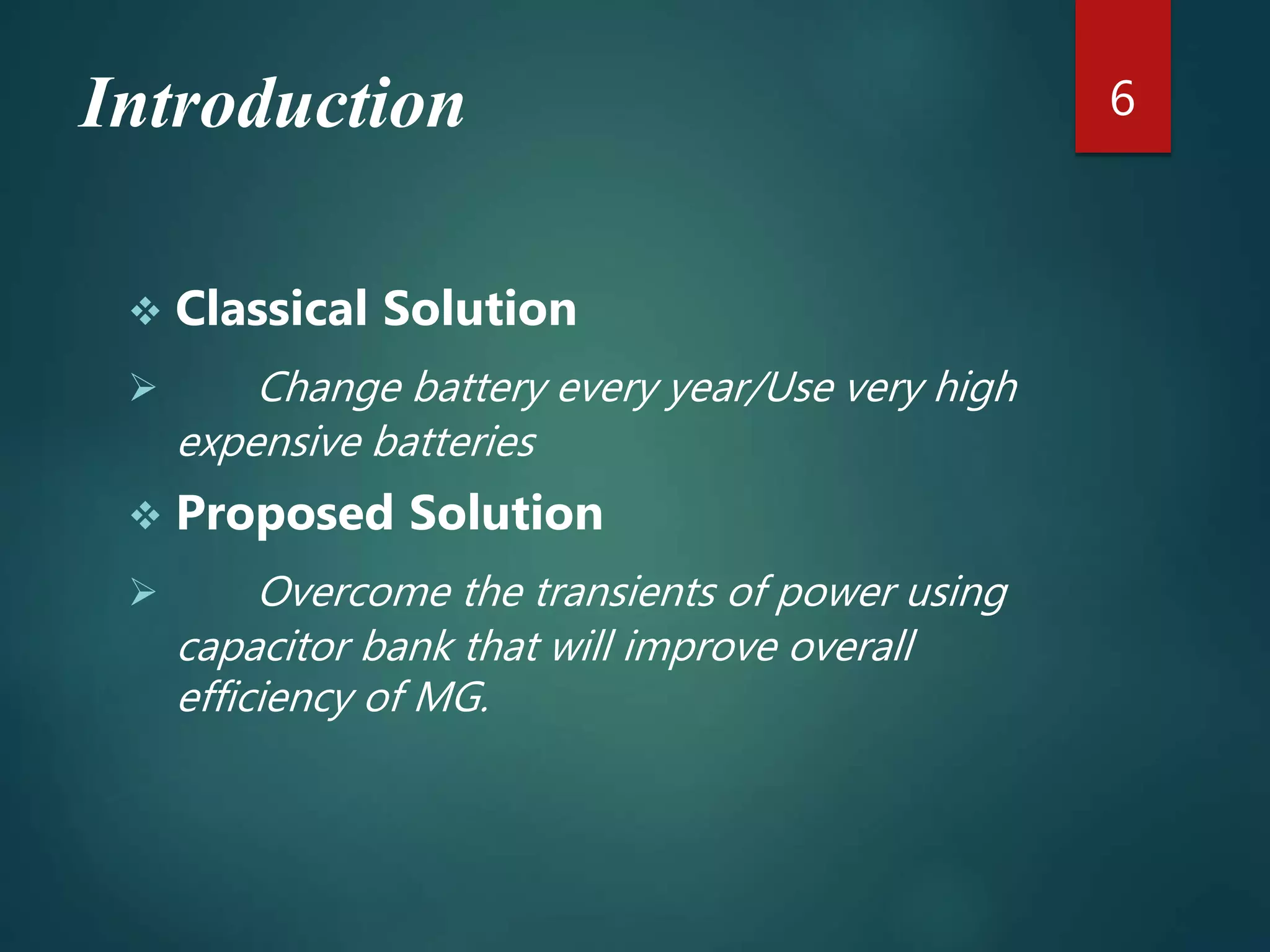
 Classical Solution
 Change battery every year/Use very high
expensive batteries
 Proposed Solution
 Overcome the transients of power using
capacitor bank that will improve overall
efficiency of MG.
6
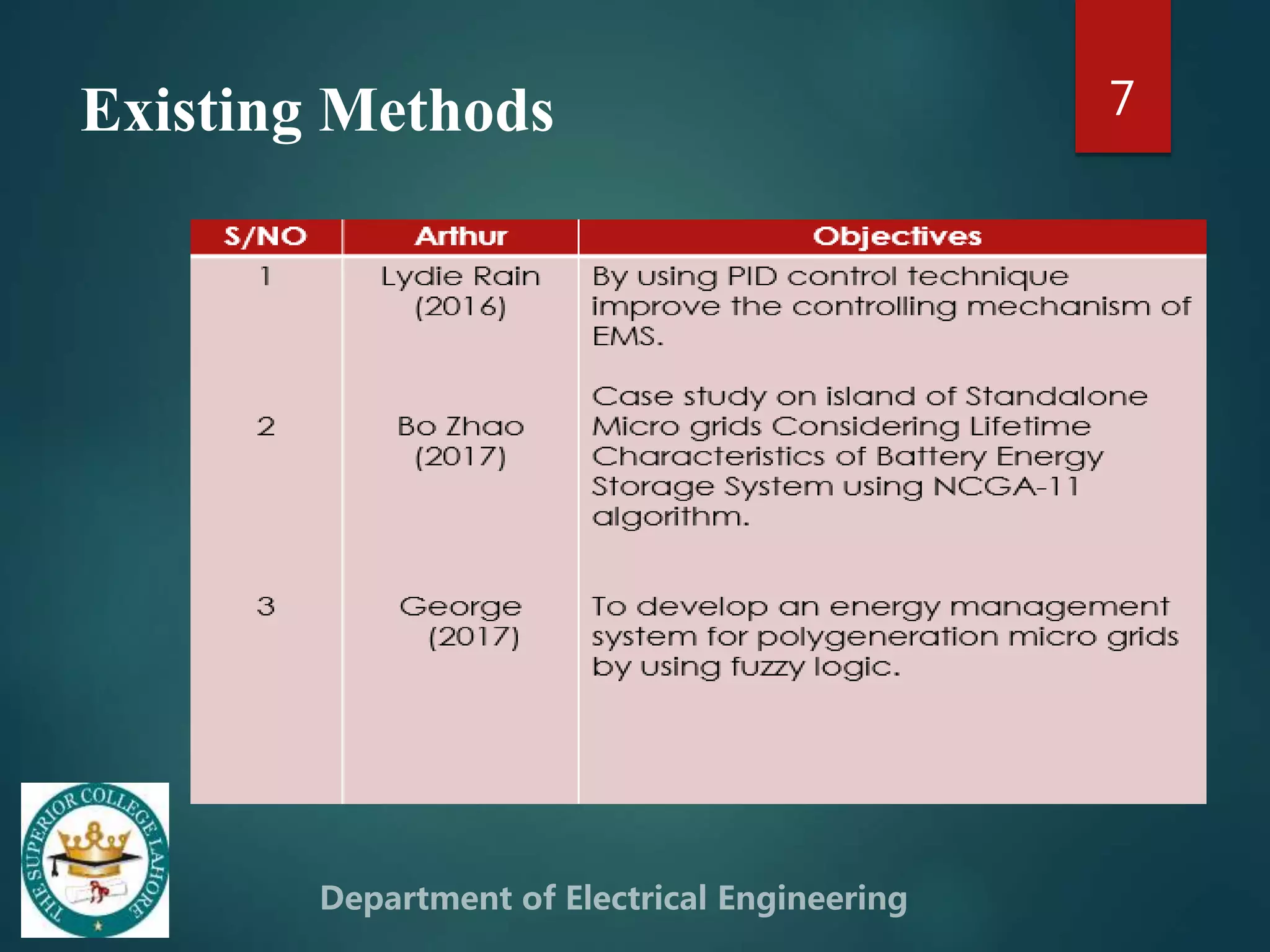
Existing Methods 7
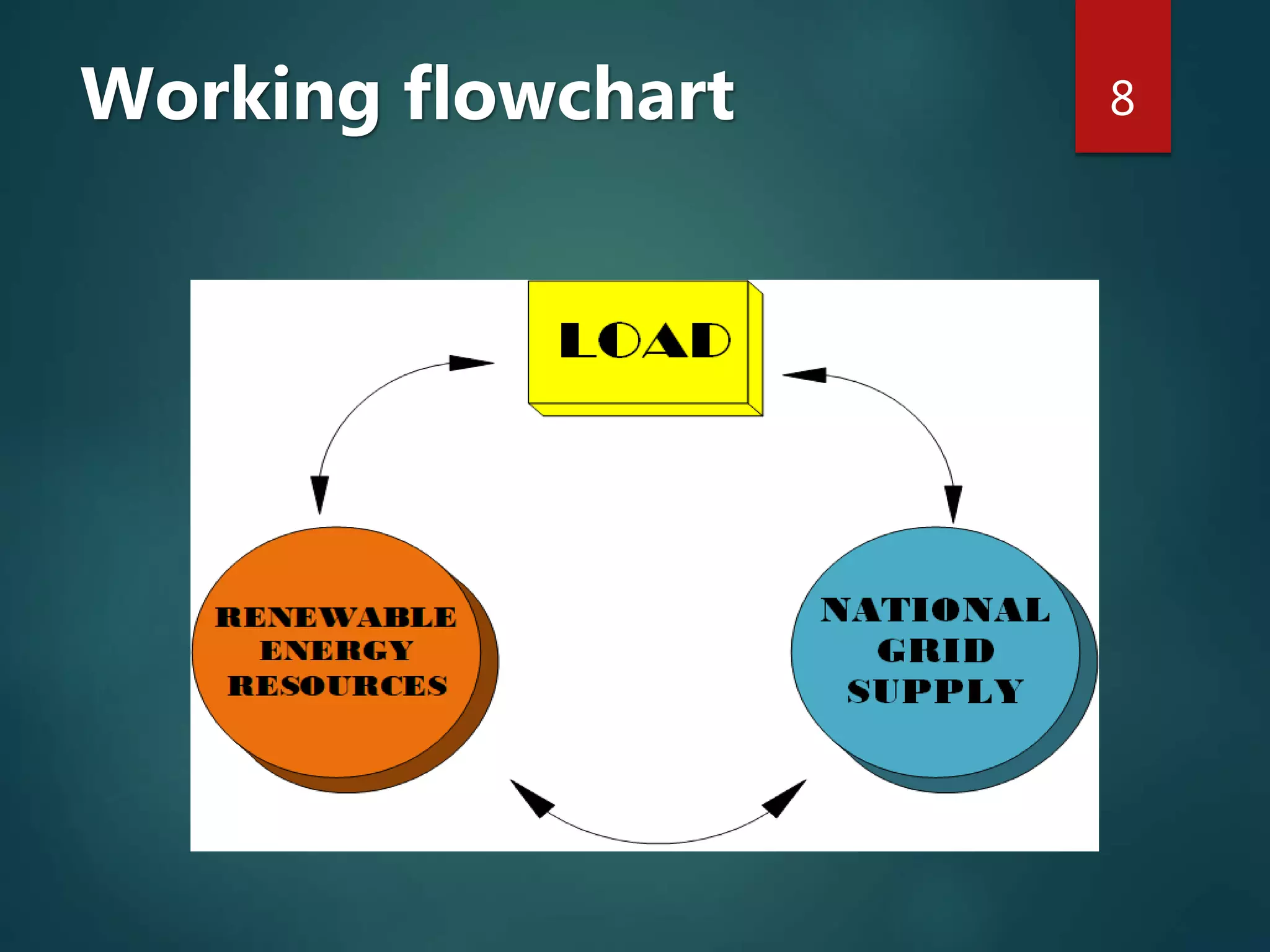
Working flowchart 8
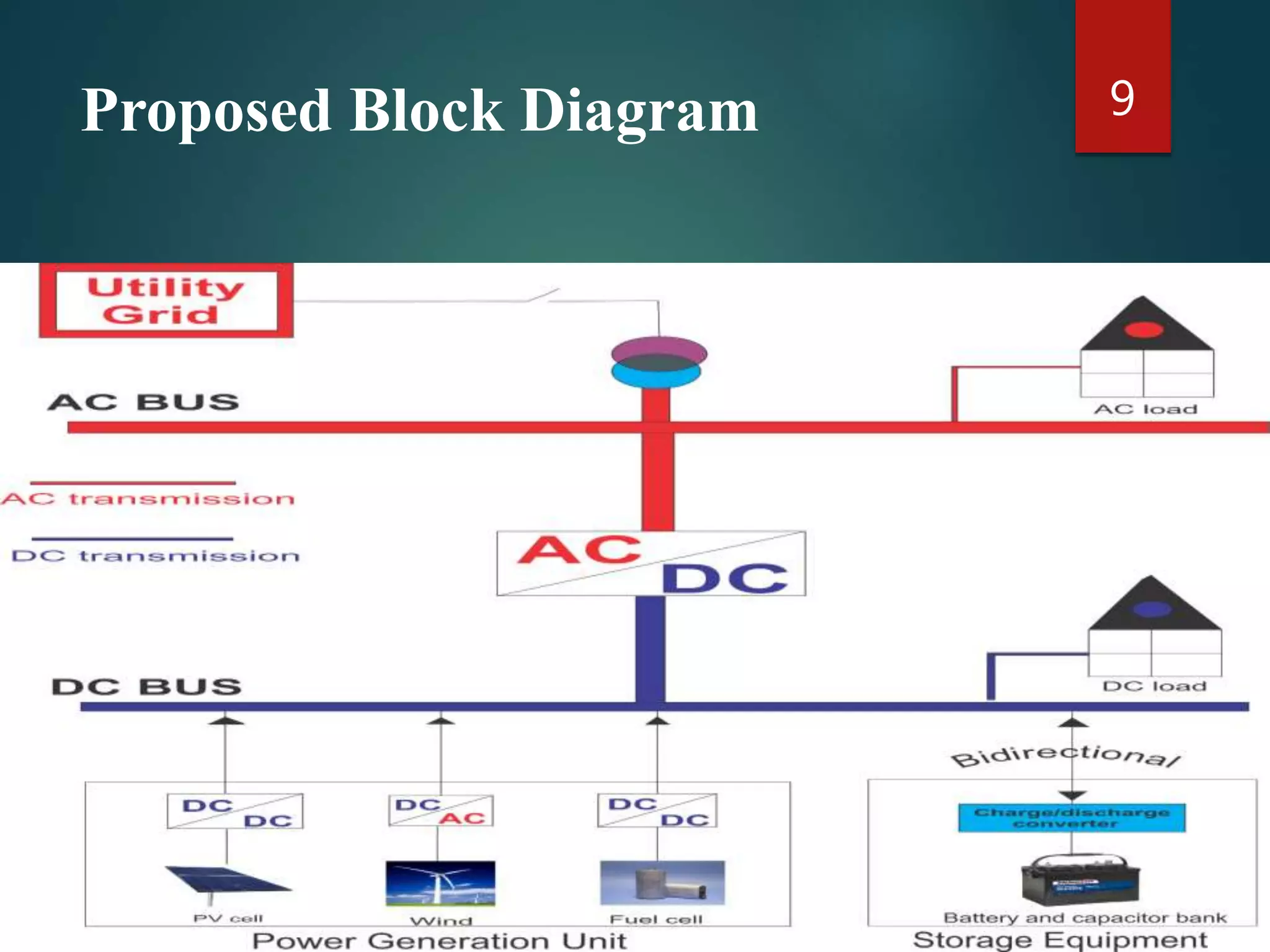
Proposed Block Diagram 9
Deliverables and Objectives
 To develop a system which will improve like
 Improve battery lifetime
 Reduce electricity bills
 Economical beneficial
 Reliable system
10
Workflow
Phase 1
• Proposal /Concept
Phase 2
• Detail study / Implementation
Phase 3
• Simulation(100%)
Phase 4
• Hardware(100%)
11
References
 R.H. Lasseter, "Micro Grids", IEEE Power Engineering Society Winter Meeting,
Volume 1, pp. 305-308, (2002)
 J. LA gorse, M. G. Samos, and A.Miraoui, "A Multivalent Fuzzy Logic-Based
Energy Management of Hybrid Systems", IEEE Trans Industry Applications, Vol.
45, No. 6,pp:2123-2129 Dec 2009
 S. D. J. McArthur, E. M. Davidson, V. M. Patterson, A. L. Dimes, D. Hatziargyriou,
and F. Ponca, "Multi-agent systems for power engineering applications-Part 1:
Concepts, approaches, and technical challenges," IEEE Trans. Power Sees., vol.
22, no. 4, pp. 1743-1752, Nov. 2007.
12
References 13

Efficient energy management system for domestic load using fuzzy logic control

  • 1.
    Efficient Energy ManagementSystem for Domestic Load using Fuzzy Logic Control Group members Talha Mujahid Naveed Amin Awais Azeem Muneeb Zahid Supervisor: Engr. Waheed Aftab Khan 1
  • 2.
    Project Outline 1. Introduction 2.Needs and problems 3. Existing Technique 4. Proposed Block Diagram 5. Deliverables & Objectives 6. Project Work Flow 7. References 2
  • 3.
    Introduction  Micro Gridcollection of several micro sources  Renewable energy resources widely available  Energy management system controls through a set of algorithms 3
  • 4.
    Introduction  Set ofrules are developed in fuzzy logic.  Fuzzy controllers are very simple conceptually. They consist of an input stage, a processing stage, and an output stage.  The processing stage invokes each appropriate rule and generates a result for each, then combines the results of the rules. Finally, the output stage converts the combined result back into a specific control output value.  Develop sophisticated control systems. 4 Department of Electrical Engineering
  • 5.
    Introduction 5 Needs and Problems •Electricity shortfall • Excessive amount of Inrush current/transient power. • Expensive and short lifetime of batteries • High tariff rates • National grid uses fossil fuels that are decreasing day by day • MG generation is free of cost
  • 6.
    Introduction  Classical Solution Change battery every year/Use very high expensive batteries  Proposed Solution  Overcome the transients of power using capacitor bank that will improve overall efficiency of MG. 6
  • 7.
  • 8.
  • 9.
  • 10.
    Deliverables and Objectives To develop a system which will improve like  Improve battery lifetime  Reduce electricity bills  Economical beneficial  Reliable system 10
  • 11.
    Workflow Phase 1 • Proposal/Concept Phase 2 • Detail study / Implementation Phase 3 • Simulation(100%) Phase 4 • Hardware(100%) 11
  • 12.
    References  R.H. Lasseter,"Micro Grids", IEEE Power Engineering Society Winter Meeting, Volume 1, pp. 305-308, (2002)  J. LA gorse, M. G. Samos, and A.Miraoui, "A Multivalent Fuzzy Logic-Based Energy Management of Hybrid Systems", IEEE Trans Industry Applications, Vol. 45, No. 6,pp:2123-2129 Dec 2009  S. D. J. McArthur, E. M. Davidson, V. M. Patterson, A. L. Dimes, D. Hatziargyriou, and F. Ponca, "Multi-agent systems for power engineering applications-Part 1: Concepts, approaches, and technical challenges," IEEE Trans. Power Sees., vol. 22, no. 4, pp. 1743-1752, Nov. 2007. 12
  • 13.