

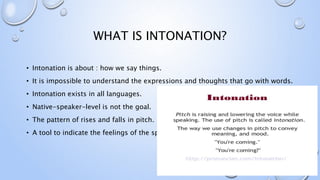
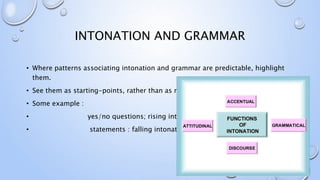


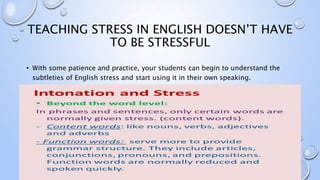
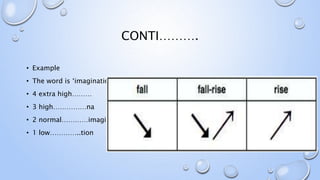
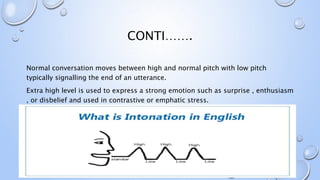
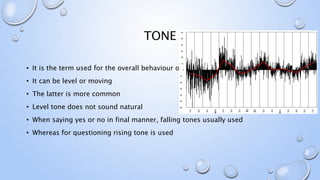

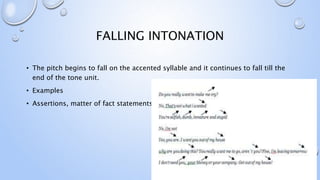

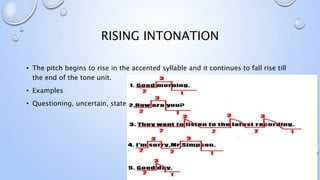

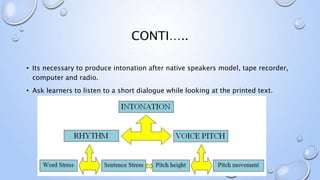

1. Intonation refers to the rises and falls in pitch when speaking and is important for conveying meaning and feelings. 2. Teaching intonation aids communication and prevents misunderstandings that can occur from using the wrong intonation. 3. Examples of intonation patterns include rising intonation for yes/no questions and falling intonation for statements. Teachers should highlight predictable intonation patterns associated with grammar.


