Effective Public Speaking
Speech is power,
Speech is to persuade, to convert, to compel.
- Ralph Waldo Emerson
What you will learn
Aspects of Public Speaking


Types, Reasons, Why

Parts of the Speech
Delivery of the Speech
Aspects of Public Speaking
Types of public speaking
Purpose of your speech
Why we listen to speakers
Who is your audience
Preparation for your speech
Types of Public Speaking
Two types of Public Speaking



Extemporaneous – means spur of the moment
Prepared – having time to develop your material
Why are you there? (Purpose)
Part of your assignment
Chance to tell others about what you learned



You have something to share
You know things about your topic that others do not

Chance to show others your presentation
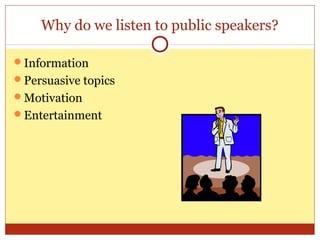
Why do we listen to public speakers?
Information
Persuasive topics
Motivation
Entertainment
Know your audience?
Age – How old is the majority of your audience?
Are there more boys/girls in the audience?
What will your audience be interested in?
How many people will be in your audience?
Will your audience be knowledgeable about your

topic?
How to win the audience?
Keep your discussion
 Interesting





Use examples or stories
Provide interesting facts

To the point



Don’t go on and on and on and on and on
Keep your comments simple but informative
Preparation
Do your homework – Know your topic
Develop your presentation material


Accuracy (content and spelling)

Practice, Practice, Practice







Mom, Dad, brother, sister, mirror, family pet, stuffed
animals, record your speech
Practice where you will do your actual presentation
Accept criticism – no one is perfect/ there is always room for
improvement
Time yourself
Parts of the Speech
Introduction
Body
Conclusion
Introduction of Speech
Get the audiences attention
Introduce yourself
State the purpose
Relate the importance to the audience
Preview the main points that will be covered
The first step
Be Prepared
Take a deep breath
Slow your breathing / pause between sentences
Get the audience engaged


Tell a joke, use a quote, use a poem to begin your speech

Walk around – use your energy
Find your own way to reduce nervousness
Face your fears
Body of the Speech
Conveys the message
Discuss main points
Provide supporting details
Educate/ entertain the audience
Conclusion
Highlight the central theme of your speech
Briefly cover the main points
Provide the audience with a feeling of satisfaction

that you accomplished what you promised
Closing statement
Thank the audience for their attention
Delivery of your Speech
Appearance
Speech and Voice
Body Language
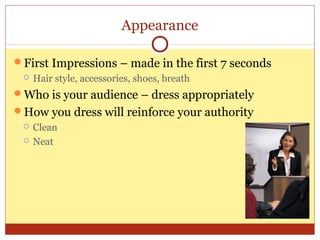
Appearance
First Impressions – made in the first 7 seconds


Hair style, accessories, shoes, breath

Who is your audience – dress appropriately
How you dress will reinforce your authority



Clean
Neat
Speech and Voice
Use variation in


Loudness




Pitch





Low and high pitch
Creates interest

Quality




Helps provide emphasis and attention

Provides emotion and feeling

Rate


Holds the attention of the audience
Body Language
 Posture
 Shows confidence
 Not too rigid – locked knees = chance to meet the floor / Relax
 Facial Expressions
 Smile/ enjoy yourself and your audience will also enjoy themselves
 Be serious when necessary
 Eye Contact
 Helps establish a relationship with your audience
 Makes them feel included
 Too nervous – look directly above their heads
 Look for signals from your audience – do they look confused? bored? Excited?
 Keep head up – Don’t talk to the floor
 Gestures
 Use your head, hands and arms – helps to emphasize ideas and feelings
 Should come naturally
Last minute tips
 Do
 Speak on a topic you have earned the right to talk about
 Speak on a topic that you are interested in – be enthusiastic
 Talk from your heart – not from your mouth
 Be sincere
 Be honest
 Be eager to communicate your information
 Keep it simple
 Make brief notes of what you want to say
 Use pictures or examples to support your opinion
 Know more about your topic than you will use
 Rehearse the points of your speech through normal conversation with friends
 Don’t
 Memorize your speech
 Imitate others, be yourself
 Preach or scold
Conclusion
Aspects of Public Speaking


Types, Purpose, Audience, Preparation

Parts of the Speech


Introduction, Body, Conclusion

Delivery of the Speech


Appearance, Voice, Body Language
Thank You

QUESTIONS ???

Effective public speaking

  • 1.
    Effective Public Speaking Speechis power, Speech is to persuade, to convert, to compel. - Ralph Waldo Emerson
  • 2.
    What you willlearn Aspects of Public Speaking  Types, Reasons, Why Parts of the Speech Delivery of the Speech
  • 3.
    Aspects of PublicSpeaking Types of public speaking Purpose of your speech Why we listen to speakers Who is your audience Preparation for your speech
  • 4.
    Types of PublicSpeaking Two types of Public Speaking   Extemporaneous – means spur of the moment Prepared – having time to develop your material
  • 5.
    Why are youthere? (Purpose) Part of your assignment Chance to tell others about what you learned   You have something to share You know things about your topic that others do not Chance to show others your presentation
  • 6.
    Why do welisten to public speakers? Information Persuasive topics Motivation Entertainment
  • 7.
    Know your audience? Age– How old is the majority of your audience? Are there more boys/girls in the audience? What will your audience be interested in? How many people will be in your audience? Will your audience be knowledgeable about your topic?
  • 8.
    How to winthe audience? Keep your discussion  Interesting    Use examples or stories Provide interesting facts To the point   Don’t go on and on and on and on and on Keep your comments simple but informative
  • 9.
    Preparation Do your homework– Know your topic Develop your presentation material  Accuracy (content and spelling) Practice, Practice, Practice     Mom, Dad, brother, sister, mirror, family pet, stuffed animals, record your speech Practice where you will do your actual presentation Accept criticism – no one is perfect/ there is always room for improvement Time yourself
  • 10.
    Parts of theSpeech Introduction Body Conclusion
  • 11.
    Introduction of Speech Getthe audiences attention Introduce yourself State the purpose Relate the importance to the audience Preview the main points that will be covered
  • 12.
    The first step BePrepared Take a deep breath Slow your breathing / pause between sentences Get the audience engaged  Tell a joke, use a quote, use a poem to begin your speech Walk around – use your energy Find your own way to reduce nervousness Face your fears
  • 13.
    Body of theSpeech Conveys the message Discuss main points Provide supporting details Educate/ entertain the audience
  • 14.
    Conclusion Highlight the centraltheme of your speech Briefly cover the main points Provide the audience with a feeling of satisfaction that you accomplished what you promised Closing statement Thank the audience for their attention
  • 15.
    Delivery of yourSpeech Appearance Speech and Voice Body Language
  • 16.
    Appearance First Impressions –made in the first 7 seconds  Hair style, accessories, shoes, breath Who is your audience – dress appropriately How you dress will reinforce your authority   Clean Neat
  • 17.
    Speech and Voice Usevariation in  Loudness   Pitch    Low and high pitch Creates interest Quality   Helps provide emphasis and attention Provides emotion and feeling Rate  Holds the attention of the audience
  • 18.
    Body Language  Posture Shows confidence  Not too rigid – locked knees = chance to meet the floor / Relax  Facial Expressions  Smile/ enjoy yourself and your audience will also enjoy themselves  Be serious when necessary  Eye Contact  Helps establish a relationship with your audience  Makes them feel included  Too nervous – look directly above their heads  Look for signals from your audience – do they look confused? bored? Excited?  Keep head up – Don’t talk to the floor  Gestures  Use your head, hands and arms – helps to emphasize ideas and feelings  Should come naturally
  • 19.
    Last minute tips Do  Speak on a topic you have earned the right to talk about  Speak on a topic that you are interested in – be enthusiastic  Talk from your heart – not from your mouth  Be sincere  Be honest  Be eager to communicate your information  Keep it simple  Make brief notes of what you want to say  Use pictures or examples to support your opinion  Know more about your topic than you will use  Rehearse the points of your speech through normal conversation with friends  Don’t  Memorize your speech  Imitate others, be yourself  Preach or scold
  • 20.
    Conclusion Aspects of PublicSpeaking  Types, Purpose, Audience, Preparation Parts of the Speech  Introduction, Body, Conclusion Delivery of the Speech  Appearance, Voice, Body Language
  • 21.