





Getting to know you
When ‘NO’ seems like it’s always the answer Connect with Benjamin McCall Twitter: @BenjaminMcCall Website:  ReThinkHR.org
Question What is your expectation for this time we have together?
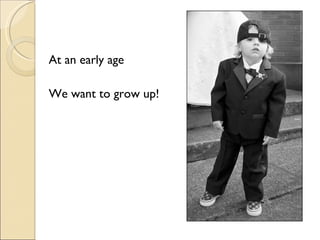
At an early age We want to grow up!
When we reach maturity We do not want to grow up!
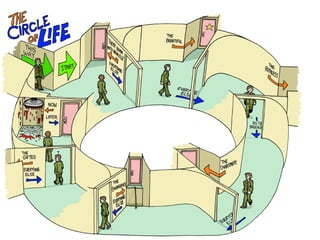
The Circle of Life
Lemonade the Documentary?
The Process Why ‘NO’ seems like it’s always the answer Communication Styles, and Self-Assessment
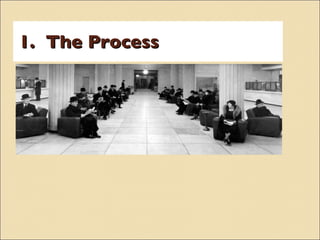
1.  The Process
How you feel about HR…
How HR feels about you…
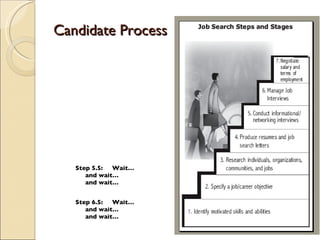
Candidate Process Step 5.5:  Wait…  and wait…  and wait… Step 6.5:  Wait…  and wait…  and wait…
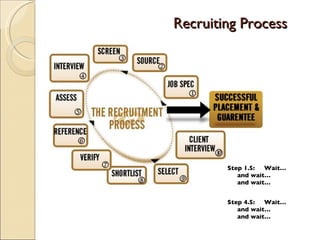
Recruiting Process Step 1.5:  Wait…  and wait…  and wait… Step 4.5:  Wait…  and wait…  and wait…
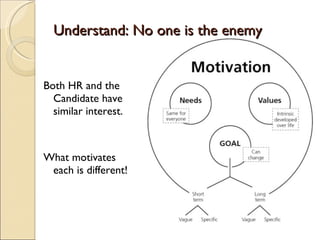
Both HR and the Candidate have similar interest. What motivates each is different! Understand: No one is the enemy
1I.  Why does it seem ‘NO’ is always the answer
Question What is your situation? How often and at what step in the process do you hear a ‘NO’? Why is this?
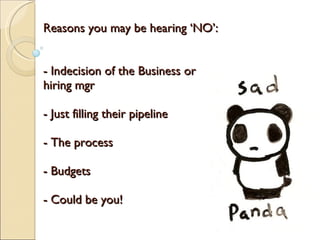
Reasons you may be hearing ‘NO’: - Indecision of the Business or hiring mgr - Just filling their pipeline - The process - Budgets - Could be you!
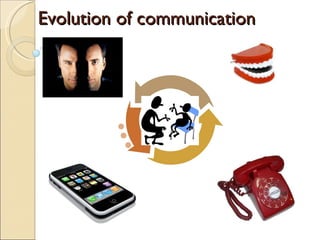
Evolution of communication
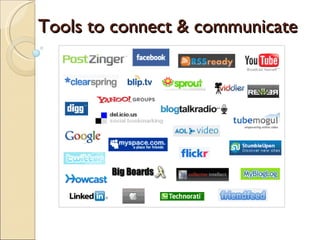
Tools to connect & communicate
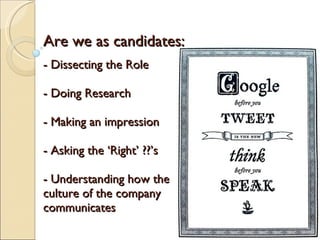
- Dissecting the Role - Doing Research - Making an impression - Asking the ‘Right’ ??’s - Understanding how the culture of the company communicates Are we as candidates:
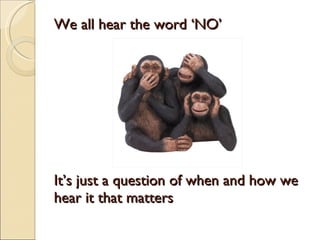
We all hear the word ‘NO’ It’s just a question of when and how we hear it that matters
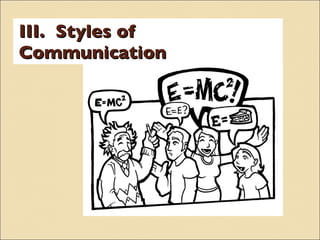
III.  Styles of Communication
Your communication style says a lot about you and it matters in the way you manage other’s styles Successful Communication
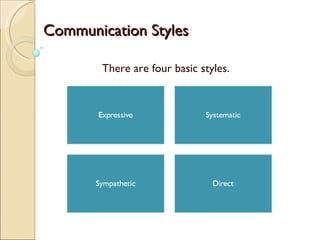
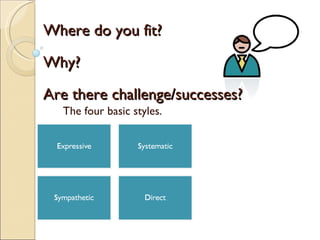
There are four basic styles. Communication Styles
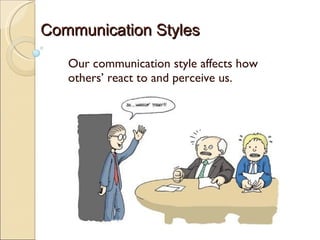
Our communication style affects how others’ react to and perceive us. Communication Styles
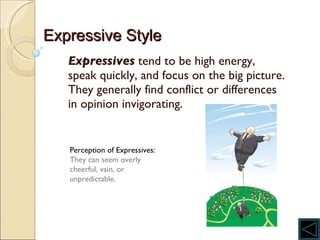
Expressives  tend to be high energy, speak quickly, and focus on the big picture. They generally find conflict or differences in opinion invigorating. Perception of Expressives:  They can seem overly cheerful, vain, or unpredictable. Expressive Style
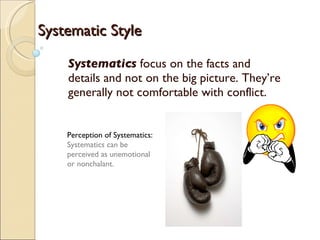
Systematics  focus on the facts and details and not on the big picture. They’re generally not comfortable with conflict. Perception of Systematics:  Systematics can be perceived as unemotional or nonchalant. Systematic Style
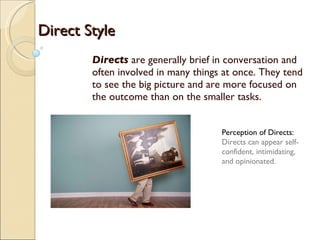
Directs  are generally brief in conversation and often involved in many things at once. They tend to see the big picture and are more focused on the outcome than on the smaller tasks. Perception of Directs:  Directs can appear self-confident, intimidating, and opinionated. Direct Style
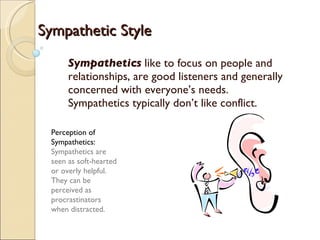
Sympathetics  like to focus on people and relationships, are good listeners and generally concerned with everyone’s needs. Sympathetics typically don’t like conflict. Perception of Sympathetics:  Sympathetics are seen as soft-hearted or overly helpful. They can be perceived as procrastinators when distracted. Sympathetic Style
The four basic styles. Where do you fit? Why? Are there challenge/successes?
LEMONADE How do you make Lemonade?
If you sense an imbalance, then adjust the way you’re communicating either verbally or physically. Being aware of and adapting our communication style to complement someone else’s style will enable employees to sustain productivity and a harmonious work environment. Be Flexible
What should I do if I hear a ‘NO’? Follow-Up Fill the pipeline Attitude: Change, Adjust or stay the same? Adjust your resume Practice your talk/interview answers Be more aggressive
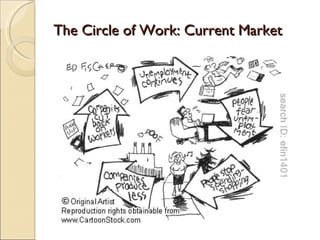
The Circle of Work: Current Market
Any final thoughts Was there anything we missed? Could we talk more? Connect: Follow me on Twitter: @BenjaminMcCall Subscribe to the site:  ReThinkHR.org
Close Connect: Follow me on Twitter: @BenjaminMcCall Subscribe to the site:  ReThinkHR.org

When 'NO' seems like it's always the answer

  • 1.
  • 2.
    When ‘NO’ seemslike it’s always the answer Connect with Benjamin McCall Twitter: @BenjaminMcCall Website: ReThinkHR.org
  • 3.
    Question What isyour expectation for this time we have together?
  • 4.
    At an earlyage We want to grow up!
  • 5.
    When we reachmaturity We do not want to grow up!
  • 6.
  • 7.
  • 8.
    The Process Why‘NO’ seems like it’s always the answer Communication Styles, and Self-Assessment
  • 9.
    1. TheProcess
  • 10.
    How you feelabout HR…
  • 11.
    How HR feelsabout you…
  • 12.
    Candidate Process Step5.5: Wait… and wait… and wait… Step 6.5: Wait… and wait… and wait…
  • 13.
    Recruiting Process Step1.5: Wait… and wait… and wait… Step 4.5: Wait… and wait… and wait…
  • 14.
    Both HR andthe Candidate have similar interest. What motivates each is different! Understand: No one is the enemy
  • 15.
    1I. Whydoes it seem ‘NO’ is always the answer
  • 16.
    Question What isyour situation? How often and at what step in the process do you hear a ‘NO’? Why is this?
  • 17.
    Reasons you maybe hearing ‘NO’: - Indecision of the Business or hiring mgr - Just filling their pipeline - The process - Budgets - Could be you!
  • 18.
  • 19.
    Tools to connect& communicate
  • 20.
    - Dissecting theRole - Doing Research - Making an impression - Asking the ‘Right’ ??’s - Understanding how the culture of the company communicates Are we as candidates:
  • 21.
    We all hearthe word ‘NO’ It’s just a question of when and how we hear it that matters
  • 22.
    III. Stylesof Communication
  • 23.
    Your communication stylesays a lot about you and it matters in the way you manage other’s styles Successful Communication
  • 24.
    There are fourbasic styles. Communication Styles
  • 25.
    Our communication styleaffects how others’ react to and perceive us. Communication Styles
  • 26.
    Expressives tendto be high energy, speak quickly, and focus on the big picture. They generally find conflict or differences in opinion invigorating. Perception of Expressives: They can seem overly cheerful, vain, or unpredictable. Expressive Style
  • 27.
    Systematics focuson the facts and details and not on the big picture. They’re generally not comfortable with conflict. Perception of Systematics: Systematics can be perceived as unemotional or nonchalant. Systematic Style
  • 28.
    Directs aregenerally brief in conversation and often involved in many things at once. They tend to see the big picture and are more focused on the outcome than on the smaller tasks. Perception of Directs: Directs can appear self-confident, intimidating, and opinionated. Direct Style
  • 29.
    Sympathetics liketo focus on people and relationships, are good listeners and generally concerned with everyone’s needs. Sympathetics typically don’t like conflict. Perception of Sympathetics: Sympathetics are seen as soft-hearted or overly helpful. They can be perceived as procrastinators when distracted. Sympathetic Style
  • 30.
    The four basicstyles. Where do you fit? Why? Are there challenge/successes?
  • 31.
    LEMONADE How doyou make Lemonade?
  • 32.
    If you sensean imbalance, then adjust the way you’re communicating either verbally or physically. Being aware of and adapting our communication style to complement someone else’s style will enable employees to sustain productivity and a harmonious work environment. Be Flexible
  • 33.
    What should Ido if I hear a ‘NO’? Follow-Up Fill the pipeline Attitude: Change, Adjust or stay the same? Adjust your resume Practice your talk/interview answers Be more aggressive
  • 34.
    The Circle ofWork: Current Market
  • 35.
    Any final thoughtsWas there anything we missed? Could we talk more? Connect: Follow me on Twitter: @BenjaminMcCall Subscribe to the site: ReThinkHR.org
  • 36.
    Close Connect: Followme on Twitter: @BenjaminMcCall Subscribe to the site: ReThinkHR.org

Editor's Notes

  • #24 Review Slide Group Activity : then perform either the “SHAPES” exercise and/or the “Lost at Sea Exercise.” Review Instructors guide within the materials to review purpose of these exercises.
  • #34 Review slide and then go to the KEY ABILITIES section of the material. Expand on each ability: Organizing, Solve Problems & Making Decisions & Building Good Teams
  • #36 Group Activity/Discussion: Give the participants a few minutes to complete the “ From Your Perspective ” page. After they have completed it, ask them to share their thoughts & opinions.
  • #37 - Review the “ Project Management Responsibilities - Ending a Project ” section of the material.