The document provides an overview of the key concepts regarding ecosystems, including:
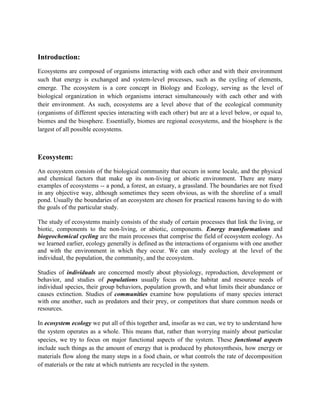
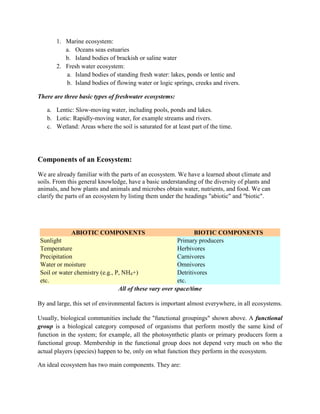
1. An ecosystem consists of both biotic (living) and abiotic (non-living) components that interact as a functional unit. The biotic components include producers, consumers, and decomposers, while the abiotic components include factors like sunlight, temperature, water, and soil chemistry.
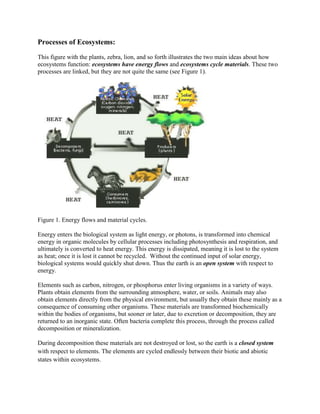
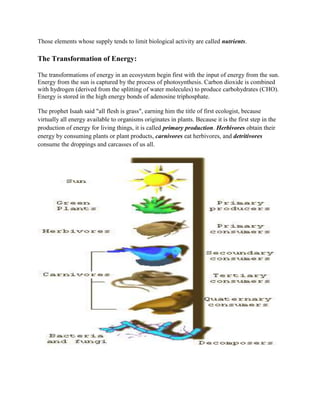
2. Energy enters ecosystems via photosynthesis and is transferred between trophic levels, though efficiency decreases at each level. Materials cycle between biotic and abiotic components through processes like respiration and decomposition.
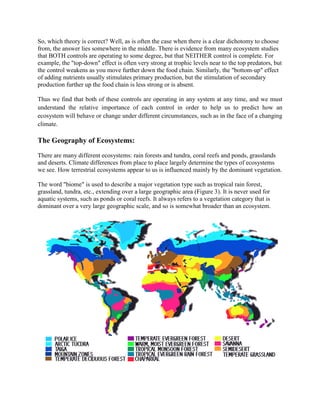
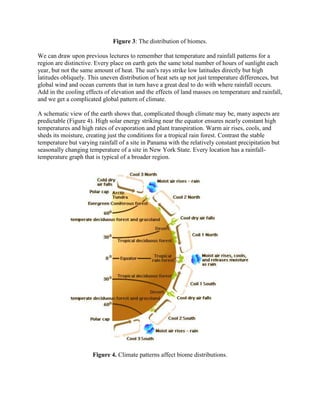
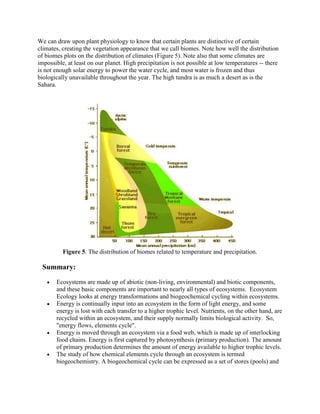
3. Ecosystems can be classified and mapped based on dominant vegetation and climate. Climate patterns influence global biome distributions like tropical rainfore