ECOATM
An automated, consumer self-serve kiosk that quickly
evaluates and buys back used consumer electronics
directly from consumers for cash
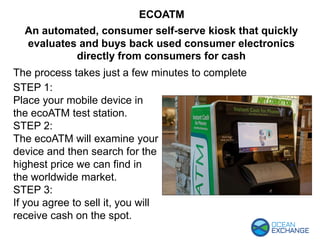
STEP 1:
Place your mobile device in
the ecoATM test station.
STEP 2:
The ecoATM will examine your
device and then search for the
highest price we can find in
the worldwide market.
STEP 3:
If you agree to sell it, you will
receive cash on the spot.
ECOATM
An automated, consumer self-serve kiosk that quickly
evaluates and buys back used consumer electronics
directly from consumers for cash
The process takes just a few minutes to complete
Bowles, who was inspired by Coinstar change-counting
machines, spent three years perfecting his device.
After securing seven patents and nearly $72 million in
financing, his company went into full-scale production in late
2011. The technology combines an artificial-intelligence-based
vision system with robotics and electrical inspection.
The result: EcoATM can recognize 4,000 types of phones,
MP3 players and tablets and identify any damage; it then uses
a constantly updated worldwide auction system to offer
consumers competitive prices based on model and condition.
Early on Bowles theorized that
placing ecoATMs in highly
trafficked areas (mostly malls)
and offering instant gratification
(cash) would entice consumers to
recycle. He was right: In 2012 the
kiosks collected hundreds of
thousands of phones and paid out
millions of dollars.
There are currently 350 ecoATMs in 24 states, and the
company is placing two more per day and making plans for
international expansion.
Meanwhile, it's improving its technology so ecoATMs can
accept bigger items like personal computers. As Bowles
explains: "We're using technology to solve a problem that
technology created."
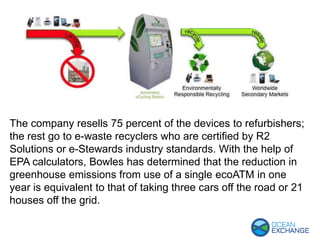
The company resells 75 percent of the devices to refurbishers;
the rest go to e-waste recyclers who are certified by R2
Solutions or e-Stewards industry standards. With the help of
EPA calculators, Bowles has determined that the reduction in
greenhouse emissions from use of a single ecoATM in one
year is equivalent to that of taking three cars off the road or 21
houses off the grid.
The average seller walks away with $25, but payouts can
reach $300 for a new smartphone. Thieves need not apply--
the machine validates the user's ID, requires a thumbprint
scan and extracts serial numbers from the devices; hi-res
cameras capture photos of the seller, and each transaction is
monitored remotely by the ecoATM staff.

EcoATM

  • 1.
    ECOATM An automated, consumerself-serve kiosk that quickly evaluates and buys back used consumer electronics directly from consumers for cash
  • 2.
    STEP 1: Place yourmobile device in the ecoATM test station. STEP 2: The ecoATM will examine your device and then search for the highest price we can find in the worldwide market. STEP 3: If you agree to sell it, you will receive cash on the spot. ECOATM An automated, consumer self-serve kiosk that quickly evaluates and buys back used consumer electronics directly from consumers for cash The process takes just a few minutes to complete
  • 3.
    Bowles, who wasinspired by Coinstar change-counting machines, spent three years perfecting his device. After securing seven patents and nearly $72 million in financing, his company went into full-scale production in late 2011. The technology combines an artificial-intelligence-based vision system with robotics and electrical inspection. The result: EcoATM can recognize 4,000 types of phones, MP3 players and tablets and identify any damage; it then uses a constantly updated worldwide auction system to offer consumers competitive prices based on model and condition.
  • 4.
    Early on Bowlestheorized that placing ecoATMs in highly trafficked areas (mostly malls) and offering instant gratification (cash) would entice consumers to recycle. He was right: In 2012 the kiosks collected hundreds of thousands of phones and paid out millions of dollars. There are currently 350 ecoATMs in 24 states, and the company is placing two more per day and making plans for international expansion. Meanwhile, it's improving its technology so ecoATMs can accept bigger items like personal computers. As Bowles explains: "We're using technology to solve a problem that technology created."
  • 5.
    The company resells75 percent of the devices to refurbishers; the rest go to e-waste recyclers who are certified by R2 Solutions or e-Stewards industry standards. With the help of EPA calculators, Bowles has determined that the reduction in greenhouse emissions from use of a single ecoATM in one year is equivalent to that of taking three cars off the road or 21 houses off the grid.
  • 6.
    The average sellerwalks away with $25, but payouts can reach $300 for a new smartphone. Thieves need not apply-- the machine validates the user's ID, requires a thumbprint scan and extracts serial numbers from the devices; hi-res cameras capture photos of the seller, and each transaction is monitored remotely by the ecoATM staff.