Organizer
Pre-School Education Unit
Ministry of Education, Singapore
Slides are available at         Lecturer
www.i-teach-k.blogspot.com      Yeap Ban Har
www.facebook.com/MCISingapore   yeapbanhar@gmail.com
introduction
      from 1992 to 2013
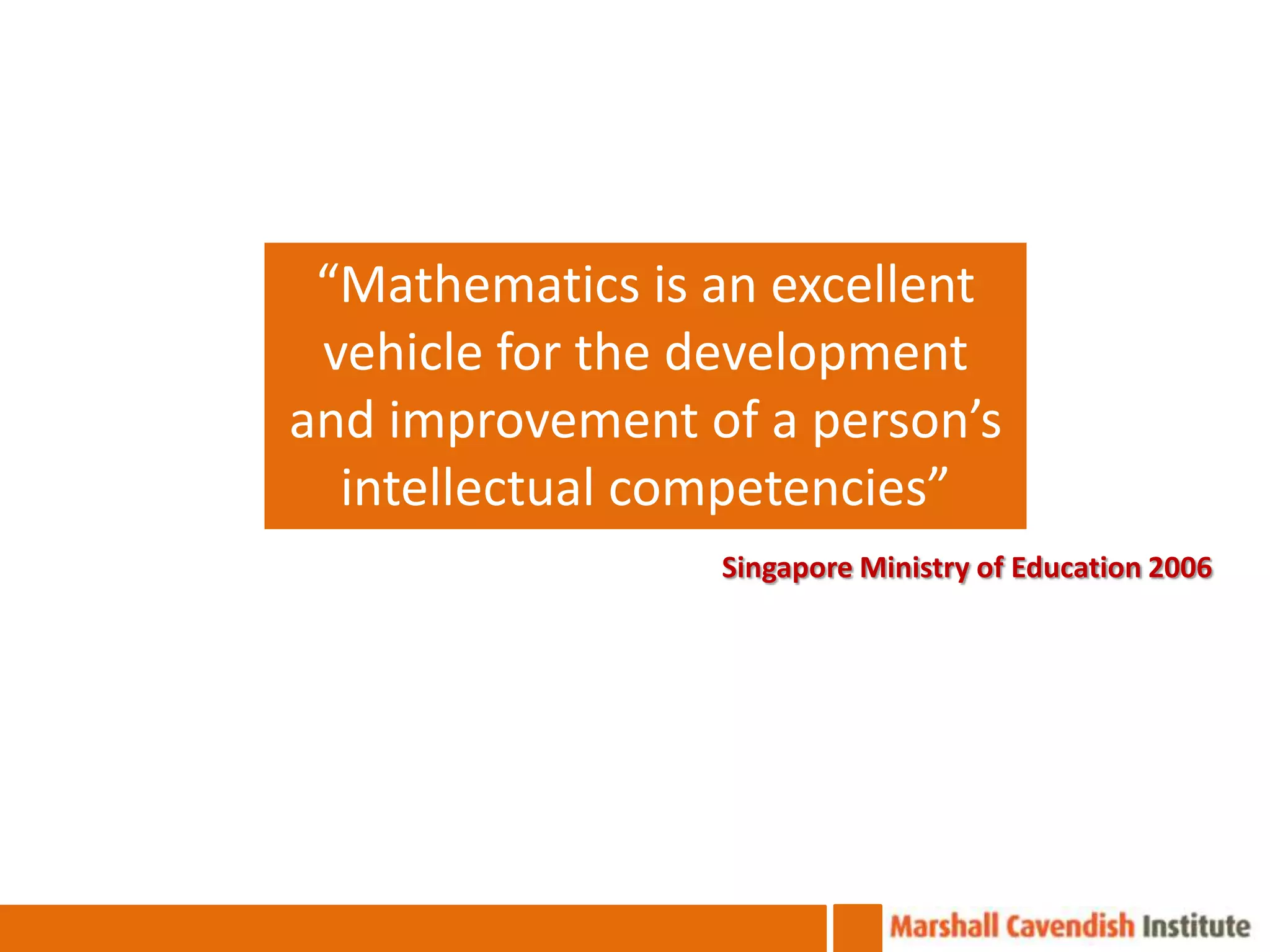
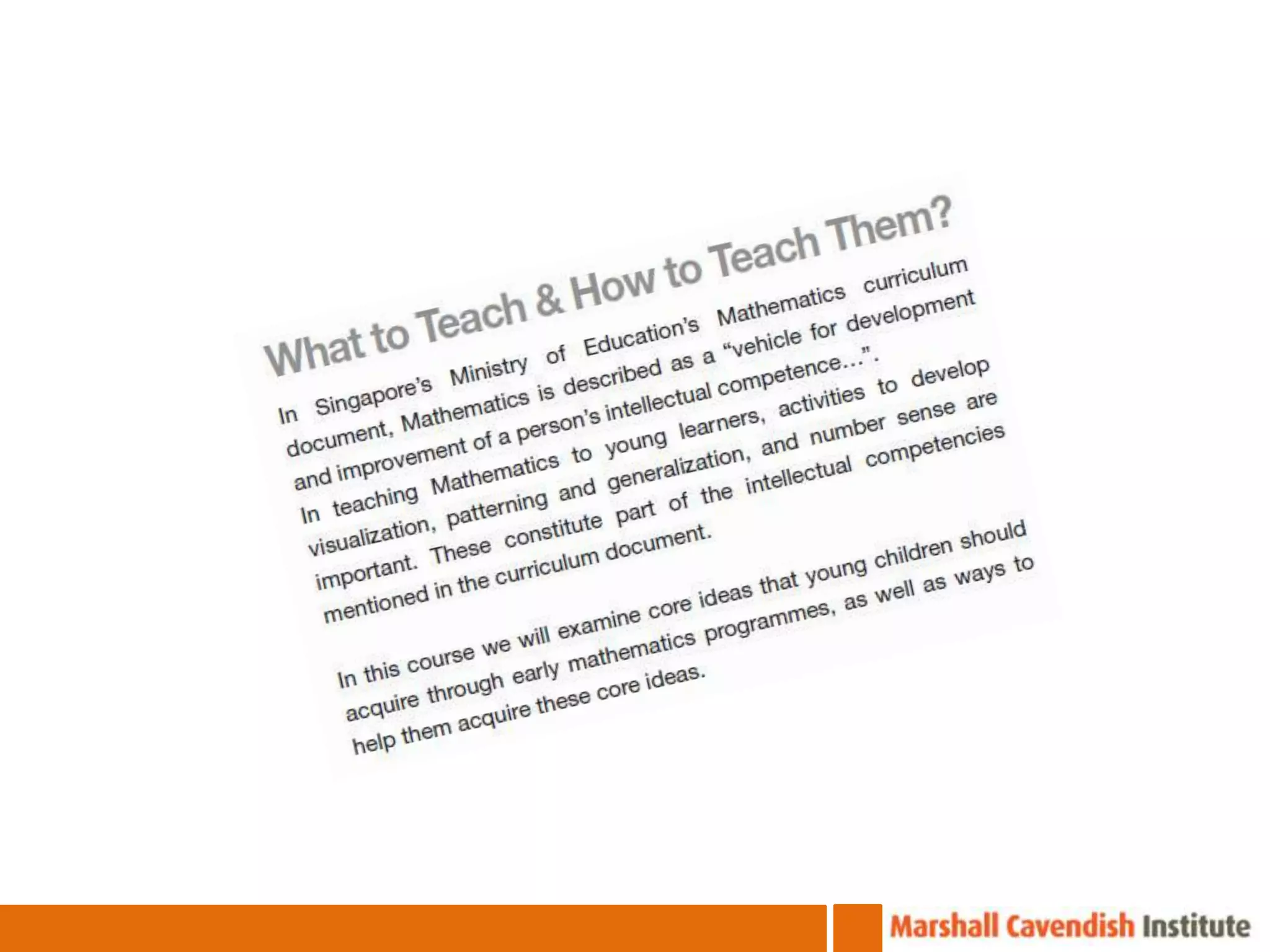
“Mathematics is an excellent
 vehicle for the development
and improvement of a person’s
  intellectual competencies”
                 Singapore Ministry of Education 2006
visualization
looking
   for
  patterns
number
   sense
what
  to teach
how to
  teach
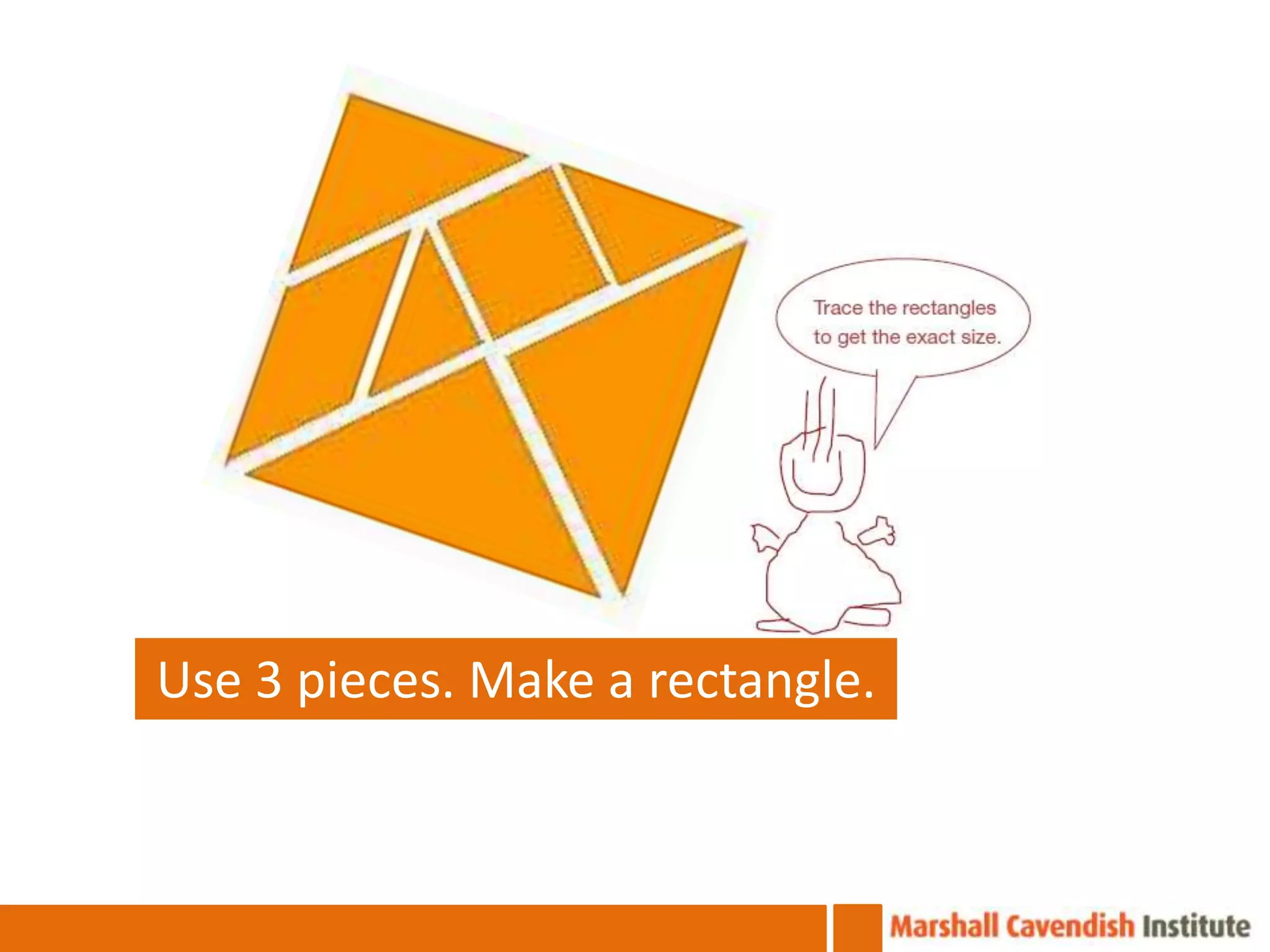
Use 3 pieces. Make a rectangle.
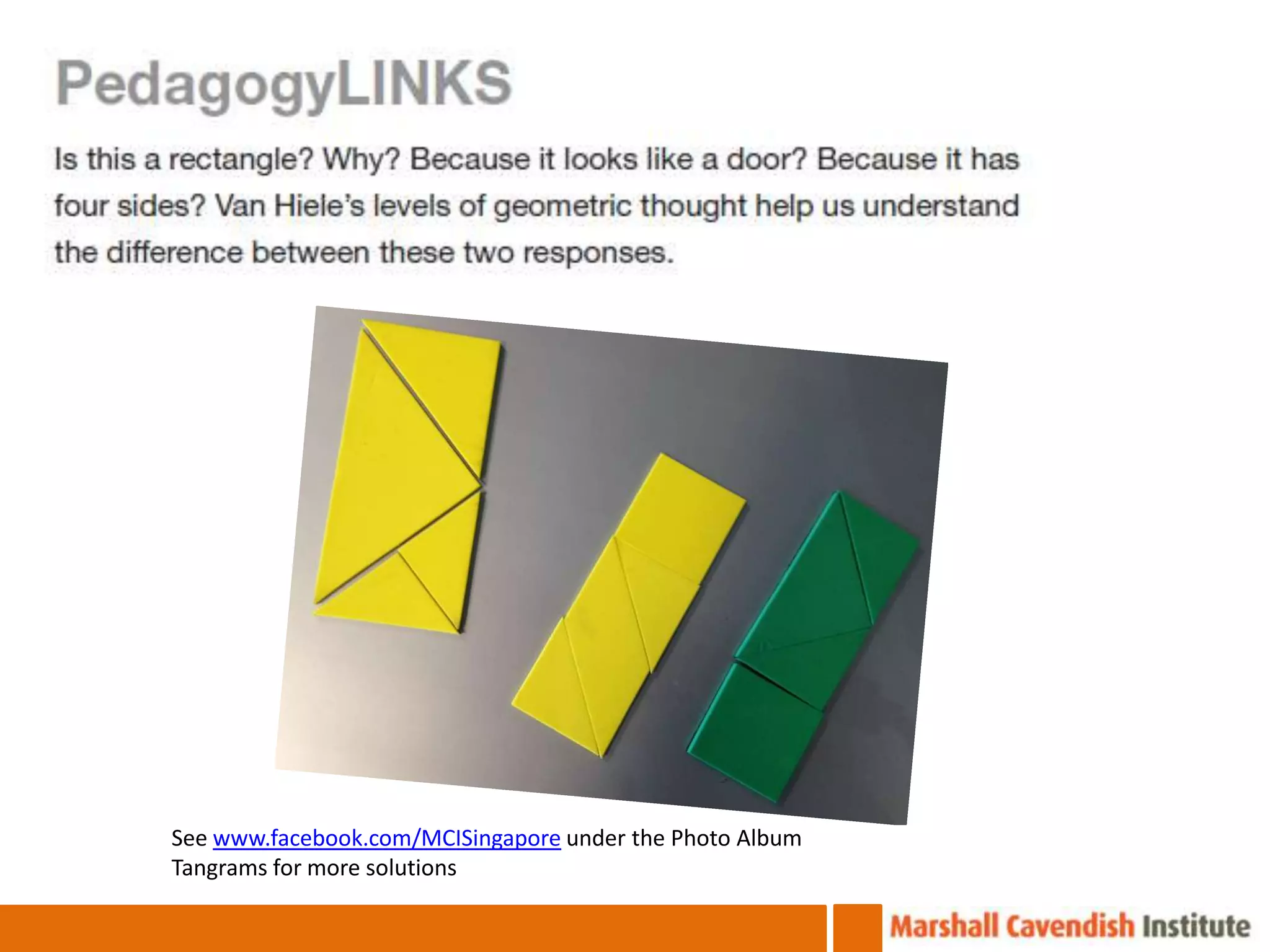
See www.facebook.com/MCISingapore under the Photo Album
Tangrams for more solutions
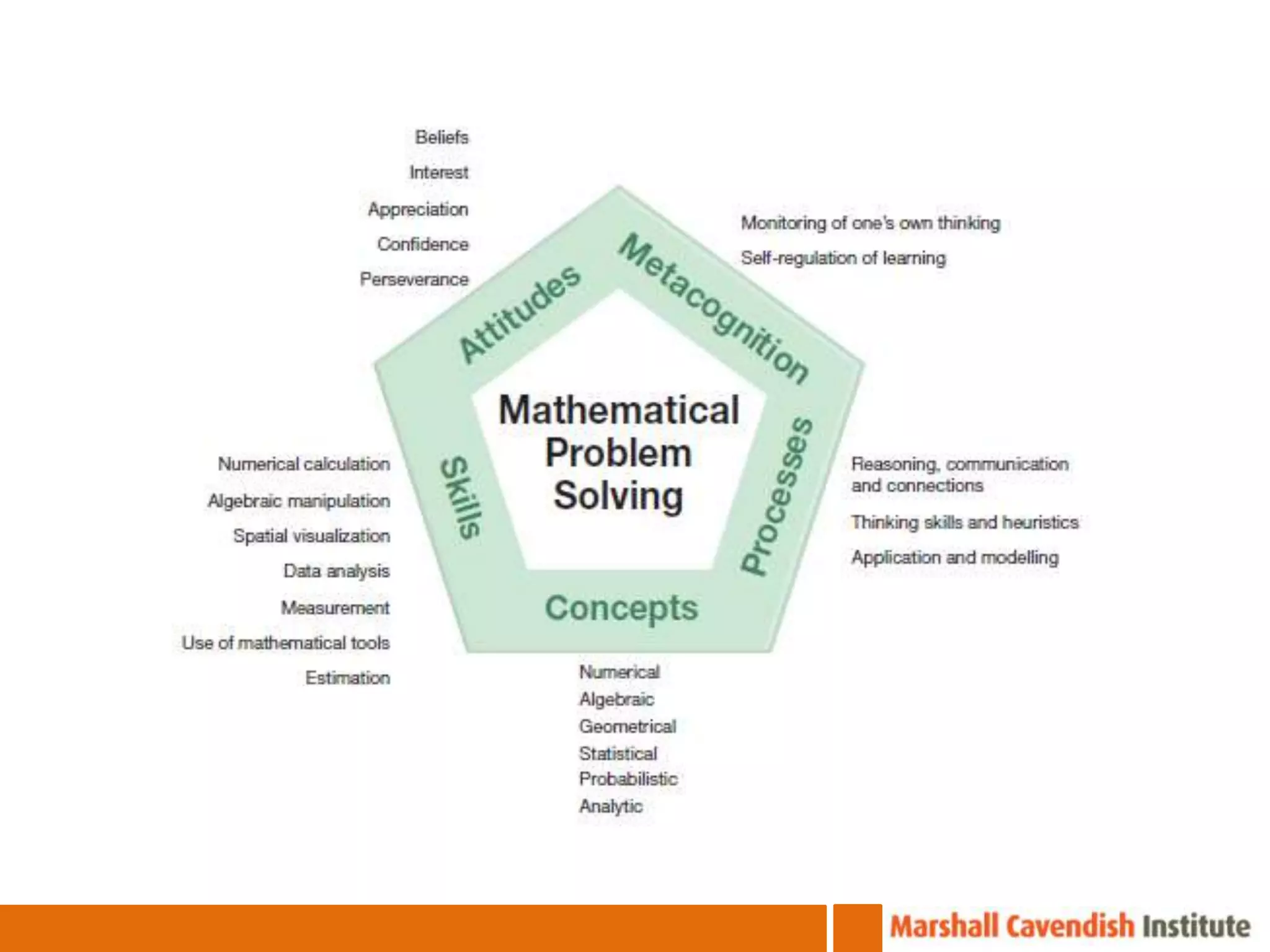
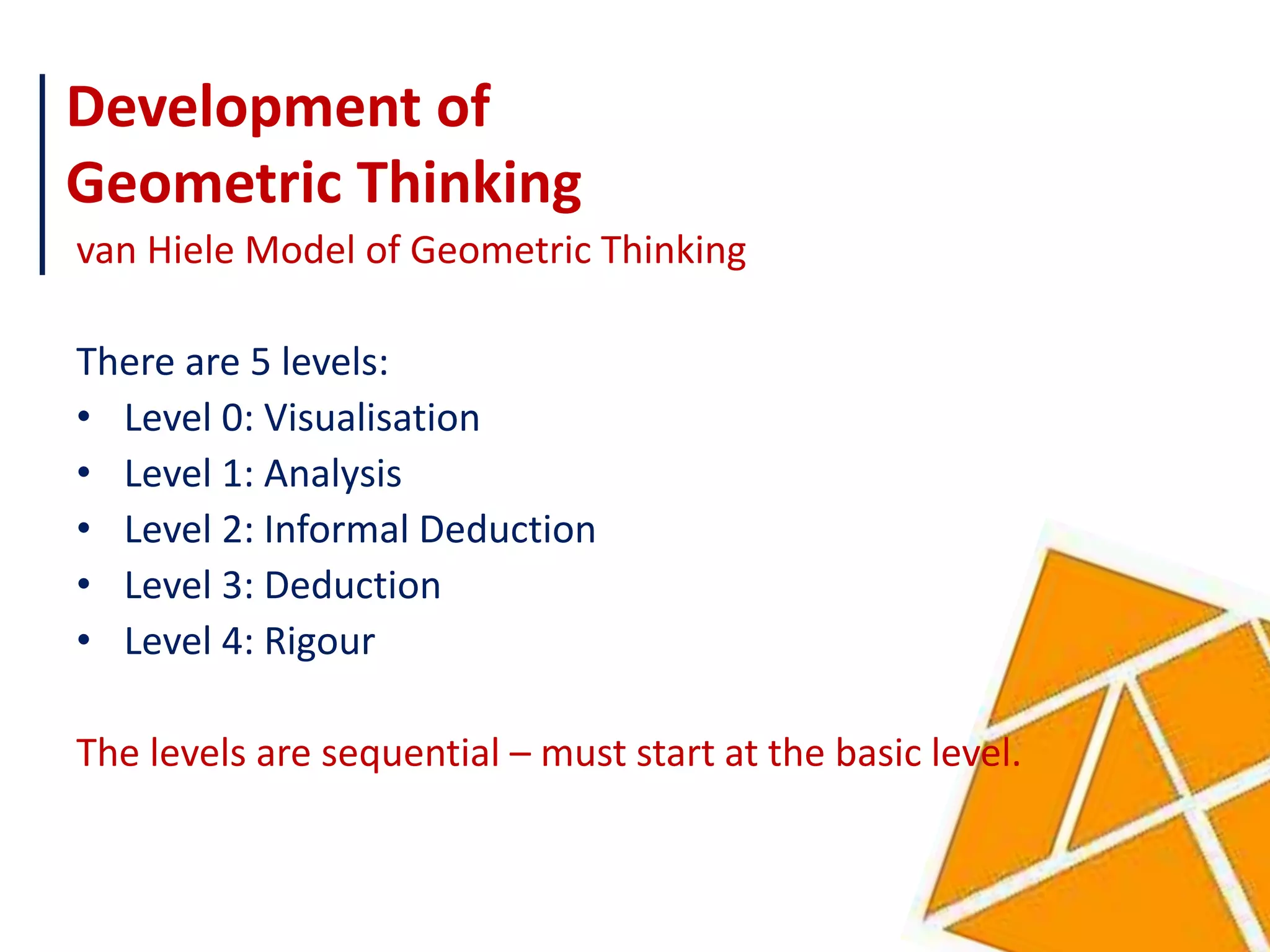
Development of
Geometric Thinking
van Hiele Model of Geometric Thinking

There are 5 levels:
• Level 0: Visualisation
• Level 1: Analysis
• Level 2: Informal Deduction
• Level 3: Deduction
• Level 4: Rigour

The levels are sequential – must start at the basic level.
Level 0: Visualisation
• Recognise the appearance of the shapes (look
  sort of alike)
• Properties are incidental to the shape
  (implicit)
“A square is a square because it looks like a
square.”
Implications for Instruction
Level 0: Visualisation
• Provide concrete materials that can be manipulated
• Include different and varied examples of shapes
• Involve lots of sorting, identifying, and describing of
  various shapes
• Provide opportunities to build, make, draw, put
  together and take apart shapes
Level 1: Analysis
• More aware of the properties of a shape than
  to its appearance

• Use properties to define categories of shapes
  (able to list the properties but not the
  relationships among the properties)
Implications for Instruction
Level 1: Informal Deduction
• Engage in the same activities as level 0 but the focus
  of the activities should be on the properties of the
  shapes, not identification

• Classify shapes by properties

• Derive generalisation by studying examples

• Use appropriate vocabulary
Level 2: Informal Deduction
• Understand the relation of properties within
  and among figures
“A square is a rectangle, a rectangle is
parallelogram which is also a quadrilateral.”
Level 3: Formal Deduction
• Construct proofs to determine the truth of a
  mathematic statements

              Level 4: Rigour
• Highly abstract form of geometric thought
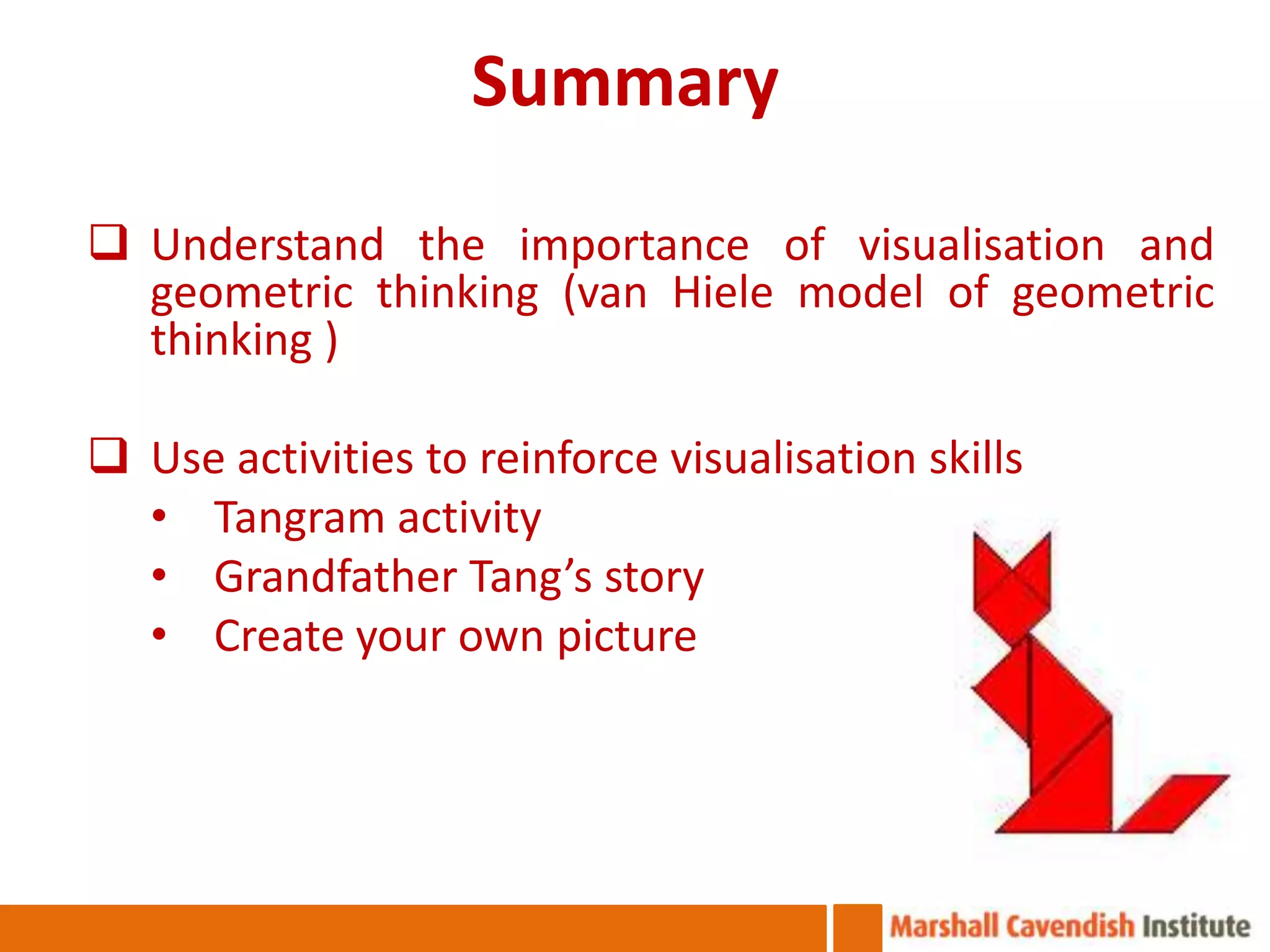
Summary
 Understand the importance of visualisation and
  geometric thinking (van Hiele model of geometric
  thinking )

 Use activities to reinforce visualisation skills
  • Tangram activity
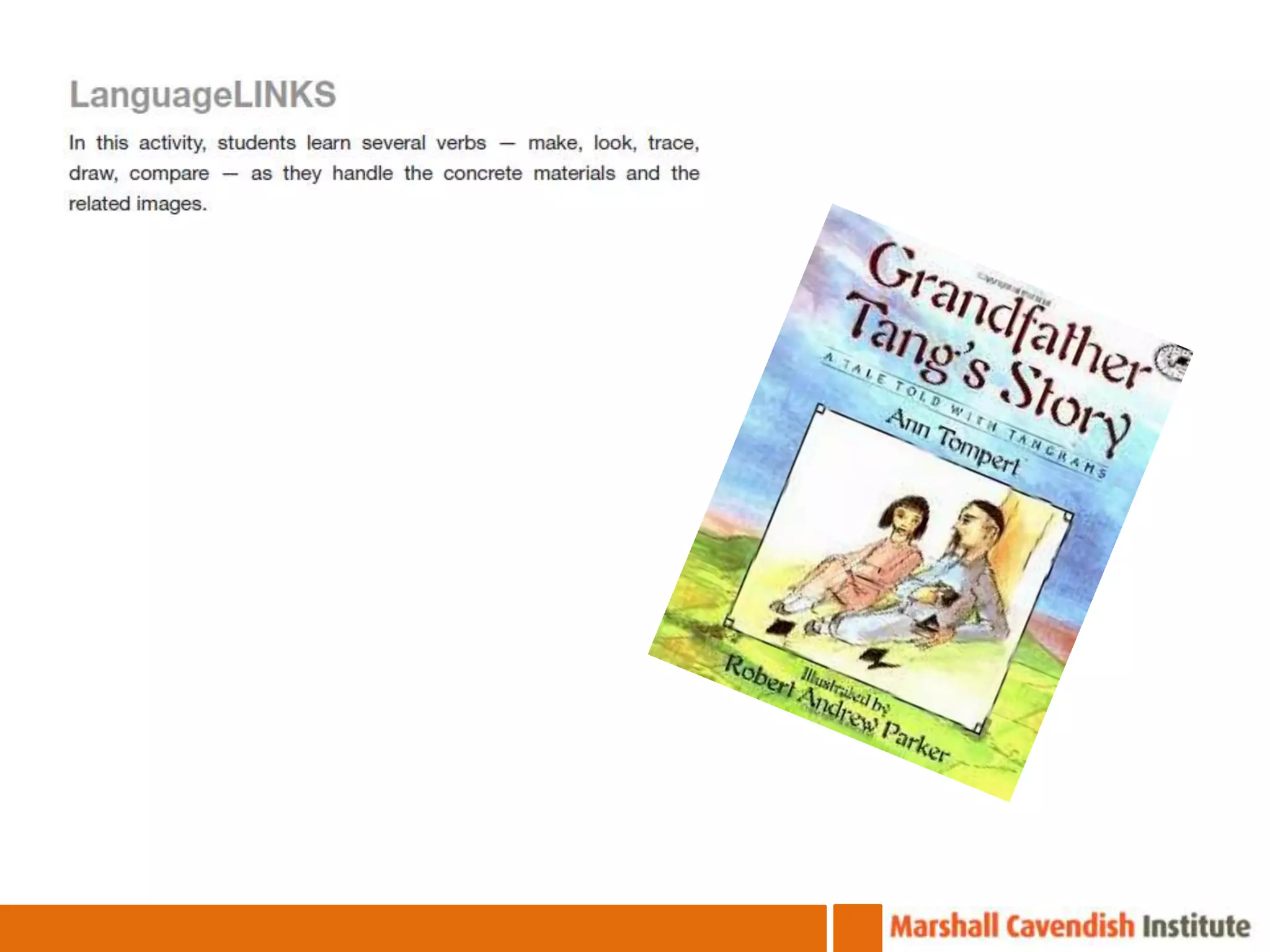
  • Grandfather Tang’s story
  • Create your own picture
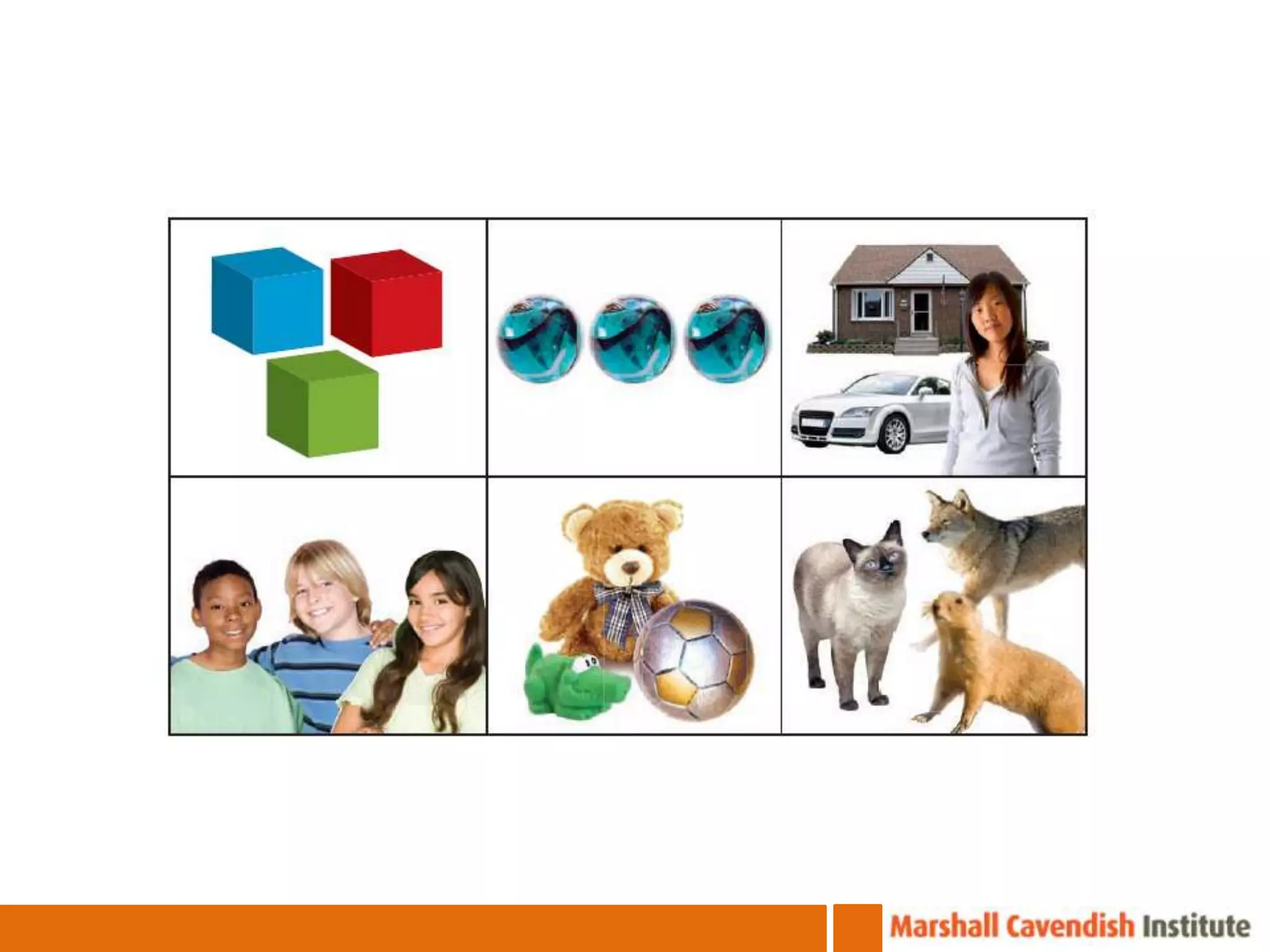
Ordinal, Cardinal & Nominal
          Numbers
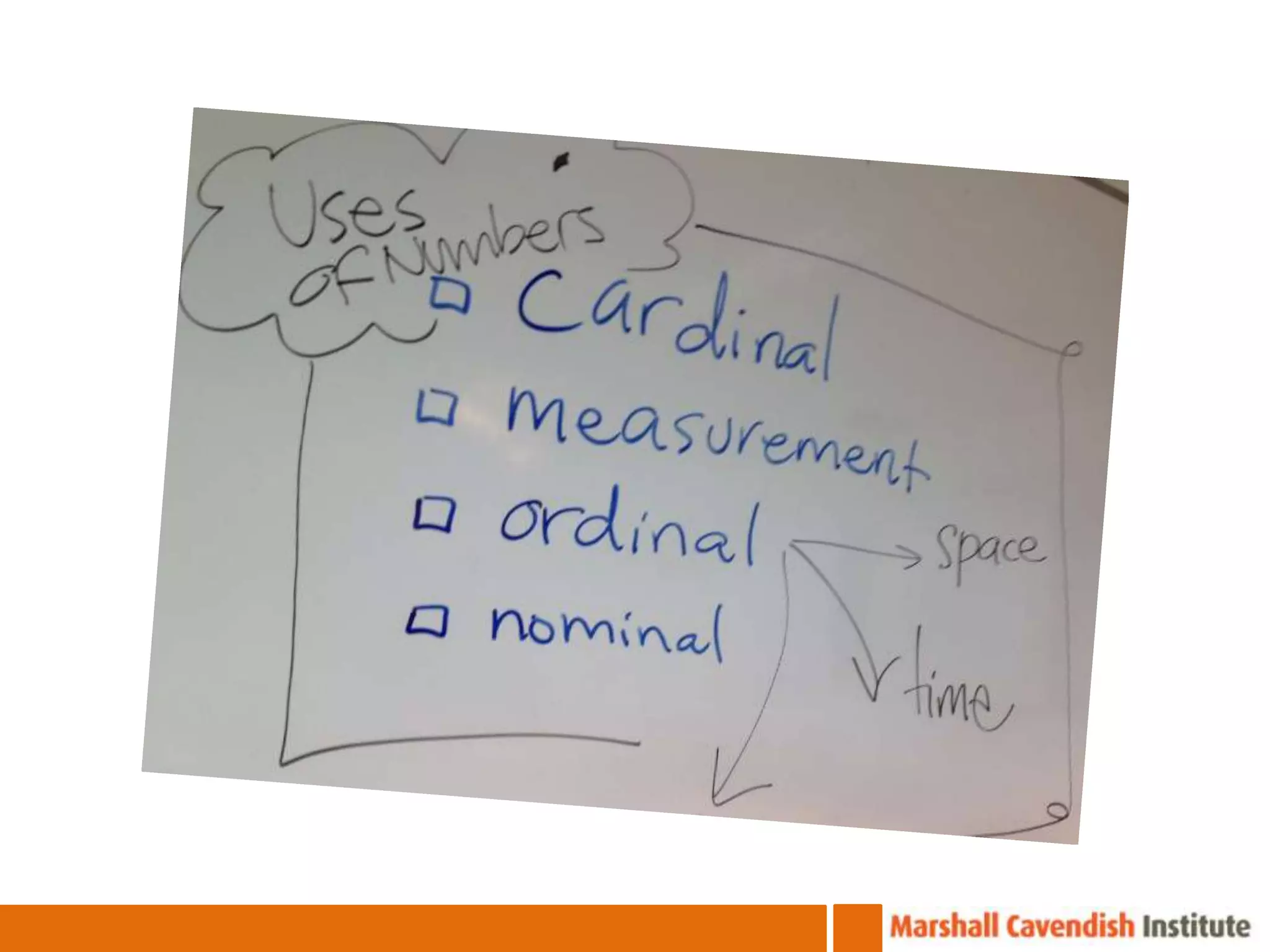
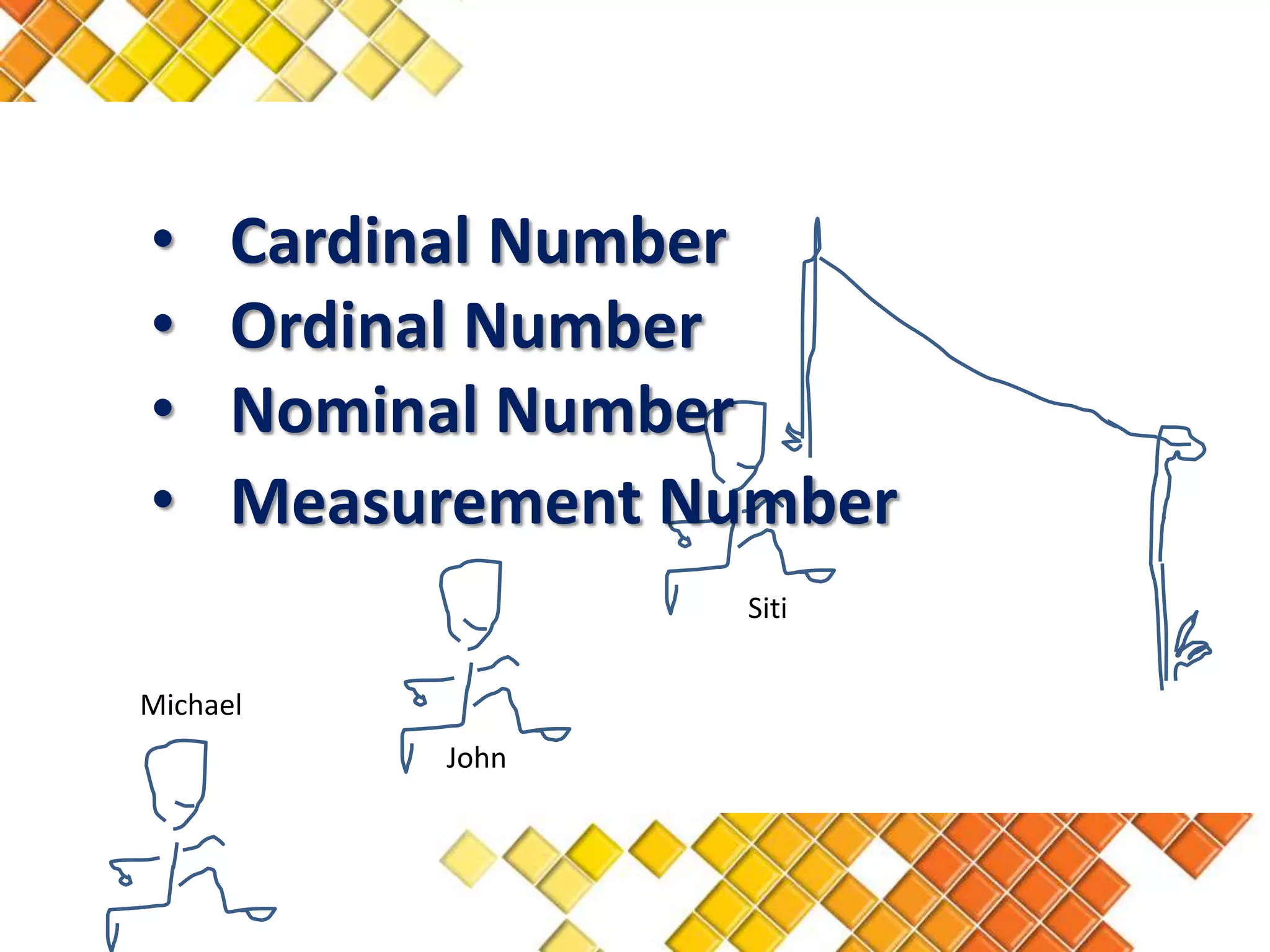
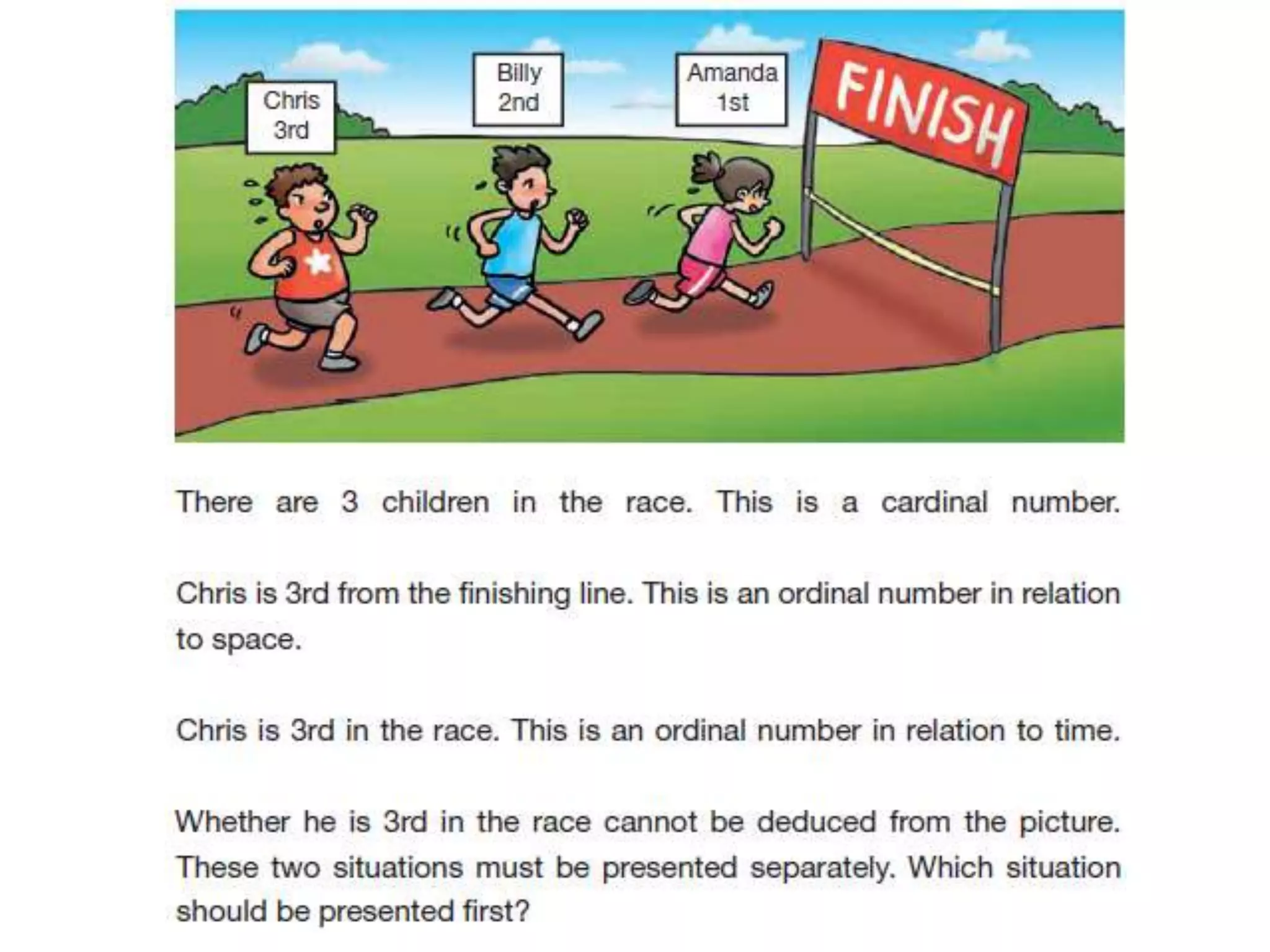
•     Cardinal Number
•     Ordinal Number
•     Nominal Number
•     Measurement Number
                   Siti


Michael
           John
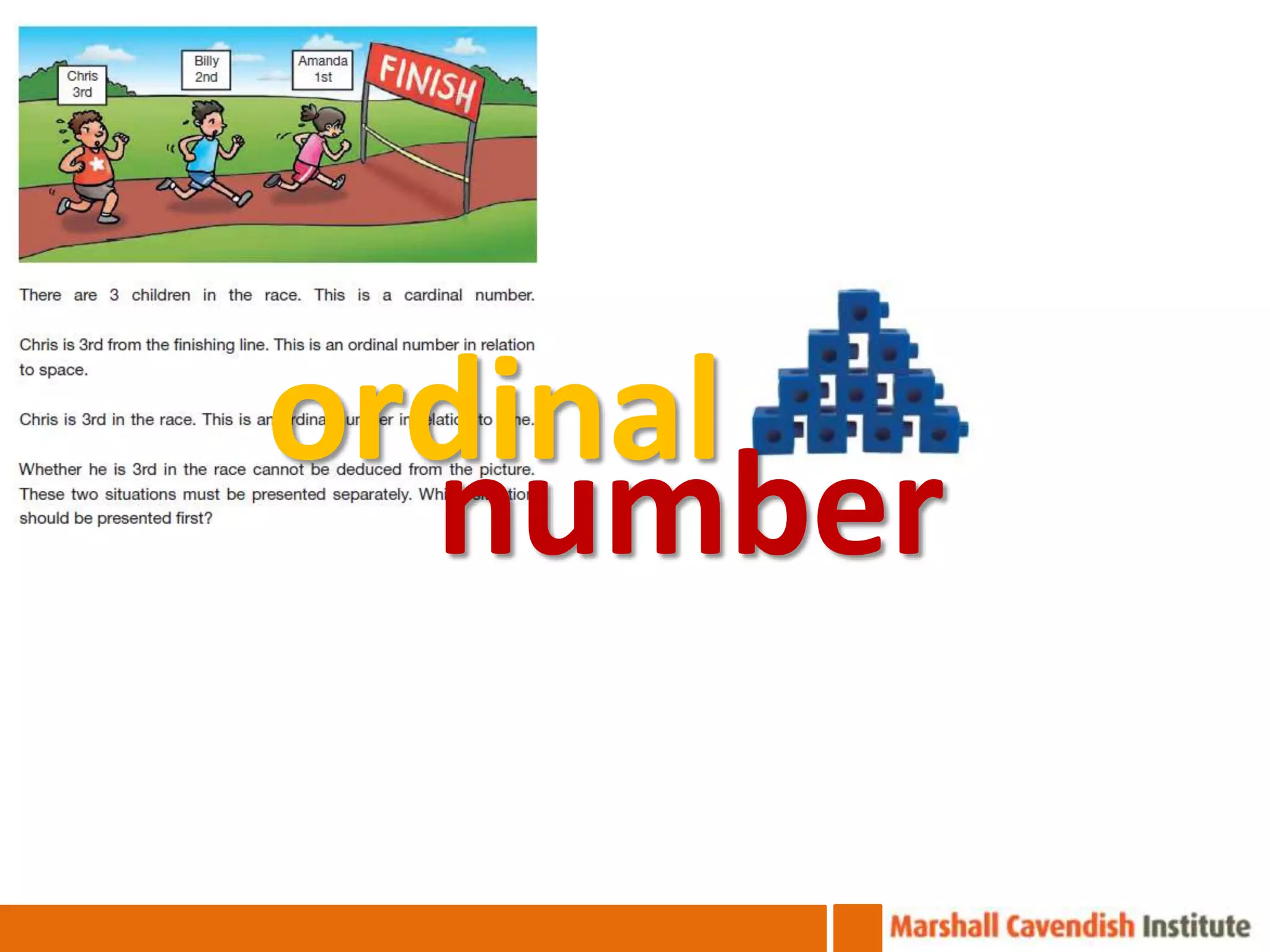
ordinal
  number
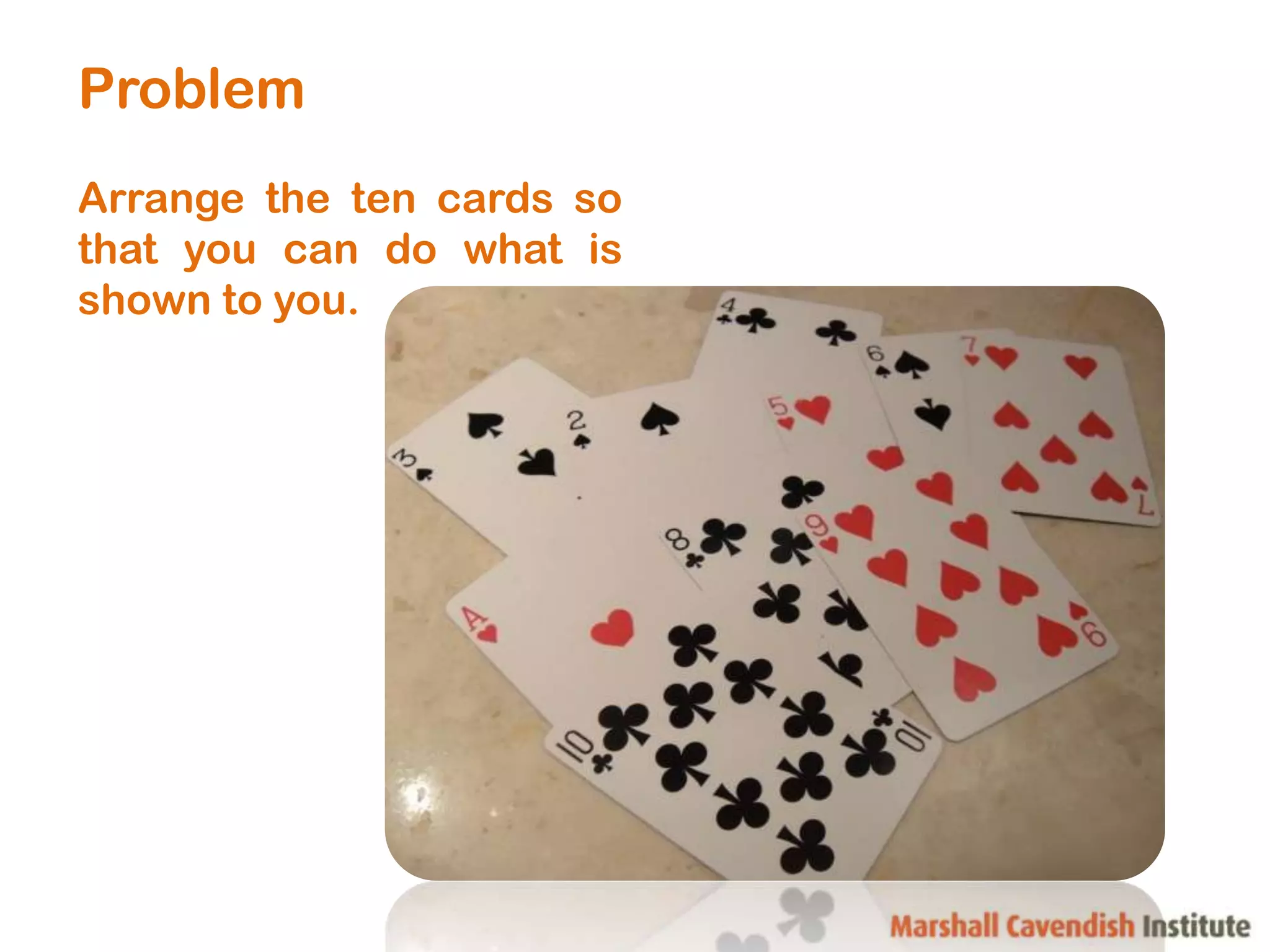
Problem
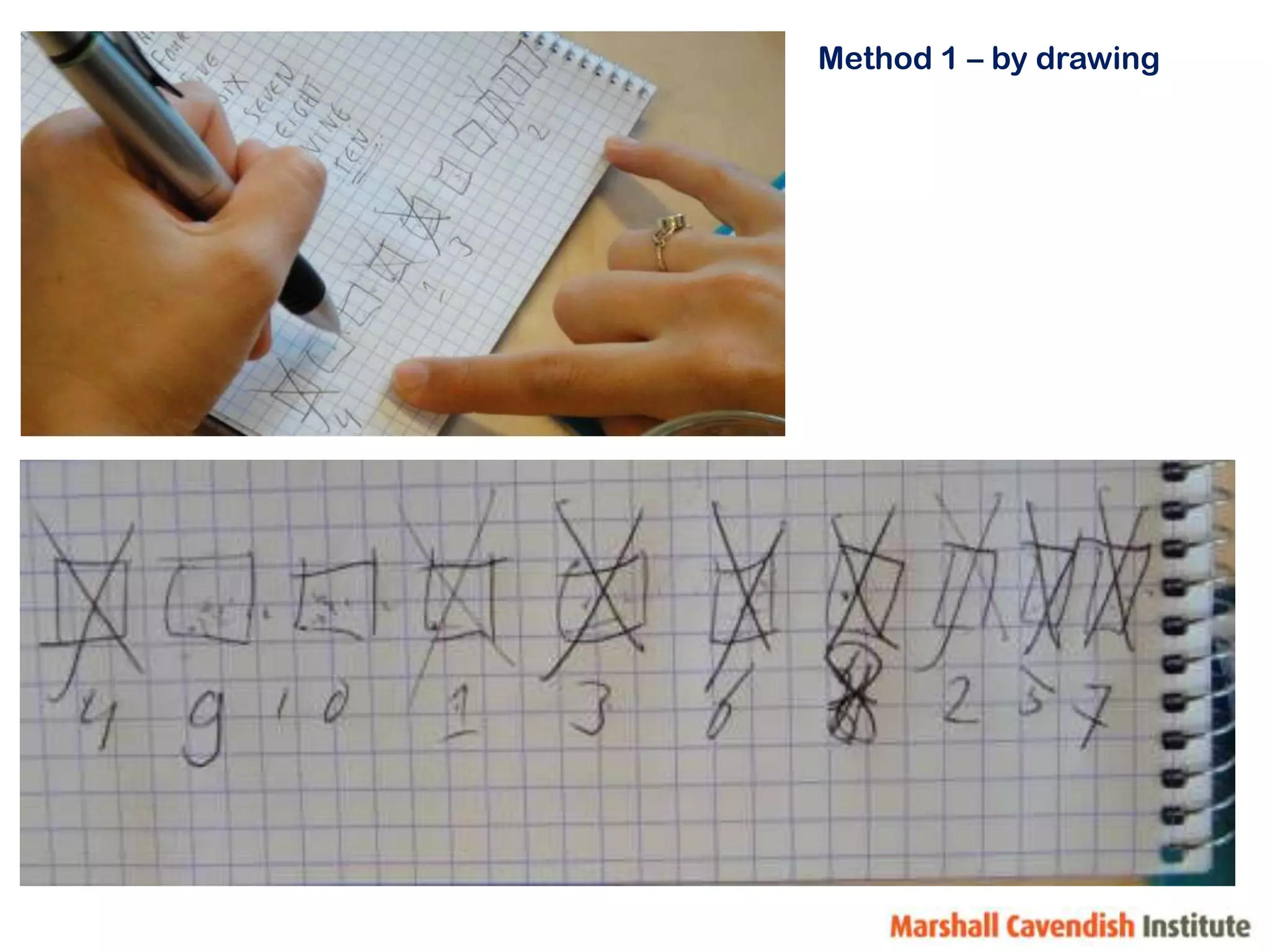
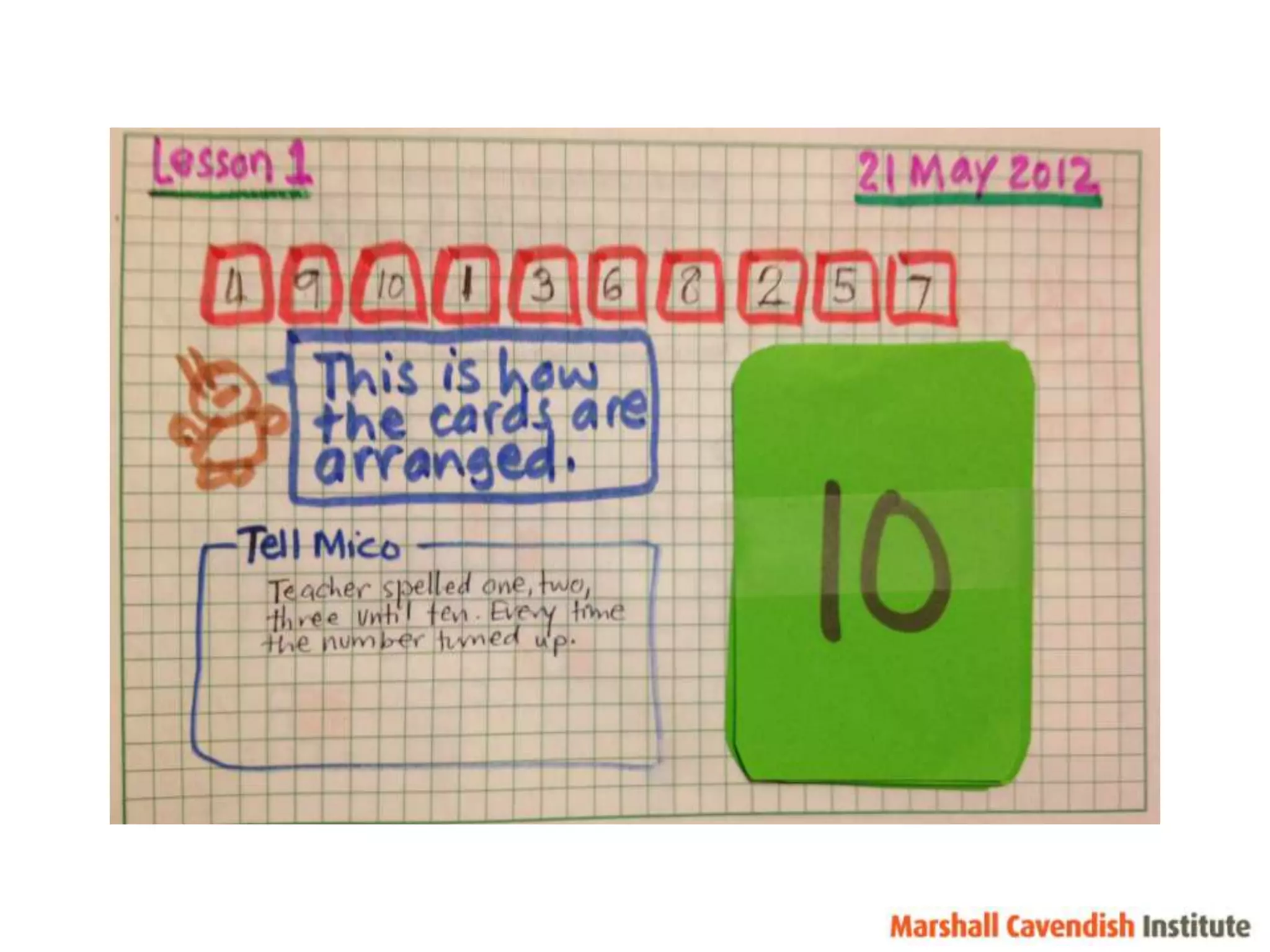
Arrange the ten cards so
that you can do what is
shown to you.
Method 1 – by drawing
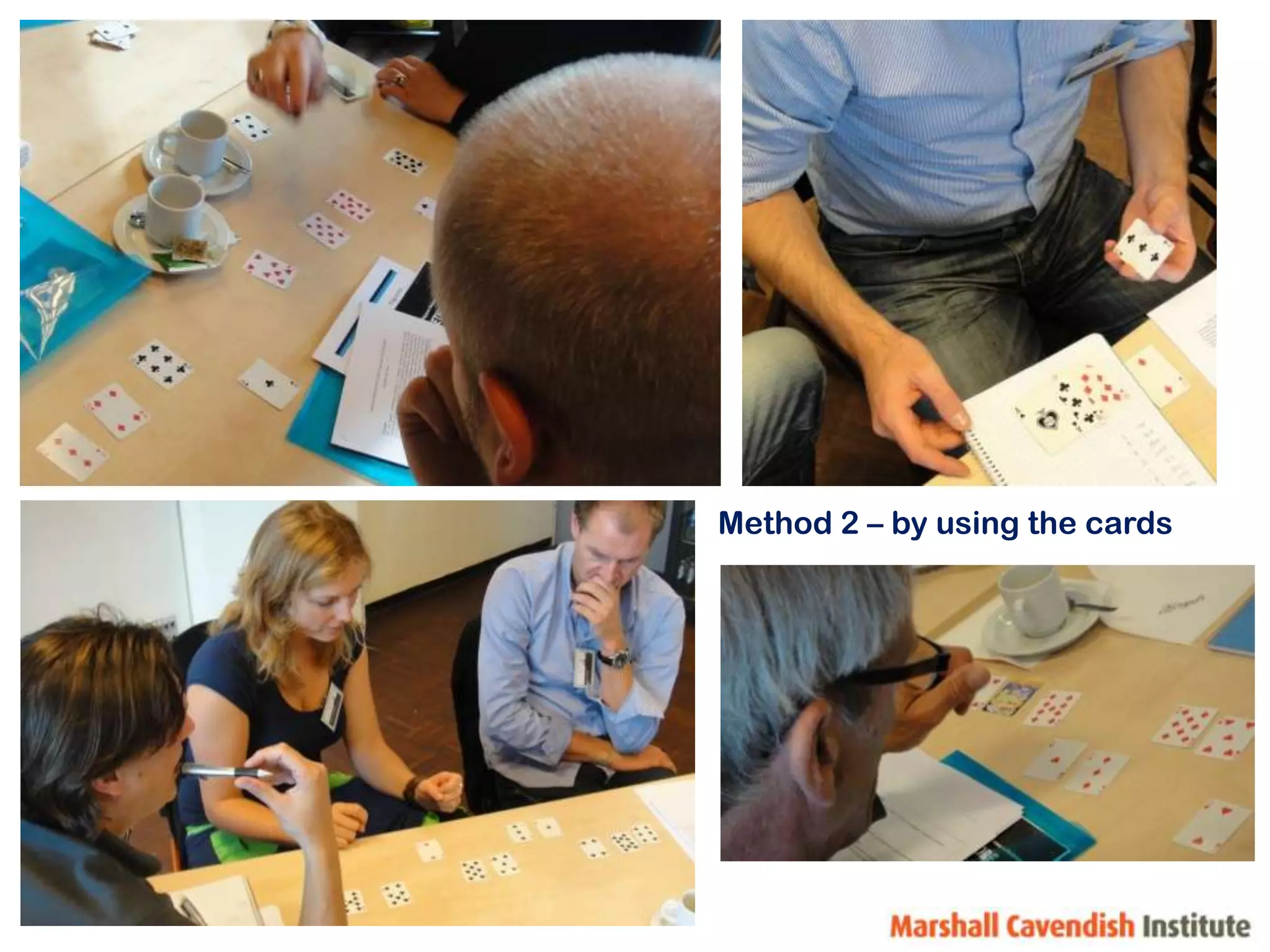
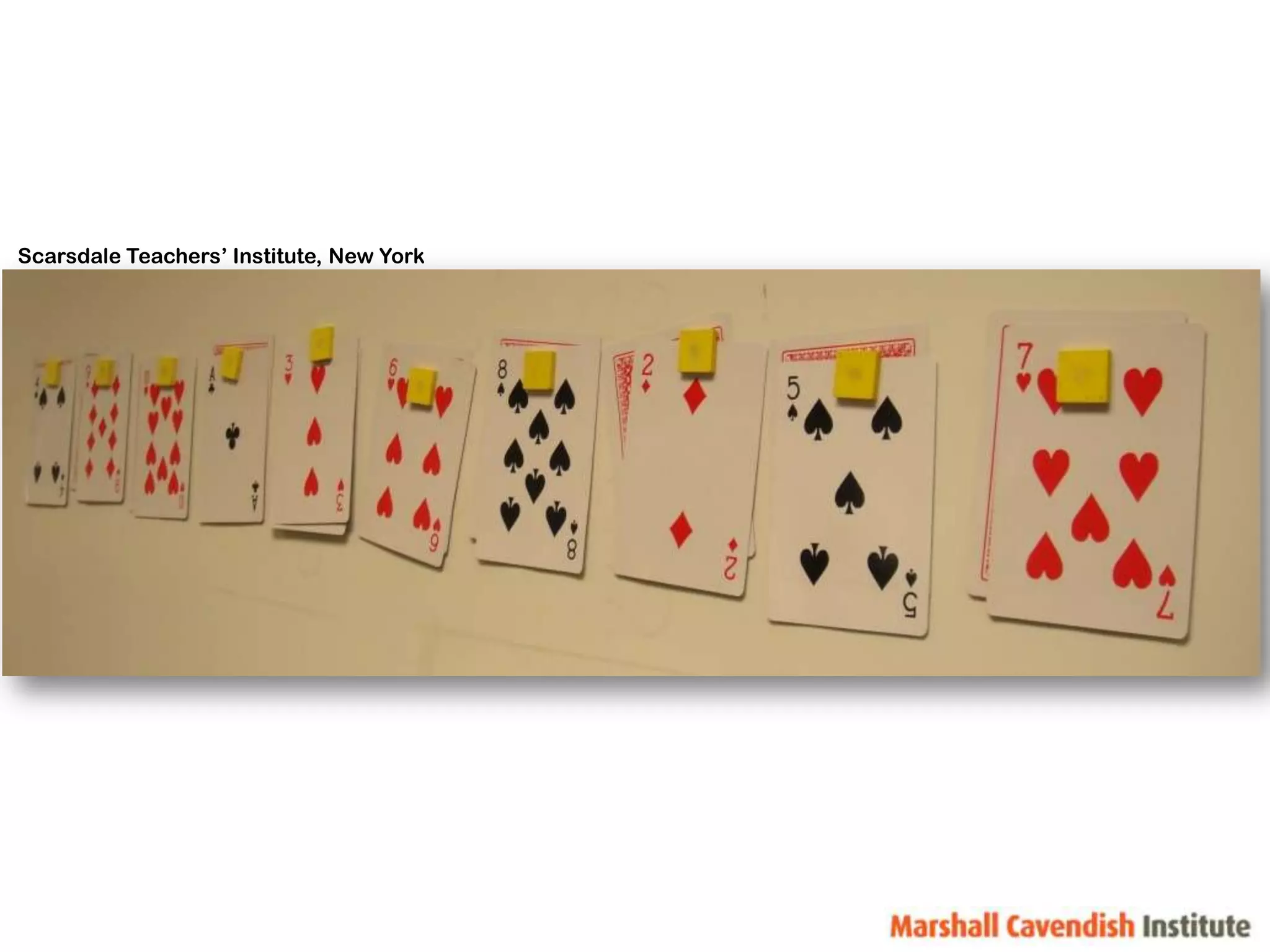
Method 2 – by using the cards
Scarsdale Teachers’ Institute, New York
rational
   counting
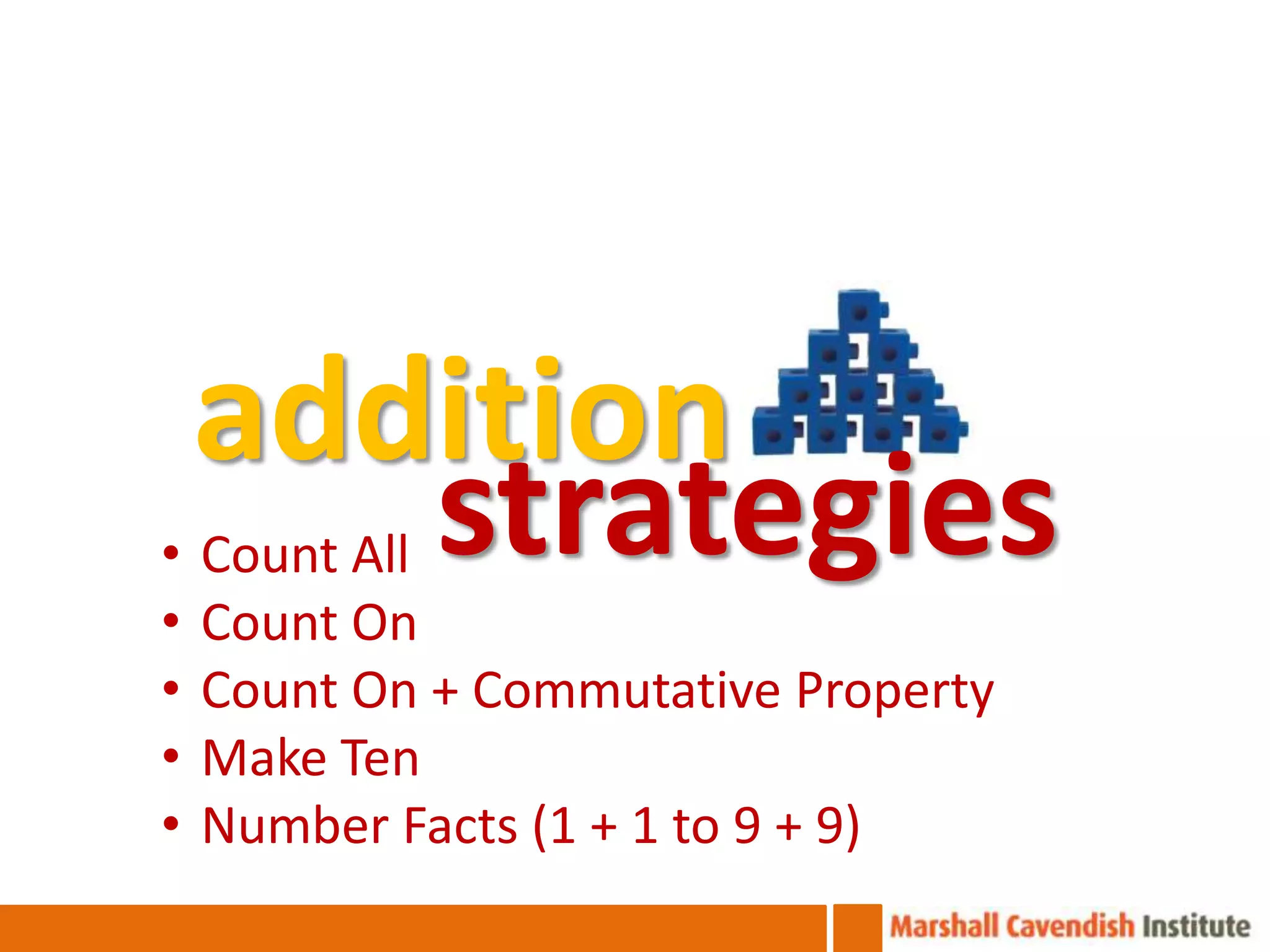
addition
•      strategies
    Count All
•   Count On
•   Count On + Commutative Property
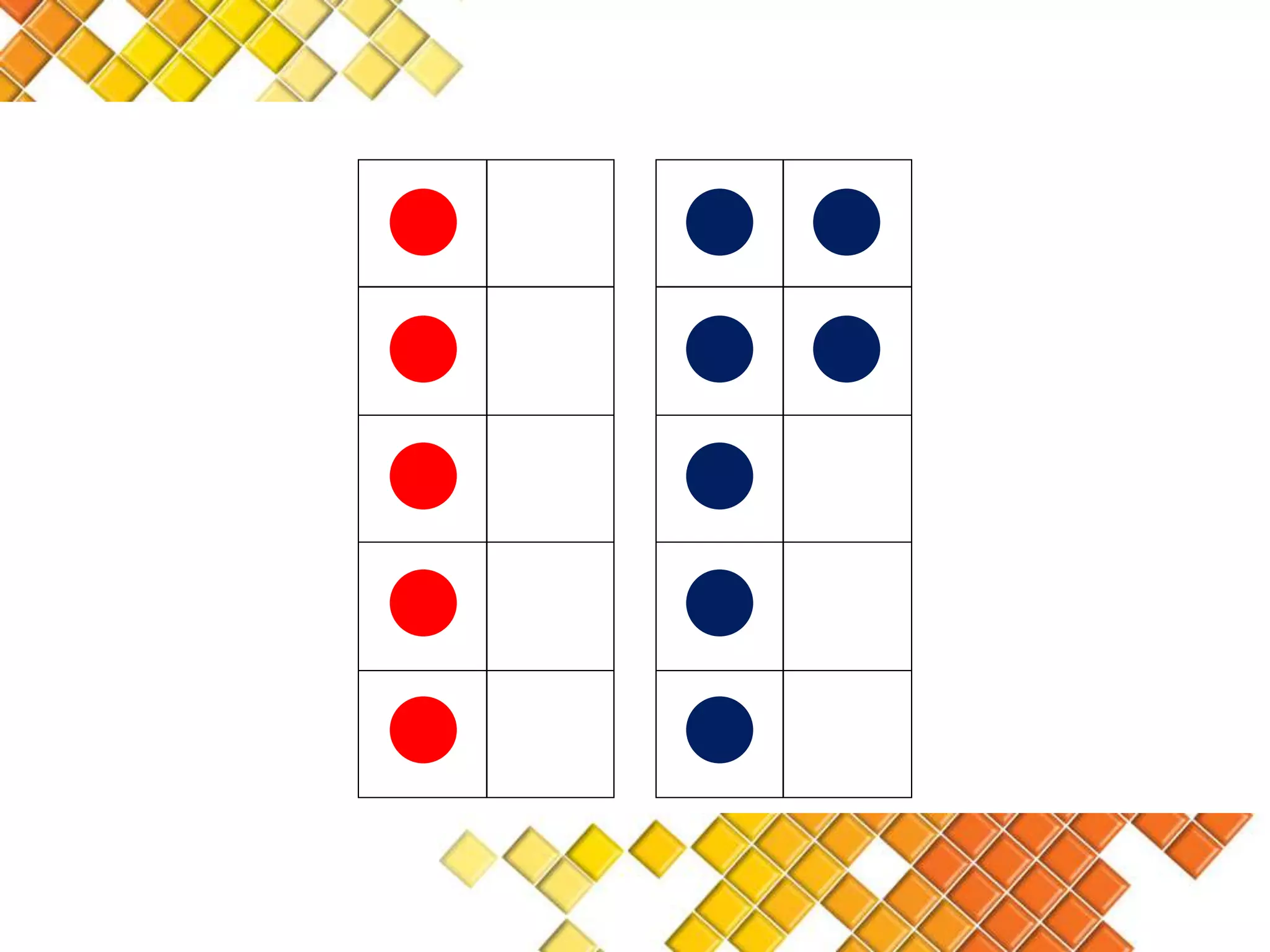
•   Make Ten
•   Number Facts (1 + 1 to 9 + 9)
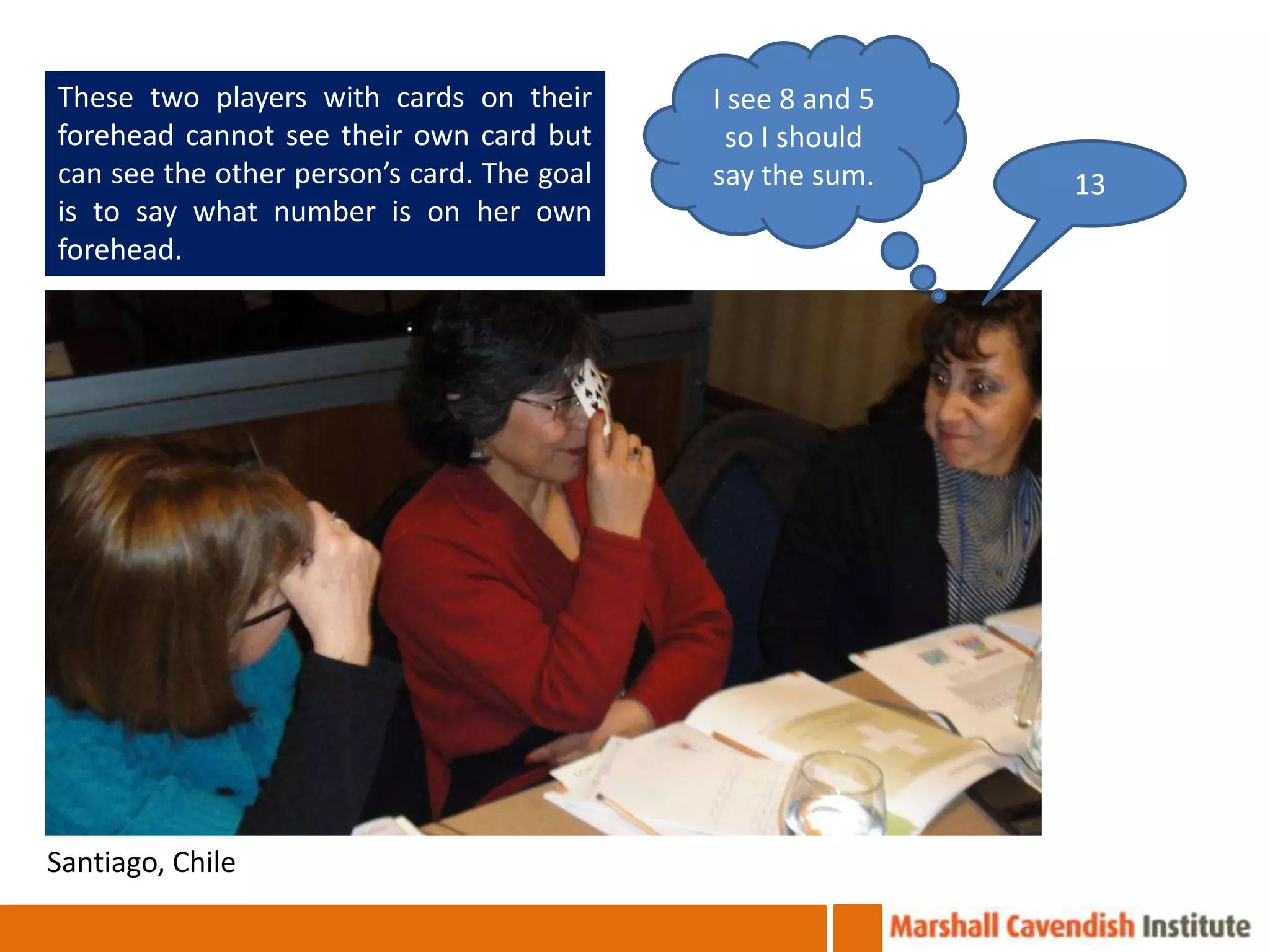
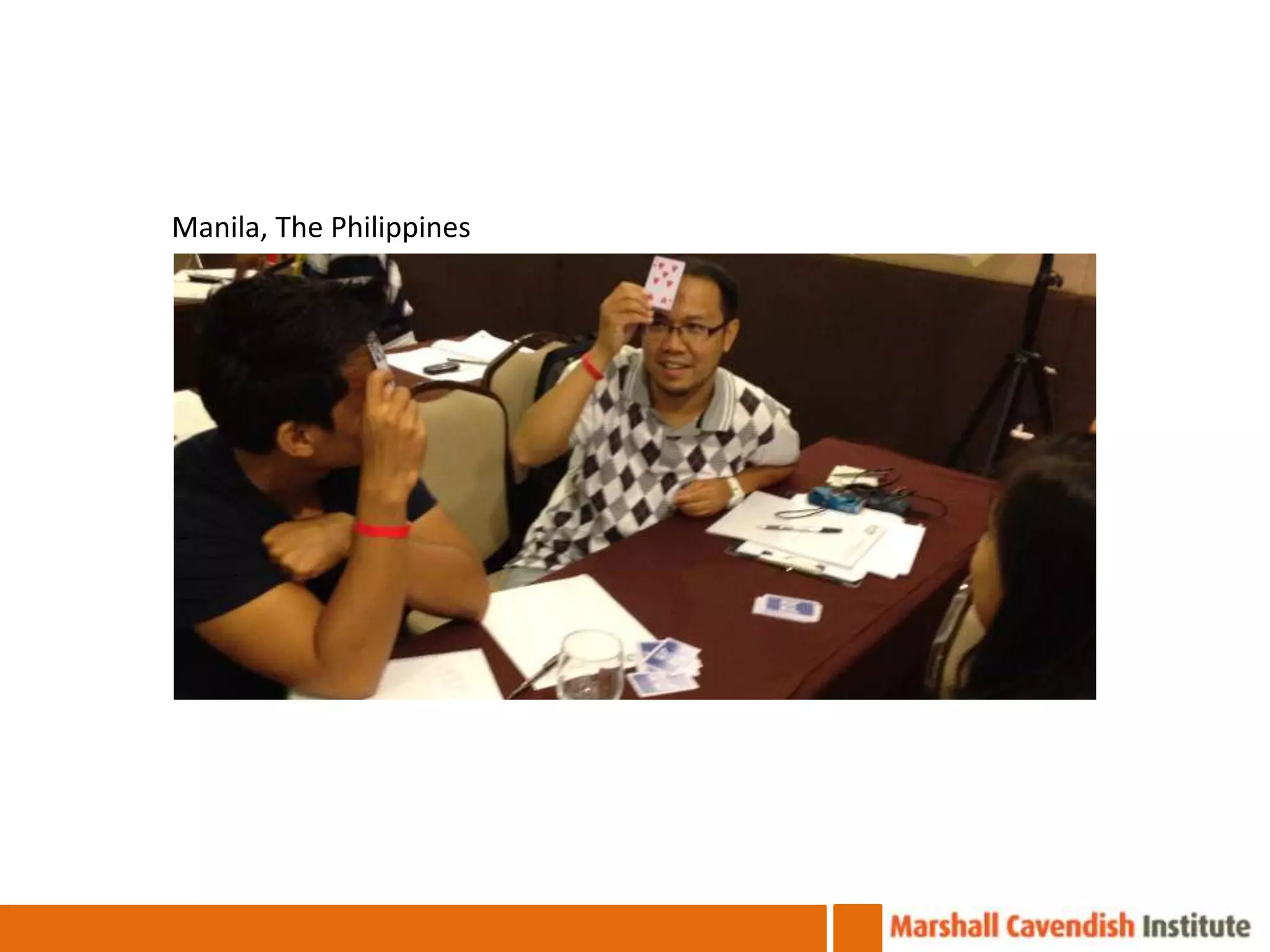
These two players with cards on their       I see 8 and 5
forehead cannot see their own card but        so I should
can see the other person’s card. The goal   say the sum.    13
is to say what number is on her own
forehead.


Santiago, Chile
Manila, The Philippines
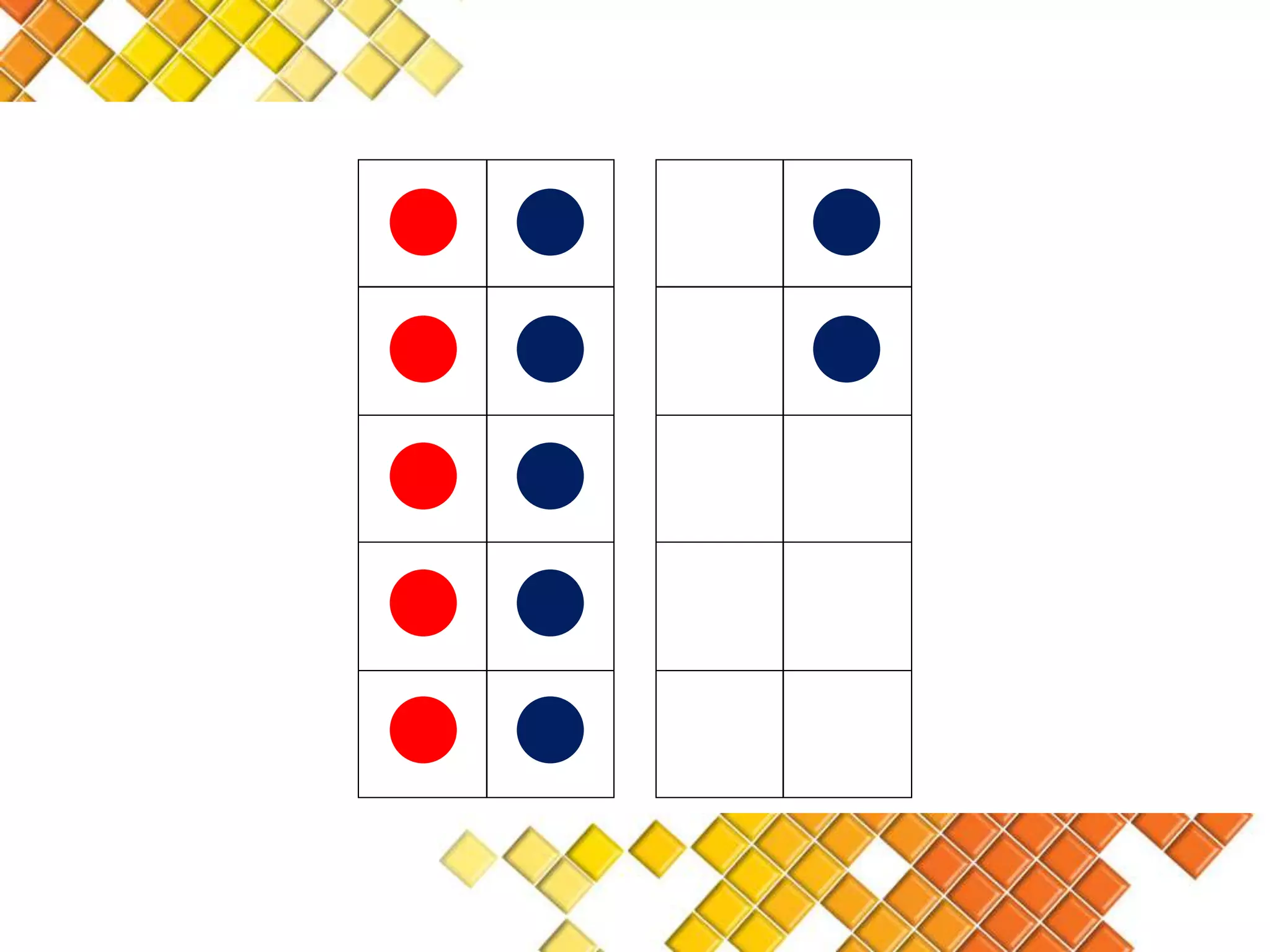
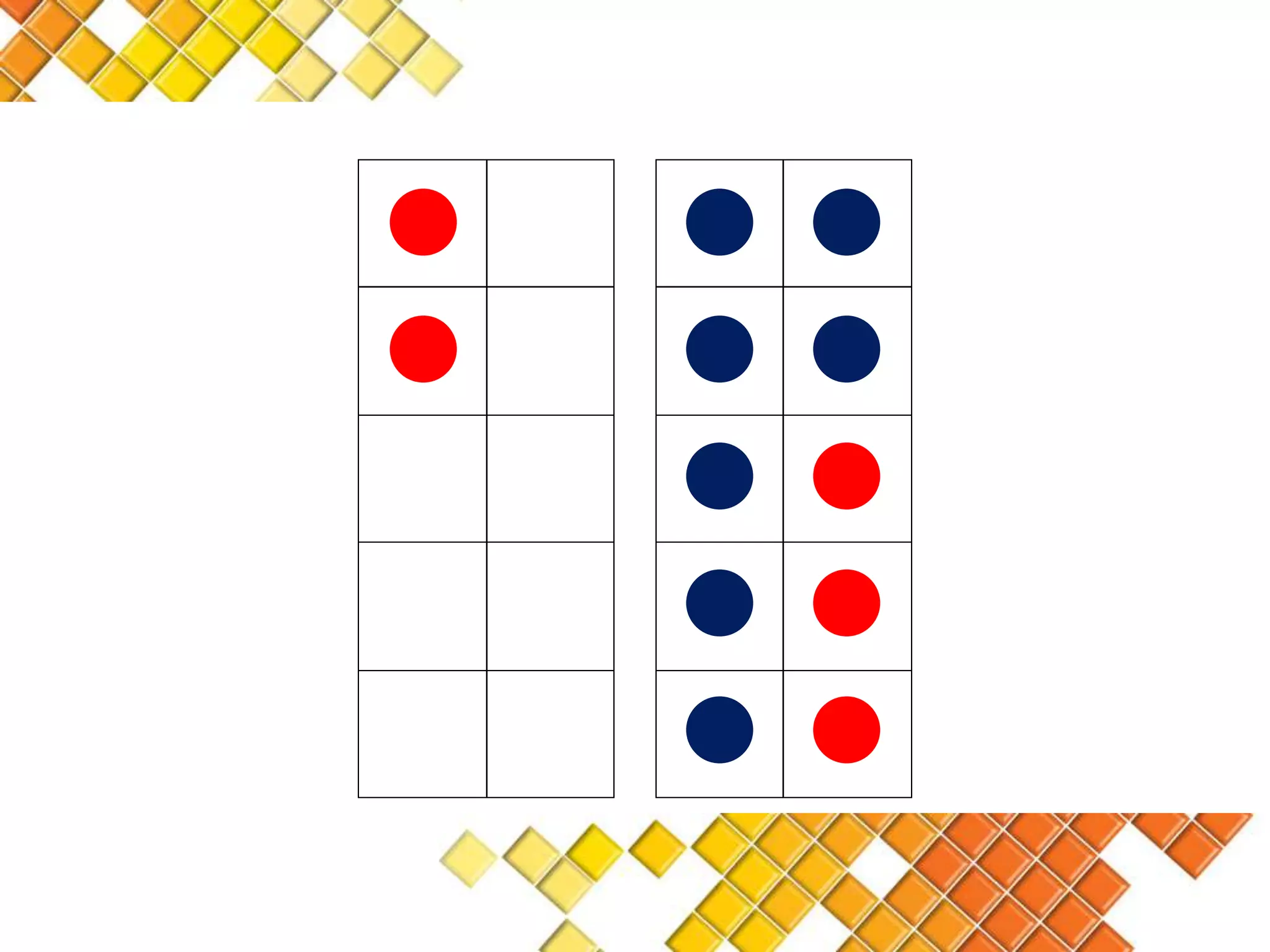
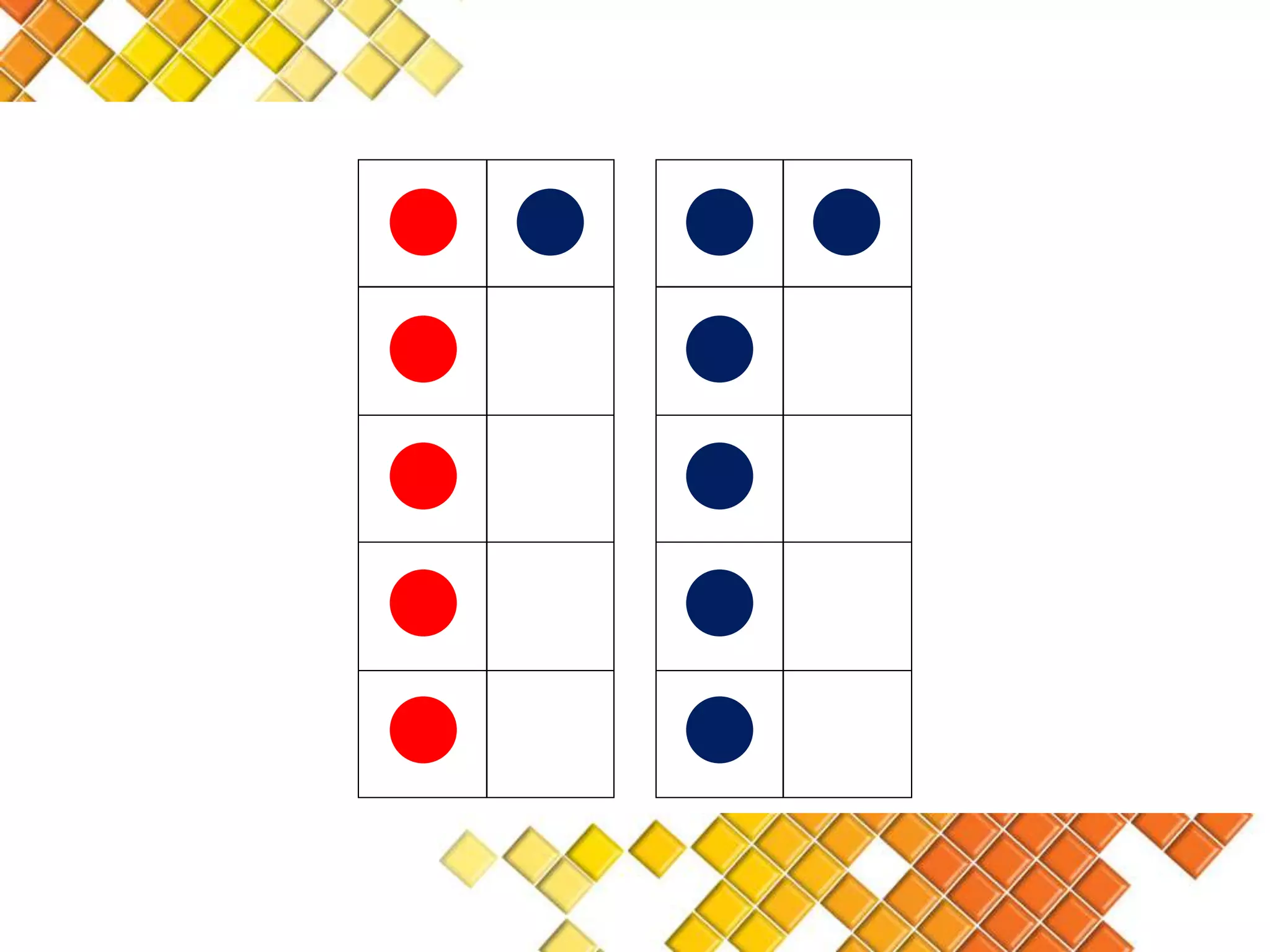
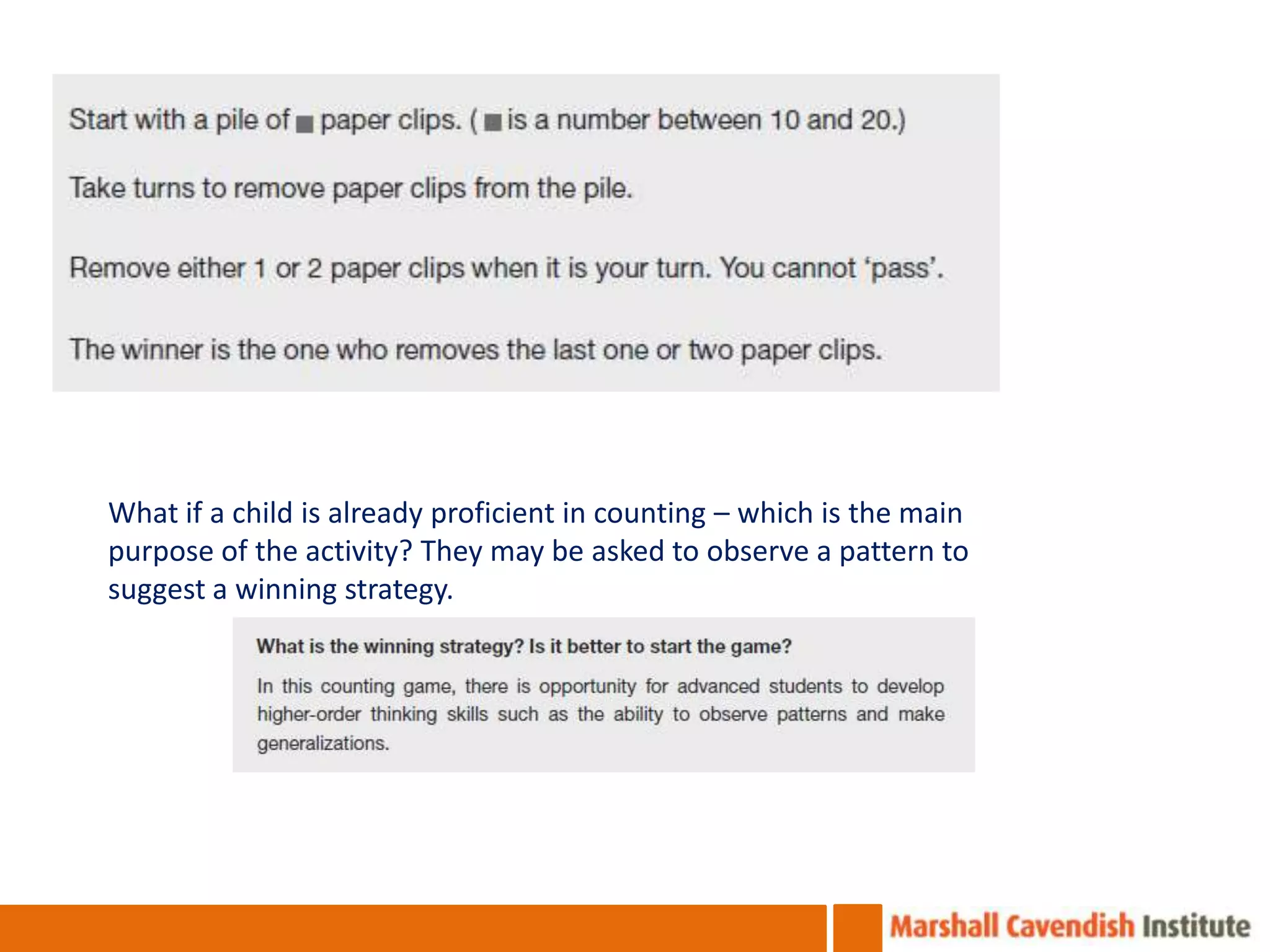
What if a child is already proficient in counting – which is the main
purpose of the activity? They may be asked to observe a pattern to
suggest a winning strategy.
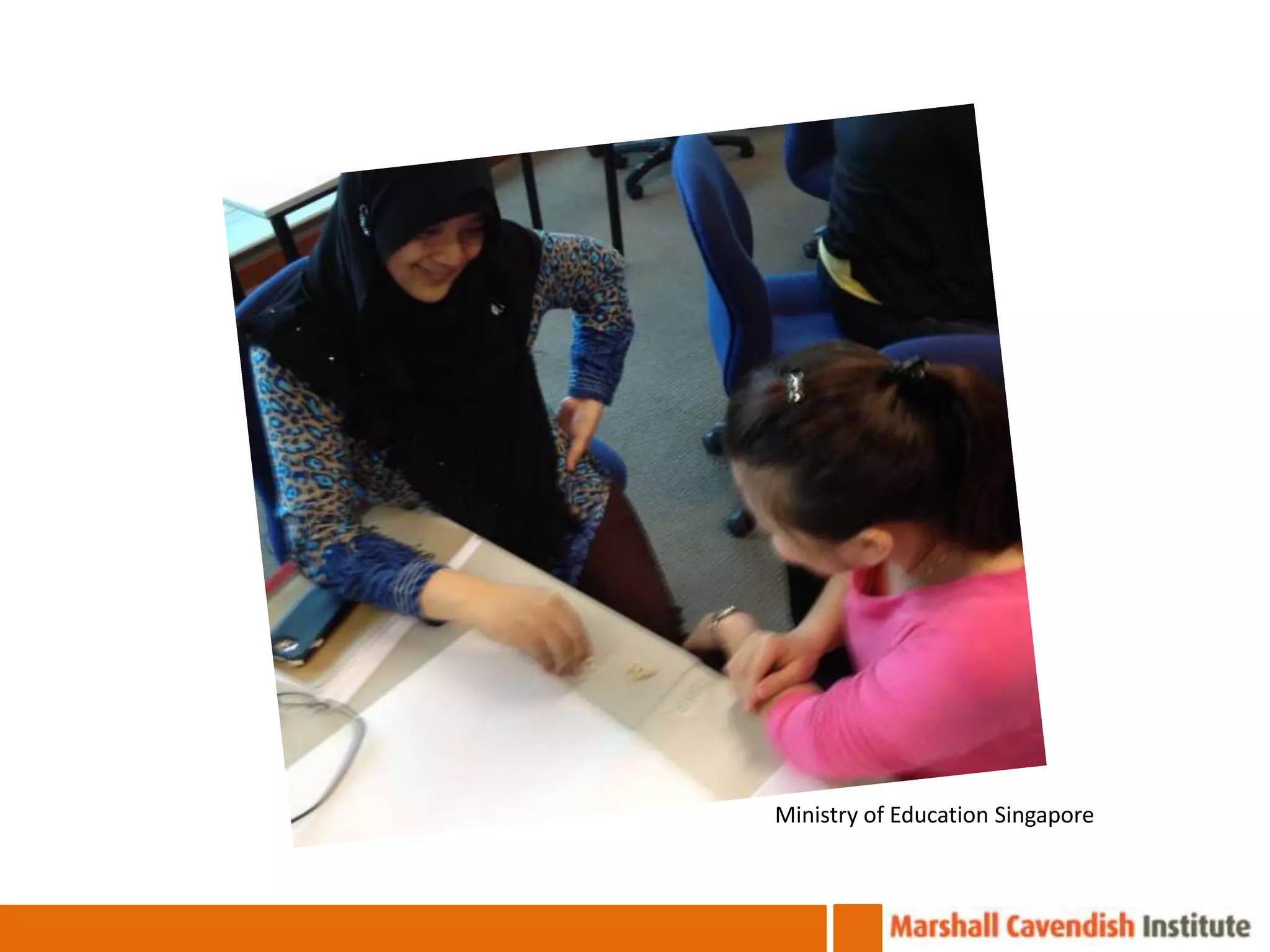
Ministry of Education Singapore
Pa-Pa-Lang by one of my nephews

ECM101 Development of Early Childhood Numeracy

  • 1.
  • 2.
    Slides are availableat Lecturer www.i-teach-k.blogspot.com Yeap Ban Har www.facebook.com/MCISingapore yeapbanhar@gmail.com
  • 4.
    introduction from 1992 to 2013
  • 7.
    “Mathematics is anexcellent vehicle for the development and improvement of a person’s intellectual competencies” Singapore Ministry of Education 2006
  • 8.
  • 9.
    looking for patterns
  • 10.
    number sense
  • 12.
    what toteach
  • 13.
    how to teach
  • 15.
    Use 3 pieces.Make a rectangle.
  • 16.
    See www.facebook.com/MCISingapore underthe Photo Album Tangrams for more solutions
  • 19.
    Development of Geometric Thinking vanHiele Model of Geometric Thinking There are 5 levels: • Level 0: Visualisation • Level 1: Analysis • Level 2: Informal Deduction • Level 3: Deduction • Level 4: Rigour The levels are sequential – must start at the basic level.
  • 20.
    Level 0: Visualisation •Recognise the appearance of the shapes (look sort of alike) • Properties are incidental to the shape (implicit) “A square is a square because it looks like a square.”
  • 21.
    Implications for Instruction Level0: Visualisation • Provide concrete materials that can be manipulated • Include different and varied examples of shapes • Involve lots of sorting, identifying, and describing of various shapes • Provide opportunities to build, make, draw, put together and take apart shapes
  • 22.
    Level 1: Analysis •More aware of the properties of a shape than to its appearance • Use properties to define categories of shapes (able to list the properties but not the relationships among the properties)
  • 23.
    Implications for Instruction Level1: Informal Deduction • Engage in the same activities as level 0 but the focus of the activities should be on the properties of the shapes, not identification • Classify shapes by properties • Derive generalisation by studying examples • Use appropriate vocabulary
  • 24.
    Level 2: InformalDeduction • Understand the relation of properties within and among figures “A square is a rectangle, a rectangle is parallelogram which is also a quadrilateral.”
  • 25.
    Level 3: FormalDeduction • Construct proofs to determine the truth of a mathematic statements Level 4: Rigour • Highly abstract form of geometric thought
  • 26.
    Summary  Understand theimportance of visualisation and geometric thinking (van Hiele model of geometric thinking )  Use activities to reinforce visualisation skills • Tangram activity • Grandfather Tang’s story • Create your own picture
  • 27.
    Ordinal, Cardinal &Nominal Numbers
  • 29.
    Cardinal Number • Ordinal Number • Nominal Number • Measurement Number Siti Michael John
  • 30.
  • 32.
    Problem Arrange the tencards so that you can do what is shown to you.
  • 33.
    Method 1 –by drawing
  • 34.
    Method 2 –by using the cards
  • 35.
  • 37.
    rational counting
  • 40.
    addition • strategies Count All • Count On • Count On + Commutative Property • Make Ten • Number Facts (1 + 1 to 9 + 9)
  • 45.
    These two playerswith cards on their I see 8 and 5 forehead cannot see their own card but so I should can see the other person’s card. The goal say the sum. 13 is to say what number is on her own forehead. Santiago, Chile
  • 46.
  • 48.
    What if achild is already proficient in counting – which is the main purpose of the activity? They may be asked to observe a pattern to suggest a winning strategy.
  • 49.
  • 51.
    Pa-Pa-Lang by oneof my nephews