BLAKEINSTITUTE2015 | Grade 1 Institute on MONDAY
Did you know that a greater number of people commit suicide, call in sick, and surf the web on
Mondays than other days in the Netherlands?
banhar.yeap@pathlight.org.sg | www.banhar.blogspot.com
Counting
Teaching kids to count is fine, but teaching them what counts is best.
Bob Talbert
Rational Counting – counting to tell the number of items in a set – is easy. Do your
Grade 1 students get to count in a way that prepare them for higher concepts?
 Count to Conserve
 Count to Decompose
 Count to Compare
During the institute, we will see examples of each of the above and see how these
help student learn in a conceptual way, or what Skemp refers to as relational
understanding (as opposed to instrumental understanding).
Skemp classified understandings in mathematics into three types – instrumental,
relational and conventional understanding.
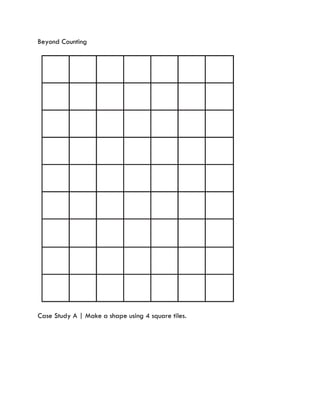
Beyond Counting
Case Study A | Make a shape using 4 square tiles.
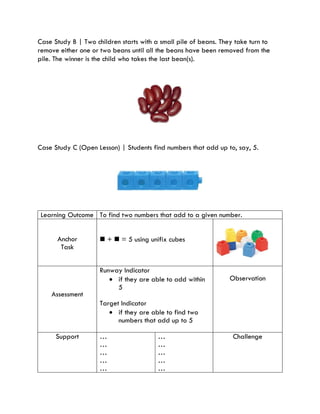
Case Study B | Two children starts with a small pile of beans. They take turn to
remove either one or two beans until all the beans have been removed from the
pile. The winner is the child who takes the last bean(s).
Case Study C (Open Lesson) | Students find numbers that add up to, say, 5.
Learning Outcome To find two numbers that add to a given number.
Anchor
Task
 +  = 5 using unifix cubes
Assessment
Runway Indicator
 if they are able to add within
5
Target Indicator
 if they are able to find two
numbers that add up to 5
Observation
Support …
…
…
…
…
…
…
…
…
…
Challenge
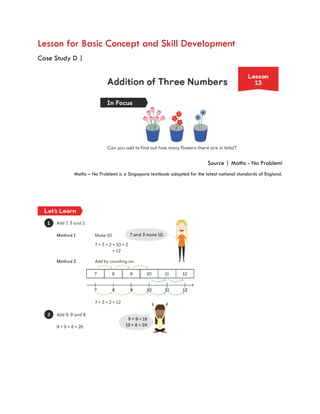
Lesson for Basic Concept and Skill Development
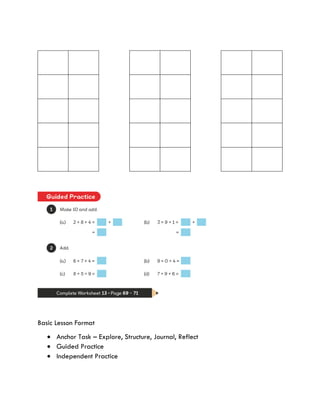
Case Study D |
Source | Maths - No Problem!
Maths – No Problem! is a Singapore textbook adapted for the latest national standards of England.
Basic Lesson Format
 Anchor Task – Explore, Structure, Journal, Reflect
 Guided Practice
 Independent Practice
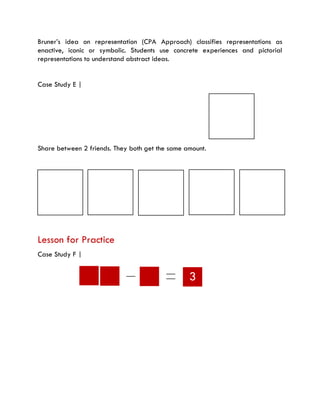
Bruner’s idea on representation (CPA Approach) classifies representations as
enactive, iconic or symbolic. Students use concrete experiences and pictorial
representations to understand abstract ideas.
Case Study E |
Share between 2 friends. They both get the same amount.
Lesson for Practice
Case Study F |
3
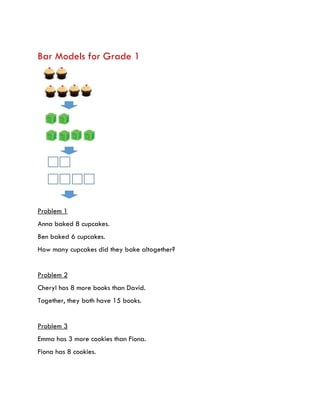
Bar Models for Grade 1
Problem 1
Anna baked 8 cupcakes.
Ben baked 6 cupcakes.
How many cupcakes did they bake altogether?
Problem 2
Cheryl has 8 more books than David.
Together, they both have 15 books.
Problem 3
Emma has 3 more cookies than Fiona.
Fiona has 8 cookies.
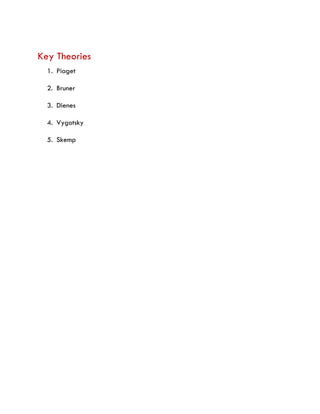
Key Theories
1. Piaget
2. Bruner
3. Dienes
4. Vygotsky
5. Skemp
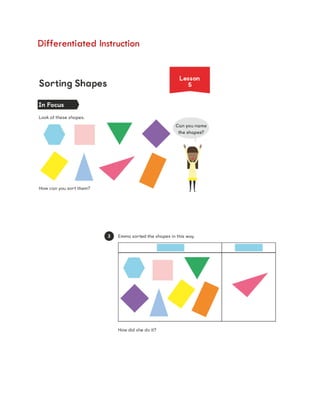
Differentiated Instruction

Blake Grade 1

  • 1.
    BLAKEINSTITUTE2015 | Grade1 Institute on MONDAY Did you know that a greater number of people commit suicide, call in sick, and surf the web on Mondays than other days in the Netherlands? banhar.yeap@pathlight.org.sg | www.banhar.blogspot.com Counting Teaching kids to count is fine, but teaching them what counts is best. Bob Talbert Rational Counting – counting to tell the number of items in a set – is easy. Do your Grade 1 students get to count in a way that prepare them for higher concepts?  Count to Conserve  Count to Decompose  Count to Compare During the institute, we will see examples of each of the above and see how these help student learn in a conceptual way, or what Skemp refers to as relational understanding (as opposed to instrumental understanding). Skemp classified understandings in mathematics into three types – instrumental, relational and conventional understanding.
  • 2.
    Beyond Counting Case StudyA | Make a shape using 4 square tiles.
  • 3.
    Case Study B| Two children starts with a small pile of beans. They take turn to remove either one or two beans until all the beans have been removed from the pile. The winner is the child who takes the last bean(s). Case Study C (Open Lesson) | Students find numbers that add up to, say, 5. Learning Outcome To find two numbers that add to a given number. Anchor Task  +  = 5 using unifix cubes Assessment Runway Indicator  if they are able to add within 5 Target Indicator  if they are able to find two numbers that add up to 5 Observation Support … … … … … … … … … … Challenge
  • 4.
    Lesson for BasicConcept and Skill Development Case Study D | Source | Maths - No Problem! Maths – No Problem! is a Singapore textbook adapted for the latest national standards of England.
  • 5.
    Basic Lesson Format Anchor Task – Explore, Structure, Journal, Reflect  Guided Practice  Independent Practice
  • 6.
    Bruner’s idea onrepresentation (CPA Approach) classifies representations as enactive, iconic or symbolic. Students use concrete experiences and pictorial representations to understand abstract ideas. Case Study E | Share between 2 friends. They both get the same amount. Lesson for Practice Case Study F | 3
  • 7.
    Bar Models forGrade 1 Problem 1 Anna baked 8 cupcakes. Ben baked 6 cupcakes. How many cupcakes did they bake altogether? Problem 2 Cheryl has 8 more books than David. Together, they both have 15 books. Problem 3 Emma has 3 more cookies than Fiona. Fiona has 8 cookies.
  • 8.
    Key Theories 1. Piaget 2.Bruner 3. Dienes 4. Vygotsky 5. Skemp
  • 9.