
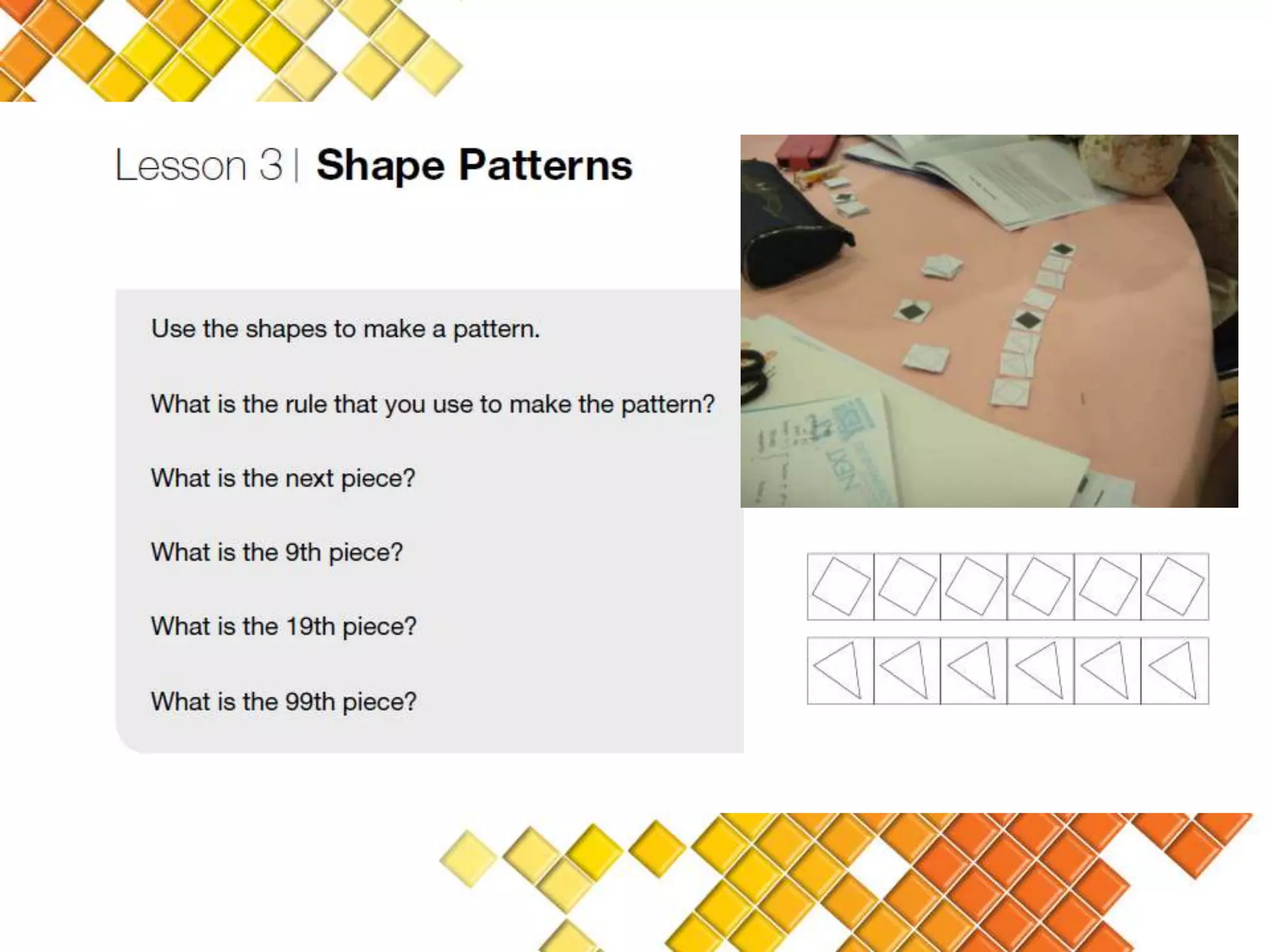

This course focuses on the WHAT and HOW of numeracy
programmes in early childhood education. You will complete four
modules in this course.

By the end of this course, you will learn
• selected key content areas such as ordinal numbers, cardinal
   numbers (counting), addition and subtraction, measurements
   and geometry
• the importance of visualization, generalization and number
   sense
• the need to include ‘soft’ skills such as communication and
   metacognition, creativity and curiosity, and so on
• strategies
• learning theories
Visualization
                               Shapes & Geometry


         INSTRUCTOR

       Peggy Foo
Marshall Cavendish Institute
Spatial Visualisation

• It involves having images of objects
• Spatial visualisation and geometry are
  interdependent (learning of one area will lead
  to the other)
Development of
              Geometric Thinking
van Hiele Model of Geometric Thinking

There are 5 levels:
• Level 0: Visualisation
• Level 1: Analysis
• Level 2: Informal Deduction
• Level 3: Deduction
• Level 4: Rigour

The levels are sequential – must start at the basic level
Level 0: Visualisation
• Recognise the appearance of the shapes (look
  sort of alike)
• Properties are incidental to the shape
  (implicit)
“A square is a square because it looks like a
square” i.e. appearance of the shape
Implications for Instruction
Level 0: Visualisation
• Provide concrete materials that can be manipulated
• Include different and varied examples of shapes
• Involve lots of sorting, identifying, and describing of
  various shapes
• Provide opportunities to build, make, draw, put
  together and take apart shapes
Level 1: Analysis
• More aware of the properties of a shape than
  to its appearance

• Use properties to define categories of shapes
  (able to list the properties but not the
  relationships among the properties)
Implications for Instruction
Level 1: Informal Deduction
• Engage in the same activities as level 0 but the focus
  of the activities should be on the properties of the
  shapes, not identification

• Classify shapes by properties

• Derive generalisation by studying examples

• Use appropriate vocabulary
Level 2: Informal Deduction
• Understand the relation of properties within
  and among figures
• Example: a square is a rectangle, a rectangle is
  parallelogram which is also a quadrilateral
Level 3: Formal Deduction
• Construct proofs to determine the truth of a
  mathematic statements
Level 4: Rigour
• Highly abstract form of geometric thought
Summary
 Understand the importance of visualisation and
  geometric thinking (van Hiele model of geometric
  thinking )

 Use activities to reinforce visualisation skills
  • Tangram activity (manipulate and identify
     geometric shape)

   • Grandfather Tang’s Story / Create your own
     picture (arrange, construct, describe in your own
     words)
Conservation of
                                  Numbers


         INSTRUCTOR

       Peggy Foo
Marshall Cavendish Institute
Objectives
Participants will be able to:

• Understand the importance of conservation of
  numbers
• Study a lesson (video) on a conservation task
Conservation of Numbers

• The number of a set remains the same even if
  the items of the set are rearranged (Piaget, 1952)
• Basis of number knowledge
• Based on understanding the concept of equality
  and one to one correspondence
• Reveal/ assess children’s knowledge of numbers
Responses
Number Conservation by Counting:
• I counted them

Number Conservation by Justification:
• Nothing is added or taken away
• I can put them back in the same position so
  they look like as they did before
Conservation Task
• Using 4 cubes, make as many different
  structures as you can
Learning points
• What can we achieve using conservation
  tasks?
   Enhance visualisation skills by constructing different
   structures and sorting / classifying the structures
   Enhance reasoning and communication skills when asked
   to justify one’s responses
Summary
•   Importance of conservation of numbers
    (basis of number knowledge, start with
    concept of equality and one-to-one
    correspondence)
•   Aspects of lesson which support
    visualisation and reasoning skills
Ordinal and Cardinal
                                    Numbers


         INSTRUCTOR

     Yeap Ban Har
Marshall Cavendish Institute
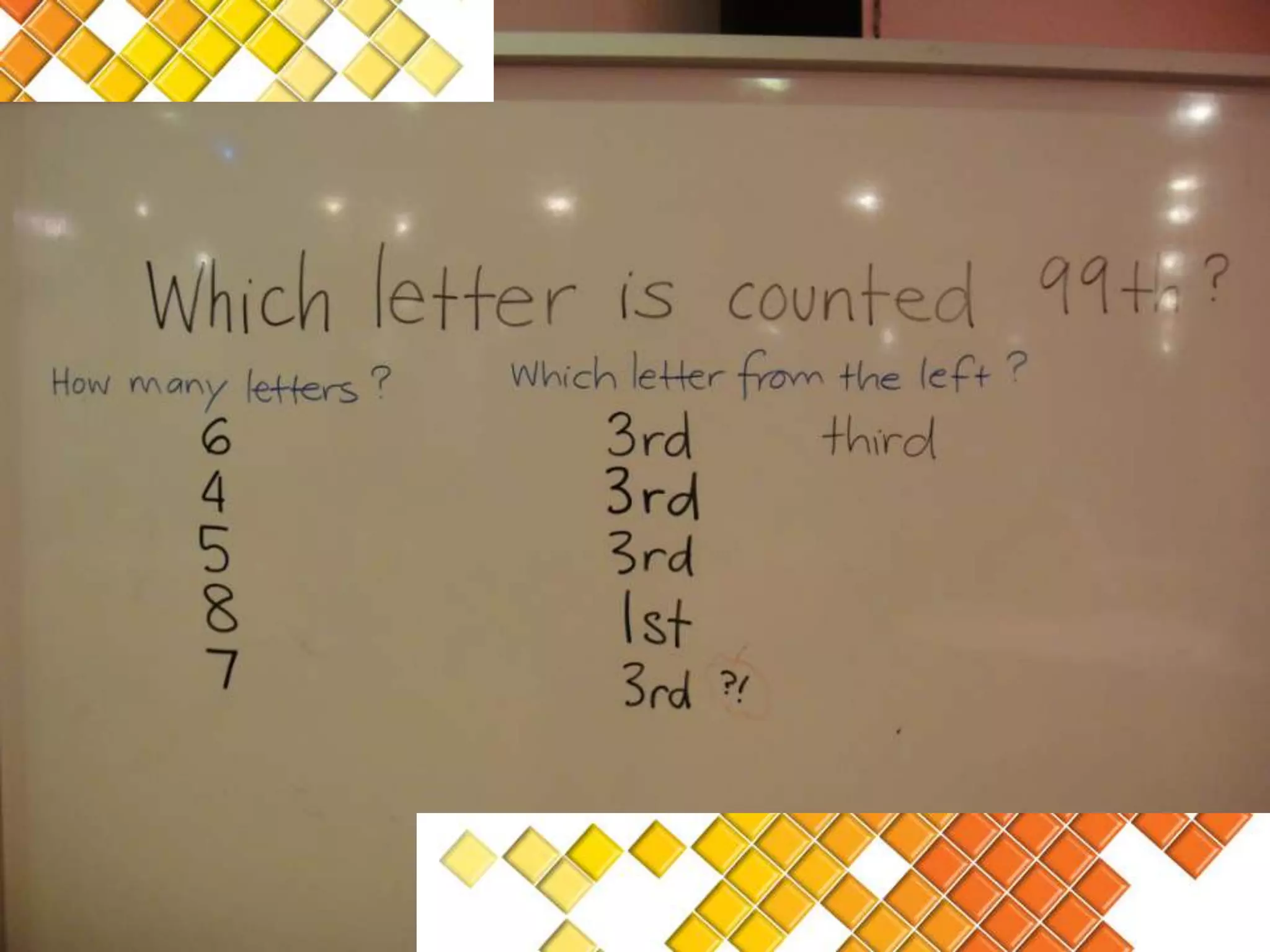
B   A   N   H   A   R
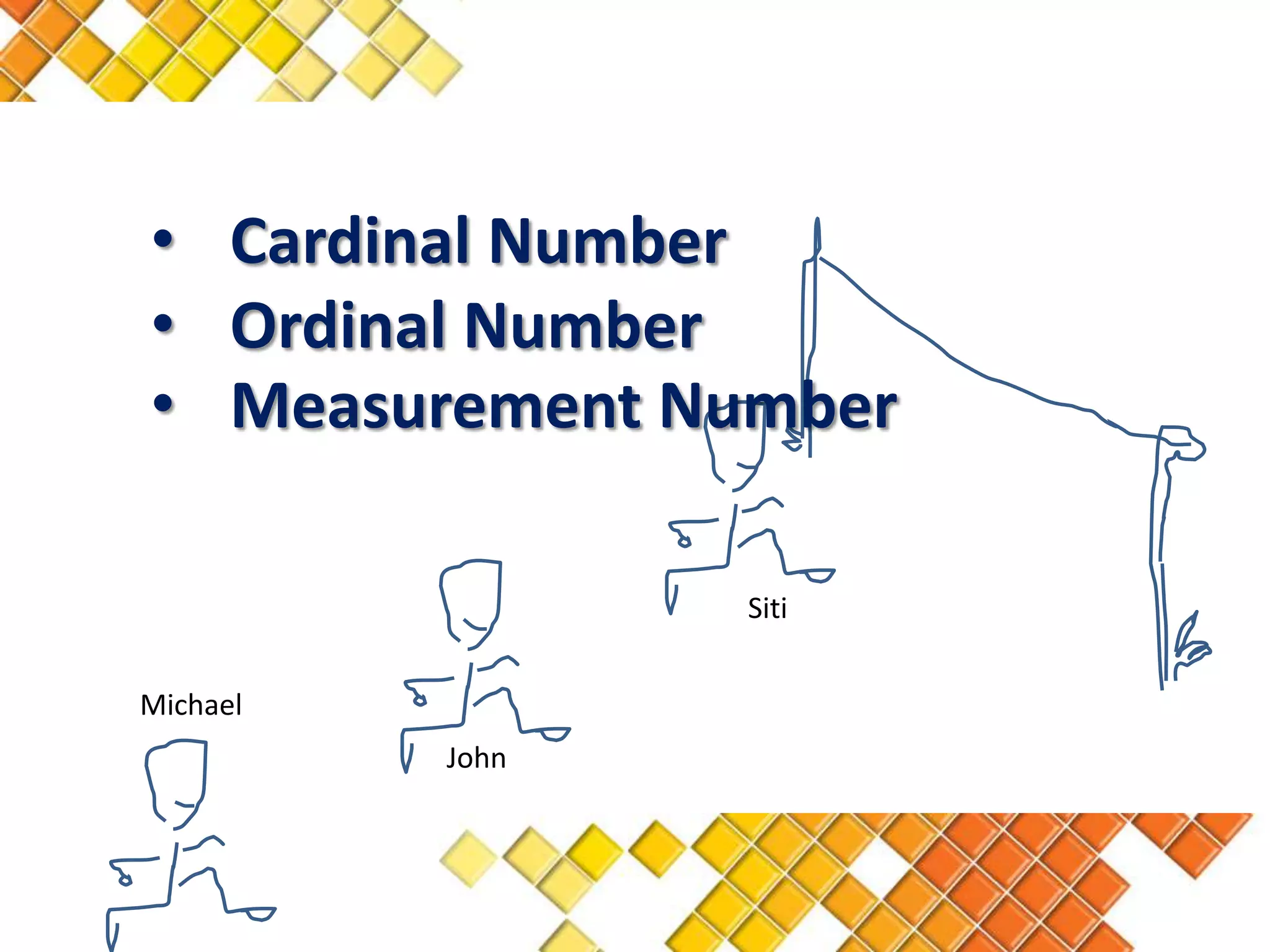
• Cardinal Number
• Ordinal Number
• Measurement Number

                 Siti


Michael
          John
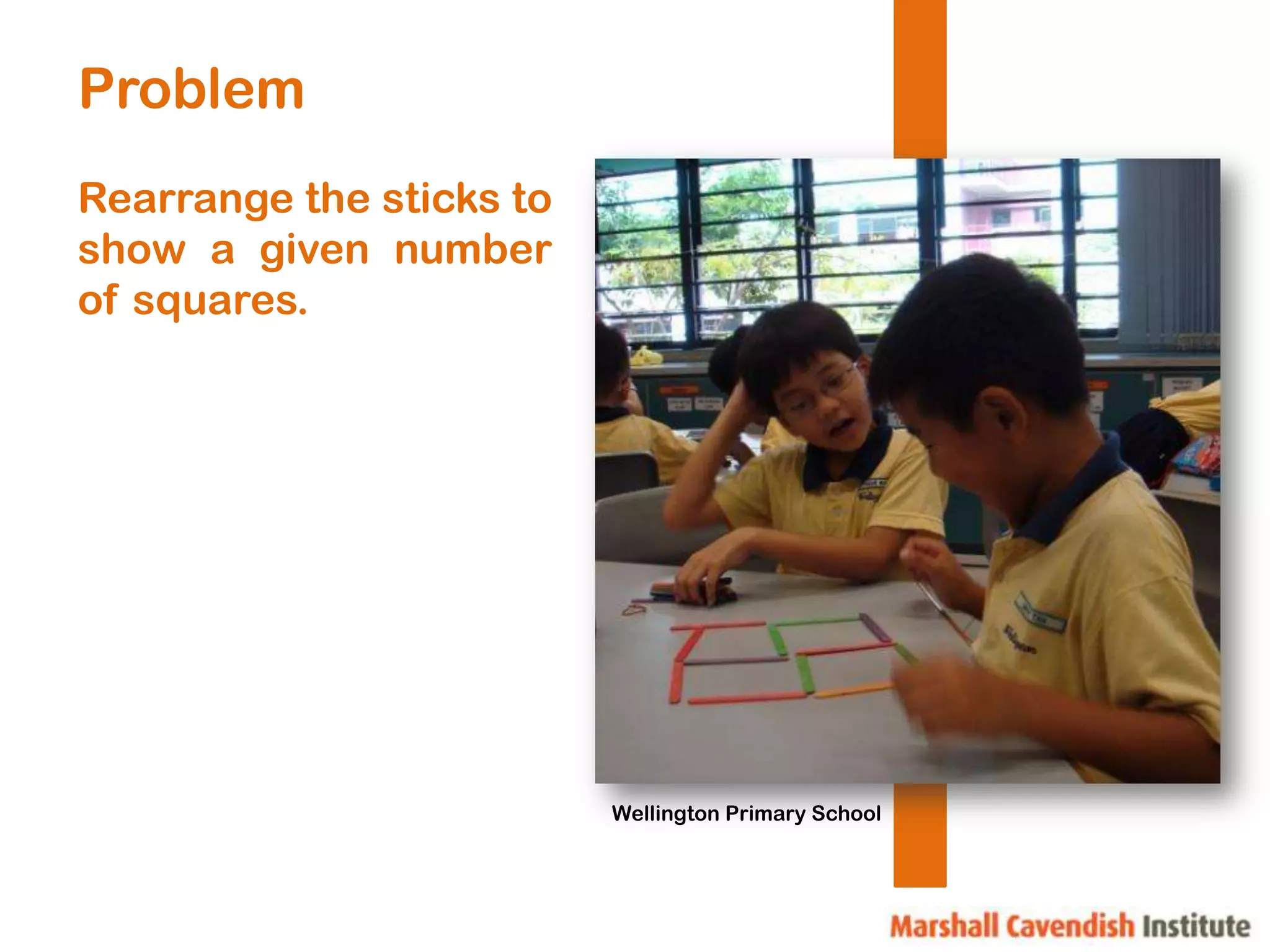
Problem
Rearrange the sticks to
show a given number
of squares.


                          Wellington Primary School
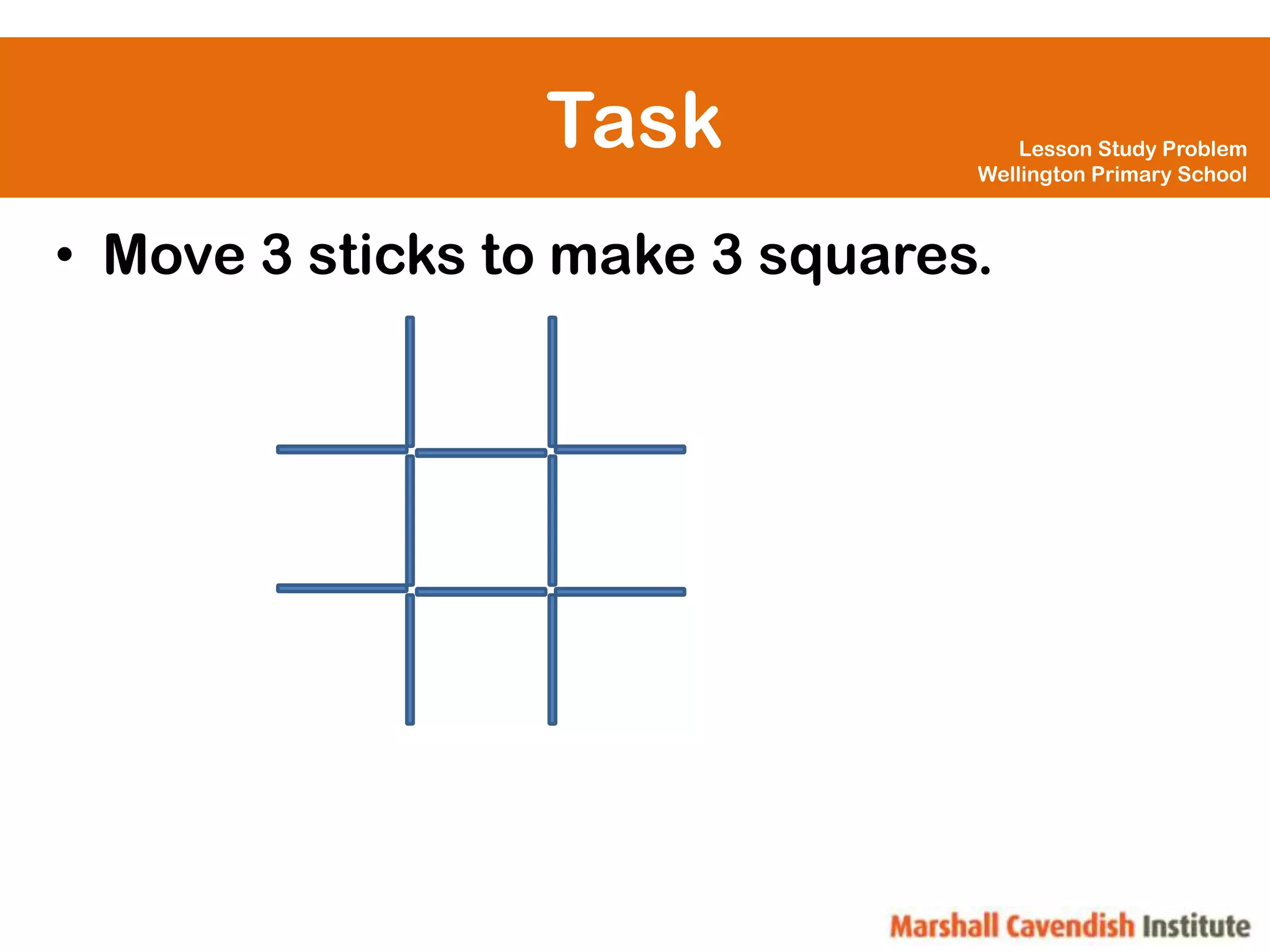
Task                Lesson Study Problem
                                 Wellington Primary School


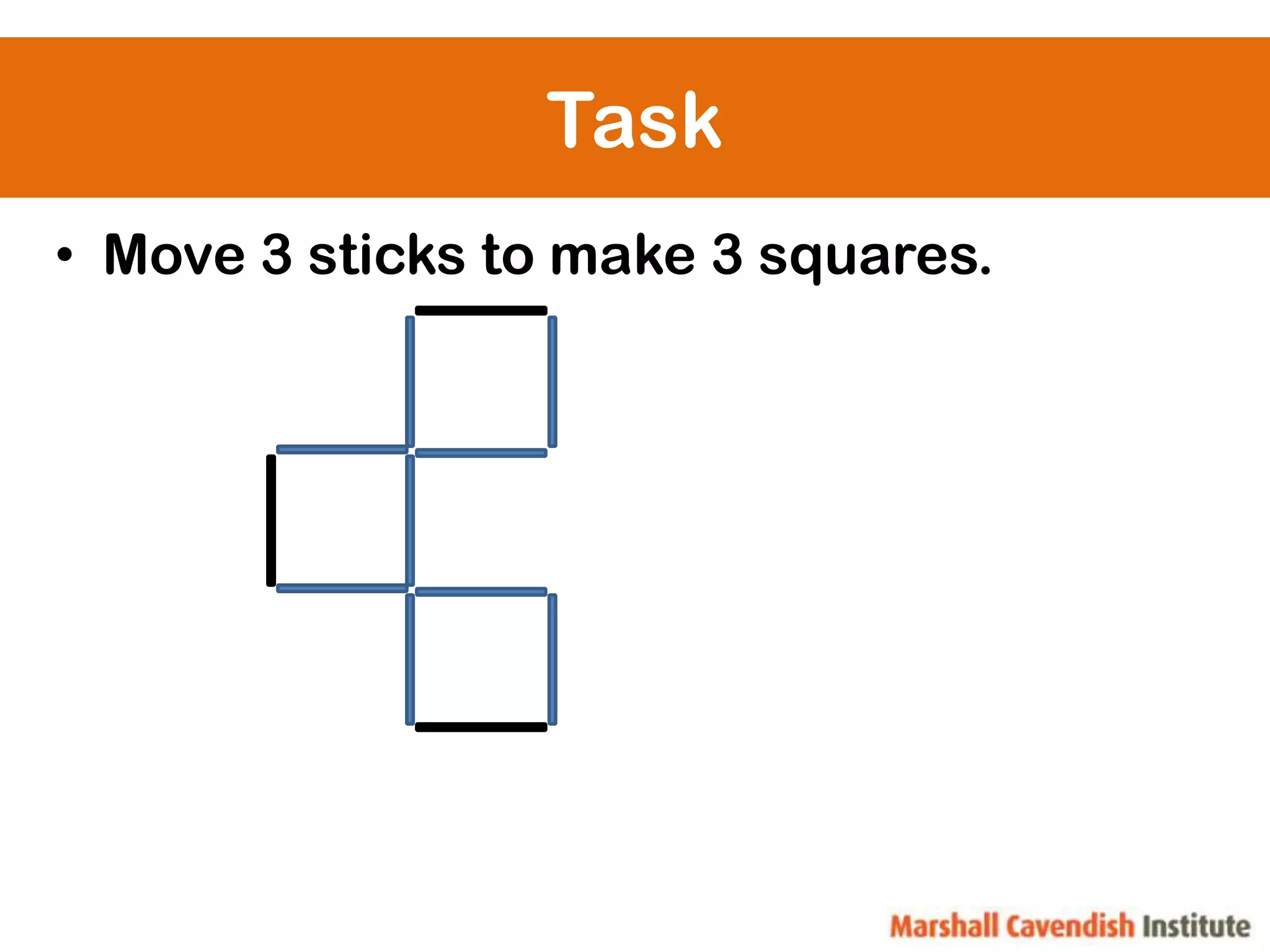
• Move 3 sticks to make 3 squares.
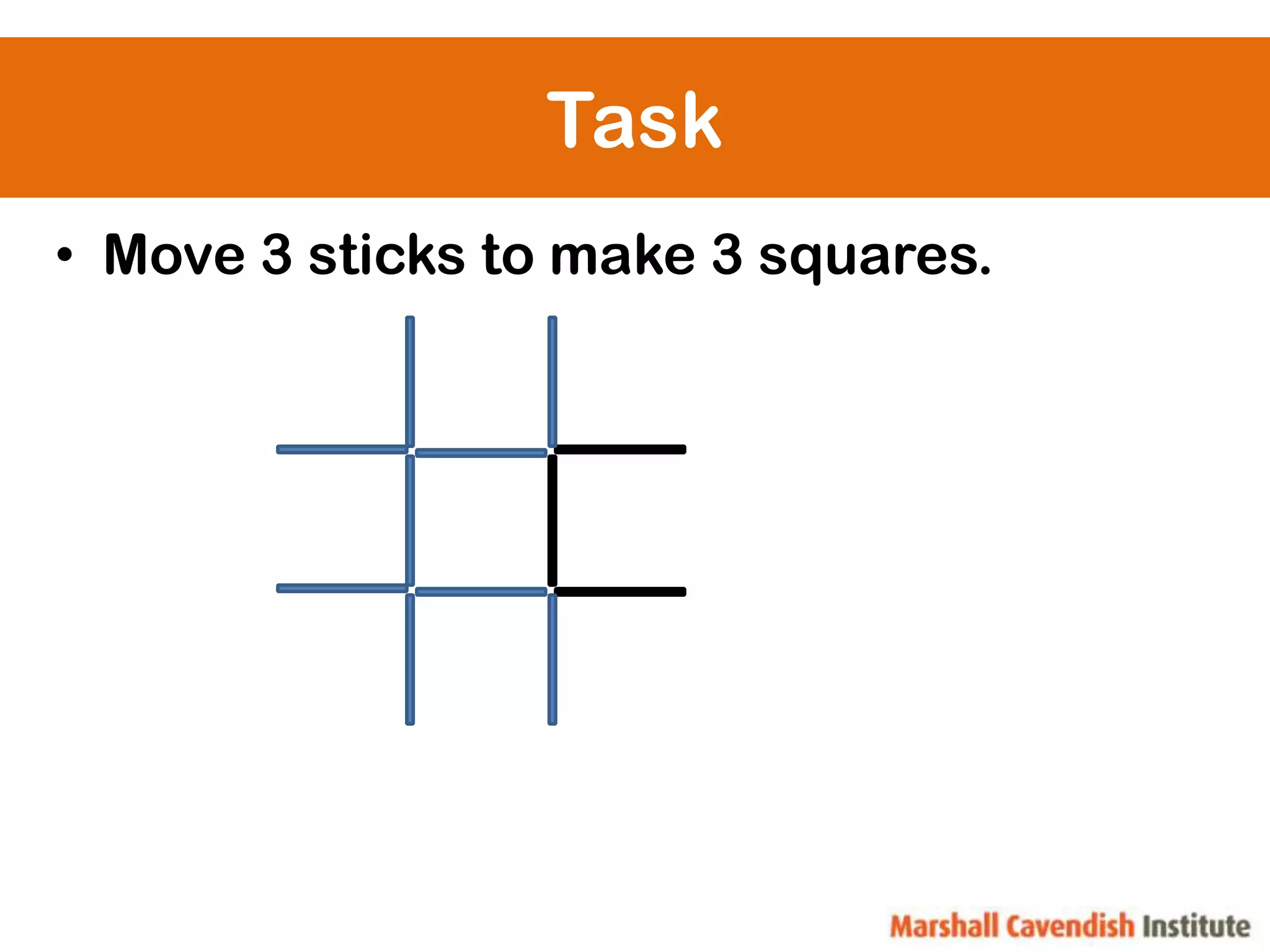
Task
• Move 3 sticks to make 3 squares.
Task
• Move 3 sticks to make 3 squares.
Task
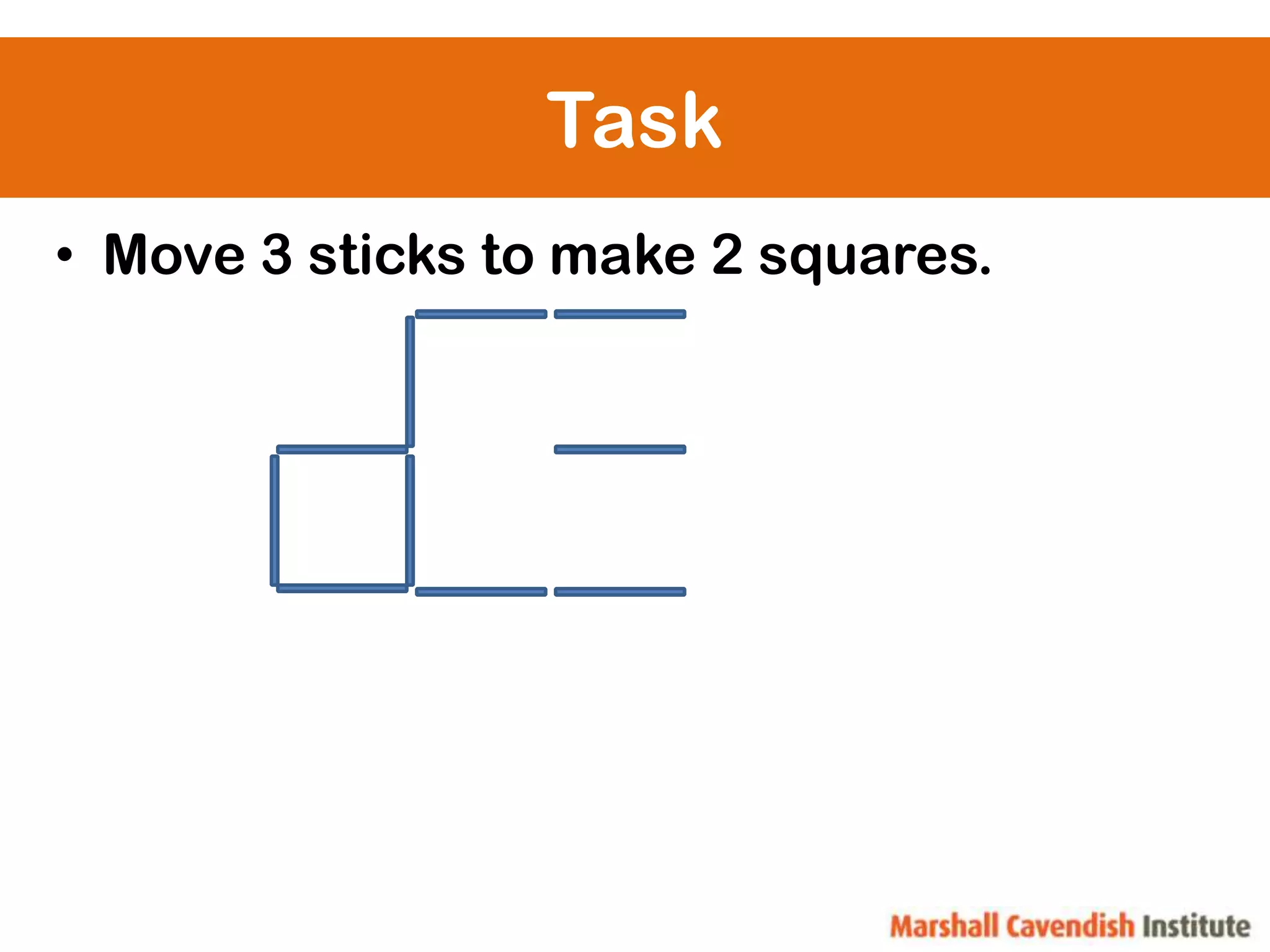
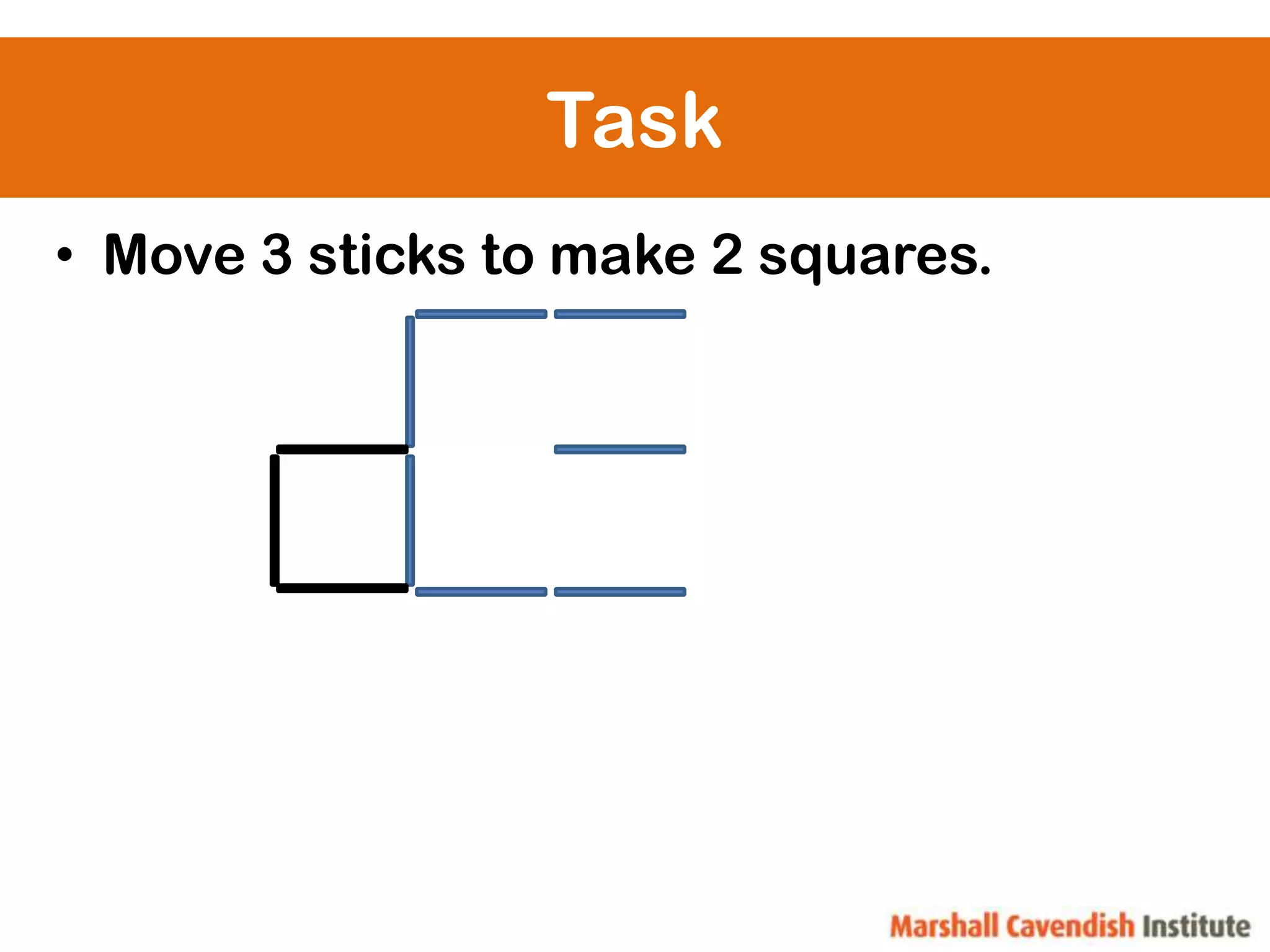
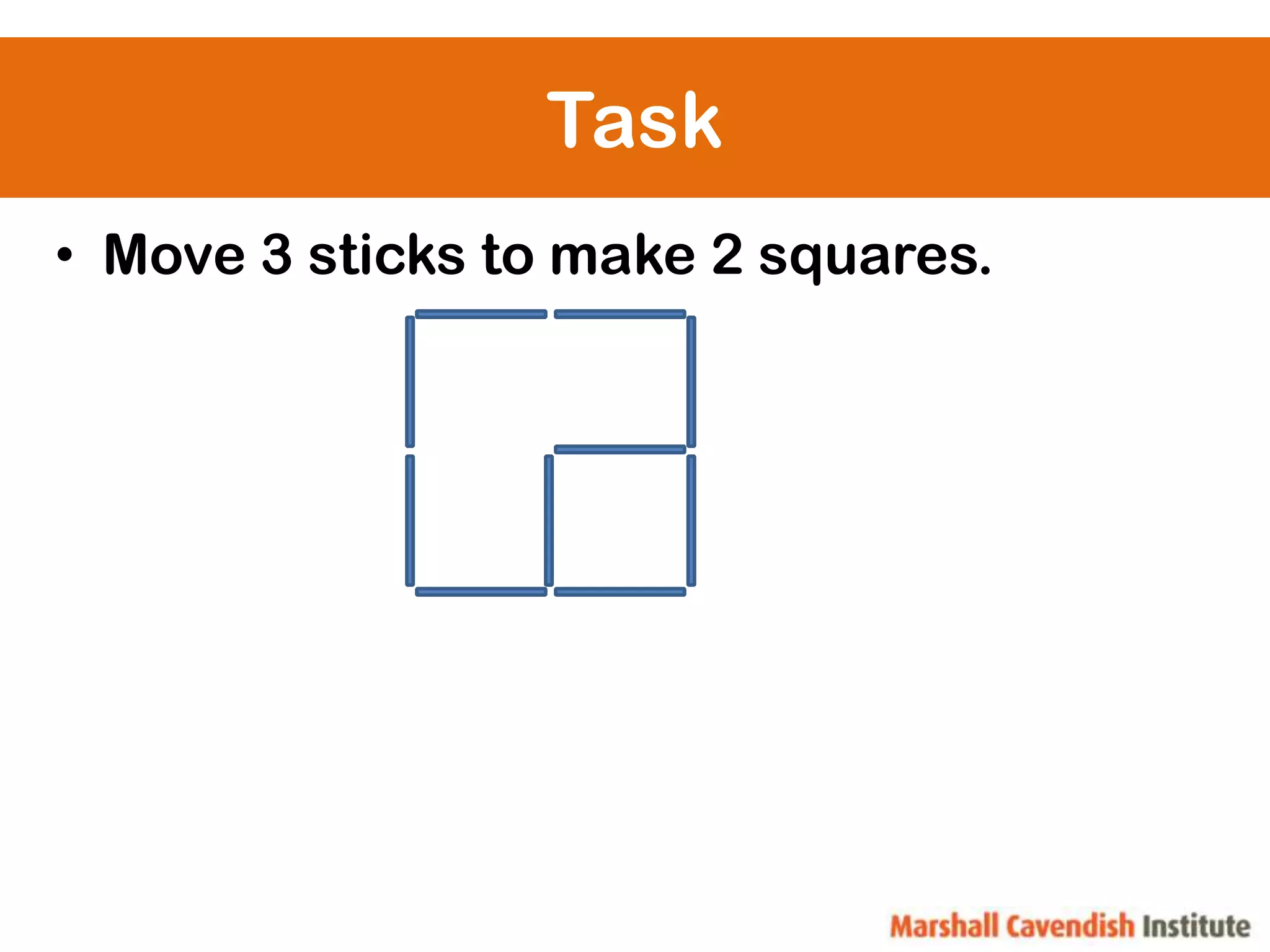
• Move 3 sticks to make 2 squares.
Task
• Move 3 sticks to make 2 squares.
Task
• Move 3 sticks to make 2 squares.
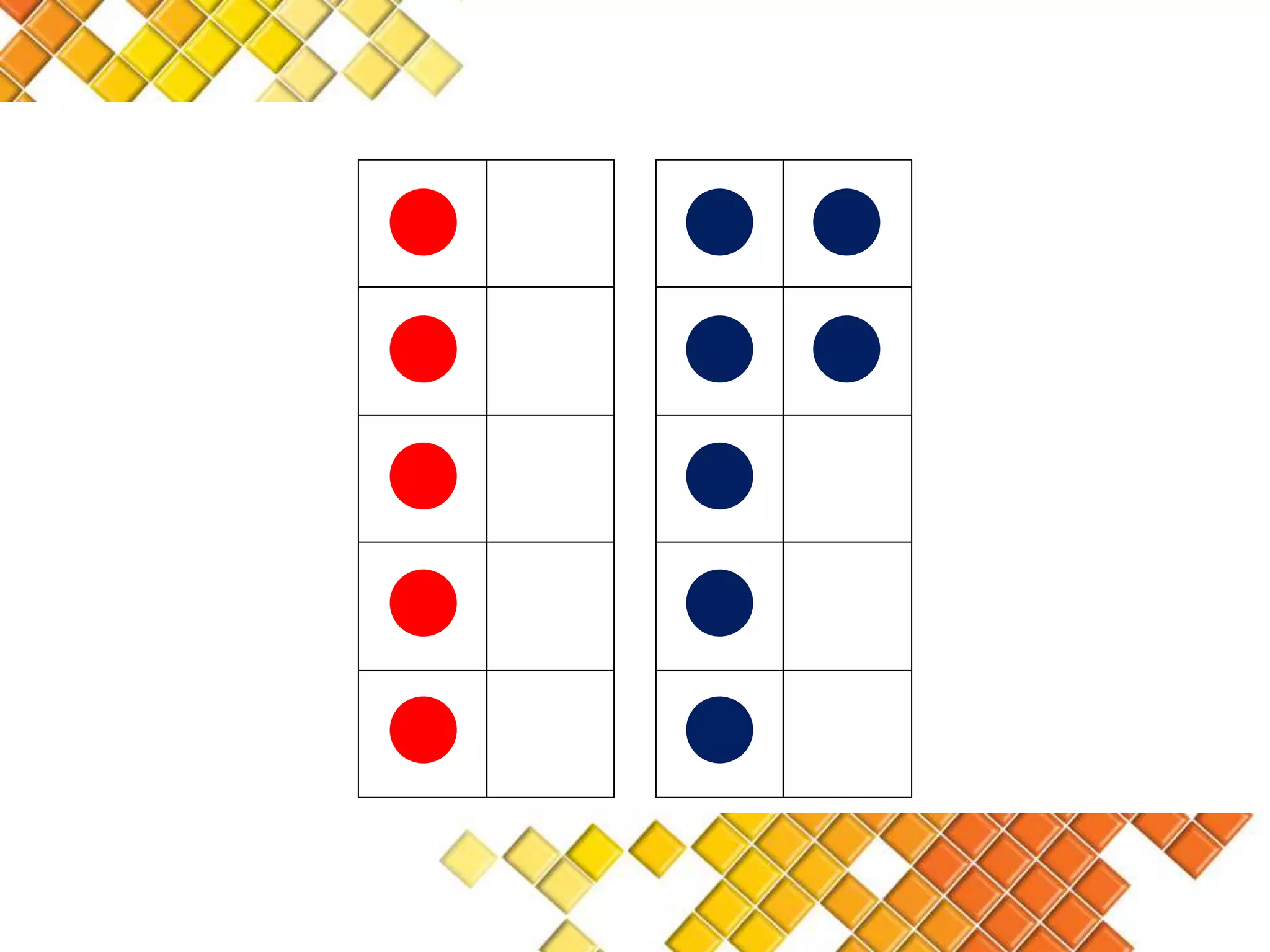
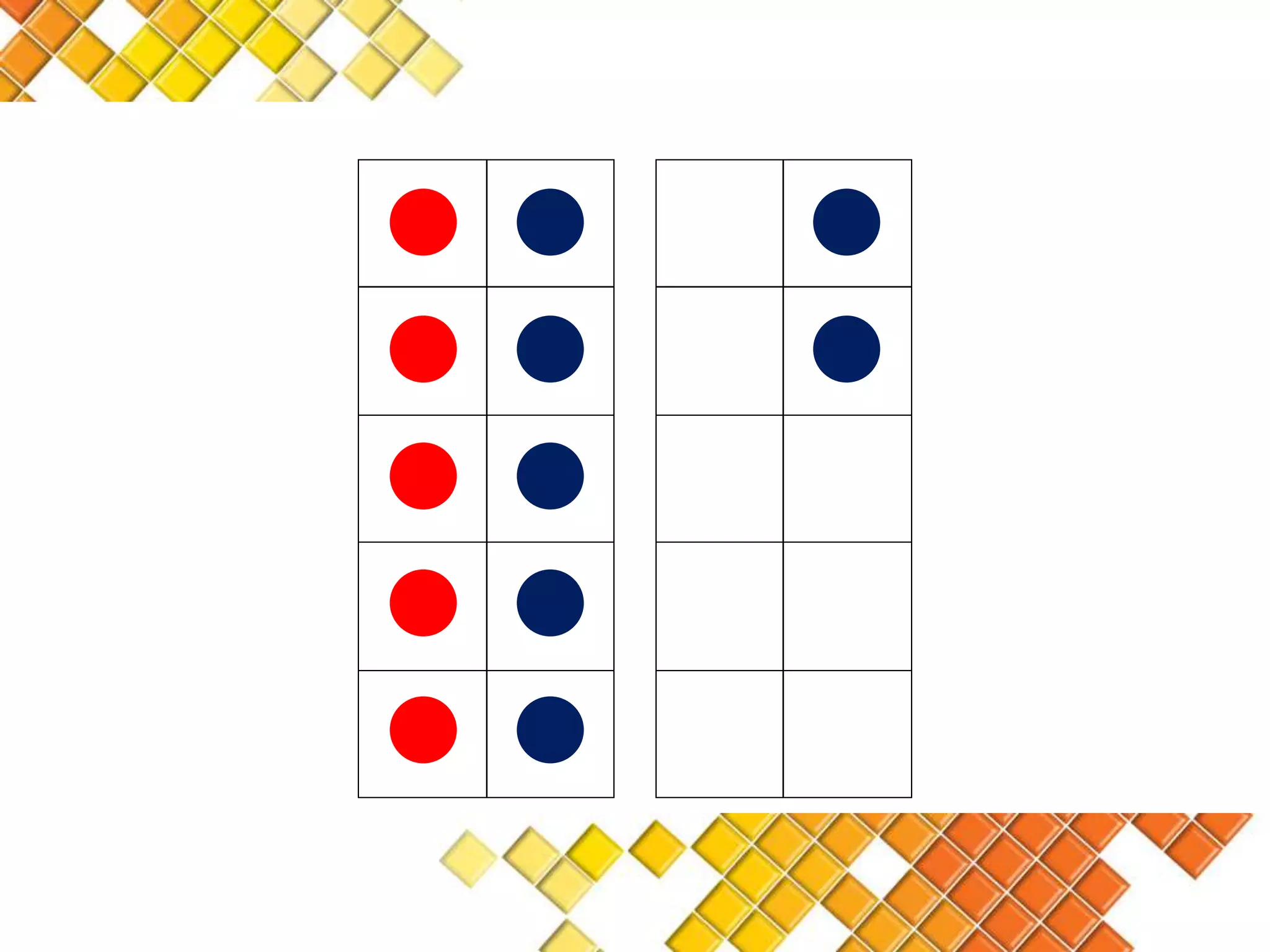
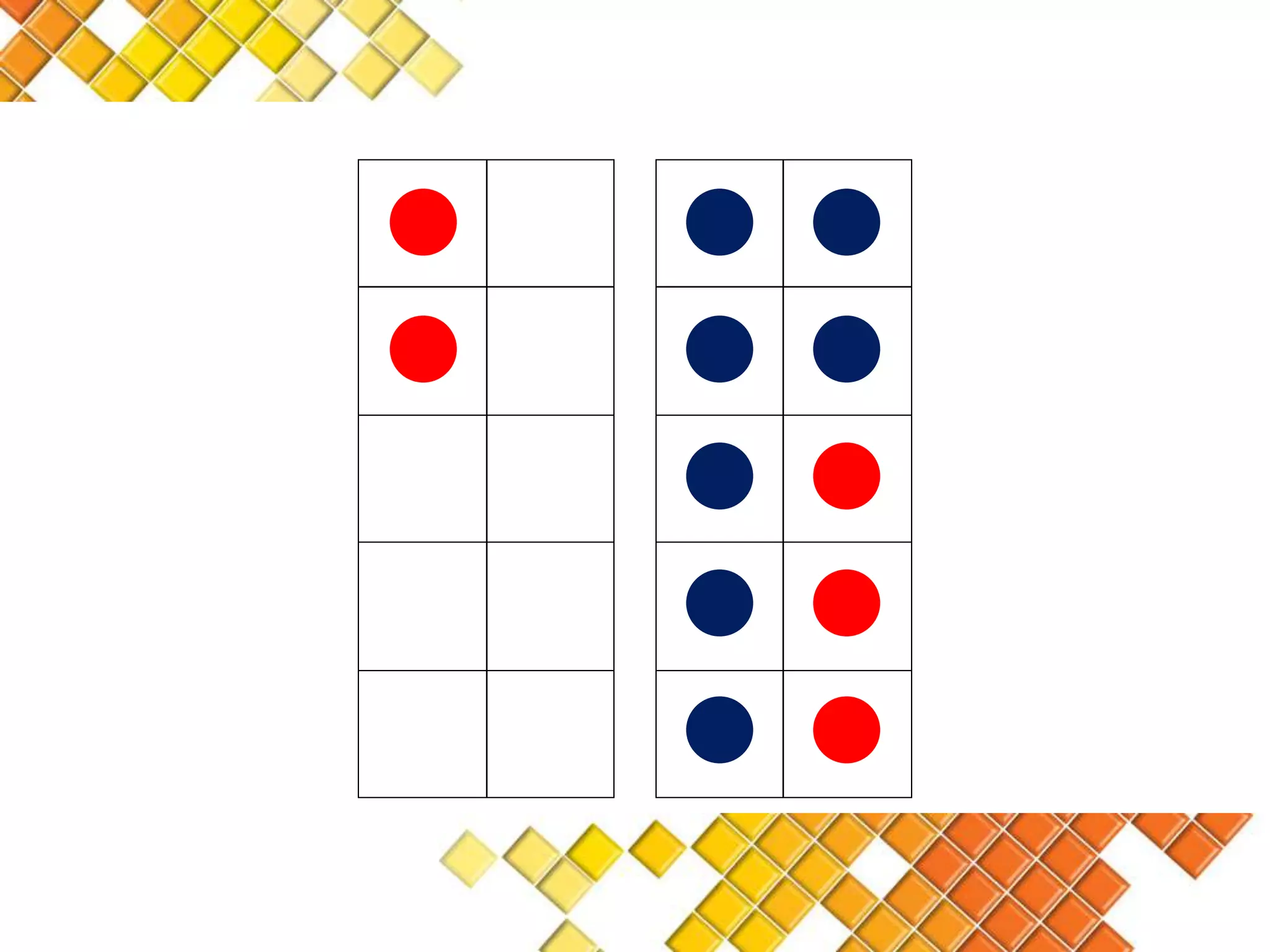
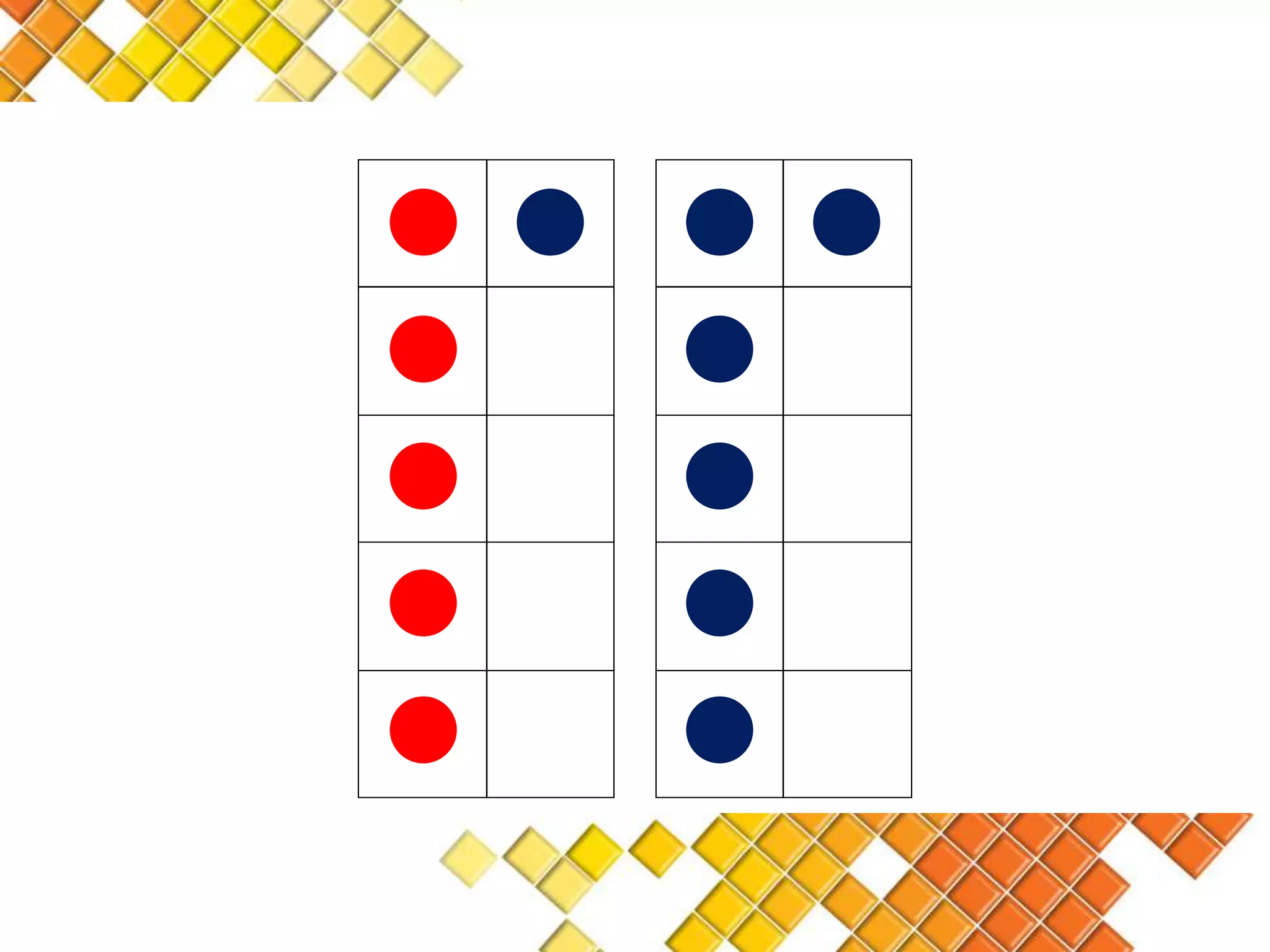
Problem
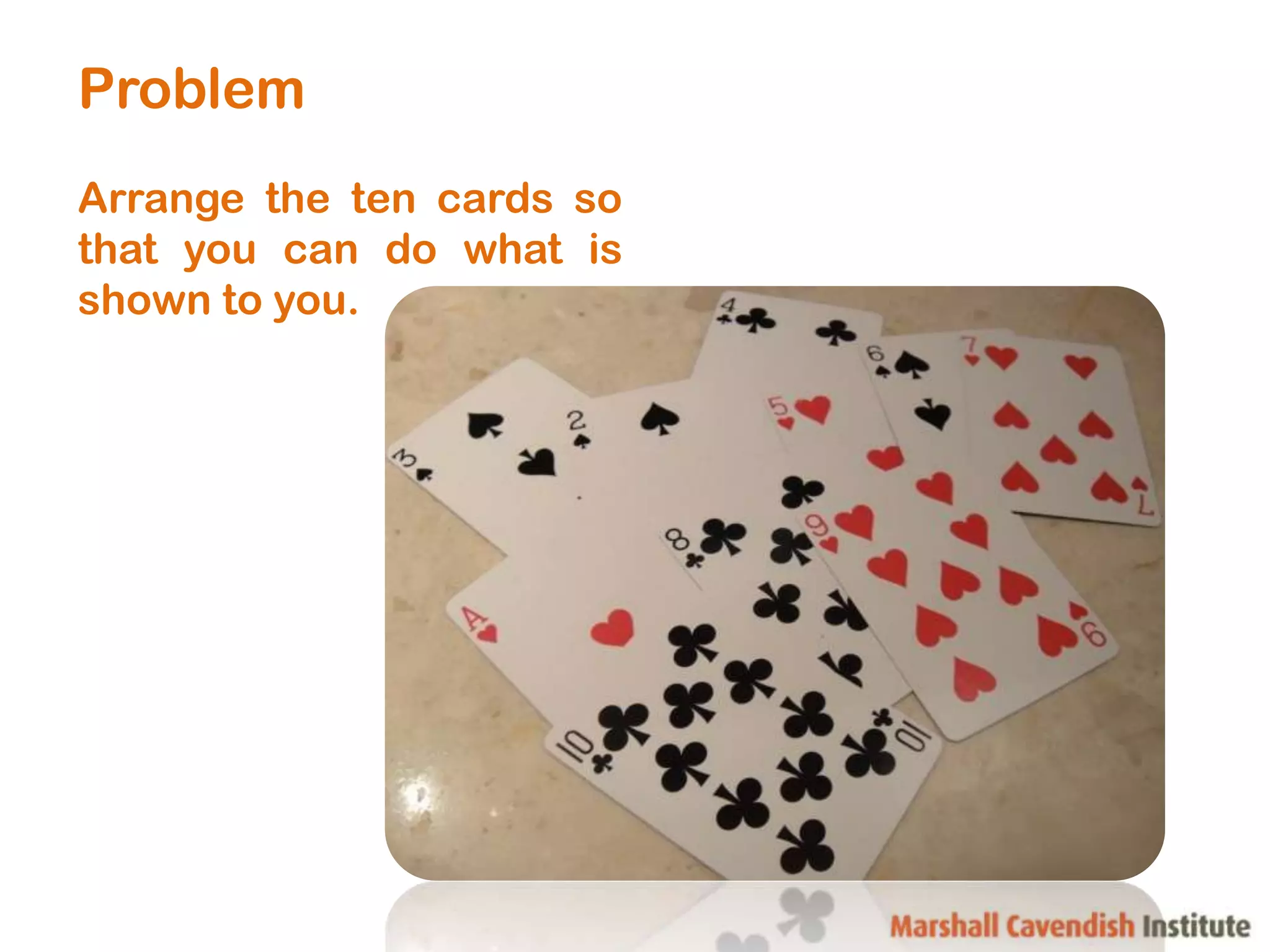
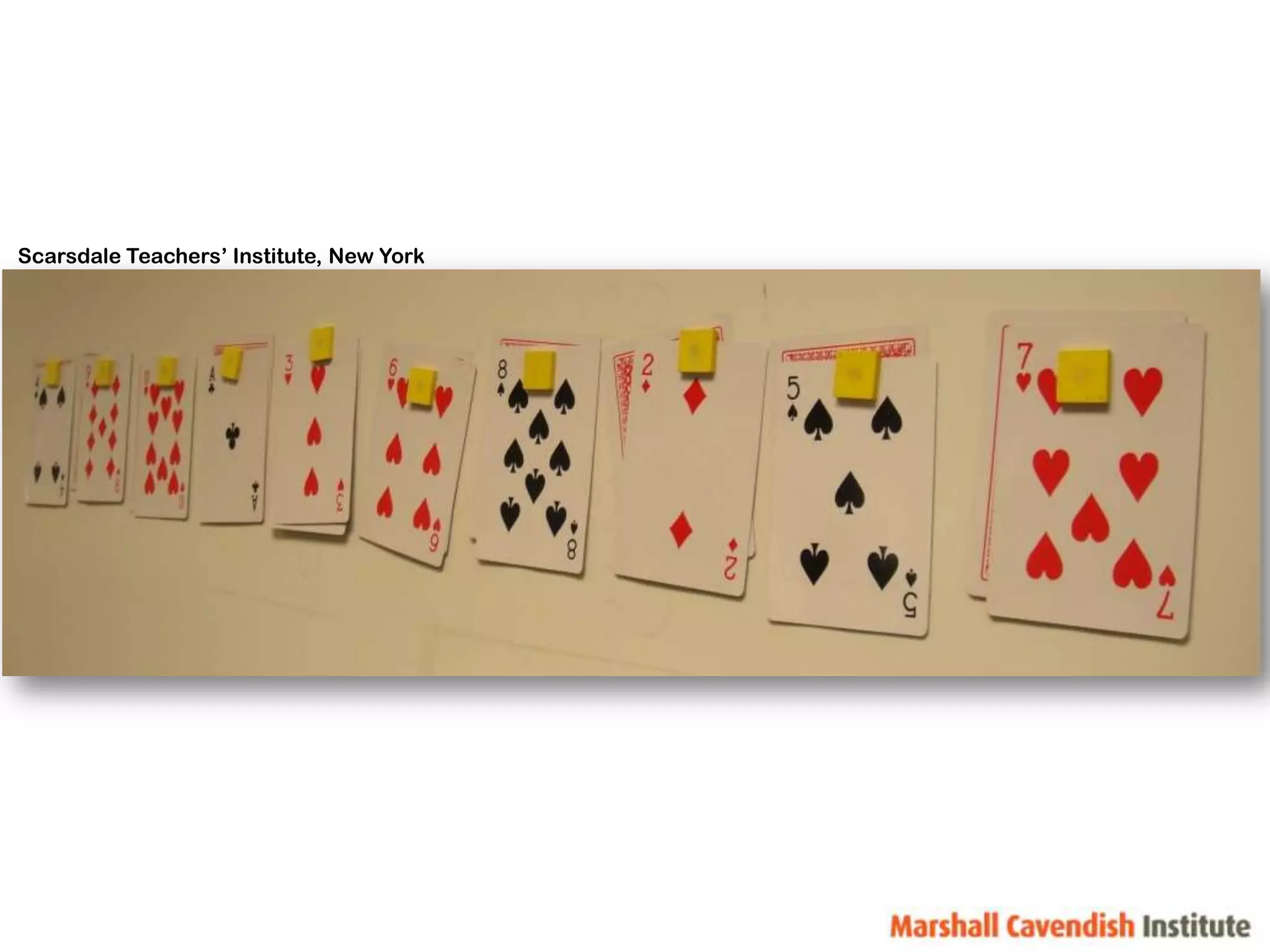
Arrange the ten cards so
that you can do what is
shown to you.
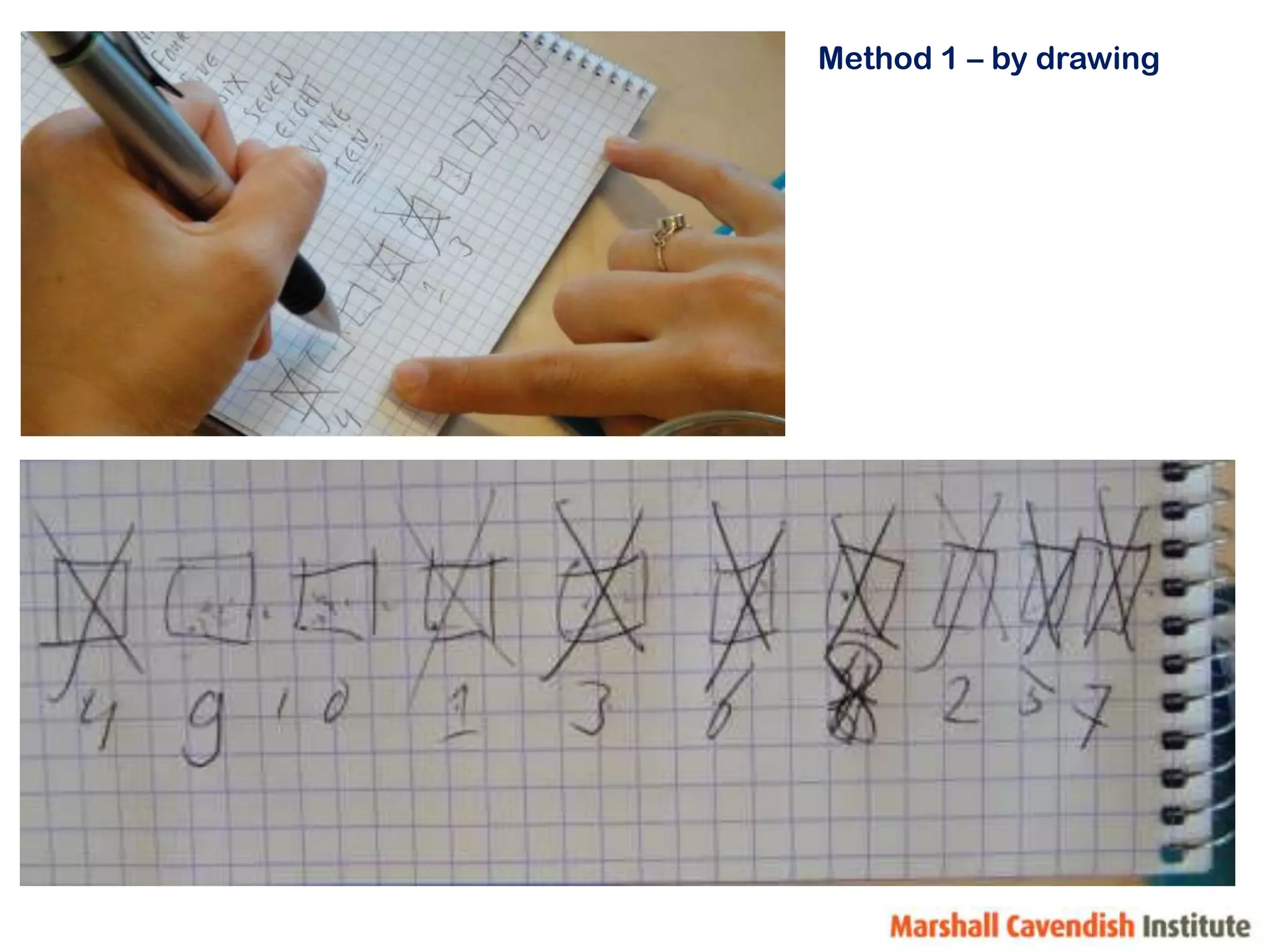
Method 1 – by drawing
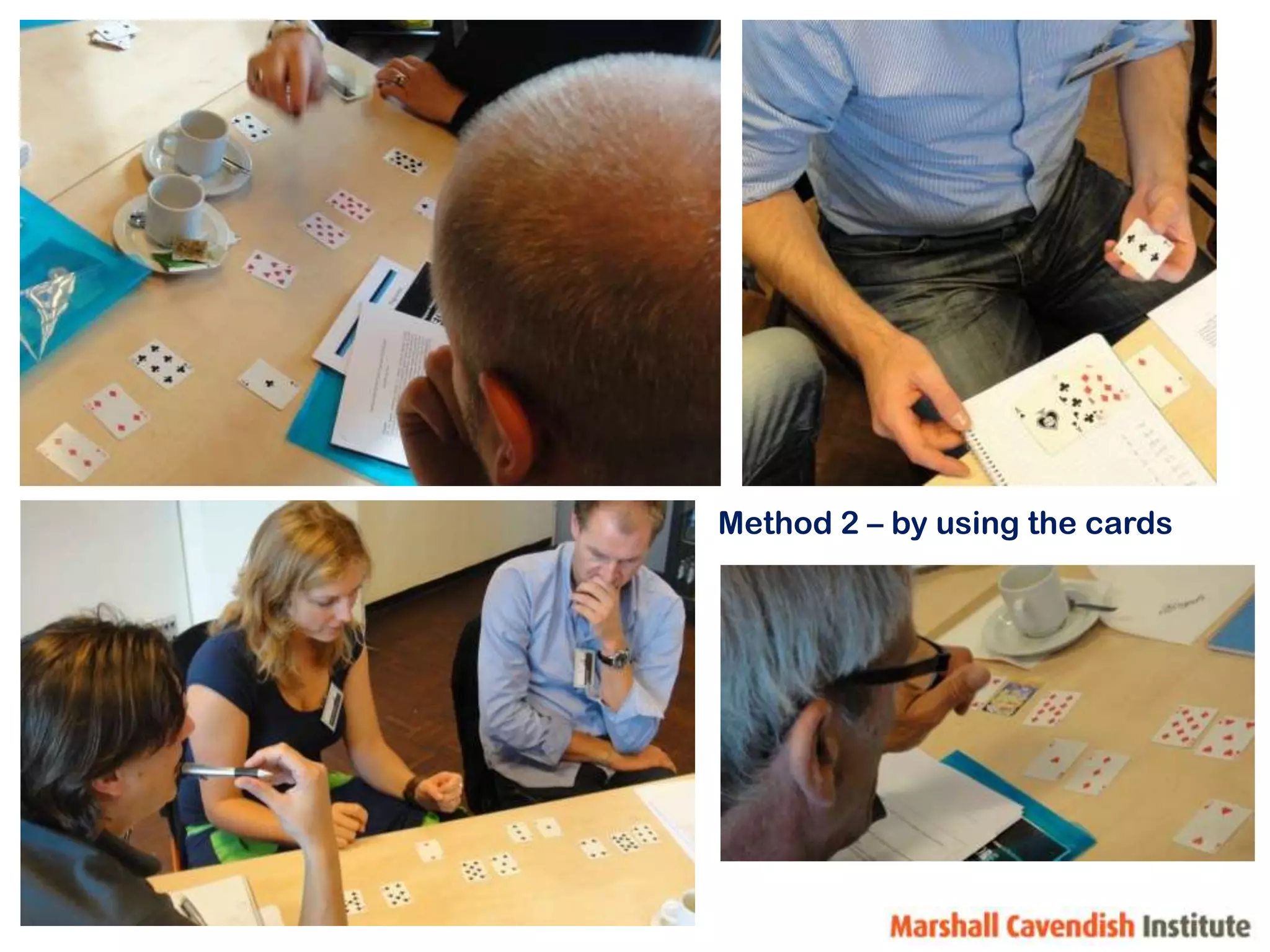
Method 2 – by using the cards
Scarsdale Teachers’ Institute, New York
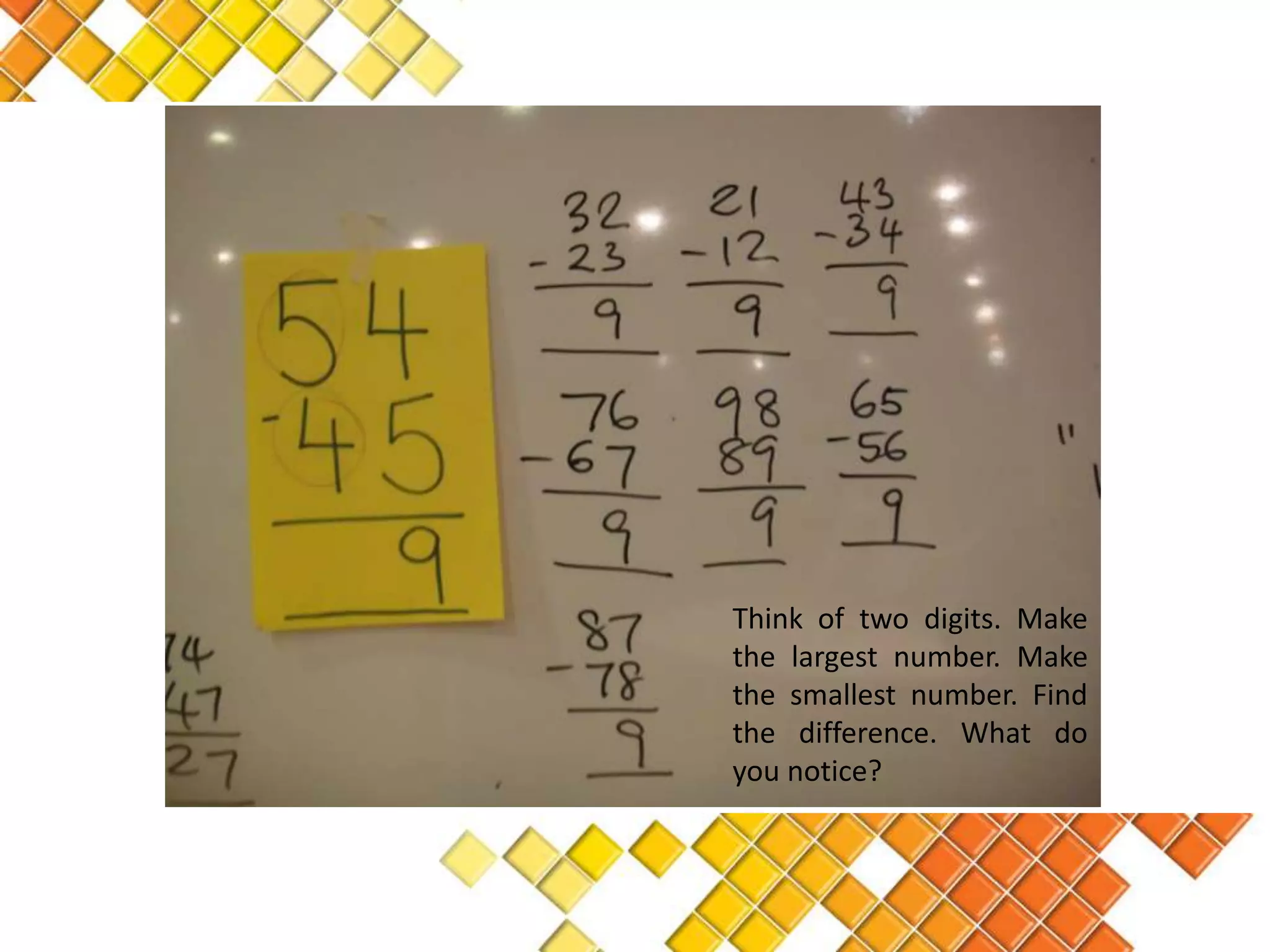
Think of two digits. Make
the largest number. Make
the smallest number. Find
the difference. What do
you notice?
Development of Numeracy in Early Childhood Education

Development of Numeracy in Early Childhood Education

  • 2.
    This course focuseson the WHAT and HOW of numeracy programmes in early childhood education. You will complete four modules in this course. By the end of this course, you will learn • selected key content areas such as ordinal numbers, cardinal numbers (counting), addition and subtraction, measurements and geometry • the importance of visualization, generalization and number sense • the need to include ‘soft’ skills such as communication and metacognition, creativity and curiosity, and so on • strategies • learning theories
  • 3.
    Visualization Shapes & Geometry INSTRUCTOR Peggy Foo Marshall Cavendish Institute
  • 4.
    Spatial Visualisation • Itinvolves having images of objects • Spatial visualisation and geometry are interdependent (learning of one area will lead to the other)
  • 5.
    Development of Geometric Thinking van Hiele Model of Geometric Thinking There are 5 levels: • Level 0: Visualisation • Level 1: Analysis • Level 2: Informal Deduction • Level 3: Deduction • Level 4: Rigour The levels are sequential – must start at the basic level
  • 6.
    Level 0: Visualisation •Recognise the appearance of the shapes (look sort of alike) • Properties are incidental to the shape (implicit) “A square is a square because it looks like a square” i.e. appearance of the shape
  • 7.
    Implications for Instruction Level0: Visualisation • Provide concrete materials that can be manipulated • Include different and varied examples of shapes • Involve lots of sorting, identifying, and describing of various shapes • Provide opportunities to build, make, draw, put together and take apart shapes
  • 8.
    Level 1: Analysis •More aware of the properties of a shape than to its appearance • Use properties to define categories of shapes (able to list the properties but not the relationships among the properties)
  • 9.
    Implications for Instruction Level1: Informal Deduction • Engage in the same activities as level 0 but the focus of the activities should be on the properties of the shapes, not identification • Classify shapes by properties • Derive generalisation by studying examples • Use appropriate vocabulary
  • 10.
    Level 2: InformalDeduction • Understand the relation of properties within and among figures • Example: a square is a rectangle, a rectangle is parallelogram which is also a quadrilateral
  • 11.
    Level 3: FormalDeduction • Construct proofs to determine the truth of a mathematic statements
  • 12.
    Level 4: Rigour •Highly abstract form of geometric thought
  • 13.
    Summary  Understand theimportance of visualisation and geometric thinking (van Hiele model of geometric thinking )  Use activities to reinforce visualisation skills • Tangram activity (manipulate and identify geometric shape) • Grandfather Tang’s Story / Create your own picture (arrange, construct, describe in your own words)
  • 14.
    Conservation of Numbers INSTRUCTOR Peggy Foo Marshall Cavendish Institute
  • 15.
    Objectives Participants will beable to: • Understand the importance of conservation of numbers • Study a lesson (video) on a conservation task
  • 16.
    Conservation of Numbers •The number of a set remains the same even if the items of the set are rearranged (Piaget, 1952) • Basis of number knowledge • Based on understanding the concept of equality and one to one correspondence • Reveal/ assess children’s knowledge of numbers
  • 17.
    Responses Number Conservation byCounting: • I counted them Number Conservation by Justification: • Nothing is added or taken away • I can put them back in the same position so they look like as they did before
  • 18.
    Conservation Task • Using4 cubes, make as many different structures as you can
  • 19.
    Learning points • Whatcan we achieve using conservation tasks? Enhance visualisation skills by constructing different structures and sorting / classifying the structures Enhance reasoning and communication skills when asked to justify one’s responses
  • 20.
    Summary • Importance of conservation of numbers (basis of number knowledge, start with concept of equality and one-to-one correspondence) • Aspects of lesson which support visualisation and reasoning skills
  • 21.
    Ordinal and Cardinal Numbers INSTRUCTOR Yeap Ban Har Marshall Cavendish Institute
  • 22.
    B A N H A R
  • 24.
    • Cardinal Number •Ordinal Number • Measurement Number Siti Michael John
  • 27.
    Problem Rearrange the sticksto show a given number of squares. Wellington Primary School
  • 28.
    Task Lesson Study Problem Wellington Primary School • Move 3 sticks to make 3 squares.
  • 29.
    Task • Move 3sticks to make 3 squares.
  • 30.
    Task • Move 3sticks to make 3 squares.
  • 31.
    Task • Move 3sticks to make 2 squares.
  • 32.
    Task • Move 3sticks to make 2 squares.
  • 33.
    Task • Move 3sticks to make 2 squares.
  • 35.
    Problem Arrange the tencards so that you can do what is shown to you.
  • 36.
    Method 1 –by drawing
  • 37.
    Method 2 –by using the cards
  • 38.
  • 46.
    Think of twodigits. Make the largest number. Make the smallest number. Find the difference. What do you notice?

Editor's Notes

  • #18 What went well – clusterWhat did not go too well – clusterAnd put them as major categoriesHow can we improve the on the categories (world café)
  • #20 According to shapesAccording to sidesAccording to surface areascolour