Chapter 13
Order Fulfillment,
Logistics, and
Supply Chain Management
1
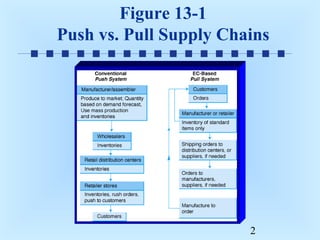
Figure 13-1
Push vs. Pull Supply Chains

2
Major Concepts
Order fulfillment: Deliver right order on time
Front office operations:
Order taking
Advertisement
CRM

Back office operations
Accounting
Finance
Inventory

Packaging
Logistics
3
Major Concepts (cont.)
Definitions of logistics:

Managing the flow of goods, information and
money along the supply chain
Aspect of military science dealing with
procurement, maintenance, and transportation
Management of details of an operation
All activities involved in management of product
movement
Right product
Right place
Right time

4
The Steps of Order Fulfillment
1. Payment Clearance
2. In-stock availability
3. Packaging, shipment
4. Insuring
5. Production (planning,
execution)
6. Plant services

7. Purchasing,
warehousing
8. Customer contacts
9. Returns (Reverse
logistics)
10. Demand forecast
11. Accounting, billing
12. Reverse logistics
5
Supply Chain Management
Definition: Flow of
material, information,
money, etc. from raw
material suppliers
through factories to
customers
It includes:
organizations,
procedures, people

SCM: Integration of
the business
processes along the
chain, Planning,
Organizing, control of
many activities
Activities: Purchasing,
delivery, packaging,
checking,
warehousing, etc.
6
Benefits of SCM
Reduce uncertainty along the chain
Proper inventory levels in the chain
Minimize delays
Eliminate rush (unplanned) activities
Provide superb customer service
Major contributor of success (ever
survival)
7
Global Supply Chain
Can be very long
Possible cross-border problems
Need information technology support of:
Communication
Collaboration

Possible delays due to: customs, tax,
translations, politics
8
Areas of Opportunities
Manufacturing
processes
Warehousing
operation
Packaging and
delivery
Material
inspection/receiving
Inbound and
outbound
transportation

Reverse logistics
(return)
In-plant material
handling
Vendor management
program
Customer order
processing

9
Areas of Opportunities (cont.)
Invoicing, auditing
and other accounting
activities
Collaboration
procedures with
partners
Employee training
and deployments
Labor scheduling

Use of teams and
empowerment of
employees
Automation of
processes
Use of software for
facilitating all the
above
Inventory
management and
control
10
Using Inventories
Insurance against stock out
Can be in several places
Can be excessive
Can be insufficient
Example: Littlewoods stores; UK

11
Using Inventories
Using inventories to solve supply chain
shortages:

Building inventories as insurance against
uncertainty—products and parts flow smoothly
Very difficult to correctly determine inventory levels
for each product and part

Customized finished products can only stock
components
Excessive levels are costly to store
Insufficient levels cannot protect against high
demand or slow delivery times
12
EC Solutions Along
the Supply Chain
Automate order taking
Use EDI/Internet
Web-based ordering; intelligent agents

Electronic payments
Inventory reduction (made-to-order pull
process)
Improved inventory management
Decreased administrative costs
13
EC Solutions Along
the Supply Chain (cont.)
Digitization of
products—instant
order fulfillment
Back-office interface
Shortens cycle
time
Eliminates errors

Collaborative commerce
among members of the
supply chain
Shortens cycle time
Minimizes delays
and work
interruptions
Lower inventories
Lower
administrative costs

livery scheduling
14
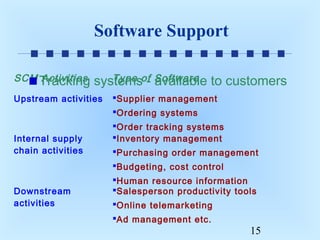
Software Support
SCM Tracking
Activities

Type - available
systemsof Software to customers

Upstream activities

Supplier management
Ordering systems

Internal supply
chain activities

Order tracking systems
Inventory management
Purchasing order management

Downstream
activities

Budgeting, cost control
Human resource information
Salesperson productivity tools
Online telemarketing
Ad management etc.

15
ERP Benefits

ERP = Integrating business processes and
activities in real time
Solves many supply chain problems
Necessary for medium to large corporations
Helpful also for some SMEs

16
ERP Implementation
Need to interface with EC order taking
system
Manages all routine transactions in the
enterprise
Recently extended to suppliers and
customers

17

E-Commerce 13

  • 1.
    Chapter 13 Order Fulfillment, Logistics,and Supply Chain Management 1
  • 2.
    Figure 13-1 Push vs.Pull Supply Chains 2
  • 3.
    Major Concepts Order fulfillment:Deliver right order on time Front office operations: Order taking Advertisement CRM Back office operations Accounting Finance Inventory Packaging Logistics 3
  • 4.
    Major Concepts (cont.) Definitionsof logistics: Managing the flow of goods, information and money along the supply chain Aspect of military science dealing with procurement, maintenance, and transportation Management of details of an operation All activities involved in management of product movement Right product Right place Right time 4
  • 5.
    The Steps ofOrder Fulfillment 1. Payment Clearance 2. In-stock availability 3. Packaging, shipment 4. Insuring 5. Production (planning, execution) 6. Plant services 7. Purchasing, warehousing 8. Customer contacts 9. Returns (Reverse logistics) 10. Demand forecast 11. Accounting, billing 12. Reverse logistics 5
  • 6.
    Supply Chain Management Definition:Flow of material, information, money, etc. from raw material suppliers through factories to customers It includes: organizations, procedures, people SCM: Integration of the business processes along the chain, Planning, Organizing, control of many activities Activities: Purchasing, delivery, packaging, checking, warehousing, etc. 6
  • 7.
    Benefits of SCM Reduceuncertainty along the chain Proper inventory levels in the chain Minimize delays Eliminate rush (unplanned) activities Provide superb customer service Major contributor of success (ever survival) 7
  • 8.
    Global Supply Chain Canbe very long Possible cross-border problems Need information technology support of: Communication Collaboration Possible delays due to: customs, tax, translations, politics 8
  • 9.
    Areas of Opportunities Manufacturing processes Warehousing operation Packagingand delivery Material inspection/receiving Inbound and outbound transportation Reverse logistics (return) In-plant material handling Vendor management program Customer order processing 9
  • 10.
    Areas of Opportunities(cont.) Invoicing, auditing and other accounting activities Collaboration procedures with partners Employee training and deployments Labor scheduling Use of teams and empowerment of employees Automation of processes Use of software for facilitating all the above Inventory management and control 10
  • 11.
    Using Inventories Insurance againststock out Can be in several places Can be excessive Can be insufficient Example: Littlewoods stores; UK 11
  • 12.
    Using Inventories Using inventoriesto solve supply chain shortages: Building inventories as insurance against uncertainty—products and parts flow smoothly Very difficult to correctly determine inventory levels for each product and part Customized finished products can only stock components Excessive levels are costly to store Insufficient levels cannot protect against high demand or slow delivery times 12
  • 13.
    EC Solutions Along theSupply Chain Automate order taking Use EDI/Internet Web-based ordering; intelligent agents Electronic payments Inventory reduction (made-to-order pull process) Improved inventory management Decreased administrative costs 13
  • 14.
    EC Solutions Along theSupply Chain (cont.) Digitization of products—instant order fulfillment Back-office interface Shortens cycle time Eliminates errors Collaborative commerce among members of the supply chain Shortens cycle time Minimizes delays and work interruptions Lower inventories Lower administrative costs livery scheduling 14
  • 15.
    Software Support SCM Tracking Activities Type- available systemsof Software to customers Upstream activities Supplier management Ordering systems Internal supply chain activities Order tracking systems Inventory management Purchasing order management Downstream activities Budgeting, cost control Human resource information Salesperson productivity tools Online telemarketing Ad management etc. 15
  • 16.
    ERP Benefits ERP =Integrating business processes and activities in real time Solves many supply chain problems Necessary for medium to large corporations Helpful also for some SMEs 16
  • 17.
    ERP Implementation Need tointerface with EC order taking system Manages all routine transactions in the enterprise Recently extended to suppliers and customers 17