•ALEIX BERTOMEU
•ALEIX CÒLERA
•JAUME CURTO
•SERGI CURTO
INDEX
 Easter -> 1-2
 Palm Sunday -> 3-4
 Easter Monday -> 5-6
 Holy Thursday -> 9
 Holy Friday -> 10-11
 Holy Saturday -> 12
 Easter Sunday -> 13-14
EASTER
 Easter is a Christian festival and holiday
celebrating the resurrection of Jesus Christ
on the third day after his crucifixion at
Calvary as described in the New Testament.
Easter is the culmination of the Passion of
Christ, preceded by Lent, a forty-day period
of fasting, prayer, and renascence.
PALM SUNDAY
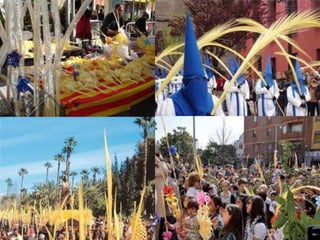
 Recalls the entry of Jesus into Jerusalem riding
on a donkey with his disciples. According to the
Gospel, Jesus was received with joy. The people
of Jerusalem raised palms and olive and laurel
branches to welcome him.
 Palm Sunday is very important in countries of
Europe for example: Germany, Croatia, Spain,
Georgia, Italy, Poland, Portugal…
 In Catalonia we go to church to bless a palm with
the children or a olive and laurel branches.
EASTER MONDAY
 The days between Palm Sunday and Holy Thursday
are known as Holy Monday, Holy Tuesday, and
Holy Wednesday. The Gospels of these days tell
events not all of which occurred on the
corresponding days between Jesus' entry into
Jerusalem and his Last Supper. For instance, the
Monday Gospel tells of the Anointing at Bethany
(John 12:1-9), which occurred before the Palm
Sunday event described in John 12:12-19.
HOLY THURSDAY
 On this day the private celebration of Mass is
forbidden. Hus, apart from the Chrism Mass for
the blessing of the Holy Oils that the diocesan
bishop may celebrate on the morning of Holy
Thursday, but also on some other day close to
Easter, the only Mass on this day is the evening
Mass of the Lord's Supper, which inaugurates the
period of three days, known as the Easter
Triduum, that includes Good Friday, holy Saturday
and Easter Sunday up to evening prayer on that
day.
HOLY FRIDAY
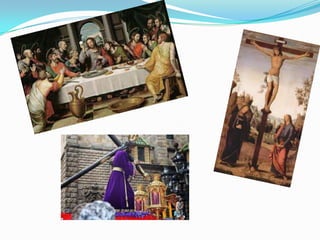
 In some countries, such as Malta, Philippines,
Italy and Spain, processions with statues
representing the Passion of Christ are held.
 The Church mourns for Christ's death, reveres
the Cross, and marvels at his life for his
obedience until death.
 The only sacraments celebrated are Penance and
Anointing of the Sick.
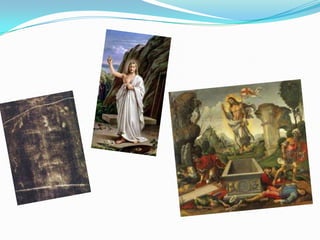
HOLY SATURDAY
 Mass is not celebrated on what is liturgically Holy
Saturday. The celebration of Easter begins after
sundown on what, though still Saturday in the civil
calendar, is liturgically Easter Sunday. On Holy
Saturday the Church waits at the Lord's tomb in
prayer and fasting, meditating on his Passion and
Death and on his Descent into Hell, and awaiting his
Resurrection. The Church abstains from the Sacrifice
of the Mass, with the sacred table left bare, until
after the solemn Vigil, that is, the anticipation by
night of the Resurrection, when the time comes for
paschal joys, the abundance of which overflows to
occupy fifty days.
EASTER SUNDAY
 In the Roman Catholic tradition, the Easter Vigil, the
longest and most solemn of the Catholic Church's
liturgical services, lasts up to three or four hours,
consists of four parts:
 The Service of Light
 The Liturgy of the Word
 The Liturgy of Baptism: The sacraments of Baptism
and Confirmation for new members of the Church and
the Renewal of Baptismal Promises by the entire
congregation.
 Holy Eucharist
Easter aleix
Easter aleix

Easter aleix

  • 1.
  • 2.
    INDEX  Easter ->1-2  Palm Sunday -> 3-4  Easter Monday -> 5-6  Holy Thursday -> 9  Holy Friday -> 10-11  Holy Saturday -> 12  Easter Sunday -> 13-14
  • 3.
    EASTER  Easter isa Christian festival and holiday celebrating the resurrection of Jesus Christ on the third day after his crucifixion at Calvary as described in the New Testament. Easter is the culmination of the Passion of Christ, preceded by Lent, a forty-day period of fasting, prayer, and renascence.
  • 5.
    PALM SUNDAY  Recallsthe entry of Jesus into Jerusalem riding on a donkey with his disciples. According to the Gospel, Jesus was received with joy. The people of Jerusalem raised palms and olive and laurel branches to welcome him.  Palm Sunday is very important in countries of Europe for example: Germany, Croatia, Spain, Georgia, Italy, Poland, Portugal…  In Catalonia we go to church to bless a palm with the children or a olive and laurel branches.
  • 7.
    EASTER MONDAY  Thedays between Palm Sunday and Holy Thursday are known as Holy Monday, Holy Tuesday, and Holy Wednesday. The Gospels of these days tell events not all of which occurred on the corresponding days between Jesus' entry into Jerusalem and his Last Supper. For instance, the Monday Gospel tells of the Anointing at Bethany (John 12:1-9), which occurred before the Palm Sunday event described in John 12:12-19.
  • 9.
    HOLY THURSDAY  Onthis day the private celebration of Mass is forbidden. Hus, apart from the Chrism Mass for the blessing of the Holy Oils that the diocesan bishop may celebrate on the morning of Holy Thursday, but also on some other day close to Easter, the only Mass on this day is the evening Mass of the Lord's Supper, which inaugurates the period of three days, known as the Easter Triduum, that includes Good Friday, holy Saturday and Easter Sunday up to evening prayer on that day.
  • 10.
    HOLY FRIDAY  Insome countries, such as Malta, Philippines, Italy and Spain, processions with statues representing the Passion of Christ are held.  The Church mourns for Christ's death, reveres the Cross, and marvels at his life for his obedience until death.  The only sacraments celebrated are Penance and Anointing of the Sick.
  • 12.
    HOLY SATURDAY  Massis not celebrated on what is liturgically Holy Saturday. The celebration of Easter begins after sundown on what, though still Saturday in the civil calendar, is liturgically Easter Sunday. On Holy Saturday the Church waits at the Lord's tomb in prayer and fasting, meditating on his Passion and Death and on his Descent into Hell, and awaiting his Resurrection. The Church abstains from the Sacrifice of the Mass, with the sacred table left bare, until after the solemn Vigil, that is, the anticipation by night of the Resurrection, when the time comes for paschal joys, the abundance of which overflows to occupy fifty days.
  • 13.
    EASTER SUNDAY  Inthe Roman Catholic tradition, the Easter Vigil, the longest and most solemn of the Catholic Church's liturgical services, lasts up to three or four hours, consists of four parts:  The Service of Light  The Liturgy of the Word  The Liturgy of Baptism: The sacraments of Baptism and Confirmation for new members of the Church and the Renewal of Baptismal Promises by the entire congregation.  Holy Eucharist