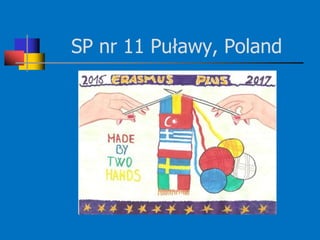
SP nr 11 Puławy, Poland
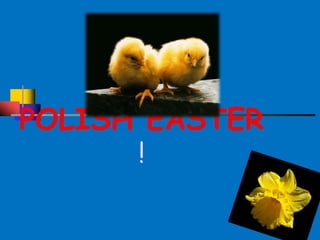
POLISH EASTER
!
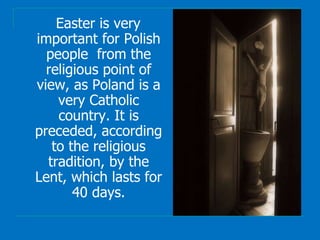
Easter is very
important for Polish
people from the
religious point of
view, as Poland is a
very Catholic
country. It is
preceded, according
to the religious
tradition, by the
Lent, which lasts for
40 days.
Easter in Polish is called Wielkanoc.
This year we celebrate Easter on 27th
of March. We have six days free from
school from Thursday 24th to
Tuesday 29th. But the main
celebrations take place during Easter
Saturday, Sunday and Monday.
FAT THURSDAY
 We celebrate Fat Thursday a week
before Ash Wednesday. On Fat
Thursday we eat a lot of donughts.
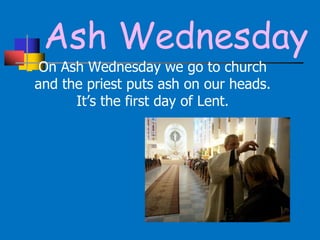
Ash Wednesday
 On Ash Wednesday we go to church
and the priest puts ash on our heads.
It’s the first day of Lent.
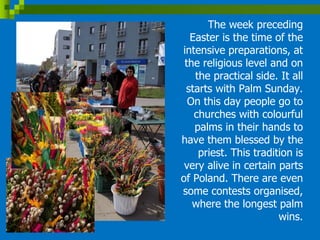
The week preceding
Easter is the time of the
intensive preparations, at
the religious level and on
the practical side. It all
starts with Palm Sunday.
On this day people go to
churches with colourful
palms in their hands to
have them blessed by the
priest. This tradition is
very alive in certain parts
of Poland. There are even
some contests organised,
where the longest palm
wins.
Palm Sunday is at the beginning of
Holly Week. This week is for deep
reflection, therefore some parishes
organise so called „Rekolekcje”
when the Catholics can go to church
on special masses to prepare
spiritually to Easter.
On Holly Friday an exceptional Mass
takes place - then the last moments
of Jesus Christ`s life is read out from
the Bible.
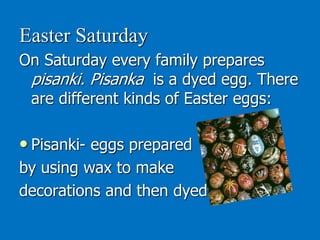
Easter Saturday
On Saturday every family prepares
pisanki. Pisanka is a dyed egg. There
are different kinds of Easter eggs:
• Pisanki- eggs prepared
by using wax to make
decorations and then dyed
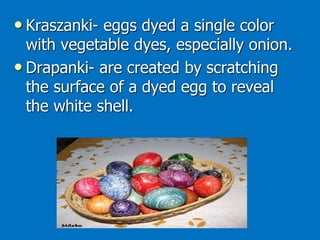
• Kraszanki- eggs dyed a single color
with vegetable dyes, especially onion.
• Drapanki- are created by scratching
the surface of a dyed egg to reveal
the white shell.
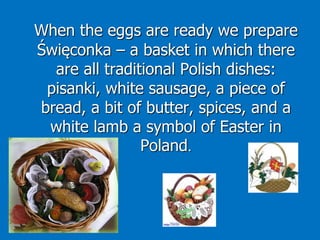
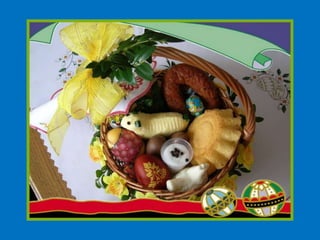
When the eggs are ready we prepare
Święconka – a basket in which there
are all traditional Polish dishes:
pisanki, white sausage, a piece of
bread, a bit of butter, spices, and a
white lamb a symbol of Easter in
Poland.
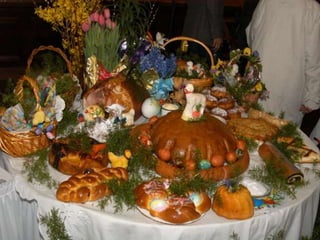
Easter Sunday starts with Resurrection Mass at 6
a.m. After that, the whole family gathers at the
table full of delicious things and have breakfast,
which starts with a prayer. Then, the „holy food” is
divided into chunks and every member of the family
gets a small piece of it. Only then people can savour
the rest of the dishes. Such breakfast can last long
hours, as Polish people like to feast.
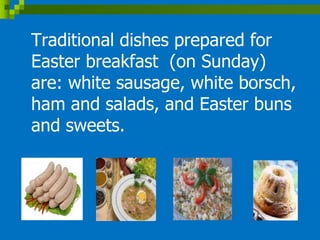
Traditional dishes prepared for
Easter breakfast (on Sunday)
are: white sausage, white borsch,
ham and salads, and Easter buns
and sweets.
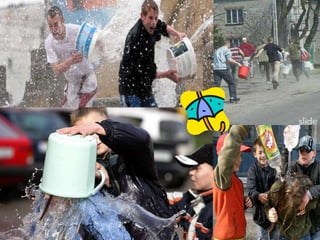
Easter Monday is known as Wet Monday or Śmigus-
Dyngus. During that day, it is allowed to pour
water on others, even some unknown! So the best
thing you can do, if you want to have dry clothes,
is to stay at home, otherwise you have to take into
account that you may get soaking wet.Formerly,
pouring water on unmarried girls was the way of
showing them men`s inerest. The more water the
man poured on the girl, the more he liked her!
Then the girl used to thank the boy for choosing
her by offering him some decorated eggs!
Easter traditionsin  Poland

Easter traditionsin Poland

  • 1.
    SP nr 11Puławy, Poland
  • 2.
  • 3.
    Easter is very importantfor Polish people from the religious point of view, as Poland is a very Catholic country. It is preceded, according to the religious tradition, by the Lent, which lasts for 40 days.
  • 4.
    Easter in Polishis called Wielkanoc. This year we celebrate Easter on 27th of March. We have six days free from school from Thursday 24th to Tuesday 29th. But the main celebrations take place during Easter Saturday, Sunday and Monday.
  • 5.
    FAT THURSDAY  Wecelebrate Fat Thursday a week before Ash Wednesday. On Fat Thursday we eat a lot of donughts.
  • 6.
    Ash Wednesday  OnAsh Wednesday we go to church and the priest puts ash on our heads. It’s the first day of Lent.
  • 7.
    The week preceding Easteris the time of the intensive preparations, at the religious level and on the practical side. It all starts with Palm Sunday. On this day people go to churches with colourful palms in their hands to have them blessed by the priest. This tradition is very alive in certain parts of Poland. There are even some contests organised, where the longest palm wins.
  • 8.
    Palm Sunday isat the beginning of Holly Week. This week is for deep reflection, therefore some parishes organise so called „Rekolekcje” when the Catholics can go to church on special masses to prepare spiritually to Easter. On Holly Friday an exceptional Mass takes place - then the last moments of Jesus Christ`s life is read out from the Bible.
  • 9.
    Easter Saturday On Saturdayevery family prepares pisanki. Pisanka is a dyed egg. There are different kinds of Easter eggs: • Pisanki- eggs prepared by using wax to make decorations and then dyed
  • 10.
    • Kraszanki- eggsdyed a single color with vegetable dyes, especially onion. • Drapanki- are created by scratching the surface of a dyed egg to reveal the white shell.
  • 11.
    When the eggsare ready we prepare Święconka – a basket in which there are all traditional Polish dishes: pisanki, white sausage, a piece of bread, a bit of butter, spices, and a white lamb a symbol of Easter in Poland.
  • 13.
    Easter Sunday startswith Resurrection Mass at 6 a.m. After that, the whole family gathers at the table full of delicious things and have breakfast, which starts with a prayer. Then, the „holy food” is divided into chunks and every member of the family gets a small piece of it. Only then people can savour the rest of the dishes. Such breakfast can last long hours, as Polish people like to feast.
  • 15.
    Traditional dishes preparedfor Easter breakfast (on Sunday) are: white sausage, white borsch, ham and salads, and Easter buns and sweets.
  • 16.
    Easter Monday isknown as Wet Monday or Śmigus- Dyngus. During that day, it is allowed to pour water on others, even some unknown! So the best thing you can do, if you want to have dry clothes, is to stay at home, otherwise you have to take into account that you may get soaking wet.Formerly, pouring water on unmarried girls was the way of showing them men`s inerest. The more water the man poured on the girl, the more he liked her! Then the girl used to thank the boy for choosing her by offering him some decorated eggs!