By
V Kedar
11149K019
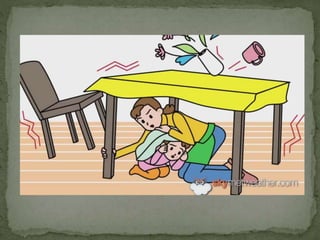
 Drop to the ground; take cover by getting under a sturdy table
or other piece of furniture; and hold on until the shaking stops.
If there is no table or desk near you, cover your face and head
with your arms and crouch in an inside corner of the building.
 Protect yourself by staying under the lintel of an inner
door, in the corner of a room, under a table or even under a
bed
 Stay away from glass, windows, outside doors and walls,
and anything that could fall, (such as lighting fixtures or
furniture)
 Stay in bed if you are there when the earthquake
strikes. Hold on and protect your head with a pillow,
unless you are under a heavy light fixture that could
fall. In that case, move to the nearest safe place.
 Avoid moving. However, move away from buildings,
trees, streetlights, and utility wires.
 If you are in open space, stay there until the shaking
stops. The greatest danger exists directly outside
buildings; at exits; and alongside exterior walls
 Most earthquake-related casualties result from
collapsing walls, flying glass, and falling objects.
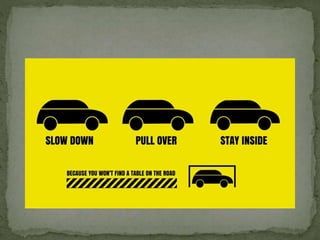
 Stop as quickly as safety permits and stay in the
vehicle. Avoid stopping near or under buildings, trees,
overpasses, and utility wires.
 Proceed cautiously once the earthquake has stopped.
Avoid roads, bridges, or ramps that might have been
damaged by the earthquake.
 Do not light a match.
 Do not move about or kick up dust.
 Cover your mouth with a handkerchief or clothing.
 Tap on a pipe or wall so rescuers can locate you. Use a
whistle if one is available.
 Shout if you have no other way to communicate.
Shouting can cause you to inhale dangerous amounts
of dust so be careful.
 Battery operated torch with extra batteries
 Battery operated radio
 First aid kit and manual
 Emergency food (dry items) and water (packed and sealed)
 Candles and matches in a waterproof container
 Knife
 Chlorine tablets or powdered water purifiers
 Can opener.
 Essential medicines
 Cash and credit cards
 Thick ropes and cords
 Sturdy shoes
 In case family members are separated from one
another during an earthquake (a real possibility during
the day when adults are at work and children are at
school), develop a plan for reuniting after the disaster.
 Ask an out-of-state relative or friend to serve as the
'family contact' after the disaster; it is often easier to
call long distance. Make sure everyone in the family
knows the name, address, and phone number of the
contact person.
Dos and don'ts during an earthquake

Dos and don'ts during an earthquake

  • 1.
  • 2.
     Drop tothe ground; take cover by getting under a sturdy table or other piece of furniture; and hold on until the shaking stops. If there is no table or desk near you, cover your face and head with your arms and crouch in an inside corner of the building.  Protect yourself by staying under the lintel of an inner door, in the corner of a room, under a table or even under a bed  Stay away from glass, windows, outside doors and walls, and anything that could fall, (such as lighting fixtures or furniture)
  • 3.
     Stay inbed if you are there when the earthquake strikes. Hold on and protect your head with a pillow, unless you are under a heavy light fixture that could fall. In that case, move to the nearest safe place.
  • 5.
     Avoid moving.However, move away from buildings, trees, streetlights, and utility wires.  If you are in open space, stay there until the shaking stops. The greatest danger exists directly outside buildings; at exits; and alongside exterior walls  Most earthquake-related casualties result from collapsing walls, flying glass, and falling objects.
  • 6.
     Stop asquickly as safety permits and stay in the vehicle. Avoid stopping near or under buildings, trees, overpasses, and utility wires.  Proceed cautiously once the earthquake has stopped. Avoid roads, bridges, or ramps that might have been damaged by the earthquake.
  • 8.
     Do notlight a match.  Do not move about or kick up dust.  Cover your mouth with a handkerchief or clothing.  Tap on a pipe or wall so rescuers can locate you. Use a whistle if one is available.  Shout if you have no other way to communicate. Shouting can cause you to inhale dangerous amounts of dust so be careful.
  • 9.
     Battery operatedtorch with extra batteries  Battery operated radio  First aid kit and manual  Emergency food (dry items) and water (packed and sealed)  Candles and matches in a waterproof container  Knife  Chlorine tablets or powdered water purifiers  Can opener.  Essential medicines  Cash and credit cards  Thick ropes and cords  Sturdy shoes
  • 10.
     In casefamily members are separated from one another during an earthquake (a real possibility during the day when adults are at work and children are at school), develop a plan for reuniting after the disaster.  Ask an out-of-state relative or friend to serve as the 'family contact' after the disaster; it is often easier to call long distance. Make sure everyone in the family knows the name, address, and phone number of the contact person.