E a r t h
S u b s y s t e m s
1
1
T
H
G
R
A
D
E
by: juliet marabise-opanes
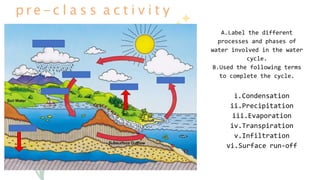
p r e - c l a s s a c t i v i t y
A.Label the different
processes and phases of
water involved in the water
cycle.
B.Used the following terms
to complete the cycle.
i.Condensation
ii.Precipitation
iii.Evaporation
iv.Transpiration
v.Infiltration
vi.Surface run-off
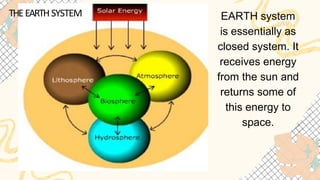
THEEARTHSYSTEM EARTH system
is essentially as
closed system. It
receives energy
from the sun and
returns some of
this energy to
space.
A. The atmosphere is the thin gaseous layer that envelopes
the lithosphere.
B. The present atmosphere is composed of 78% nitrogen (N),
21% oxygen (O2), 0.9% argon, and trace amount of other gasses.
C. One of the most important processes by which the heat
on the Earth’s Surface is redistributed is through atmospheric
circulation.
D. There is also a constant exchange of heat and moisture
between the atmosphere and the hydrosphere through the
hydrologic cycle.
ATMOSPHERE (Air): The layer of gases surrounding the
Earth, including the troposphere (where weather occurs),
stratosphere (containing the ozone layer), and other
atmospheric layers. It influences weather patterns,
climate, and supports life through oxygen and other
gases.
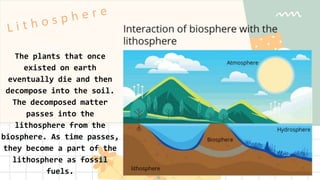
The plants that once
existed on earth
eventually die and then
decompose into the soil.
The decomposed matter
passes into the
lithosphere from the
biosphere. As time passes,
they become a part of the
lithosphere as fossil
fuels.
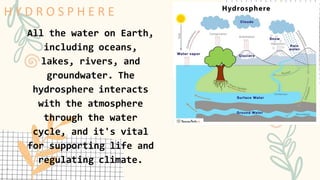
H Y D R O S P H E R E
All the water on Earth,
including oceans,
lakes, rivers, and
groundwater. The
hydrosphere interacts
with the atmosphere
through the water
cycle, and it's vital
for supporting life and
regulating climate.
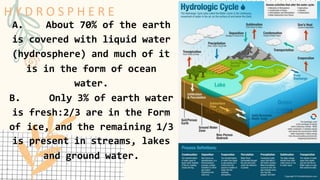
H Y D R O S P H E R E
A. About 70% of the earth
is covered with liquid water
(hydrosphere) and much of it
is in the form of ocean
water.
B. Only 3% of earth water
is fresh:2/3 are in the Form
of ice, and the remaining 1/3
is present in streams, lakes
and ground water.
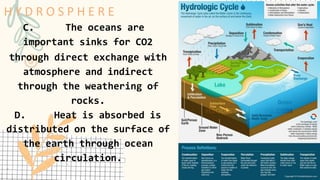
H Y D R O S P H E R E
C. The oceans are
important sinks for CO2
through direct exchange with
atmosphere and indirect
through the weathering of
rocks.
D. Heat is absorbed is
distributed on the surface of
the earth through ocean
circulation.
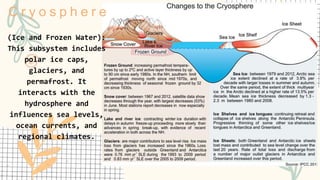
C r y o s p h e r e
(Ice and Frozen Water):
This subsystem includes
polar ice caps,
glaciers, and
permafrost. It
interacts with the
hydrosphere and
influences sea levels,
ocean currents, and
regional climates.
A r e t h e r e a n y
q u e s t i o n s ?

EARTH SUBSYSTEM PPT.pptx

  • 1.
    E a rt h S u b s y s t e m s 1 1 T H G R A D E by: juliet marabise-opanes
  • 2.
    p r e- c l a s s a c t i v i t y A.Label the different processes and phases of water involved in the water cycle. B.Used the following terms to complete the cycle. i.Condensation ii.Precipitation iii.Evaporation iv.Transpiration v.Infiltration vi.Surface run-off
  • 3.
    THEEARTHSYSTEM EARTH system isessentially as closed system. It receives energy from the sun and returns some of this energy to space.
  • 4.
    A. The atmosphereis the thin gaseous layer that envelopes the lithosphere. B. The present atmosphere is composed of 78% nitrogen (N), 21% oxygen (O2), 0.9% argon, and trace amount of other gasses. C. One of the most important processes by which the heat on the Earth’s Surface is redistributed is through atmospheric circulation. D. There is also a constant exchange of heat and moisture between the atmosphere and the hydrosphere through the hydrologic cycle. ATMOSPHERE (Air): The layer of gases surrounding the Earth, including the troposphere (where weather occurs), stratosphere (containing the ozone layer), and other atmospheric layers. It influences weather patterns, climate, and supports life through oxygen and other gases.
  • 12.
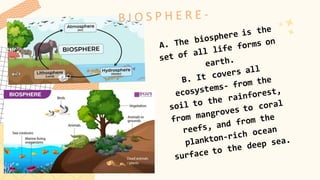
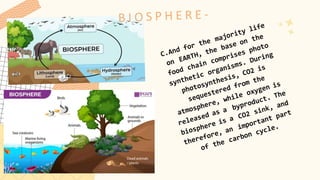
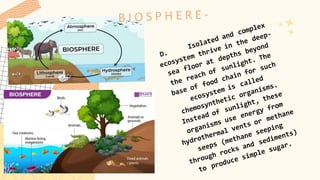
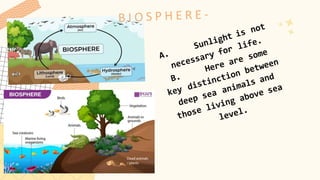
    The plants thatonce existed on earth eventually die and then decompose into the soil. The decomposed matter passes into the lithosphere from the biosphere. As time passes, they become a part of the lithosphere as fossil fuels.
  • 18.
    H Y DR O S P H E R E All the water on Earth, including oceans, lakes, rivers, and groundwater. The hydrosphere interacts with the atmosphere through the water cycle, and it's vital for supporting life and regulating climate.
  • 19.
    H Y DR O S P H E R E A. About 70% of the earth is covered with liquid water (hydrosphere) and much of it is in the form of ocean water. B. Only 3% of earth water is fresh:2/3 are in the Form of ice, and the remaining 1/3 is present in streams, lakes and ground water.
  • 20.
    H Y DR O S P H E R E C. The oceans are important sinks for CO2 through direct exchange with atmosphere and indirect through the weathering of rocks. D. Heat is absorbed is distributed on the surface of the earth through ocean circulation.
  • 21.
    C r yo s p h e r e (Ice and Frozen Water): This subsystem includes polar ice caps, glaciers, and permafrost. It interacts with the hydrosphere and influences sea levels, ocean currents, and regional climates.
  • 24.
    A r et h e r e a n y q u e s t i o n s ?