Earth Systems
Go to web browser. Enter
www.classpoint.app
Type in the class code 11EL
Type your name, Then enter
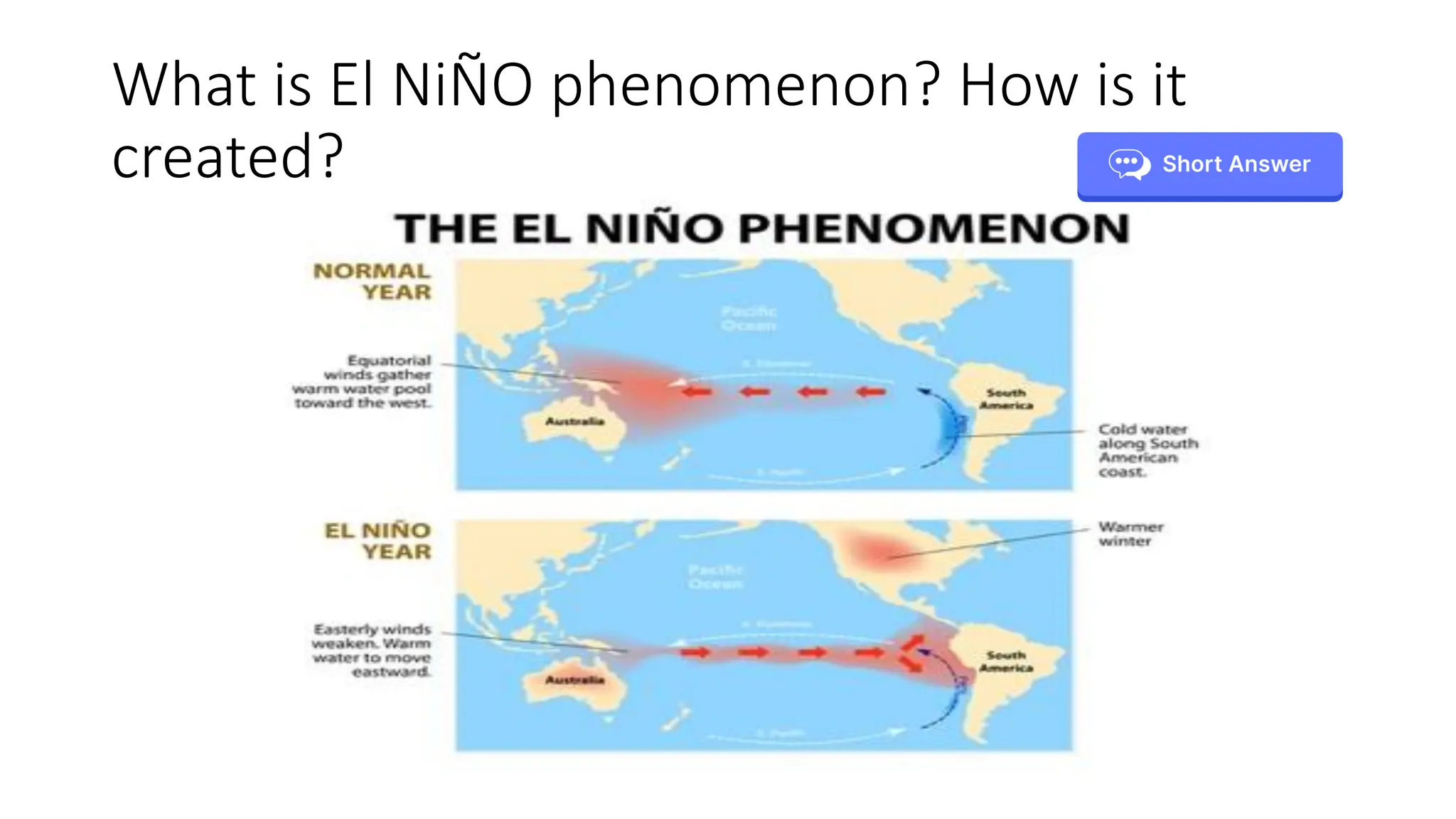
What is El NiÑO phenomenon? How is it
created?
Learning Objective
• define the concept of a system
• recognize the Earth as a system
composed of subsystems.
System
•A set of interconnect
components that are
interacting to form a unified
whole.
•Isolated, Closed, and Open.
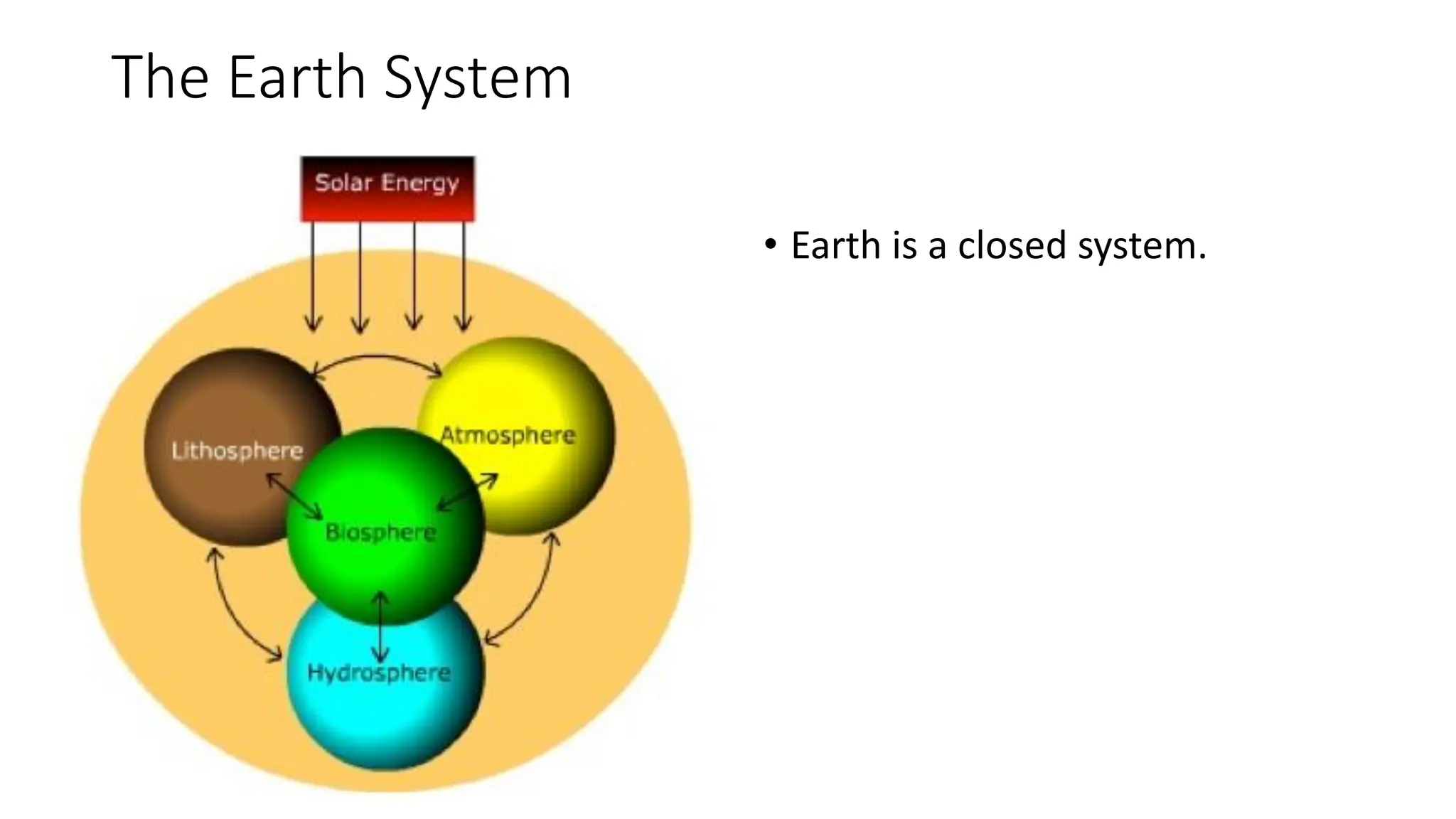
The Earth System
• Earth is a closed system.
Atmosphere
• Thin gaseous layer that envelopes the
lithosphere.
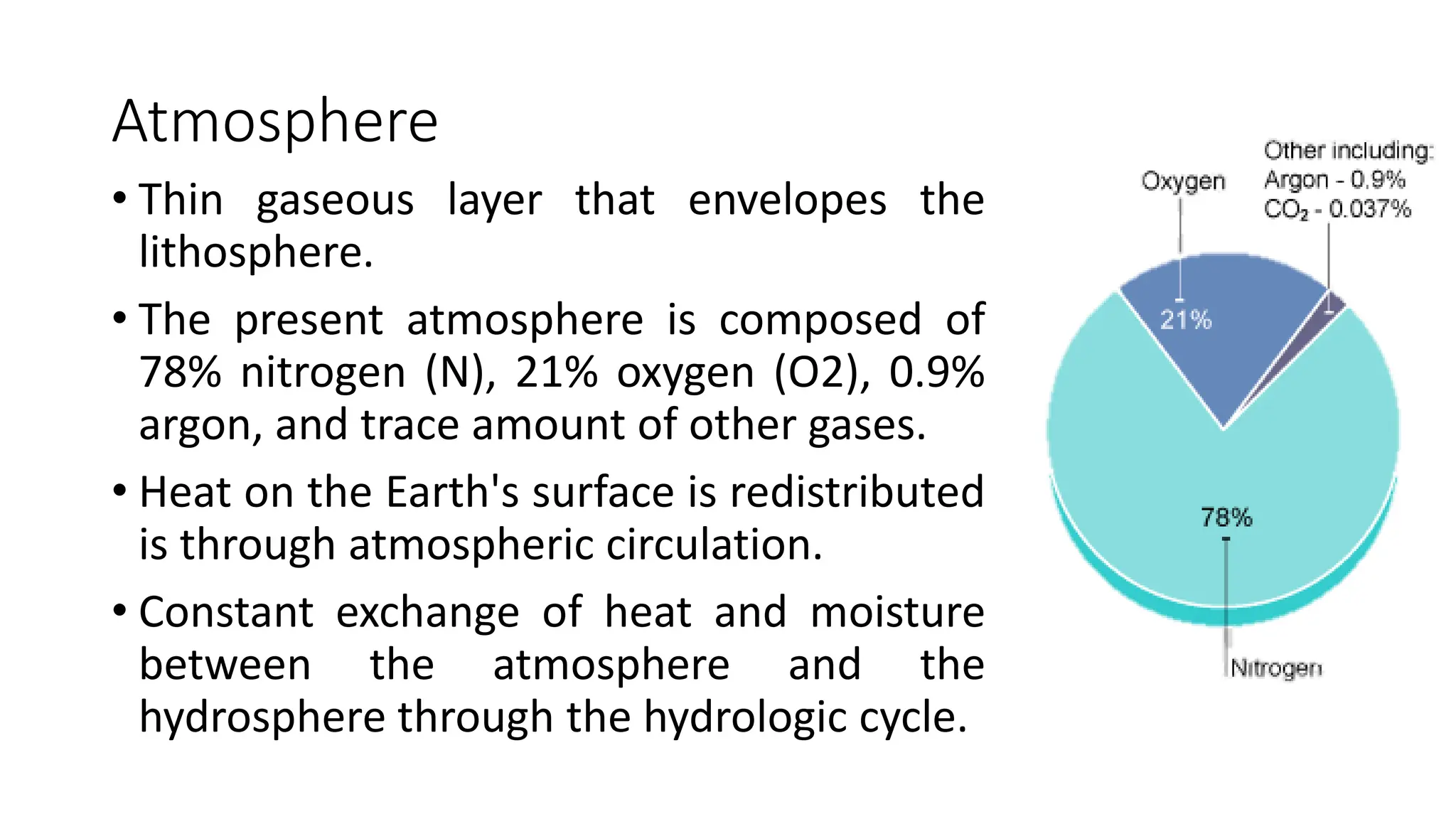
• The present atmosphere is composed of
78% nitrogen (N), 21% oxygen (O2), 0.9%
argon, and trace amount of other gases.
• Heat on the Earth's surface is redistributed
is through atmospheric circulation.
• Constant exchange of heat and moisture
between the atmosphere and the
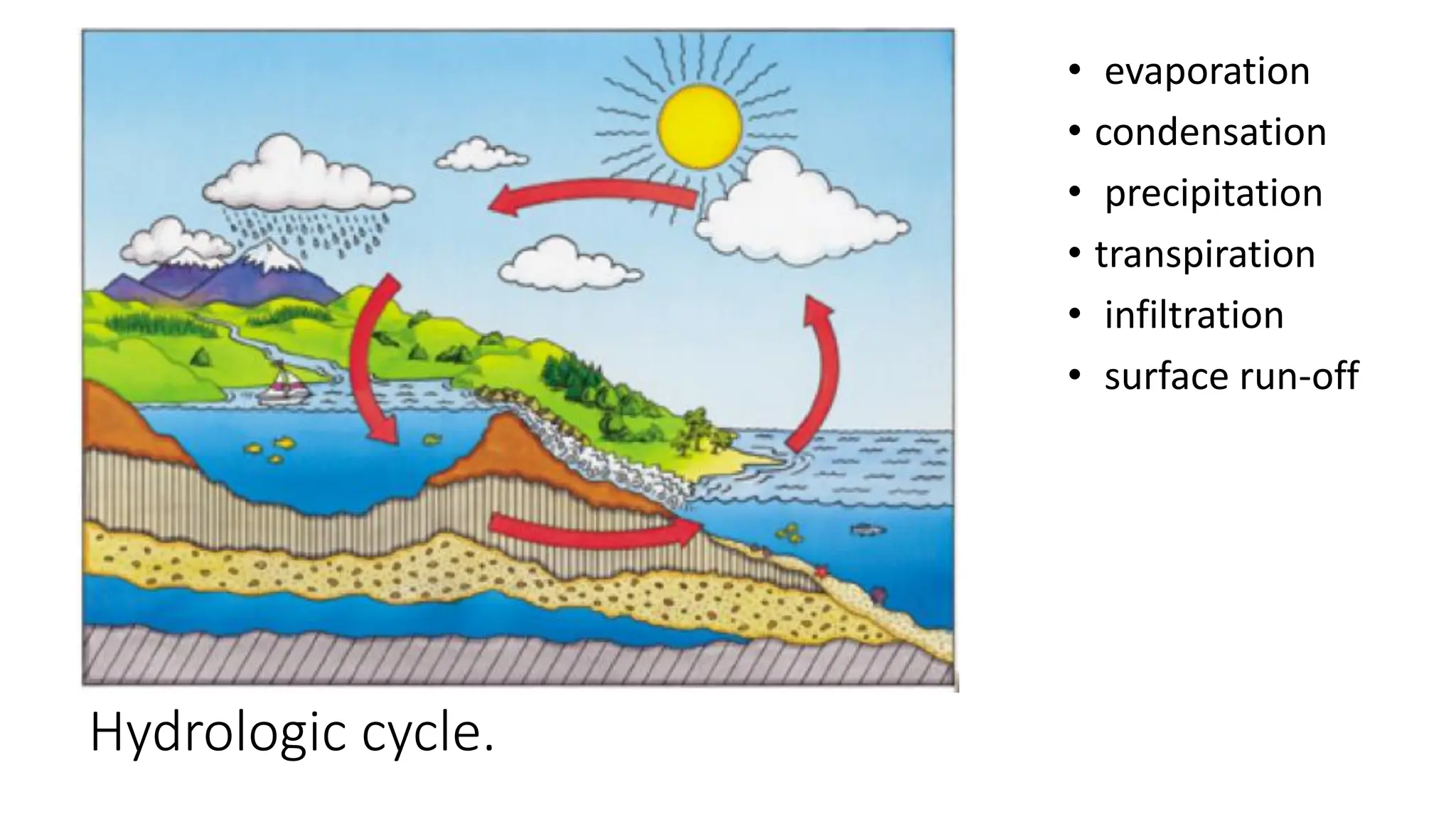
hydrosphere through the hydrologic cycle.
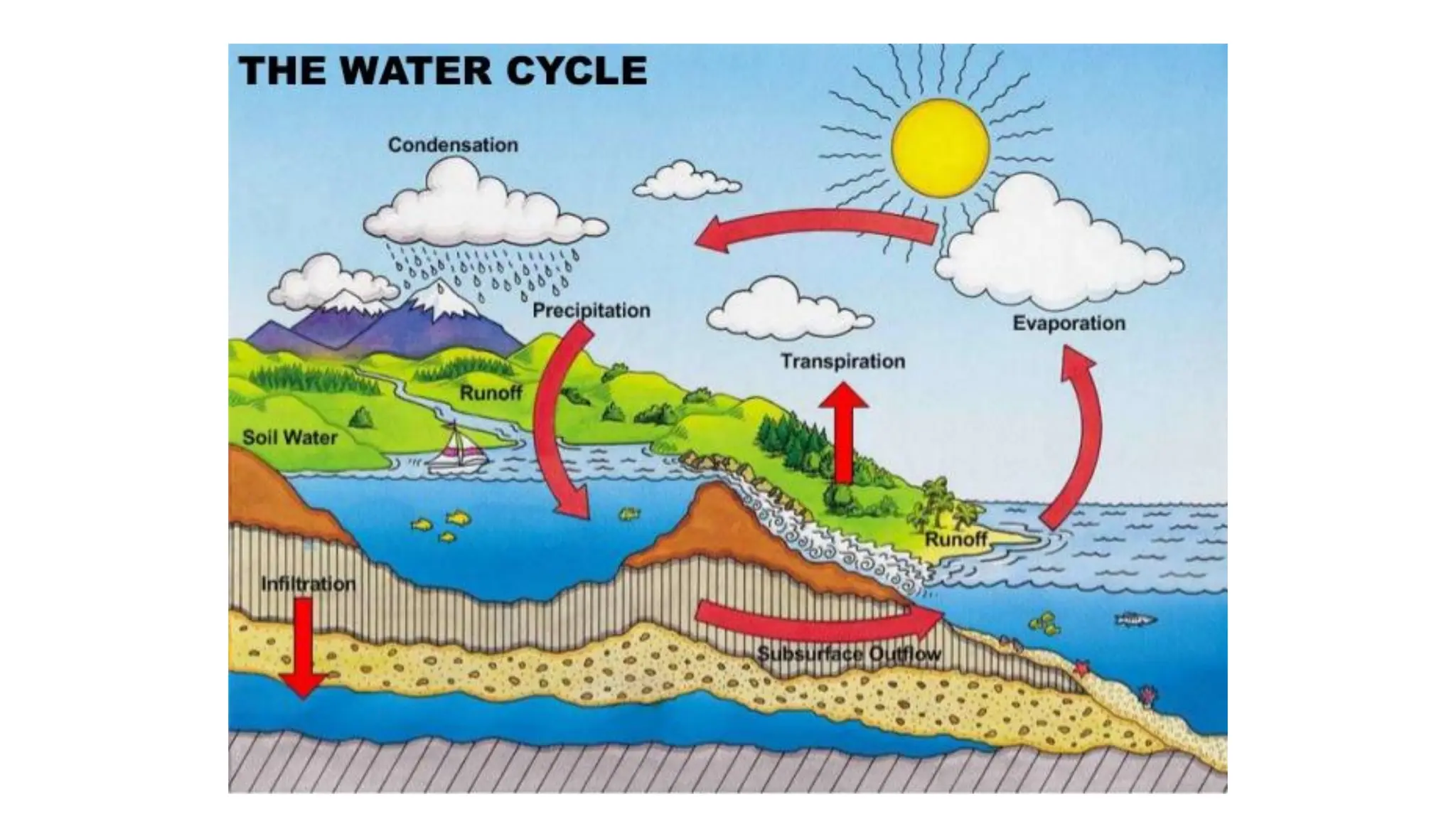
Hydrologic cycle.
• evaporation
• condensation
• precipitation
• transpiration
• infiltration
• surface run-off
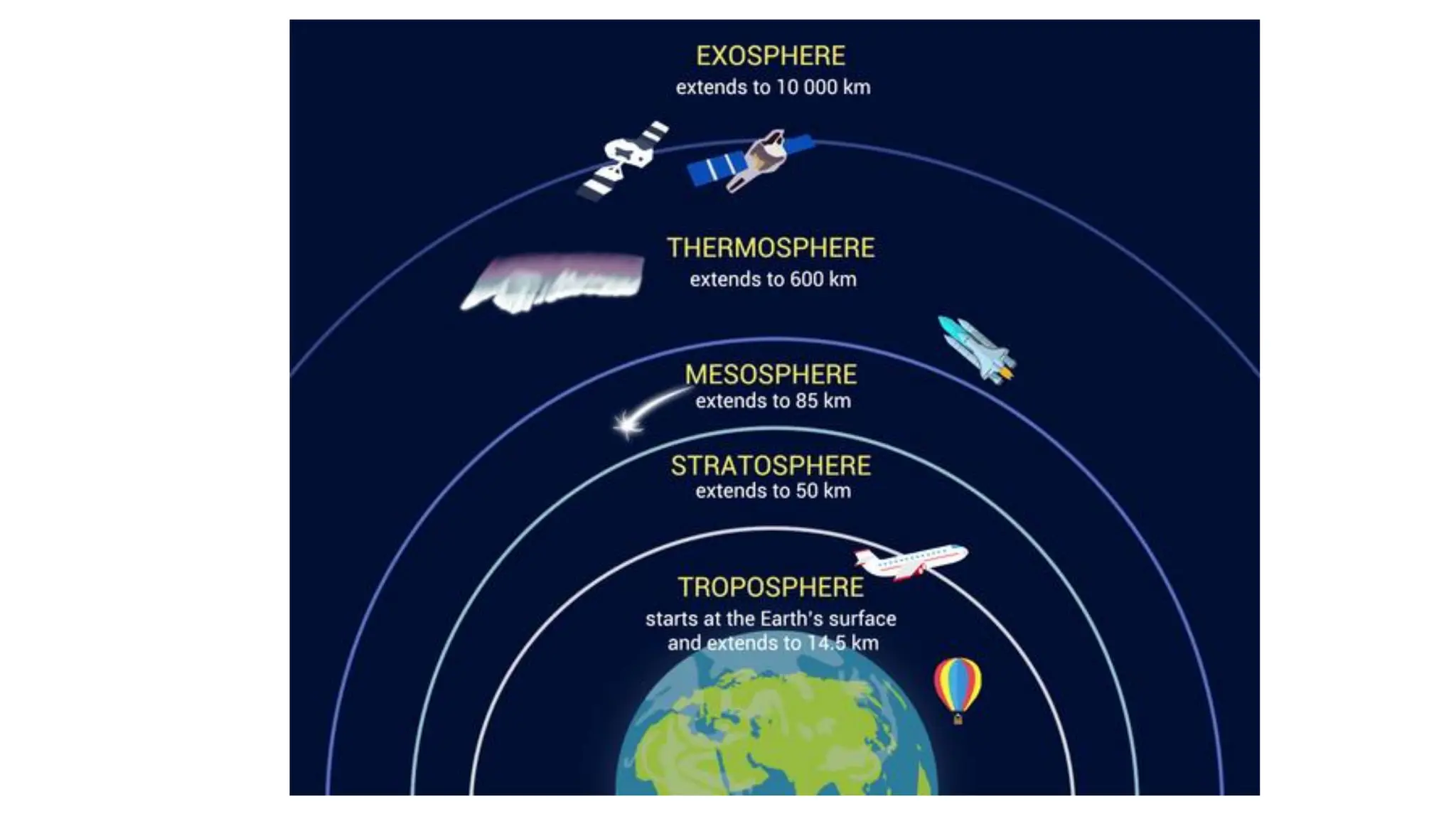
•The troposphere is the lowest layer where the weather
forms.
•The stratosphere has the ozone layer that protects the Earth
from the Sun's harmful UV radiation is found in this layer.
•The mesosphere protects the Earth from the impact of
space debris.
•The thermosphere has charged particles that are affected by
the Earth's magnetic field. The particles create the Auroras
or Northern and Southern lights.
•The exosphere is the farthest layer.
Lithosphere/Geosphere
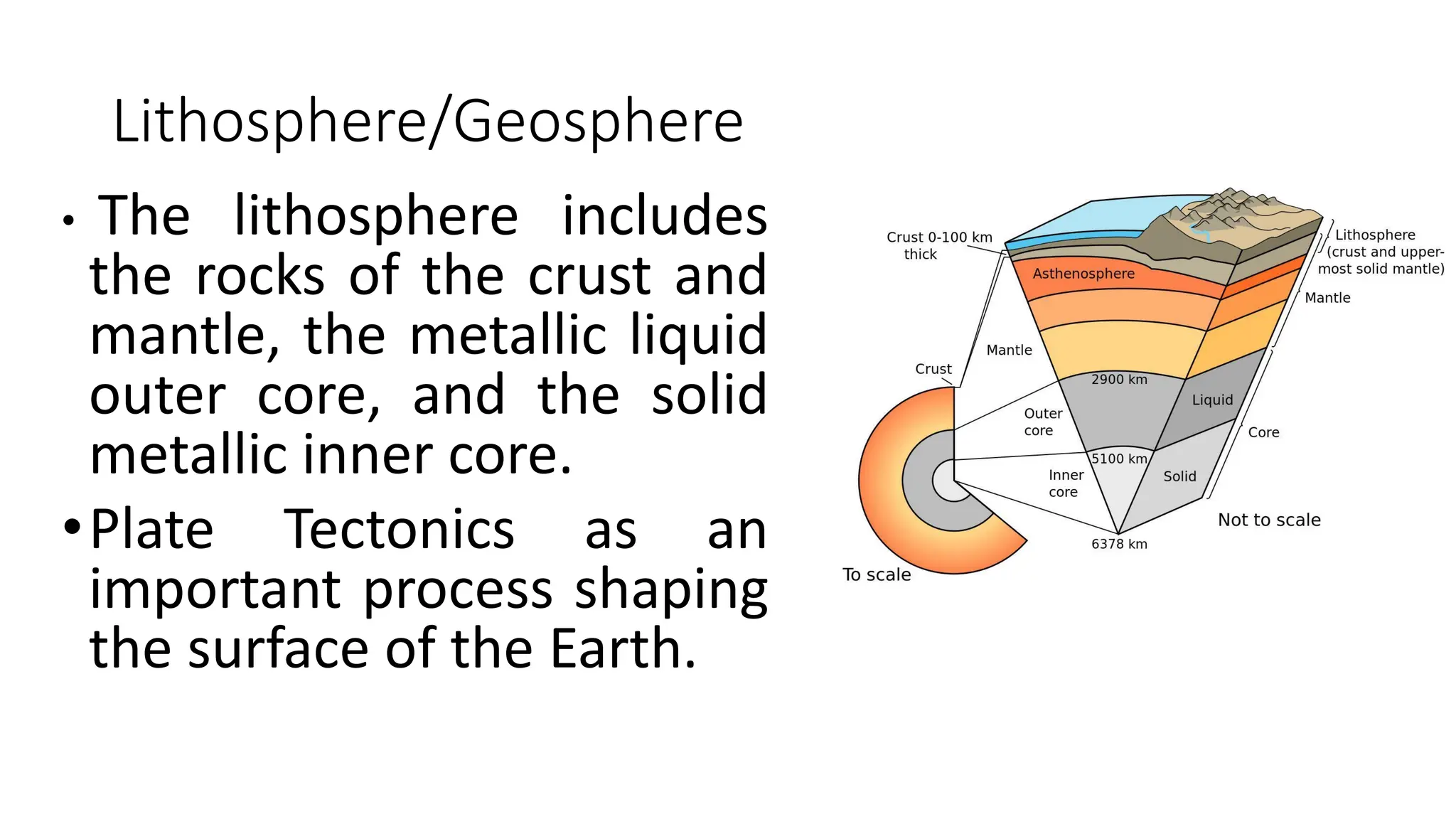
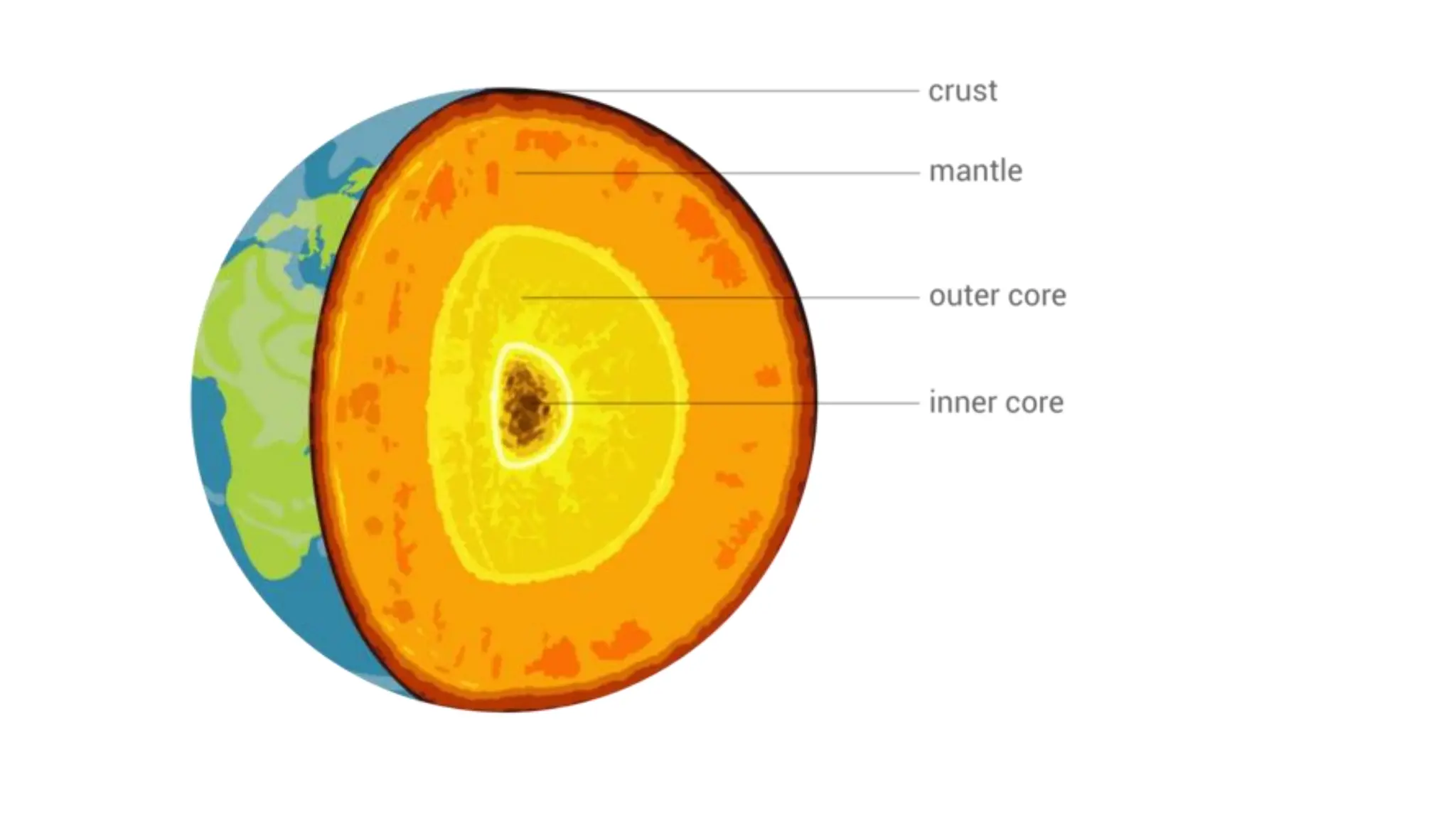
• The lithosphere includes
the rocks of the crust and
mantle, the metallic liquid
outer core, and the solid
metallic inner core.
•Plate Tectonics as an
important process shaping
the surface of the Earth.
•The crust is the outermost layer of the
geosphere.
•made mostly of silicate materials.
•two different types of crust,
•thin oceanic crust that lies beneath the
oceanic floors is about 5 to 10 km thick.
•thicker continental crust that makes up the
continents is about 15 to 70 km thick.
• The mantle, which lies just below the crust, is made mostly of
silicate rocks rich in magnesium and iron. It is about 2900 km thick.
The layer with the lowest temperature is the one right beneath the
crust. This layer, which is soft enough to flow, causes the plates of
the crust to move. The layer with the highest temperature is found
in contact with the heat-producing core.
• The core, which has a radius of 3400 km, is the innermost layer of
the Earth. It is made up of iron and nickel. It is the source of internal
heat because it contains radioactive materials that release energy
as they decay into more stable substances.
Biosphere
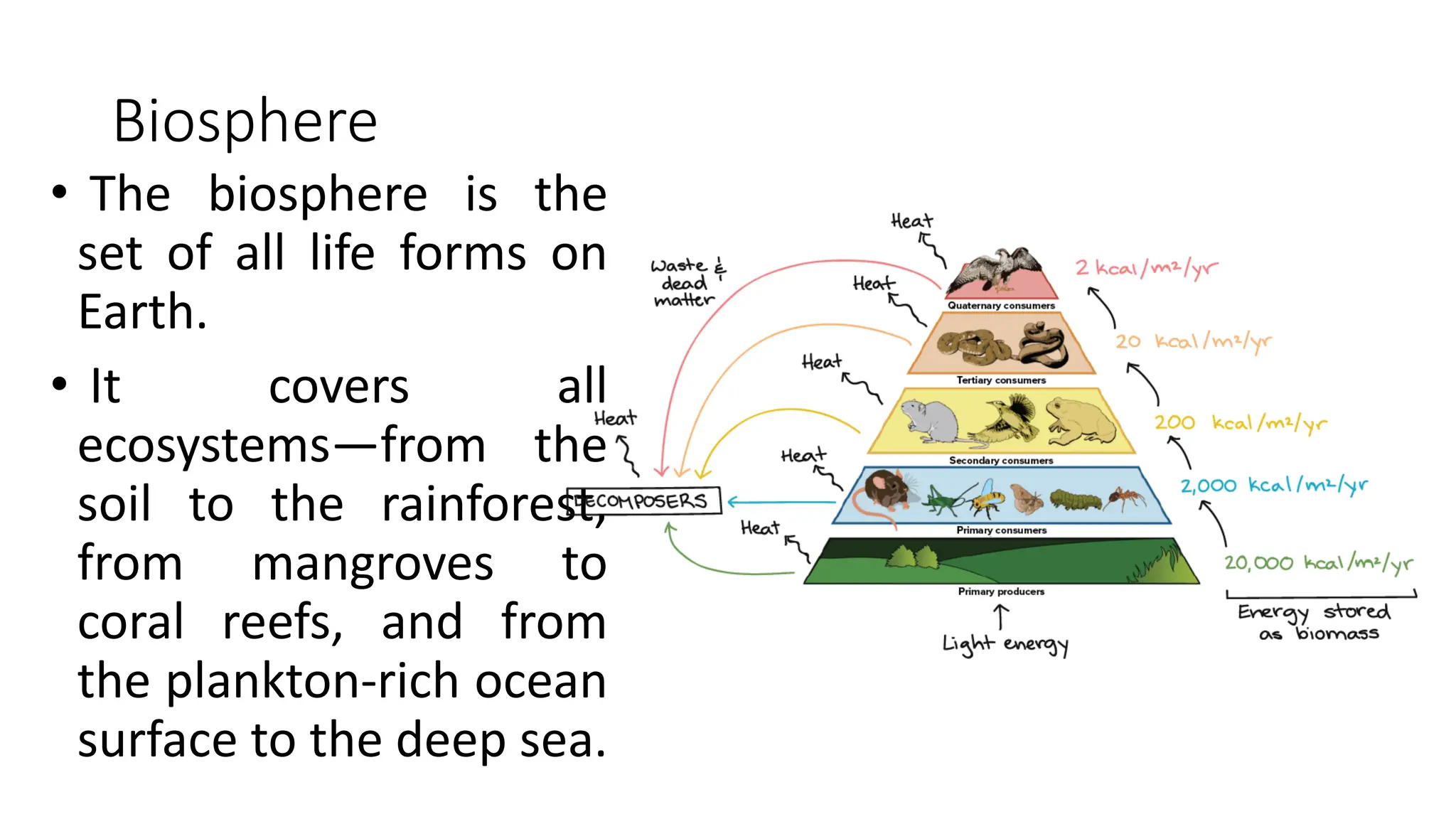
• The biosphere is the
set of all life forms on
Earth.
• It covers all
ecosystems—from the
soil to the rainforest,
from mangroves to
coral reefs, and from
the plankton-rich ocean
surface to the deep sea.
Biosphere
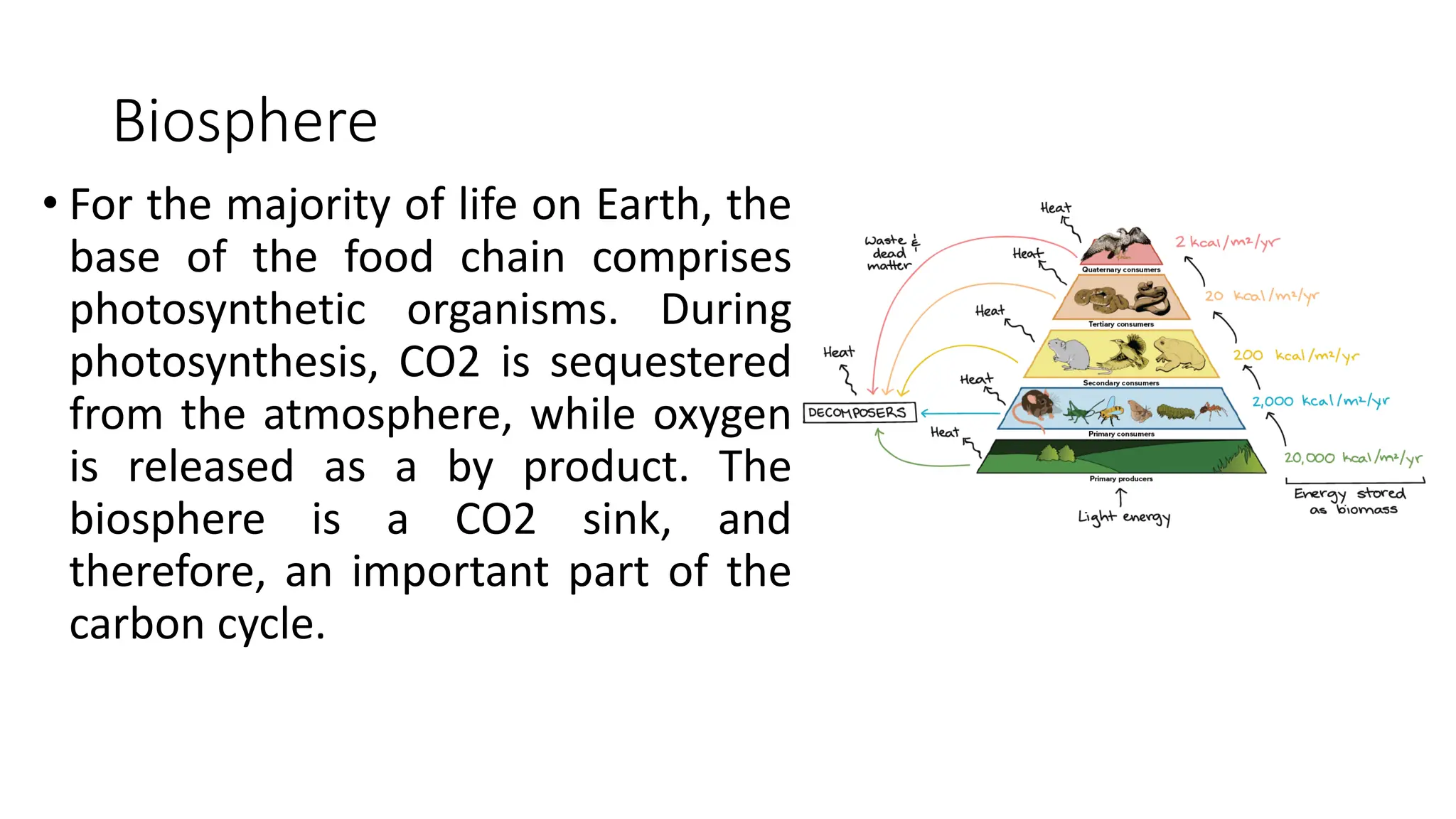
• For the majority of life on Earth, the
base of the food chain comprises
photosynthetic organisms. During
photosynthesis, CO2 is sequestered
from the atmosphere, while oxygen
is released as a by product. The
biosphere is a CO2 sink, and
therefore, an important part of the
carbon cycle.
Hydrosphere
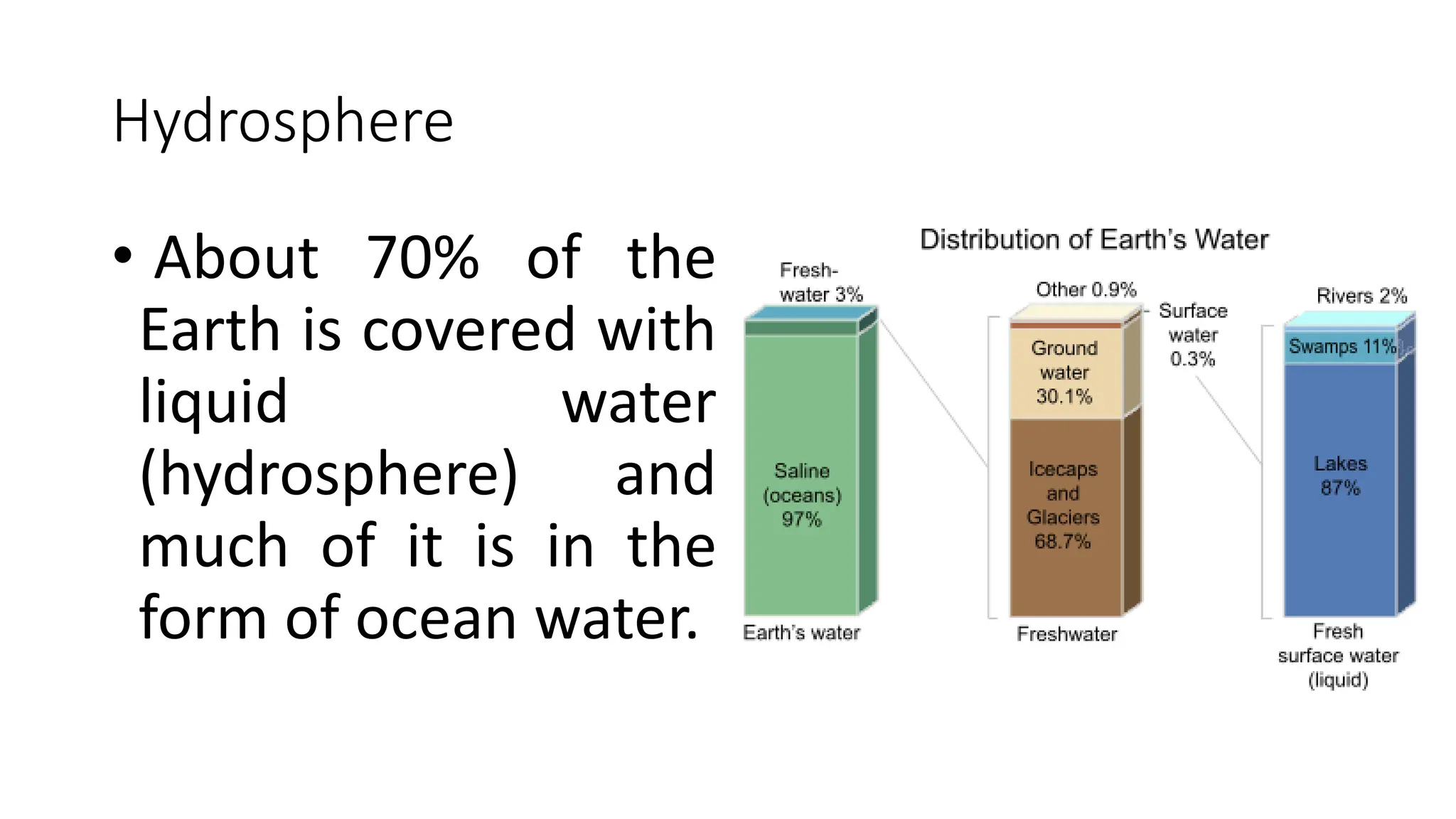
• About 70% of the
Earth is covered with
liquid water
(hydrosphere) and
much of it is in the
form of ocean water.
Hydrosphere
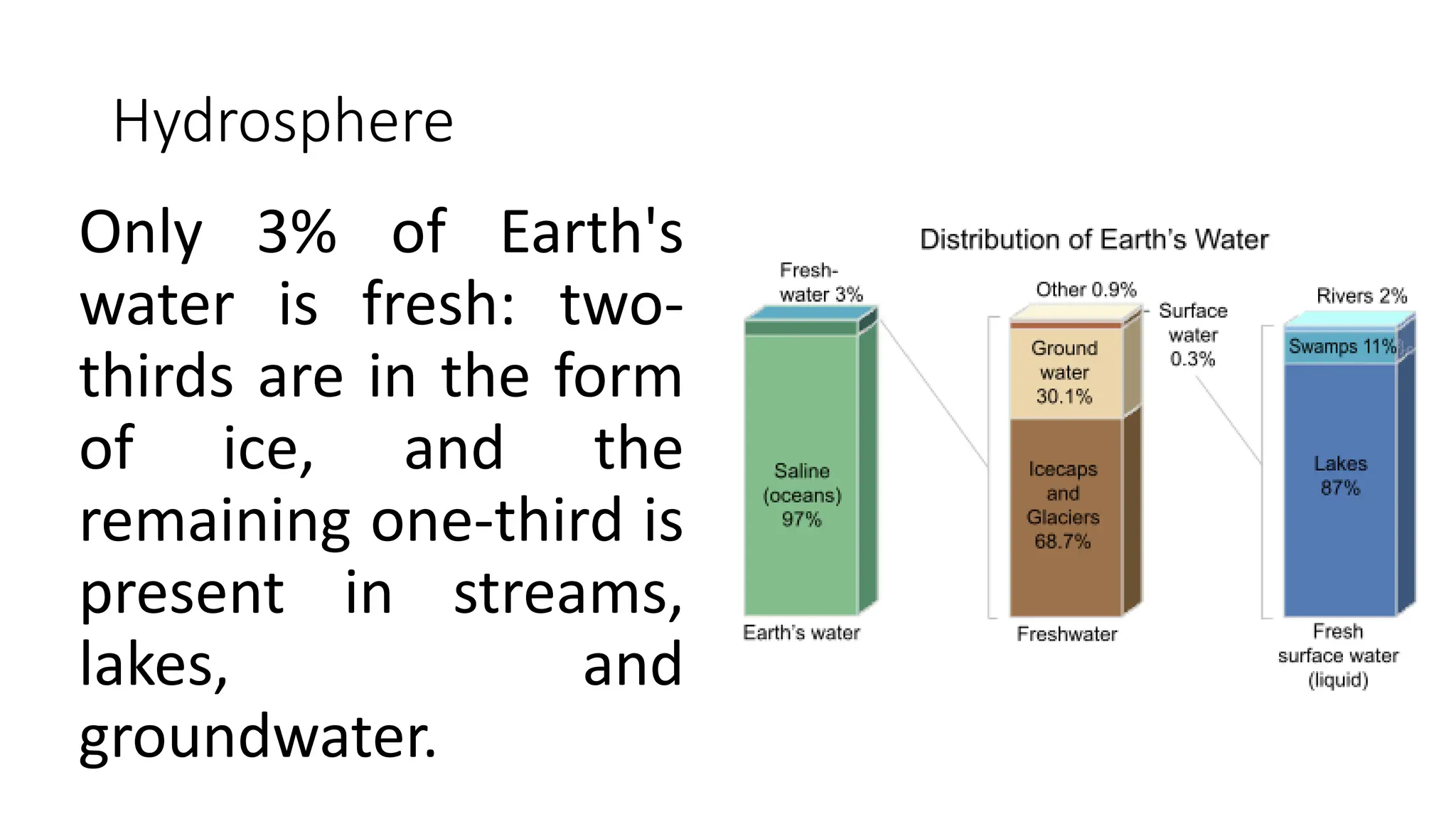
Only 3% of Earth's
water is fresh: two-
thirds are in the form
of ice, and the
remaining one-third is
present in streams,
lakes, and
groundwater.
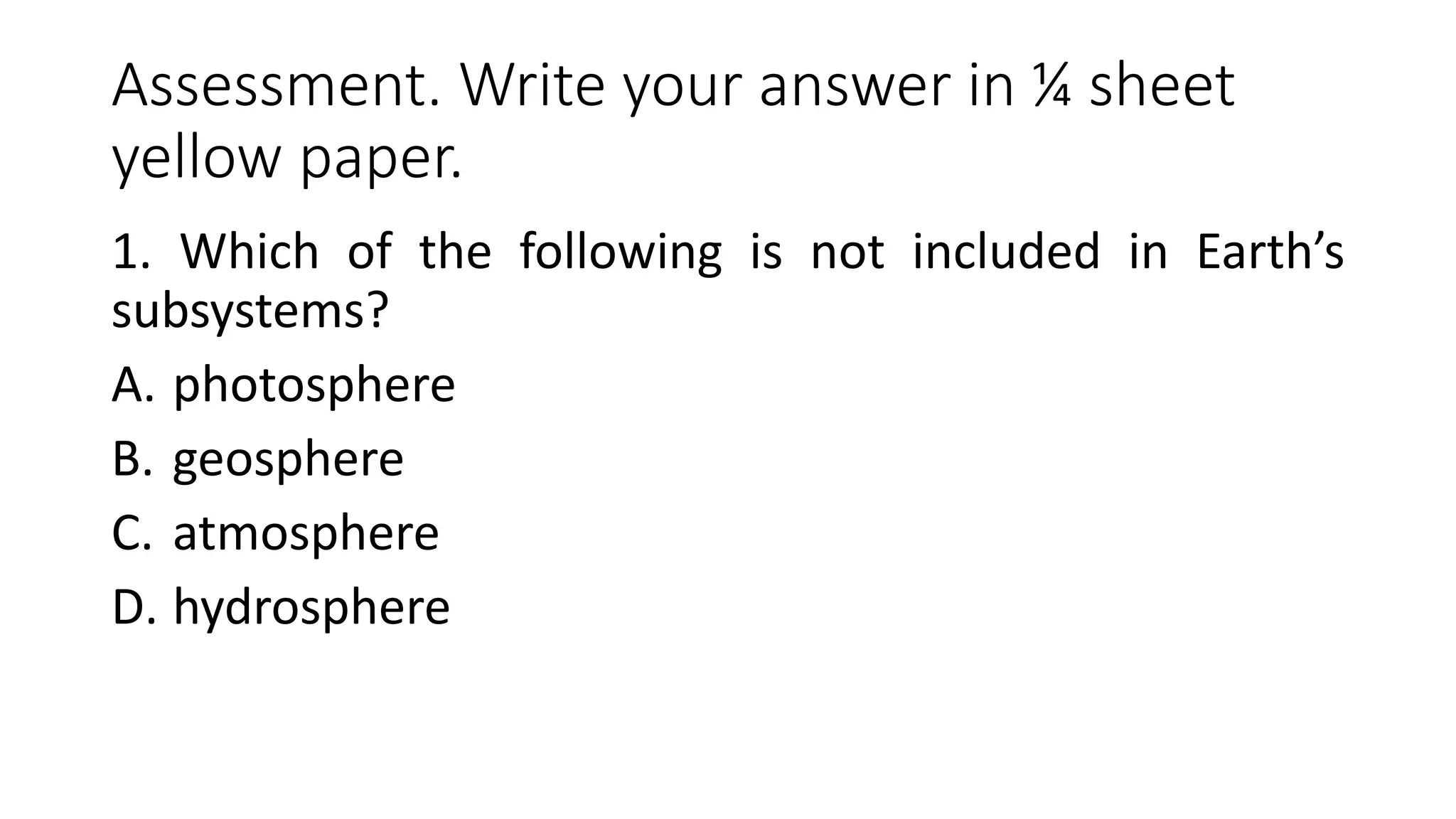
Assessment. Write your answer in ¼ sheet
yellow paper.
1. Which of the following is not included in Earth’s
subsystems?
A. photosphere
B. geosphere
C. atmosphere
D. hydrosphere
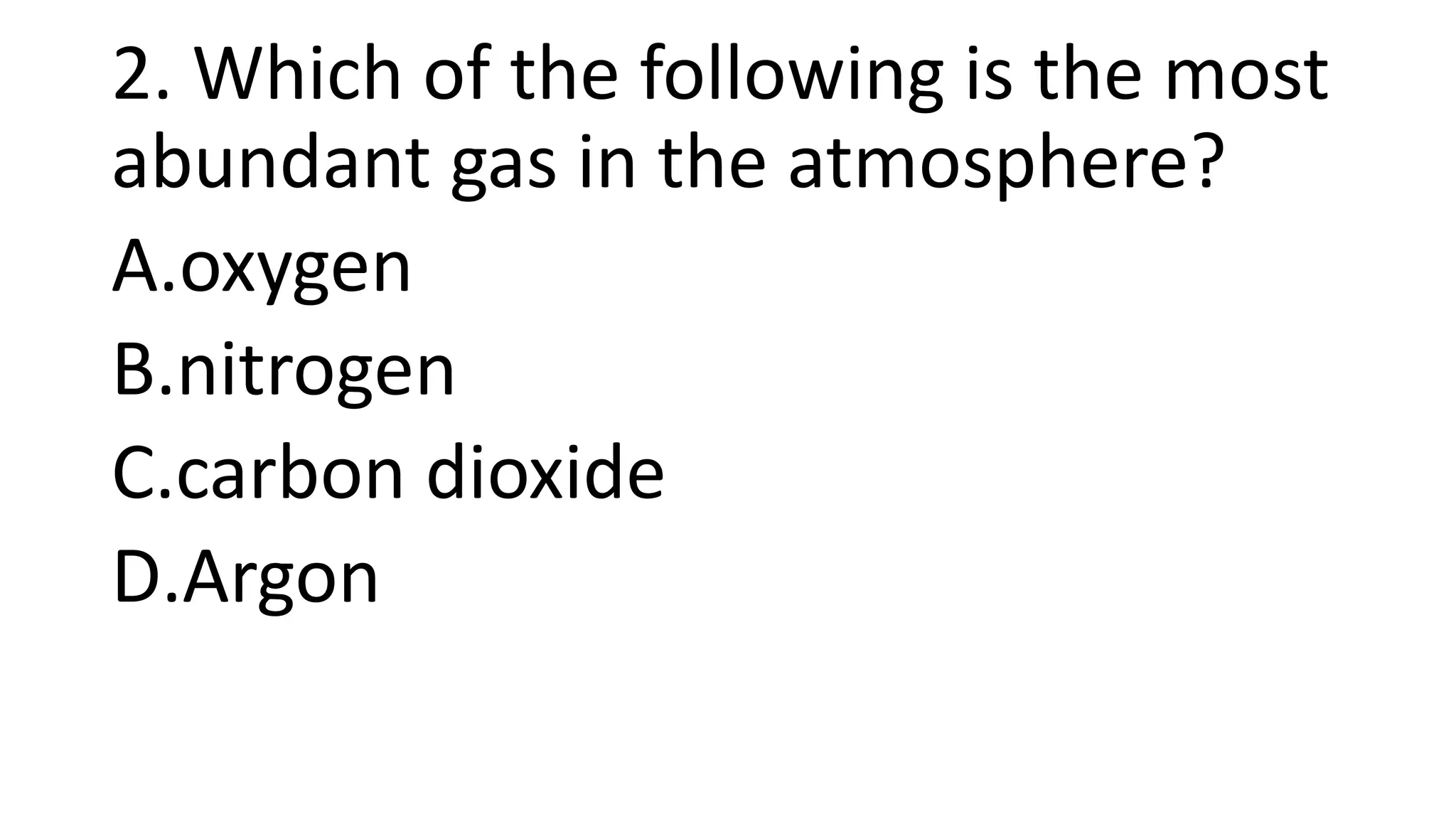
2. Which of the following is the most
abundant gas in the atmosphere?
A.oxygen
B.nitrogen
C.carbon dioxide
D.Argon
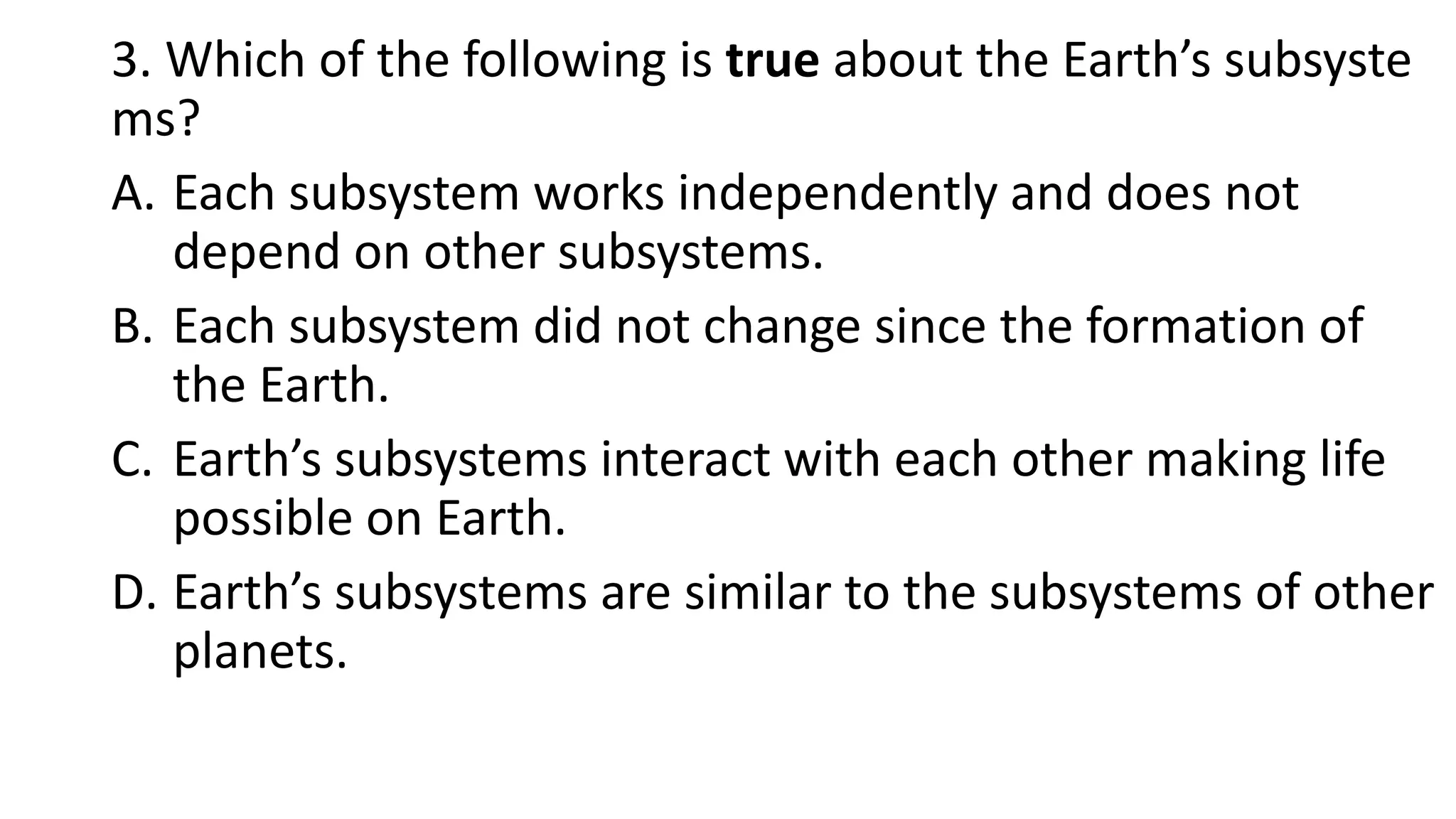
3. Which of the following is true about the Earth’s subsyste
ms?
A. Each subsystem works independently and does not
depend on other subsystems.
B. Each subsystem did not change since the formation of
the Earth.
C. Earth’s subsystems interact with each other making life
possible on Earth.
D. Earth’s subsystems are similar to the subsystems of other
planets.
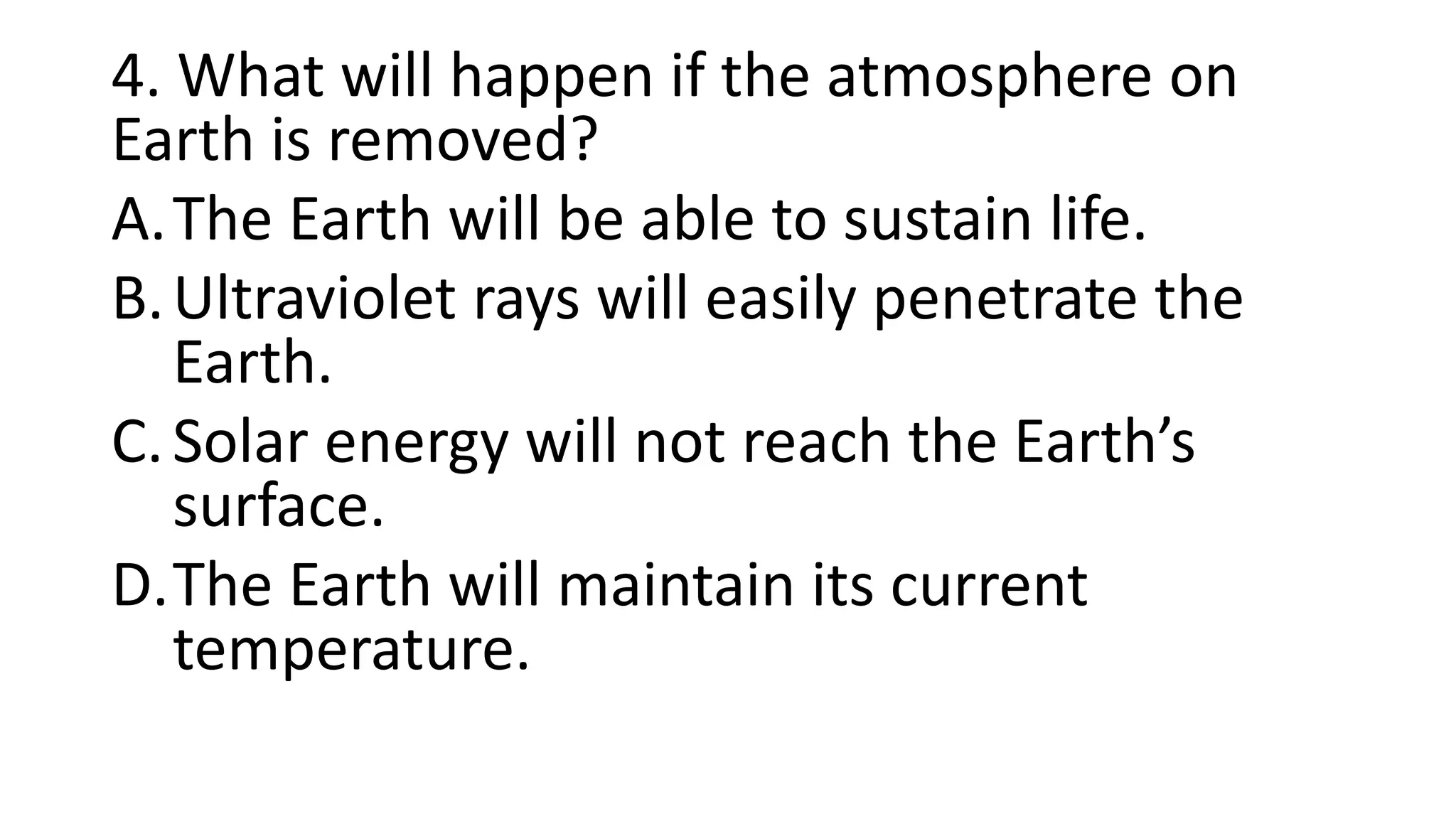
4. What will happen if the atmosphere on
Earth is removed?
A.The Earth will be able to sustain life.
B.Ultraviolet rays will easily penetrate the
Earth.
C.Solar energy will not reach the Earth’s
surface.
D.The Earth will maintain its current
temperature.
5. Atmosphere support other subsystems, EXCEPT?
A. It supplies organisms the needed oxygen and
carbon dioxide.
B. It absorbs all the minerals and nutrients from
the geosphere.
C. It serves as a reservoir for water vapor.
D.It shapes the Earth’s landforms by its constant
movement as the wind.
6. Includes rocks of the different layers of the Earth.
7. A theory that Earth’s outer shell is divided into
several plates that glide over the mantle.
8. Thin gaseous layer that envelops the Earth.
9. Which gas is the most abundant in the
Atmosphere?
Assessment (1/4 yellow paper)
10. What type of system is the Earth system?
11. What is the percentage of the Earth’s freshwater?
12. True or False: during photosynthesis, N2 is
sequestered from the atmosphere, while O2 is
released as a byproduct.
13. A set of interconnect components that are
interacting to form a unified whole.
Assessment (1/4 yellow paper)
14. True or False: 80% of the Earth is covered with
liquid water.
15. The constant exchange of heat and moisture
between the atmosphere and the hydrosphere.
Assessment (ANSWERS)
1. A
2. B
3. C
4. B
5. B
Assessment (ANSWERS)
6. Lithosphere
7. Plate Tectonics
8. Atmosphere
9. Nitrogen (N2)
10. Closed System
11. 3%
12. False
13. System
14. False
15. Hydrologic Cycle
Enrichment
•The impact of man to the environment has
become so massive that scientists are proposing
the addition of man or the ‘anthroposphere’ to
the Earth system.
•how man has altered the atmosphere,
biosphere, hydrosphere, lithosphere, and as a
consequence, the Earth System as whole.
Today’s Objective
•To describe the characteristics of Earth that
are necessary to support life.
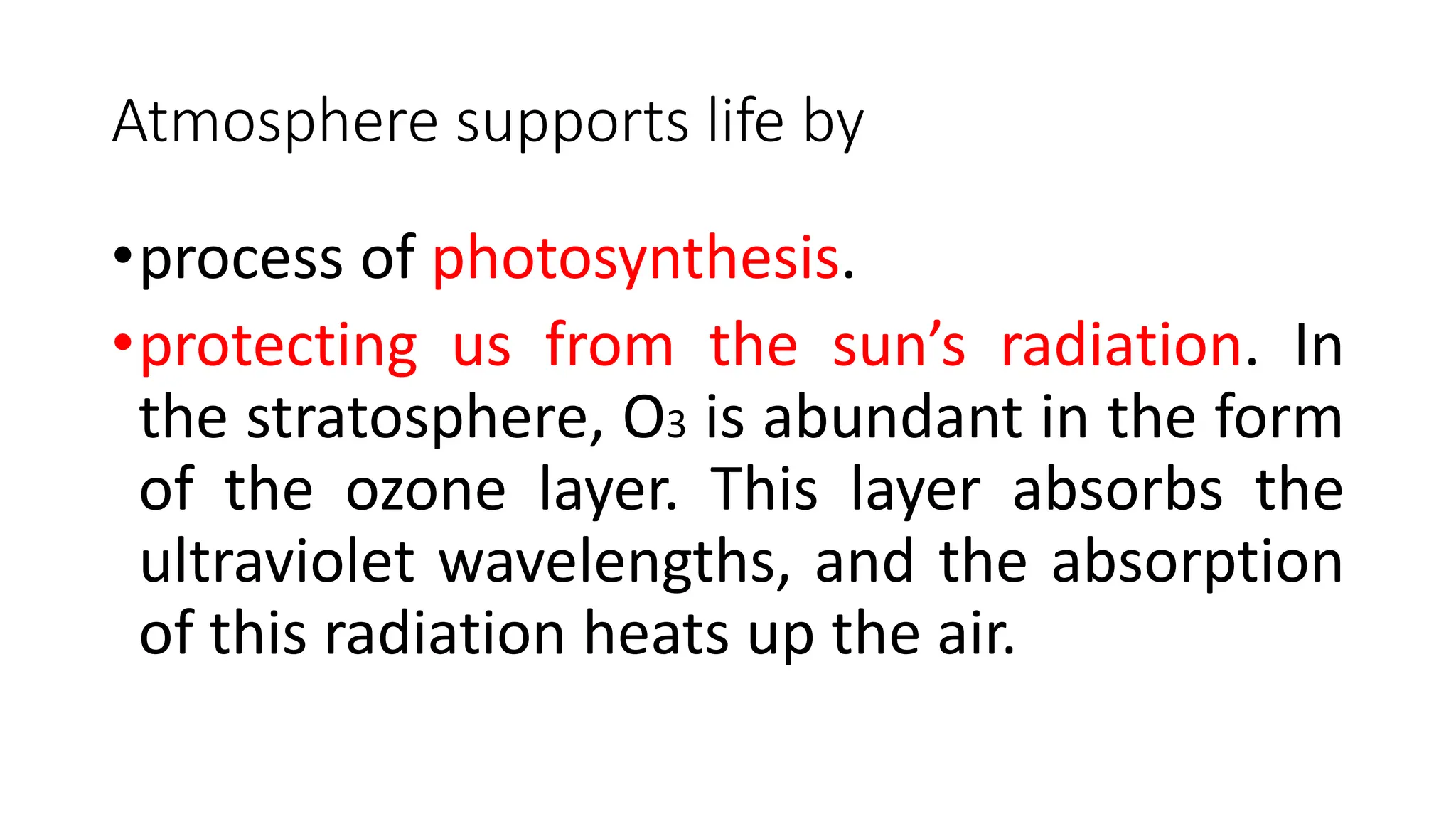
Atmosphere supports life by
•process of photosynthesis.
•protecting us from the sun’s radiation. In
the stratosphere, O3 is abundant in the form
of the ozone layer. This layer absorbs the
ultraviolet wavelengths, and the absorption
of this radiation heats up the air.
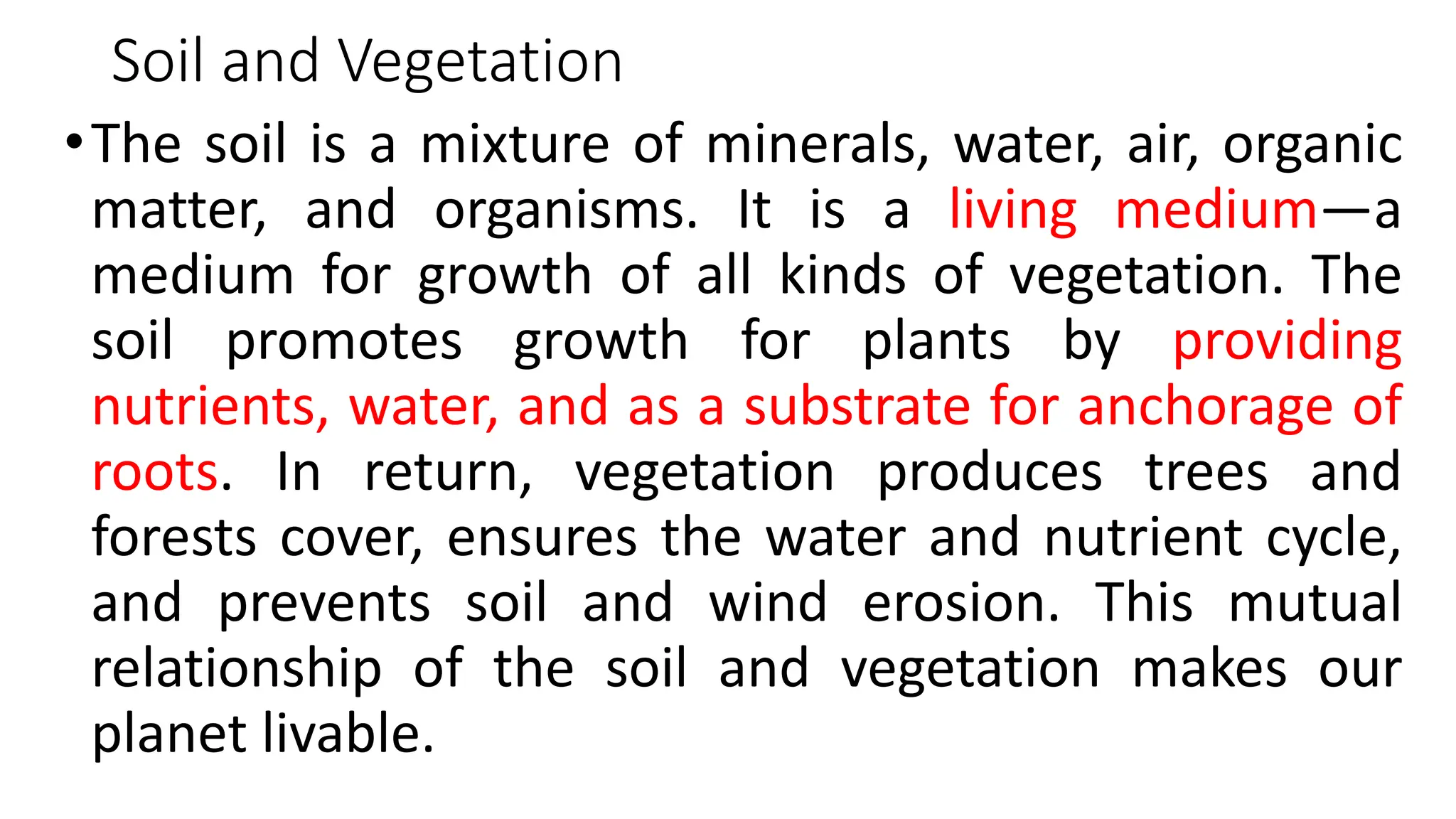
Soil and Vegetation
•The soil is a mixture of minerals, water, air, organic
matter, and organisms. It is a living medium—a
medium for growth of all kinds of vegetation. The
soil promotes growth for plants by providing
nutrients, water, and as a substrate for anchorage of
roots. In return, vegetation produces trees and
forests cover, ensures the water and nutrient cycle,
and prevents soil and wind erosion. This mutual
relationship of the soil and vegetation makes our
planet livable.
Earth’s Hydrosphere
•water reservoir
•serve as thermostat and heat reservoir,
especially the ocean. They also serve as
ways for transportation.
1. Earth’s living medium for growing of all kinds of
vegetation.
2. How do oxygen and carbon dioxide make the earth
habitable?
3. How does Earth’s atmosphere protect us from the
Sun's radiation?
4. How hydrosphere help to sustain life on Earth?
• Soil
• Photosynthesis
• Presence of ozone layer.
• Water reservoir, ways of transportation and heat reservoir.
Explore!
•Imagine that you have a garden. Get one
plant that could fit in a pot but do not put
soil when you transfer it. Put the plant
inside a box and leave it for one week. What
do you think will happen to the plant? How
would you relate this scenario with the
different characteristics of the Earth?

week1-d3-earth-system.pdf

  • 1.
  • 2.
    Go to webbrowser. Enter www.classpoint.app Type in the class code 11EL Type your name, Then enter
  • 3.
    What is ElNiÑO phenomenon? How is it created?
  • 4.
    Learning Objective • definethe concept of a system • recognize the Earth as a system composed of subsystems.
  • 5.
    System •A set ofinterconnect components that are interacting to form a unified whole. •Isolated, Closed, and Open.
  • 6.
    The Earth System •Earth is a closed system.
  • 7.
    Atmosphere • Thin gaseouslayer that envelopes the lithosphere. • The present atmosphere is composed of 78% nitrogen (N), 21% oxygen (O2), 0.9% argon, and trace amount of other gases. • Heat on the Earth's surface is redistributed is through atmospheric circulation. • Constant exchange of heat and moisture between the atmosphere and the hydrosphere through the hydrologic cycle.
  • 8.
    Hydrologic cycle. • evaporation •condensation • precipitation • transpiration • infiltration • surface run-off
  • 11.
    •The troposphere isthe lowest layer where the weather forms. •The stratosphere has the ozone layer that protects the Earth from the Sun's harmful UV radiation is found in this layer. •The mesosphere protects the Earth from the impact of space debris. •The thermosphere has charged particles that are affected by the Earth's magnetic field. The particles create the Auroras or Northern and Southern lights. •The exosphere is the farthest layer.
  • 12.
    Lithosphere/Geosphere • The lithosphereincludes the rocks of the crust and mantle, the metallic liquid outer core, and the solid metallic inner core. •Plate Tectonics as an important process shaping the surface of the Earth.
  • 14.
    •The crust isthe outermost layer of the geosphere. •made mostly of silicate materials. •two different types of crust, •thin oceanic crust that lies beneath the oceanic floors is about 5 to 10 km thick. •thicker continental crust that makes up the continents is about 15 to 70 km thick.
  • 15.
    • The mantle,which lies just below the crust, is made mostly of silicate rocks rich in magnesium and iron. It is about 2900 km thick. The layer with the lowest temperature is the one right beneath the crust. This layer, which is soft enough to flow, causes the plates of the crust to move. The layer with the highest temperature is found in contact with the heat-producing core. • The core, which has a radius of 3400 km, is the innermost layer of the Earth. It is made up of iron and nickel. It is the source of internal heat because it contains radioactive materials that release energy as they decay into more stable substances.
  • 16.
    Biosphere • The biosphereis the set of all life forms on Earth. • It covers all ecosystems—from the soil to the rainforest, from mangroves to coral reefs, and from the plankton-rich ocean surface to the deep sea.
  • 17.
    Biosphere • For themajority of life on Earth, the base of the food chain comprises photosynthetic organisms. During photosynthesis, CO2 is sequestered from the atmosphere, while oxygen is released as a by product. The biosphere is a CO2 sink, and therefore, an important part of the carbon cycle.
  • 18.
    Hydrosphere • About 70%of the Earth is covered with liquid water (hydrosphere) and much of it is in the form of ocean water.
  • 19.
    Hydrosphere Only 3% ofEarth's water is fresh: two- thirds are in the form of ice, and the remaining one-third is present in streams, lakes, and groundwater.
  • 20.
    Assessment. Write youranswer in ¼ sheet yellow paper. 1. Which of the following is not included in Earth’s subsystems? A. photosphere B. geosphere C. atmosphere D. hydrosphere
  • 21.
    2. Which ofthe following is the most abundant gas in the atmosphere? A.oxygen B.nitrogen C.carbon dioxide D.Argon
  • 22.
    3. Which ofthe following is true about the Earth’s subsyste ms? A. Each subsystem works independently and does not depend on other subsystems. B. Each subsystem did not change since the formation of the Earth. C. Earth’s subsystems interact with each other making life possible on Earth. D. Earth’s subsystems are similar to the subsystems of other planets.
  • 23.
    4. What willhappen if the atmosphere on Earth is removed? A.The Earth will be able to sustain life. B.Ultraviolet rays will easily penetrate the Earth. C.Solar energy will not reach the Earth’s surface. D.The Earth will maintain its current temperature.
  • 24.
    5. Atmosphere supportother subsystems, EXCEPT? A. It supplies organisms the needed oxygen and carbon dioxide. B. It absorbs all the minerals and nutrients from the geosphere. C. It serves as a reservoir for water vapor. D.It shapes the Earth’s landforms by its constant movement as the wind.
  • 25.
    6. Includes rocksof the different layers of the Earth. 7. A theory that Earth’s outer shell is divided into several plates that glide over the mantle. 8. Thin gaseous layer that envelops the Earth. 9. Which gas is the most abundant in the Atmosphere?
  • 26.
    Assessment (1/4 yellowpaper) 10. What type of system is the Earth system? 11. What is the percentage of the Earth’s freshwater? 12. True or False: during photosynthesis, N2 is sequestered from the atmosphere, while O2 is released as a byproduct. 13. A set of interconnect components that are interacting to form a unified whole.
  • 27.
    Assessment (1/4 yellowpaper) 14. True or False: 80% of the Earth is covered with liquid water. 15. The constant exchange of heat and moisture between the atmosphere and the hydrosphere.
  • 28.
  • 29.
    Assessment (ANSWERS) 6. Lithosphere 7.Plate Tectonics 8. Atmosphere 9. Nitrogen (N2) 10. Closed System 11. 3% 12. False 13. System 14. False 15. Hydrologic Cycle
  • 30.
    Enrichment •The impact ofman to the environment has become so massive that scientists are proposing the addition of man or the ‘anthroposphere’ to the Earth system. •how man has altered the atmosphere, biosphere, hydrosphere, lithosphere, and as a consequence, the Earth System as whole.
  • 32.
    Today’s Objective •To describethe characteristics of Earth that are necessary to support life.
  • 33.
    Atmosphere supports lifeby •process of photosynthesis. •protecting us from the sun’s radiation. In the stratosphere, O3 is abundant in the form of the ozone layer. This layer absorbs the ultraviolet wavelengths, and the absorption of this radiation heats up the air.
  • 34.
    Soil and Vegetation •Thesoil is a mixture of minerals, water, air, organic matter, and organisms. It is a living medium—a medium for growth of all kinds of vegetation. The soil promotes growth for plants by providing nutrients, water, and as a substrate for anchorage of roots. In return, vegetation produces trees and forests cover, ensures the water and nutrient cycle, and prevents soil and wind erosion. This mutual relationship of the soil and vegetation makes our planet livable.
  • 35.
    Earth’s Hydrosphere •water reservoir •serveas thermostat and heat reservoir, especially the ocean. They also serve as ways for transportation.
  • 36.
    1. Earth’s livingmedium for growing of all kinds of vegetation. 2. How do oxygen and carbon dioxide make the earth habitable? 3. How does Earth’s atmosphere protect us from the Sun's radiation? 4. How hydrosphere help to sustain life on Earth?
  • 37.
    • Soil • Photosynthesis •Presence of ozone layer. • Water reservoir, ways of transportation and heat reservoir.
  • 38.
    Explore! •Imagine that youhave a garden. Get one plant that could fit in a pot but do not put soil when you transfer it. Put the plant inside a box and leave it for one week. What do you think will happen to the plant? How would you relate this scenario with the different characteristics of the Earth?