Noor Asyikin Bt Abdullah Ariana Bt Syamsidi
3 main categories of early pregnancy disorders are:
 
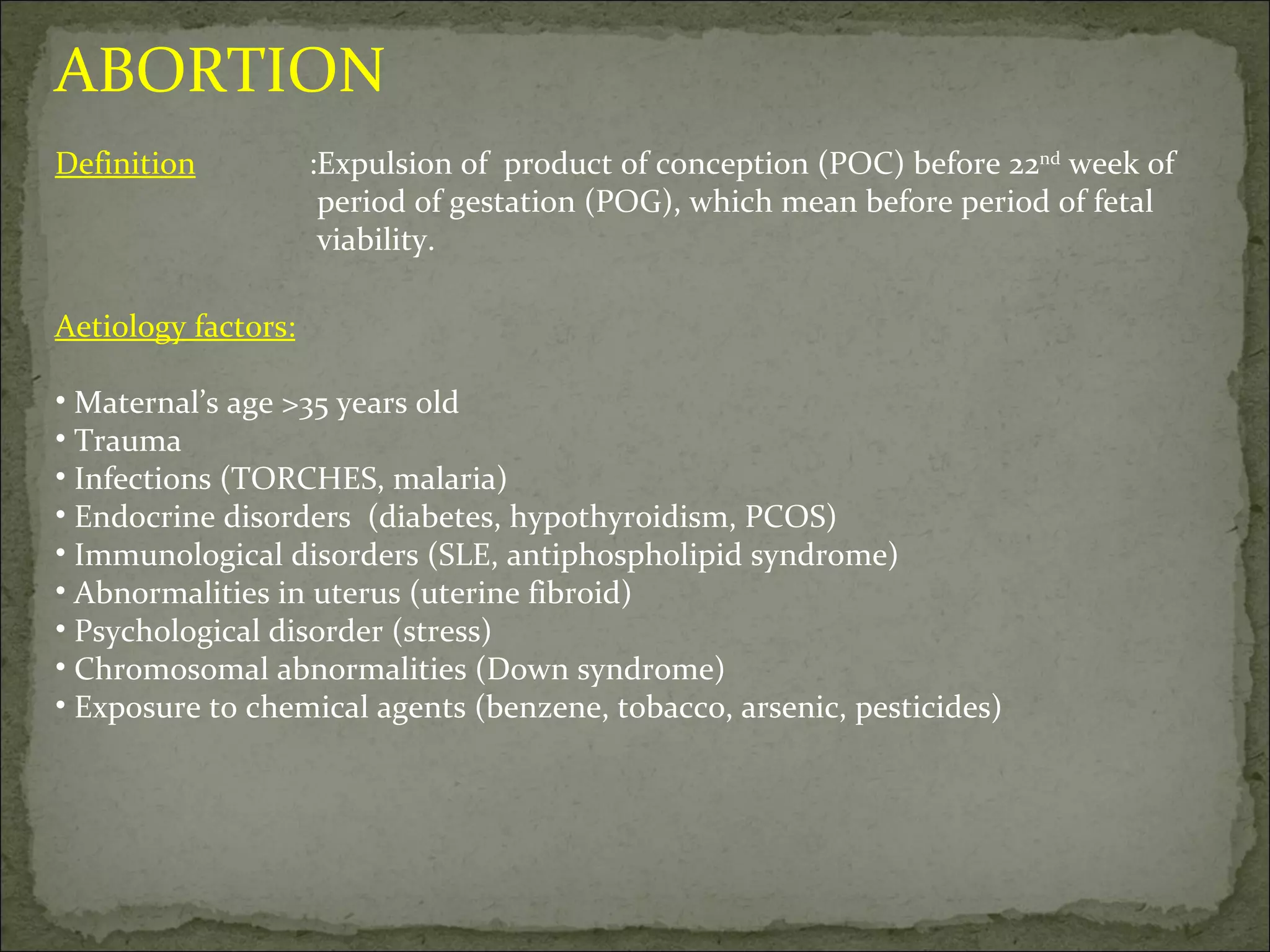
ABORTION Definition :Expulsion of  product of conception (POC) before 22 nd  week of   period of gestation (POG), which mean before period of fetal   viability. Aetiology factors: Maternal’s age >35 years old Trauma Infections (TORCHES, malaria) Endocrine disorders  (diabetes, hypothyroidism, PCOS) Immunological disorders (SLE, antiphospholipid syndrome) Abnormalities in uterus (uterine fibroid) Psychological disorder (stress) Chromosomal abnormalities (Down syndrome) Exposure to chemical agents (benzene, tobacco, arsenic, pesticides)
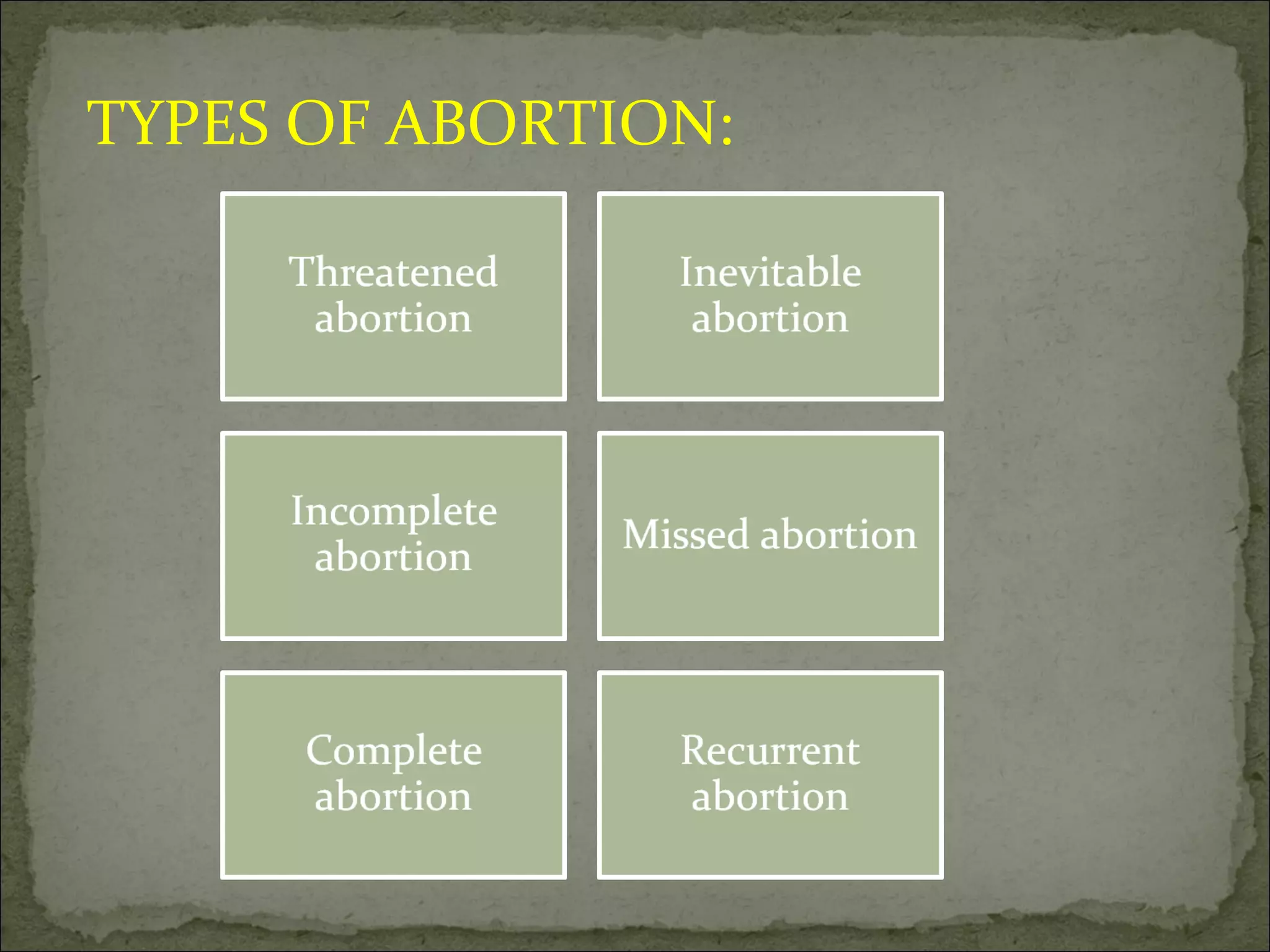
TYPES OF ABORTION:
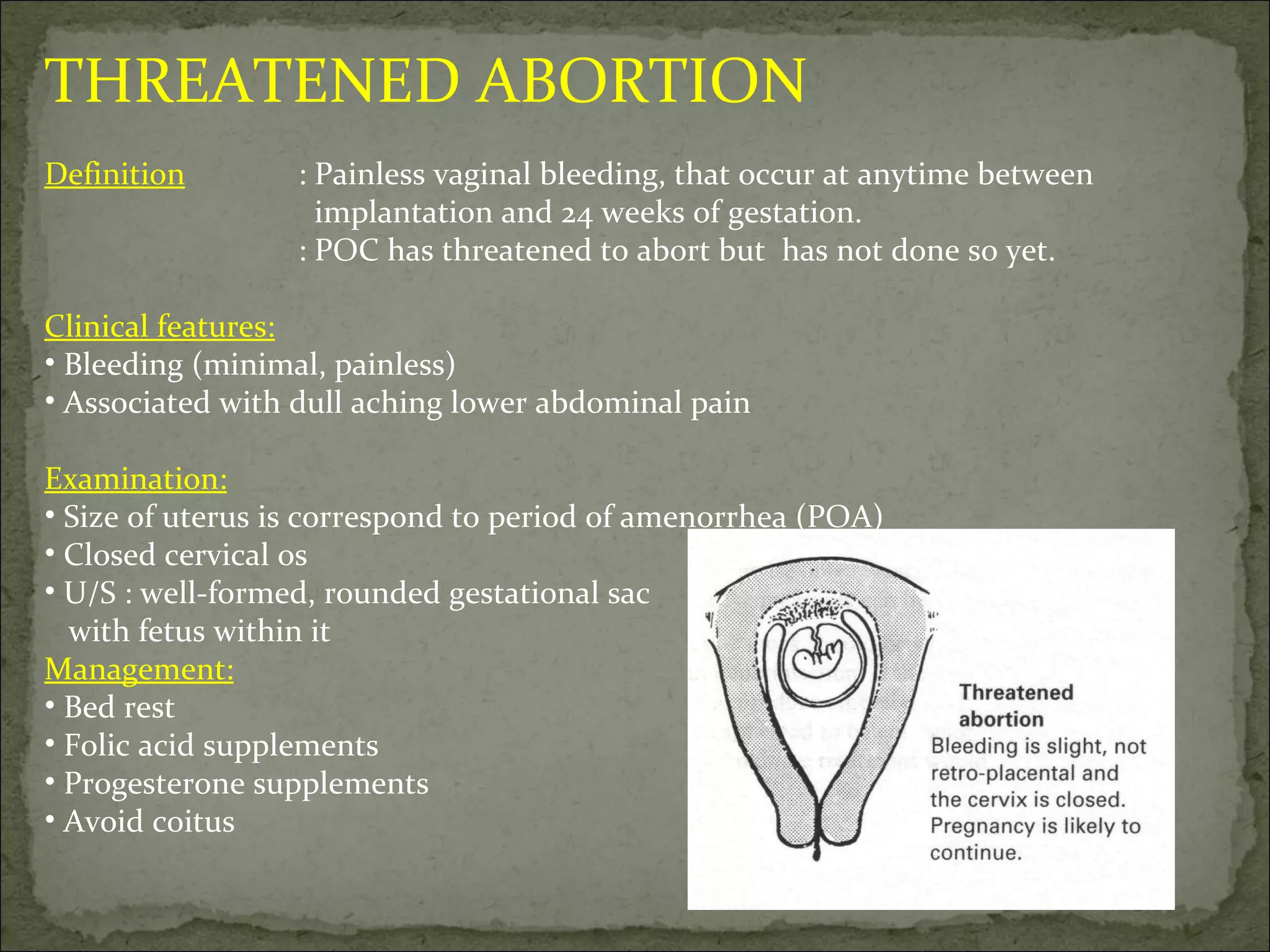
THREATENED ABORTION Definition : Painless vaginal bleeding, that occur at anytime between    implantation and 24 weeks of gestation. : POC has threatened to abort but  has not done so yet. Clinical features: Bleeding (minimal, painless) Associated with dull aching lower abdominal pain Examination: Size of uterus is correspond to period of amenorrhea (POA) Closed cervical os U/S : well-formed, rounded gestational sac with fetus within it Management: Bed rest Folic acid supplements Progesterone supplements  Avoid coitus
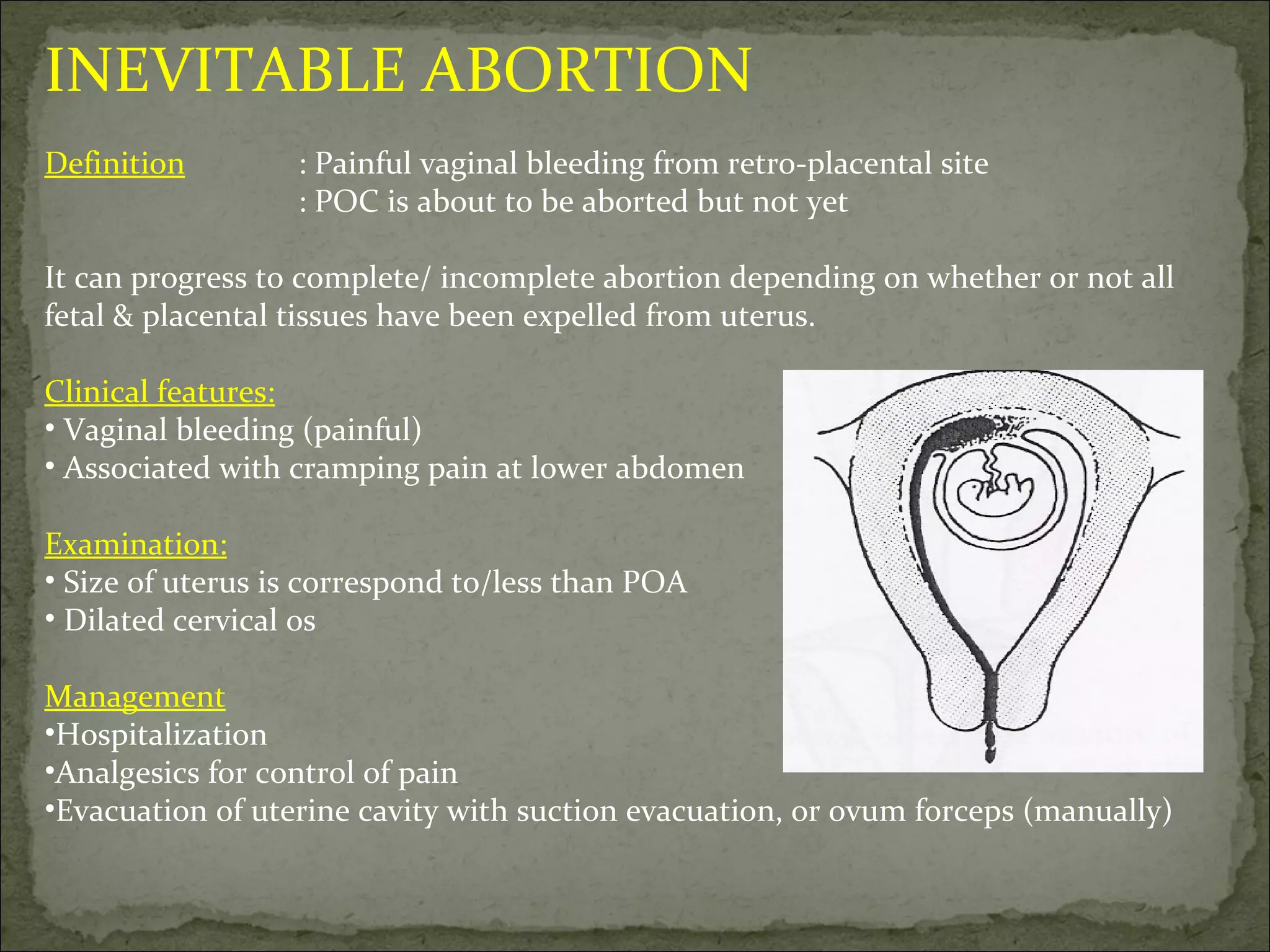
INEVITABLE ABORTION Definition : Painful vaginal bleeding from retro-placental site : POC is about to be aborted but not yet It can progress to complete/ incomplete abortion depending on whether or not all fetal & placental tissues have been expelled from uterus. Clinical features: Vaginal bleeding (painful) Associated with cramping pain at lower abdomen Examination: Size of uterus is correspond to/less than POA Dilated cervical os Management Hospitalization Analgesics for control of pain Evacuation of uterine cavity with suction evacuation, or ovum forceps (manually)
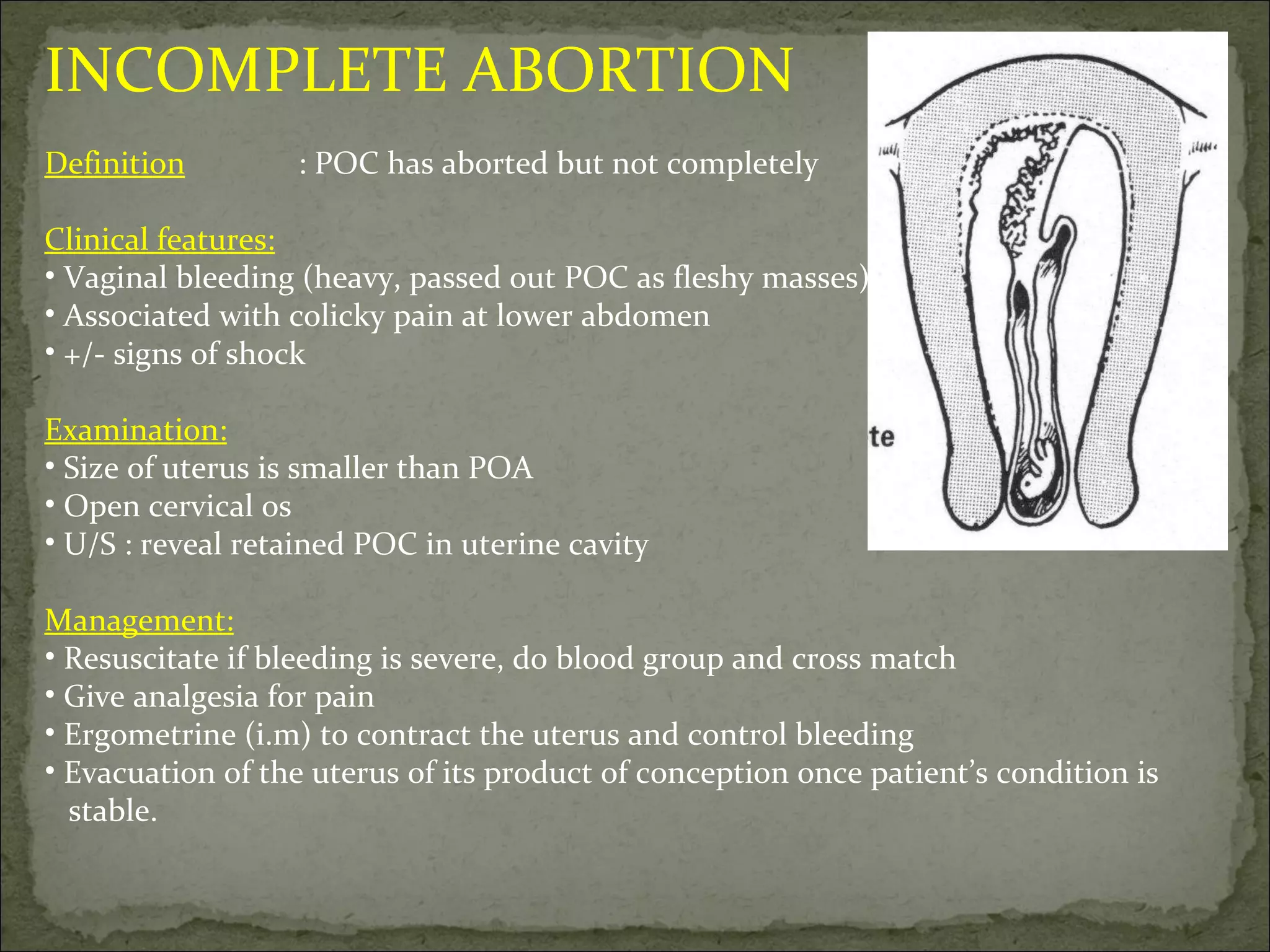
INCOMPLETE ABORTION Definition : POC has aborted but not completely Clinical features: Vaginal bleeding (heavy, passed out POC as fleshy masses) Associated with colicky pain at lower abdomen +/- signs of shock Examination: Size of uterus is smaller than POA Open cervical os U/S : reveal retained POC in uterine cavity Management: Resuscitate if bleeding is severe, do blood group and cross match Give analgesia for pain Ergometrine (i.m) to contract the uterus and control bleeding Evacuation of the uterus of its product of conception once patient’s condition is  stable.
COMPLETE ABORTION Definition : All the POC has completely aborted. Clinical features: History of pain and passage of product Followed by absent of pain, minimal bleeding Examination: Size of uterus is smaller than POA Closed cervical os U/S : empty  uterine cavity Management: Do U/S to look for empty of uterine cavity and to rule out any possibility of extra uterine pregnancy
MISSED ABORTION Definition : When the embryo/fetus is already died : but still remain in the uterine cavity for a period of time : without symptoms of miscarriage Clinical features: Decreased in pregnancy symptoms Vaginal bleeding (absent, minimal) Examination: Size of uterus is smaller than POA Closed cervical os U/S : crumpled gestational sac : revealed fetal pole but no signs of activity  (no heart activity) Management: Wait for spontaneous expulsion (disadvantage: involve further maternal anxiety,  pain of expulsion, DIVC) Evacuation of uterus of its POC - surgically : dilatation & currettage - medically : mifepristone + misoprostol
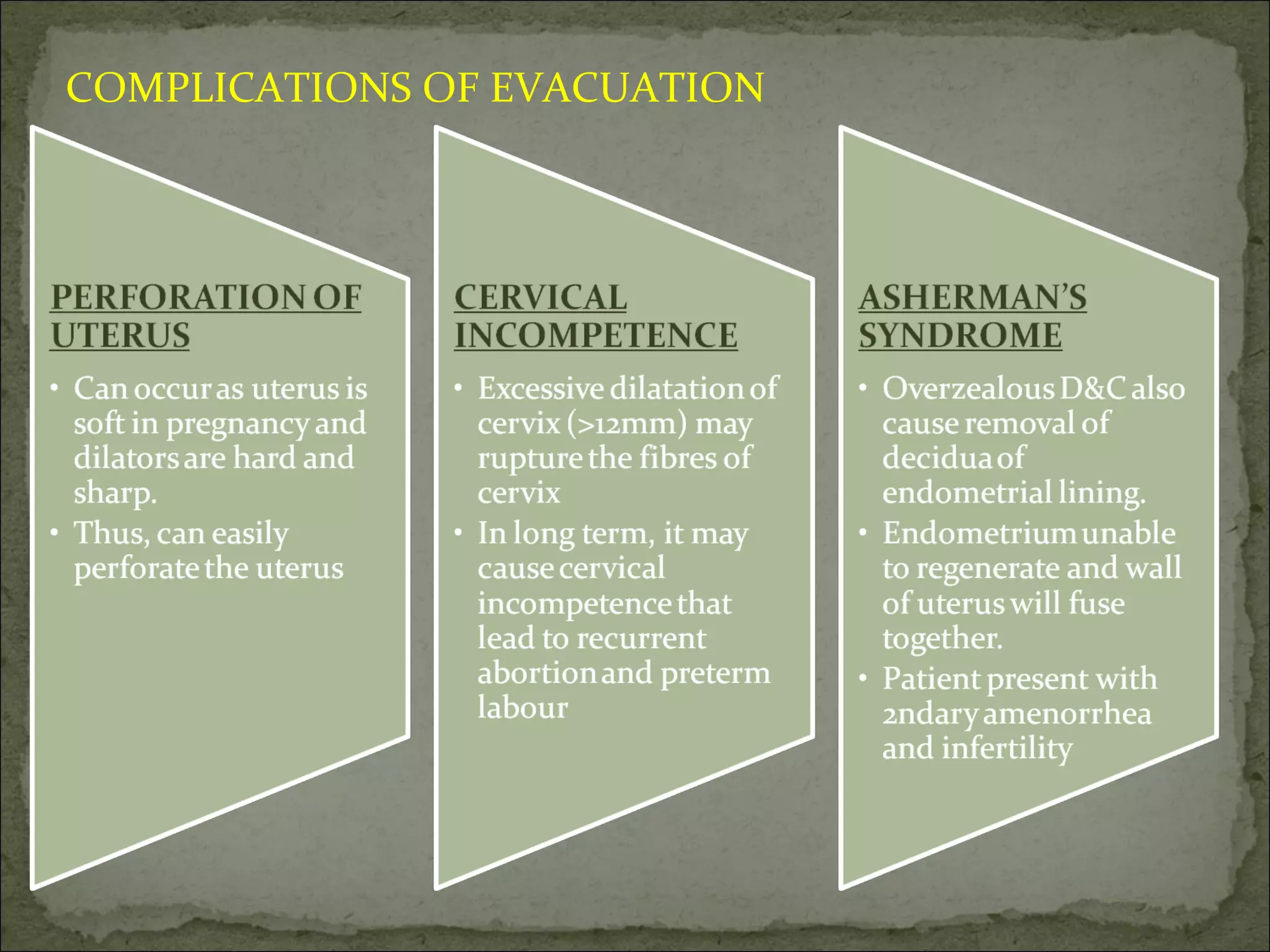
COMPLICATIONS OF EVACUATION
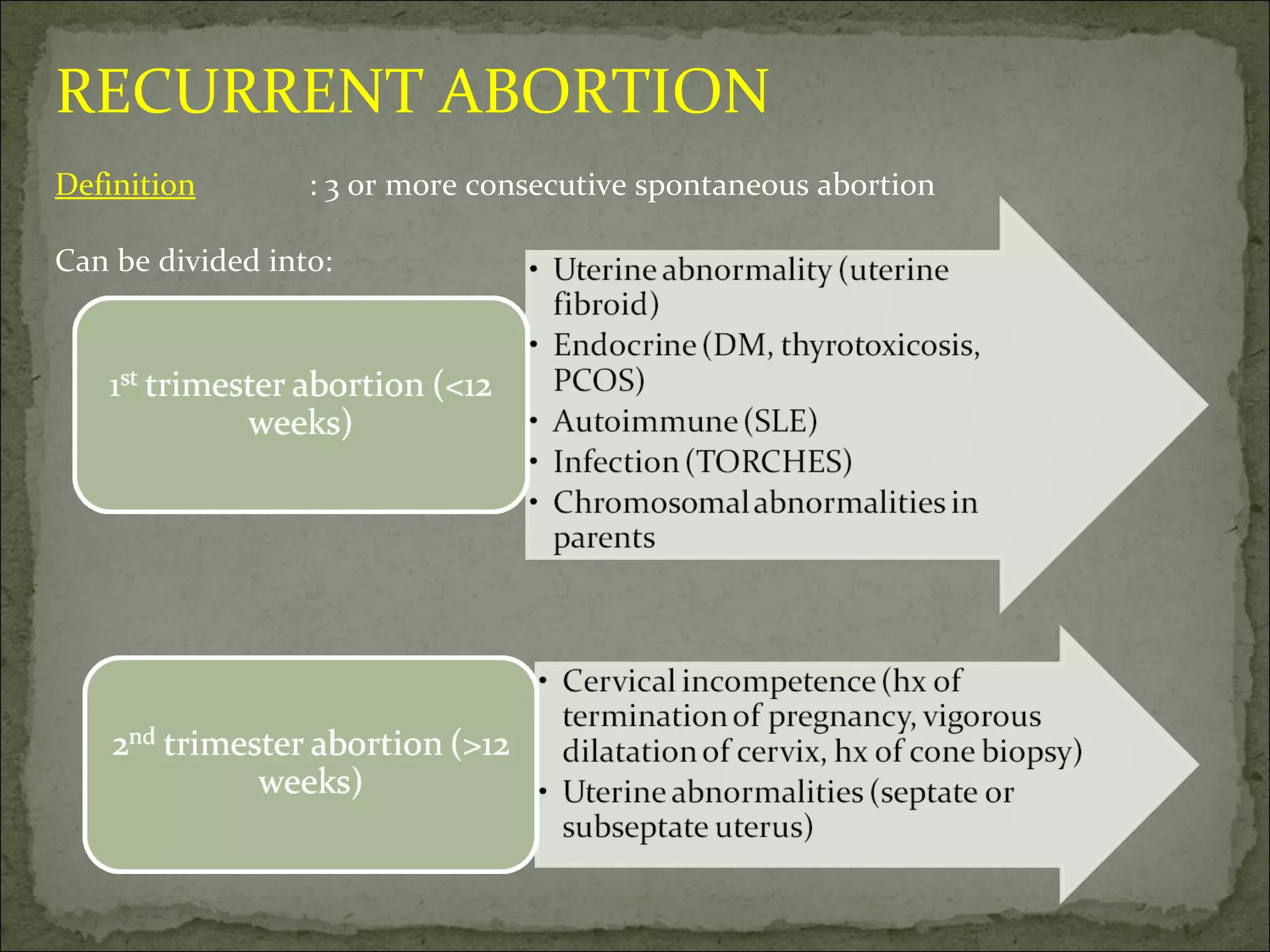
RECURRENT ABORTION Definition : 3 or more consecutive spontaneous abortion Can be divided into:
 
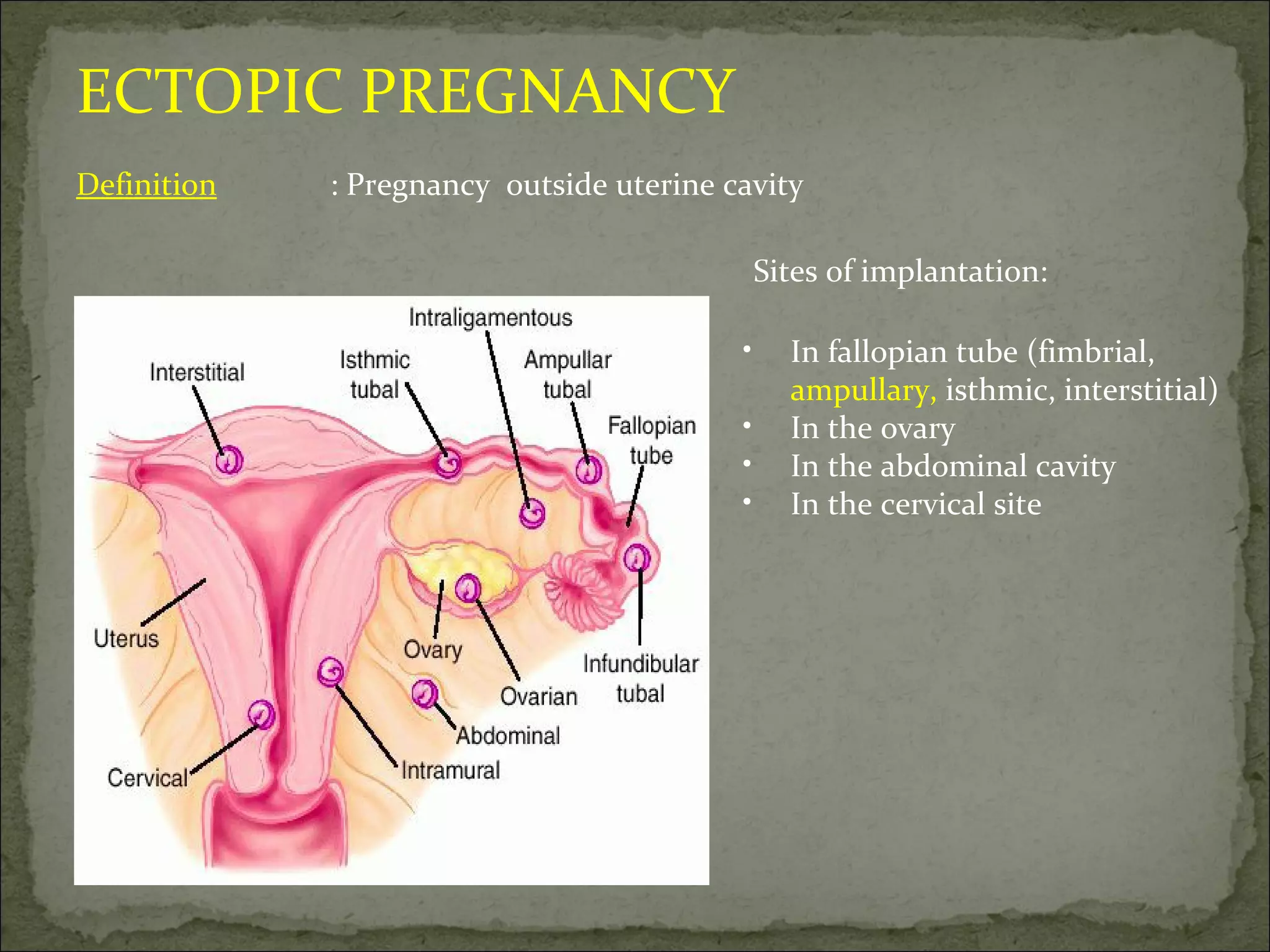
ECTOPIC PREGNANCY Definition : Pregnancy  outside uterine cavity In fallopian tube (fimbrial,  ampullary,  isthmic, interstitial) In the ovary In the abdominal cavity In the cervical site Sites of implantation:
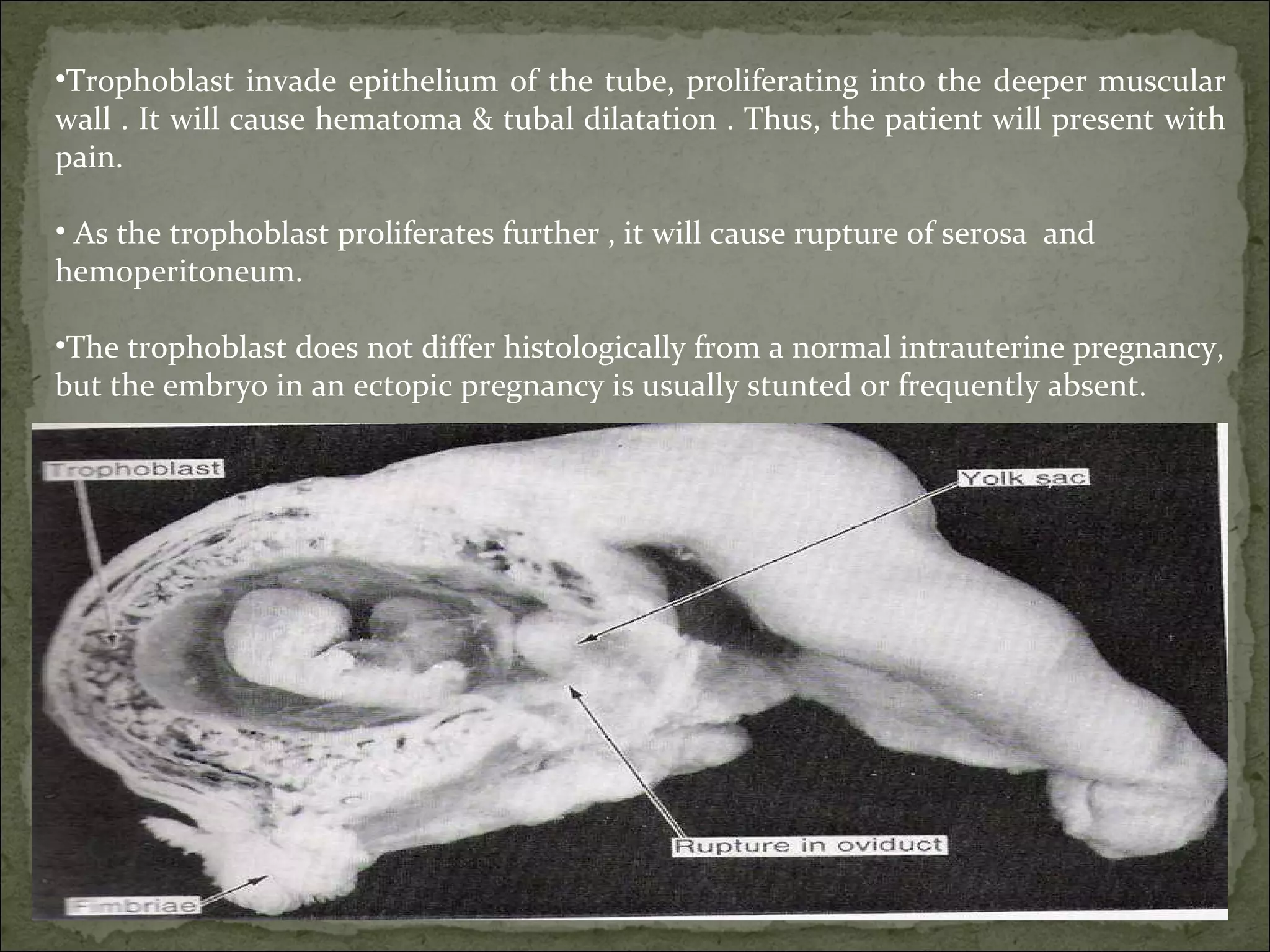
Trophoblast invade epithelium of the tube, proliferating into the deeper muscular wall . It will cause hematoma & tubal dilatation . Thus, the patient will present with pain. As the trophoblast proliferates further , it will cause rupture of serosa  and hemoperitoneum. The trophoblast does not differ histologically from a normal intrauterine pregnancy, but the embryo in an ectopic pregnancy is usually stunted or frequently absent.
PATHOPHYSIOLOGY Any mechanical or functional factors that interfere the passage of the fertilized ovum to the uterine cavity. Important factors involved in its transport:  tubal contractility, ovarian hormones & cilial action within the tubes
Vaginal Bleeding  (scanty, dark and intermittent) Lower abd pain, back or pelvic pain (usu. unilateral) Shoulder pain Syncopal attacks  (hemoperitoneum) Symp of hypovolemic shock -  Upset menstrual pattern  -  Vague abdominal pain
General examination   shoulder pain 2° to free blood in the peritoneal cavity irritating the diaphragm vascular instability - low BP, fainting, dizzy, rapid heart rate abdominal palpation : mild tenderness, guarding, decreased bowel sounds may be present (ectopic pregnancy rupture may cause intra-abdominal bleeding)
Gynecological examination speculum  : cervical os is closed  BE : uterus will be smaller than the expected date Positive cervical excitation gentle motion of the cervix to both sides of the lateral fornix tender if stretching of the involved site
Human chorionic gonadotrophin (hCG)  normal/low hCG Transvaginal ultrasound  +/- gestational sac(intrauterine/tubal) Extrauterine sac with an embryo/embryonic remnants Any fluid in the pelvis esp. in Pouch of Douglas Empty ectopic sac/heterogenous adnexal mass Pseudogestational sac(small, centrally located endometrial fluid collection surrounded by a single echogenic rim of endometrial tissue undergoing decidual reaction)
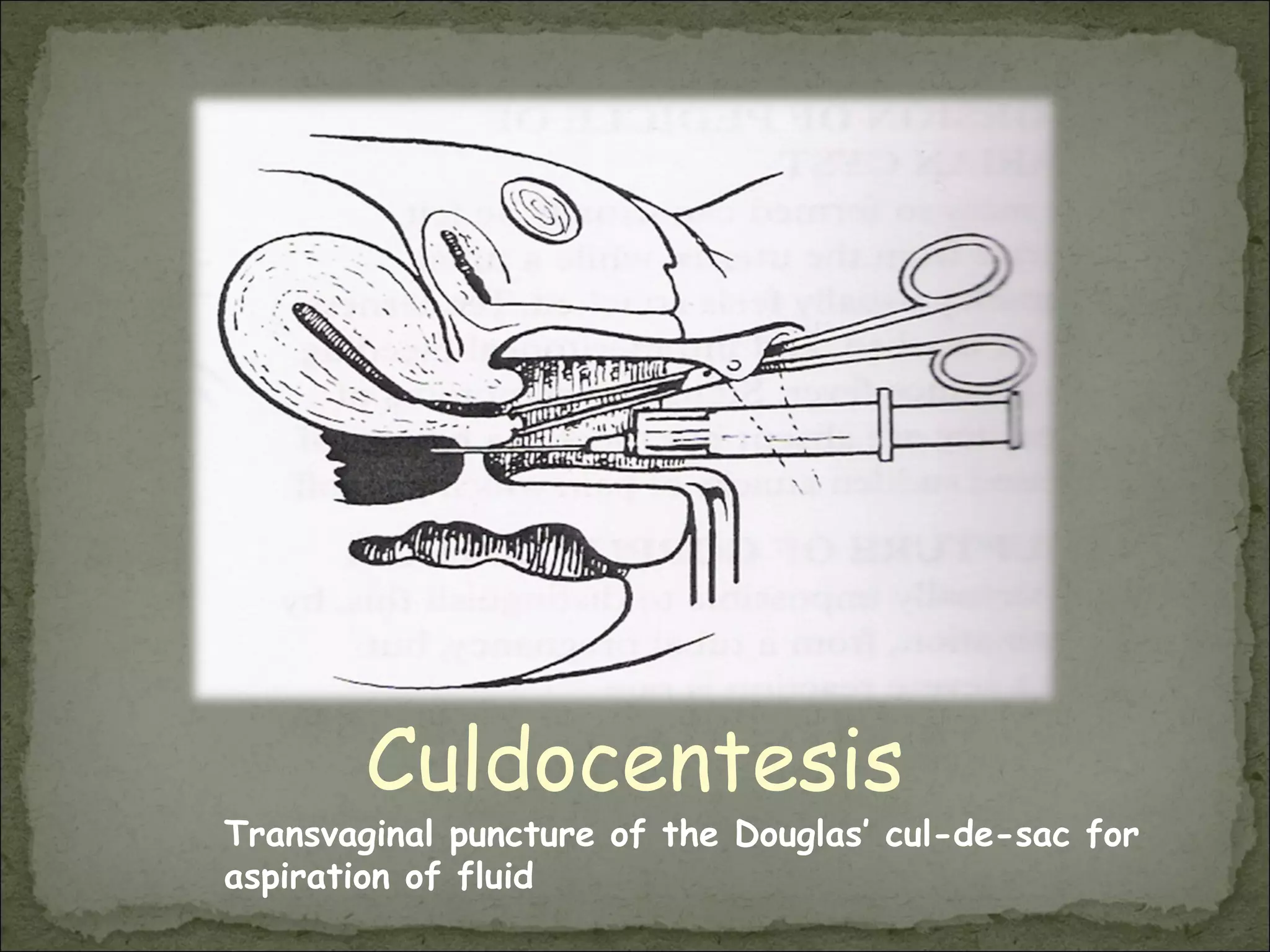
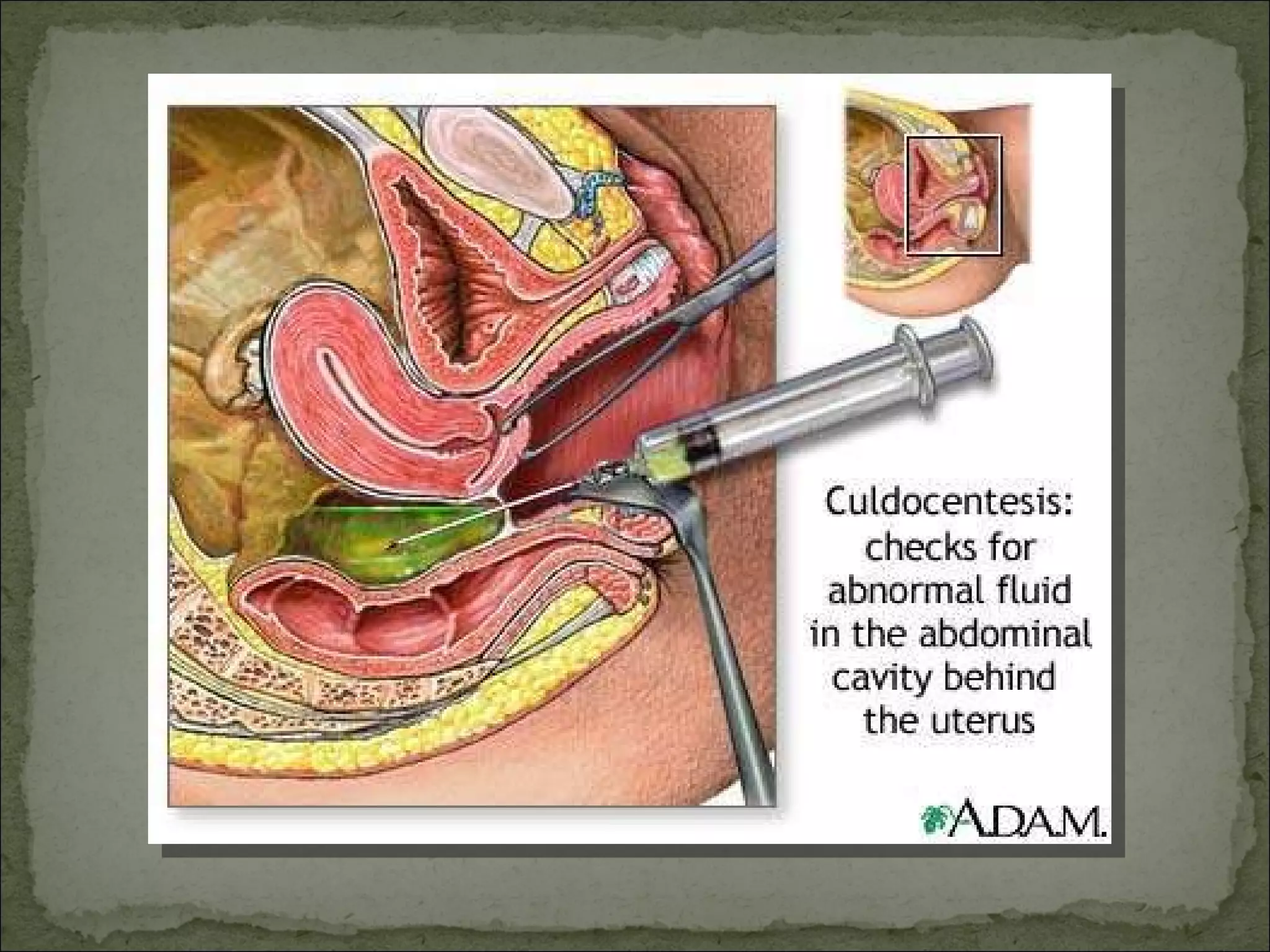
Culdocentesis  to exclude hemoperitoneum (late ectopic pregnancy-emergency cases) Laparoscopy All but the very early ectopic pregnancies can be diagnosed by this techniqu e Dilatation and Curettage Not useful as a primary investigation.  On the contrary, many ectopic pregnancies are missed even after dilatation and curettage is done for termination of pregnancy
Culdocentesis Transvaginal puncture of the Douglas’ cul-de-sac for aspiration of fluid
 
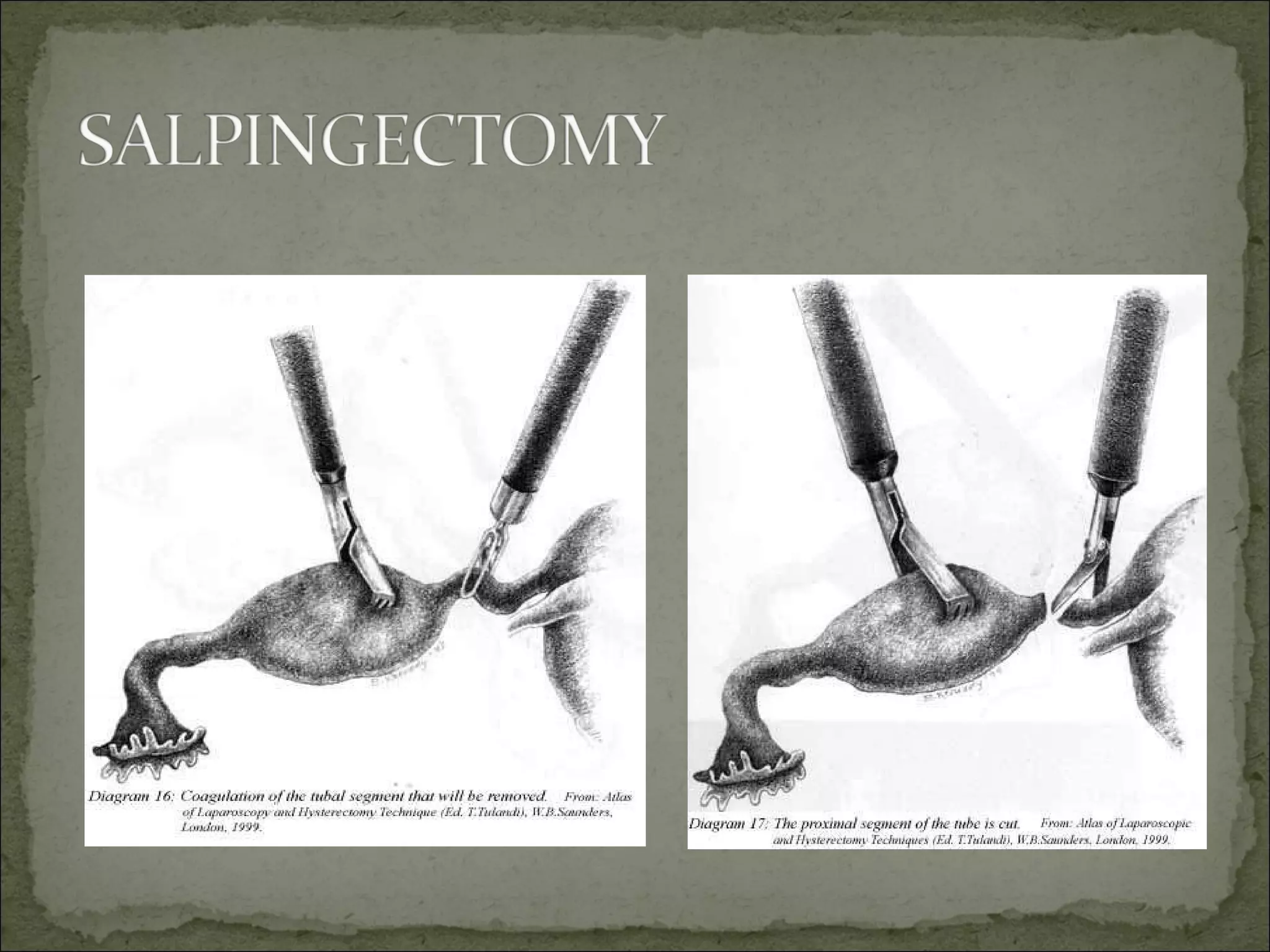
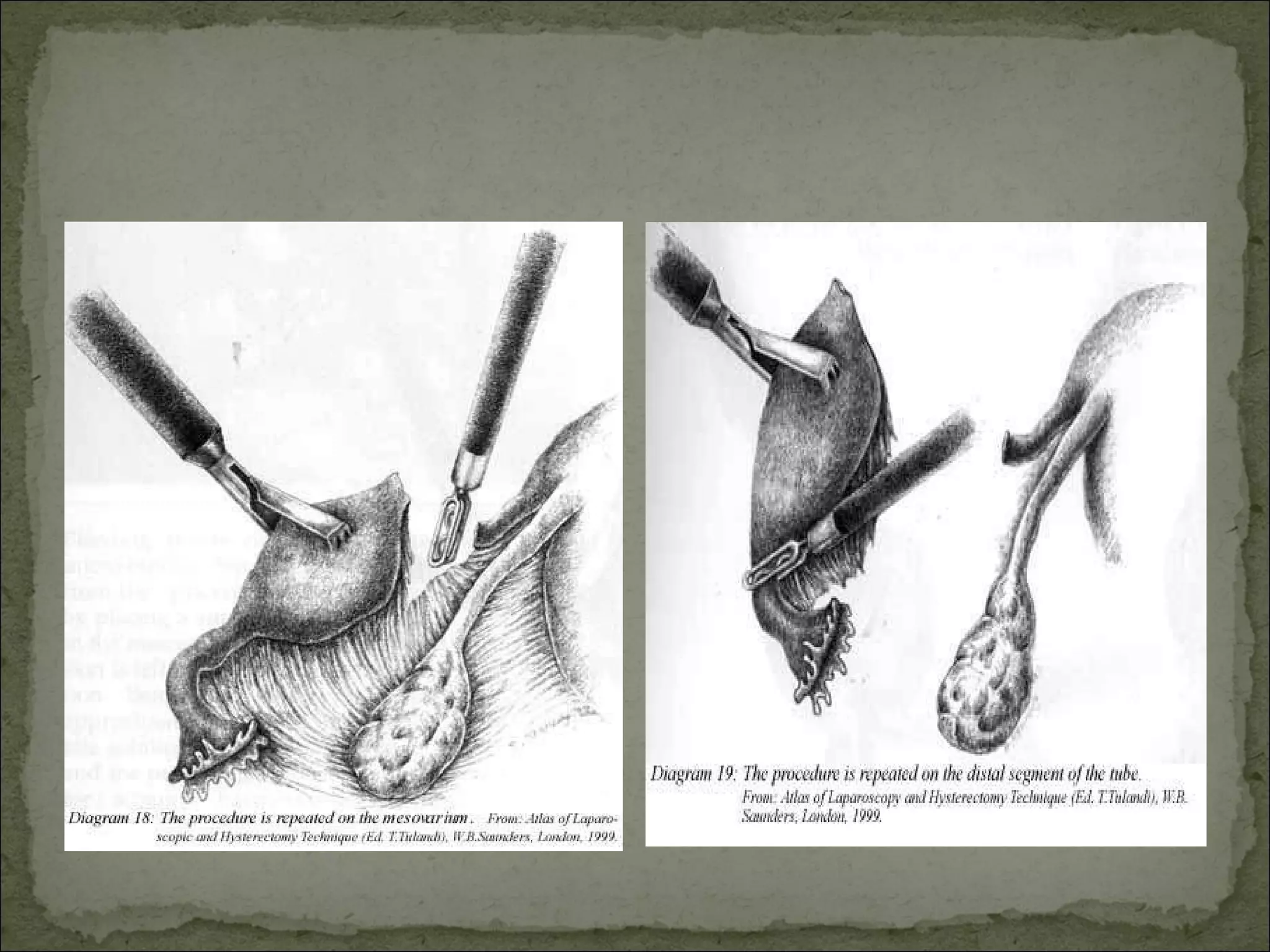
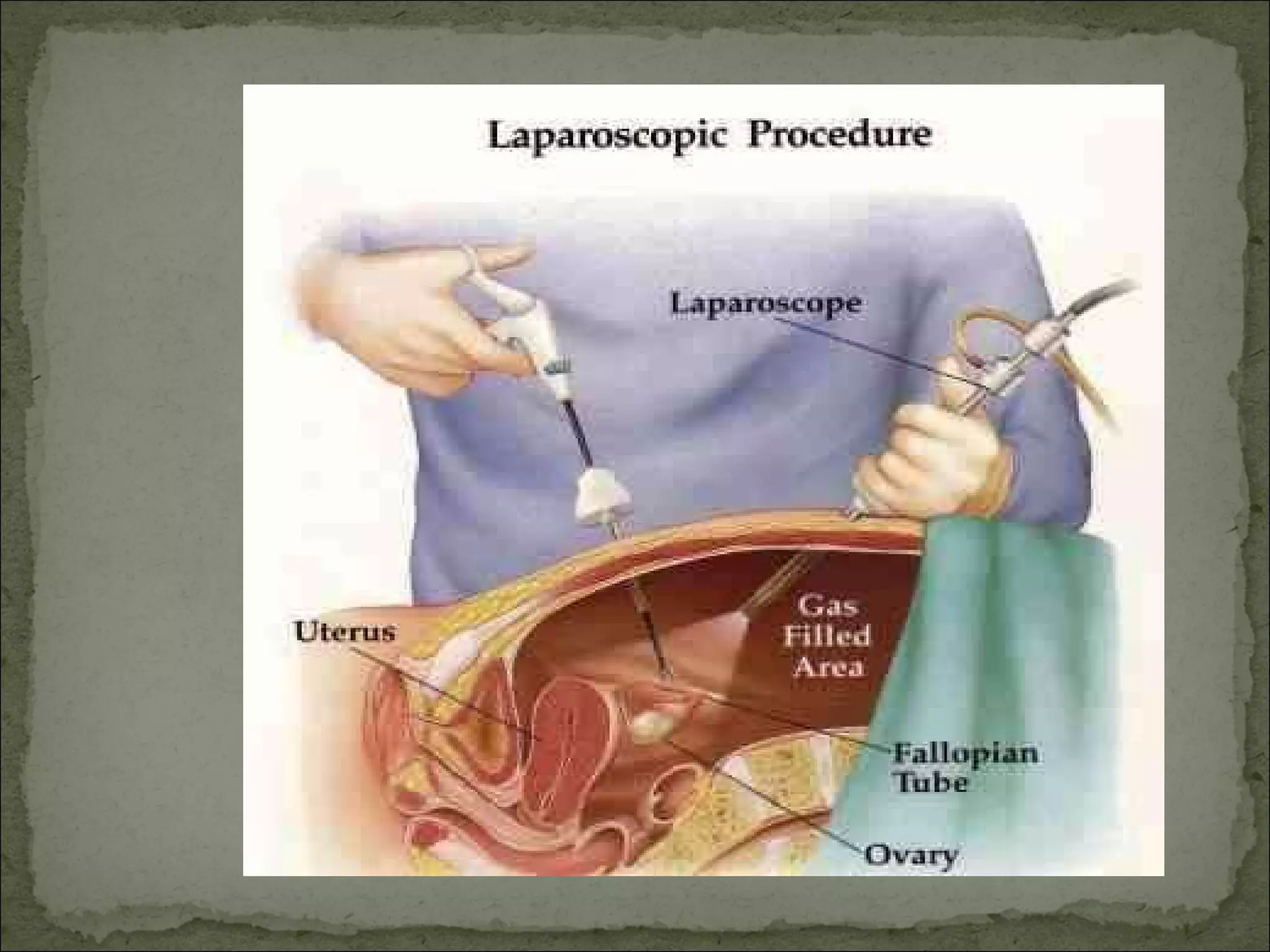
Surgical : salpingectomy/salpingotomy either by laparotomy/laparoscopy Medical Methotrexate ;  i.m/direct into tubal pregnancy Expectant  Strict criteria in selected pt. Ultrasound & hCG assessments are prerequisites


Also known as ‘hydatidiform mole’  ‘ Gestational throphoblastic disease’. Abnormal pregnancy in which the developing fetus and placenta are replaced by proliferation of throphoblastic tissue.
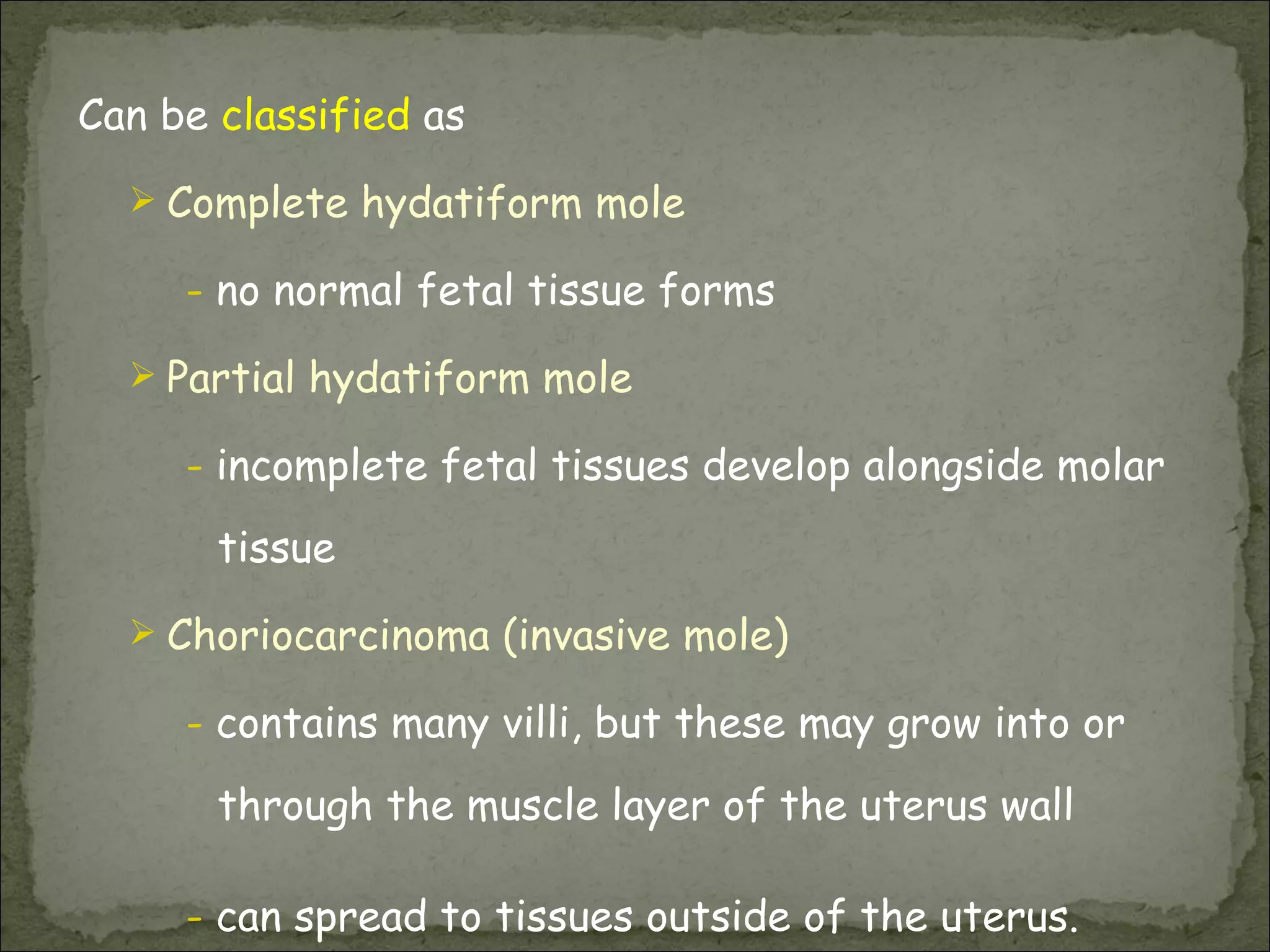
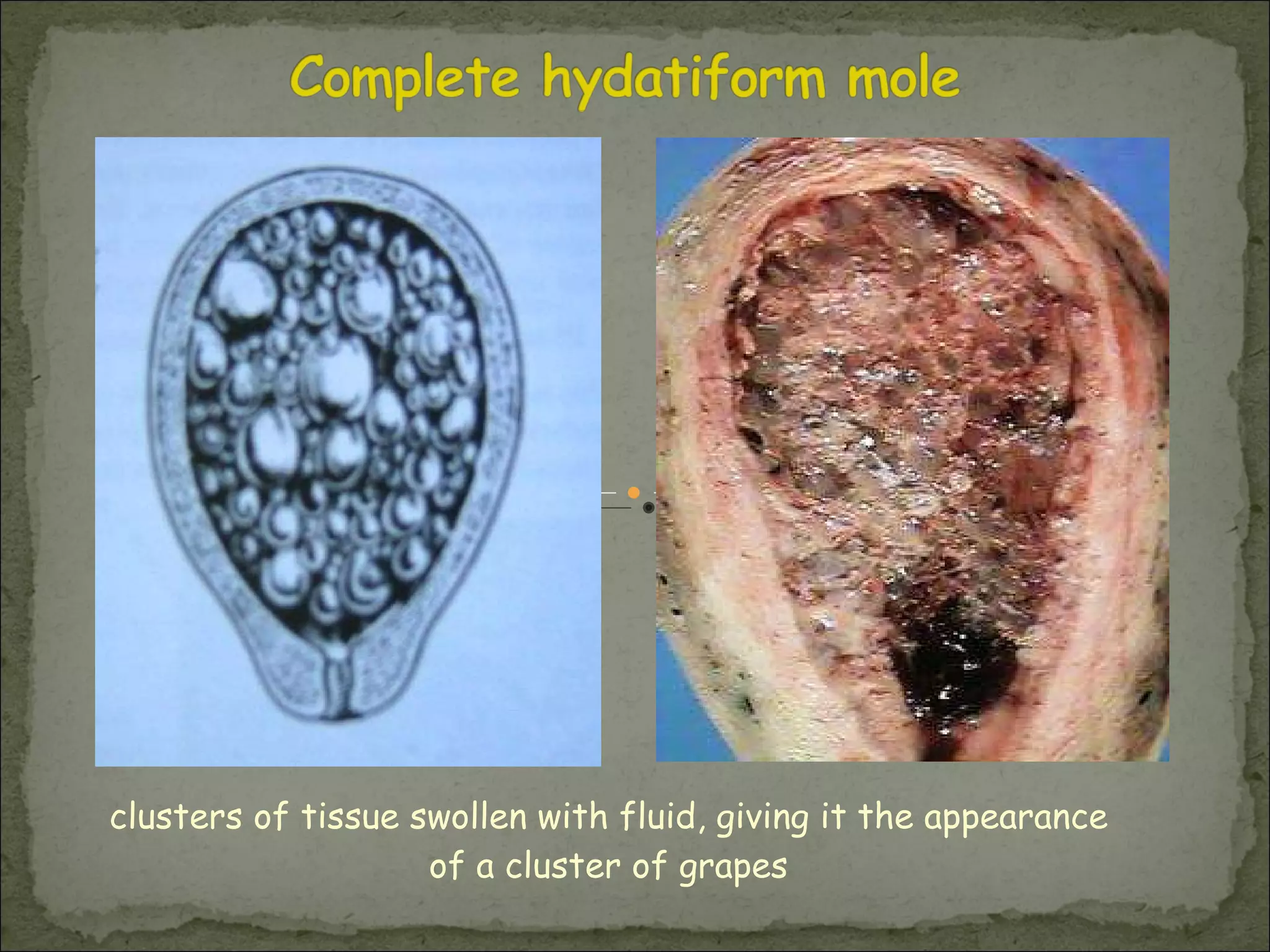
Can be  classified  as Complete hydatiform mole -  no normal fetal tissue forms Partial hydatiform mole -  incomplete fetal tissues develop alongside molar tissue Choriocarcinoma (invasive mole) -  contains many villi, but these may grow into or through the muscle layer of the uterus wall -  can spread to tissues outside of the uterus.
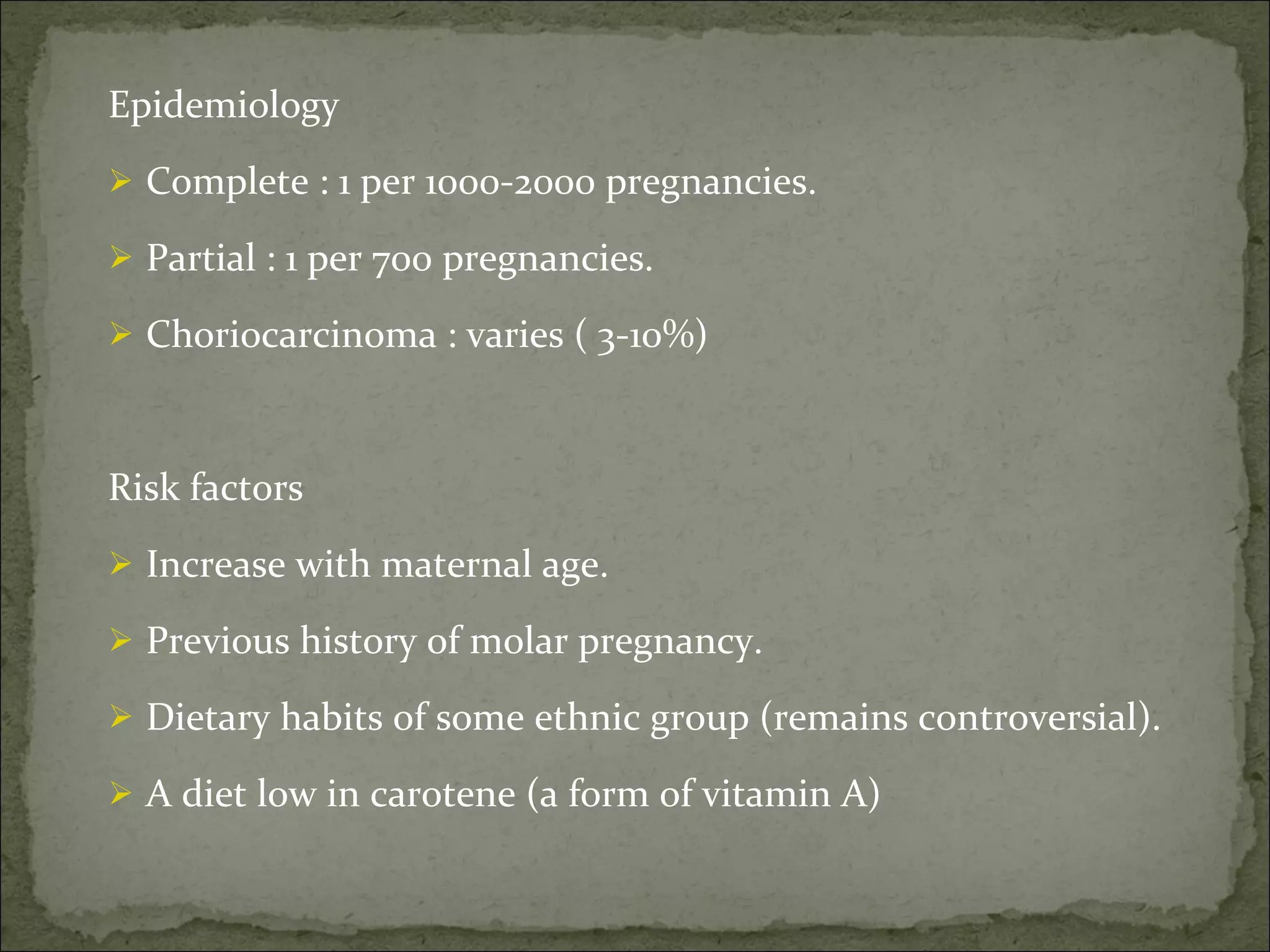
Epidemiology  Complete : 1 per 1000-2000 pregnancies. Partial : 1 per 700 pregnancies. Choriocarcinoma : varies ( 3-10%) Risk factors  Increase with maternal age. Previous history of molar pregnancy. Dietary habits of some ethnic group (remains controversial). A diet low in carotene (a form of vitamin A)
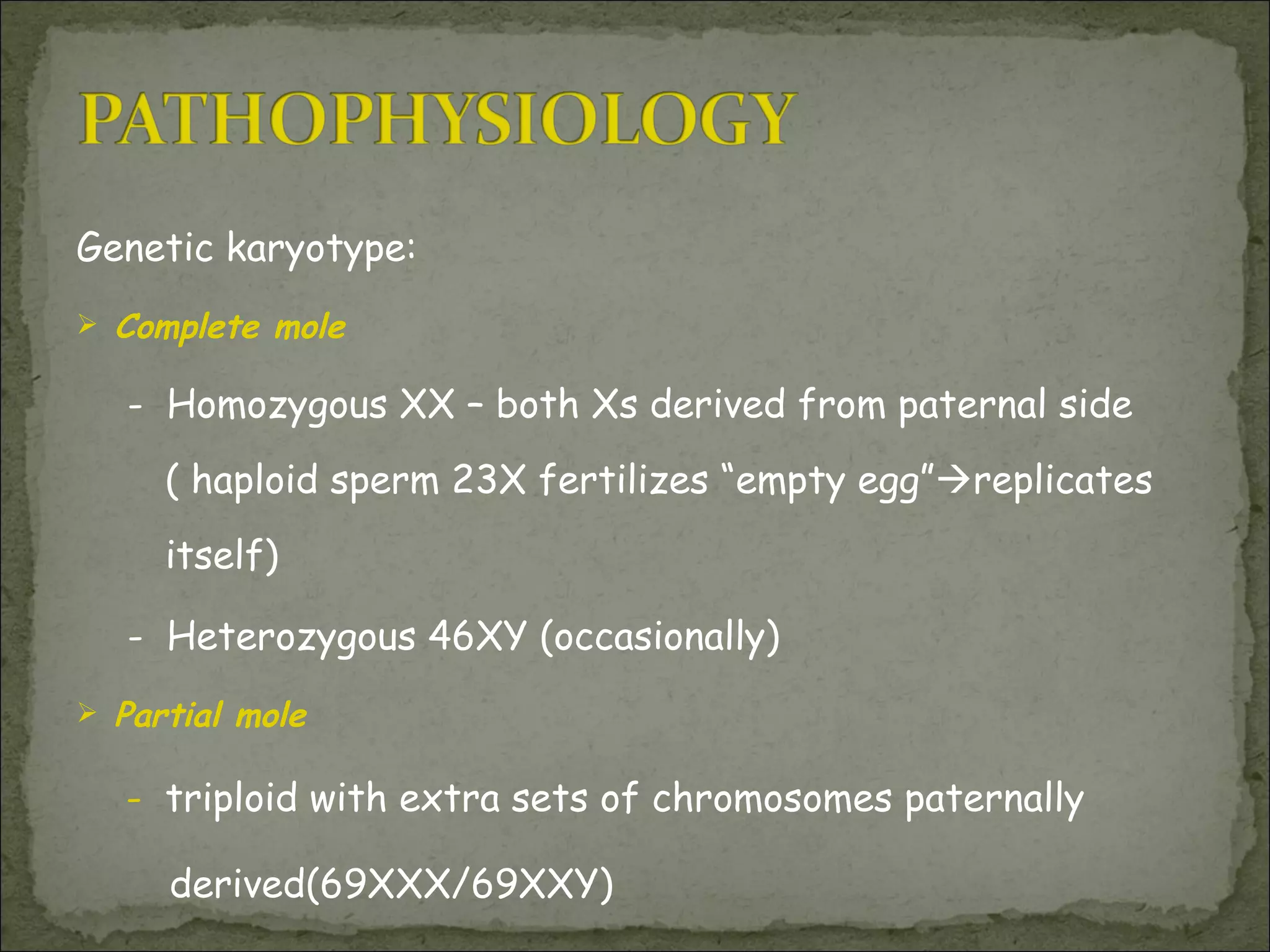
Genetic karyotype: Complete mole  -  Homozygous XX – both Xs derived from paternal side ( haploid sperm 23X fertilizes “empty egg”  replicates itself) -  Heterozygous 46XY (occasionally) Partial mole    -  triploid with extra sets of chromosomes paternally derived(69XXX/69XXY)
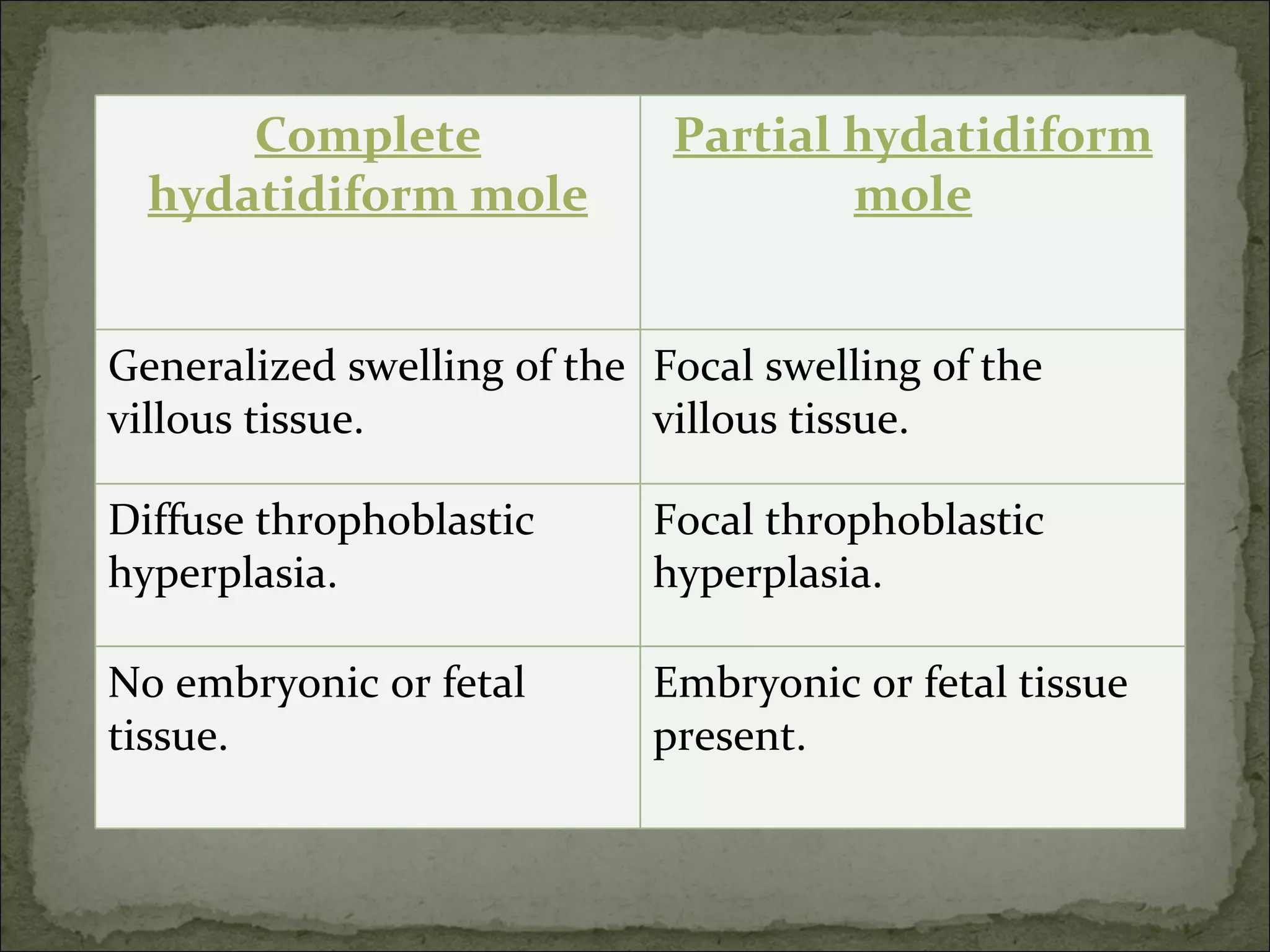
Complete hydatidiform mole Partial hydatidiform mole Generalized swelling of the villous tissue. Focal swelling of the villous tissue. Diffuse throphoblastic hyperplasia. Focal throphoblastic hyperplasia. No embryonic or fetal tissue. Embryonic or fetal tissue present.
clusters of tissue swollen with fluid, giving it the appearance of a cluster of grapes
Bleeding in early pregnancy Passing out  “ grape-like structure ” Hyperemesis gravidarum Thyrotoxicosis Other findings :- Uterus larger than dates No fetal heart ( doptone examination )
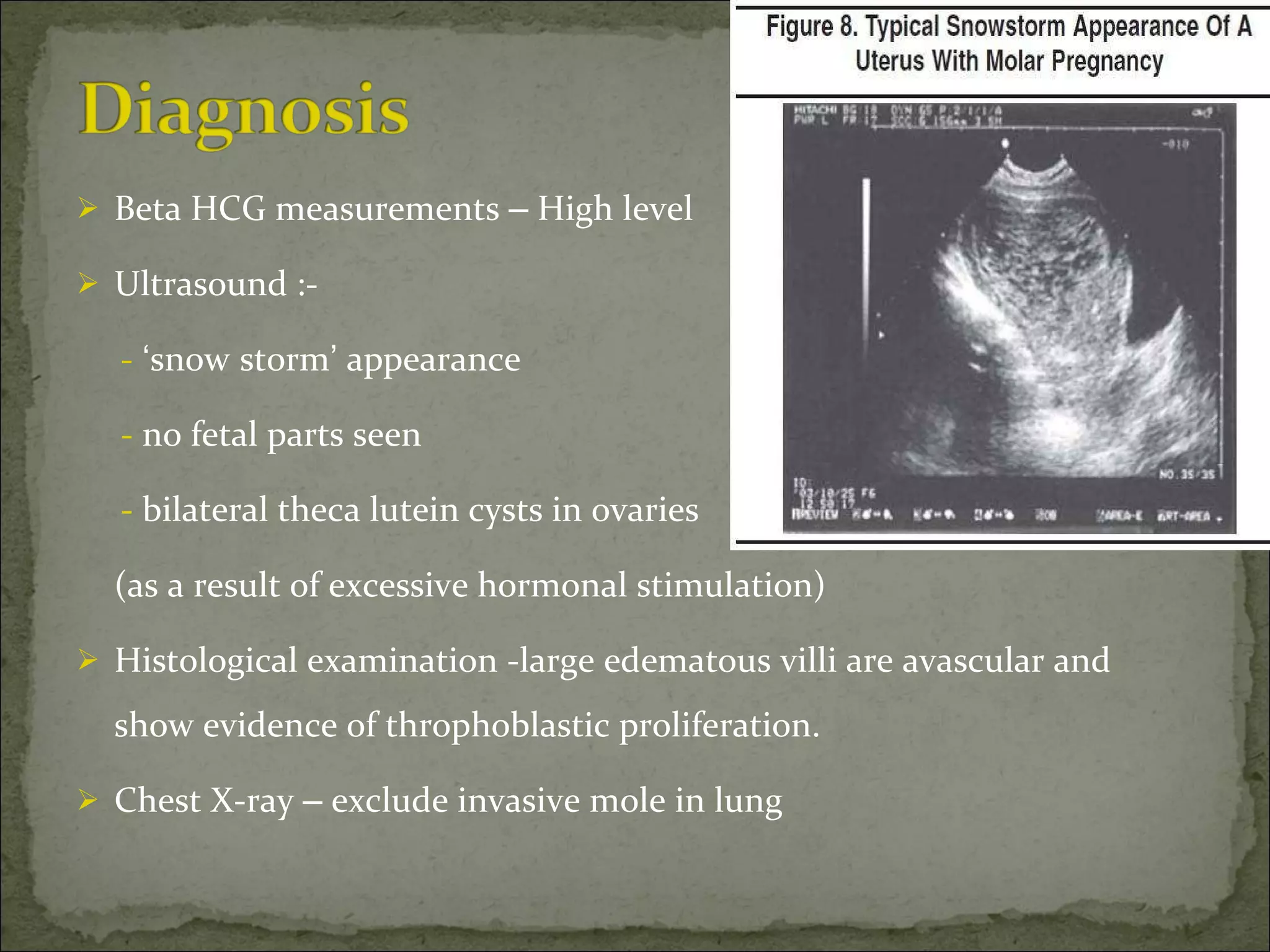
Beta HCG measurements  –  High level Ultrasound :- -   ‘ snow   storm ’  appearance -  no fetal parts seen -  bilateral theca lutein cysts in ovaries (as a result of excessive hormonal stimulation) Histological examination -large edematous villi are avascular and show evidence of throphoblastic proliferation. Chest X-ray  –  exclude invasive mole in lung
Suction evacuation of the molar tissue  Weekly hCG level monitoring until undetectable Monthly monitoring for 6-24 months
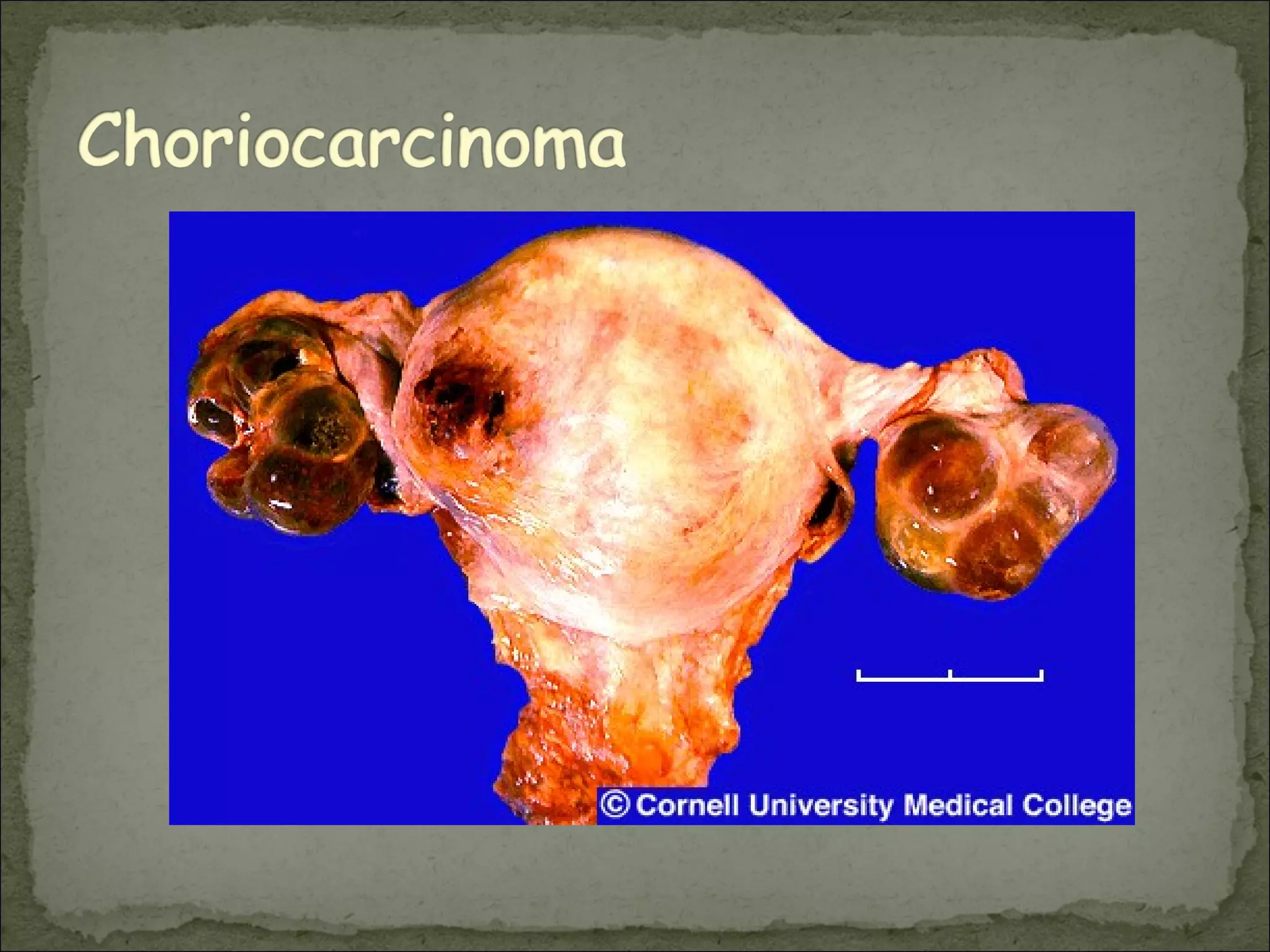
Highly malignant tumour that arises from throphoblastic epithelium. Can metastasizes to lung, liver and brain. 50% follow molar pregnancy, 30% after miscarriage, 20% after normal pregnancy. Also can occur after extrauterine pregnancy -> signs and symptom of ectopic pregnancy
 
High maternal age Prev hx of molar pregnancy ABO blood gp (parents)  –  chorioCA women with blood gp A have higher risk than gp O History of miscarriage.
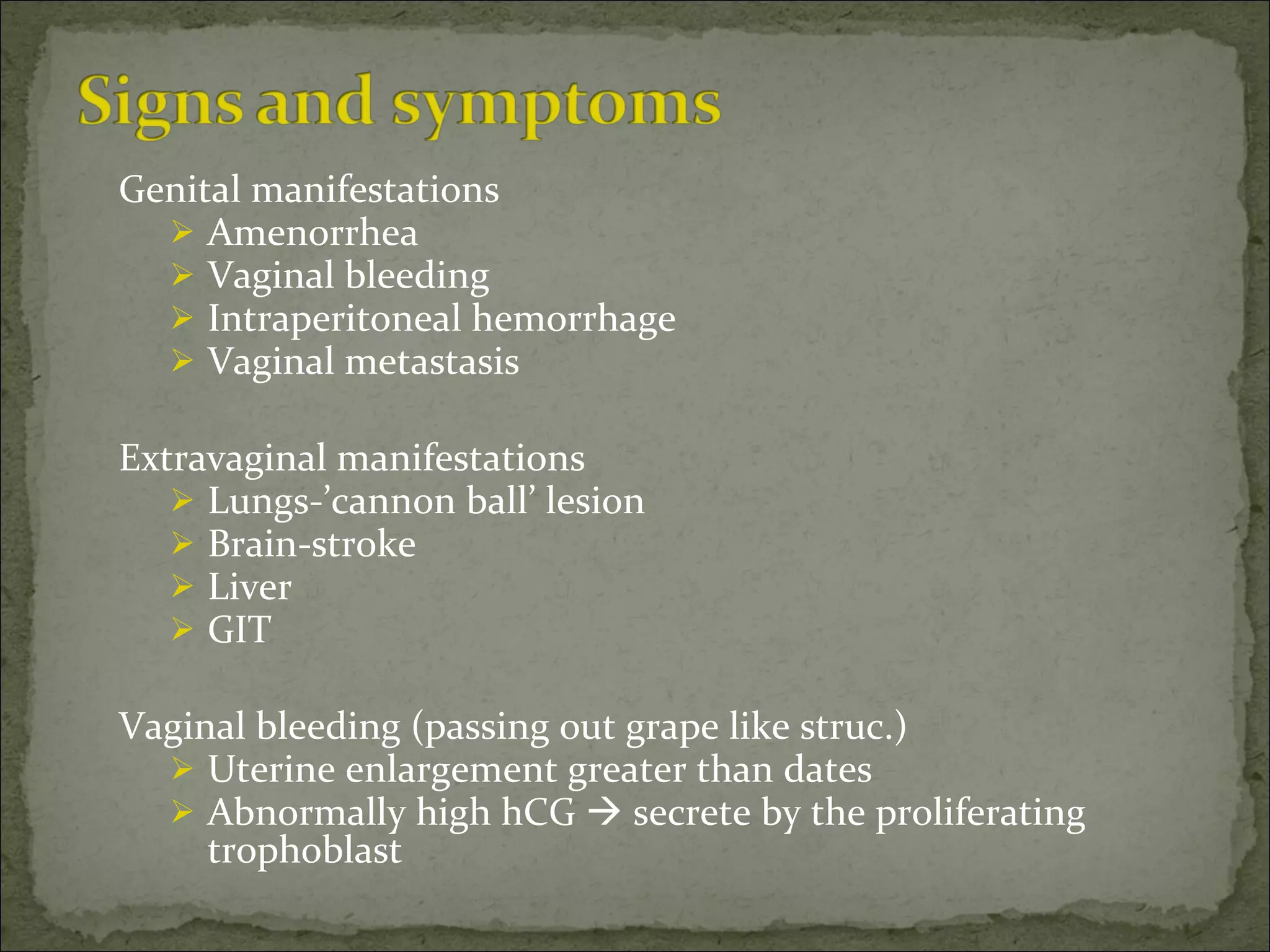
Genital manifestations Amenorrhea Vaginal bleeding Intraperitoneal hemorrhage Vaginal metastasis Extravaginal manifestations Lungs-’cannon ball’ lesion Brain-stroke Liver GIT Vaginal bleeding (passing out grape like struc.) Uterine enlargement greater than dates Abnormally high hCG    secrete by the proliferating trophoblast
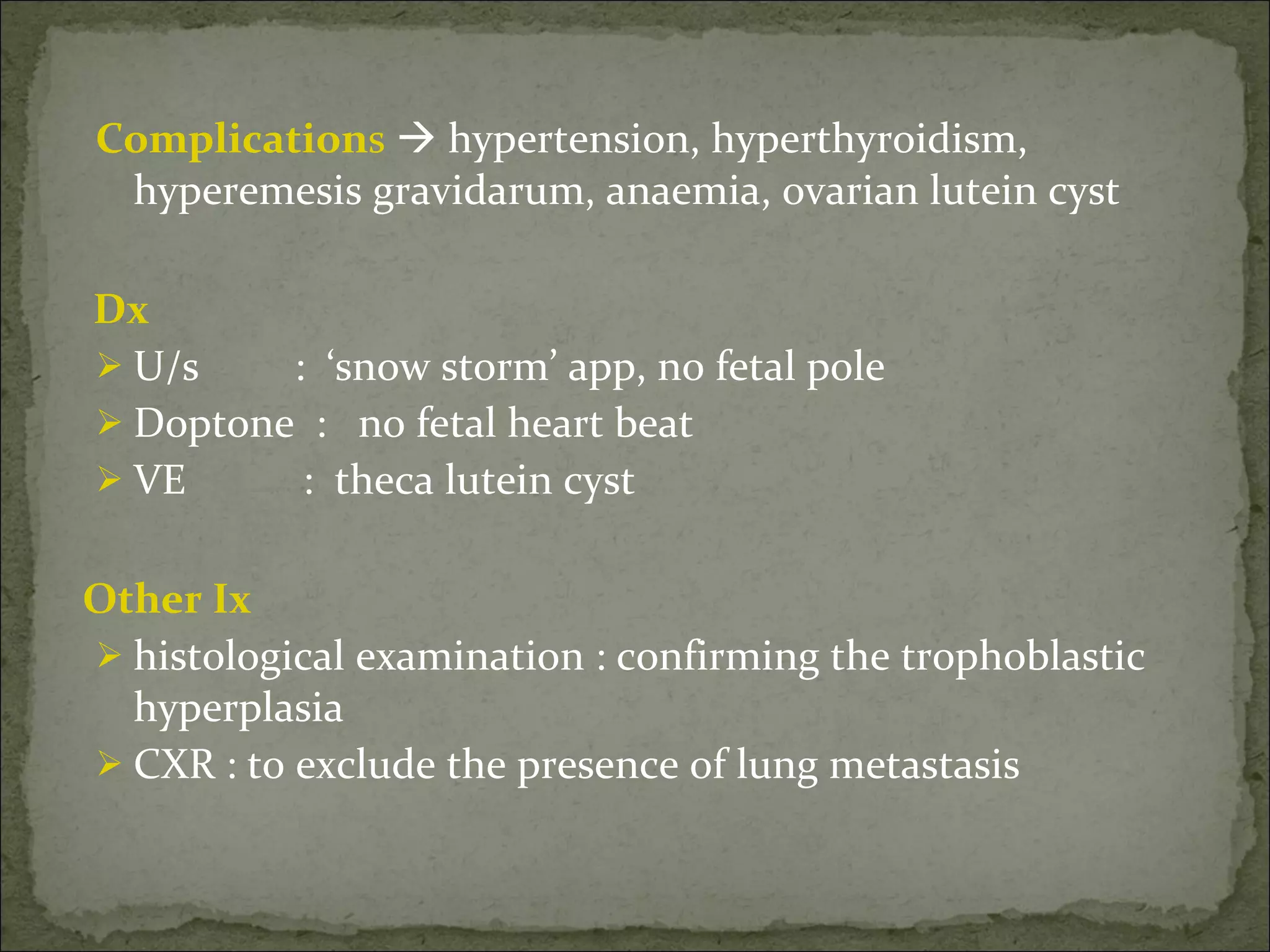
Complication s     hypertension, hyperthyroidism, hyperemesis gravidarum, anaemia, ovarian lutein cyst    Dx  U/s  :  ‘snow storm’ app, no fetal pole  Doptone  :  no fetal heart beat VE  :  theca lutein cyst Other Ix  histological examination : confirming the trophoblastic hyperplasia CXR : to exclude the presence of lung metastasis
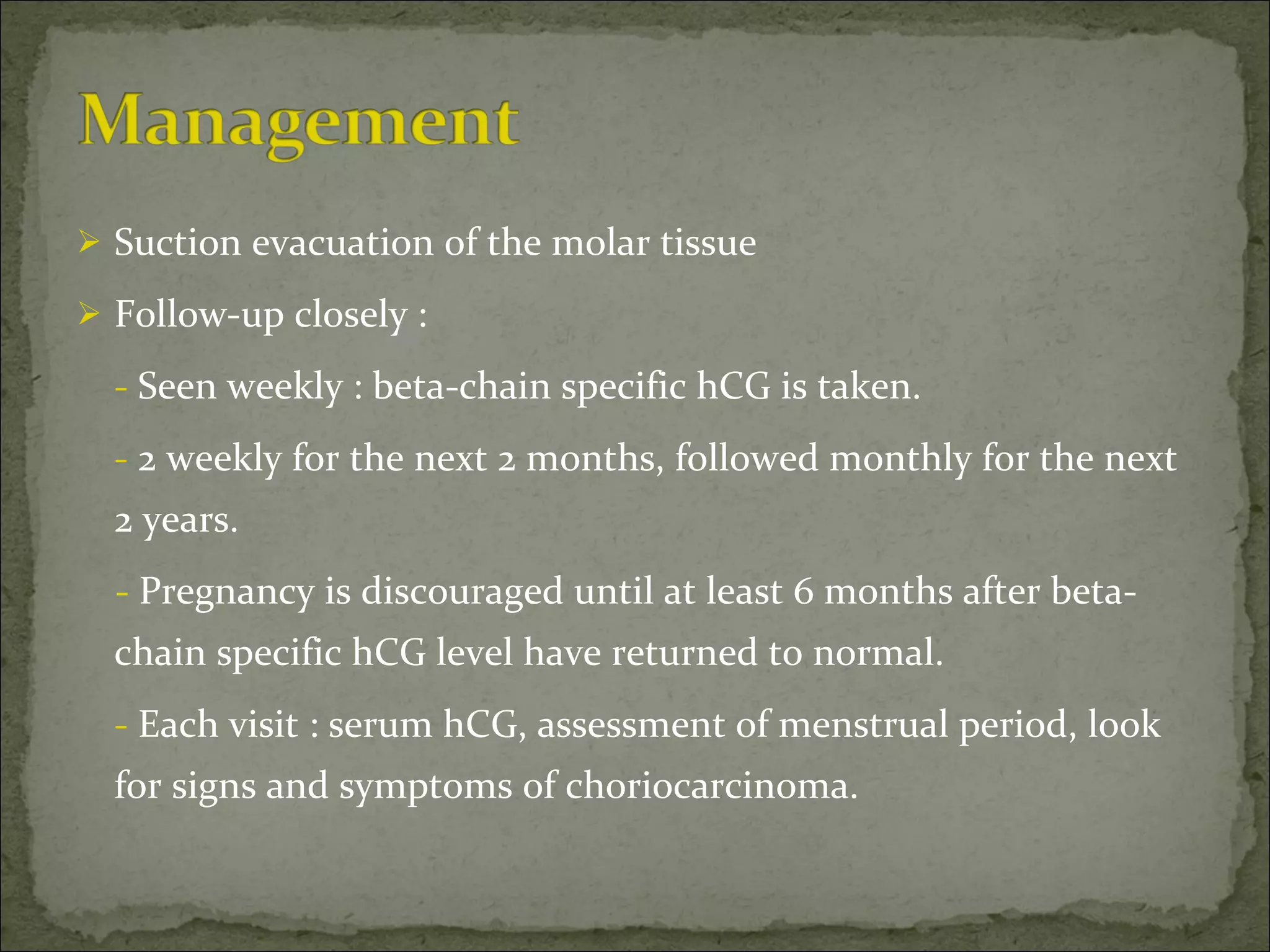
Suction evacuation of the molar tissue  Follow-up closely : -  Seen weekly : beta-chain specific hCG is taken. -  2 weekly for the next 2 months, followed monthly for the next 2 years. -  Pregnancy is discouraged until at least 6 months after beta-chain specific hCG level have returned to normal. -  Each visit : serum hCG, assessment of menstrual period, look for signs and symptoms of choriocarcinoma.
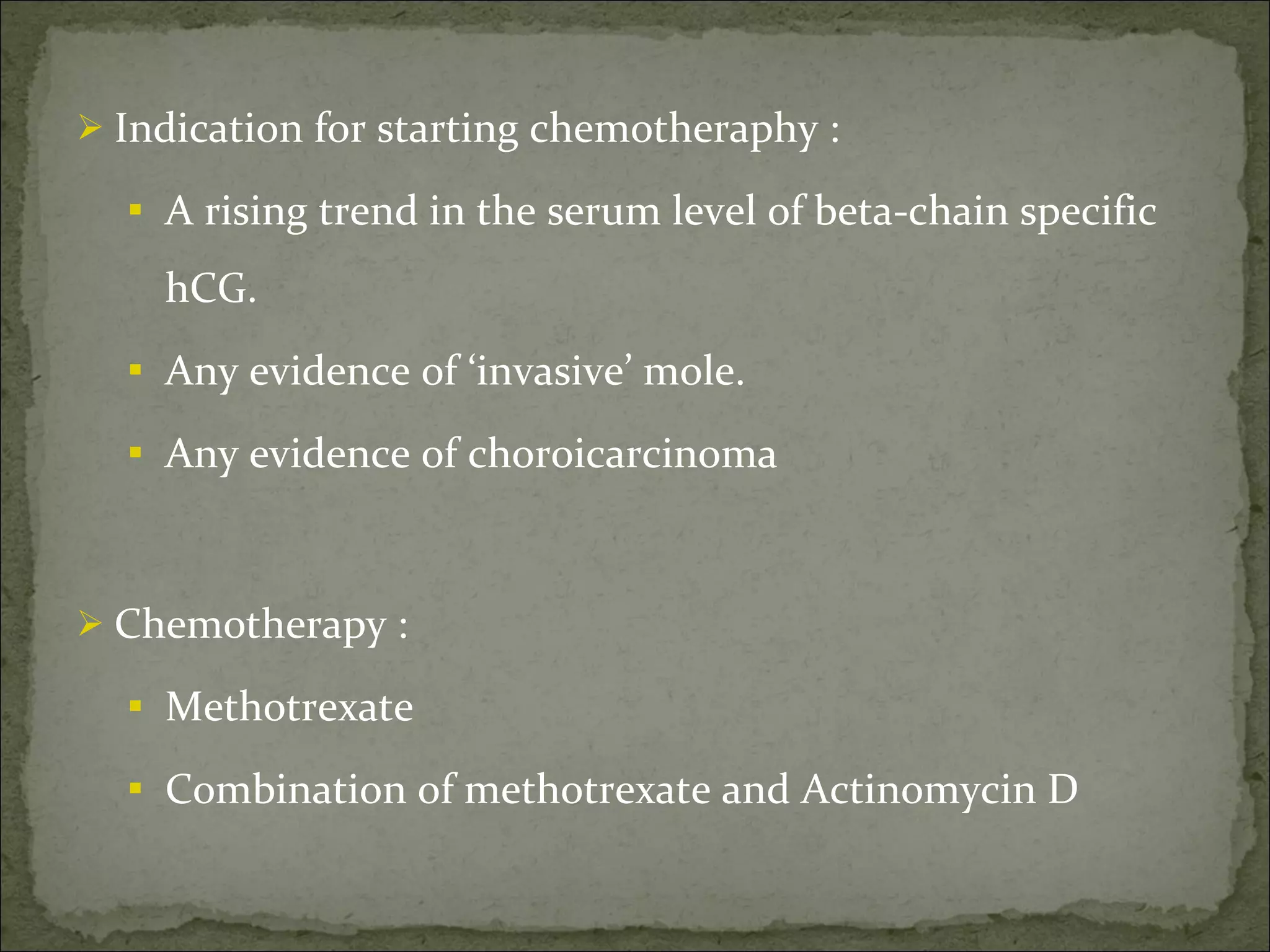
Indication for starting chemotheraphy : A rising trend in the serum level of beta-chain specific hCG. Any evidence of ‘invasive’ mole. Any evidence of choroicarcinoma Chemotherapy : Methotrexate  Combination of methotrexate and Actinomycin D
Thank you!!

Early Pregnancy Complication by UM

  • 1.
    Noor Asyikin BtAbdullah Ariana Bt Syamsidi
  • 2.
    3 main categoriesof early pregnancy disorders are:
  • 3.
  • 4.
    ABORTION Definition :Expulsionof product of conception (POC) before 22 nd week of period of gestation (POG), which mean before period of fetal viability. Aetiology factors: Maternal’s age >35 years old Trauma Infections (TORCHES, malaria) Endocrine disorders (diabetes, hypothyroidism, PCOS) Immunological disorders (SLE, antiphospholipid syndrome) Abnormalities in uterus (uterine fibroid) Psychological disorder (stress) Chromosomal abnormalities (Down syndrome) Exposure to chemical agents (benzene, tobacco, arsenic, pesticides)
  • 5.
  • 6.
    THREATENED ABORTION Definition: Painless vaginal bleeding, that occur at anytime between implantation and 24 weeks of gestation. : POC has threatened to abort but has not done so yet. Clinical features: Bleeding (minimal, painless) Associated with dull aching lower abdominal pain Examination: Size of uterus is correspond to period of amenorrhea (POA) Closed cervical os U/S : well-formed, rounded gestational sac with fetus within it Management: Bed rest Folic acid supplements Progesterone supplements Avoid coitus
  • 7.
    INEVITABLE ABORTION Definition: Painful vaginal bleeding from retro-placental site : POC is about to be aborted but not yet It can progress to complete/ incomplete abortion depending on whether or not all fetal & placental tissues have been expelled from uterus. Clinical features: Vaginal bleeding (painful) Associated with cramping pain at lower abdomen Examination: Size of uterus is correspond to/less than POA Dilated cervical os Management Hospitalization Analgesics for control of pain Evacuation of uterine cavity with suction evacuation, or ovum forceps (manually)
  • 8.
    INCOMPLETE ABORTION Definition: POC has aborted but not completely Clinical features: Vaginal bleeding (heavy, passed out POC as fleshy masses) Associated with colicky pain at lower abdomen +/- signs of shock Examination: Size of uterus is smaller than POA Open cervical os U/S : reveal retained POC in uterine cavity Management: Resuscitate if bleeding is severe, do blood group and cross match Give analgesia for pain Ergometrine (i.m) to contract the uterus and control bleeding Evacuation of the uterus of its product of conception once patient’s condition is stable.
  • 9.
    COMPLETE ABORTION Definition: All the POC has completely aborted. Clinical features: History of pain and passage of product Followed by absent of pain, minimal bleeding Examination: Size of uterus is smaller than POA Closed cervical os U/S : empty uterine cavity Management: Do U/S to look for empty of uterine cavity and to rule out any possibility of extra uterine pregnancy
  • 10.
    MISSED ABORTION Definition: When the embryo/fetus is already died : but still remain in the uterine cavity for a period of time : without symptoms of miscarriage Clinical features: Decreased in pregnancy symptoms Vaginal bleeding (absent, minimal) Examination: Size of uterus is smaller than POA Closed cervical os U/S : crumpled gestational sac : revealed fetal pole but no signs of activity (no heart activity) Management: Wait for spontaneous expulsion (disadvantage: involve further maternal anxiety, pain of expulsion, DIVC) Evacuation of uterus of its POC - surgically : dilatation & currettage - medically : mifepristone + misoprostol
  • 11.
  • 12.
    RECURRENT ABORTION Definition: 3 or more consecutive spontaneous abortion Can be divided into:
  • 13.
  • 14.
    ECTOPIC PREGNANCY Definition: Pregnancy outside uterine cavity In fallopian tube (fimbrial, ampullary, isthmic, interstitial) In the ovary In the abdominal cavity In the cervical site Sites of implantation:
  • 15.
    Trophoblast invade epitheliumof the tube, proliferating into the deeper muscular wall . It will cause hematoma & tubal dilatation . Thus, the patient will present with pain. As the trophoblast proliferates further , it will cause rupture of serosa and hemoperitoneum. The trophoblast does not differ histologically from a normal intrauterine pregnancy, but the embryo in an ectopic pregnancy is usually stunted or frequently absent.
  • 16.
    PATHOPHYSIOLOGY Any mechanicalor functional factors that interfere the passage of the fertilized ovum to the uterine cavity. Important factors involved in its transport: tubal contractility, ovarian hormones & cilial action within the tubes
  • 17.
    Vaginal Bleeding (scanty, dark and intermittent) Lower abd pain, back or pelvic pain (usu. unilateral) Shoulder pain Syncopal attacks (hemoperitoneum) Symp of hypovolemic shock - Upset menstrual pattern - Vague abdominal pain
  • 18.
    General examination shoulder pain 2° to free blood in the peritoneal cavity irritating the diaphragm vascular instability - low BP, fainting, dizzy, rapid heart rate abdominal palpation : mild tenderness, guarding, decreased bowel sounds may be present (ectopic pregnancy rupture may cause intra-abdominal bleeding)
  • 19.
    Gynecological examination speculum : cervical os is closed BE : uterus will be smaller than the expected date Positive cervical excitation gentle motion of the cervix to both sides of the lateral fornix tender if stretching of the involved site
  • 20.
    Human chorionic gonadotrophin(hCG) normal/low hCG Transvaginal ultrasound +/- gestational sac(intrauterine/tubal) Extrauterine sac with an embryo/embryonic remnants Any fluid in the pelvis esp. in Pouch of Douglas Empty ectopic sac/heterogenous adnexal mass Pseudogestational sac(small, centrally located endometrial fluid collection surrounded by a single echogenic rim of endometrial tissue undergoing decidual reaction)
  • 21.
    Culdocentesis toexclude hemoperitoneum (late ectopic pregnancy-emergency cases) Laparoscopy All but the very early ectopic pregnancies can be diagnosed by this techniqu e Dilatation and Curettage Not useful as a primary investigation. On the contrary, many ectopic pregnancies are missed even after dilatation and curettage is done for termination of pregnancy
  • 22.
    Culdocentesis Transvaginal punctureof the Douglas’ cul-de-sac for aspiration of fluid
  • 23.
  • 24.
    Surgical : salpingectomy/salpingotomyeither by laparotomy/laparoscopy Medical Methotrexate ; i.m/direct into tubal pregnancy Expectant Strict criteria in selected pt. Ultrasound & hCG assessments are prerequisites
  • 25.
  • 26.
  • 27.
  • 28.
    Also known as‘hydatidiform mole’ ‘ Gestational throphoblastic disease’. Abnormal pregnancy in which the developing fetus and placenta are replaced by proliferation of throphoblastic tissue.
  • 29.
    Can be classified as Complete hydatiform mole - no normal fetal tissue forms Partial hydatiform mole - incomplete fetal tissues develop alongside molar tissue Choriocarcinoma (invasive mole) - contains many villi, but these may grow into or through the muscle layer of the uterus wall - can spread to tissues outside of the uterus.
  • 30.
    Epidemiology Complete: 1 per 1000-2000 pregnancies. Partial : 1 per 700 pregnancies. Choriocarcinoma : varies ( 3-10%) Risk factors Increase with maternal age. Previous history of molar pregnancy. Dietary habits of some ethnic group (remains controversial). A diet low in carotene (a form of vitamin A)
  • 31.
    Genetic karyotype: Completemole - Homozygous XX – both Xs derived from paternal side ( haploid sperm 23X fertilizes “empty egg”  replicates itself) - Heterozygous 46XY (occasionally) Partial mole - triploid with extra sets of chromosomes paternally derived(69XXX/69XXY)
  • 32.
    Complete hydatidiform molePartial hydatidiform mole Generalized swelling of the villous tissue. Focal swelling of the villous tissue. Diffuse throphoblastic hyperplasia. Focal throphoblastic hyperplasia. No embryonic or fetal tissue. Embryonic or fetal tissue present.
  • 33.
    clusters of tissueswollen with fluid, giving it the appearance of a cluster of grapes
  • 34.
    Bleeding in earlypregnancy Passing out “ grape-like structure ” Hyperemesis gravidarum Thyrotoxicosis Other findings :- Uterus larger than dates No fetal heart ( doptone examination )
  • 35.
    Beta HCG measurements – High level Ultrasound :- - ‘ snow storm ’ appearance - no fetal parts seen - bilateral theca lutein cysts in ovaries (as a result of excessive hormonal stimulation) Histological examination -large edematous villi are avascular and show evidence of throphoblastic proliferation. Chest X-ray – exclude invasive mole in lung
  • 36.
    Suction evacuation ofthe molar tissue Weekly hCG level monitoring until undetectable Monthly monitoring for 6-24 months
  • 37.
    Highly malignant tumourthat arises from throphoblastic epithelium. Can metastasizes to lung, liver and brain. 50% follow molar pregnancy, 30% after miscarriage, 20% after normal pregnancy. Also can occur after extrauterine pregnancy -> signs and symptom of ectopic pregnancy
  • 38.
  • 39.
    High maternal agePrev hx of molar pregnancy ABO blood gp (parents) – chorioCA women with blood gp A have higher risk than gp O History of miscarriage.
  • 40.
    Genital manifestations AmenorrheaVaginal bleeding Intraperitoneal hemorrhage Vaginal metastasis Extravaginal manifestations Lungs-’cannon ball’ lesion Brain-stroke Liver GIT Vaginal bleeding (passing out grape like struc.) Uterine enlargement greater than dates Abnormally high hCG  secrete by the proliferating trophoblast
  • 41.
    Complication s  hypertension, hyperthyroidism, hyperemesis gravidarum, anaemia, ovarian lutein cyst Dx U/s : ‘snow storm’ app, no fetal pole Doptone : no fetal heart beat VE : theca lutein cyst Other Ix histological examination : confirming the trophoblastic hyperplasia CXR : to exclude the presence of lung metastasis
  • 42.
    Suction evacuation ofthe molar tissue Follow-up closely : - Seen weekly : beta-chain specific hCG is taken. - 2 weekly for the next 2 months, followed monthly for the next 2 years. - Pregnancy is discouraged until at least 6 months after beta-chain specific hCG level have returned to normal. - Each visit : serum hCG, assessment of menstrual period, look for signs and symptoms of choriocarcinoma.
  • 43.
    Indication for startingchemotheraphy : A rising trend in the serum level of beta-chain specific hCG. Any evidence of ‘invasive’ mole. Any evidence of choroicarcinoma Chemotherapy : Methotrexate Combination of methotrexate and Actinomycin D
  • 44.