E-Waste Management in Kerala:
Issues and Challenges
What is E-Waste ?
E-Waste stands for Electronic Waste.
Any electronic device which cannot be
further used is termed as E-waste.
Devices like computer, computer
peripherals, digital camera, television,
DVD player, mobile phones, CDs etc
which has no further use comes in this
category.
Rapid changes in market , instant
availability of devices and ease
affordability of electronic devices
due to its cheap cost has resulted
in the generation of a heap of used
electronics devices- E-waste
The US-EPA has estimated a 5 to 10%
increase in the generation of e-waste
each year globally. But the most
alarming factor accompanied with this
fact is that only 5% of this amount is
being recovered
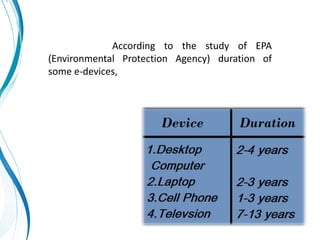
According to the study of EPA
(Environmental Protection Agency) duration of
some e-devices,
How Hazardous?
Both organic and inorganic types of e-waste
materials are used in the production of E-
wastes. There are many hazardous
components in electronic devices and an
improper disposal of these may leads to
severe issues to human lives.
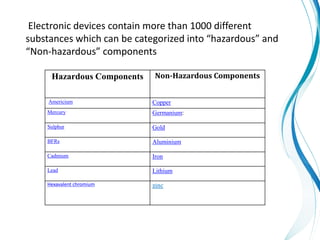
Electronic devices contain more than 1000 different
substances which can be categorized into “hazardous” and
“Non-hazardous” components
Hazardous Components Non-Hazardous Components
Americium Copper
Mercury Germanium:
Sulphur Gold
BFRs Aluminium
Cadmium Iron
Lead Lithium
Hexavalent chromium zinc
Some components used in the
production of electronic devices
are very sensitive to the nature,
such as epoxy resins, fibre glass,
PCBs, PVC (polyvinyl chlorides),
thermosetting plastics, lead, tin,
copper, silicon, beryllium, carbon,
iron and aluminium
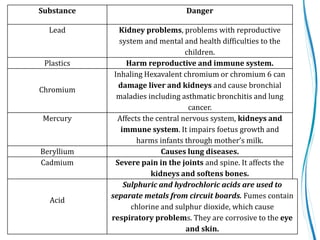
Substance Danger
Lead Kidney problems, problems with reproductive
system and mental and health difficulties to the
children.
Plastics Harm reproductive and immune system.
Chromium
Inhaling Hexavalent chromium or chromium 6 can
damage liver and kidneys and cause bronchial
maladies including asthmatic bronchitis and lung
cancer.
Mercury Affects the central nervous system, kidneys and
immune system. It impairs foetus growth and
harms infants through mother’s milk.
Beryllium Causes lung diseases.
Cadmium Severe pain in the joints and spine. It affects the
kidneys and softens bones.
Acid
Sulphuric and hydrochloric acids are used to
separate metals from circuit boards. Fumes contain
chlorine and sulphur dioxide, which cause
respiratory problems. They are corrosive to the eye
and skin.
The impacts of improper disposal
methods are mostly seen in developing
countries like India, Africa and Latin
America. Since they alone produce a
mass quantity of electronic waste and
bear the electronic waste shipping from
the developed countries legally or may be
illegally on the name of second hand
products.
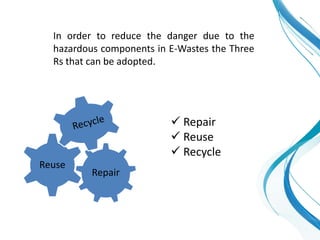
In order to reduce the danger due to the
hazardous components in E-Wastes the Three
Rs that can be adopted.
Repair
Reuse
 Repair
 Reuse
 Recycle
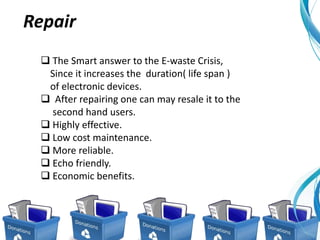
 The Smart answer to the E-waste Crisis,
Since it increases the duration( life span )
of electronic devices.
 After repairing one can may resale it to the
second hand users.
 Highly effective.
 Low cost maintenance.
 More reliable.
 Echo friendly.
 Economic benefits.
Repair
 After repairing one can reuse the electronic
devices.
 Reusing also increases the life span of
electronic
devices.
 By reusing one can save energy.
 Reusing is more echo friendly.
 Reusing decreases the hazardousness
 Effective.
 Financial benefits.
Reuse
 Can recollect the raw materials.
 Can provide devices for Reuse.
 Commercial benefits.
 Reduces environmental hazards.
 Echo friendly.
 Reliable.
 Effective.
Recycle
E-waste
Management in
India
i) “Usability” life span of devices
ii) Obsolescence to electronics gadgets
iii) Reduced recyclability of thrown-away devices
iv) Import of e-waste from other countries.
E-WASTE GENERATION IN INDIA
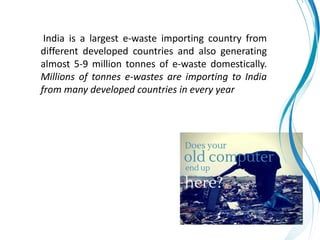
India is a largest e-waste importing country from
different developed countries and also generating
almost 5-9 million tonnes of e-waste domestically.
Millions of tonnes e-wastes are importing to India
from many developed countries in every year
Many Western Countries are
under taken lots of actions towards
the crisis arised by the electronic
wastes. There is Free Trade
Agreements (FTAs) or so- called
“Economic Partnership
Agreements” (EPAs) to export e-
waste of developed countries to
the developing countries in
worldwide
India’s EXIM (export- import) policy allows
import of the second-hand computers not more
than 10 years old. But mostly the rules are not
considered in action.
Dell India is the first computer manufacturer
to ban the export of e-waste to developing
countries in 2009. And they are into
recycling their devices named “closed loop
recycling” and from them they make new
dell product
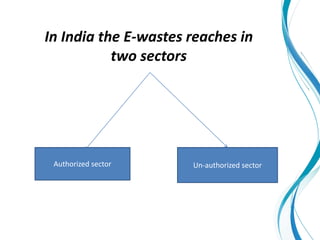
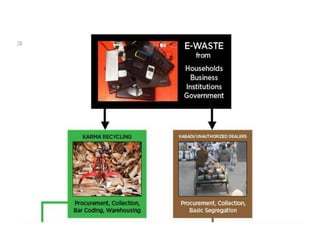
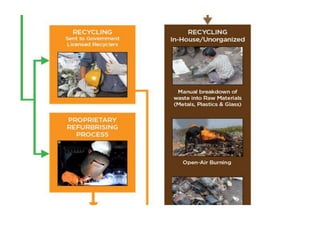
In India the E-wastes reaches in
two sectors
Authorized sector Un-authorized sector
In India there are only few authorized
local organisations such as E- Parisara,
Karma etc. But they are not capable to
recycle all e-waste producing and
importing to India.
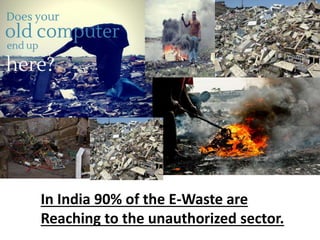
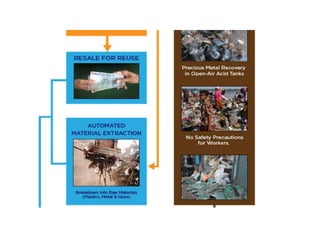
In India 90% of the E-Waste are
Reaching to the unauthorized sector.
Unfortunately in India there are only few
recognised organisations! And there is no
such organisation which can recycle whole
this electronic wastes. And this crisis leads
to the land filling and unauthorized
recycling.
INCREDIBLE INDIA
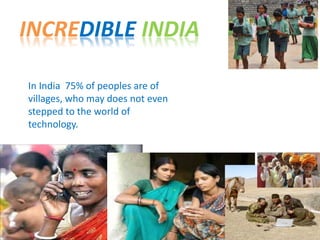
In India 75% of peoples are of
villages, who may does not even
stepped to the world of
technology.
DIGITAL INDIA
A project by PM Narendra
Modi in order to pursue 100% internet
literacy, to provide at least a smart phone
to every Indian citizen.
E-Waste
Management in
Kerala
There are few major initiatives that
made by Kerala government to
ensue the proper disposal of
electronic wastes
The state government has introduced strict
measures for the safe collection and
disposal of e-waste.
The government order issued has defined
the role of manufacturer, local bodies and
pollution control board (PCB) in safe
disposal of e-waste
 In October 30 Government of Kerala had signed up a recycling
company [ Earth scense recycle Pvt Ltd ] to collect and process e-waste
from across the state and they runs a scientific recycling facility at
Hyderabad .
 According to this agreement company will start collecting e-wastes
from government offices, public and private establishments in kerala. And
they will be giving an amount of Rs 5 per kilogram of e-waste
 The project was originated by clean kerala company Ltd , A company
formed by state government to develop integrated waste disposal
mechanisms for local bodies .
What We need ?
 We need to strictly keep laws like extended producer
responsibility(EPR).
 An all India authorised organisation which can recycle whole the e-
waste importing to India.
 A small amount of money can be added with electronic devices as
RE-tax(Reuse/Repair/Recycle)
 The reusable devices can be provided to the others for free of cost
in order to enhance Pm Modi’s Digital India Project.
 We must control the import of e-wastes by strict laws.
Presented By
Ifadha MV
&
Dr.Abdul Haleem
Department Of Computer Science
Farook College

E waste management in kerala

  • 1.
    E-Waste Management inKerala: Issues and Challenges
  • 2.
    What is E-Waste? E-Waste stands for Electronic Waste. Any electronic device which cannot be further used is termed as E-waste. Devices like computer, computer peripherals, digital camera, television, DVD player, mobile phones, CDs etc which has no further use comes in this category.
  • 3.
    Rapid changes inmarket , instant availability of devices and ease affordability of electronic devices due to its cheap cost has resulted in the generation of a heap of used electronics devices- E-waste
  • 4.
    The US-EPA hasestimated a 5 to 10% increase in the generation of e-waste each year globally. But the most alarming factor accompanied with this fact is that only 5% of this amount is being recovered
  • 5.
    According to thestudy of EPA (Environmental Protection Agency) duration of some e-devices,
  • 6.
    How Hazardous? Both organicand inorganic types of e-waste materials are used in the production of E- wastes. There are many hazardous components in electronic devices and an improper disposal of these may leads to severe issues to human lives.
  • 7.
    Electronic devices containmore than 1000 different substances which can be categorized into “hazardous” and “Non-hazardous” components Hazardous Components Non-Hazardous Components Americium Copper Mercury Germanium: Sulphur Gold BFRs Aluminium Cadmium Iron Lead Lithium Hexavalent chromium zinc
  • 8.
    Some components usedin the production of electronic devices are very sensitive to the nature, such as epoxy resins, fibre glass, PCBs, PVC (polyvinyl chlorides), thermosetting plastics, lead, tin, copper, silicon, beryllium, carbon, iron and aluminium
  • 9.
    Substance Danger Lead Kidneyproblems, problems with reproductive system and mental and health difficulties to the children. Plastics Harm reproductive and immune system. Chromium Inhaling Hexavalent chromium or chromium 6 can damage liver and kidneys and cause bronchial maladies including asthmatic bronchitis and lung cancer. Mercury Affects the central nervous system, kidneys and immune system. It impairs foetus growth and harms infants through mother’s milk. Beryllium Causes lung diseases. Cadmium Severe pain in the joints and spine. It affects the kidneys and softens bones. Acid Sulphuric and hydrochloric acids are used to separate metals from circuit boards. Fumes contain chlorine and sulphur dioxide, which cause respiratory problems. They are corrosive to the eye and skin.
  • 10.
    The impacts ofimproper disposal methods are mostly seen in developing countries like India, Africa and Latin America. Since they alone produce a mass quantity of electronic waste and bear the electronic waste shipping from the developed countries legally or may be illegally on the name of second hand products.
  • 11.
    In order toreduce the danger due to the hazardous components in E-Wastes the Three Rs that can be adopted. Repair Reuse  Repair  Reuse  Recycle
  • 12.
     The Smartanswer to the E-waste Crisis, Since it increases the duration( life span ) of electronic devices.  After repairing one can may resale it to the second hand users.  Highly effective.  Low cost maintenance.  More reliable.  Echo friendly.  Economic benefits. Repair
  • 13.
     After repairingone can reuse the electronic devices.  Reusing also increases the life span of electronic devices.  By reusing one can save energy.  Reusing is more echo friendly.  Reusing decreases the hazardousness  Effective.  Financial benefits. Reuse
  • 14.
     Can recollectthe raw materials.  Can provide devices for Reuse.  Commercial benefits.  Reduces environmental hazards.  Echo friendly.  Reliable.  Effective. Recycle
  • 15.
  • 16.
    i) “Usability” lifespan of devices ii) Obsolescence to electronics gadgets iii) Reduced recyclability of thrown-away devices iv) Import of e-waste from other countries. E-WASTE GENERATION IN INDIA
  • 17.
    India is alargest e-waste importing country from different developed countries and also generating almost 5-9 million tonnes of e-waste domestically. Millions of tonnes e-wastes are importing to India from many developed countries in every year
  • 18.
    Many Western Countriesare under taken lots of actions towards the crisis arised by the electronic wastes. There is Free Trade Agreements (FTAs) or so- called “Economic Partnership Agreements” (EPAs) to export e- waste of developed countries to the developing countries in worldwide
  • 19.
    India’s EXIM (export-import) policy allows import of the second-hand computers not more than 10 years old. But mostly the rules are not considered in action.
  • 20.
    Dell India isthe first computer manufacturer to ban the export of e-waste to developing countries in 2009. And they are into recycling their devices named “closed loop recycling” and from them they make new dell product
  • 21.
    In India theE-wastes reaches in two sectors Authorized sector Un-authorized sector
  • 22.
    In India thereare only few authorized local organisations such as E- Parisara, Karma etc. But they are not capable to recycle all e-waste producing and importing to India.
  • 23.
    In India 90%of the E-Waste are Reaching to the unauthorized sector.
  • 27.
    Unfortunately in Indiathere are only few recognised organisations! And there is no such organisation which can recycle whole this electronic wastes. And this crisis leads to the land filling and unauthorized recycling.
  • 28.
    INCREDIBLE INDIA In India75% of peoples are of villages, who may does not even stepped to the world of technology.
  • 29.
    DIGITAL INDIA A projectby PM Narendra Modi in order to pursue 100% internet literacy, to provide at least a smart phone to every Indian citizen.
  • 30.
  • 31.
    There are fewmajor initiatives that made by Kerala government to ensue the proper disposal of electronic wastes
  • 32.
    The state governmenthas introduced strict measures for the safe collection and disposal of e-waste. The government order issued has defined the role of manufacturer, local bodies and pollution control board (PCB) in safe disposal of e-waste
  • 33.
     In October30 Government of Kerala had signed up a recycling company [ Earth scense recycle Pvt Ltd ] to collect and process e-waste from across the state and they runs a scientific recycling facility at Hyderabad .  According to this agreement company will start collecting e-wastes from government offices, public and private establishments in kerala. And they will be giving an amount of Rs 5 per kilogram of e-waste  The project was originated by clean kerala company Ltd , A company formed by state government to develop integrated waste disposal mechanisms for local bodies .
  • 34.
    What We need?  We need to strictly keep laws like extended producer responsibility(EPR).  An all India authorised organisation which can recycle whole the e- waste importing to India.  A small amount of money can be added with electronic devices as RE-tax(Reuse/Repair/Recycle)  The reusable devices can be provided to the others for free of cost in order to enhance Pm Modi’s Digital India Project.  We must control the import of e-wastes by strict laws.
  • 35.
    Presented By Ifadha MV & Dr.AbdulHaleem Department Of Computer Science Farook College