E- waste
Management
Lets, Start
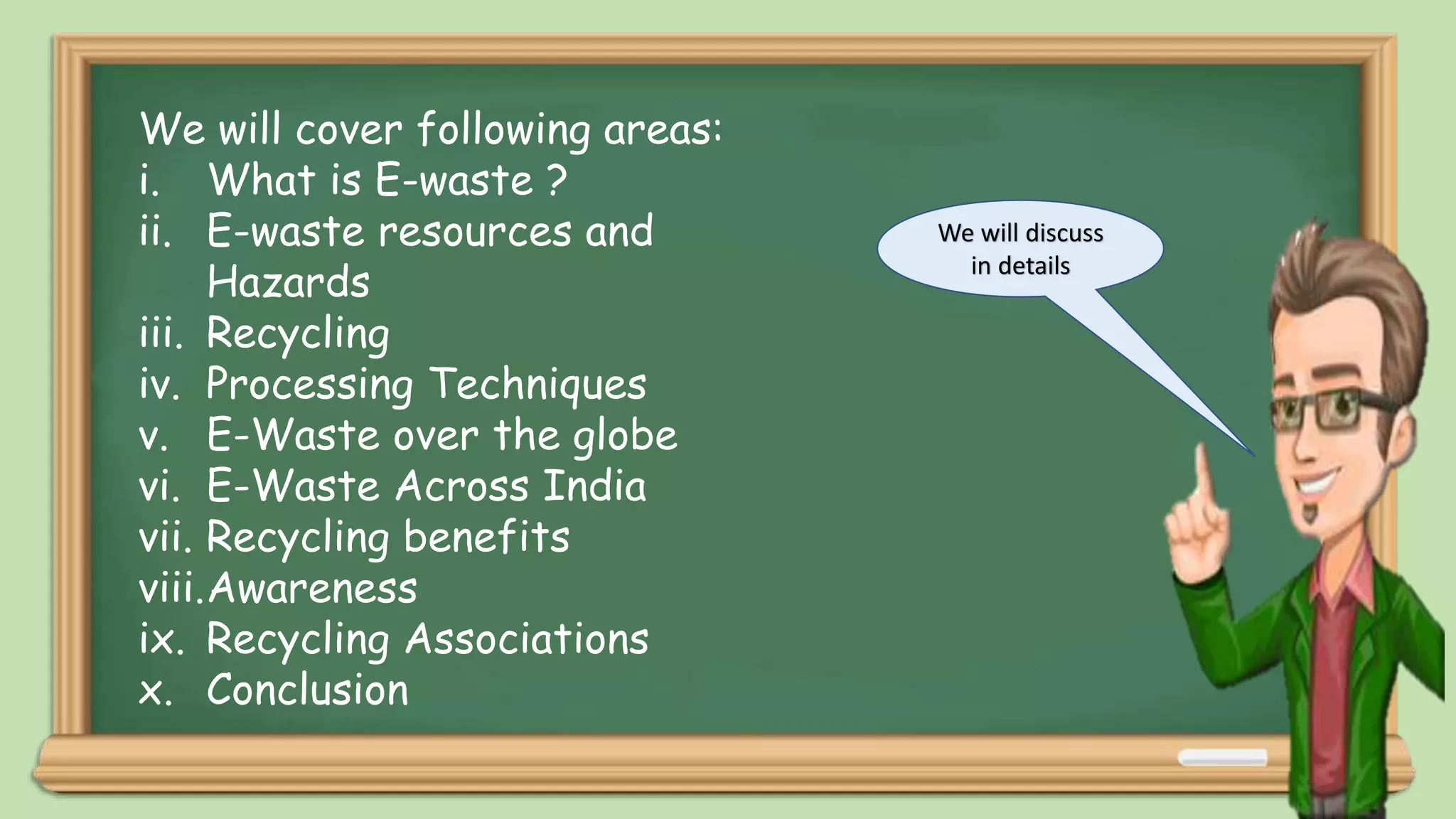
We will cover following areas:
i. What is E-waste ?
ii. E-waste resources and
Hazards
iii. Recycling
iv. Processing Techniques
v. E-Waste over the globe
vi. E-Waste Across India
vii. Recycling benefits
viii.Awareness
ix. Recycling Associations
x. Conclusion
We will discuss
in details
What is E-waste ?
E-waste is a popular, informal
name for electronic products
nearing the end of their "useful
life." Computers, televisions,
VCRs, stereos, copiers, and fax
machines are
common electronic products.
Many of these products can be
reused, refurbished,
or recycled.
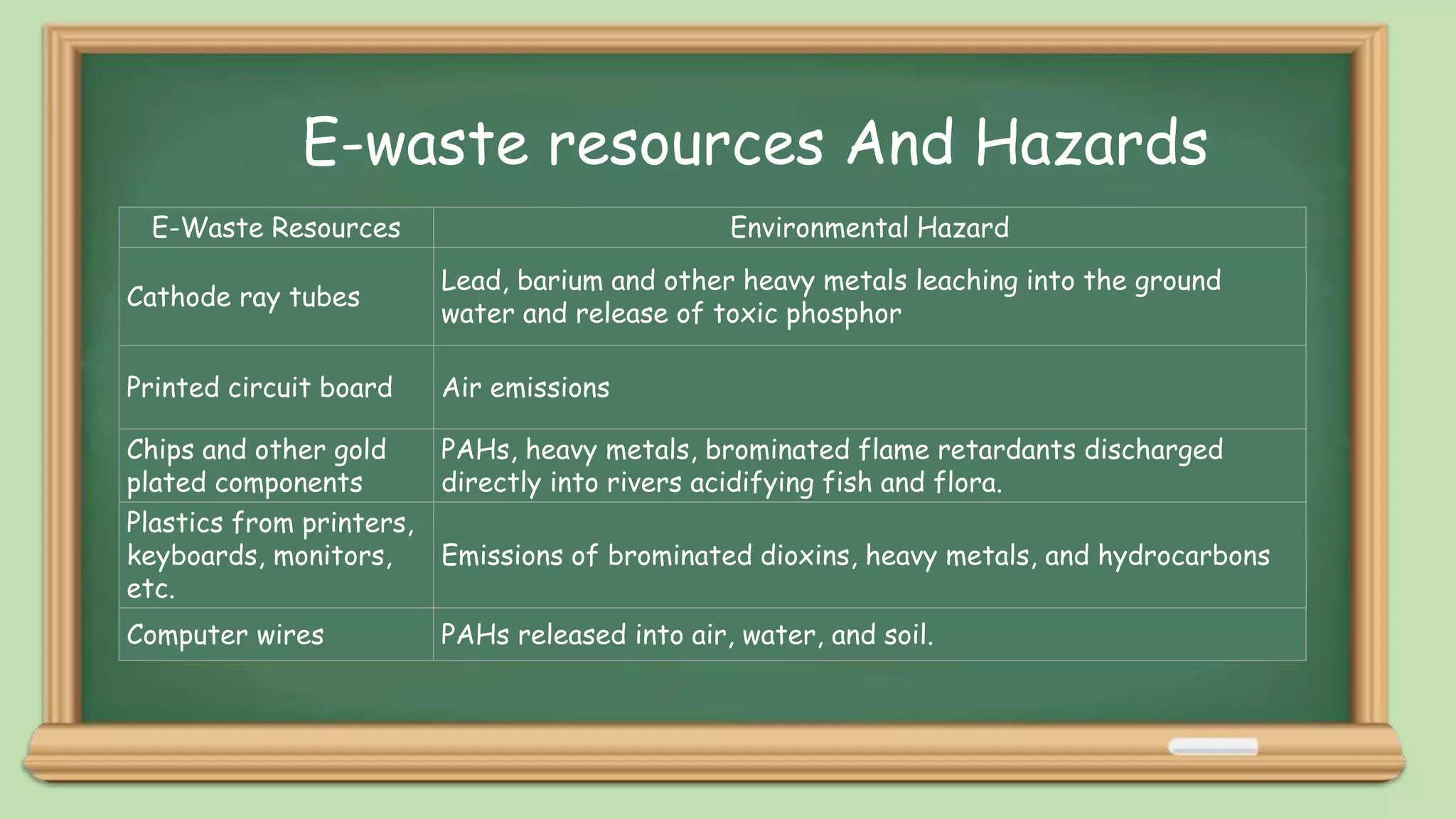
E-waste resources And Hazards
E-Waste Resources Environmental Hazard
Cathode ray tubes
Lead, barium and other heavy metals leaching into the ground
water and release of toxic phosphor
Printed circuit board Air emissions
Chips and other gold
plated components
PAHs, heavy metals, brominated flame retardants discharged
directly into rivers acidifying fish and flora.
Plastics from printers,
keyboards, monitors,
etc.
Emissions of brominated dioxins, heavy metals, and hydrocarbons
Computer wires PAHs released into air, water, and soil.
Processing Techniques
Sort E-waste
E-Waste Drives Pick- Ups
Drop-Offs
Scrap Product Recycled/
Refurbished
Recycling
Benefits
Saves landfill
spaces
Create jobs for
professional
recyclers
Ecological
degradation is
prevented
Conserve Natural
Resources
Management of
toxic element
Facts and Figures
E-waste Over The Globe
E-waste disposed and recycled
properly in U.S. each year
13%
E-waste disposed and recycled
properly globally each Year
29%
E-waste produced
annually in the united states
9.4 M
tons
E-waste shipped to
developing countries
per year
41.8 M
tons
Televisions
Discarded per Year
20 M
Computers discarded
per year
41 M
Cell phones
discarded per Year
152
M
i. Recycling
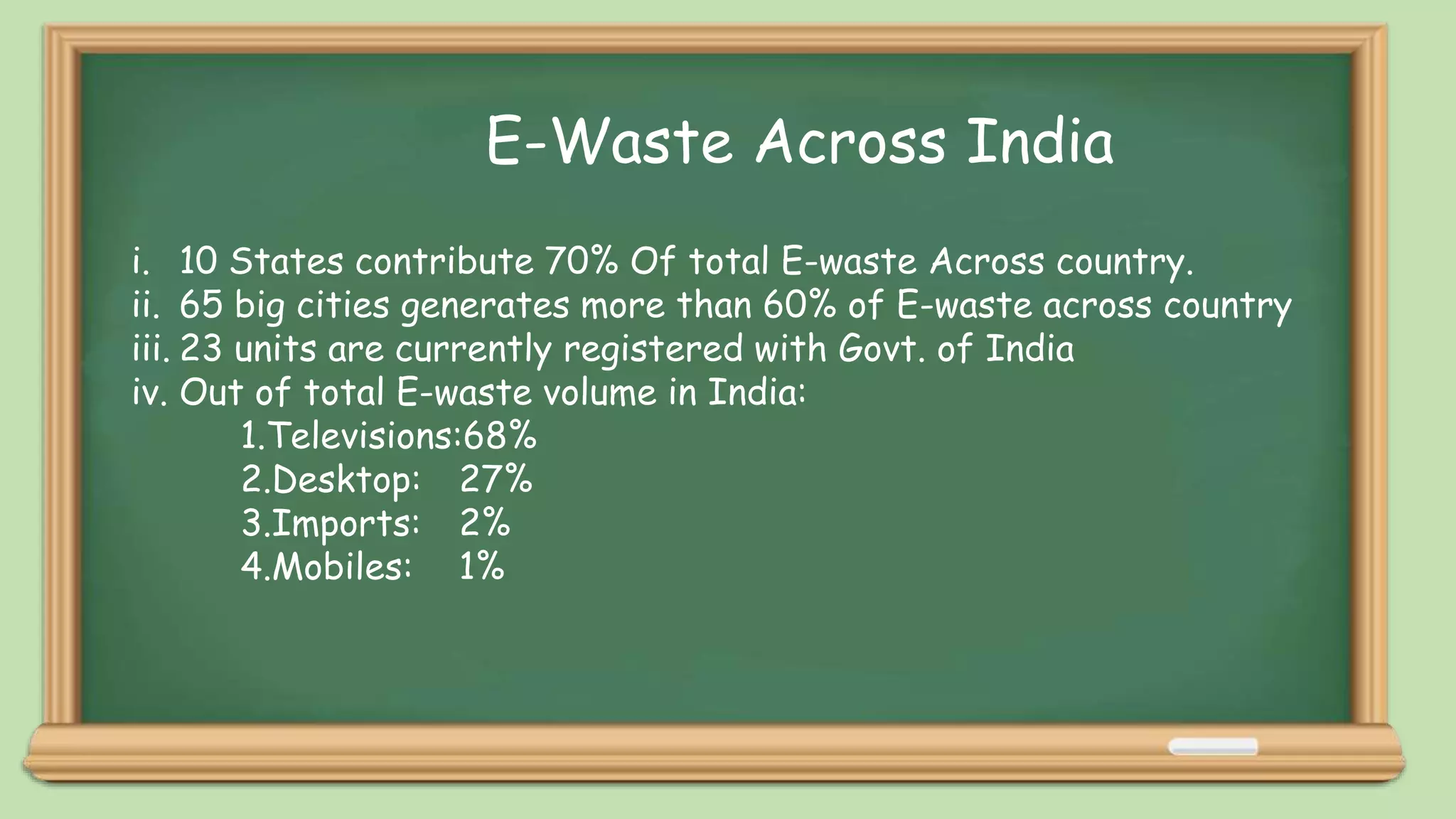
E-Waste Across India
i. 10 States contribute 70% Of total E-waste Across country.
ii. 65 big cities generates more than 60% of E-waste across country
iii. 23 units are currently registered with Govt. of India
iv. Out of total E-waste volume in India:
1.Televisions:68%
2.Desktop: 27%
3.Imports: 2%
4.Mobiles: 1%
i. Recycling
Awareness
i. Encouraging others to take part in reducing E-Waste
ii. Educating consumers of proper recycling methods, and not to dispose of
devices
iii. multiple organizations and programs to promote consumer awareness on E-
Waste, for example "The Electronics Takeback Coalition", which encourages
consumers to recycle their electronic gadgets.
iv. Countries like Australia are coming up with the education programme in
colleges
v. However, nothing is more effective than spreading awareness
i. Recycling
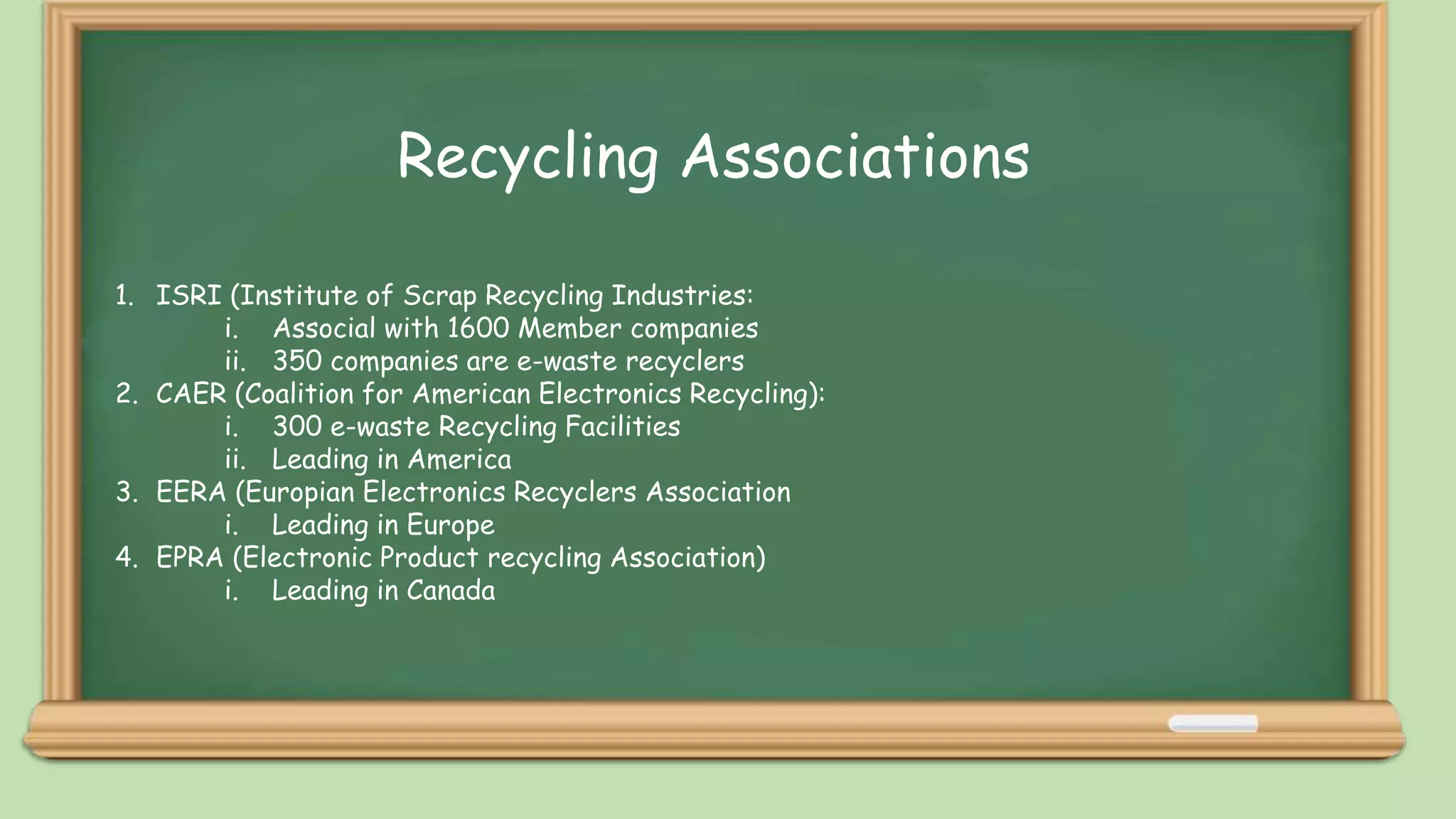
Recycling Associations
1. ISRI (Institute of Scrap Recycling Industries:
i. Associal with 1600 Member companies
ii. 350 companies are e-waste recyclers
2. CAER (Coalition for American Electronics Recycling):
i. 300 e-waste Recycling Facilities
ii. Leading in America
3. EERA (Europian Electronics Recyclers Association
i. Leading in Europe
4. EPRA (Electronic Product recycling Association)
i. Leading in Canada
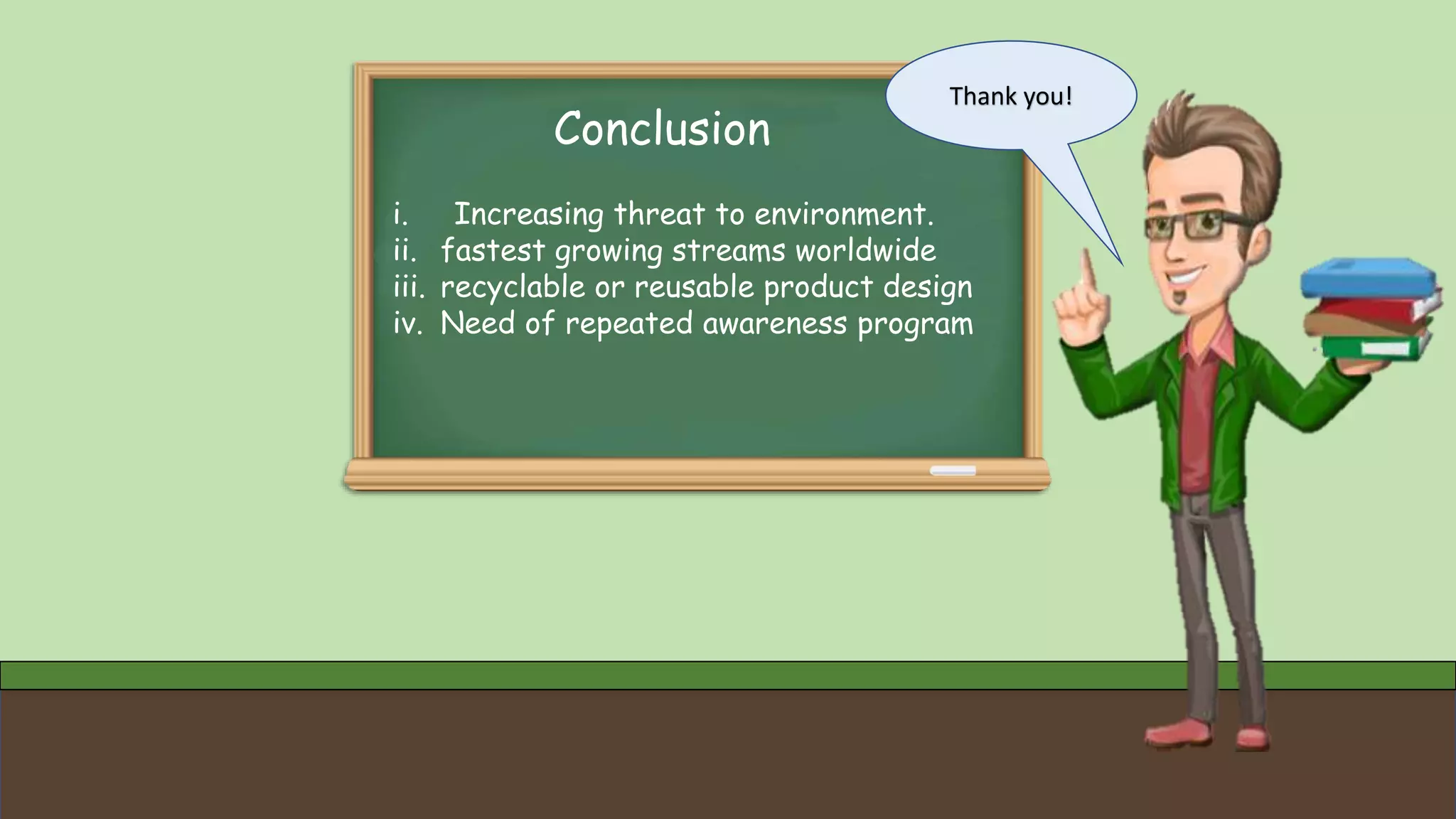
Thank you!
Conclusion
i. Increasing threat to environment.
ii. fastest growing streams worldwide
iii. recyclable or reusable product design
iv. Need of repeated awareness program

E waste management

  • 1.
  • 2.
    We will coverfollowing areas: i. What is E-waste ? ii. E-waste resources and Hazards iii. Recycling iv. Processing Techniques v. E-Waste over the globe vi. E-Waste Across India vii. Recycling benefits viii.Awareness ix. Recycling Associations x. Conclusion We will discuss in details
  • 3.
    What is E-waste? E-waste is a popular, informal name for electronic products nearing the end of their "useful life." Computers, televisions, VCRs, stereos, copiers, and fax machines are common electronic products. Many of these products can be reused, refurbished, or recycled.
  • 4.
    E-waste resources AndHazards E-Waste Resources Environmental Hazard Cathode ray tubes Lead, barium and other heavy metals leaching into the ground water and release of toxic phosphor Printed circuit board Air emissions Chips and other gold plated components PAHs, heavy metals, brominated flame retardants discharged directly into rivers acidifying fish and flora. Plastics from printers, keyboards, monitors, etc. Emissions of brominated dioxins, heavy metals, and hydrocarbons Computer wires PAHs released into air, water, and soil.
  • 5.
    Processing Techniques Sort E-waste E-WasteDrives Pick- Ups Drop-Offs Scrap Product Recycled/ Refurbished
  • 6.
    Recycling Benefits Saves landfill spaces Create jobsfor professional recyclers Ecological degradation is prevented Conserve Natural Resources Management of toxic element
  • 7.
    Facts and Figures E-wasteOver The Globe E-waste disposed and recycled properly in U.S. each year 13% E-waste disposed and recycled properly globally each Year 29% E-waste produced annually in the united states 9.4 M tons E-waste shipped to developing countries per year 41.8 M tons Televisions Discarded per Year 20 M Computers discarded per year 41 M Cell phones discarded per Year 152 M
  • 8.
    i. Recycling E-Waste AcrossIndia i. 10 States contribute 70% Of total E-waste Across country. ii. 65 big cities generates more than 60% of E-waste across country iii. 23 units are currently registered with Govt. of India iv. Out of total E-waste volume in India: 1.Televisions:68% 2.Desktop: 27% 3.Imports: 2% 4.Mobiles: 1%
  • 9.
    i. Recycling Awareness i. Encouragingothers to take part in reducing E-Waste ii. Educating consumers of proper recycling methods, and not to dispose of devices iii. multiple organizations and programs to promote consumer awareness on E- Waste, for example "The Electronics Takeback Coalition", which encourages consumers to recycle their electronic gadgets. iv. Countries like Australia are coming up with the education programme in colleges v. However, nothing is more effective than spreading awareness
  • 10.
    i. Recycling Recycling Associations 1.ISRI (Institute of Scrap Recycling Industries: i. Associal with 1600 Member companies ii. 350 companies are e-waste recyclers 2. CAER (Coalition for American Electronics Recycling): i. 300 e-waste Recycling Facilities ii. Leading in America 3. EERA (Europian Electronics Recyclers Association i. Leading in Europe 4. EPRA (Electronic Product recycling Association) i. Leading in Canada
  • 11.
    Thank you! Conclusion i. Increasingthreat to environment. ii. fastest growing streams worldwide iii. recyclable or reusable product design iv. Need of repeated awareness program