E-WASTE: THE LATEST CONTRIBUTOR TO ENVIRONMENTAL
DEGRADATION
PRESENTERS:
DHEERENDAR REDDY- 11502093-(B35)
CHENCHO DEM – 11510696-(B36)
ROHIT KUMAR- 11508462-(B39)
NAVENDU BAKAYA- 11508452-(B40)
 Introduction
 What is e-waste
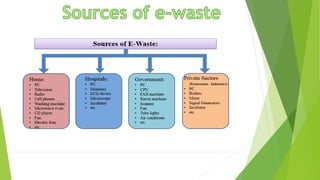
 Sources of e-waste
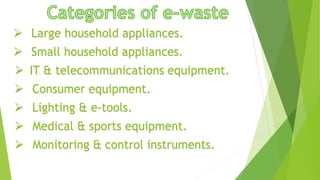
 Categories of e-waste
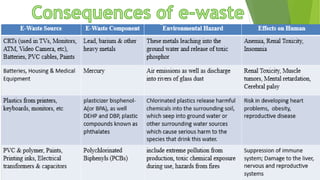
 Consequences of e-waste
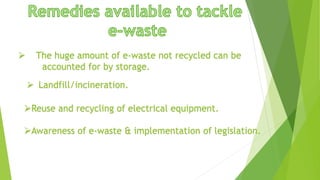
 Remedies of e-waste
 Draft law on e-waste recycling
 Conclusion
 The rapid pace of the technological
change in the fields of environment has
made appliances for home and office
equipment both affordable and widely used.
 Resulting in lots of electronic appliances added to
waste stream.
“As many as 3,000 personal computers; 8,500 mobile handsets;
5,500 TV sets and are dismantled in the Delhi everyday
for reuse of their component parts and materials”
 It May be defined as, computers, office
equipment, entertainment devices &
many other electronic or electrical.
 The electronic components that are
disposed off in an inappropriate manner are
collectively termed as ‘e-waste’.
 Devices which are unwanted broken and
discarded by their original users are known
as ‘e-waste’ or ‘electronic waste’.
 Large household appliances.
 Small household appliances.
 IT & telecommunications equipment.
 Consumer equipment.
 Lighting & e-tools.
 Medical & sports equipment.
 Monitoring & control instruments.
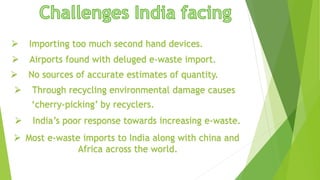
 Importing too much second hand devices.
 Airports found with deluged e-waste import.
 No sources of accurate estimates of quantity.
 Through recycling environmental damage causes
‘cherry-picking’ by recyclers.
 India’s poor response towards increasing e-waste.
 Most e-waste imports to India along with china and
Africa across the world.
 The huge amount of e-waste not recycled can be
accounted for by storage.
 Landfill/incineration.
Reuse and recycling of electrical equipment.
Awareness of e-waste & implementation of legislation.
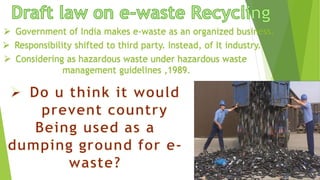
 Government of India makes e-waste as an organized business.
 Responsibility shifted to third party. Instead, of It industry.
 Considering as hazardous waste under hazardous waste
management guidelines ,1989.
1.http://www.slideshare.net/mdmustafakamal9/ewaste-ppt?related=1
2.http://www.slideshare.net/vbvklone/e-waste-27139823?qid=d28d6568-a826-456b-8261-d5fe74a604d8&v=
default&b=&from_search=4
3.http://indiatechonline.com//snapshot.php
4.http://www.indiatechonline.com//it-happend-in-india.php?id=1145
e-waste
e-waste

e-waste

  • 1.
    E-WASTE: THE LATESTCONTRIBUTOR TO ENVIRONMENTAL DEGRADATION PRESENTERS: DHEERENDAR REDDY- 11502093-(B35) CHENCHO DEM – 11510696-(B36) ROHIT KUMAR- 11508462-(B39) NAVENDU BAKAYA- 11508452-(B40)
  • 2.
     Introduction  Whatis e-waste  Sources of e-waste  Categories of e-waste  Consequences of e-waste  Remedies of e-waste  Draft law on e-waste recycling  Conclusion
  • 3.
     The rapidpace of the technological change in the fields of environment has made appliances for home and office equipment both affordable and widely used.  Resulting in lots of electronic appliances added to waste stream. “As many as 3,000 personal computers; 8,500 mobile handsets; 5,500 TV sets and are dismantled in the Delhi everyday for reuse of their component parts and materials”
  • 4.
     It Maybe defined as, computers, office equipment, entertainment devices & many other electronic or electrical.  The electronic components that are disposed off in an inappropriate manner are collectively termed as ‘e-waste’.  Devices which are unwanted broken and discarded by their original users are known as ‘e-waste’ or ‘electronic waste’.
  • 6.
     Large householdappliances.  Small household appliances.  IT & telecommunications equipment.  Consumer equipment.  Lighting & e-tools.  Medical & sports equipment.  Monitoring & control instruments.
  • 8.
     Importing toomuch second hand devices.  Airports found with deluged e-waste import.  No sources of accurate estimates of quantity.  Through recycling environmental damage causes ‘cherry-picking’ by recyclers.  India’s poor response towards increasing e-waste.  Most e-waste imports to India along with china and Africa across the world.
  • 10.
     The hugeamount of e-waste not recycled can be accounted for by storage.  Landfill/incineration. Reuse and recycling of electrical equipment. Awareness of e-waste & implementation of legislation.
  • 11.
     Government ofIndia makes e-waste as an organized business.  Responsibility shifted to third party. Instead, of It industry.  Considering as hazardous waste under hazardous waste management guidelines ,1989.
  • 13.