HOW TO BE A SUCCESSFUL
PASCO ESCHOOL FAMILY
 Elementary Students (K–5)
 Younger kids need extra guidance to get used to the school
environment, especially if they’re just starting kindergarten. Here are
some ways you can expose them to the traditional elements of
attending school and draw their attention to a few things that are
especially important in a virtual setting.
 Make new friends and work well with others. Help expose
your student to new people and new relationships by giving him or
her a chance to socialize with different people. Arrange a playgroup,
go to the playground, sign up for swimming lessons, or attend events
in the children’s section of the local library. If you have more than
one student, work on teaching them to collaborate effectively and get
along during the school day.
 Learn how to use technology. Familiarize your student with
computer technology or work on more advanced skills like typing,
depending on his or her skill level. Consider creating technology rules
early on so your student won’t stray into unsafe territory or
get distracted. Don’t forget to cover online communication
and etiquette.
 Establish a routine. A consistent routine helps provide students
of all ages with much-needed structure, but it’s especially important
for younger students who need to get used to fitting school into their
day.
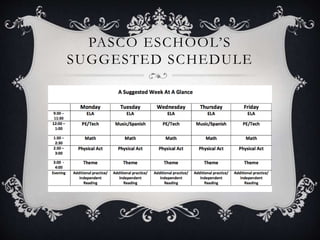
PASCO ESCHOOL’S
SUGGESTED SCHEDULE
 Your first and best stop for help with “learning the ropes” of online
schooling should be your child’s teacher! He or she can point you in the
right direction for school orientation, tech support, learning resources,
and more. Your teacher may have suggestions to help you with student
motivation or creating your daily schedule.
 While you are adjusting to your new role as your child’s Learning
Coach, there are some simple ways to make the schooling-at-home
experience pleasant for everyone.
 Remember that you are a family. Although education is very
important, your relationship with your child should always come first.
Make your home classroom a positive environment and find little ways to
let your child know that you’re on his or her side. Showing your student
that you understand when he or she is struggling can make the day go
much better. Your involvement in the learning process will show your
student that you care and that you really want to be part of the growing
that is taking place.
 Make learning fun! Everyone enjoys a change of pace, so when
you can, try to transform learning into play for both of you.
Word games can be a great way to practice school vocabulary and
spelling, and many traditional board games and puzzles involve math.
(Plus, every child enjoys the chance to challenge and defeat a parent!)
 Make lunchtime a special time. Try having your kids sit and eat
while you read to them. This is a great opportunity to discuss and
demonstrate good listening and comprehending skills. (As a treat, you
might also want to try a fun fall-themed recipe for dessert.)
 Start family story time. Snuggling and reading together can be
great for bonding. Use your student’s daily reading as a family story
time. You will not only help your child understand the reading
material, but you will also be showing affection and love. Keep in
mind that you can make reading time for any subject! When
you’re reading together, science, social studies, and math can be just as
interesting as a literary story.
 Don’t forget we are here to support YOU!!!

E school success

  • 1.
    HOW TO BEA SUCCESSFUL PASCO ESCHOOL FAMILY
  • 2.
     Elementary Students(K–5)  Younger kids need extra guidance to get used to the school environment, especially if they’re just starting kindergarten. Here are some ways you can expose them to the traditional elements of attending school and draw their attention to a few things that are especially important in a virtual setting.
  • 3.
     Make newfriends and work well with others. Help expose your student to new people and new relationships by giving him or her a chance to socialize with different people. Arrange a playgroup, go to the playground, sign up for swimming lessons, or attend events in the children’s section of the local library. If you have more than one student, work on teaching them to collaborate effectively and get along during the school day.
  • 4.
     Learn howto use technology. Familiarize your student with computer technology or work on more advanced skills like typing, depending on his or her skill level. Consider creating technology rules early on so your student won’t stray into unsafe territory or get distracted. Don’t forget to cover online communication and etiquette.
  • 5.
     Establish aroutine. A consistent routine helps provide students of all ages with much-needed structure, but it’s especially important for younger students who need to get used to fitting school into their day.
  • 6.
  • 7.
     Your firstand best stop for help with “learning the ropes” of online schooling should be your child’s teacher! He or she can point you in the right direction for school orientation, tech support, learning resources, and more. Your teacher may have suggestions to help you with student motivation or creating your daily schedule.  While you are adjusting to your new role as your child’s Learning Coach, there are some simple ways to make the schooling-at-home experience pleasant for everyone.
  • 8.
     Remember thatyou are a family. Although education is very important, your relationship with your child should always come first. Make your home classroom a positive environment and find little ways to let your child know that you’re on his or her side. Showing your student that you understand when he or she is struggling can make the day go much better. Your involvement in the learning process will show your student that you care and that you really want to be part of the growing that is taking place.
  • 9.
     Make learningfun! Everyone enjoys a change of pace, so when you can, try to transform learning into play for both of you. Word games can be a great way to practice school vocabulary and spelling, and many traditional board games and puzzles involve math. (Plus, every child enjoys the chance to challenge and defeat a parent!)
  • 10.
     Make lunchtimea special time. Try having your kids sit and eat while you read to them. This is a great opportunity to discuss and demonstrate good listening and comprehending skills. (As a treat, you might also want to try a fun fall-themed recipe for dessert.)
  • 11.
     Start familystory time. Snuggling and reading together can be great for bonding. Use your student’s daily reading as a family story time. You will not only help your child understand the reading material, but you will also be showing affection and love. Keep in mind that you can make reading time for any subject! When you’re reading together, science, social studies, and math can be just as interesting as a literary story.
  • 12.
     Don’t forgetwe are here to support YOU!!!