Download to read offline
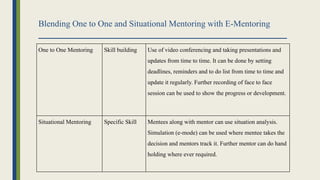
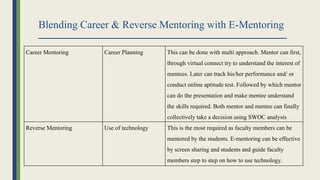
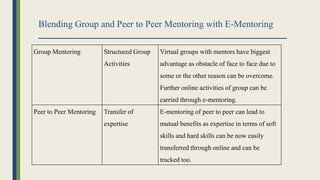
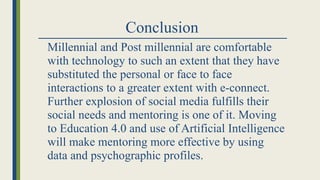
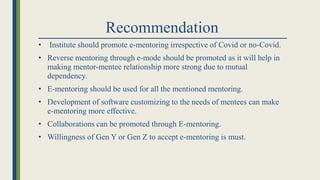


Dr. Ketan Vira discusses blending different types of mentoring with e-mentoring. One-to-one mentoring can use video conferencing and updates. Situational mentoring can use situation analysis and simulations. Career mentoring can use aptitude tests and presentations to help mentees. Reverse mentoring allows faculty to be mentored by students on technology use. Group mentoring enables virtual activities. Peer-to-peer mentoring allows expertise transfer online. E-mentoring is well-suited for millennials and can become more effective using data and artificial intelligence. The document recommends promoting e-mentoring, reverse mentoring, and developing customized e-mentoring software.


