Prep, Rest and Recovery for Athletes Nic Ebright, LMT-CES Sports Massage Therapist Certified Personal Trainer
Simple Math Consistency Time RESULTS = In what ways can we improve these factors…?
Workshop Topics Prep Warm-up v. Stretching before event.  Rest and Recovery:  Overtraining Syndrome Adaptations to Rest 10 Ways To Recover After Exercise (Demo) Sports Massage!
Exercise Prep Warming-up vs. Stretching Which is better?  Both are important Depends on your goals Guidelines
Warming-Up Pre- Event Benefits: Increase Muscle Temperature Increase Core Temperature Blood Vessels Dilate (+ Cooling) Improve Range of Motion Hormonal Changes (Energy Usage) Mental Prep Goal: Improve Performance/Prevent injury
Stretching Pre/Post Event Benefits: Improve range of motion  Decrease muscle tension/stiffness Improve posture Improve your ability to relax  Mental prep Goal: Improve overall flexibility
Guidelines: Warm-Up Routine can include: Specific Movement Patterns Runners practice their strides Non-Specific Movement Patterns Jumping Jacks Planning can include: Progression (low to high intensity) Jog - Run - Sprint General to Specific Variety!
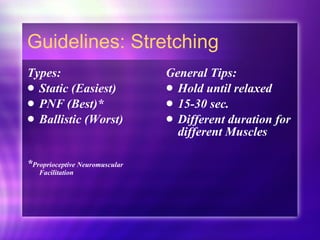
Guidelines: Stretching Types: Static (Easiest) PNF (Best)* Ballistic (Worst) * Proprioceptive Neuromuscular Facilitation General Tips: Hold until relaxed 15-30 sec. Different duration for different Muscles
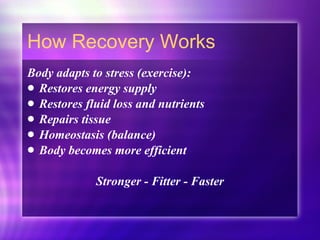
How Recovery Works Body adapts to stress (exercise): Restores energy supply Restores fluid loss and nutrients Repairs tissue Homeostasis (balance) Body becomes more efficient Stronger - Fitter - Faster
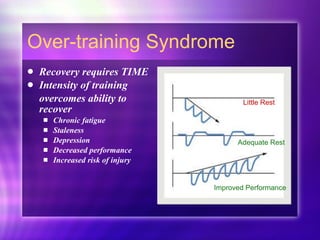
Over-training Syndrome Recovery requires TIME Intensity of training  overcomes ability to recover Chronic fatigue Staleness Depression Decreased performance Increased risk of injury Little Rest Adequate Rest Improved Performance
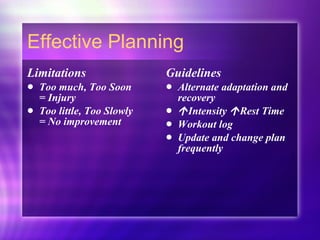
Effective Planning Limitations Too much, Too Soon  = Injury Too little, Too Slowly  = No improvement Guidelines Alternate adaptation and recovery  Intensity   Rest Time Workout log Update and change plan frequently
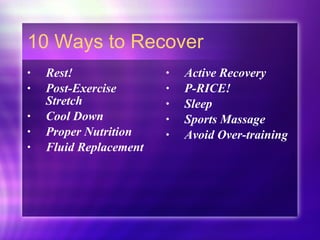
10 Ways to Recover Rest! Post-Exercise Stretch Cool Down Proper Nutrition Fluid Replacement Active Recovery P-RICE! Sleep Sports Massage Avoid Over-training

Prep, Rest And Recovery Workshop

  • 1.
    Prep, Rest andRecovery for Athletes Nic Ebright, LMT-CES Sports Massage Therapist Certified Personal Trainer
  • 2.
    Simple Math ConsistencyTime RESULTS = In what ways can we improve these factors…?
  • 3.
    Workshop Topics PrepWarm-up v. Stretching before event. Rest and Recovery: Overtraining Syndrome Adaptations to Rest 10 Ways To Recover After Exercise (Demo) Sports Massage!
  • 4.
    Exercise Prep Warming-upvs. Stretching Which is better? Both are important Depends on your goals Guidelines
  • 5.
    Warming-Up Pre- EventBenefits: Increase Muscle Temperature Increase Core Temperature Blood Vessels Dilate (+ Cooling) Improve Range of Motion Hormonal Changes (Energy Usage) Mental Prep Goal: Improve Performance/Prevent injury
  • 6.
    Stretching Pre/Post EventBenefits: Improve range of motion Decrease muscle tension/stiffness Improve posture Improve your ability to relax Mental prep Goal: Improve overall flexibility
  • 7.
    Guidelines: Warm-Up Routinecan include: Specific Movement Patterns Runners practice their strides Non-Specific Movement Patterns Jumping Jacks Planning can include: Progression (low to high intensity) Jog - Run - Sprint General to Specific Variety!
  • 8.
    Guidelines: Stretching Types:Static (Easiest) PNF (Best)* Ballistic (Worst) * Proprioceptive Neuromuscular Facilitation General Tips: Hold until relaxed 15-30 sec. Different duration for different Muscles
  • 9.
    How Recovery WorksBody adapts to stress (exercise): Restores energy supply Restores fluid loss and nutrients Repairs tissue Homeostasis (balance) Body becomes more efficient Stronger - Fitter - Faster
  • 10.
    Over-training Syndrome Recoveryrequires TIME Intensity of training overcomes ability to recover Chronic fatigue Staleness Depression Decreased performance Increased risk of injury Little Rest Adequate Rest Improved Performance
  • 11.
    Effective Planning LimitationsToo much, Too Soon = Injury Too little, Too Slowly = No improvement Guidelines Alternate adaptation and recovery  Intensity  Rest Time Workout log Update and change plan frequently
  • 12.
    10 Ways toRecover Rest! Post-Exercise Stretch Cool Down Proper Nutrition Fluid Replacement Active Recovery P-RICE! Sleep Sports Massage Avoid Over-training