Meeting the needs of online learners; the
challenges to shaping a new approach to online
learning.
Dr Esther Jubb
Academic Manager,
University of Derby Online Learning.
University of Derby Online Learning: Some Context

   10 years of online distance learning delivery
      Across a variety of programmes – foundation degrees to MBA
      Developed as a response to local initiatives
      Recruitment, admission, delivery and support all localised within
        individual departments
   Some areas of excellence but other areas where attention to detail and
    consistency of student experience was patchy.
A little more context….

   2008/9 creation of a central customer services/operations team to provide
    support to online distance learners – one stop shop for information
   2011 Executive decision to create separate business unit solely focused on
    Online Distance learning.
   January 2012 Senior Academic Team in place
      Senior Development and Delivery Manager
      2 Academic Managers


The Academic Team
 8 Senior Online Tutors (Programme Leaders) – Disciplinary Specialists
 1 Quality Manager

   Bb 9.1, SP8 with a very (!!!) tight integration with SRS (Peoplesoft)
The Guiding Principles

   What do we want to deliver and how do we want to deliver it?
   The learner will:
      be provided with stimulating, relevant and current content and activities
       specifically designed for online distance study
      receive timely feedback and support from dedicated online tutors.
      have opportunities to learn with and from their peers.
      have flexible and simple access to learning resources and key
       programme information
      receive dedicated support and guidance about how to be a successful
Learning Content, Activities and Resources Appropriate for
  Online Study.
   193 modules!
   What is the current state of our module materials?
      Rubric
      Review of library resources
      Review of learning activities
      Streamlining of Independent Study process
   Institutional transition to new credit framework
      Some programmes already transitioned, some transitioning in 2012/13
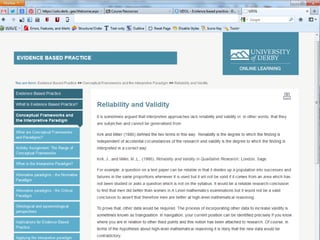
   More flexible way to deliver learning content (CMS)
The VLE

   Same instance used for on-campus and online delivery
   Merging of courses
   ‘Threshold Standards’
   Trial of esubmission
   Use of ‘Campus Pack’ technology

   Our challenge to ‘owners’ of the VLE
      Review of roles – enhanced access for Derby based Academic Team
      Self management of Online modules and programmes
      Templates
      Live classroom technology
What was missing?

 A sense of the sequence (a designed experience)
 A clear indication to students of what they should DO
  with this content
 A clear indication of where there are opportunities to
  receive feedback from the tutor
 Coherently organised content – reviewable,
  maintainable content
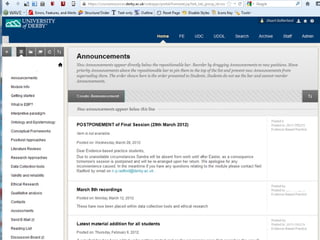
Blackboard

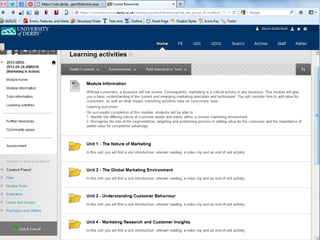
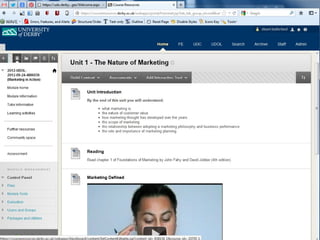
 Introduced structure
 Introduced a common template in Blackboard
 Introduced optional learning activities (and
  therefore initial opportunities to receive
  feedback from tutors)
 Introduced a content management system -
  reviewable, maintainable content in one place
Other early ‘wins’
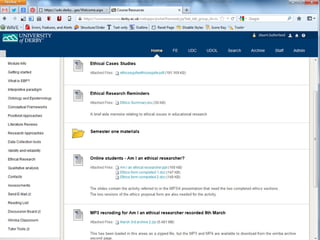
 Common student orientation
    Materials in CMS, delivered via Bb
 Common independent studies module content
    Materials in CMS, with localised disciplinary content
     and learner experience managed in Bb
 Online tutor induction
    Delivered via Bb, using same tools and environment
     that they will teach in.
 Bb functionality which allows us to manage our online
  tutors locally
Responsive Online Tutors

   Who are they?
   Where do they come from?
   What are the issues and challenges?
      Contractual
      Systems and processes
      Quality assurance
Where next?

   Consistent approach to assessment and feedback.
      Framework of assessment providing formative and summative
       assessment opportunities appropriate for online study
      Assessment tasks that can be managed more easily by external online
       tutors
   Overhaul of content so that it is maintainable, reusable and reviewable.
      Greater use of the CMS
      Development of resources to be used across multiple modules
          Independent Study
          Research Methods
          Project Management
Lessons Learned

   Internal University processes are designed for ‘core business’
      Be clear about what you want and why you want it
      Institutional timescales are often slower that a ‘new business’ needs
   External tutors are both a blessing and a challenge
      Huge enthusiasm
      Performance management
      Payment scales

Durham Bb presentation

  • 1.
    Meeting the needsof online learners; the challenges to shaping a new approach to online learning. Dr Esther Jubb Academic Manager, University of Derby Online Learning.
  • 2.
    University of DerbyOnline Learning: Some Context  10 years of online distance learning delivery  Across a variety of programmes – foundation degrees to MBA  Developed as a response to local initiatives  Recruitment, admission, delivery and support all localised within individual departments  Some areas of excellence but other areas where attention to detail and consistency of student experience was patchy.
  • 3.
    A little morecontext….  2008/9 creation of a central customer services/operations team to provide support to online distance learners – one stop shop for information  2011 Executive decision to create separate business unit solely focused on Online Distance learning.  January 2012 Senior Academic Team in place  Senior Development and Delivery Manager  2 Academic Managers The Academic Team  8 Senior Online Tutors (Programme Leaders) – Disciplinary Specialists  1 Quality Manager  Bb 9.1, SP8 with a very (!!!) tight integration with SRS (Peoplesoft)
  • 5.
    The Guiding Principles  What do we want to deliver and how do we want to deliver it?  The learner will:  be provided with stimulating, relevant and current content and activities specifically designed for online distance study  receive timely feedback and support from dedicated online tutors.  have opportunities to learn with and from their peers.  have flexible and simple access to learning resources and key programme information  receive dedicated support and guidance about how to be a successful
  • 6.
    Learning Content, Activitiesand Resources Appropriate for Online Study.  193 modules!  What is the current state of our module materials?  Rubric  Review of library resources  Review of learning activities  Streamlining of Independent Study process  Institutional transition to new credit framework  Some programmes already transitioned, some transitioning in 2012/13  More flexible way to deliver learning content (CMS)
  • 7.
    The VLE  Same instance used for on-campus and online delivery  Merging of courses  ‘Threshold Standards’  Trial of esubmission  Use of ‘Campus Pack’ technology  Our challenge to ‘owners’ of the VLE  Review of roles – enhanced access for Derby based Academic Team  Self management of Online modules and programmes  Templates  Live classroom technology
  • 10.
    What was missing? A sense of the sequence (a designed experience)  A clear indication to students of what they should DO with this content  A clear indication of where there are opportunities to receive feedback from the tutor  Coherently organised content – reviewable, maintainable content
  • 11.
    Blackboard  Introduced structure Introduced a common template in Blackboard  Introduced optional learning activities (and therefore initial opportunities to receive feedback from tutors)  Introduced a content management system - reviewable, maintainable content in one place
  • 16.
    Other early ‘wins’ Common student orientation  Materials in CMS, delivered via Bb  Common independent studies module content  Materials in CMS, with localised disciplinary content and learner experience managed in Bb  Online tutor induction  Delivered via Bb, using same tools and environment that they will teach in.  Bb functionality which allows us to manage our online tutors locally
  • 17.
    Responsive Online Tutors  Who are they?  Where do they come from?  What are the issues and challenges?  Contractual  Systems and processes  Quality assurance
  • 18.
    Where next?  Consistent approach to assessment and feedback.  Framework of assessment providing formative and summative assessment opportunities appropriate for online study  Assessment tasks that can be managed more easily by external online tutors  Overhaul of content so that it is maintainable, reusable and reviewable.  Greater use of the CMS  Development of resources to be used across multiple modules  Independent Study  Research Methods  Project Management
  • 19.
    Lessons Learned  Internal University processes are designed for ‘core business’  Be clear about what you want and why you want it  Institutional timescales are often slower that a ‘new business’ needs  External tutors are both a blessing and a challenge  Huge enthusiasm  Performance management  Payment scales

Editor's Notes

  • #18 Issues with HR – documentation, on-boarding etc. IT Services – username creation and process of notification