DUPUYTREN’S
CONTRACTURE
DR. SATISH KUMAR
FINAL YEAR MCh PG
Dupuytren Disease
• Most common heritable disorder affecting connective tissues
• Inherited, benign, chronic progressive condition that results in fibrotic
changes of the palmar and digital fascia and adjacent soft tissues
• tissues shorten along lines of mechanical tension, limiting digit extension.
• Dupuytren contracture (DC) is the end result of DD.
Epidemiology
• Senior Caucasian men with a family history of the condition
• Early fifties to early sixties.
• Presents bilaterally in only 20% of patients, but over time increases to at
least 70%
• Autosomal dominant
• Specific genetic locus yet to be identified
• Positive family history is the single strongest predictor of the disease and
is associated with earlier age of onset
Associated conditions
• Hypercholesterolemia, diabetes, smoking tobacco, excessive alcohol use,
antiepileptic medication, regional trauma, chronic heavy manual labor and
a lower-than-average body mass index.
• GENETIC BIOMARKERS
• Genetic markers specific to DD - identified in profibrotic pathways involving
regulation of TGFβ1; cell differentiation; proliferation and apoptosis;
metalloproteinase activity; fibroblast growth factor; vascular endothelial
growth factor; hypoxia inducible factor alpha.
• HLA studies
• Increased incidence of HLA-DRB1 genotype in Caucasians
• HLA-B7 haplotype in both Peyronie disease and DD.
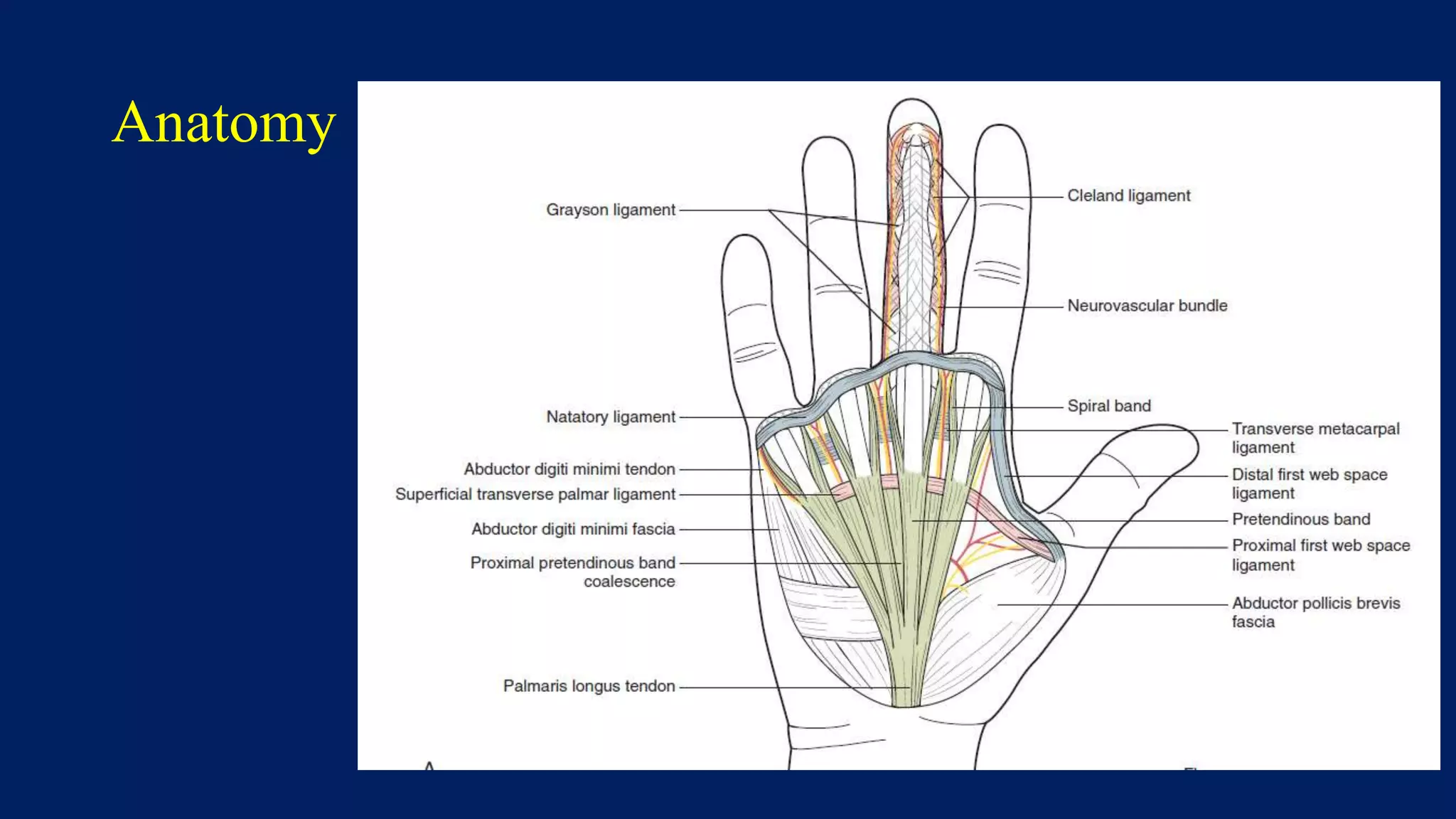
Anatomy
Palmar aponeurosis
• 3- dimensional structure
• Longitudinal fibres
• Transverse fibres
• Vertical fibres
Longitudinal fibres
• Superficial layer
• Into undersurface of the dermis in the distal palm
• Intermediate layer
• Spiral bands of Glosset
• Goes deep to N-V bundle and natatory lig
• Attaches to lateral digital sheath
• Deep layer
• pierce the transverse Metacarpal ligament to merge with fibers of the sagittal bands of the
extensor mechanism.
Transverse fibres
• Proximal fibres (Deep – skoog)
• Distal fibres (Superficial – Natatory ligament)
Vertical fibres
• Superficial (Fibres of Mcgrouther)
• Deep (Fibres of Juvara and Legueu)
Ligaments in the digits
• Lateral digital sheet
• Thickening of the superficial fascia in the lateral aspect of digits
• Cleland’s ligament
• Dorsal to the N-V bundle
• Grayson’s ligament
• Volar to the N-V bundle
• “ligaments” - loose meshwork of multiple layers of crossing oblique
curved fibers.
Physical Examination
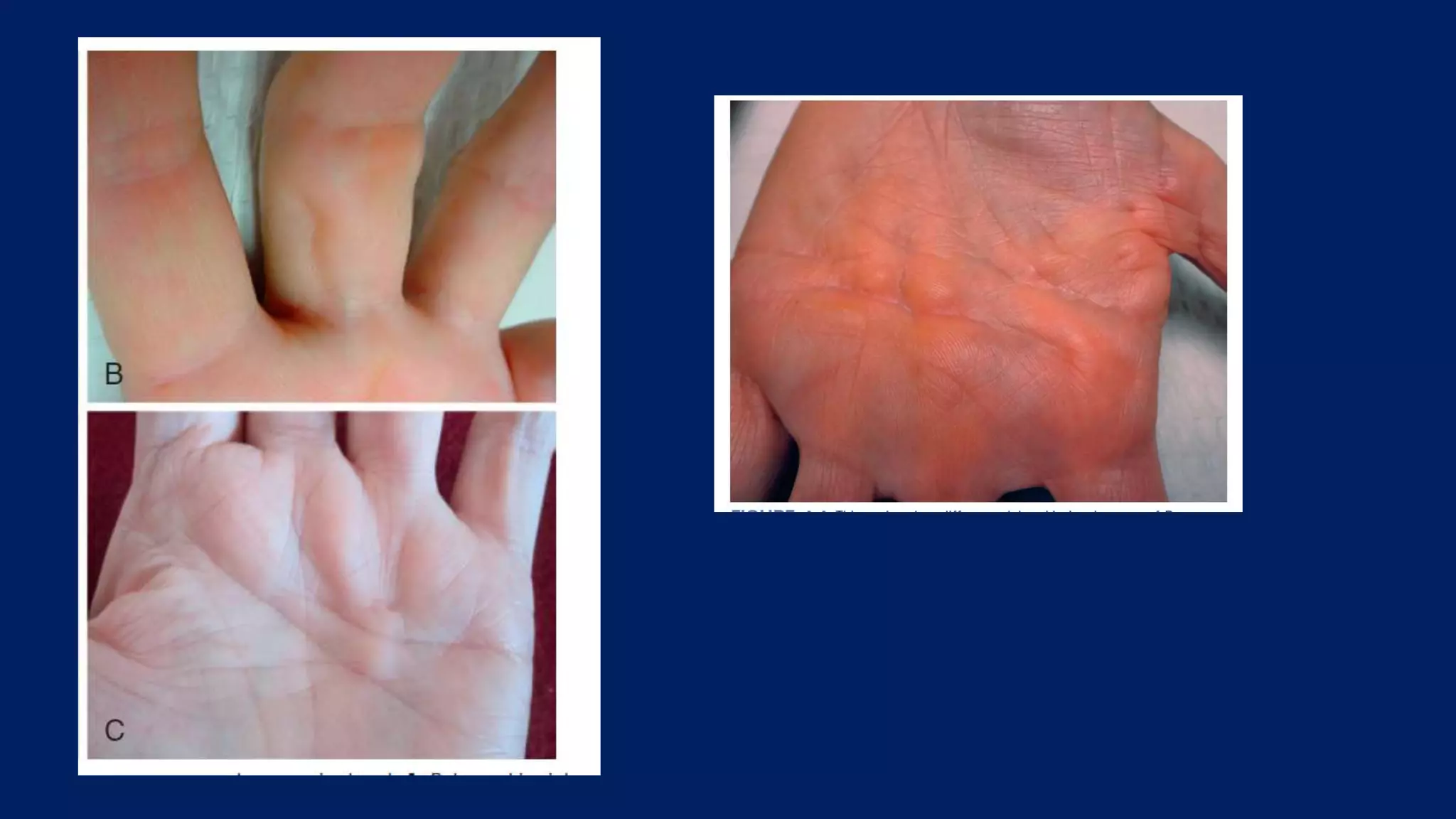
• The earliest signs -
• skin tightness
• contour changes
• Nodules
• cords without contractures
• prominence of the palmar monticule
• Nodules and cords are usually arranged as beads on a string.
• Palpated cords feel like strings beneath the skin
• feel firm only when placed under tension, have well-defined
margins, and are not fixed to the dermis
• Nodules are flattened round or ovoid areas of subdermal
firmness, fixed to the dermis, typically 0.5 to 1.5 cm in diameter
with indistinct peripheral margins
• DD of nodules - fibrosarcoma, fibrous histiocytoma, giant cell
tumor, synovial sarcoma, calcifying aponeurotic fibroma,
epithelioid sarcoma
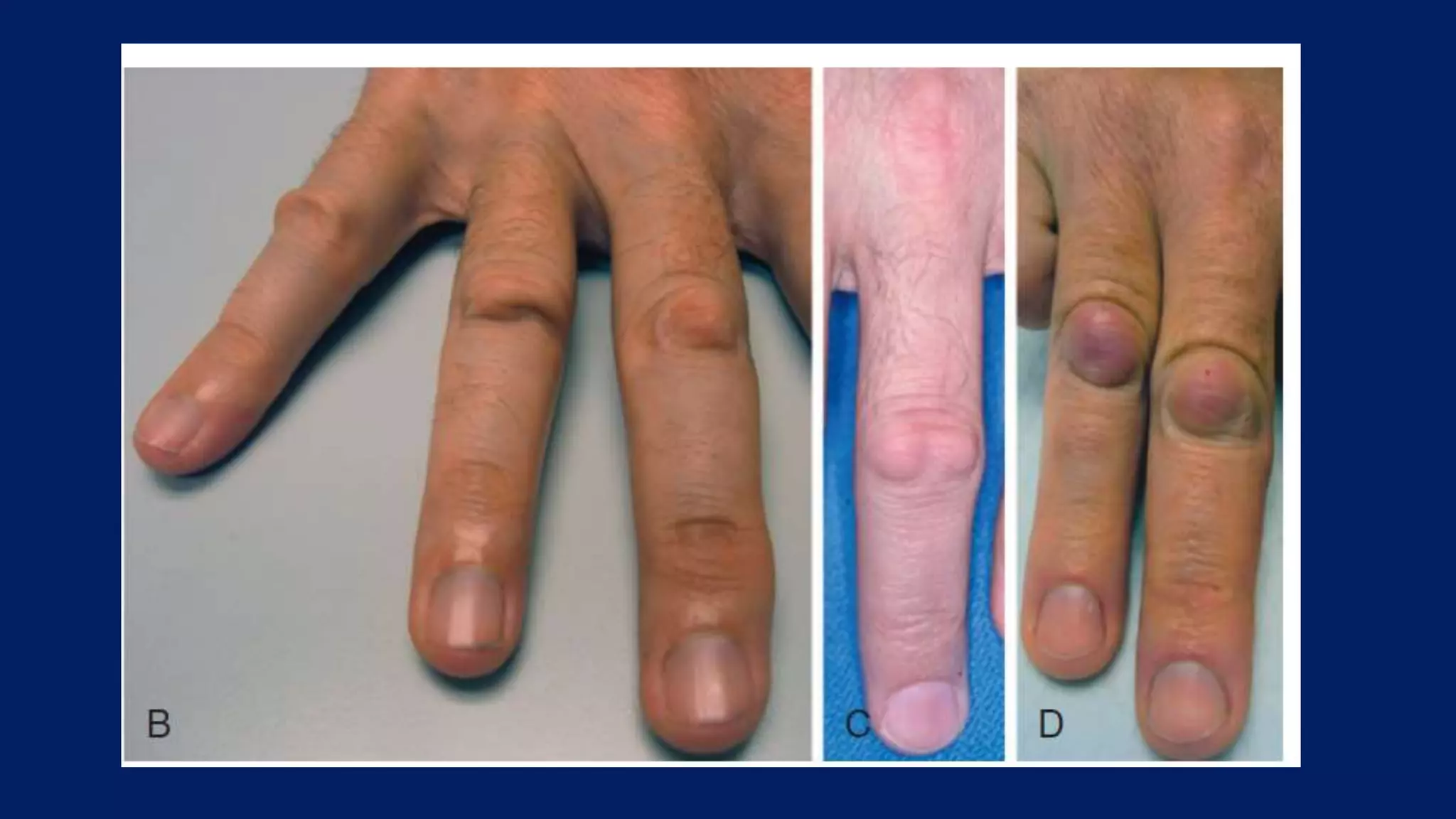
• Dorsal Dupuytren nodules (Garrod pads or knuckle pads)
• firm masses on the extensor aspect of the digital joints
• most commonly affect the proximal interphalangeal (PIP) joints
• fixed to the superficial paratenon of the extensor mechanism
and involve overlying subcutaneous tissue
• DDN are found in one in five DD patients
• often precede palmar DD and associated with more aggressive
biology.
Dupuytren contracture
• Passive extension deficit due to a contracted cord
• most often affects MCP and PIP joints of the fingers
• Thumb involvement
• CMC, MCP or IP flexion contractures and palmar adduction contractures
• Contractures on the ulnar border of the palm
• Little finger MCP flexion/abduction contractures
Staging
• Luck Classification
• 3 histologic stages
• Proliferative – nodules
• Involutional - nodular cords
• Residual - nonnodular cords
• key cell - myofibroblast
• Normal palmar fascia - little to no type III collagen.
• Abnormally high levels of type III collagen - palmar fascia of DD patients even in the absence of
contracture
• ratio of type III to type I collagen highest in proliferative stage (>35%)
Tubiana Staging
• Stage 0: no contracture
• Stage 1: 0 - 45 degrees (MCP + PIP)
• Stage 2: 45 - 90 degrees (MCP + PIP)
• Stage 3: 90 - 135 degrees (MCP + PIP)
• Stage 4: >135 degrees (MCP + PIP)
Diathesis Score and Severity
• Diathesis factors
• family history of DD in siblings or parents
• gender
• age of onset of DD
• current age
• age of first treatment
• bilaterality of DD
• number of digits involved
• thumb involvement
• presence of nodules
• presence of DDNs
• presence of Ledderhose disease; Peyronie disease
• history of frozen shoulder
• Diathesis factors predict biologic severity
• Biologic severity affects the clinical course both before and after
treatment
• Greater the number of diathesis factors, the higher the
recurrence rate after surgery.
• The strongest predictor - younger age of onset
Diagnostic Imaging
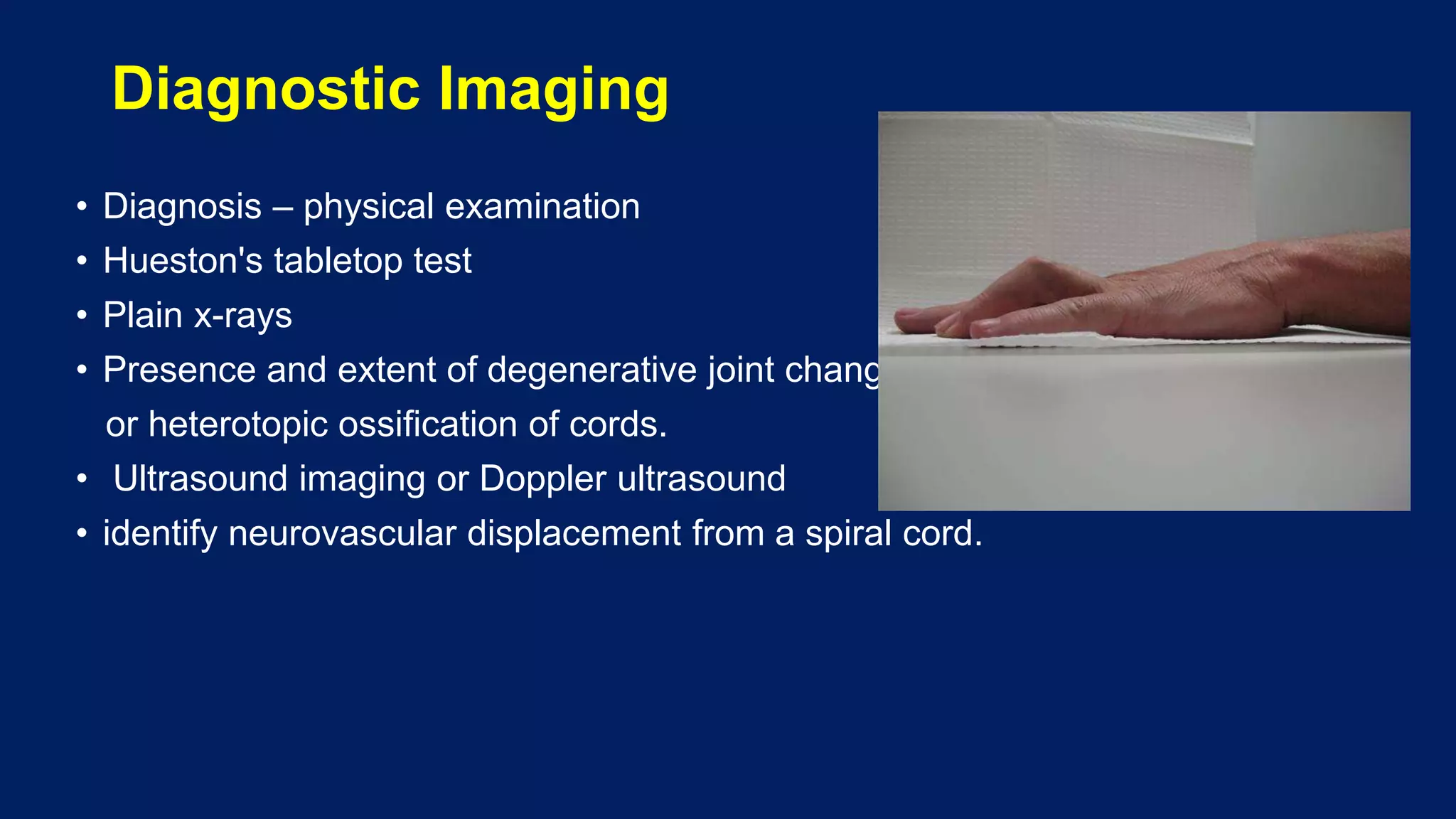
• Diagnosis – physical examination
• Hueston's tabletop test
• Plain x-rays
• Presence and extent of degenerative joint changes
or heterotopic ossification of cords.
• Ultrasound imaging or Doppler ultrasound
• identify neurovascular displacement from a spiral cord.
Pathology
• Fibroblasts subjected to mechanical stress and in presence of
TGFβ1 > differentiate into myofibroblasts.
• Cell-matrix attachments of collagen strands to myofibroblast
signal myofibroblasts to contract in response to mechanical
stress on ECM
• stiffens the ECM through collagen crosslinking
• stiffened matrix transmits mechanical forces to adjacent tissues
which then undergo the same process.
• Dupuytren-type abnormalities
• Abnormally increased levels of type III collagen
• abnormal mechanical stress–strain curves
• abnormal tension-related contraction
• DNA alterations
• Dupuytren-related gene expression markers.
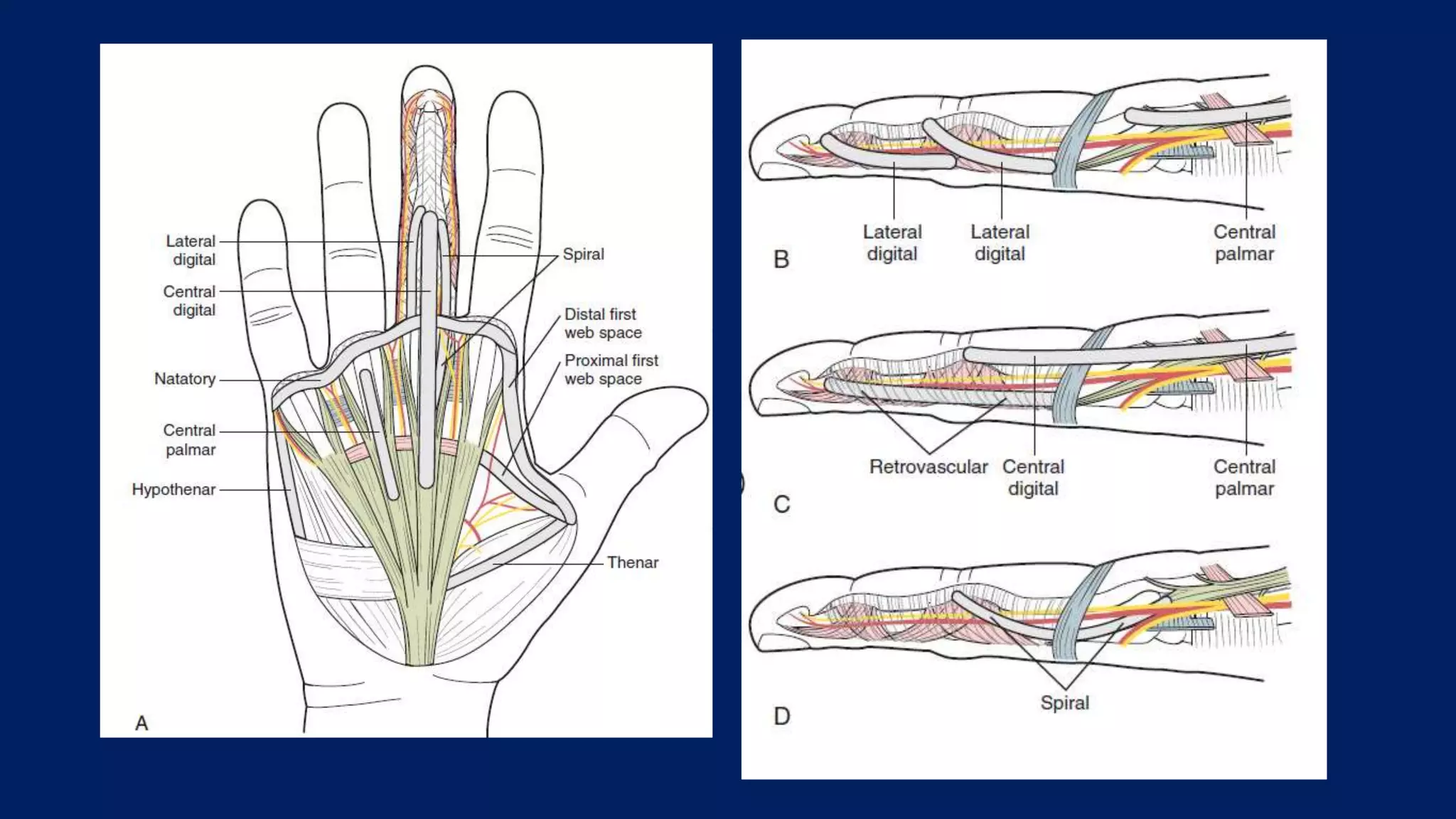
• Common central palm cords
• Central palmar
• Spiral
• Proximal first web.
• Common border palm cords
• Natatory
• Distal first web
• Hypothenar
• Thenar
• Thenar and hypothenar cords - uncommon and associated with
diffuse disease or aggressive biology
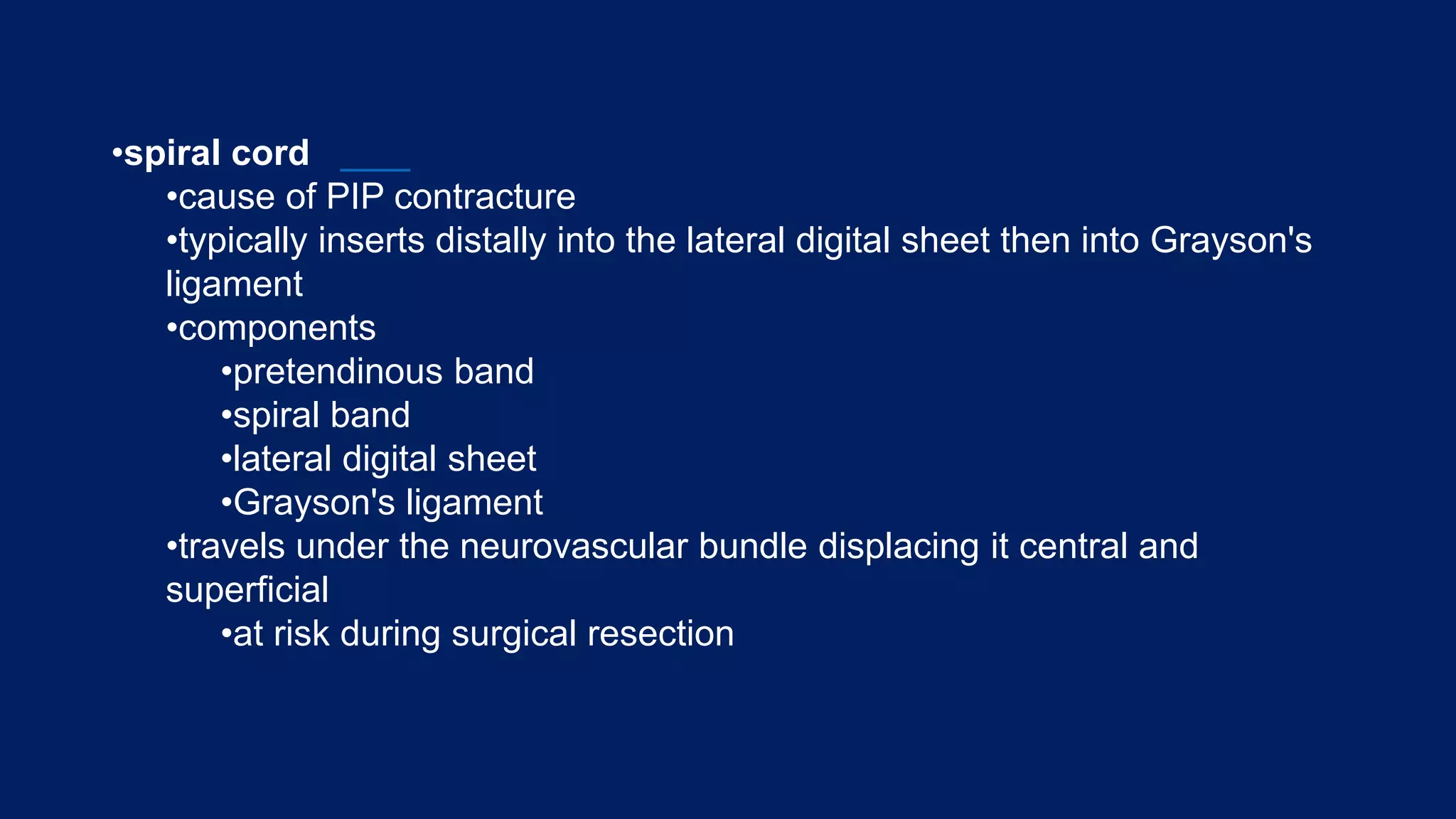
•spiral cord
•cause of PIP contracture
•typically inserts distally into the lateral digital sheet then into Grayson's
ligament
•components
•pretendinous band
•spiral band
•lateral digital sheet
•Grayson's ligament
•travels under the neurovascular bundle displacing it central and
superficial
•at risk during surgical resection
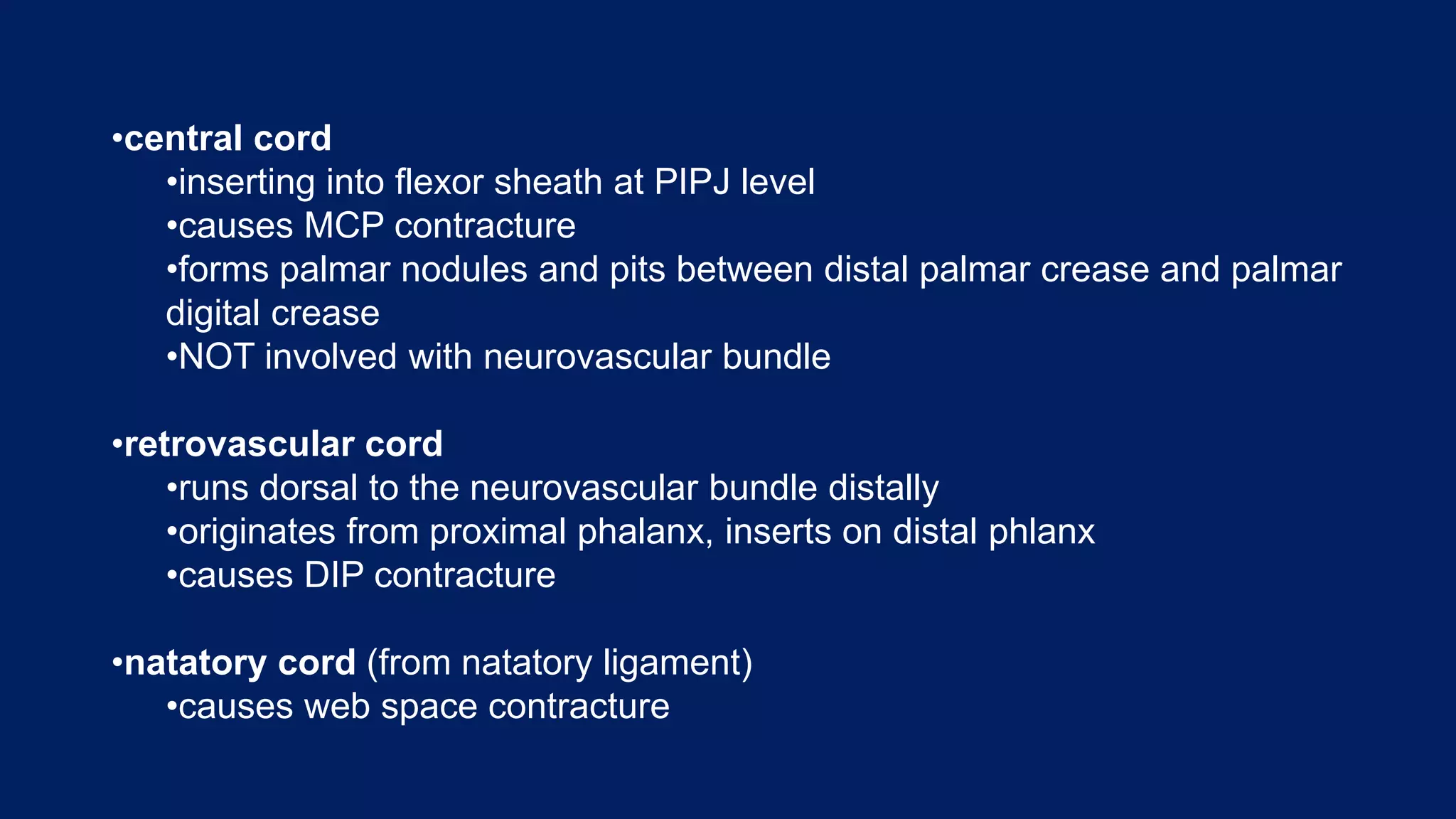
•central cord
•inserting into flexor sheath at PIPJ level
•causes MCP contracture
•forms palmar nodules and pits between distal palmar crease and palmar
digital crease
•NOT involved with neurovascular bundle
•retrovascular cord
•runs dorsal to the neurovascular bundle distally
•originates from proximal phalanx, inserts on distal phlanx
•causes DIP contracture
•natatory cord (from natatory ligament)
•causes web space contracture
Secondary pathology
• Flexed posture results in anatomic changes of joints and tendons
• Central slip attenuation leads to extension deficit for PIP contractures >60
degrees
• Boutonnière, sagittal band rupture, or mallet deformity develop
secondary to chronic contractures.
• Little finger PIP joint contractures have worse prognosis and
higher recurrence
Treatment modalities
• Minimally invasive
-Enzymatic fasciotomy
-Percutaneous needle fasciotomy
• Fasciectomy
• Dermofasciectomy
Percutaneous needle fasciotomy
• Requirements –
• Cooperative patient with joint contracture due to palpable, tensionable
cord with adequate skin reserve.
• Contraindications –
• patients who cannot tolerate an awake procedure or who have tight skin or
scars preventing extension, diffuse skin involvement
• lack of a palpable cord
• infection in the area of the procedure.
• Procedure-
• Under local anesthesia, small gauge hypodermic needle
inserted through a portal
• cord maintained under tension, the needle tip is used to
progressively sever cord fibers until the cord “gives” at that level
• After palpable cords released, final passive extension
performed and light bandages applied
• no splinting necessary
Enzymatic Fasciotomy With Collagenase
Clostridium Histolyticum
• Contraindications -
• allergic reaction to CCH or to collagenase
• Pregnant / breastfeeding
• bleeding problem
• on anticoagulant medications
• < 18 years old
• easiest and least time-consuming option
• Procedure –
• central substance of the chosen cord
segment injected at three closely
spaced points
• Soft immobilizing bandage given
• Manipulation done by the physician
on postinjection days 1 through 4
• Night time static extension splint to
wear for 1 month
• Active exercises during the day
Fasciectomy
• Segmental fasciectomy involves minimal dissection to remove short segments of cords.
• Regional fasciectomy (local fasciectomy) removal of all diseased fascia
• Both similar outcomes
• Radical fasciectomy - removal of all palmar fascia, including paratendinous septa,
subcutaneous and subfascial fatty tissue, and fat pads of the palmar monticuli.
• no longer recommended
• Indications
• failed minimally invasive treatment
• diffuse disease
• concurrent treatment of secondary pathology
• Procedure -
• Segmental Fasciectomy
• multiple short transverse or longitudinal “C”-shaped incisions
• incisions planned directly over the nodules.
• Nodules and cord segments excised through these incisions to restore extension.
• entire cord pathology not removed.
• skin closed, soft bandage applied.
• Regional Fasciectomy.
• longitudinal, longitudinal zigzag, or transverse incisions.
• Combinations of incisions for exposure of multiple fingers
• Local flaps (Z- or Y–V-plasty) incorporated into the primary skin incisions
• all visibly diseased tissue removed
• Follow neurovascular structures from uninvolved areas toward the
diseased areas (“known to unknown”).
• Use sharp dissection
• Do not skeletonize the neurovascular bundles.
• Soft bandage is applied and splinting during the first postoperative week.
• Open palm technique of McCash is regional fasciectomy through
transverse incisions, which are not closed.
• healing by wound contracture over the next 3 to 4 weeks
Dermofasciectomy
• Functional unit replacement of skin and regional nonessential palmar soft
tissues with full thickness skin graft.
• Recurrence rates are lower
• Replacement of skin with full thickness skin graft both changes soft tissue
mechanics and inhibits myofibroblast activity.
• Indications –
• Longitudinal skin shortage
• Recurrent contracture with diffuse skin involvement or extensive scarring
• Skin irretrievably devascularized during surgery
• young patients with strong diathesis profile
Procedure
• skin excision in palm - truncated ellipse centered over the distal palmar
crease
• fingers as a rectangular palmar hemicircumference of the pulp space
• skin graft avoided over the palmar prominences of metacarpal heads to
avoid durability and sensitivity issues
• Incisions planned such that the healed junctions of graft and normal skin
follow tension-free lines
• In digits, all lateral digital fascia including Cleland ligament excised
• For little finger involvement, the abductor digiti minimi fascia also excised.
Dorsal Dupuytren Nodules - Rx
• Do not require treatment
• Steroid injections
• helpful for relieving symptoms of pain, tenderness, and extensor tightness
• 5 mg triamcinolone
• lateral approach
• aiming for the center of the nodule
• excision – risk of extensor tendon injury
• Recurrence or persistent tenderness is common.
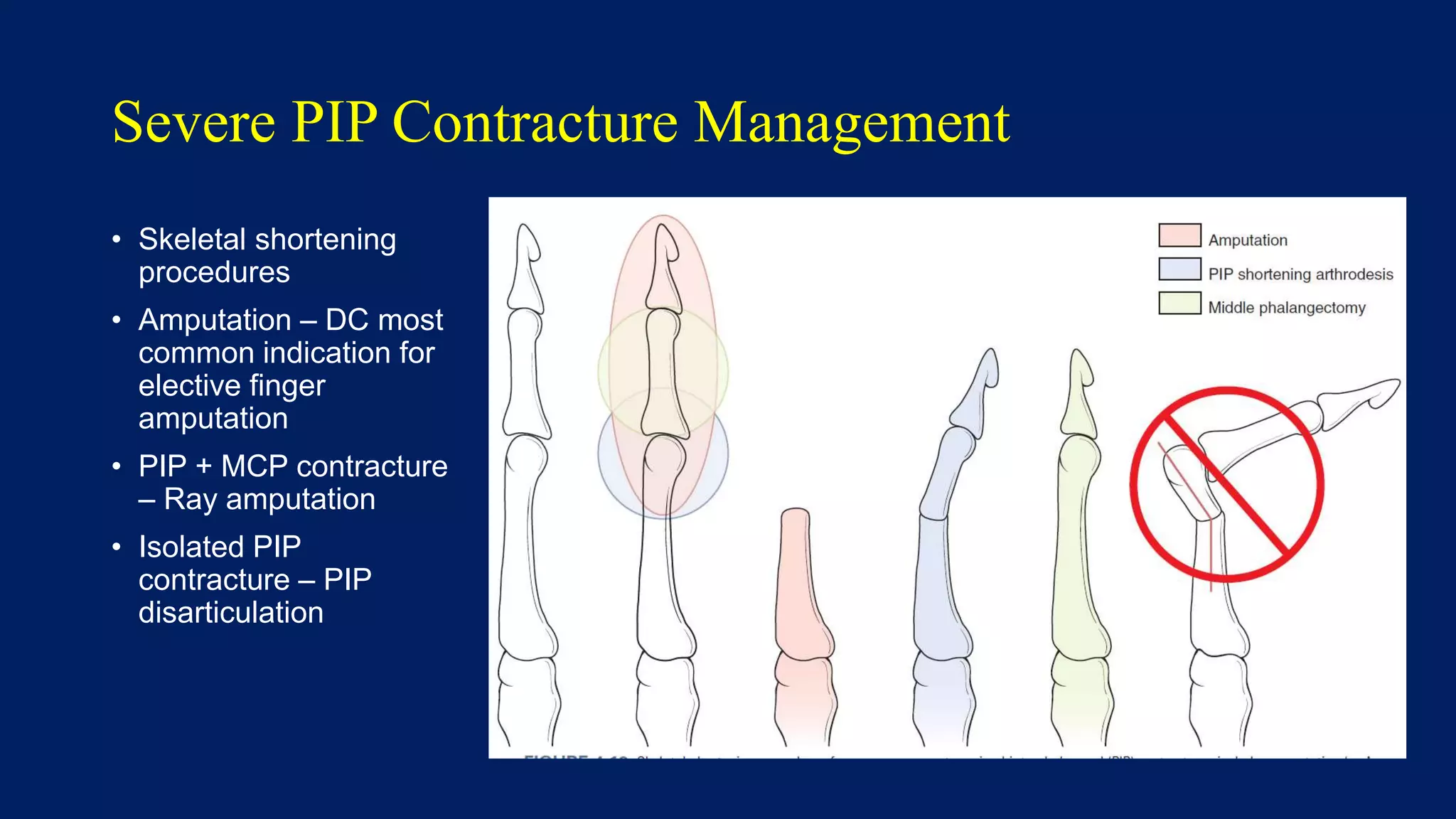
Severe PIP Contracture Management
• Skeletal shortening
procedures
• Amputation – DC most
common indication for
elective finger
amputation
• PIP + MCP contracture
– Ray amputation
• Isolated PIP
contracture – PIP
disarticulation
Procedure selection
THANK YOU

Dupuytren's contracture

  • 1.
  • 2.
    Dupuytren Disease • Mostcommon heritable disorder affecting connective tissues • Inherited, benign, chronic progressive condition that results in fibrotic changes of the palmar and digital fascia and adjacent soft tissues • tissues shorten along lines of mechanical tension, limiting digit extension. • Dupuytren contracture (DC) is the end result of DD.
  • 3.
    Epidemiology • Senior Caucasianmen with a family history of the condition • Early fifties to early sixties. • Presents bilaterally in only 20% of patients, but over time increases to at least 70% • Autosomal dominant • Specific genetic locus yet to be identified • Positive family history is the single strongest predictor of the disease and is associated with earlier age of onset
  • 4.
    Associated conditions • Hypercholesterolemia,diabetes, smoking tobacco, excessive alcohol use, antiepileptic medication, regional trauma, chronic heavy manual labor and a lower-than-average body mass index. • GENETIC BIOMARKERS • Genetic markers specific to DD - identified in profibrotic pathways involving regulation of TGFβ1; cell differentiation; proliferation and apoptosis; metalloproteinase activity; fibroblast growth factor; vascular endothelial growth factor; hypoxia inducible factor alpha. • HLA studies • Increased incidence of HLA-DRB1 genotype in Caucasians • HLA-B7 haplotype in both Peyronie disease and DD.
  • 5.
  • 6.
    Palmar aponeurosis • 3-dimensional structure • Longitudinal fibres • Transverse fibres • Vertical fibres
  • 7.
    Longitudinal fibres • Superficiallayer • Into undersurface of the dermis in the distal palm • Intermediate layer • Spiral bands of Glosset • Goes deep to N-V bundle and natatory lig • Attaches to lateral digital sheath • Deep layer • pierce the transverse Metacarpal ligament to merge with fibers of the sagittal bands of the extensor mechanism.
  • 9.
    Transverse fibres • Proximalfibres (Deep – skoog) • Distal fibres (Superficial – Natatory ligament)
  • 10.
    Vertical fibres • Superficial(Fibres of Mcgrouther) • Deep (Fibres of Juvara and Legueu)
  • 12.
    Ligaments in thedigits • Lateral digital sheet • Thickening of the superficial fascia in the lateral aspect of digits • Cleland’s ligament • Dorsal to the N-V bundle • Grayson’s ligament • Volar to the N-V bundle • “ligaments” - loose meshwork of multiple layers of crossing oblique curved fibers.
  • 15.
    Physical Examination • Theearliest signs - • skin tightness • contour changes • Nodules • cords without contractures • prominence of the palmar monticule
  • 17.
    • Nodules andcords are usually arranged as beads on a string. • Palpated cords feel like strings beneath the skin • feel firm only when placed under tension, have well-defined margins, and are not fixed to the dermis • Nodules are flattened round or ovoid areas of subdermal firmness, fixed to the dermis, typically 0.5 to 1.5 cm in diameter with indistinct peripheral margins • DD of nodules - fibrosarcoma, fibrous histiocytoma, giant cell tumor, synovial sarcoma, calcifying aponeurotic fibroma, epithelioid sarcoma
  • 18.
    • Dorsal Dupuytrennodules (Garrod pads or knuckle pads) • firm masses on the extensor aspect of the digital joints • most commonly affect the proximal interphalangeal (PIP) joints • fixed to the superficial paratenon of the extensor mechanism and involve overlying subcutaneous tissue • DDN are found in one in five DD patients • often precede palmar DD and associated with more aggressive biology.
  • 20.
    Dupuytren contracture • Passiveextension deficit due to a contracted cord • most often affects MCP and PIP joints of the fingers • Thumb involvement • CMC, MCP or IP flexion contractures and palmar adduction contractures • Contractures on the ulnar border of the palm • Little finger MCP flexion/abduction contractures
  • 21.
    Staging • Luck Classification •3 histologic stages • Proliferative – nodules • Involutional - nodular cords • Residual - nonnodular cords • key cell - myofibroblast • Normal palmar fascia - little to no type III collagen. • Abnormally high levels of type III collagen - palmar fascia of DD patients even in the absence of contracture • ratio of type III to type I collagen highest in proliferative stage (>35%)
  • 22.
    Tubiana Staging • Stage0: no contracture • Stage 1: 0 - 45 degrees (MCP + PIP) • Stage 2: 45 - 90 degrees (MCP + PIP) • Stage 3: 90 - 135 degrees (MCP + PIP) • Stage 4: >135 degrees (MCP + PIP)
  • 23.
    Diathesis Score andSeverity • Diathesis factors • family history of DD in siblings or parents • gender • age of onset of DD • current age • age of first treatment • bilaterality of DD • number of digits involved • thumb involvement • presence of nodules • presence of DDNs • presence of Ledderhose disease; Peyronie disease • history of frozen shoulder
  • 24.
    • Diathesis factorspredict biologic severity • Biologic severity affects the clinical course both before and after treatment • Greater the number of diathesis factors, the higher the recurrence rate after surgery. • The strongest predictor - younger age of onset
  • 25.
    Diagnostic Imaging • Diagnosis– physical examination • Hueston's tabletop test • Plain x-rays • Presence and extent of degenerative joint changes or heterotopic ossification of cords. • Ultrasound imaging or Doppler ultrasound • identify neurovascular displacement from a spiral cord.
  • 26.
    Pathology • Fibroblasts subjectedto mechanical stress and in presence of TGFβ1 > differentiate into myofibroblasts. • Cell-matrix attachments of collagen strands to myofibroblast signal myofibroblasts to contract in response to mechanical stress on ECM • stiffens the ECM through collagen crosslinking • stiffened matrix transmits mechanical forces to adjacent tissues which then undergo the same process.
  • 27.
    • Dupuytren-type abnormalities •Abnormally increased levels of type III collagen • abnormal mechanical stress–strain curves • abnormal tension-related contraction • DNA alterations • Dupuytren-related gene expression markers.
  • 28.
    • Common centralpalm cords • Central palmar • Spiral • Proximal first web. • Common border palm cords • Natatory • Distal first web • Hypothenar • Thenar • Thenar and hypothenar cords - uncommon and associated with diffuse disease or aggressive biology
  • 30.
    •spiral cord •cause ofPIP contracture •typically inserts distally into the lateral digital sheet then into Grayson's ligament •components •pretendinous band •spiral band •lateral digital sheet •Grayson's ligament •travels under the neurovascular bundle displacing it central and superficial •at risk during surgical resection
  • 31.
    •central cord •inserting intoflexor sheath at PIPJ level •causes MCP contracture •forms palmar nodules and pits between distal palmar crease and palmar digital crease •NOT involved with neurovascular bundle •retrovascular cord •runs dorsal to the neurovascular bundle distally •originates from proximal phalanx, inserts on distal phlanx •causes DIP contracture •natatory cord (from natatory ligament) •causes web space contracture
  • 32.
    Secondary pathology • Flexedposture results in anatomic changes of joints and tendons • Central slip attenuation leads to extension deficit for PIP contractures >60 degrees • Boutonnière, sagittal band rupture, or mallet deformity develop secondary to chronic contractures. • Little finger PIP joint contractures have worse prognosis and higher recurrence
  • 34.
    Treatment modalities • Minimallyinvasive -Enzymatic fasciotomy -Percutaneous needle fasciotomy • Fasciectomy • Dermofasciectomy
  • 35.
    Percutaneous needle fasciotomy •Requirements – • Cooperative patient with joint contracture due to palpable, tensionable cord with adequate skin reserve. • Contraindications – • patients who cannot tolerate an awake procedure or who have tight skin or scars preventing extension, diffuse skin involvement • lack of a palpable cord • infection in the area of the procedure.
  • 36.
    • Procedure- • Underlocal anesthesia, small gauge hypodermic needle inserted through a portal • cord maintained under tension, the needle tip is used to progressively sever cord fibers until the cord “gives” at that level • After palpable cords released, final passive extension performed and light bandages applied • no splinting necessary
  • 38.
    Enzymatic Fasciotomy WithCollagenase Clostridium Histolyticum • Contraindications - • allergic reaction to CCH or to collagenase • Pregnant / breastfeeding • bleeding problem • on anticoagulant medications • < 18 years old • easiest and least time-consuming option
  • 39.
    • Procedure – •central substance of the chosen cord segment injected at three closely spaced points • Soft immobilizing bandage given • Manipulation done by the physician on postinjection days 1 through 4 • Night time static extension splint to wear for 1 month • Active exercises during the day
  • 40.
    Fasciectomy • Segmental fasciectomyinvolves minimal dissection to remove short segments of cords. • Regional fasciectomy (local fasciectomy) removal of all diseased fascia • Both similar outcomes • Radical fasciectomy - removal of all palmar fascia, including paratendinous septa, subcutaneous and subfascial fatty tissue, and fat pads of the palmar monticuli. • no longer recommended • Indications • failed minimally invasive treatment • diffuse disease • concurrent treatment of secondary pathology
  • 41.
    • Procedure - •Segmental Fasciectomy • multiple short transverse or longitudinal “C”-shaped incisions • incisions planned directly over the nodules. • Nodules and cord segments excised through these incisions to restore extension. • entire cord pathology not removed. • skin closed, soft bandage applied. • Regional Fasciectomy. • longitudinal, longitudinal zigzag, or transverse incisions. • Combinations of incisions for exposure of multiple fingers • Local flaps (Z- or Y–V-plasty) incorporated into the primary skin incisions
  • 42.
    • all visiblydiseased tissue removed • Follow neurovascular structures from uninvolved areas toward the diseased areas (“known to unknown”). • Use sharp dissection • Do not skeletonize the neurovascular bundles. • Soft bandage is applied and splinting during the first postoperative week. • Open palm technique of McCash is regional fasciectomy through transverse incisions, which are not closed. • healing by wound contracture over the next 3 to 4 weeks
  • 44.
    Dermofasciectomy • Functional unitreplacement of skin and regional nonessential palmar soft tissues with full thickness skin graft. • Recurrence rates are lower • Replacement of skin with full thickness skin graft both changes soft tissue mechanics and inhibits myofibroblast activity. • Indications – • Longitudinal skin shortage • Recurrent contracture with diffuse skin involvement or extensive scarring • Skin irretrievably devascularized during surgery • young patients with strong diathesis profile
  • 45.
    Procedure • skin excisionin palm - truncated ellipse centered over the distal palmar crease • fingers as a rectangular palmar hemicircumference of the pulp space • skin graft avoided over the palmar prominences of metacarpal heads to avoid durability and sensitivity issues • Incisions planned such that the healed junctions of graft and normal skin follow tension-free lines • In digits, all lateral digital fascia including Cleland ligament excised • For little finger involvement, the abductor digiti minimi fascia also excised.
  • 47.
    Dorsal Dupuytren Nodules- Rx • Do not require treatment • Steroid injections • helpful for relieving symptoms of pain, tenderness, and extensor tightness • 5 mg triamcinolone • lateral approach • aiming for the center of the nodule • excision – risk of extensor tendon injury • Recurrence or persistent tenderness is common.
  • 48.
    Severe PIP ContractureManagement • Skeletal shortening procedures • Amputation – DC most common indication for elective finger amputation • PIP + MCP contracture – Ray amputation • Isolated PIP contracture – PIP disarticulation
  • 50.
  • 51.

Editor's Notes

  • #6 palmaris longus tendon four central bands of fascia extend distally toward each of the fingers pretendinous bands At the level of the distal palmar crease, the central bands are bridged transversely by the superficial transverse palmar ligament superficial transverse palmar ligament is in continuity with the proximal firstweb- space ligament subdermal fascial layer borders the periphery of the web spaces from thumb to little finger natatory ligament continuation across the first-web space is referred to as the distal first-webspace ligament.
  • #9 Superficial fibres Intermediate deep
  • #12 S skin T tendon M metacarpal Lf longitudinal fibres Tf transverse fibres Vertical fibres Dtl deep transverse metacarpal ligament
  • #14 Landsmeer ligaments Transverse ret lig a3 Oblique ret lig a2
  • #15 Cleland lig Vertucal fibres Long fibres Sup fibres to skin Interm fibres spiral band Deep fibres to trans mc lig
  • #16 skin tightness (i.e., exaggerated blanching with finger extension), contour changes (i.e., skin crease deformation, dimples),
  • #17 Dimpling Palmar monticule prominence
  • #34 Percutaneous fasciotomy and open fasciotomy most common procedures early 1800s Fasciectomy dominant procedure in the late 1800s Radical fasciectomy, developed early 1900s, recommended procedure until the mid- 1900s, Percutaneous needle fasciotomy and enzymatic fasciotomy, developed mid-1900s
  • #44 Common fasciectomy incisions. For flaps, initial incisions are red; blue lines are final closure. A, Incisions without skin rearrangement: zigzag (little finger), C (ring finger), transverse (middle finger); the C and transverse incisions are typical for segmental fasciectomy. B, Z-plasty (little finger), Y–V-plasty (middle finger). C, Combined incisions for multiple fingers: in continuity, with closure (ring and little fingers), discontinuous, with open palm technique (index and middle fingers
  • #47 palm - truncated ellipse fingers as a rectangular palmar Digit including Cleland ligament excised
  • #49 Extension osteotomy results in increased PIP joint flexion,