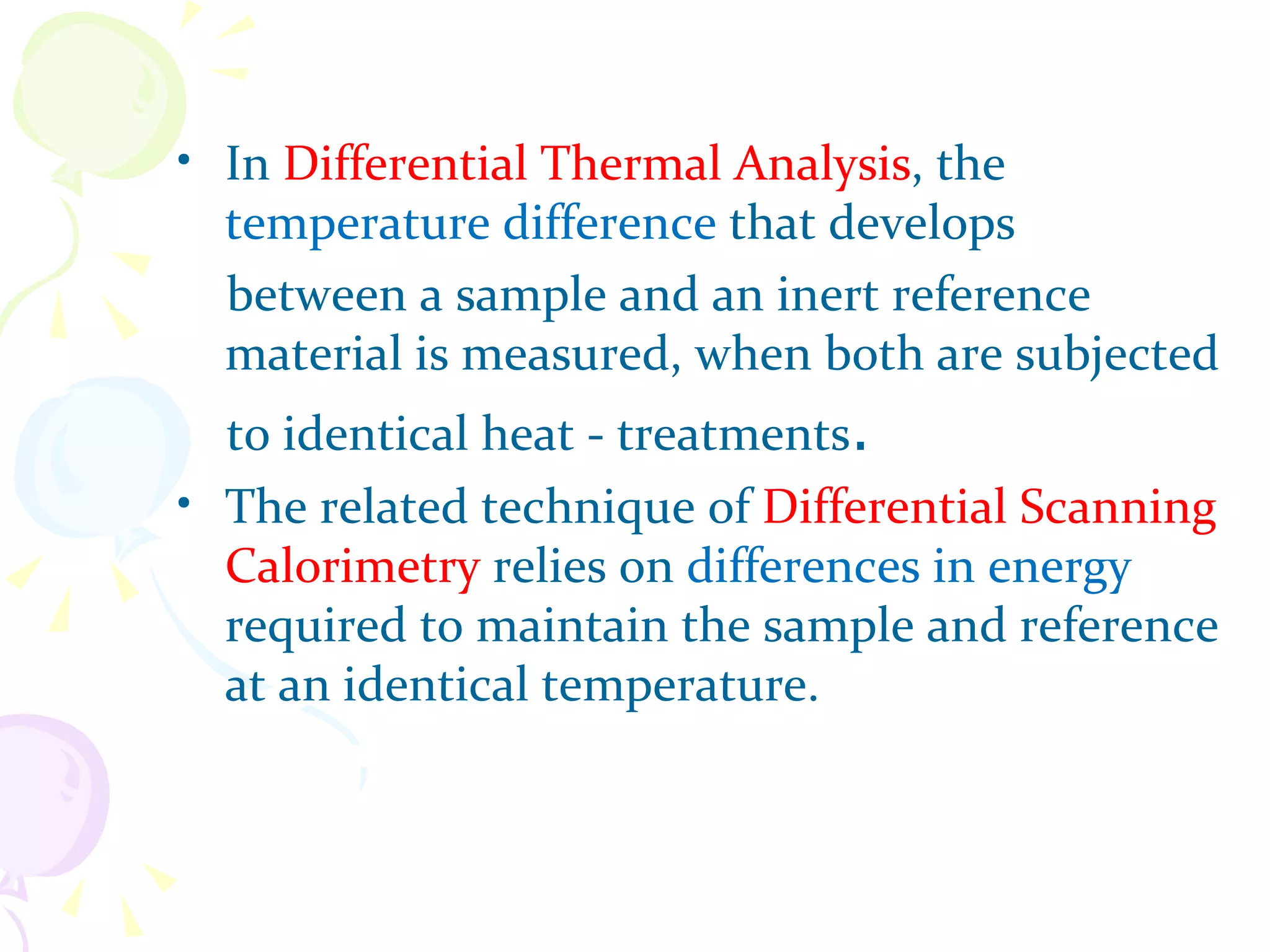

DIFFERENTIAL
   THERMAL
ANALYSIS (DTA)

   Prepared by:-
   Mr. Jiten B. Patel
   M.pharm(1st sem)


                        B.M.C.P.
Thermal Analysis Techniques
• When a material is heated its structural and
  chemical composition can undergo changes
  such as fusion, melting, crystallization,
  oxidation, decomposition, transition,
  expansion and sintering.

• Using Thermal Analysis such changes can be
  monitored in every atmosphere of interest. The
  obtained information is very useful in both
  quality control and problem solving.
Types of thermal analysis
• TG (Thermogravimetric) analysis:
  weight

• DTA (Differential Thermal Analysis): temperature

• DSC (Differential ScanningCalorimetry):
  temperature
• In Differential Thermal Analysis, the
  temperature difference that develops
  between a sample and an inert reference
  material is measured, when both are subjected
  to identical heat - treatments.
• The related technique of Differential Scanning
  Calorimetry relies on differences in energy
  required to maintain the sample and reference
  at an identical temperature.
Thermogravimetry (TG)

• Thermogravimetry is the measurement of the
  mass of a sample as the temperature increases.
  This method is useful for determining sample
  purity and water, carbonate, and organic
  content; and for studying decomposition
  reactions.
INTRODUCTION

• This is a comparison method

• Analytical method for recording the
  difference in temperature (∆T) b/w a
  substance and an inert reference material as
  a function of temperature or time
• Any transformation – change in specific heat
  or an enthaply of transition can be detected
  by DTA
• In DTA both test sample & an inert reference
  material (alumina) – controlled heating or
  cooling programming
• If zero temperature difference b/w sample &
  reference material – sample does not
  undergo any chemical or physical change.
• If any reaction takes place temperature
  difference (∆T) will occur b/w sample &
  reference material
• A DTA curve can be used as a finger print for
  identification purposes, for example,
• in the study of clays where the structural
  similarity of different forms renders diffraction
  experiments difficult to interpret.
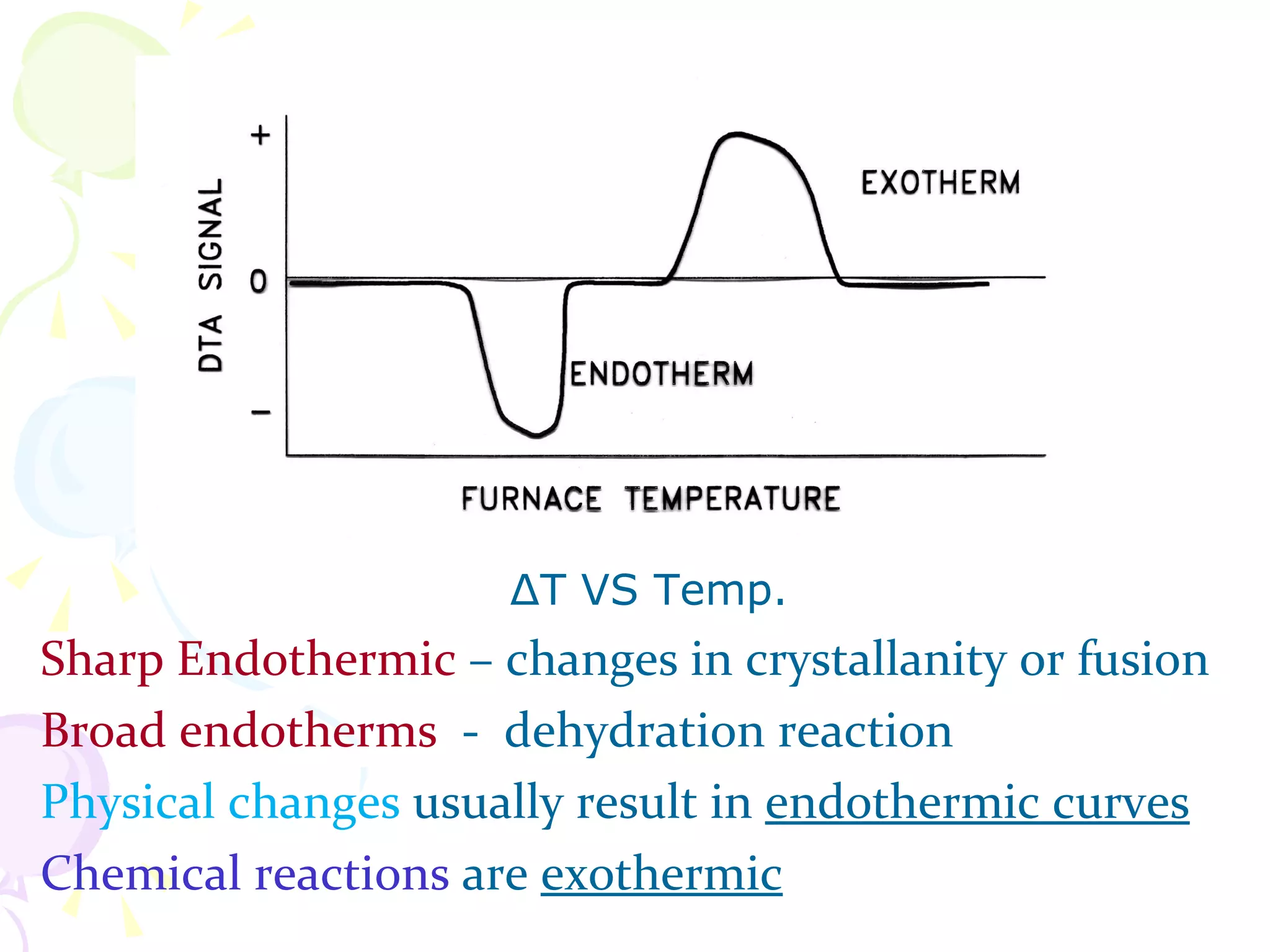
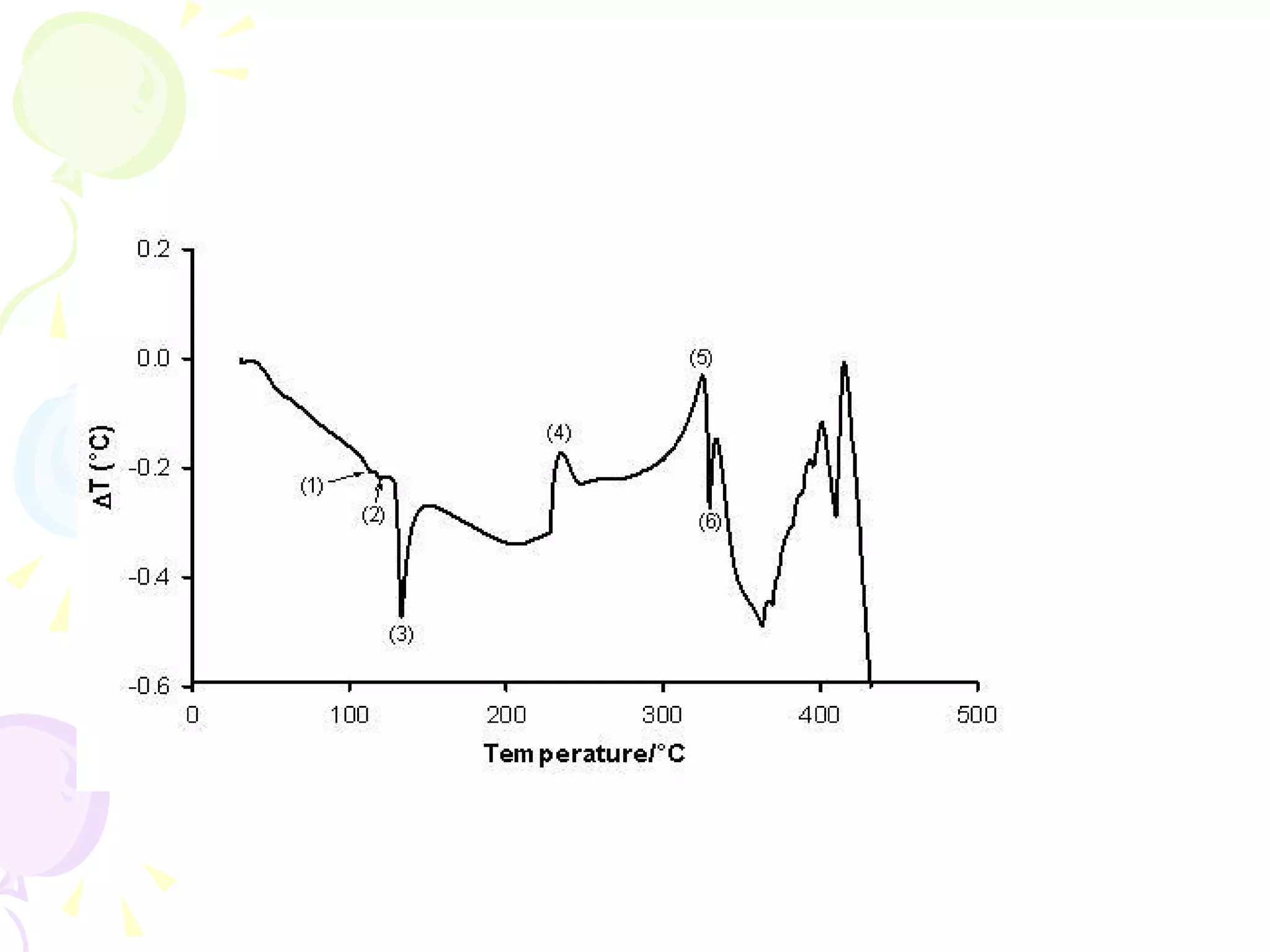
∆T VS Temp.
Sharp Endothermic – changes in crystallanity or fusion
Broad endotherms - dehydration reaction
Physical changes usually result in endothermic curves
Chemical reactions are exothermic
Apparatus

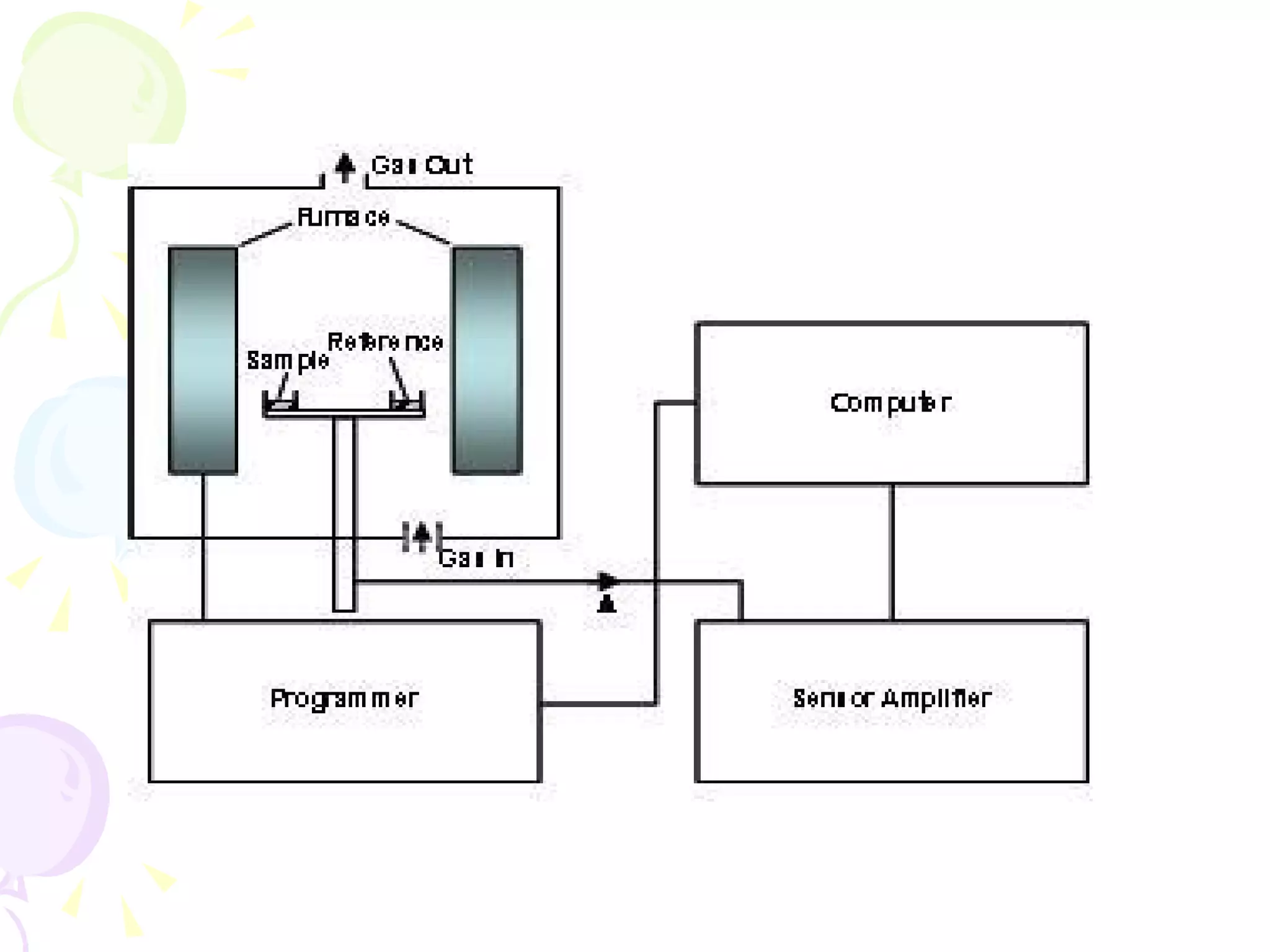
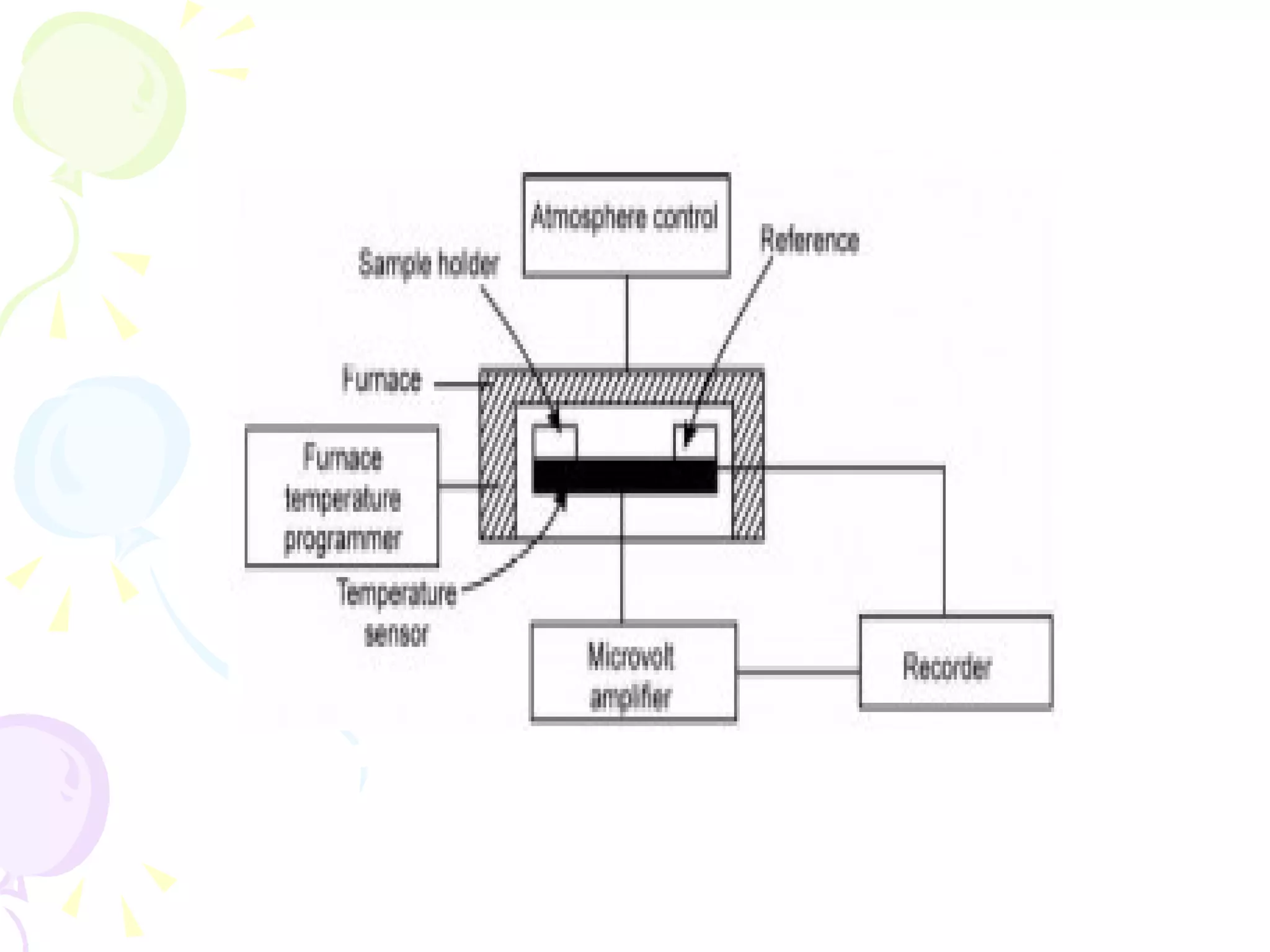
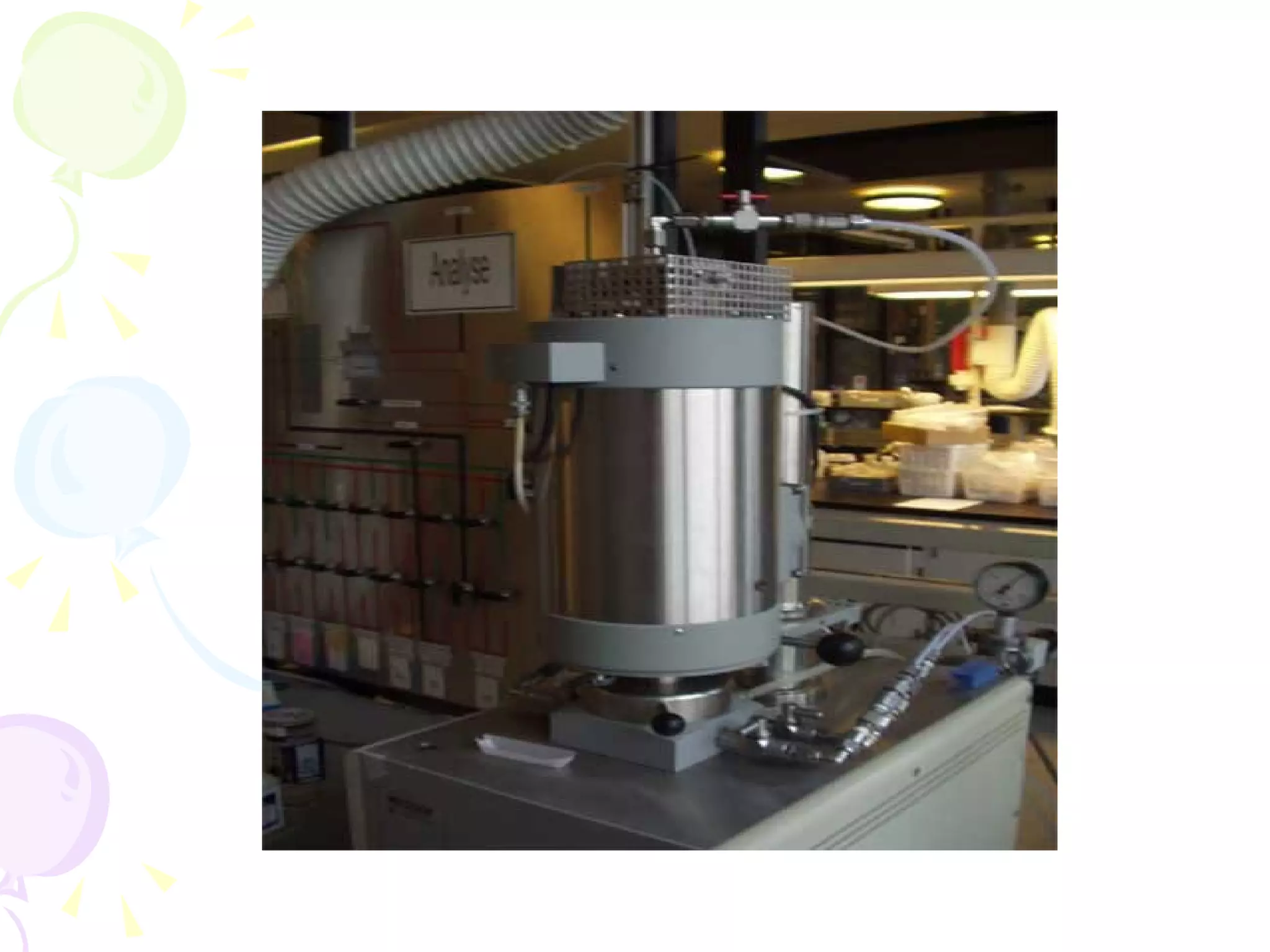
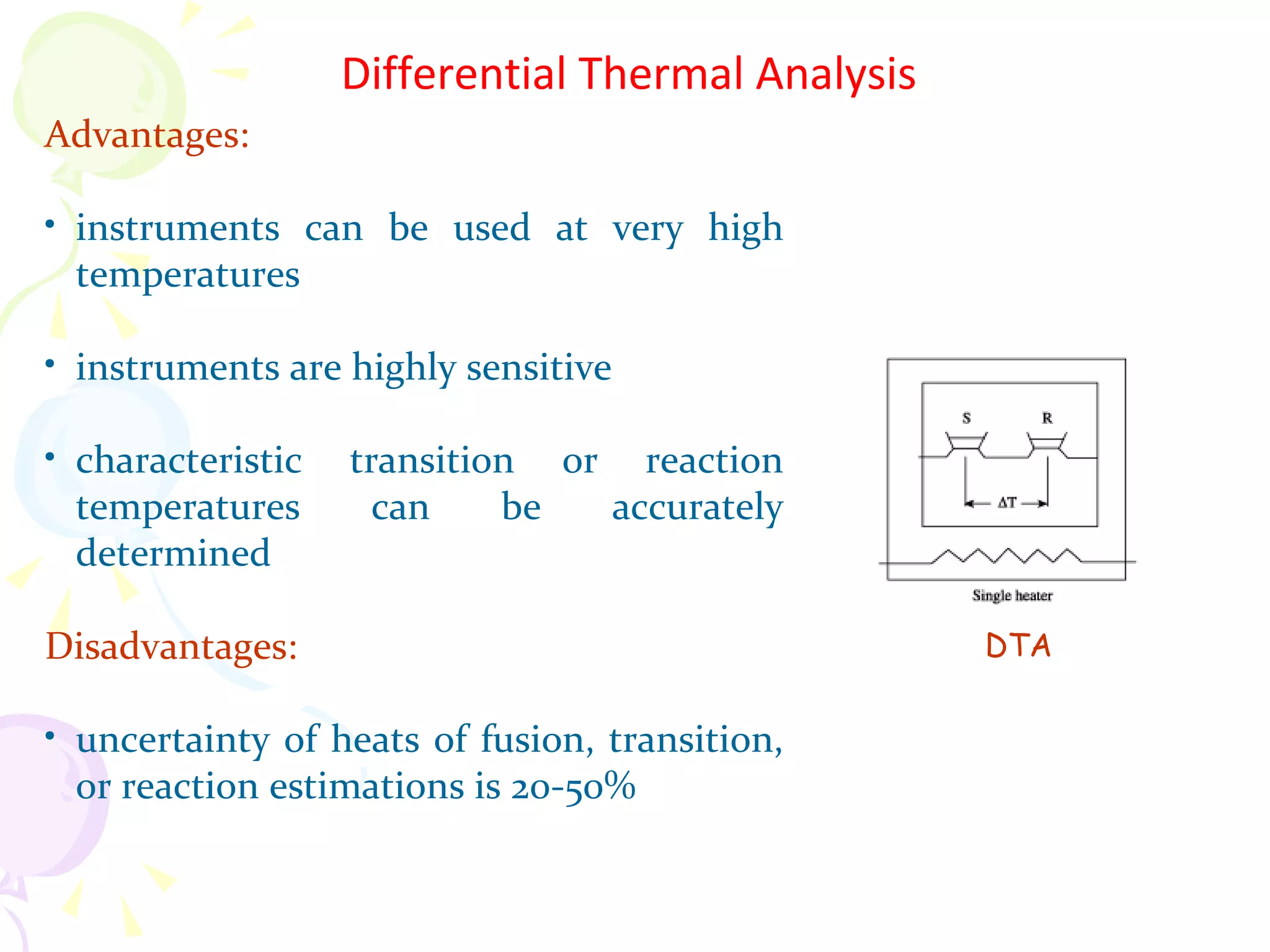
• The key features of a differential thermal analysis
  kit are as follows

  1. Sample holder comprising thermocouples,
  sample containers and a ceramic or metallic
  block.
  2. Furnace.
  3. Temperature programmer.
  4. Recording system.
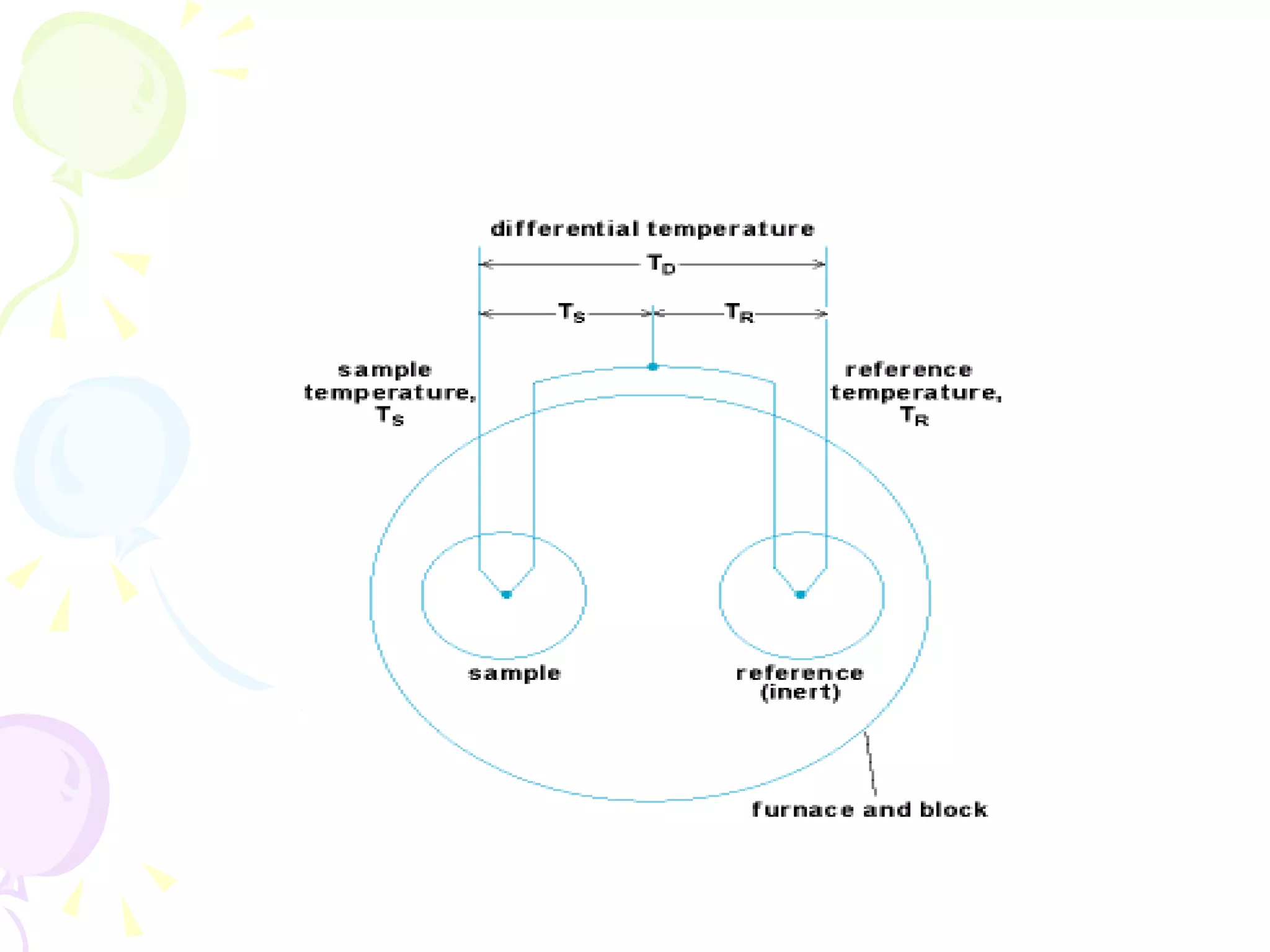
• Heart of the analysis – heating block
• Identical pair of cavities for the sample, ref.
  material
• Whole unit is set in an oven- control pressure
• Thermocouple is place directly in contact with
  the sample and another in contact with the
  reference
• Temp.of the block is raised, the temperature of
  the sample & reference follow
• Zero temp. difference – no physical or chemical
  change
• If any reaction – difference in ∆T
Differential Thermal Analysis
Advantages:

• instruments can be used at very high
  temperatures

• instruments are highly sensitive

• characteristic   transition or reaction
  temperatures       can    be  accurately
  determined

Disadvantages:                                     DTA

• uncertainty of heats of fusion, transition,
  or reaction estimations is 20-50%
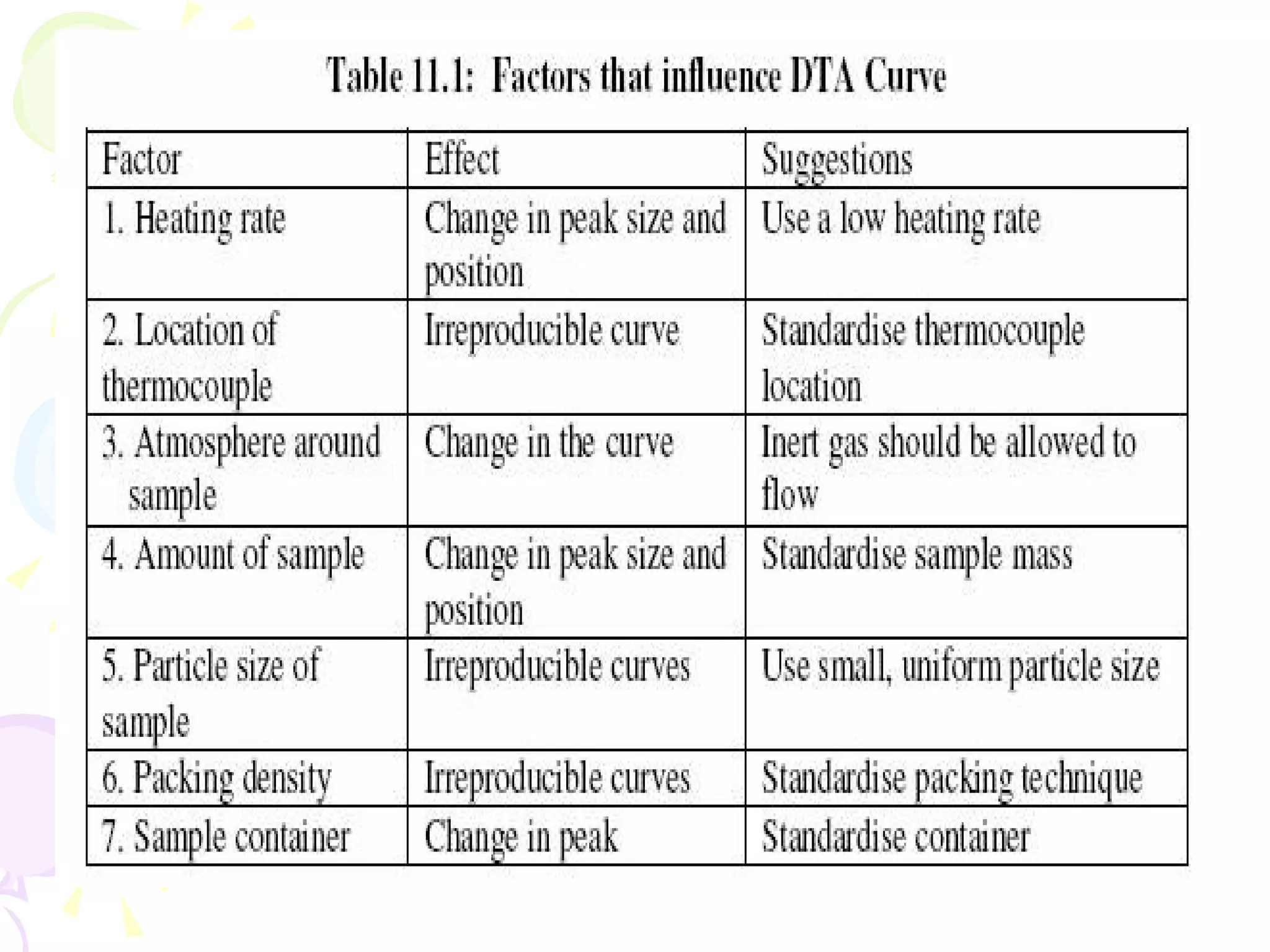
Factors affect results in DTA

•   Sample weight
•   Particle size
•   Heating rate
•   Atmospheric conditions
•   Conditions of sample packing into dishes
Applications

• Quantitative identification and purity
  assessment of materials are accomplished by
  comparing the DTA curve of sample to that of
  a reference curve
• Impurities may be detected by depression of
  the M.P
THANK YOU

DTA

  • 1.
    DIFFERENTIAL THERMAL ANALYSIS (DTA) Prepared by:- Mr. Jiten B. Patel M.pharm(1st sem) B.M.C.P.
  • 2.
    Thermal Analysis Techniques •When a material is heated its structural and chemical composition can undergo changes such as fusion, melting, crystallization, oxidation, decomposition, transition, expansion and sintering. • Using Thermal Analysis such changes can be monitored in every atmosphere of interest. The obtained information is very useful in both quality control and problem solving.
  • 3.
    Types of thermalanalysis • TG (Thermogravimetric) analysis: weight • DTA (Differential Thermal Analysis): temperature • DSC (Differential ScanningCalorimetry): temperature
  • 4.
    • In DifferentialThermal Analysis, the temperature difference that develops between a sample and an inert reference material is measured, when both are subjected to identical heat - treatments. • The related technique of Differential Scanning Calorimetry relies on differences in energy required to maintain the sample and reference at an identical temperature.
  • 5.
    Thermogravimetry (TG) • Thermogravimetryis the measurement of the mass of a sample as the temperature increases. This method is useful for determining sample purity and water, carbonate, and organic content; and for studying decomposition reactions.
  • 6.
    INTRODUCTION • This isa comparison method • Analytical method for recording the difference in temperature (∆T) b/w a substance and an inert reference material as a function of temperature or time • Any transformation – change in specific heat or an enthaply of transition can be detected by DTA
  • 7.
    • In DTAboth test sample & an inert reference material (alumina) – controlled heating or cooling programming • If zero temperature difference b/w sample & reference material – sample does not undergo any chemical or physical change. • If any reaction takes place temperature difference (∆T) will occur b/w sample & reference material
  • 8.
    • A DTAcurve can be used as a finger print for identification purposes, for example, • in the study of clays where the structural similarity of different forms renders diffraction experiments difficult to interpret.
  • 9.
    ∆T VS Temp. SharpEndothermic – changes in crystallanity or fusion Broad endotherms - dehydration reaction Physical changes usually result in endothermic curves Chemical reactions are exothermic
  • 10.
    Apparatus • The keyfeatures of a differential thermal analysis kit are as follows 1. Sample holder comprising thermocouples, sample containers and a ceramic or metallic block. 2. Furnace. 3. Temperature programmer. 4. Recording system.
  • 14.
    • Heart ofthe analysis – heating block • Identical pair of cavities for the sample, ref. material • Whole unit is set in an oven- control pressure • Thermocouple is place directly in contact with the sample and another in contact with the reference • Temp.of the block is raised, the temperature of the sample & reference follow • Zero temp. difference – no physical or chemical change • If any reaction – difference in ∆T
  • 17.
    Differential Thermal Analysis Advantages: •instruments can be used at very high temperatures • instruments are highly sensitive • characteristic transition or reaction temperatures can be accurately determined Disadvantages: DTA • uncertainty of heats of fusion, transition, or reaction estimations is 20-50%
  • 18.
    Factors affect resultsin DTA • Sample weight • Particle size • Heating rate • Atmospheric conditions • Conditions of sample packing into dishes
  • 20.
    Applications • Quantitative identificationand purity assessment of materials are accomplished by comparing the DTA curve of sample to that of a reference curve • Impurities may be detected by depression of the M.P
  • 21.