State whether these
statements are
TRUE or FALSE
1. It is important to work on
communicating our feelings
in relationships.
TRUE
2. To love someone, we must
love our self first.
TRUE
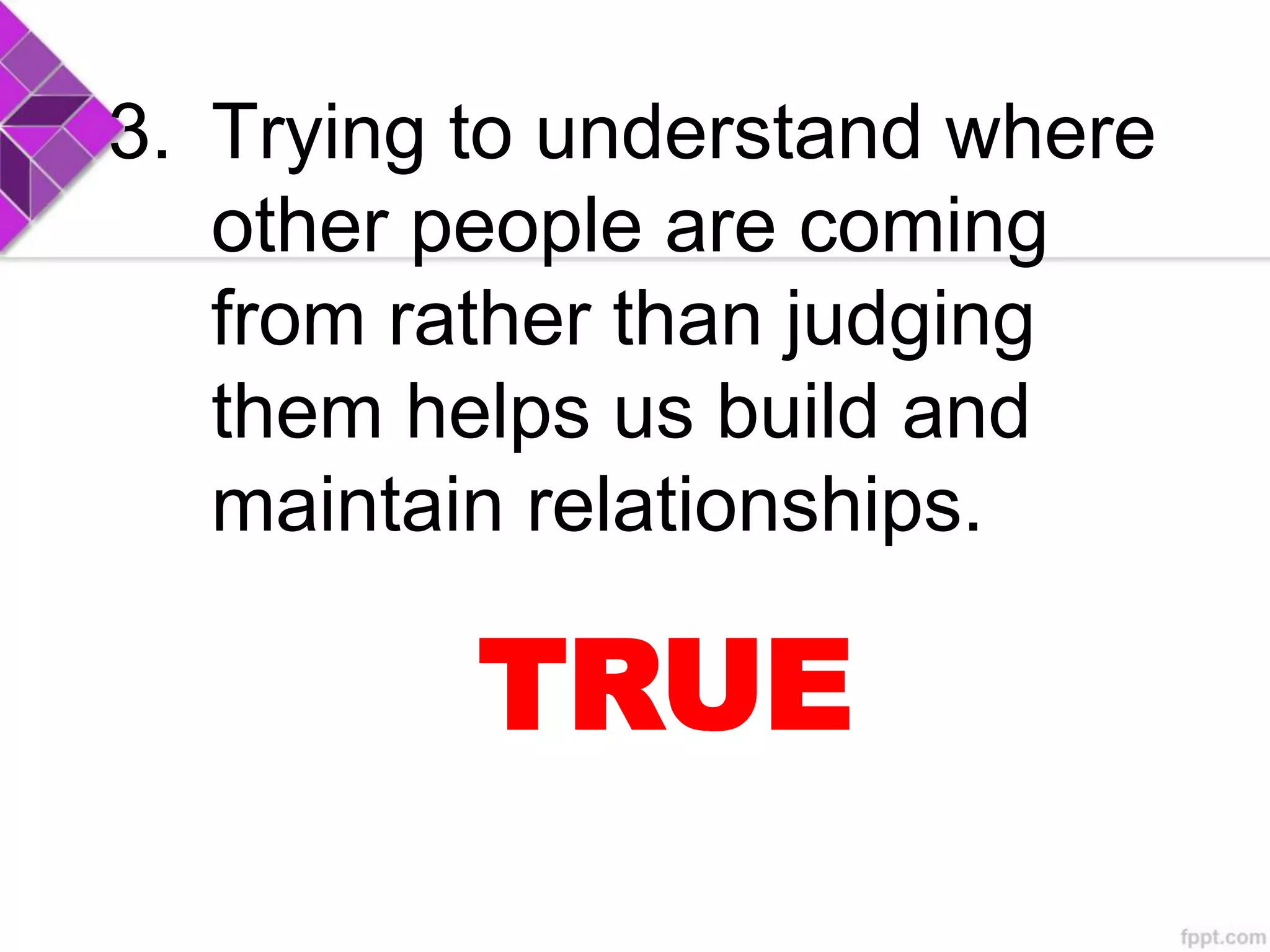
3. Trying to understand where
other people are coming
from rather than judging
them helps us build and
maintain relationships.
TRUE
4. Having good relationship
does not contribute anything
to us having good health.
FALSE
5. In our relationships, it is vital
that we practice forgiveness
when a loved one has hurt
us.
TRUE
6. Our loved ones cannot help
us when we deal with stress.
FALSE
7. Expressing gratitude to our
friends and family helps us
maintain good relationships.
TRUE
8. We are happy in our
relationships when our loved
ones stay connected by
spending time with us and
letting us know that they love
us.
TRUE
9. Excessive reliance on social
media can be a cause of
tension in relationships.
TRUE
10.Relationships are static; they
are unchangeable.
FALSE
11. Being compassionate,
forgiving and grateful
contribute to healthy
relationships.
TRUE
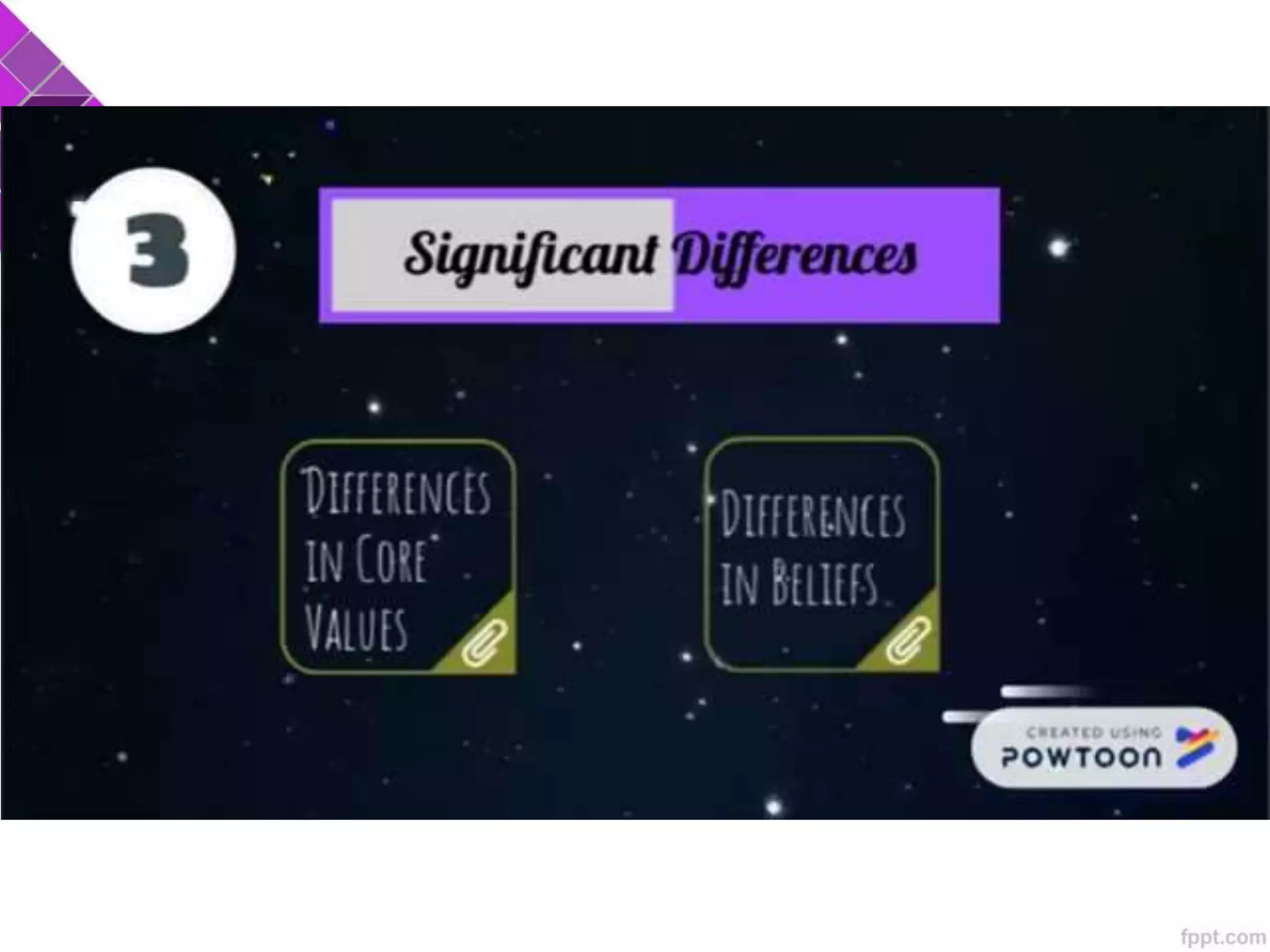
12. Significant differences in
core values and beliefs never
create a problem in
relationships.
FALSE
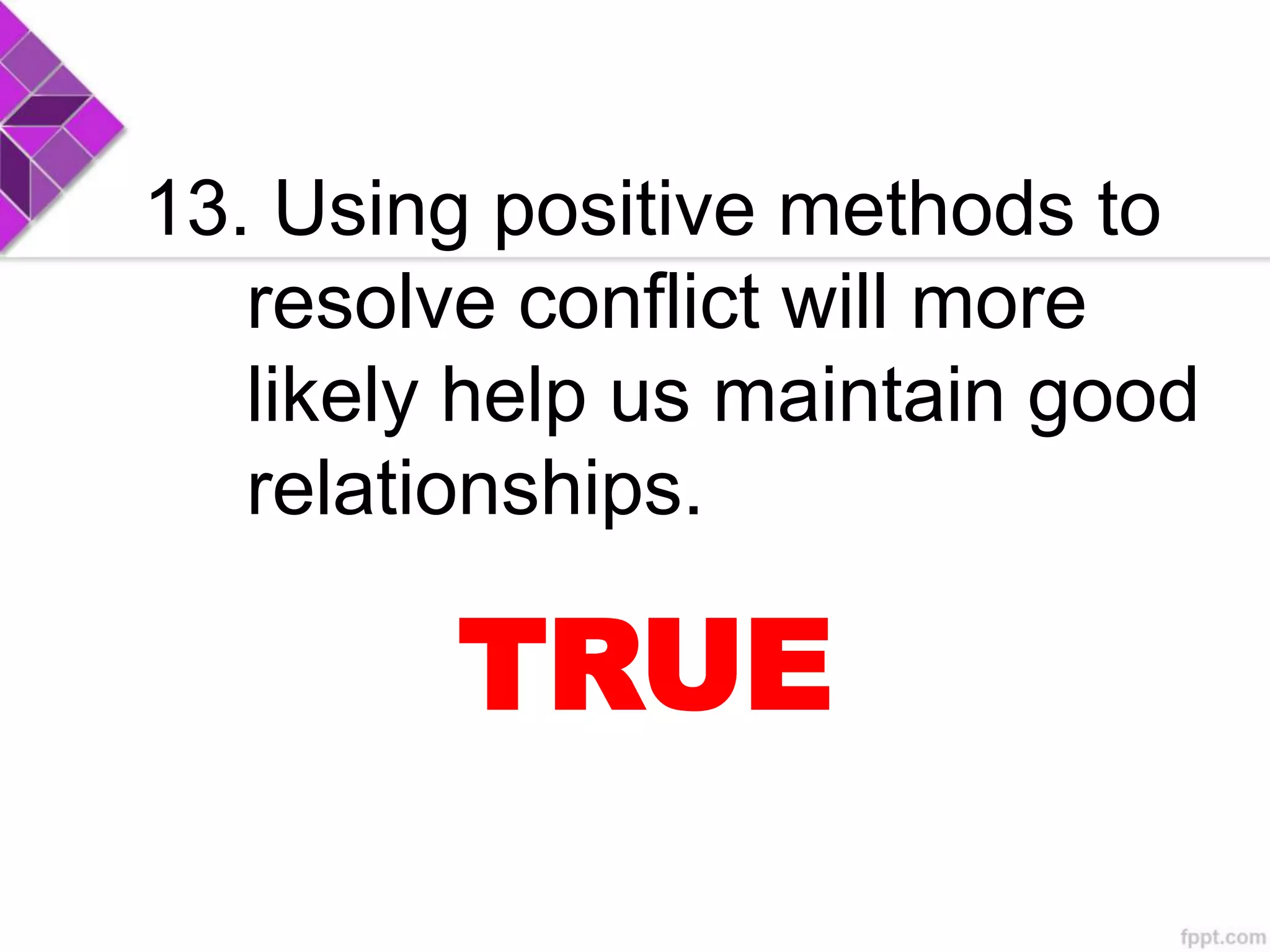
13. Using positive methods to
resolve conflict will more
likely help us maintain good
relationships.
TRUE
14. To fully enjoy and benefit
from relationships we need
skills, information,
inspiration, practice and
social support.
TRUE
• refer to close connections
between people, formed by
emotional bonds and
interactions. Relationships
are not static; they are
continually evolving, and to
fully enjoy and benefit from
them, we need skills,
information, inspiration,
practice and social support.
1. FAMILY
• The Bureau of the
Census defines family
as “two or more
persons who are
related by birth,
marriage, or adoption
and who live together
as one household.”
3. Regular
Interactions
1.Support
2. Mutual
trust
4. Shared
beliefs and
values
5. Security
6. A sense of
community
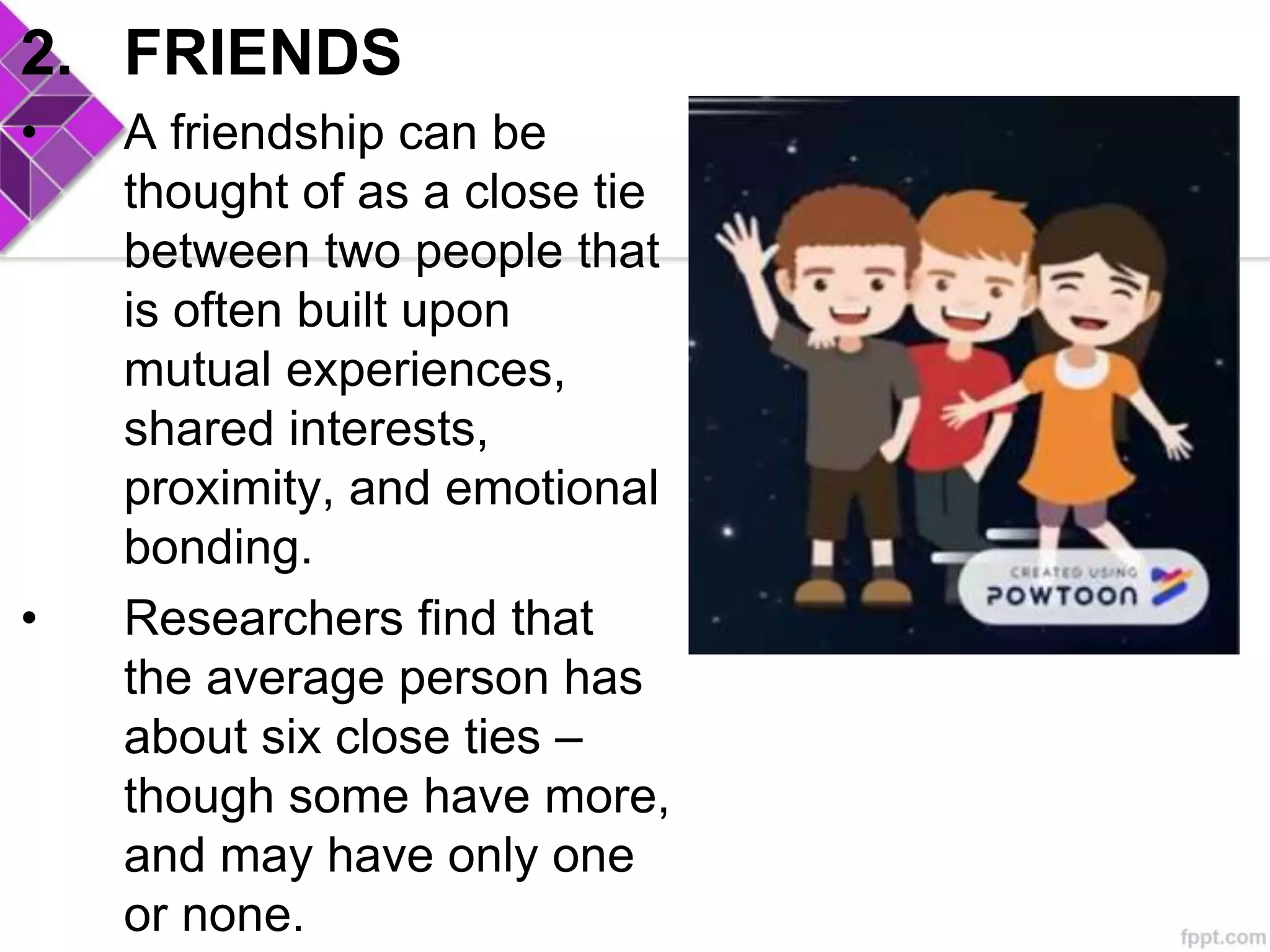
2. FRIENDS
• A friendship can be
thought of as a close tie
between two people that
is often built upon
mutual experiences,
shared interests,
proximity, and emotional
bonding.
• Researchers find that
the average person has
about six close ties –
though some have more,
and may have only one
or none.
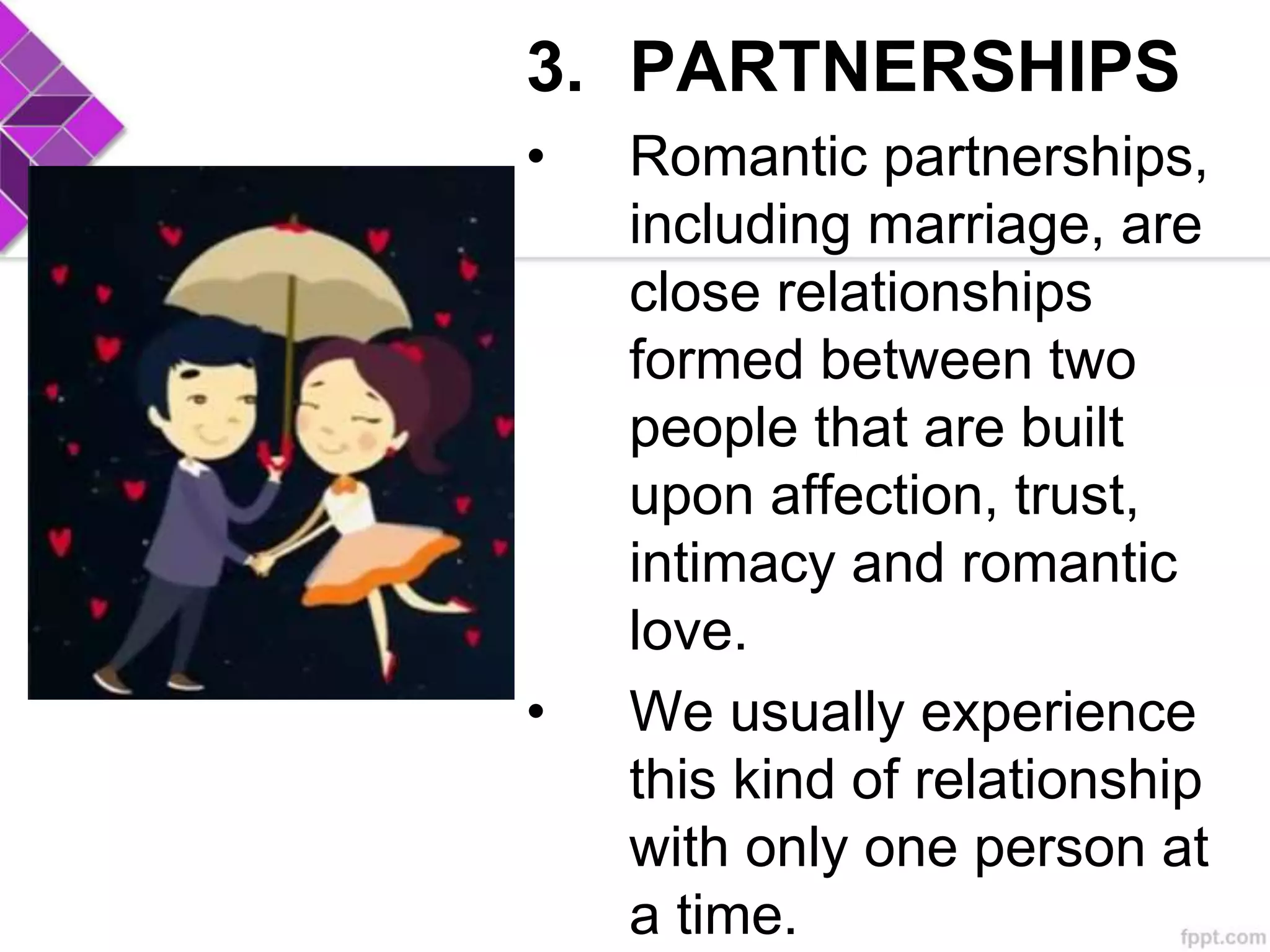
3. PARTNERSHIPS
• Romantic partnerships,
including marriage, are
close relationships
formed between two
people that are built
upon affection, trust,
intimacy and romantic
love.
• We usually experience
this kind of relationship
with only one person at
a time.
• Healthy relationships are a vital
component of health and well-being.
• There is compelling evidence that strong
relationships contribute to a long, healthy,
and happy life.
• The health risks from being alone or
isolated in one’s life are comparable to the
risks associated with cigarette smoking,
blood pressure, and obesity.
• Social alienation is an inevitable result of
contemporary society’s preoccupation with
materialism and frantic “busy-ness”.
• Their decades of research support the
idea that a lack of relationships can cause
multiple problems with physical, emotional
and spiritual health.
• The research is clear and devastating:
isolation is fatal.
1. Think about what it means to be in a loving
romantic relationship.
2. Describe what it would mean if you said, “I
Love You” in a romantic relationship.
3. You will have 5 minutes to write 3 to 5
sentences about it.
4. Fold the paper once when you are done and
hand it in.
5. One girl and one boy will take turns reading
the definitions in class and you will attempt to
guess whether a boy or girl wrote the
definition.
• To make this more engaging for students,
we turn it into a competition and the
students have to keep score as to how
many they guess correctly. The winner at
the end of the class is crowned “Dr. Love”
(you can make this as dramatic as you
want).
• As the students read the definitions, as the
teacher, I start to write down buzz words
and common themes I hear on the board
(trust, respect, emotional, commitment,
loyalty, etc.).
• Some Reflection Questions:
• What made you think the writer was a boy
or girl?
• Do you think we (males and females) are
more alike than different in our views of
what love means?
• What common themes did you hear
mentioned when someone says “I Love
You?”
• What effect might differing views of love
1. Express your ways of showing attraction,
love, and commitment to become
responsible in a relationship through
acting out the scenes that you will get.
2. Think of situations or scenarios
happening in a romantic relationship.
3. One boy and one girl will be called to act
out the situation on the spot.
SCENE 1
• Setting: Park
• Situation: You are going to confess your
feelings for your bestfriend that you have
been holding for a long time. You wanted
to court her and ask her to be your
girlfriend. How are you going to show it?

Personal Relationships in Middle and Late Adolescence

  • 2.
  • 3.
    1. It isimportant to work on communicating our feelings in relationships. TRUE
  • 4.
    2. To lovesomeone, we must love our self first. TRUE
  • 5.
    3. Trying tounderstand where other people are coming from rather than judging them helps us build and maintain relationships. TRUE
  • 6.
    4. Having goodrelationship does not contribute anything to us having good health. FALSE
  • 7.
    5. In ourrelationships, it is vital that we practice forgiveness when a loved one has hurt us. TRUE
  • 8.
    6. Our lovedones cannot help us when we deal with stress. FALSE
  • 9.
    7. Expressing gratitudeto our friends and family helps us maintain good relationships. TRUE
  • 10.
    8. We arehappy in our relationships when our loved ones stay connected by spending time with us and letting us know that they love us. TRUE
  • 11.
    9. Excessive relianceon social media can be a cause of tension in relationships. TRUE
  • 12.
    10.Relationships are static;they are unchangeable. FALSE
  • 13.
    11. Being compassionate, forgivingand grateful contribute to healthy relationships. TRUE
  • 14.
    12. Significant differencesin core values and beliefs never create a problem in relationships. FALSE
  • 15.
    13. Using positivemethods to resolve conflict will more likely help us maintain good relationships. TRUE
  • 16.
    14. To fullyenjoy and benefit from relationships we need skills, information, inspiration, practice and social support. TRUE
  • 18.
    • refer toclose connections between people, formed by emotional bonds and interactions. Relationships are not static; they are continually evolving, and to fully enjoy and benefit from them, we need skills, information, inspiration, practice and social support.
  • 20.
    1. FAMILY • TheBureau of the Census defines family as “two or more persons who are related by birth, marriage, or adoption and who live together as one household.”
  • 21.
    3. Regular Interactions 1.Support 2. Mutual trust 4.Shared beliefs and values 5. Security 6. A sense of community
  • 22.
    2. FRIENDS • Afriendship can be thought of as a close tie between two people that is often built upon mutual experiences, shared interests, proximity, and emotional bonding. • Researchers find that the average person has about six close ties – though some have more, and may have only one or none.
  • 23.
    3. PARTNERSHIPS • Romanticpartnerships, including marriage, are close relationships formed between two people that are built upon affection, trust, intimacy and romantic love. • We usually experience this kind of relationship with only one person at a time.
  • 25.
    • Healthy relationshipsare a vital component of health and well-being. • There is compelling evidence that strong relationships contribute to a long, healthy, and happy life. • The health risks from being alone or isolated in one’s life are comparable to the risks associated with cigarette smoking, blood pressure, and obesity.
  • 33.
    • Social alienationis an inevitable result of contemporary society’s preoccupation with materialism and frantic “busy-ness”. • Their decades of research support the idea that a lack of relationships can cause multiple problems with physical, emotional and spiritual health. • The research is clear and devastating: isolation is fatal.
  • 44.
    1. Think aboutwhat it means to be in a loving romantic relationship. 2. Describe what it would mean if you said, “I Love You” in a romantic relationship. 3. You will have 5 minutes to write 3 to 5 sentences about it. 4. Fold the paper once when you are done and hand it in. 5. One girl and one boy will take turns reading the definitions in class and you will attempt to guess whether a boy or girl wrote the definition.
  • 45.
    • To makethis more engaging for students, we turn it into a competition and the students have to keep score as to how many they guess correctly. The winner at the end of the class is crowned “Dr. Love” (you can make this as dramatic as you want). • As the students read the definitions, as the teacher, I start to write down buzz words and common themes I hear on the board (trust, respect, emotional, commitment, loyalty, etc.).
  • 46.
    • Some ReflectionQuestions: • What made you think the writer was a boy or girl? • Do you think we (males and females) are more alike than different in our views of what love means? • What common themes did you hear mentioned when someone says “I Love You?” • What effect might differing views of love
  • 47.
    1. Express yourways of showing attraction, love, and commitment to become responsible in a relationship through acting out the scenes that you will get. 2. Think of situations or scenarios happening in a romantic relationship. 3. One boy and one girl will be called to act out the situation on the spot.
  • 48.
    SCENE 1 • Setting:Park • Situation: You are going to confess your feelings for your bestfriend that you have been holding for a long time. You wanted to court her and ask her to be your girlfriend. How are you going to show it?

Editor's Notes

  • #27 People with strong social relationships are 50% less likely to die prematurely. Committing to a life partner can add 3 years to life expectancy Researchers have found that men’s life expectancy benefits from marriage more than women’s do
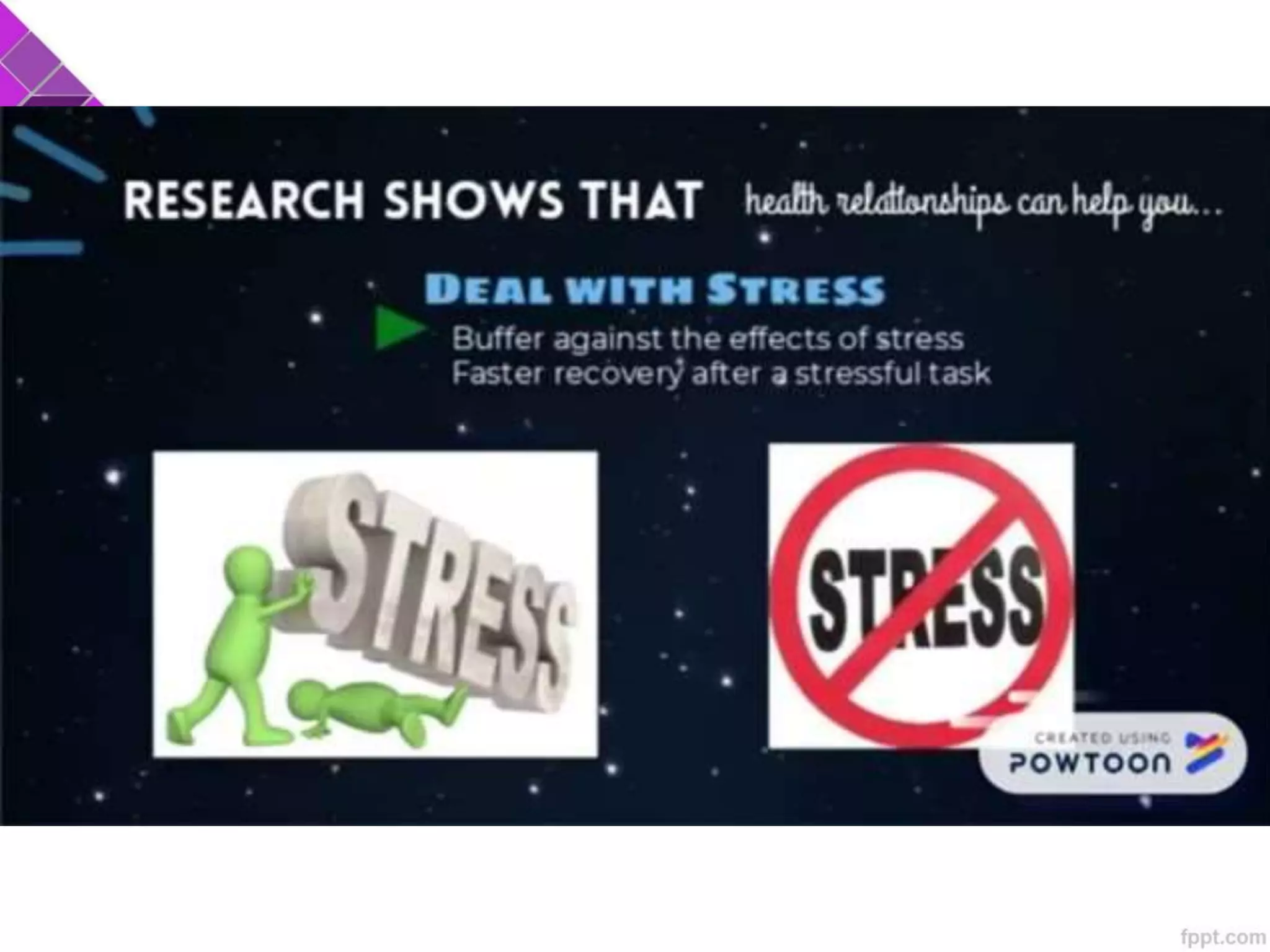
  • #28 1. The support offered by a caring friend can provide a buffer against the effects of stress. 2. Researchers found that people who completed a stressful task experienced a faster recovery when they were reminded of people with whom they had strong relationships.
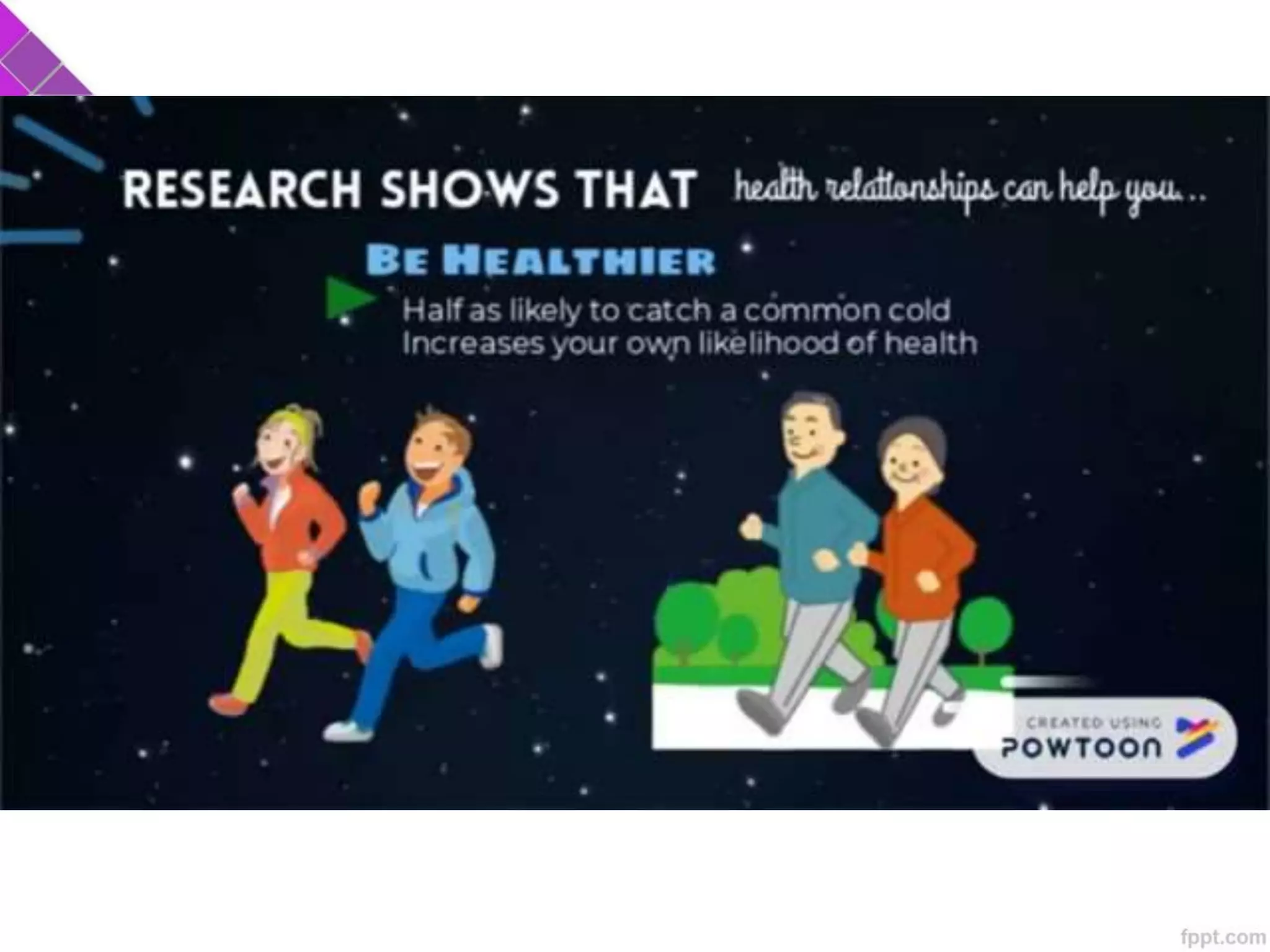
  • #29 College students who reported having strong relationships were half as likely to catch a common cold when exposed to the virus. People who feel they have friends and family to count on are generally more satisfied with their personal health than people who feel isolated. And hanging out with healthy people increases your own likelihood of health. Non-obese people are more likely to have non-obese friends because healthy habits spread through our social networks.
  • #33 Researchers who studied a group of 229 adults over five years found that loneliness could predict higher blood pressure even years later, indicating that the effects of isolation have long-lasting consequences.