UNDP –
DRR Financing Regional Conference
Experience in DRR
financing: What are the
gaps? What has been
done?
Istanbul, Turkey, 4-5 October 2018
“Knowing is not enough; we must apply.
Being willing is not enough; we must do”
2
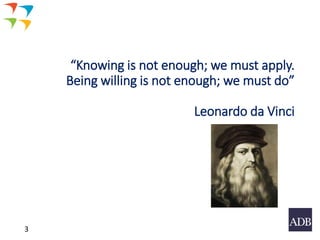
“Knowing is not enough; we must apply.
Being willing is not enough; we must do”
Leonardo da Vinci
3
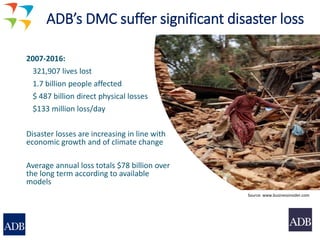
2007-2016:
321,907 lives lost
1.7 billion people affected
$ 487 billion direct physical losses
$133 million loss/day
Disaster losses are increasing in line with
economic growth and of climate change
Average annual loss totals $78 billion over
the long term according to available
models
Source: www.businessinsider.com
ADB’s DMC suffer significant disaster loss
5
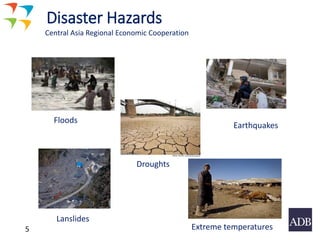
Disaster Hazards
Central Asia Regional Economic Cooperation
Floods
Droughts
Earthquakes
Lanslides
Extreme temperatures
6
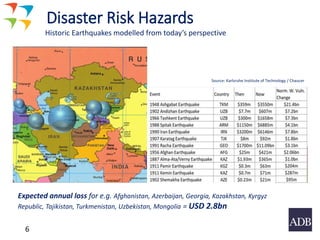
Disaster Risk Hazards
Historic Earthquakes modelled from today’s perspective
Source: Karlsruhe Institute of Technology / Chaucer
Expected annual loss for e.g. Afghanistan, Azerbaijan, Georgia, Kazakhstan, Kyrgyz
Republic, Tajikistan, Turkmenistan, Uzbekistan, Mongolia = USD 2.8bn
7
The Infrastructure Finance Gap
Asia Pacific
• US$26 trillion from 2016 to 2030 or US$1.7 trillion per year infrastructure
need including climate change measure are needed for developing Asia
• US$ 241 billion annual climate mitigation and adaptation including the costs
of climate proofing, a subset of climate adaptation
• 2.4% of projected GDP for the 5-year period from 2016 to 2020 (5% without
the People’s Republic of China) is the difference between investment needs
and current investment levels
• Fiscal reforms could help Governments to assume 40% of the gap
• 60% of the gap would have to be filled with private sector financing (an
increase from about $63 billion today to as high as $250 billion a year over
2016–2020)
Source: ADB “Meeting Asia’s Infrastructure Needs, 2017”
8
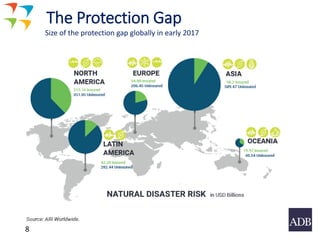
The Protection Gap
Size of the protection gap globally in early 2017
9
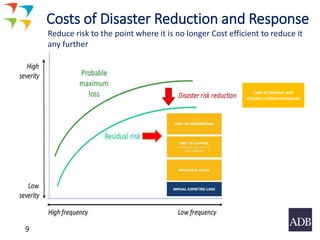
Costs of Disaster Reduction and Response
Reduce risk to the point where it is no longer Cost efficient to reduce it
any further
Cost of disaster and
climate resilient measures
10
ADB Disaster Risk Reduction Activities
• 2.5% of infrastructure investments in developing Asia (10% excluding the
People’s Republic of China and India) were financed by MDBs
• Considerable investments in flood and seismic risk management, e.g.
➢ flood management in selected river basins
➢ sponge city projects
➢ seismic retrofitting of schools
• ADB financing disaster risk reduction program intended to
➢ strengthen countries disaster resilience
➢ promote risk-sensitive land use planning
➢ implement structural, technology- and eco-based solutions
➢ foster institutional capacity development and train builders
➢ help demonstrate the benefits of such investments and stimulate
further investments
• A growing proportion of ADB finance is going to private sector
promoting PPP infrastructure finance projects
11
Strengthening the enabling environment
• Assessments of disaster risk, associated fiscal burden and funding gaps
• Development of comprehensive national disaster risk financing strategies
• Strengthening technical knowledge and understanding
• Leveraging funding
• Strengthening insurance supervision and local insurance industry
Development of individual products
• Contingent disaster financing
• Establishing risk pools
• Piloting weather-index crop insurance
• Microfinance-linked products
• Developing Knowledge Products leveraging insurance for more bankable
investments into sustainable infrastructure
ADB Disaster Risk Transfer Activities
A two tier approach
Thank you.
Remember Leonardo Da Vinci:
“Knowing is not enough; we must apply.
Being willing is not enough; we must do”

2018 DRR Financing 1.4 Thomas Kessler

  • 1.
    UNDP – DRR FinancingRegional Conference Experience in DRR financing: What are the gaps? What has been done? Istanbul, Turkey, 4-5 October 2018
  • 2.
    “Knowing is notenough; we must apply. Being willing is not enough; we must do” 2
  • 3.
    “Knowing is notenough; we must apply. Being willing is not enough; we must do” Leonardo da Vinci 3
  • 4.
    2007-2016: 321,907 lives lost 1.7billion people affected $ 487 billion direct physical losses $133 million loss/day Disaster losses are increasing in line with economic growth and of climate change Average annual loss totals $78 billion over the long term according to available models Source: www.businessinsider.com ADB’s DMC suffer significant disaster loss
  • 5.
    5 Disaster Hazards Central AsiaRegional Economic Cooperation Floods Droughts Earthquakes Lanslides Extreme temperatures
  • 6.
    6 Disaster Risk Hazards HistoricEarthquakes modelled from today’s perspective Source: Karlsruhe Institute of Technology / Chaucer Expected annual loss for e.g. Afghanistan, Azerbaijan, Georgia, Kazakhstan, Kyrgyz Republic, Tajikistan, Turkmenistan, Uzbekistan, Mongolia = USD 2.8bn
  • 7.
    7 The Infrastructure FinanceGap Asia Pacific • US$26 trillion from 2016 to 2030 or US$1.7 trillion per year infrastructure need including climate change measure are needed for developing Asia • US$ 241 billion annual climate mitigation and adaptation including the costs of climate proofing, a subset of climate adaptation • 2.4% of projected GDP for the 5-year period from 2016 to 2020 (5% without the People’s Republic of China) is the difference between investment needs and current investment levels • Fiscal reforms could help Governments to assume 40% of the gap • 60% of the gap would have to be filled with private sector financing (an increase from about $63 billion today to as high as $250 billion a year over 2016–2020) Source: ADB “Meeting Asia’s Infrastructure Needs, 2017”
  • 8.
    8 The Protection Gap Sizeof the protection gap globally in early 2017
  • 9.
    9 Costs of DisasterReduction and Response Reduce risk to the point where it is no longer Cost efficient to reduce it any further Cost of disaster and climate resilient measures
  • 10.
    10 ADB Disaster RiskReduction Activities • 2.5% of infrastructure investments in developing Asia (10% excluding the People’s Republic of China and India) were financed by MDBs • Considerable investments in flood and seismic risk management, e.g. ➢ flood management in selected river basins ➢ sponge city projects ➢ seismic retrofitting of schools • ADB financing disaster risk reduction program intended to ➢ strengthen countries disaster resilience ➢ promote risk-sensitive land use planning ➢ implement structural, technology- and eco-based solutions ➢ foster institutional capacity development and train builders ➢ help demonstrate the benefits of such investments and stimulate further investments • A growing proportion of ADB finance is going to private sector promoting PPP infrastructure finance projects
  • 11.
    11 Strengthening the enablingenvironment • Assessments of disaster risk, associated fiscal burden and funding gaps • Development of comprehensive national disaster risk financing strategies • Strengthening technical knowledge and understanding • Leveraging funding • Strengthening insurance supervision and local insurance industry Development of individual products • Contingent disaster financing • Establishing risk pools • Piloting weather-index crop insurance • Microfinance-linked products • Developing Knowledge Products leveraging insurance for more bankable investments into sustainable infrastructure ADB Disaster Risk Transfer Activities A two tier approach
  • 12.
    Thank you. Remember LeonardoDa Vinci: “Knowing is not enough; we must apply. Being willing is not enough; we must do”