Presentation on DRI Plant
• Shashank Gautam
• Rahul Mandal
• Himanshu Ranjan
• Konkala Navyasri Reddy
• Arpon Samui
• Harsh Chauhan
• Anoop Tiwari
• Gaurav Jain
• Ruchi Kushwaha
• Sevi Dewarwar
• Aakanksha
GROUP MEMBERS
CONTENT
• Overview
• Purpose of Sponge Iron
• Raw material
• Flow Chart
• Process
• Rotary Kiln
• Ellingham Diagram and Chemical Reactions
• Rotary Cooler
• PSB
• ESP
• Problem Statement
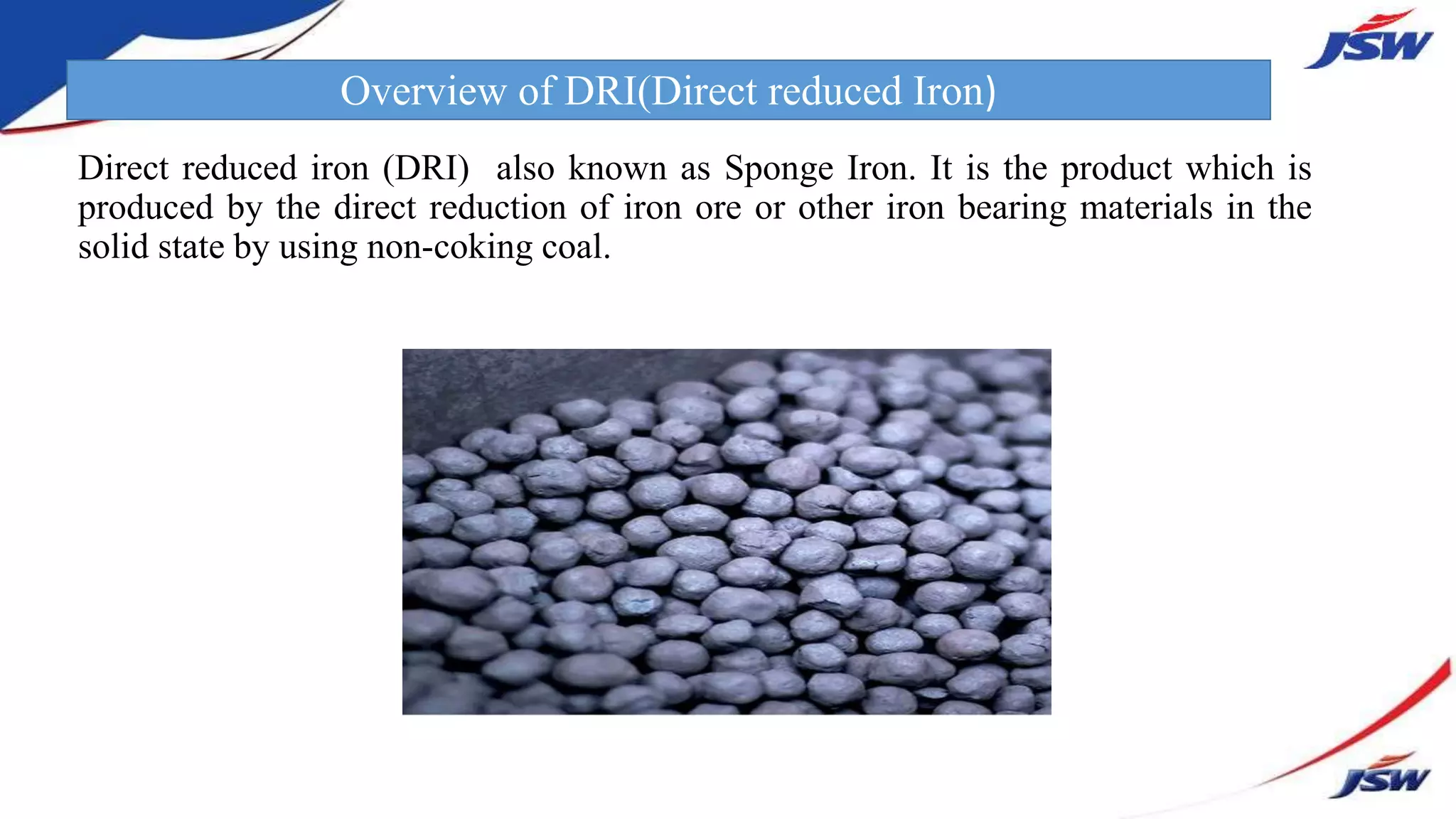
Direct reduced iron (DRI) also known as Sponge Iron. It is the product which is
produced by the direct reduction of iron ore or other iron bearing materials in the
solid state by using non-coking coal.
Overview of DRI(Direct reduced Iron)
• It is a superior substitute of steel scrap for
EAF(electric arc furnace) and Induced
furnace.
• Sponge iron has low Sulphur content.
• Sponge iron is a pivotal material used for the
production of various steel items like best
quality TMT bars, Ductile Iron (DI) pipes.
Purpose of Sponge iron
• Coal Fines(0-5mm in size) – Injection coal from kiln outlet
• Iron ore(5 -25mm in size)- Raw material (pellet) which is feed from inlet
• Dolomite(1- 6 mm in size)- for removing coal Sulphur
• Coal(3-20mm in size) – Feed from inlet
• Coal Lumps(5-25mm in size)- feed from inlet
Raw materials used in DRI
Pellet
Coal dolomite
Rotary
Kiln
Coal
Coarse
Coal
Rotary
Cooler
fuel Air
WHRB
ESP
A
B
C
Turbine
Flowchart
Fine
coal
PSB
DRI Lumps +
Fines
Dolochar
Transfer Chute
PROCESS
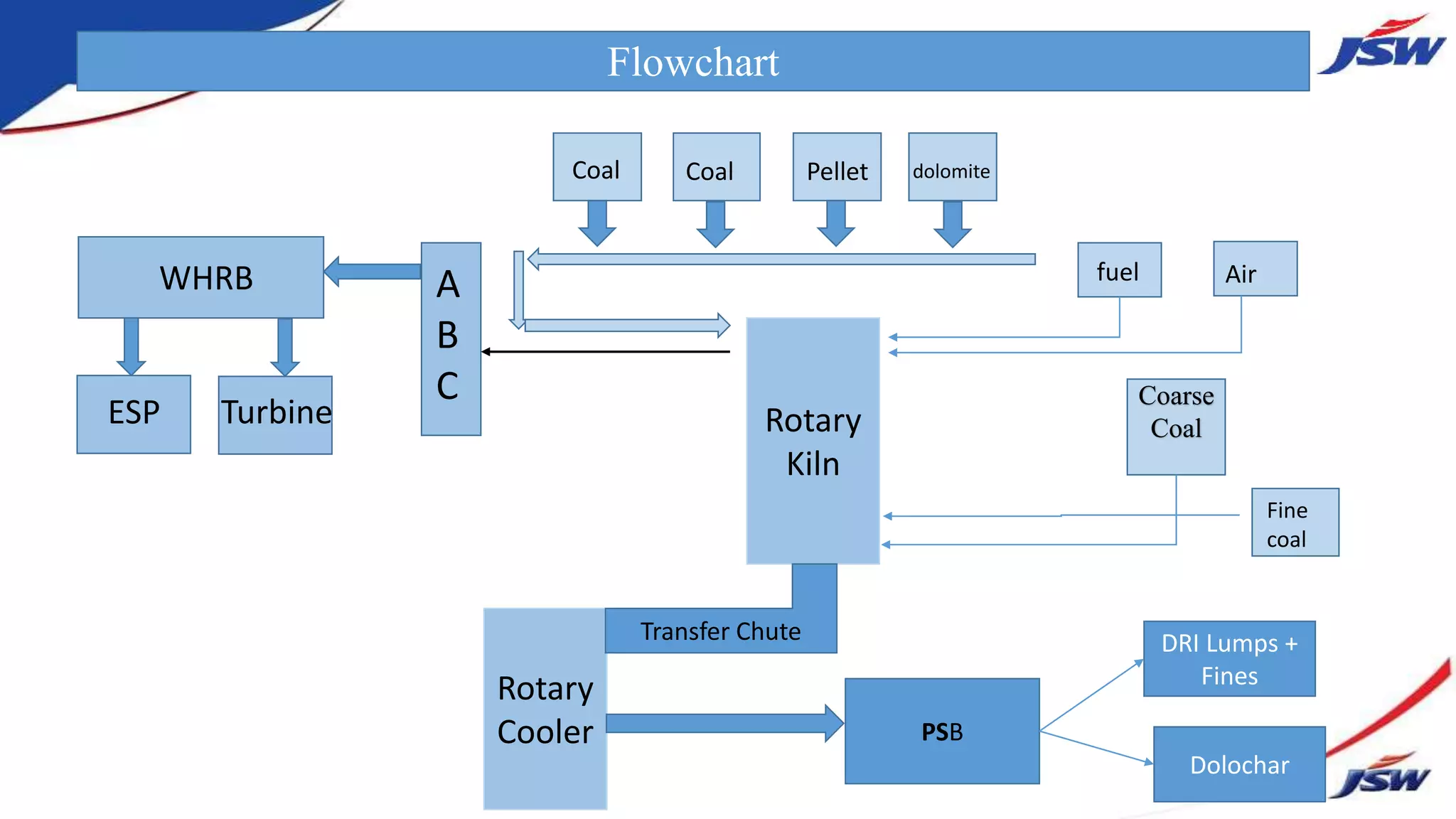
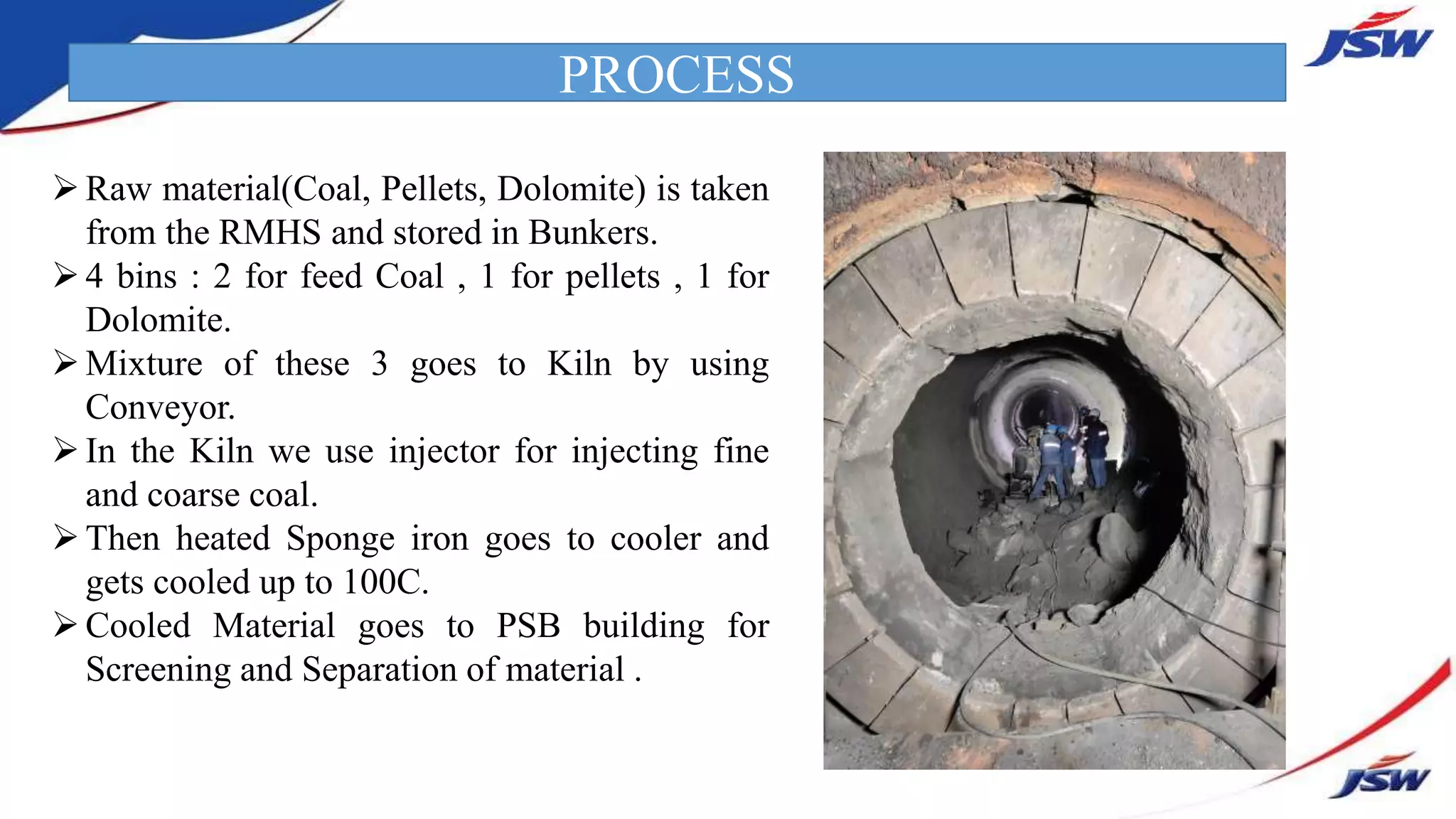
Raw material(Coal, Pellets, Dolomite) is taken
from the RMHS and stored in Bunkers.
4 bins : 2 for feed Coal , 1 for pellets , 1 for
Dolomite.
Mixture of these 3 goes to Kiln by using
Conveyor.
In the Kiln we use injector for injecting fine
and coarse coal.
Then heated Sponge iron goes to cooler and
gets cooled up to 100C.
Cooled Material goes to PSB building for
Screening and Separation of material .
PROCESS
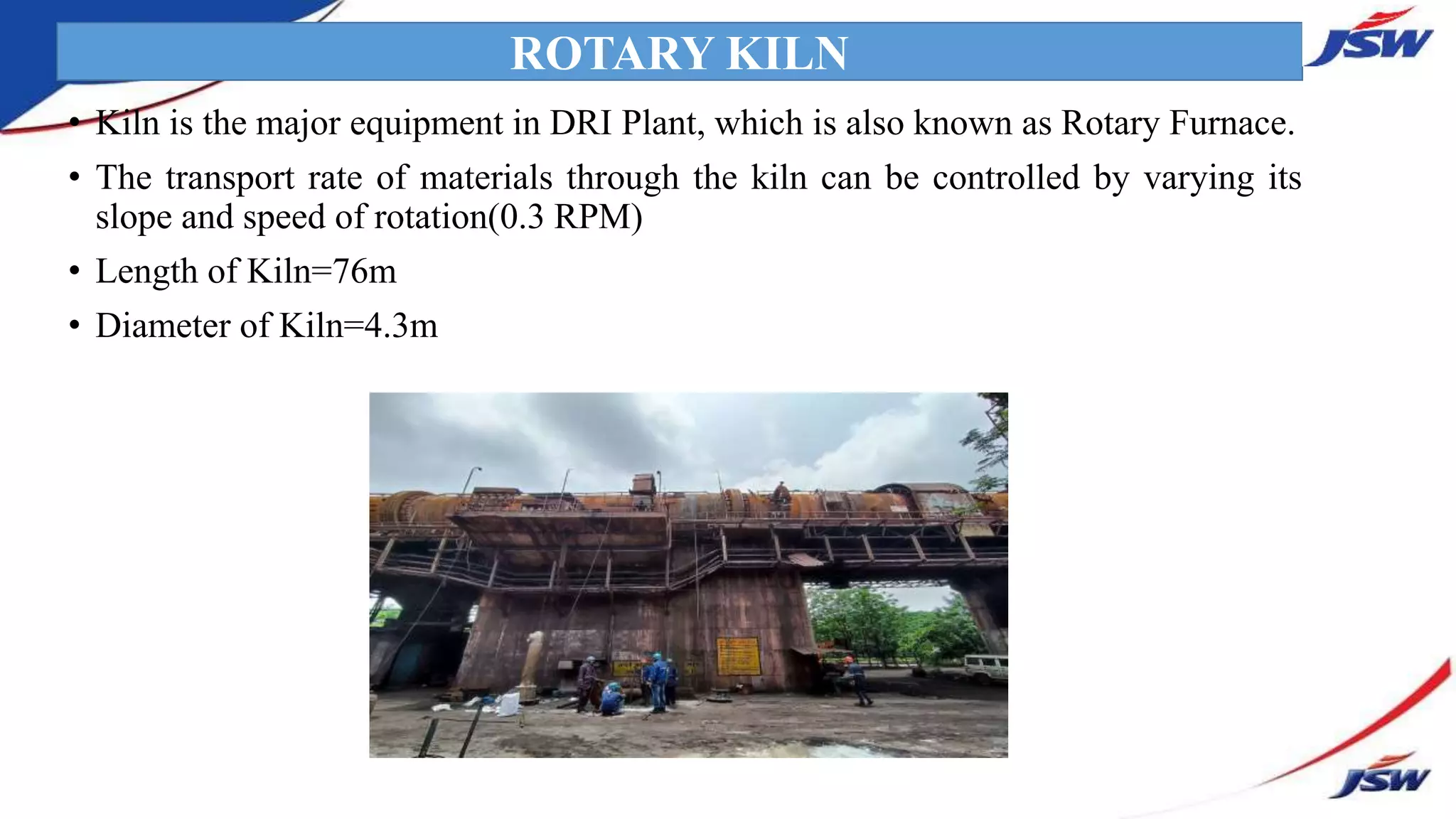
• Kiln is the major equipment in DRI Plant, which is also known as Rotary Furnace.
• The transport rate of materials through the kiln can be controlled by varying its
slope and speed of rotation(0.3 RPM)
• Length of Kiln=76m
• Diameter of Kiln=4.3m
ROTARY KILN
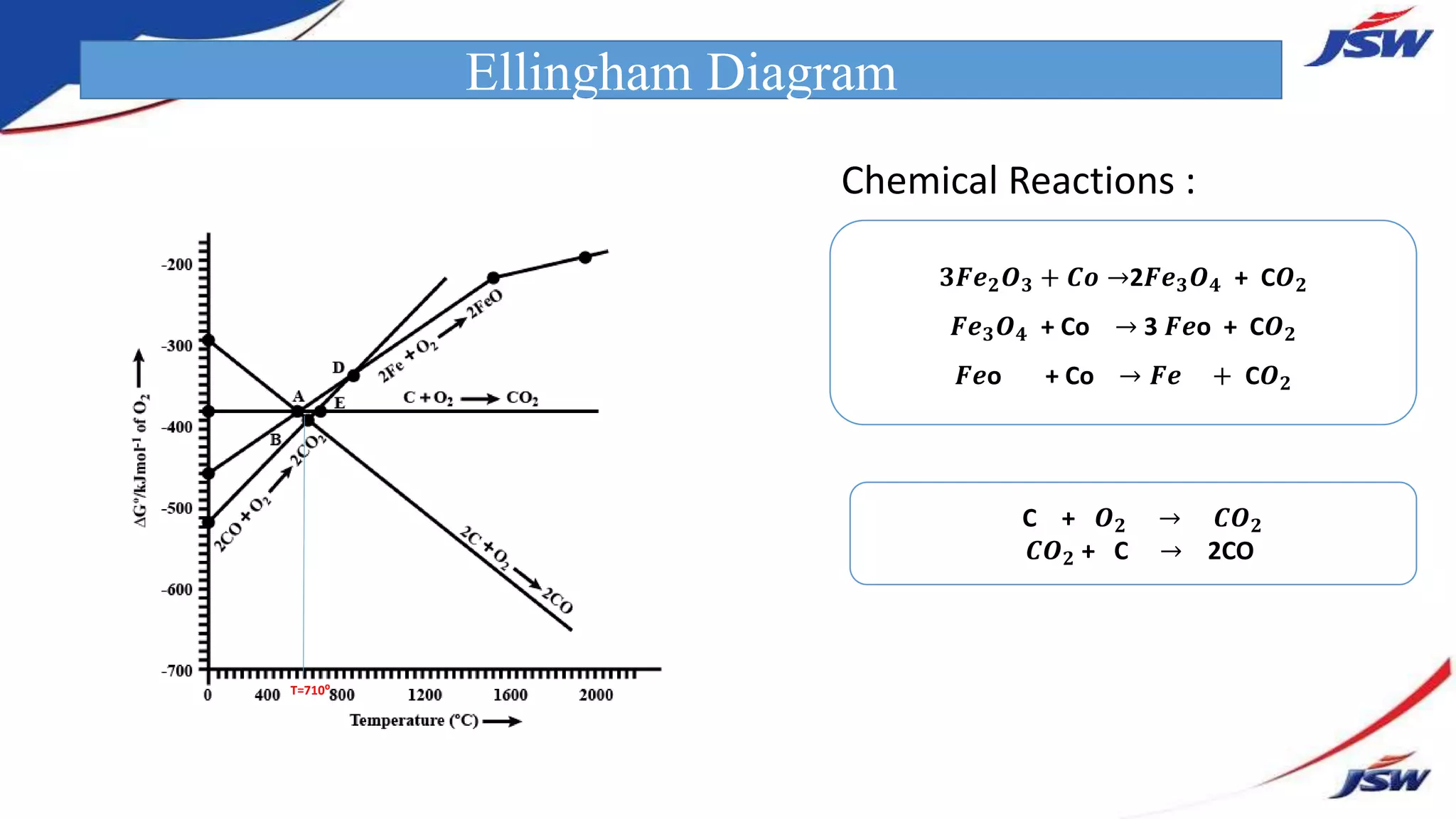
Ellingham Diagram
T=710⁰
𝟑𝑭𝒆𝟐𝑶𝟑 + 𝑪𝒐 →2𝑭𝒆𝟑𝑶𝟒 + C𝑶𝟐
𝑭𝒆𝟑𝑶𝟒 + Co → 3 𝑭𝒆o + C𝑶𝟐
𝑭𝒆o + Co → 𝑭𝒆 + C𝑶𝟐
C + 𝑶𝟐 → 𝑪𝑶𝟐
𝑪𝑶𝟐 + C → 2CO
Chemical Reactions :
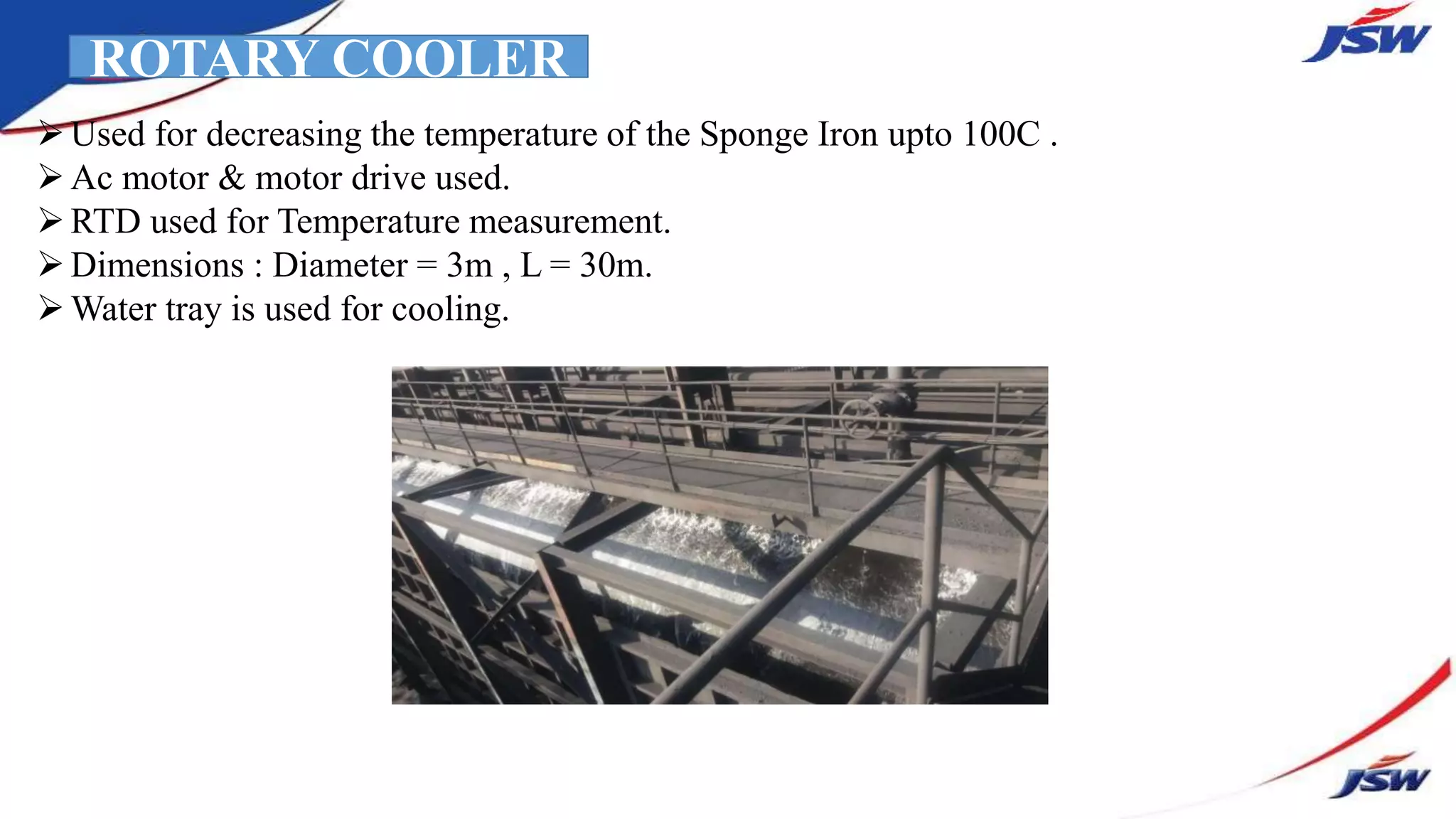
Used for decreasing the temperature of the Sponge Iron upto 100C .
Ac motor & motor drive used.
RTD used for Temperature measurement.
Dimensions : Diameter = 3m , L = 30m.
Water tray is used for cooling.
ROTARY COOLER
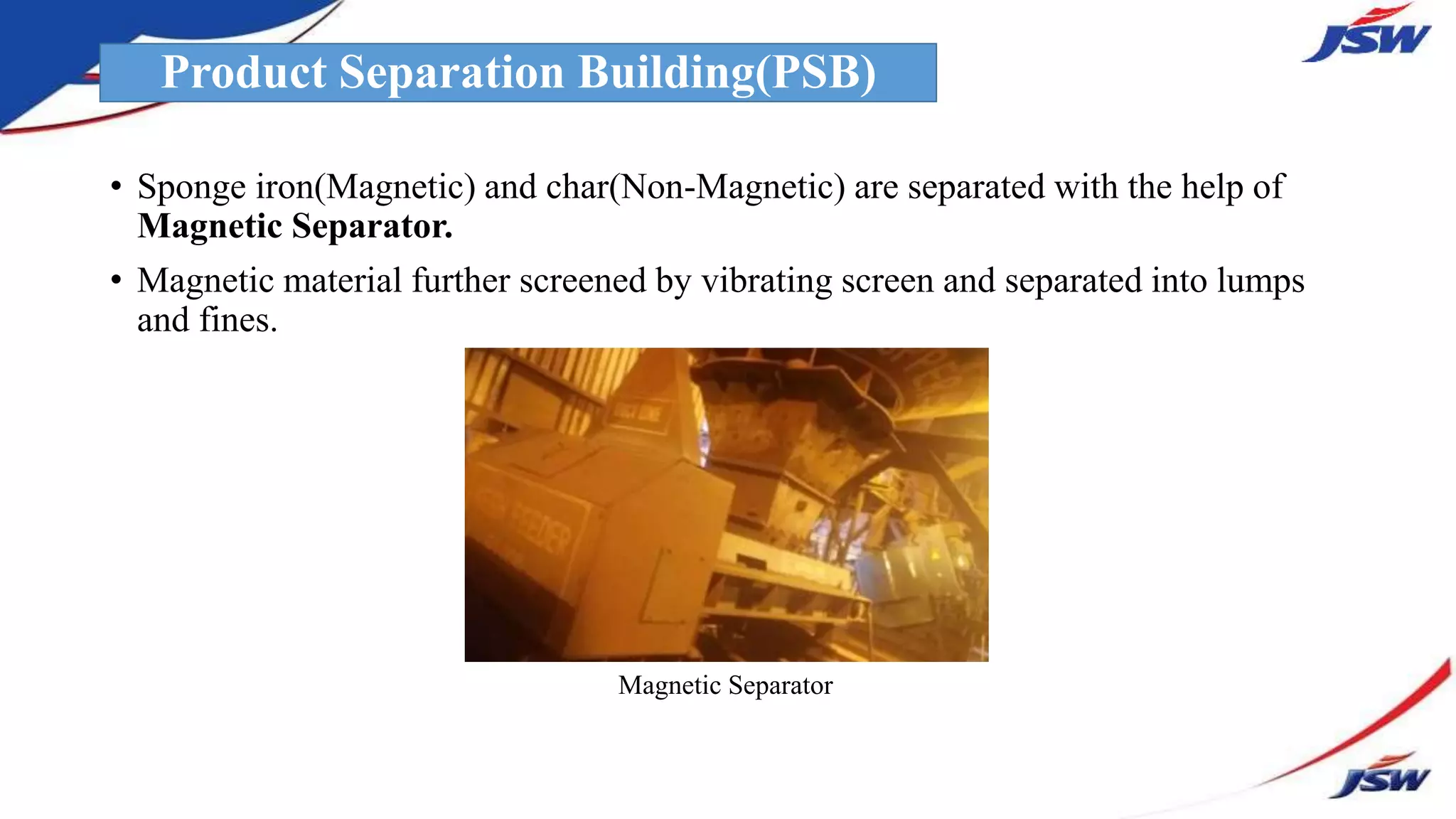
Product Separation Building(PSB)
• Sponge iron(Magnetic) and char(Non-Magnetic) are separated with the help of
Magnetic Separator.
• Magnetic material further screened by vibrating screen and separated into lumps
and fines.
Magnetic Separator
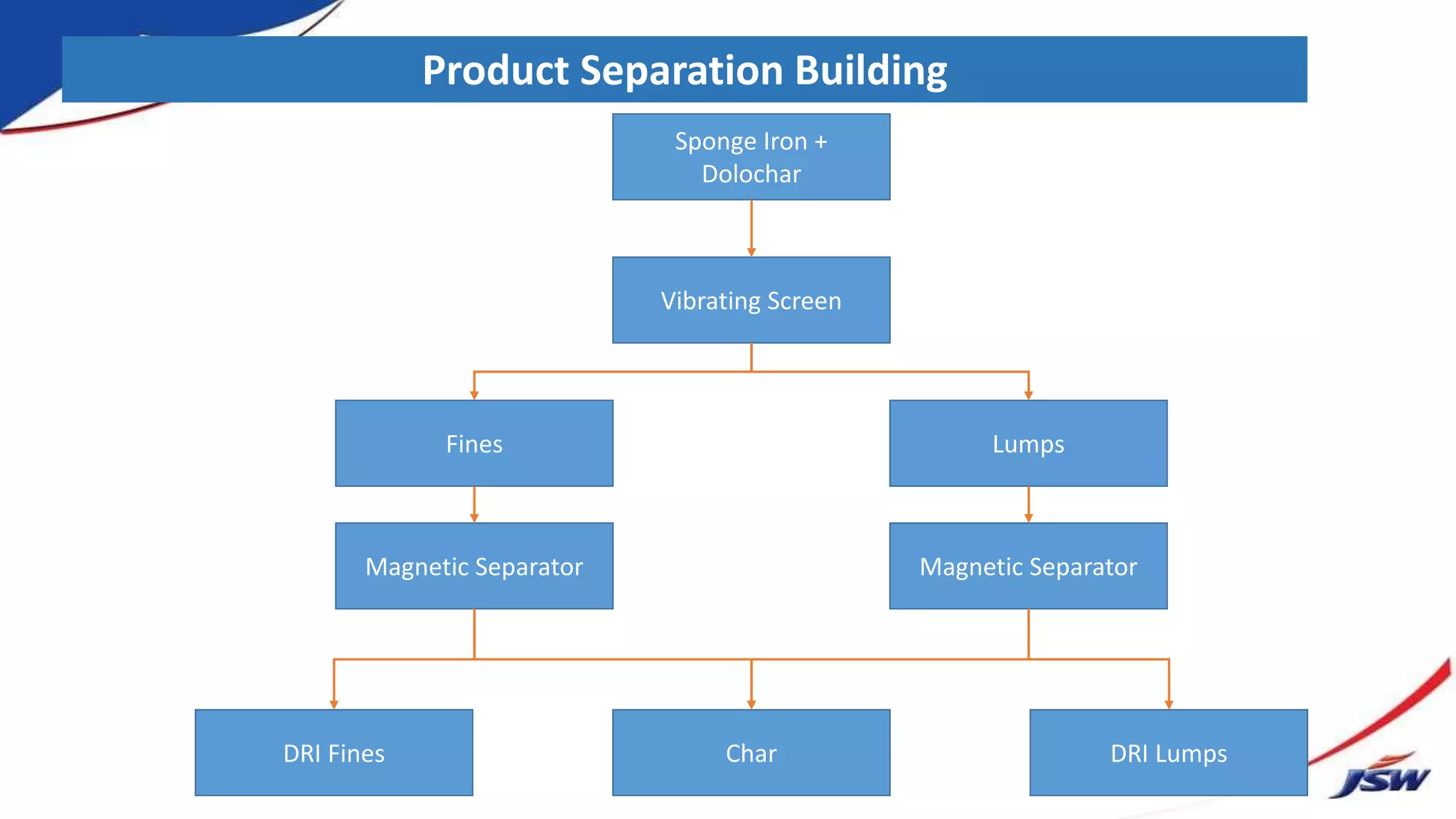
Sponge Iron +
Dolochar
Vibrating Screen
Fines Lumps
Magnetic Separator Magnetic Separator
DRI Fines DRI Lumps
Char
Product Separation Building
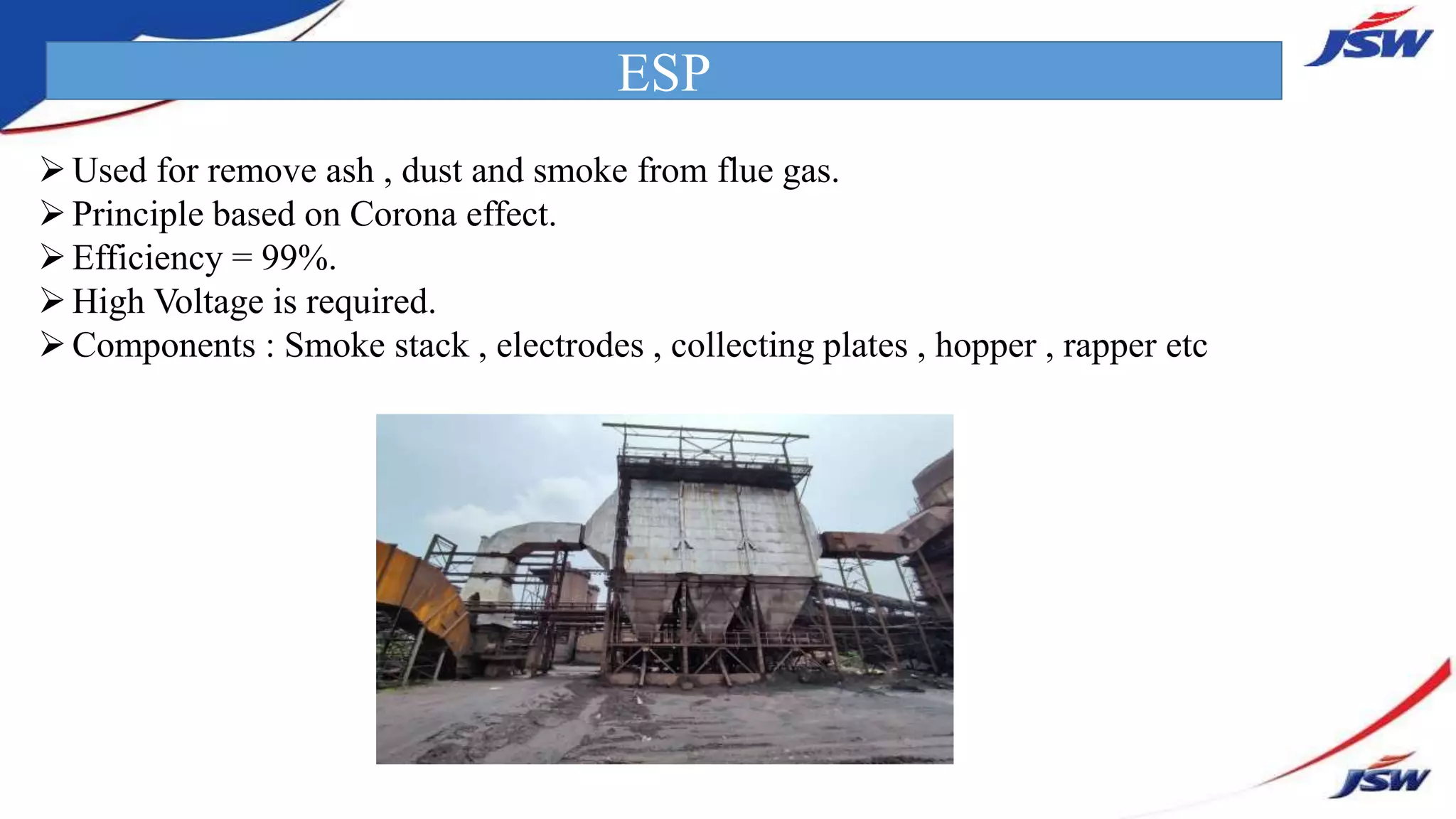
ESP
Used for remove ash , dust and smoke from flue gas.
Principle based on Corona effect.
Efficiency = 99%.
High Voltage is required.
Components : Smoke stack , electrodes , collecting plates , hopper , rapper etc
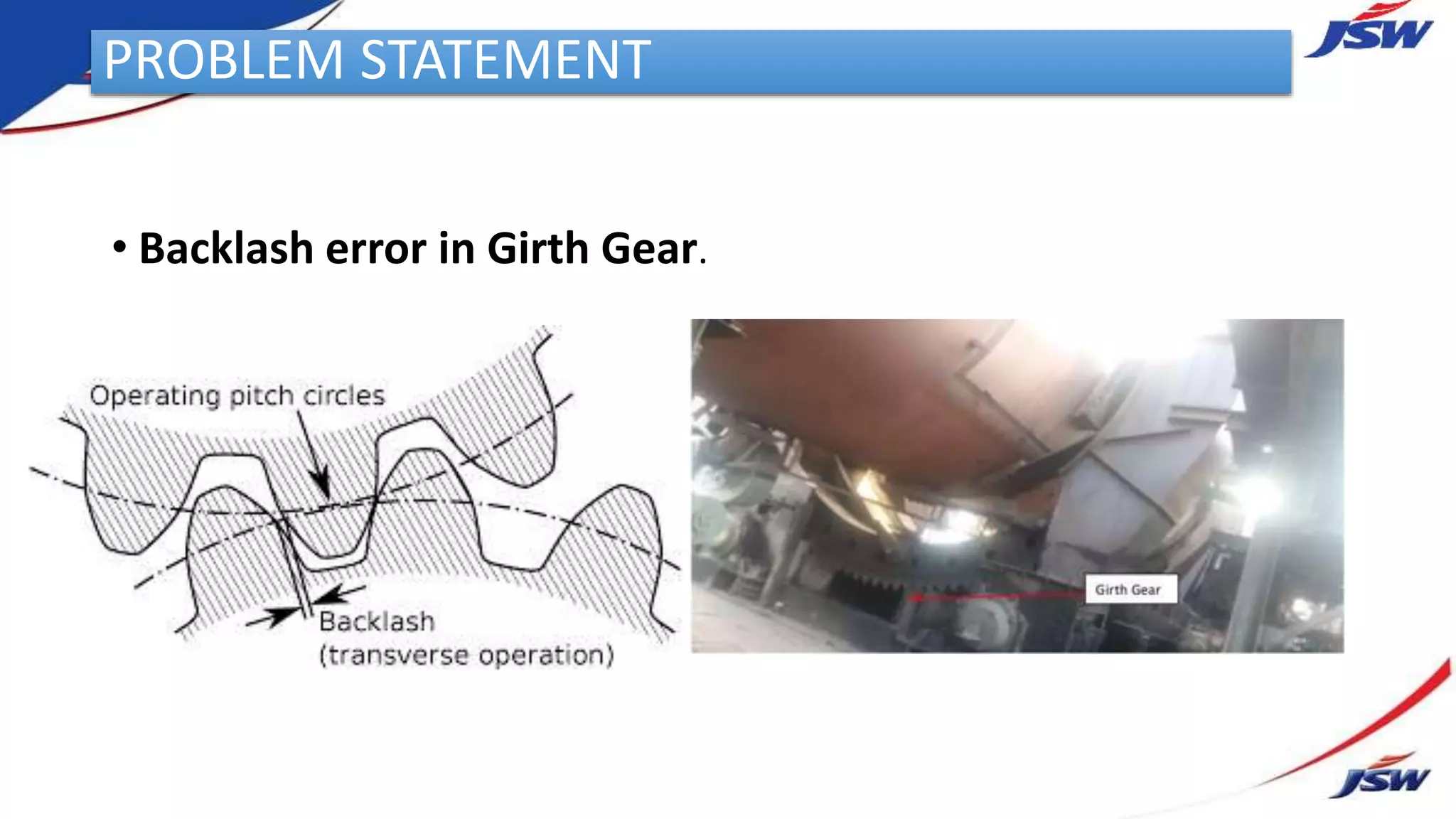
PROBLEM STATEMENT
• Backlash error in Girth Gear.
.
• Grinding should be done on the gear teeths.
• Oiling should be done.
Solution
.
• Leakages from rotary cooler cause corrosion.
Harmful effect of corrosion:-
• It cause crack on the surface of metal
• it reduce the quality and strength of metal surface.
PROBLEM STATEMENT
SOLUTION
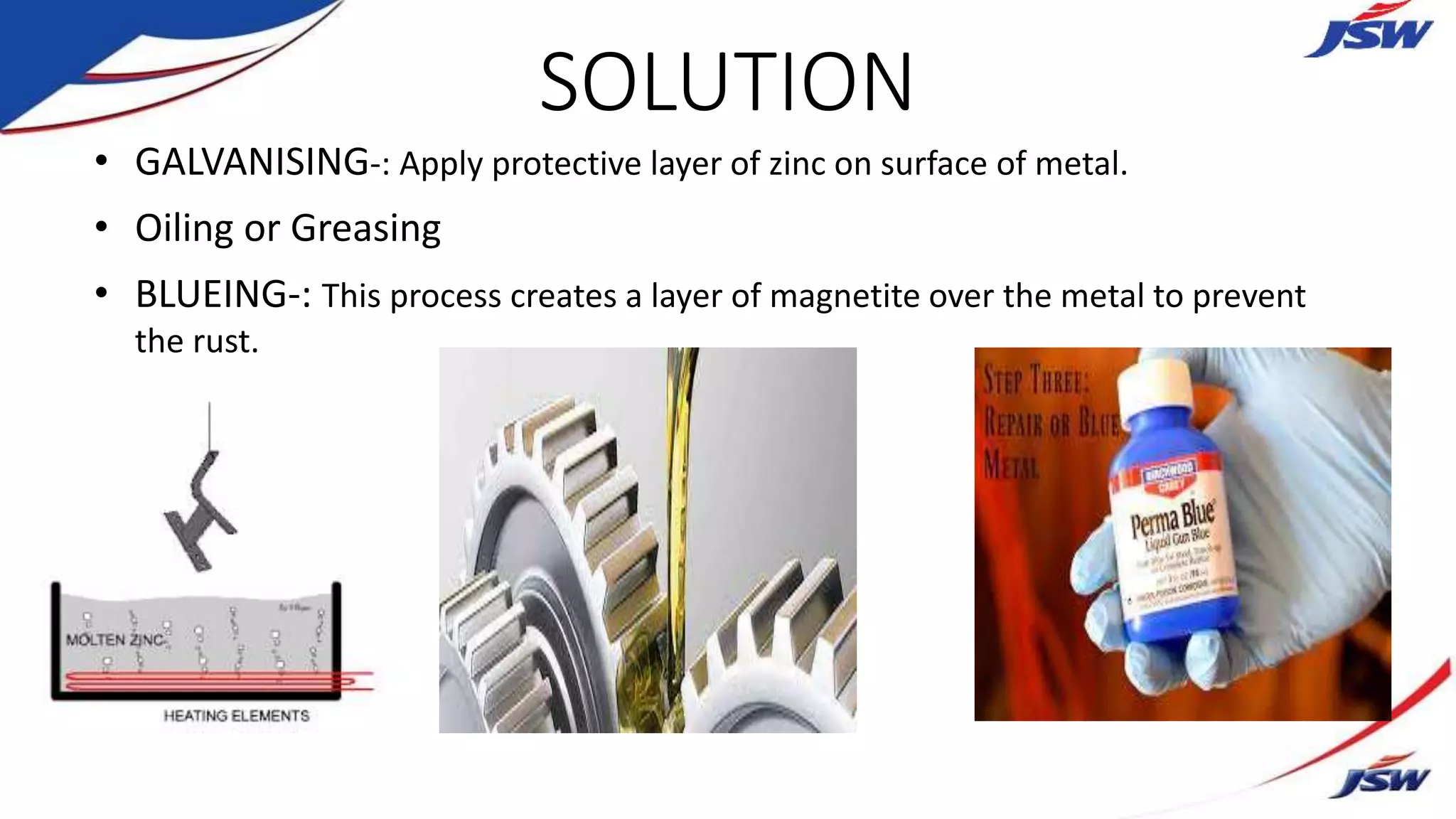
• GALVANISING-: Apply protective layer of zinc on surface of metal.
• Oiling or Greasing
• BLUEING-: This process creates a layer of magnetite over the metal to prevent
the rust.
PROBLEM STATEMENT
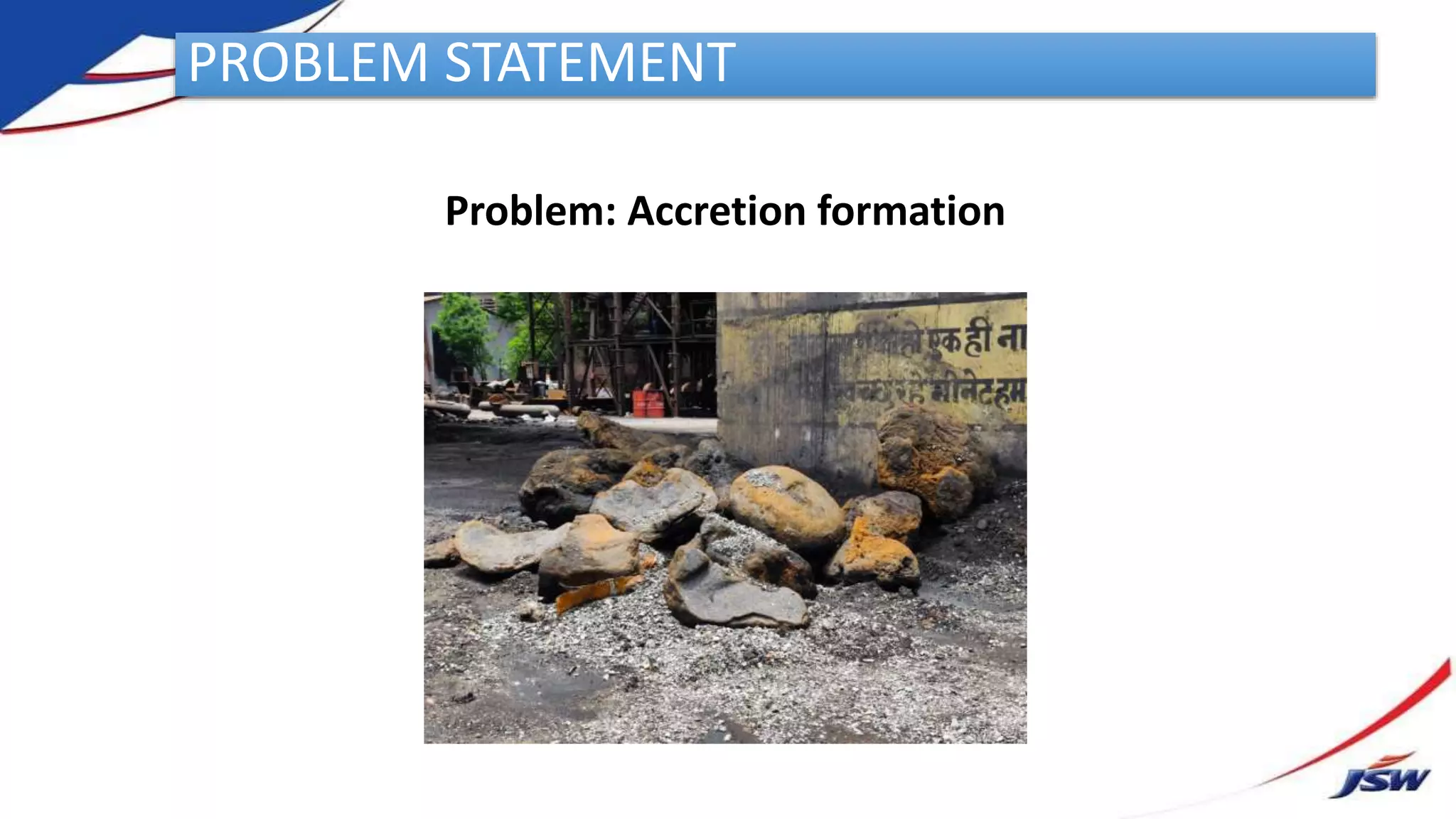
Problem: Accretion formation
Solution
1. Using good quality of raw
materials:
A. Iron ore:
• Low gangue content
• High tumbler index
• Low abrasion index
2. By increasing the fusion temperature of the complex compound which sticks to
refractory wall
By using Dolomite the fusion temperature can be increased.
3. By performing the procedure and maintaining the temperatures inside the Kiln.
. B. Non-coking coal:
• Low ash content
• High reactivity
• High ash fusion temperature
• Low swelling and caking index
DRI PLANT.pptx

DRI PLANT.pptx

  • 1.
    Presentation on DRIPlant • Shashank Gautam • Rahul Mandal • Himanshu Ranjan • Konkala Navyasri Reddy • Arpon Samui • Harsh Chauhan • Anoop Tiwari • Gaurav Jain • Ruchi Kushwaha • Sevi Dewarwar • Aakanksha GROUP MEMBERS
  • 2.
    CONTENT • Overview • Purposeof Sponge Iron • Raw material • Flow Chart • Process • Rotary Kiln • Ellingham Diagram and Chemical Reactions • Rotary Cooler • PSB • ESP • Problem Statement
  • 3.
    Direct reduced iron(DRI) also known as Sponge Iron. It is the product which is produced by the direct reduction of iron ore or other iron bearing materials in the solid state by using non-coking coal. Overview of DRI(Direct reduced Iron)
  • 4.
    • It isa superior substitute of steel scrap for EAF(electric arc furnace) and Induced furnace. • Sponge iron has low Sulphur content. • Sponge iron is a pivotal material used for the production of various steel items like best quality TMT bars, Ductile Iron (DI) pipes. Purpose of Sponge iron
  • 5.
    • Coal Fines(0-5mmin size) – Injection coal from kiln outlet • Iron ore(5 -25mm in size)- Raw material (pellet) which is feed from inlet • Dolomite(1- 6 mm in size)- for removing coal Sulphur • Coal(3-20mm in size) – Feed from inlet • Coal Lumps(5-25mm in size)- feed from inlet Raw materials used in DRI
  • 6.
  • 7.
    PROCESS Raw material(Coal, Pellets,Dolomite) is taken from the RMHS and stored in Bunkers. 4 bins : 2 for feed Coal , 1 for pellets , 1 for Dolomite. Mixture of these 3 goes to Kiln by using Conveyor. In the Kiln we use injector for injecting fine and coarse coal. Then heated Sponge iron goes to cooler and gets cooled up to 100C. Cooled Material goes to PSB building for Screening and Separation of material . PROCESS
  • 8.
    • Kiln isthe major equipment in DRI Plant, which is also known as Rotary Furnace. • The transport rate of materials through the kiln can be controlled by varying its slope and speed of rotation(0.3 RPM) • Length of Kiln=76m • Diameter of Kiln=4.3m ROTARY KILN
  • 9.
    Ellingham Diagram T=710⁰ 𝟑𝑭𝒆𝟐𝑶𝟑 +𝑪𝒐 →2𝑭𝒆𝟑𝑶𝟒 + C𝑶𝟐 𝑭𝒆𝟑𝑶𝟒 + Co → 3 𝑭𝒆o + C𝑶𝟐 𝑭𝒆o + Co → 𝑭𝒆 + C𝑶𝟐 C + 𝑶𝟐 → 𝑪𝑶𝟐 𝑪𝑶𝟐 + C → 2CO Chemical Reactions :
  • 10.
    Used for decreasingthe temperature of the Sponge Iron upto 100C . Ac motor & motor drive used. RTD used for Temperature measurement. Dimensions : Diameter = 3m , L = 30m. Water tray is used for cooling. ROTARY COOLER
  • 11.
    Product Separation Building(PSB) •Sponge iron(Magnetic) and char(Non-Magnetic) are separated with the help of Magnetic Separator. • Magnetic material further screened by vibrating screen and separated into lumps and fines. Magnetic Separator
  • 12.
    Sponge Iron + Dolochar VibratingScreen Fines Lumps Magnetic Separator Magnetic Separator DRI Fines DRI Lumps Char Product Separation Building
  • 13.
    ESP Used for removeash , dust and smoke from flue gas. Principle based on Corona effect. Efficiency = 99%. High Voltage is required. Components : Smoke stack , electrodes , collecting plates , hopper , rapper etc
  • 14.
    PROBLEM STATEMENT • Backlasherror in Girth Gear.
  • 15.
    . • Grinding shouldbe done on the gear teeths. • Oiling should be done. Solution
  • 16.
    . • Leakages fromrotary cooler cause corrosion. Harmful effect of corrosion:- • It cause crack on the surface of metal • it reduce the quality and strength of metal surface. PROBLEM STATEMENT
  • 17.
    SOLUTION • GALVANISING-: Applyprotective layer of zinc on surface of metal. • Oiling or Greasing • BLUEING-: This process creates a layer of magnetite over the metal to prevent the rust.
  • 18.
  • 19.
    Solution 1. Using goodquality of raw materials: A. Iron ore: • Low gangue content • High tumbler index • Low abrasion index 2. By increasing the fusion temperature of the complex compound which sticks to refractory wall By using Dolomite the fusion temperature can be increased. 3. By performing the procedure and maintaining the temperatures inside the Kiln. . B. Non-coking coal: • Low ash content • High reactivity • High ash fusion temperature • Low swelling and caking index

Editor's Notes

  • #7 WHRB- Waste Heat Recovery Boiler ABC – After Burning Chamber PSB- product Separation building