2
IInd Seminar on
Wel-come
Vijay kumar S.
2015A28D
“role of dreb -genes in crop improvement”
Conclusions
Case studies
Biological role of DREB transcripstion factor.
Mechanism of DREB transcription factor.
What is DREB gene …??
Introduction
2
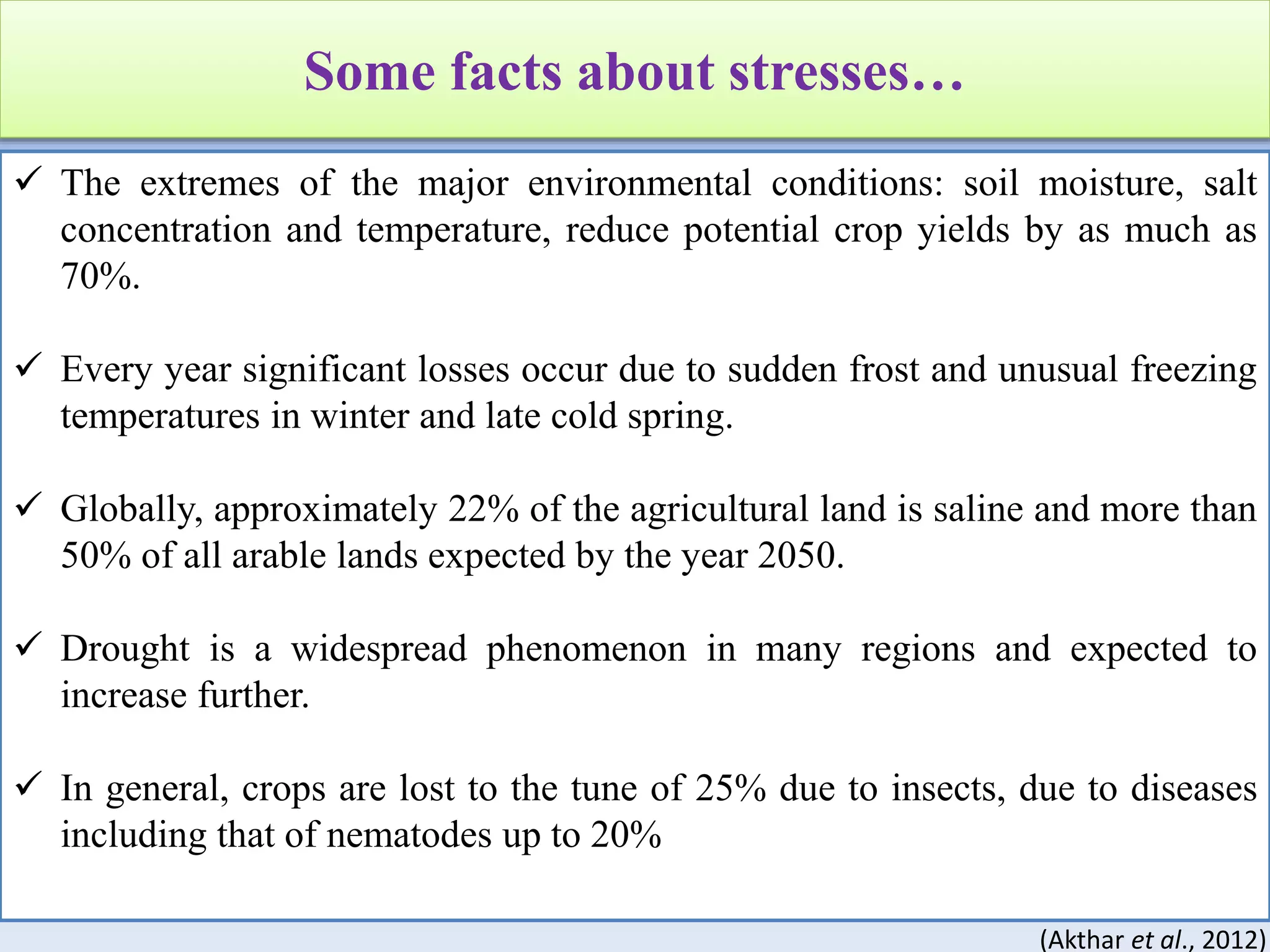
Some facts about stresses…
 The extremes of the major environmental conditions: soil moisture, salt
concentration and temperature, reduce potential crop yields by as much as
70%.
 Every year significant losses occur due to sudden frost and unusual freezing
temperatures in winter and late cold spring.
 Globally, approximately 22% of the agricultural land is saline and more than
50% of all arable lands expected by the year 2050.
 Drought is a widespread phenomenon in many regions and expected to
increase further.
 In general, crops are lost to the tune of 25% due to insects, due to diseases
including that of nematodes up to 20%
(Akthar et al., 2012)
(Agarwal et al., 2006)
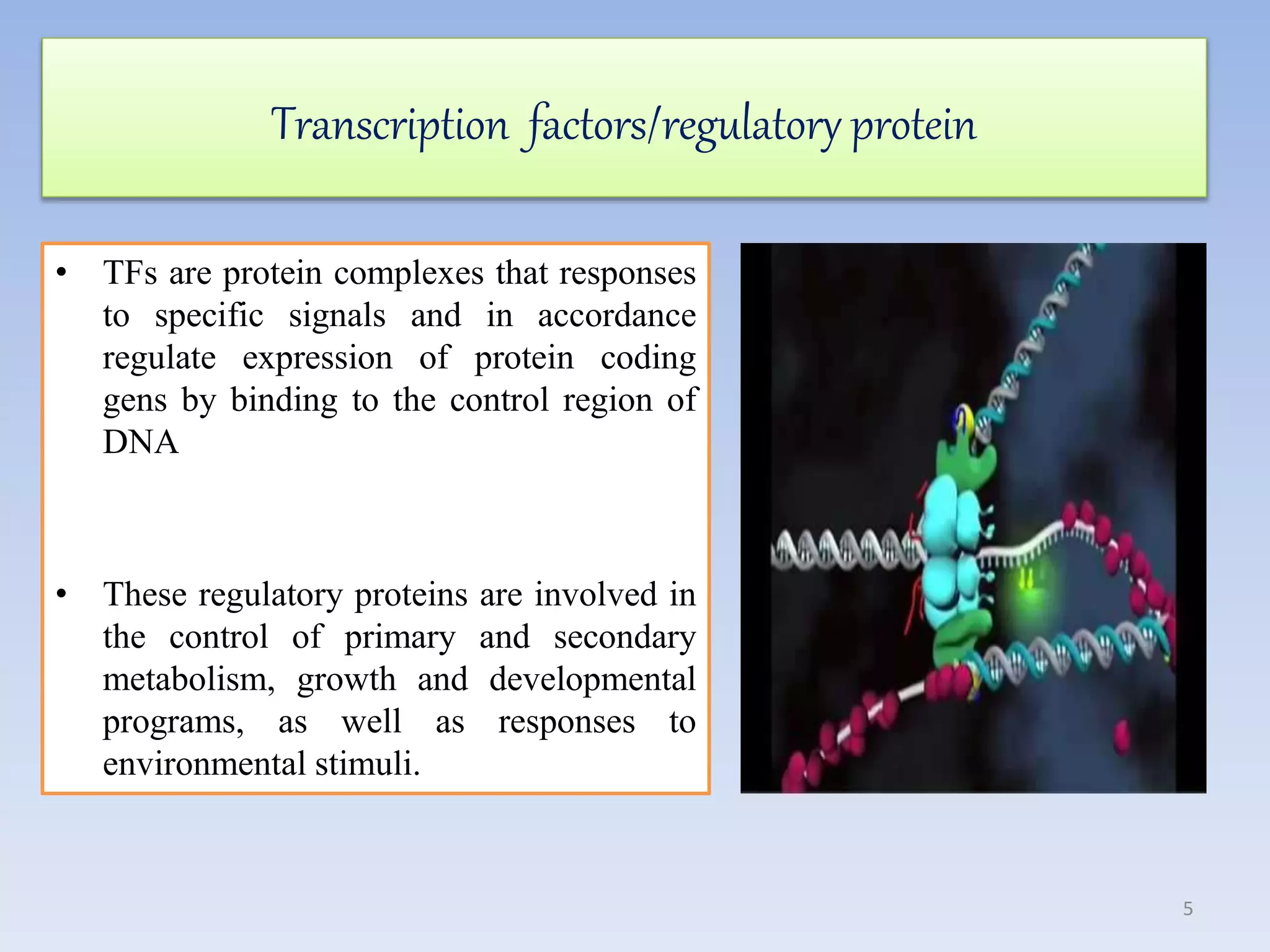
Transcription factors/regulatory protein
• TFs are protein complexes that responses
to specific signals and in accordance
regulate expression of protein coding
gens by binding to the control region of
DNA
• These regulatory proteins are involved in
the control of primary and secondary
metabolism, growth and developmental
programs, as well as responses to
environmental stimuli.
5
6
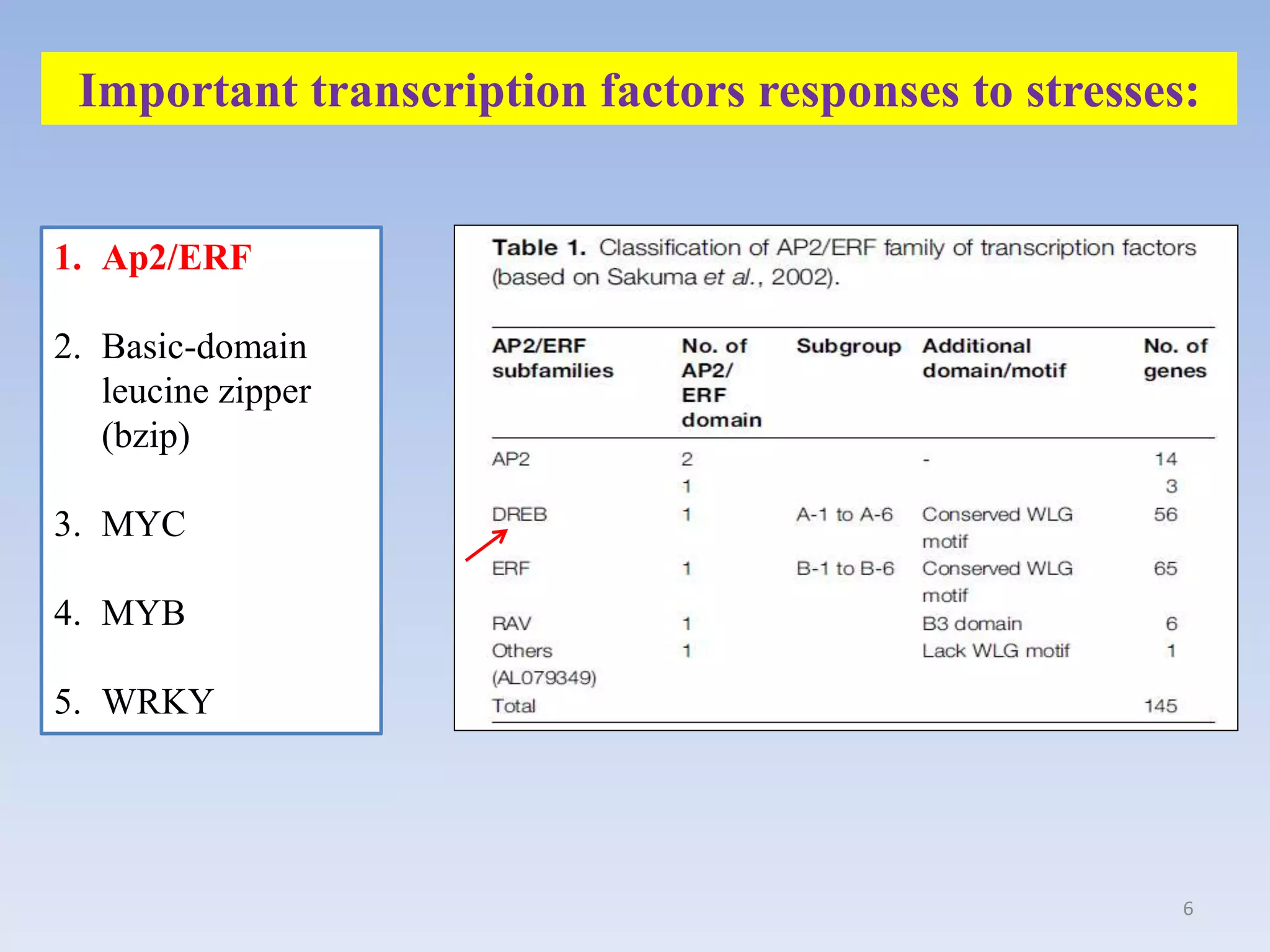
Important transcription factors responses to stresses:
1. Ap2/ERF
2. Basic-domain
leucine zipper
(bzip)
3. MYC
4. MYB
5. WRKY
what is DREB..?
• Dehydration Responsive Element Binding
• DREB transcription factors are one of the largest sub-families
of transcriptional regulators in plants
• DREB proteins are involved in responses to abiotic stresses
• DREB exhibit extensive auto-regulation and cross-regulation
that facilitates transcriptional reprogramming in plant
• The DREB gene with 9bp conserved core sequence was first
identified in Arabidopsis in 1993
• The first isolated cDNAs encoding DRED protein in 1997
7
Structural characteristics of DREB TFs
• All TFs have a DNA binding domain containing a short peptide region called
the DNA-binding motif.
• Proteins belongs to DREB have highly conserved DNA binding domain called
AP2 /ERF domain consisting of ~60 amino acids.
• DNA-binding domain that directly interact with GCC box or dehydration
responsive element(DRE) or C-repeat element (CRT) cis-acting element at the
promoter of downstream target gene.
• The amino acids Valine (at position 14) and glutamic acid (19) in the AP2/ERF
domain are quite conserved and play a central role in recognition and binding
specificity of Cis elements.
8
• The entry of DREB proteins is mediated by one or two nuclear localization signal
(NLS).
• AP2 domain play a central role in recognition and binding specificity of cis
element. 30 aa sequence rich in basic and hydrophobic in nature.
• All the DREB/CBF genes posses carboxyl terminal acidic region. This region is
supposed to be a transcriptional activator motif.
• DSAW and LWSY motif are the signature sequences are specifically found in
A1 sub group.
• The DREB/CBF-type proteins have a basic-amino acid-rich stretch having
consensus sequence PKRPAGRTKFRETRHP as NLS.
9
Structure of the DREB domain
10
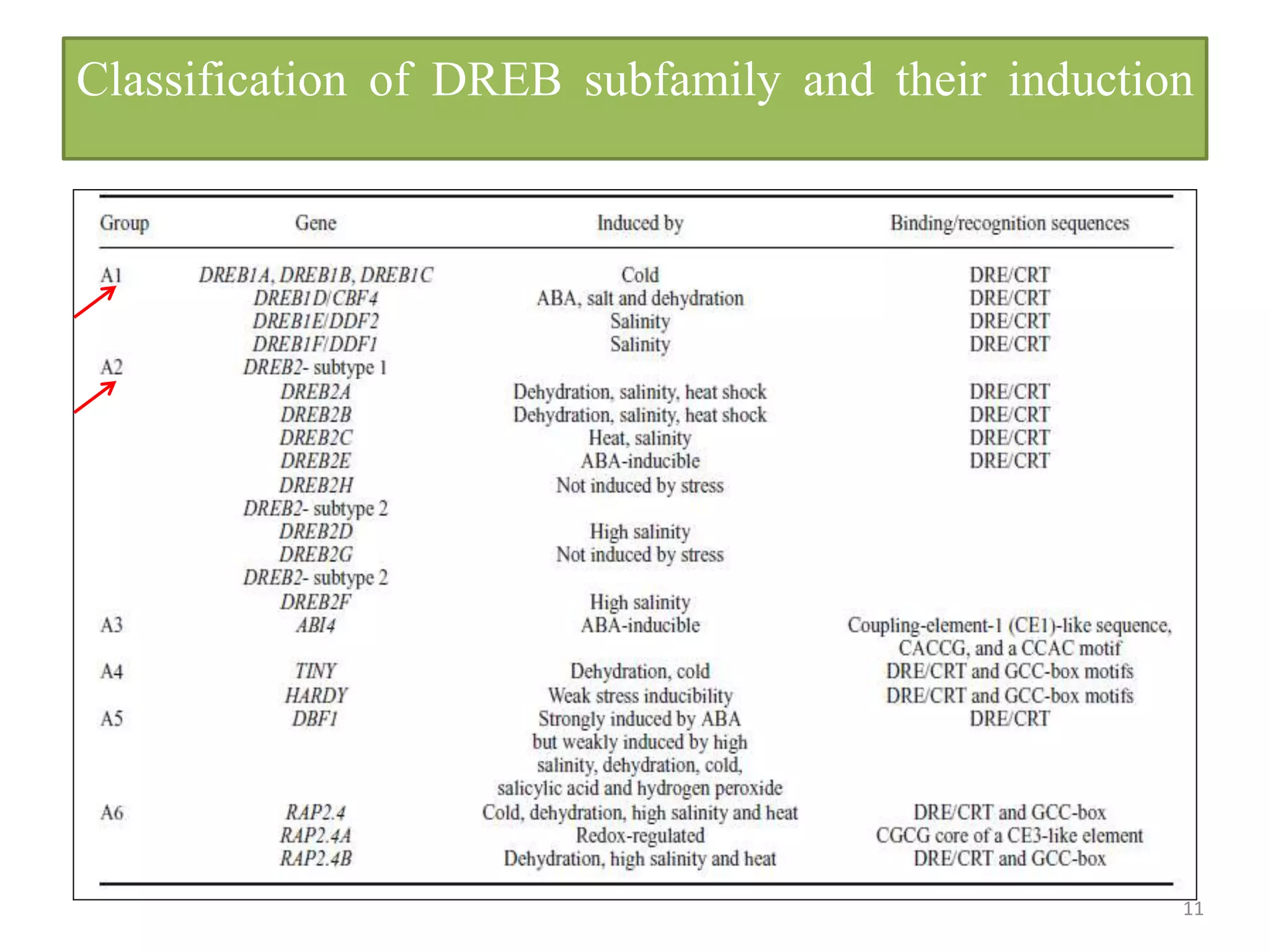
Classification of DREB subfamily and their induction
11
The newly discovered non-plant protein bearing an AP2 domain are predicted to be
HNH endonucleases
Horizontal transfer of an HNH-AP2 endonuclease from bacteria or virus in to
plants may lead to the origin of the AP2/ERF FAMILY
origin and evolution
12
(Magnani et al., 2004)
Stress signal perception pathways of DREB
13
(Lata and Prasad 2011)
Expression analysis of DREB
In Arabidopsis, out of six DREB1 genes DREB1A, DREB1B and DREB1C were
expressed at high levels under cold stress but not under drought or high-salinity
stress.
It is well known that expressions of the A-1 group of genes is induced by low
temperature, but not by drought or high-salt stress,
while A-2 group genes are regulated by salt and drought, but not by cold.
The different abiotic stress signalling pathways are assumed to interact and share
some common elements that formed as potential ‘node’ for crosstalk.
14
DREB1/CBF (A-1) subgroup — major regulator of
cold-stress responses
15
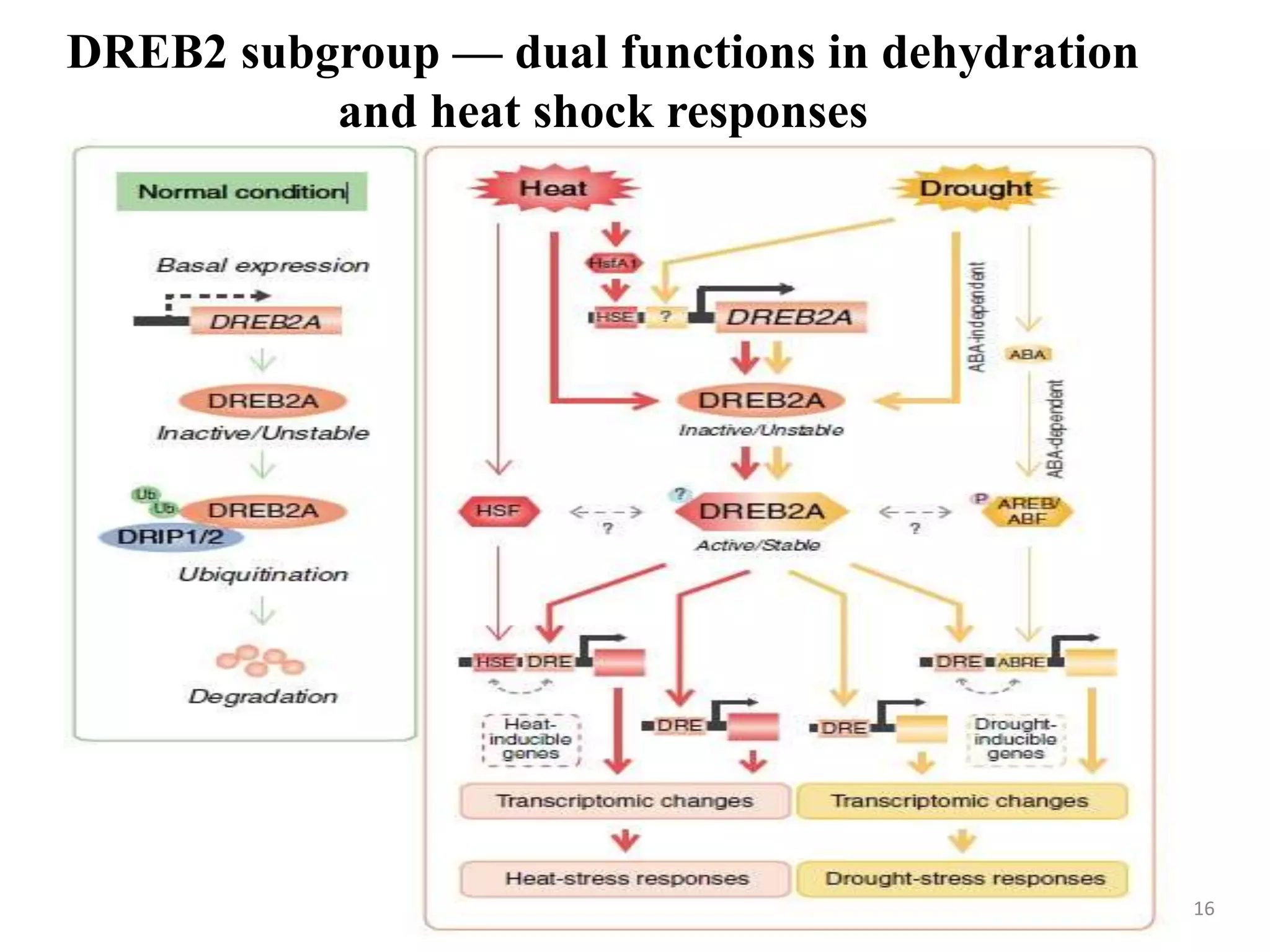
DREB2 subgroup — dual functions in dehydration
and heat shock responses
16
Case studies
17
Material:
1. Samba Mahsuri cultivar
2. TF- AtDREB1A
18
Expression cassette PCR analysis - TO
Southern analysis of To Copy no detection
RT-PCR of TO with DREB primers RT-PCR of TO with actin primers
19
21
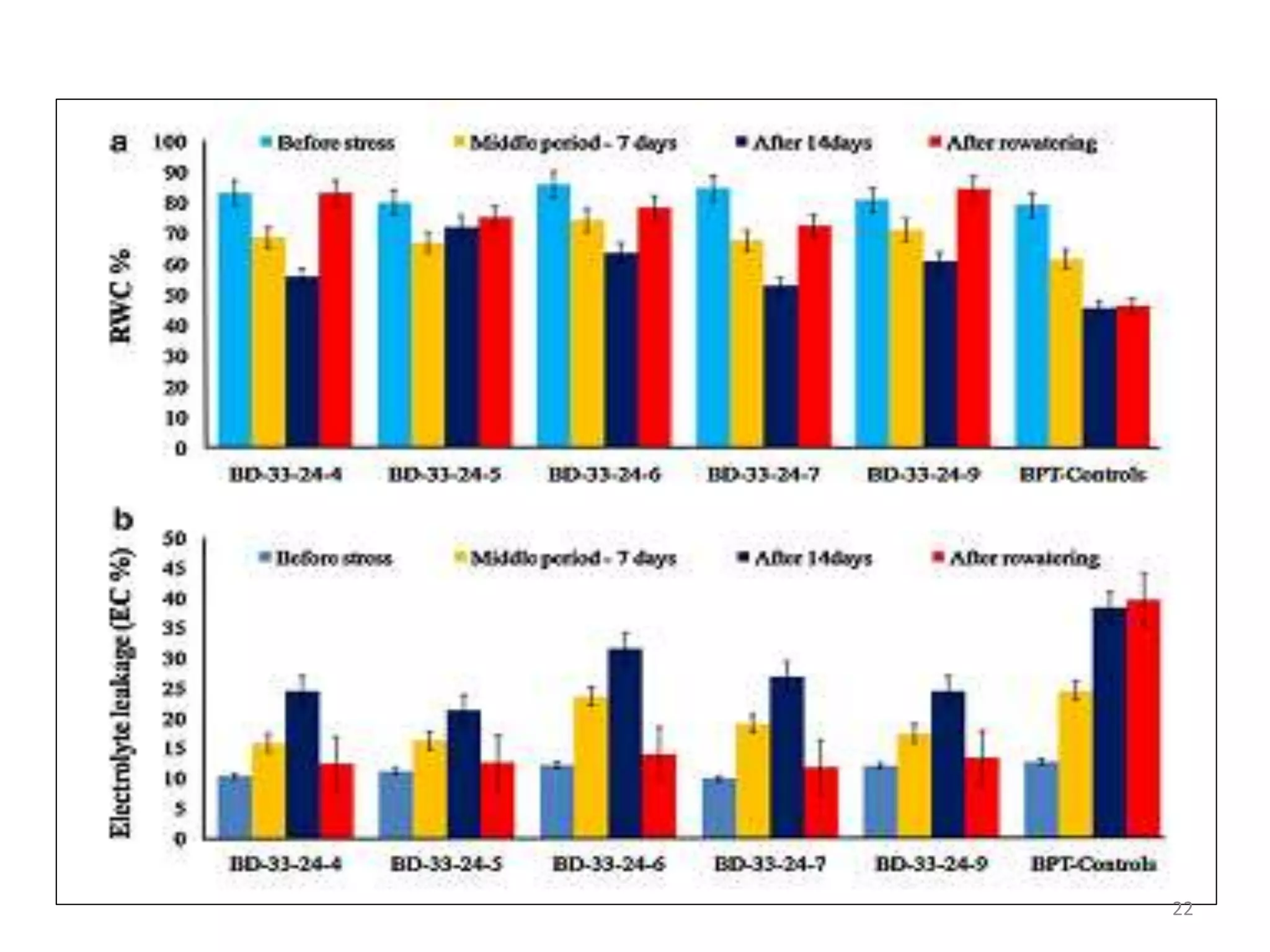
22
23
After withdrawal of water for
28 days
After 2 days of re-watering
Vandana Rasi BPT-control T5 transgenic lines
Evaluation
and
Screening
24
Conclusion for case study-1
1. Drought tolerance at both vegetative and reproductive stages.
2. DREB1A functioned in stress tolerance pathway.
3. Samba Mahsuri - a premium variety.
4. Selected transgenic lines would be valuable resource.
5. They can be used as a direct variety.
25
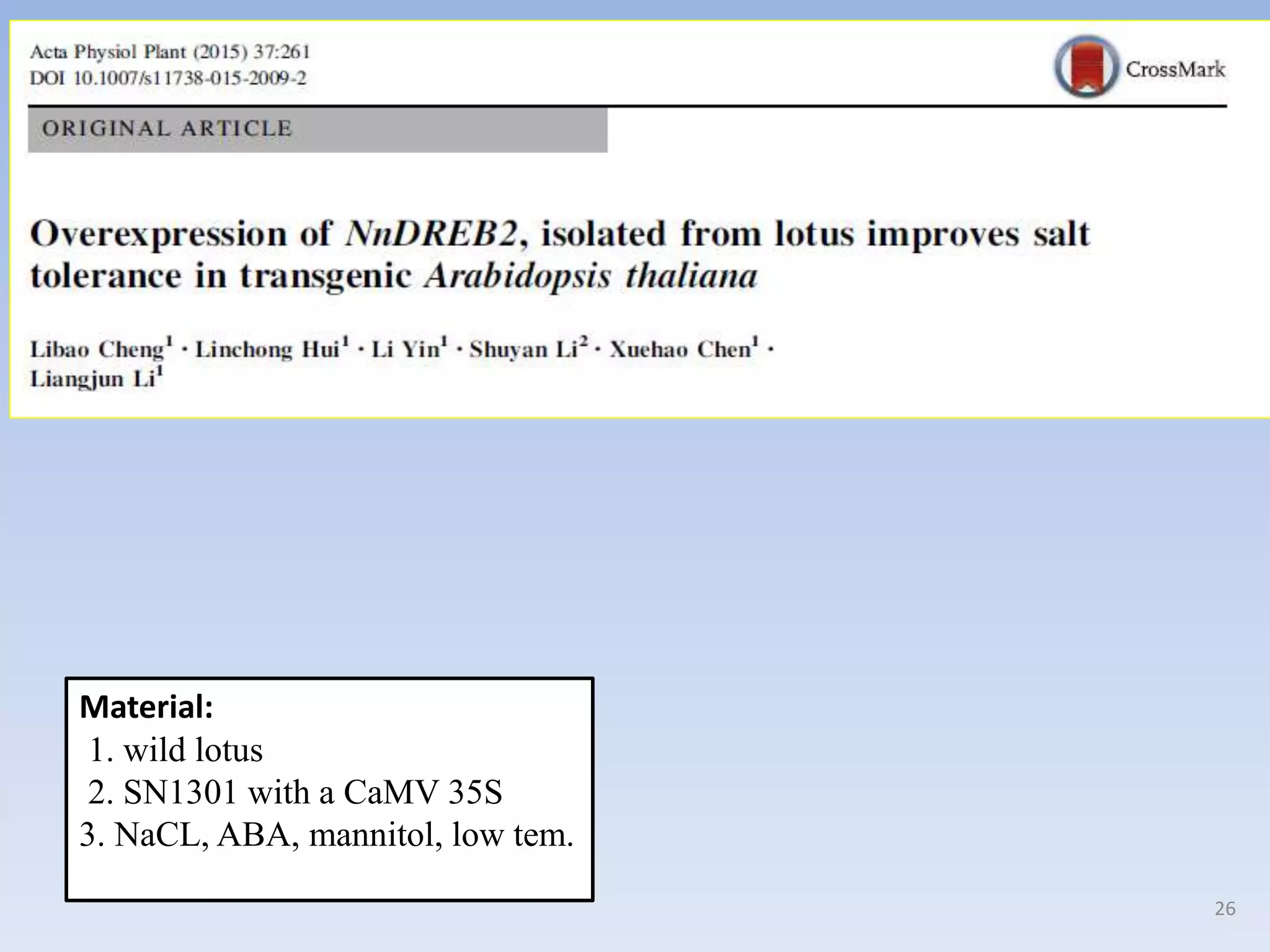
Material:
1. wild lotus
2. SN1301 with a CaMV 35S
3. NaCL, ABA, mannitol, low tem.
26
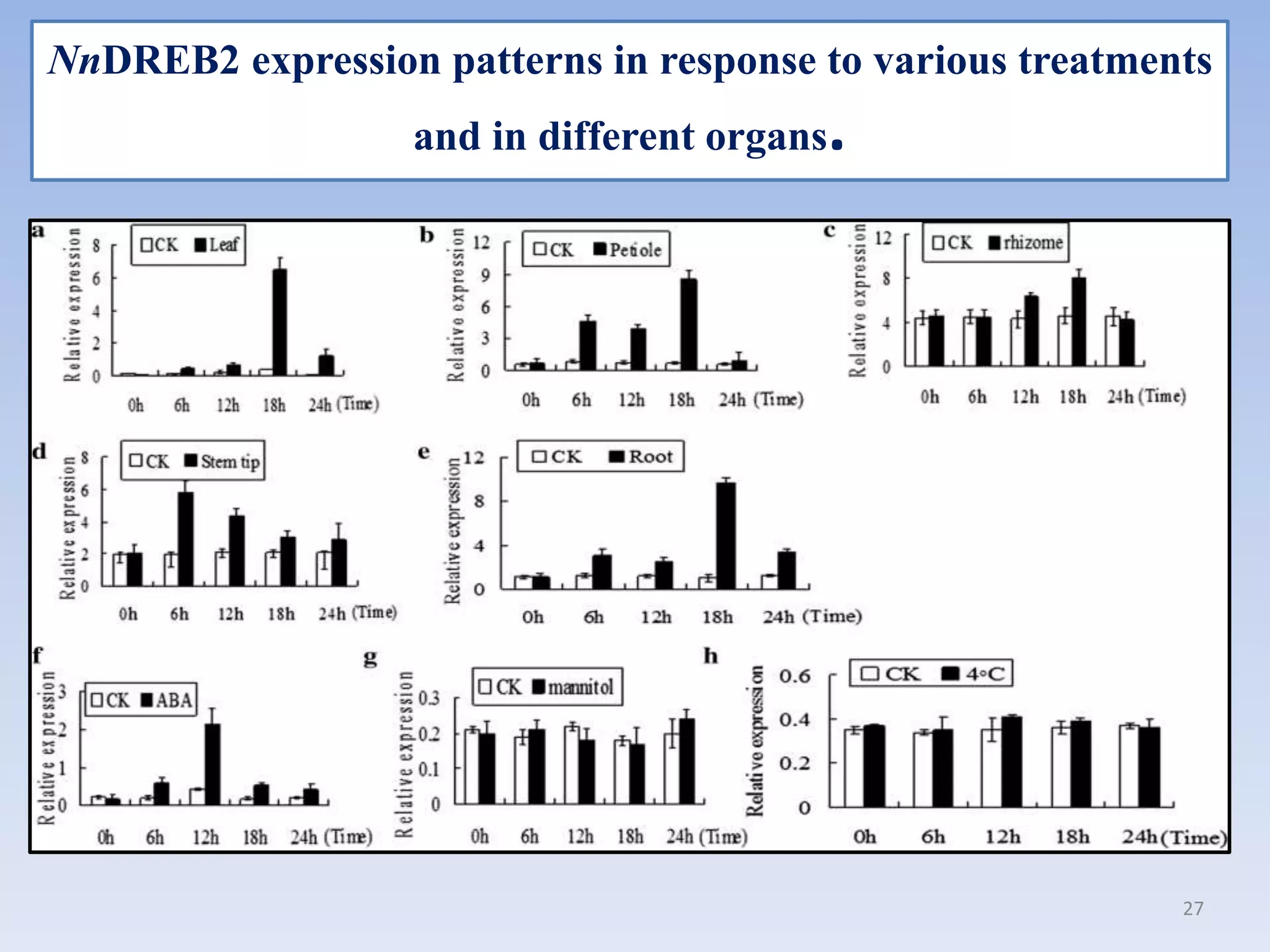
NnDREB2 expression patterns in response to various treatments
and in different organs.
27
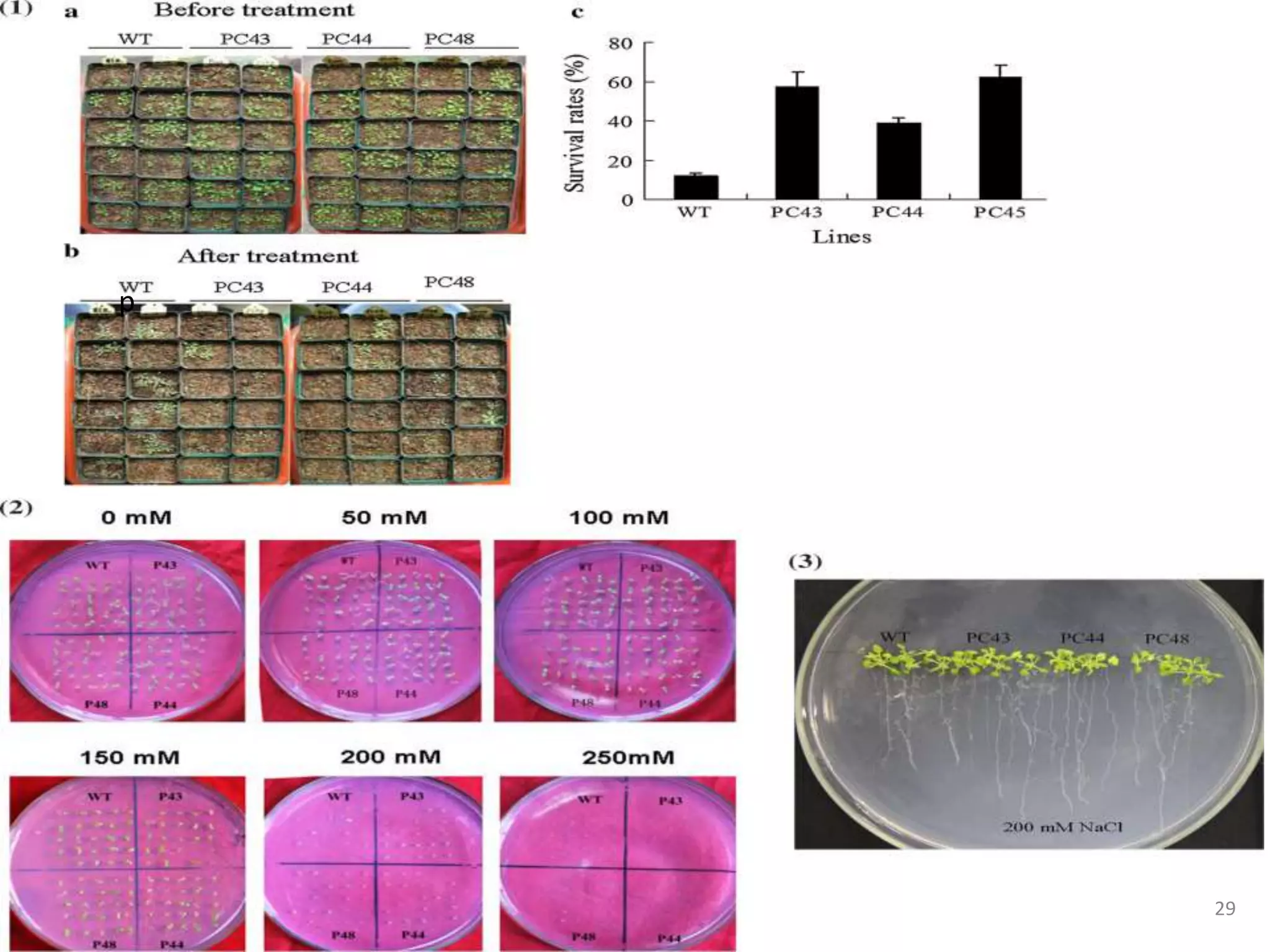
Screen of transgenic plants by RT-PCR method and
GUS staining
28
p
29
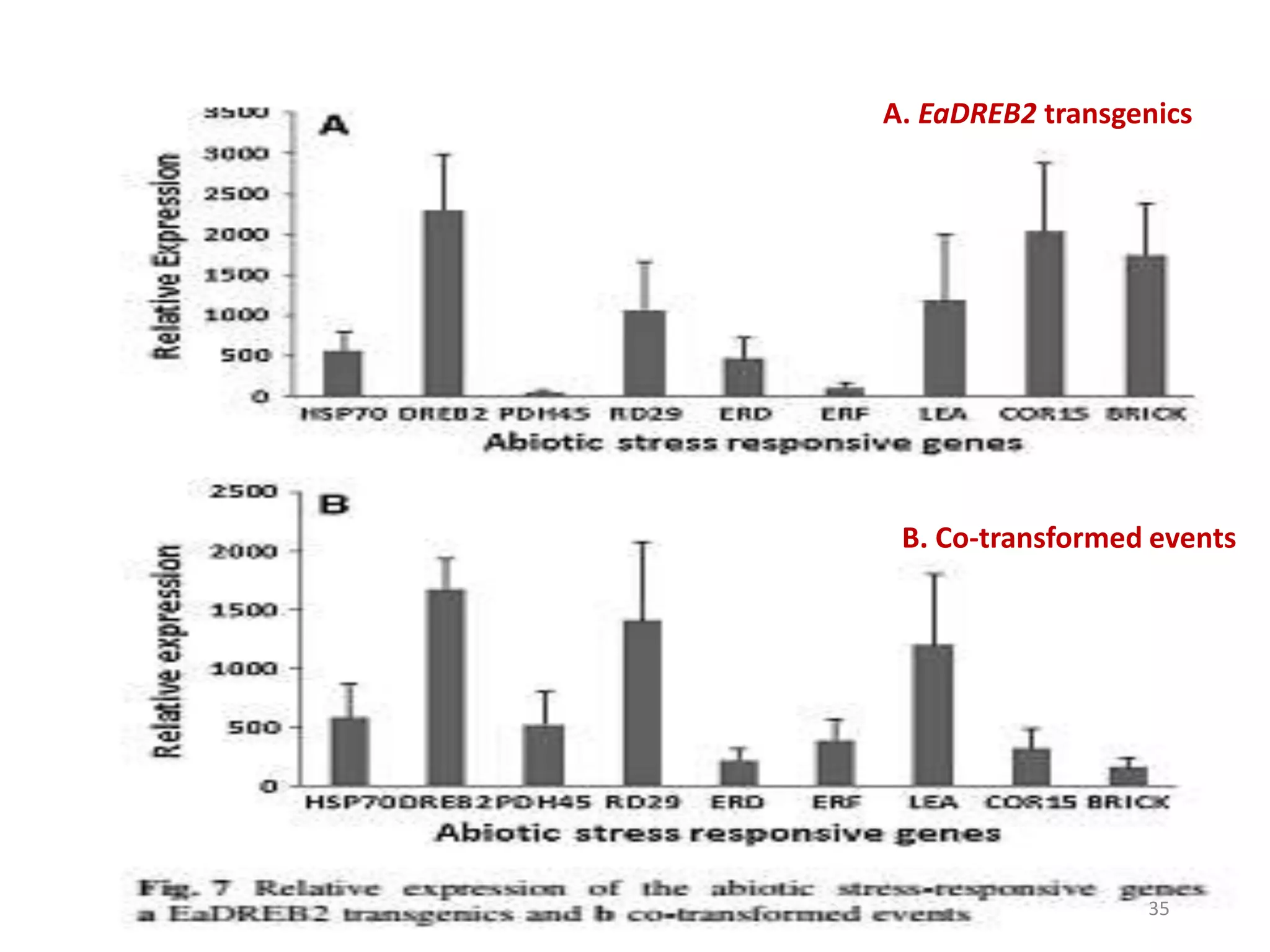
Expression profiling analysis of 22 stress-related genes
30
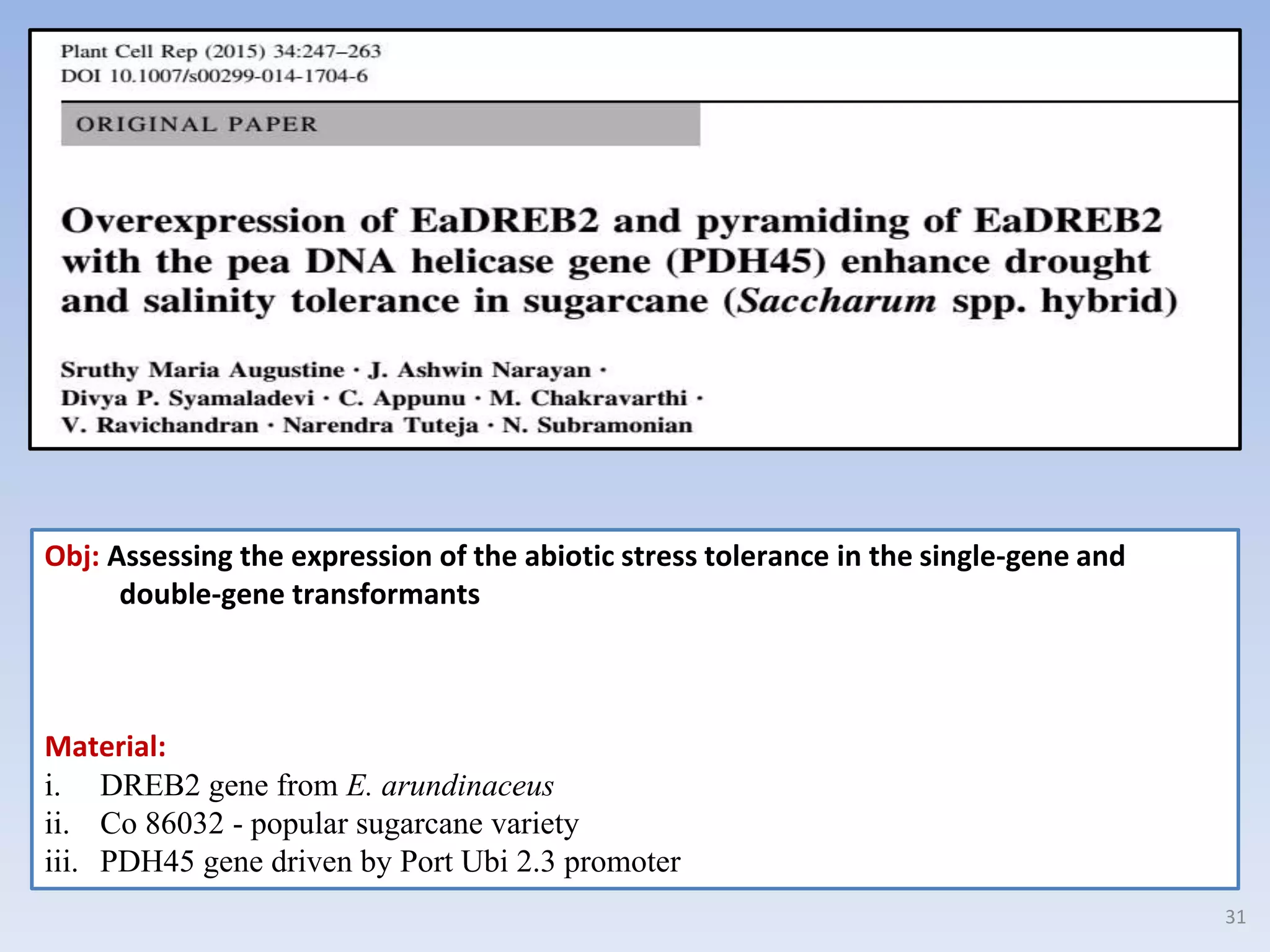
Obj: Assessing the expression of the abiotic stress tolerance in the single-gene and
double-gene transformants
Material:
i. DREB2 gene from E. arundinaceus
ii. Co 86032 - popular sugarcane variety
iii. PDH45 gene driven by Port Ubi 2.3 promoter
31
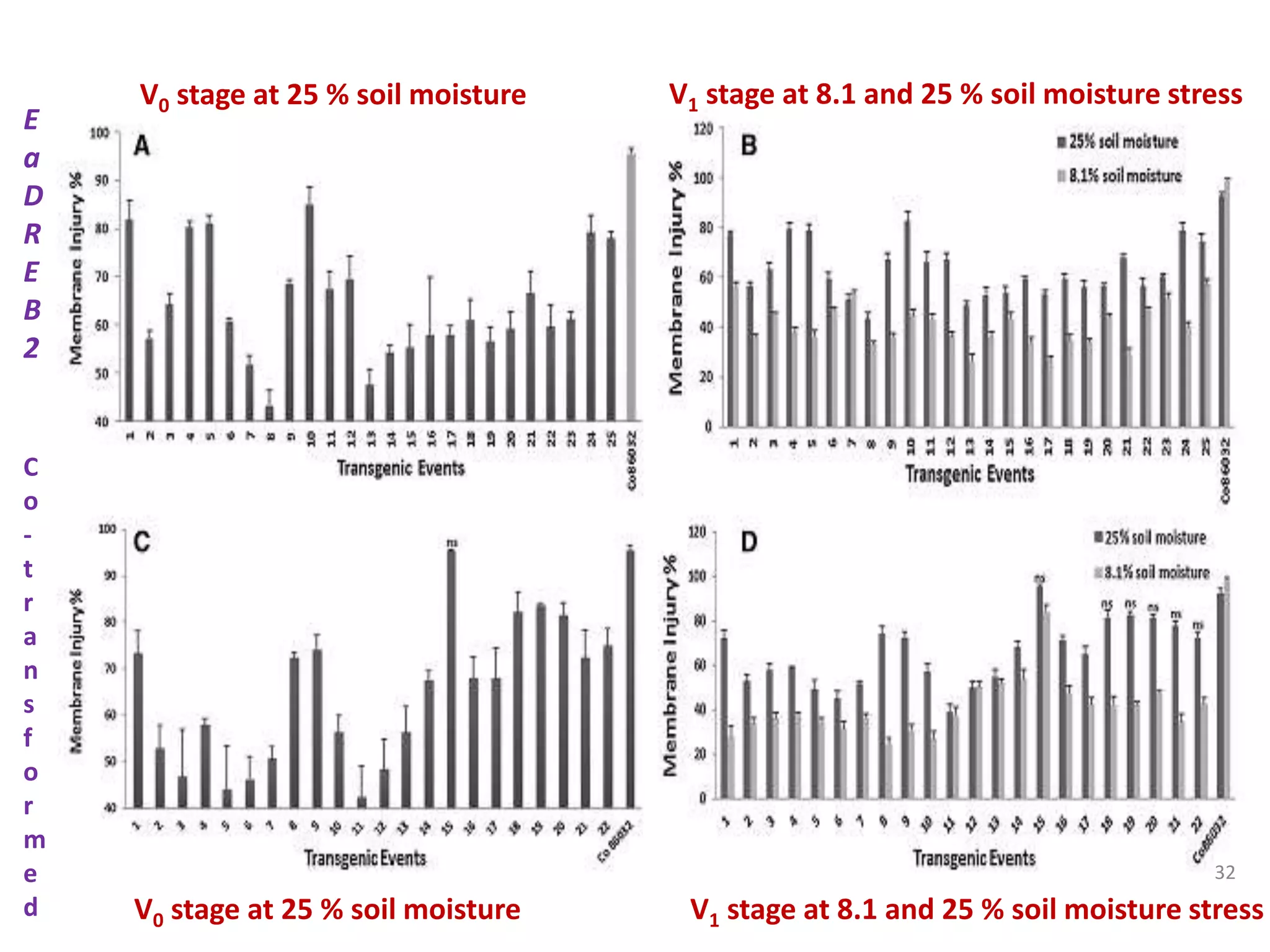
V0 stage at 25 % soil moisture V1 stage at 8.1 and 25 % soil moisture stress
E
a
D
R
E
B
2
C
o
-
t
r
a
n
s
f
o
r
m
e
d
32
33
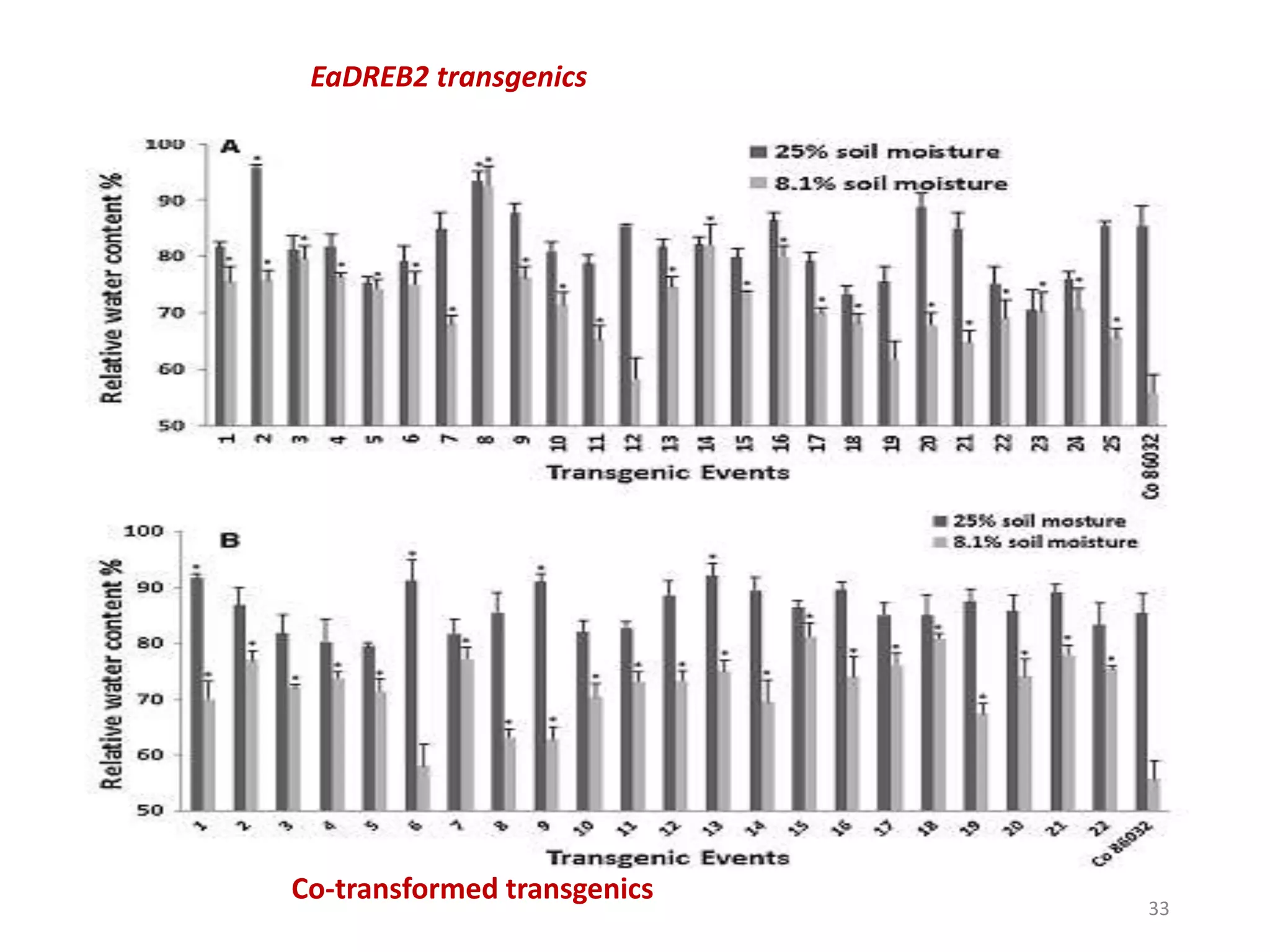
EaDREB2 transgenics
Co-transformed transgenics
34
A. EaDREB2 transgenics
B. Co-transformed events
35
Assay for salinity tolerance EaDREB2 36
Assay for salinity tolerance Co-transformed 37
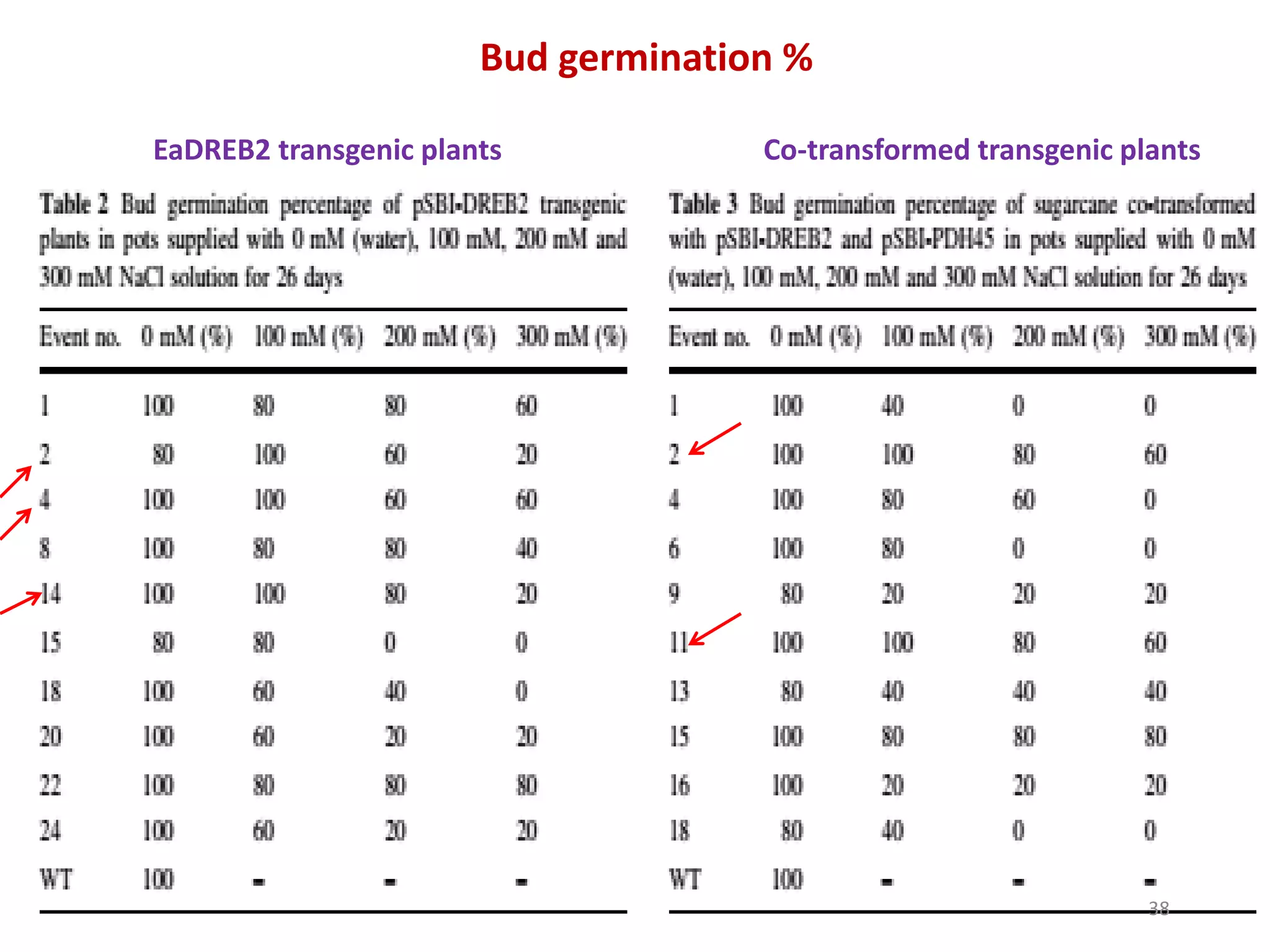
Bud germination %
EaDREB2 transgenic plants Co-transformed transgenic plants
38
Conclusion for case study-3
Transformation of sugarcane with the EaDREB2 gene under the control of the Port
Ubi 2.3 promoter enhanced the tolerance to water deficit and salinity stress
through improved physiological adaptation .
Improved salinity tolerance was observed in the co-transformed events compared
to that of EaDREB2 and enhanced stress-related gene expression.
Thus, for combining drought and salinity tolerance, pyramiding of these two genes
seems to be a better approach.
Further replicated field studies are needed to confirm their tolerance to drought
and salinity, along with the yield potential and water use efficiency.
39
40
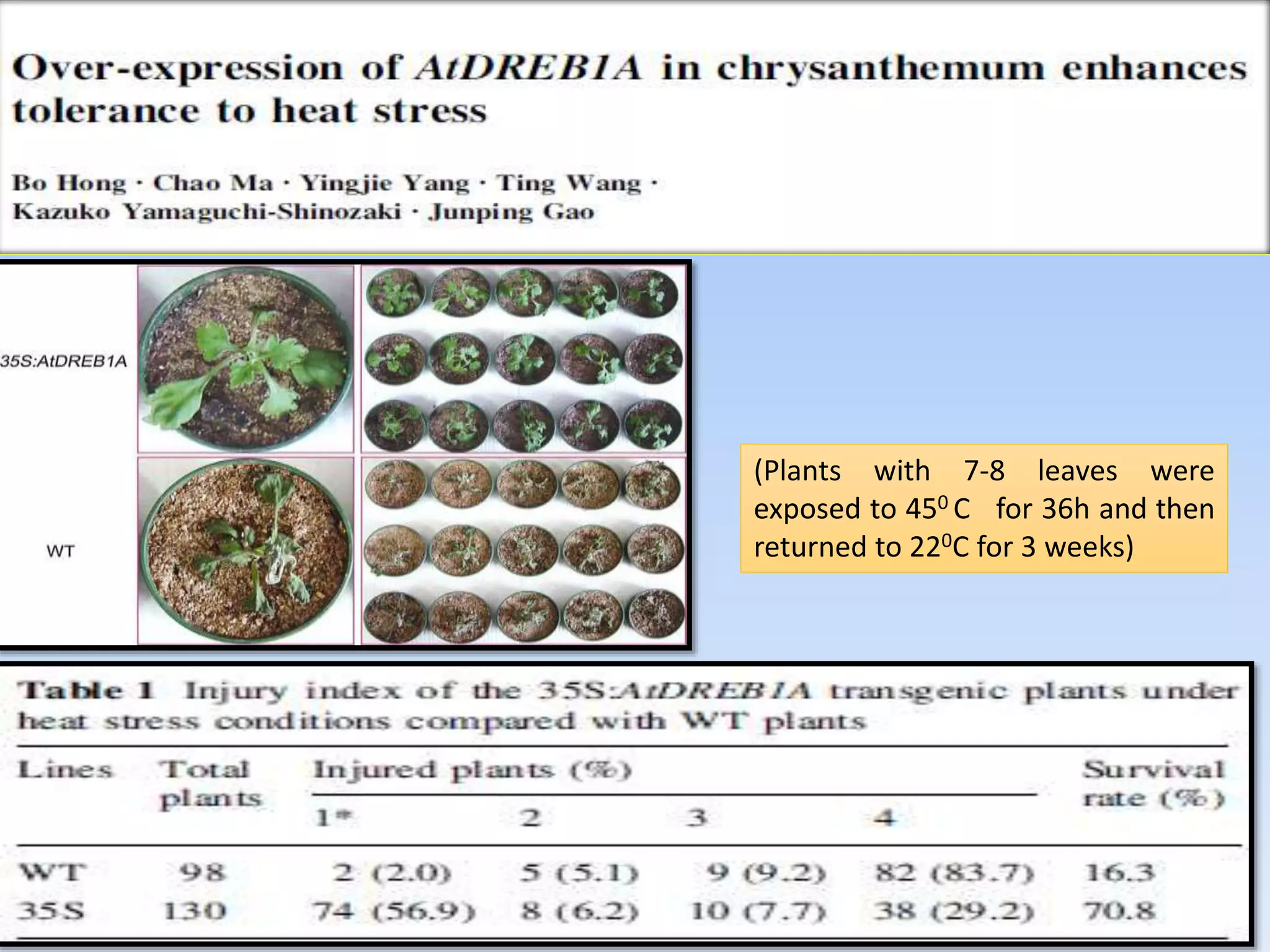
(Plants with 7-8 leaves were
exposed to 450 C for 36h and then
returned to 220C for 3 weeks)
41
Effect of heat stress on electrolyte leakage in transgenic
chrysanthemum
Expression of the AtDREB1A gene analyzed by RT-PCR
under heat conditions in transgenic plants exposed to 45C
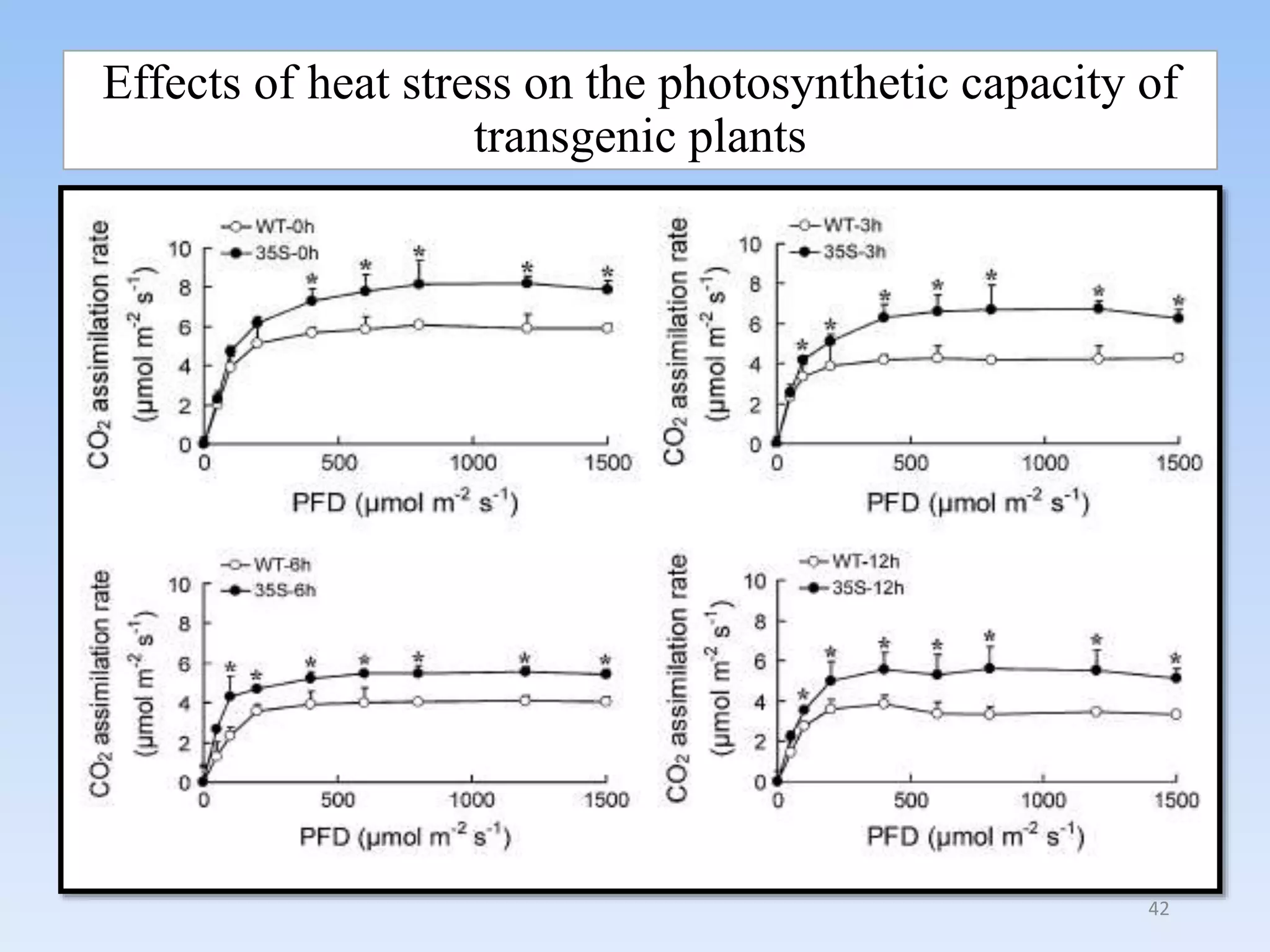
Effects of heat stress on the photosynthetic capacity of
transgenic plants
42
43
Conclusion :- AtDREB1A TF enhanced the CO2 assimilation rates and
Rubisco activity under heat stress condition in Chrysanthemum
Aim: To establish protocols for the development of genome-specific and allele specific
markers in common wheat using the Dreb1 genes.
Material:
1. Opata 85 T. aestivum L., AABBDD, 2n=6x=42)
2. DS107 T. durum (AABB, 2n=4x=28),
3. UR203 T. urartu (AA, 2n=2x=14),
4. 2046 Aegilops. speltoides (BB, 2n=2x=14),
5. Y2009 Ae. tauschii (DD, 2n=2x=14).
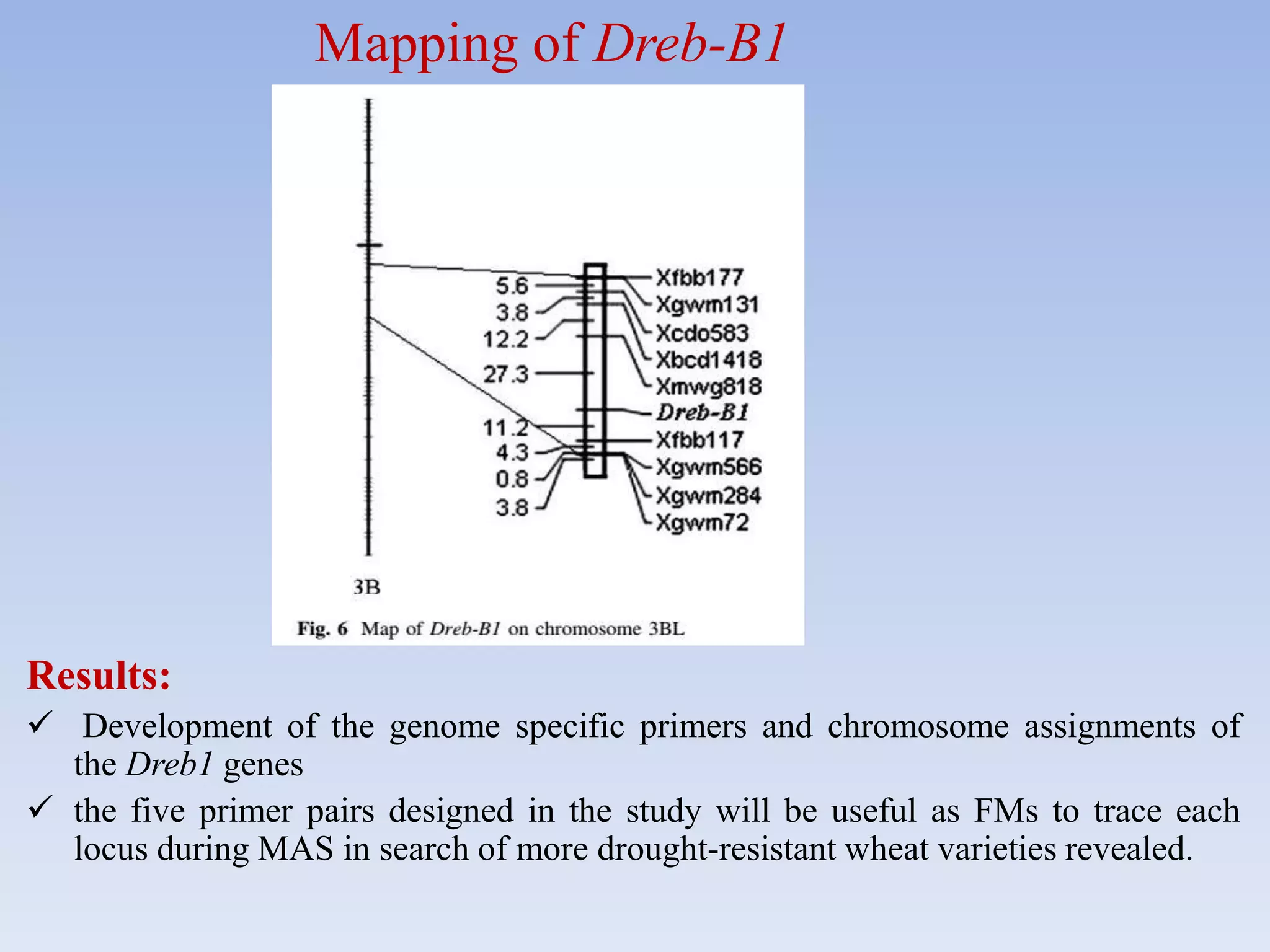
Results:
 Development of the genome specific primers and chromosome assignments of
the Dreb1 genes
 the five primer pairs designed in the study will be useful as FMs to trace each
locus during MAS in search of more drought-resistant wheat varieties revealed.
Mapping of Dreb-B1
46
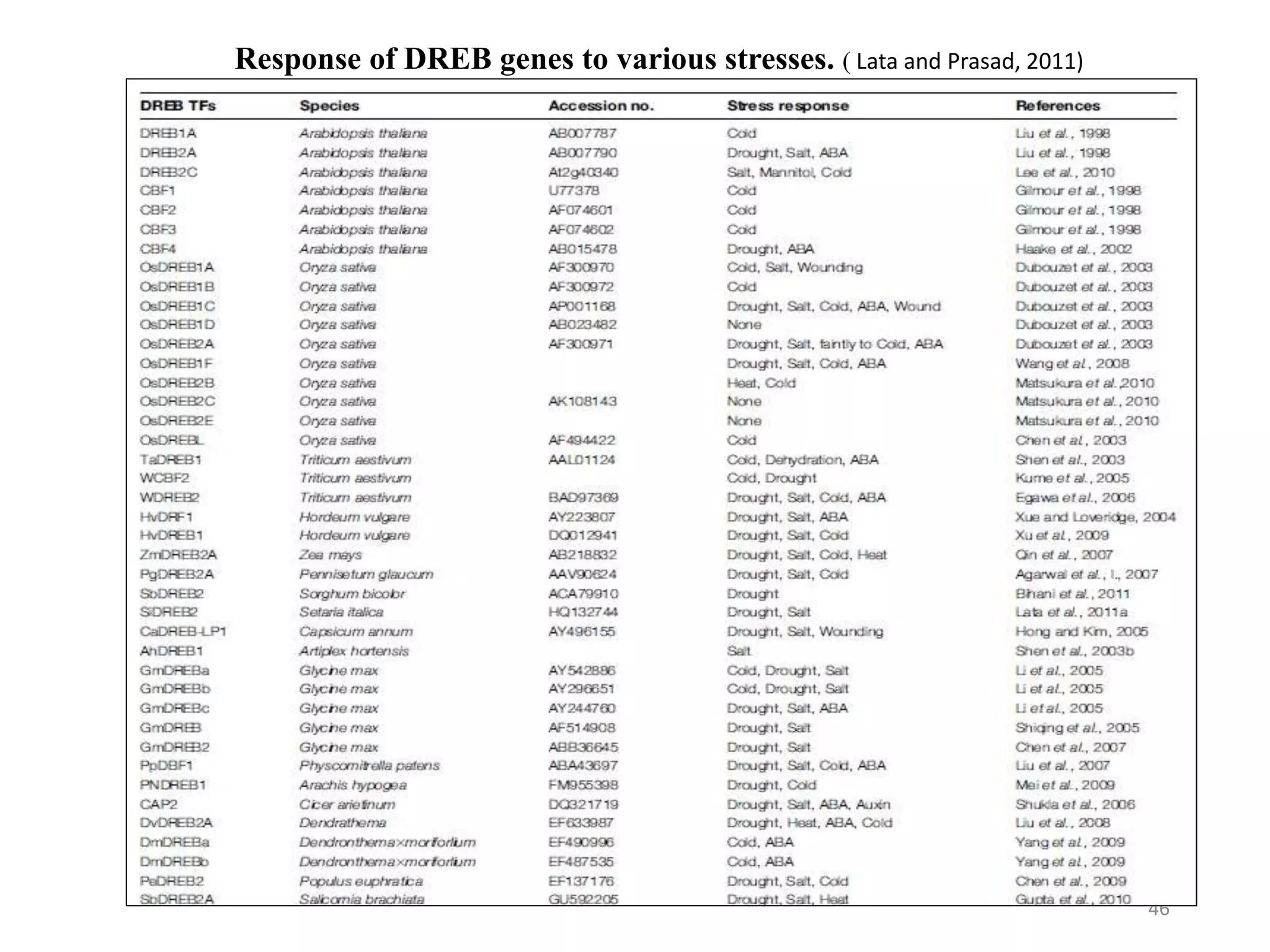
Response of DREB genes to various stresses. ( Lata and Prasad, 2011)
47
Stress response of overexpressing DREBs in transgenic plants. ( Lata and Prasad, 2011)
48Conclusions
Further research is needed to uncover the regulatory mechanism of drought
response and tolerance under field conditions.
Considerable progress can be made in improving crop tolerance by
incorporating AP2/ERF genes.
Optimizing DREB technology through reducing growth abnormalities and
enhancing the introduced trait to the level of commercial value.
DREB as a candidate gene and developing proper functional marker used
for MAS and allele-mining in breeding programmes
49
Crop
improvement DREB

Dreb ppt

  • 1.
    2 IInd Seminar on Wel-come Vijaykumar S. 2015A28D “role of dreb -genes in crop improvement”
  • 2.
    Conclusions Case studies Biological roleof DREB transcripstion factor. Mechanism of DREB transcription factor. What is DREB gene …?? Introduction 2
  • 3.
    Some facts aboutstresses…  The extremes of the major environmental conditions: soil moisture, salt concentration and temperature, reduce potential crop yields by as much as 70%.  Every year significant losses occur due to sudden frost and unusual freezing temperatures in winter and late cold spring.  Globally, approximately 22% of the agricultural land is saline and more than 50% of all arable lands expected by the year 2050.  Drought is a widespread phenomenon in many regions and expected to increase further.  In general, crops are lost to the tune of 25% due to insects, due to diseases including that of nematodes up to 20% (Akthar et al., 2012)
  • 4.
  • 5.
    Transcription factors/regulatory protein •TFs are protein complexes that responses to specific signals and in accordance regulate expression of protein coding gens by binding to the control region of DNA • These regulatory proteins are involved in the control of primary and secondary metabolism, growth and developmental programs, as well as responses to environmental stimuli. 5
  • 6.
    6 Important transcription factorsresponses to stresses: 1. Ap2/ERF 2. Basic-domain leucine zipper (bzip) 3. MYC 4. MYB 5. WRKY
  • 7.
    what is DREB..? •Dehydration Responsive Element Binding • DREB transcription factors are one of the largest sub-families of transcriptional regulators in plants • DREB proteins are involved in responses to abiotic stresses • DREB exhibit extensive auto-regulation and cross-regulation that facilitates transcriptional reprogramming in plant • The DREB gene with 9bp conserved core sequence was first identified in Arabidopsis in 1993 • The first isolated cDNAs encoding DRED protein in 1997 7
  • 8.
    Structural characteristics ofDREB TFs • All TFs have a DNA binding domain containing a short peptide region called the DNA-binding motif. • Proteins belongs to DREB have highly conserved DNA binding domain called AP2 /ERF domain consisting of ~60 amino acids. • DNA-binding domain that directly interact with GCC box or dehydration responsive element(DRE) or C-repeat element (CRT) cis-acting element at the promoter of downstream target gene. • The amino acids Valine (at position 14) and glutamic acid (19) in the AP2/ERF domain are quite conserved and play a central role in recognition and binding specificity of Cis elements. 8
  • 9.
    • The entryof DREB proteins is mediated by one or two nuclear localization signal (NLS). • AP2 domain play a central role in recognition and binding specificity of cis element. 30 aa sequence rich in basic and hydrophobic in nature. • All the DREB/CBF genes posses carboxyl terminal acidic region. This region is supposed to be a transcriptional activator motif. • DSAW and LWSY motif are the signature sequences are specifically found in A1 sub group. • The DREB/CBF-type proteins have a basic-amino acid-rich stretch having consensus sequence PKRPAGRTKFRETRHP as NLS. 9
  • 10.
    Structure of theDREB domain 10
  • 11.
    Classification of DREBsubfamily and their induction 11
  • 12.
    The newly discoverednon-plant protein bearing an AP2 domain are predicted to be HNH endonucleases Horizontal transfer of an HNH-AP2 endonuclease from bacteria or virus in to plants may lead to the origin of the AP2/ERF FAMILY origin and evolution 12 (Magnani et al., 2004)
  • 13.
    Stress signal perceptionpathways of DREB 13 (Lata and Prasad 2011)
  • 14.
    Expression analysis ofDREB In Arabidopsis, out of six DREB1 genes DREB1A, DREB1B and DREB1C were expressed at high levels under cold stress but not under drought or high-salinity stress. It is well known that expressions of the A-1 group of genes is induced by low temperature, but not by drought or high-salt stress, while A-2 group genes are regulated by salt and drought, but not by cold. The different abiotic stress signalling pathways are assumed to interact and share some common elements that formed as potential ‘node’ for crosstalk. 14
  • 15.
    DREB1/CBF (A-1) subgroup— major regulator of cold-stress responses 15
  • 16.
    DREB2 subgroup —dual functions in dehydration and heat shock responses 16
  • 17.
  • 18.
    Material: 1. Samba Mahsuricultivar 2. TF- AtDREB1A 18
  • 19.
    Expression cassette PCRanalysis - TO Southern analysis of To Copy no detection RT-PCR of TO with DREB primers RT-PCR of TO with actin primers 19
  • 21.
  • 22.
  • 23.
  • 24.
    After withdrawal ofwater for 28 days After 2 days of re-watering Vandana Rasi BPT-control T5 transgenic lines Evaluation and Screening 24
  • 25.
    Conclusion for casestudy-1 1. Drought tolerance at both vegetative and reproductive stages. 2. DREB1A functioned in stress tolerance pathway. 3. Samba Mahsuri - a premium variety. 4. Selected transgenic lines would be valuable resource. 5. They can be used as a direct variety. 25
  • 26.
    Material: 1. wild lotus 2.SN1301 with a CaMV 35S 3. NaCL, ABA, mannitol, low tem. 26
  • 27.
    NnDREB2 expression patternsin response to various treatments and in different organs. 27
  • 28.
    Screen of transgenicplants by RT-PCR method and GUS staining 28
  • 29.
  • 30.
    Expression profiling analysisof 22 stress-related genes 30
  • 31.
    Obj: Assessing theexpression of the abiotic stress tolerance in the single-gene and double-gene transformants Material: i. DREB2 gene from E. arundinaceus ii. Co 86032 - popular sugarcane variety iii. PDH45 gene driven by Port Ubi 2.3 promoter 31
  • 32.
    V0 stage at25 % soil moisture V1 stage at 8.1 and 25 % soil moisture stress V0 stage at 25 % soil moisture V1 stage at 8.1 and 25 % soil moisture stress E a D R E B 2 C o - t r a n s f o r m e d 32
  • 33.
  • 34.
  • 35.
    A. EaDREB2 transgenics B.Co-transformed events 35
  • 36.
    Assay for salinitytolerance EaDREB2 36
  • 37.
    Assay for salinitytolerance Co-transformed 37
  • 38.
    Bud germination % EaDREB2transgenic plants Co-transformed transgenic plants 38
  • 39.
    Conclusion for casestudy-3 Transformation of sugarcane with the EaDREB2 gene under the control of the Port Ubi 2.3 promoter enhanced the tolerance to water deficit and salinity stress through improved physiological adaptation . Improved salinity tolerance was observed in the co-transformed events compared to that of EaDREB2 and enhanced stress-related gene expression. Thus, for combining drought and salinity tolerance, pyramiding of these two genes seems to be a better approach. Further replicated field studies are needed to confirm their tolerance to drought and salinity, along with the yield potential and water use efficiency. 39
  • 40.
    40 (Plants with 7-8leaves were exposed to 450 C for 36h and then returned to 220C for 3 weeks)
  • 41.
    41 Effect of heatstress on electrolyte leakage in transgenic chrysanthemum Expression of the AtDREB1A gene analyzed by RT-PCR under heat conditions in transgenic plants exposed to 45C
  • 42.
    Effects of heatstress on the photosynthetic capacity of transgenic plants 42
  • 43.
    43 Conclusion :- AtDREB1ATF enhanced the CO2 assimilation rates and Rubisco activity under heat stress condition in Chrysanthemum
  • 44.
    Aim: To establishprotocols for the development of genome-specific and allele specific markers in common wheat using the Dreb1 genes. Material: 1. Opata 85 T. aestivum L., AABBDD, 2n=6x=42) 2. DS107 T. durum (AABB, 2n=4x=28), 3. UR203 T. urartu (AA, 2n=2x=14), 4. 2046 Aegilops. speltoides (BB, 2n=2x=14), 5. Y2009 Ae. tauschii (DD, 2n=2x=14).
  • 45.
    Results:  Development ofthe genome specific primers and chromosome assignments of the Dreb1 genes  the five primer pairs designed in the study will be useful as FMs to trace each locus during MAS in search of more drought-resistant wheat varieties revealed. Mapping of Dreb-B1
  • 46.
    46 Response of DREBgenes to various stresses. ( Lata and Prasad, 2011)
  • 47.
    47 Stress response ofoverexpressing DREBs in transgenic plants. ( Lata and Prasad, 2011)
  • 48.
    48Conclusions Further research isneeded to uncover the regulatory mechanism of drought response and tolerance under field conditions. Considerable progress can be made in improving crop tolerance by incorporating AP2/ERF genes. Optimizing DREB technology through reducing growth abnormalities and enhancing the introduced trait to the level of commercial value. DREB as a candidate gene and developing proper functional marker used for MAS and allele-mining in breeding programmes
  • 49.