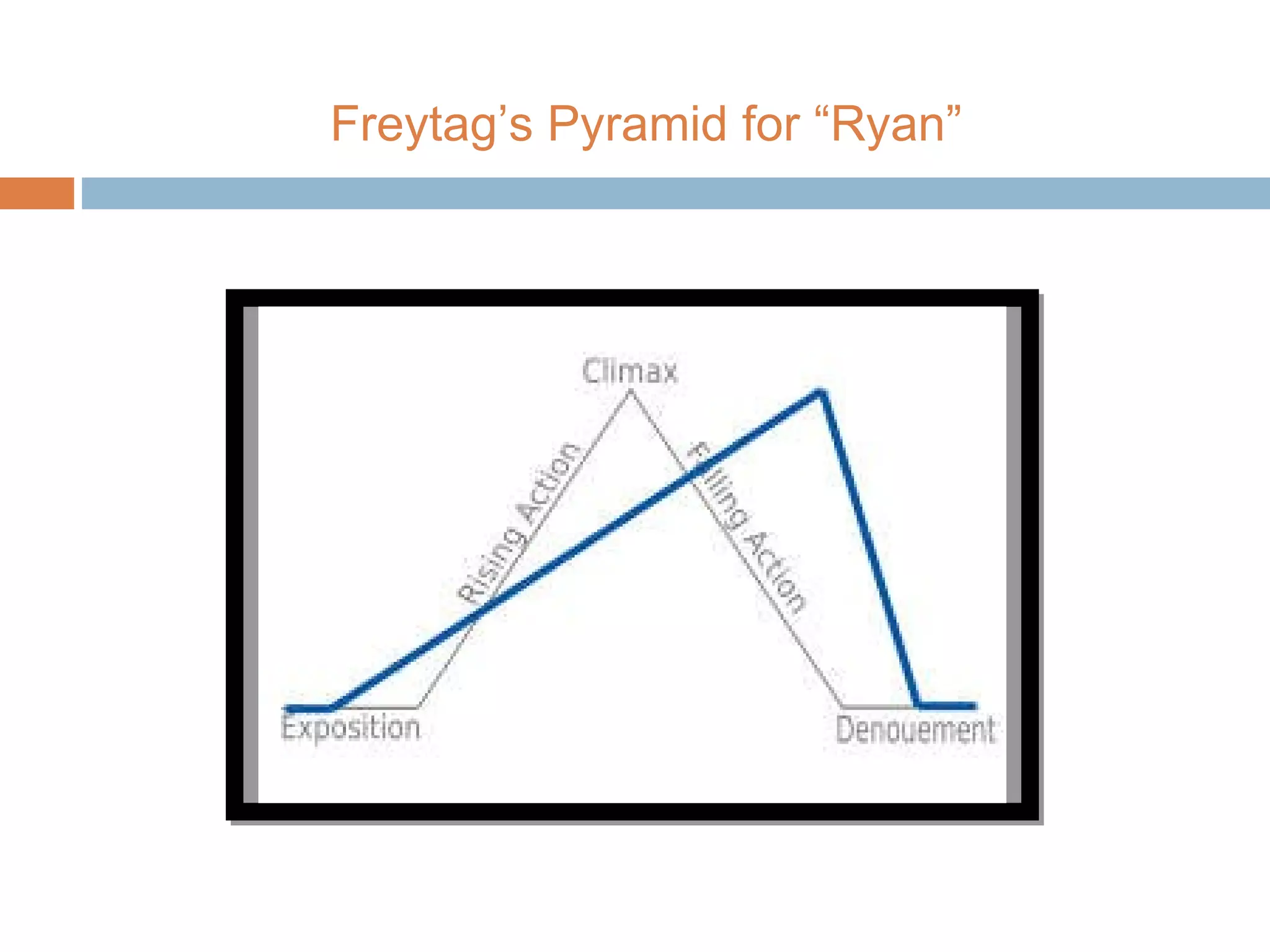
Freytag ’s Pyramid for “Ryan”
 
T R A G E D Y  (1133-35) One of oldest literary genres Tragedy vs. tragedy  Hamartia , or tragic flaw (Aristotle) “ Great souls suffering greatly”  (1556) Tragic hero experiences reversal of fortune Arouses pity or fear in spectators (Aristotle) Tragic (elevated) style / language “ A play that portrays a serious conflict between human beings and some superior, overwhelming force. It ends sorrowfully and disastrously, and this outcome seems inevitable”   (1133).
Christopher  Marlowe ’s    Doctor Faustus     (about year 1588)   Act II, Scene I
In  Journal  (p.66), respond to following prompt:  Tragic heroes   often effect feelings of  pity  or  fear in readers / spectators. Does Dr. Faustus prompt either of these feelings in you? If so, why? If not, why not? Are there other feelings his character  triggers? Use specifics from the text.
Why is this a tragedy? Character in conflict with superior force Disastrous ending Elevated diction  Other dramatic elements: Dramatic conventions Symbolic action  Allusions Faustus as tragic hero: High standing What is his tragic flaw (or flaws)? Hubris
C O M E D Y  “ A literary work aimed at amusing an audience. In  traditional comedy, the protagonist often faces  obstacles and complications that threaten disaster  but are overturned at the last moment to produce  a happy ending ”  (1155).
High vs. Low Comedy  (1142-43)   High Comedy Wit and wordplay Evokes  “thoughtful  laughter ”  (1155) Depicts human folly, pretense, and hypocrisy  Low Comedy Physical action (clowning, roughhousing), visual gags, course humor and jokes --  anything to get a laugh  i.e. drunkenness, appearance, clumsiness, trickery, lust Like high comedy, satirizes human failings Popular culture
Protagonists are lovers. After comical misadventures, the two end up together.  ROMANTIC COMEDY
Ives’ “Soap Opera”  (1143-53) GROUP WORK: In groups of 2-3, discuss questions  3, 4, 6, and 7 on pg. 1153. Be ready to report on findings.

Dramatic Modes: Tragedy & Comedy (ch. 35)

  • 1.
    Freytag ’s Pyramidfor “Ryan”
  • 2.
  • 3.
    T R AG E D Y (1133-35) One of oldest literary genres Tragedy vs. tragedy Hamartia , or tragic flaw (Aristotle) “ Great souls suffering greatly” (1556) Tragic hero experiences reversal of fortune Arouses pity or fear in spectators (Aristotle) Tragic (elevated) style / language “ A play that portrays a serious conflict between human beings and some superior, overwhelming force. It ends sorrowfully and disastrously, and this outcome seems inevitable” (1133).
  • 4.
    Christopher Marlowe’s Doctor Faustus (about year 1588) Act II, Scene I
  • 5.
    In Journal (p.66), respond to following prompt: Tragic heroes often effect feelings of pity or fear in readers / spectators. Does Dr. Faustus prompt either of these feelings in you? If so, why? If not, why not? Are there other feelings his character triggers? Use specifics from the text.
  • 6.
    Why is thisa tragedy? Character in conflict with superior force Disastrous ending Elevated diction Other dramatic elements: Dramatic conventions Symbolic action Allusions Faustus as tragic hero: High standing What is his tragic flaw (or flaws)? Hubris
  • 7.
    C O ME D Y “ A literary work aimed at amusing an audience. In traditional comedy, the protagonist often faces obstacles and complications that threaten disaster but are overturned at the last moment to produce a happy ending ” (1155).
  • 8.
    High vs. LowComedy (1142-43) High Comedy Wit and wordplay Evokes “thoughtful laughter ” (1155) Depicts human folly, pretense, and hypocrisy Low Comedy Physical action (clowning, roughhousing), visual gags, course humor and jokes -- anything to get a laugh i.e. drunkenness, appearance, clumsiness, trickery, lust Like high comedy, satirizes human failings Popular culture
  • 9.
    Protagonists are lovers.After comical misadventures, the two end up together. ROMANTIC COMEDY
  • 10.
    Ives’ “Soap Opera” (1143-53) GROUP WORK: In groups of 2-3, discuss questions 3, 4, 6, and 7 on pg. 1153. Be ready to report on findings.