Download to read offline


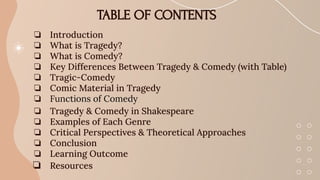


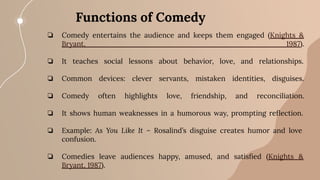


Shakespeare’s plays are often divided into two major groups: tragedies and comedies. Although both types explore human emotions and social relationships, they differ greatly in tone, structure, and final outcome. Shakespearean tragedies focus on the darker side of human experience. They usually follow a noble hero whose personal flaws or wrong decisions lead to downfall and suffering. Works like Hamlet, Macbeth, Othello, and King Lear show how ambition, jealousy, or pride can destroy individuals and the world around them. Tragedies often end with death, loss, and moral lessons that highlight the consequences of human weakness. In contrast, Shakespearean comedies celebrate life, humor, and hope. They revolve around misunderstandings, clever wordplay, disguises, and complicated love stories. Unlike tragedies, comedies usually resolve conflicts through reconciliation, forgiveness, and reunion. Plays such as Twelfth Night, A Midsummer Night’s Dream, and The Merchant of Venice show characters finding harmony after passing through humorous or confusing situations. These plays often end with marriages, dances, or festive celebrations, symbolizing social harmony and new beginnings. The key difference between the two forms lies in their endings and emotional impact. Tragedies evoke pity, fear, and reflection, while comedies create joy, laughter, and a sense of relief. Yet, both genres reveal Shakespeare’s deep understanding of human nature. Through tragedy and comedy, Shakespeare shows that life contains both sorrow and joy, and that understanding both is essential to understanding ourselves.


