Oedipus
Sophocles
Intro to Ancient Greek Theatre
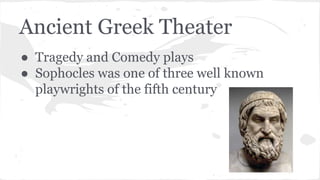
Ancient Greek Theater
● Tragedy and Comedy plays
● Sophocles was one of three well known
playwrights of the fifth century
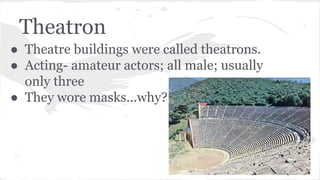
Theatron
● Theatre buildings were called theatrons.
● Acting- amateur actors; all male; usually
only three
● They wore masks...why?
Tragedy
● Highest form of drama
● Big themes: love, loss, pride, the abuse of
power, and the relationships between man
and gods.
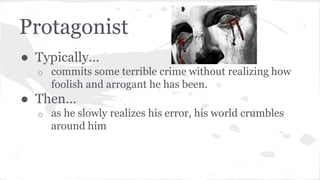
Protagonist
● Typically…
o commits some terrible crime without realizing how
foolish and arrogant he has been.
● Then…
o as he slowly realizes his error, his world crumbles
around him
So what is a tragic hero?
Tragic Hero
A person who is neither good nor evil who
commits an act that results in suffering and
utter defeat.
Other words to know...
● Hamartia: “missing the mark”
o came to signify a tragic flaw, especially a
misperception, a lack of some important insight, or
some blindness that ironically results from one’s
own strengths and abilities
● Peripeteia: sudden reversal of fortune
o change of stability toward the downfall of the
protagonist
Continued...
● Hubris: pride
o the defect of a character that causes the tragic hero
to ignore problems
● Catharsis: an emotional discharge that
brings about moral or spiritual renewal or
welcome relief from tension and anxiety
o the marking feature and ultimate end of any tragic
work
Features of Ancient Greek
Tragedy
● Suffering
● Cleansing
● Religious
● Honored Dionysus
● Competitions
● Prizes
● Myth
● History
● Not bloody
● Limitations
● Masks
Aristotle’s Definition
● deals with one issue that is very serious
● had a chorus whose role was to comment on the
action of the play
● in a play, the story must be dramatized or acted out
● should lead the audience to feel sorry for the main
character
● as the play moves along, the events should build up
the emotions of pity and fear
Aristotle’s Elements of
Tragedy
● Plot
● Character
● Thought
● Diction
● Melody
● Spectacle

Intro to Oedipus

  • 1.
  • 2.
    Ancient Greek Theater ●Tragedy and Comedy plays ● Sophocles was one of three well known playwrights of the fifth century
  • 3.
    Theatron ● Theatre buildingswere called theatrons. ● Acting- amateur actors; all male; usually only three ● They wore masks...why?
  • 4.
    Tragedy ● Highest formof drama ● Big themes: love, loss, pride, the abuse of power, and the relationships between man and gods.
  • 5.
    Protagonist ● Typically… o commitssome terrible crime without realizing how foolish and arrogant he has been. ● Then… o as he slowly realizes his error, his world crumbles around him
  • 6.
    So what isa tragic hero?
  • 7.
    Tragic Hero A personwho is neither good nor evil who commits an act that results in suffering and utter defeat.
  • 8.
    Other words toknow... ● Hamartia: “missing the mark” o came to signify a tragic flaw, especially a misperception, a lack of some important insight, or some blindness that ironically results from one’s own strengths and abilities ● Peripeteia: sudden reversal of fortune o change of stability toward the downfall of the protagonist
  • 9.
    Continued... ● Hubris: pride othe defect of a character that causes the tragic hero to ignore problems ● Catharsis: an emotional discharge that brings about moral or spiritual renewal or welcome relief from tension and anxiety o the marking feature and ultimate end of any tragic work
  • 10.
    Features of AncientGreek Tragedy ● Suffering ● Cleansing ● Religious ● Honored Dionysus ● Competitions ● Prizes ● Myth ● History ● Not bloody ● Limitations ● Masks
  • 11.
    Aristotle’s Definition ● dealswith one issue that is very serious ● had a chorus whose role was to comment on the action of the play ● in a play, the story must be dramatized or acted out ● should lead the audience to feel sorry for the main character ● as the play moves along, the events should build up the emotions of pity and fear
  • 12.
    Aristotle’s Elements of Tragedy ●Plot ● Character ● Thought ● Diction ● Melody ● Spectacle