Fundamentals of
Breastfeeding and
Maternal Nutrition
By
Dr. M. Shoukri
MD, M.Sc.,
International Board-
Certified Lactation
Consultant (IBCLC)
Introduction
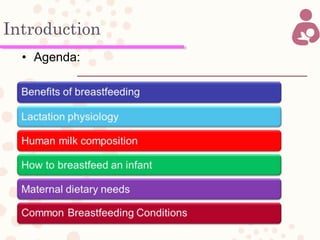
• Agenda:
Lactation Physiology
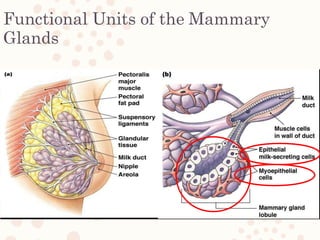
Mammary
gland
Source of milk
for offspring,
the breast
Alveoli
Rounded or
oblong shaped
cavity present in
breast
Myoepithelial
cells
Line the alveoli &
can contract to
cause milk to be
secreted into ducts
Lobes
Rounded
structures of
mammary glands
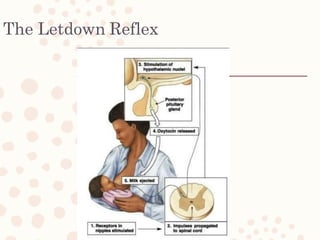
Oxytocin
Hormone produced
during letdown that
causes milk to eject
into ducts
Prolactin
necessary for
milk production
Lactogenesis
Term for human milk
production
Secretory cells
Cells in acinus (milk Ahormone
gland) that are
responsible for
secreting milk
components into
ducts
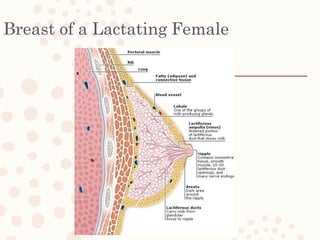
Breast of a Lactating Female
Functional Units of the Mammary
Glands
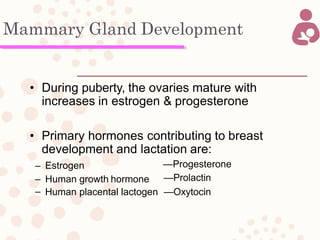
Mammary Gland Development
• During puberty, the ovaries mature with
increases in estrogen & progesterone
• Primary hormones contributing to breast
development and lactation are:
– Estrogen
– Human growth hormone
—Progesterone
—Prolactin
– Human placental lactogen —Oxytocin
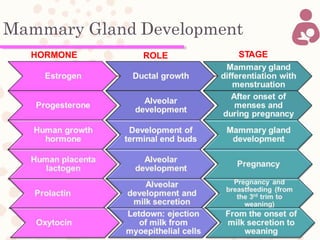
Mammary Gland Development
HORMONE ROLE STAGE
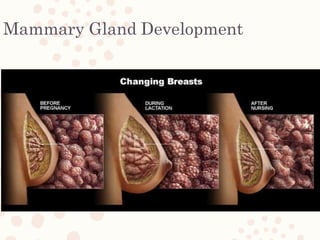
Mammary Gland Development
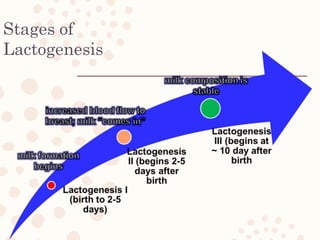
Stages of
Lactogenesis
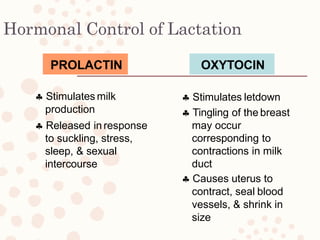
Hormonal Control of Lactation
PROLACTIN
 Stimulates milk
production
 Released in response
to suckling, stress,
sleep, & sexual
intercourse
OXYTOCIN
 Stimulates letdown
 Tingling of the breast
may occur
corresponding to
contractions in milk
duct
 Causes uterus to
contract, seal blood
vessels, & shrink in
size
The Letdown Reflex
Human Milk Composition
• Human milk is the only food needed by
the majority of healthy infants for ~ 6
months
– It nurtures & protects infants from infectious
diseases
• The composition changes over a single
feeding, over a day, based on age of
the infant, presence of infection in the
breast, with menses, & maternal
nutrition status
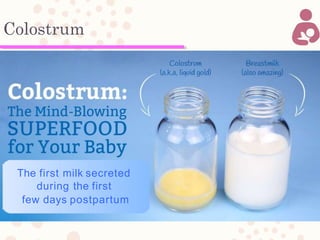
Colostrum
The first milk secreted
during the first
few days postpartum
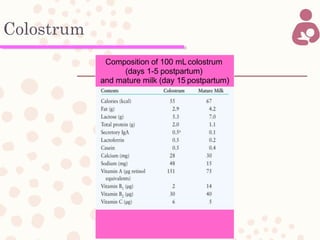
Colostrum
Composition of 100 mL colostrum
(days 1-5 postpartum)
and mature milk (day 15 postpartum)
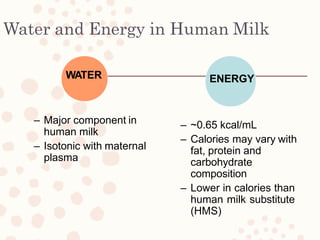
Water and Energy in Human Milk
WATER
– Major component in
human milk
– Isotonic with maternal
plasma
ENERGY
– ~0.65 kcal/mL
– Calories may vary with
fat, protein and
carbohydrate
composition
– Lower in calories than
human milk substitute
(HMS)
Lipids in Human Milk
• Lipids—provide ½ the calories in human
milk
• Effect of maternal diet on fat composition
– Fatty acid profile reflects dietary intake of
mother
– Very  fat diet with adequate CHO & protein,
milk is  in medium-chain fatty acids
DHA, Trans Fatty Acids, and
Cholesterol in Human Milk
DHA (docosahexaenoic acid)
Essential for retinal development.
Associated with higher IQ scores.
Trans fatty acids
Present in human milk from
maternal diet.
Cholesterol
Higher in human milk than HMS.
Early consumption of cholesterol through
breast milk appears to be related to lower
blood cholesterol levels later in life.
Proteins in Human Milk
Total proteins
Lower than in
whole cow’s milk
(0.32 vs. 0.96 g/fl
oz)
Have antiviral &
antimicrobial
effects
Casein
Main protein in
mature human milk
Facilitates calcium
absorption
Proteins in Human
Milk
– A soluble protein that
precipitates by acid or
enzyme
– Some minerals,
hormones & vitamin
binding proteins are part
of whey
– Includes lactoferrin, an
iron carrier
Whey Non-protein nitrogen
~20-25% nitrogen
in human milk
Used to make non-
essential amino
acids
Milk
Carbohydrates
Lactose
Dominant CHO
Enhances calcium
absorption
Oligosaccharides
A medium-length
CHO
Prevent binding of
pathogenic
microorganisms to
gut, which prevents
infection & diarrhea
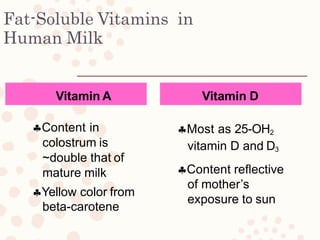
Fat-Soluble Vitamins in
Human Milk
Vitamin A
Content in
colostrum is
~double that of
mature milk
Yellow color from
beta-carotene
Vitamin D
Most as 25-OH2
vitamin D and D3
Content reflective
of mother’s
exposure to sun
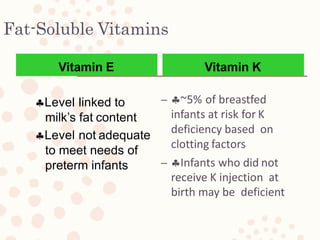
Fat-Soluble Vitamins
– ~5% of breastfed
infants at risk for K
deficiency based on
clotting factors
– Infants who did not
receive K injection at
birth may be deficient
Vitamin E
Level linked to
milk’s fat content
Level not adequate
to meet needs of
preterm infants
Vitamin K
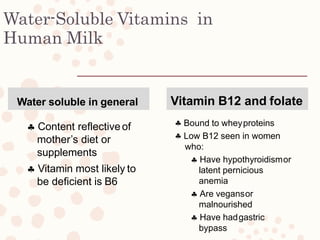
Water-Soluble Vitamins in
Human Milk
Water soluble in general
 Content reflectiveof
mother’s diet or
supplements
 Vitamin most likely to
be deficient is B6
Vitamin B12 and folate
 Bound to wheyproteins
 Low B12 seen in women
who:
 Have hypothyroidismor
latent pernicious
anemia
 Are vegansor
malnourished
 Have hadgastric
bypass
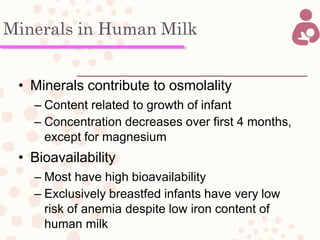
Minerals in Human Milk
• Minerals contribute to osmolality
– Content related to growth of infant
– Concentration decreases over first 4 months,
except for magnesium
• Bioavailability
– Most have high bioavailability
– Exclusively breastfed infants have very low
risk of anemia despite low iron content of
human milk
Minerals in Human Milk
• Zinc
– Bound to protein & highly available
– Rare defect in mammary gland uptake of zinc
may cause zinc deficiency that appears as
diaper rash
• Trace minerals
– Copper, selenium, chromium, manganese,
molybdenum, nickel, fluoride
– In general, trace minerals are not altered by
mother’s diet, except fluoride
Taste of Human Milk
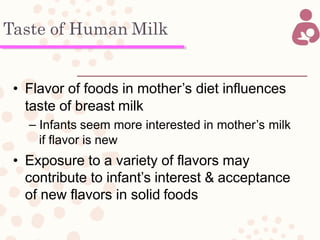
• Flavor of foods in mother’s diet influences
taste of breast milk
– Infants seem more interested in mother’s milk
if flavor is new
• Exposure to a variety of flavors may
contribute to infant’s interest & acceptance
of new flavors in solid foods
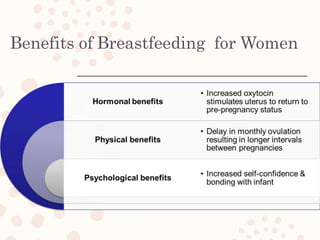
Benefits of Breastfeeding for Women
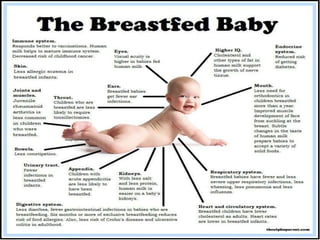
Benefits of Breastfeeding for Infants
1. Nutritional benefits
– Widely recognized
– HMS (Human Milk Subs) use human milk as a
standard
– Nutrients are balanced
– Human milk is isosmotic
– Meets infants’ protein needs without overloading the
kidneys
– Contains soft, easily digestible curd
– Provides generous amounts of the right lipids
– Minerals more bioavailable
Benefits of Breastfeeding for Infants
2. Immunological benefits
– Lower infant mortality in developing countries
– Fewer acute illnesses
3. Reductions in chronic illnesses
– Reduce risk of celiac disease, IBS, leukemia
– Reduce risk of allergies and asthmatic disease
3. Breastfeeding & childhood overweight
– Typically breastfed infants are leaner at 1 year ofage
Benefits of Breastfeeding for Infants
5. Cognitive benefits
– Studies show an increase in cognitive ability
even after adjusting for family environment
5. Analgesic effects
– Reduction of infant pain
5. Socioeconomic benefits
– Decreased need for medical care
Breast Milk Supply and Demand
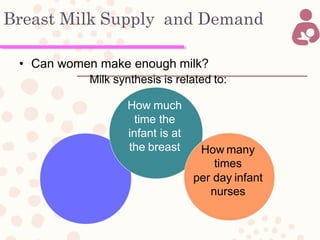
• Can women make enough milk?
Milk synthesis is related to:
How
vigorously
an infant
nurses
How much
time the
infant is at
the breast How many
times
per day infant
nurses
Breast Milk
Supply and
Demand
• The size of the breast does NOT limita
woman’s ability to nurse
• Is feeding frequency related to the amount of
milk a woman makes?
– Rate of milk synthesis is variable between
breasts & between feedings
Breast Milk
Supply and
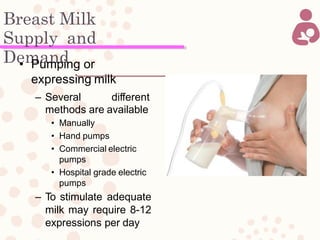
Demand• Pumping or
expressing milk
– Several different
methods are available
• Manually
• Hand pumps
• Commercial electric
pumps
• Hospital grade electric
pumps
– To stimulate adequate
milk may require 8-12
expressions per day
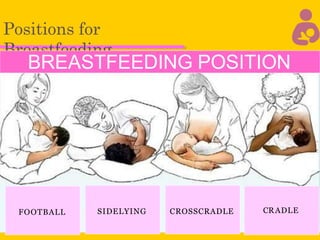
Positions for
Breastfeeding
BREASTFEEDING POSITION
FOOTBALL SIDELYING CROSSCRADLE CRADLE
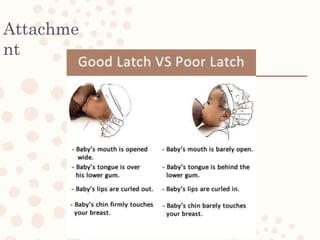
Attachme
nt
Attachme
nt
The Breastfeeding
Infant
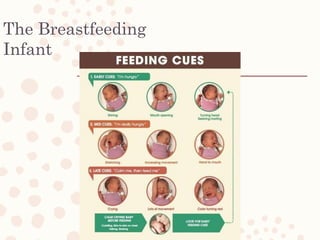
• Reflexes
– Gag reflex—prevents infant from taking food and
fluids into lungs
– Oral search reflex—infant opens mouth wide
when close to breast & thrusting tongue forward
– Rooting reflex—infant turns to side when
stimulated on that side
• Also requires appropriate positioning ,
adequate letdown and milk production
The Breastfeeding
Infant
The Breastfeeding
Infant
•
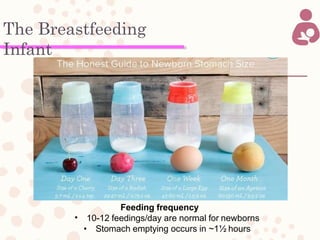
Feeding frequency
10-12 feedings/day are normal for newborns
• Stomach emptying occurs in ~1½ hours
Identifying Breastfeeding
Malnutrition
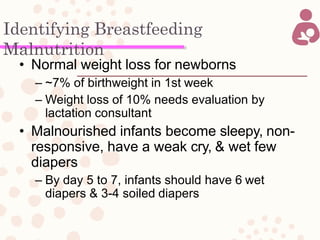
• Normal weight loss for newborns
– ~7% of birthweight in 1st week
– Weight loss of 10% needs evaluation by
lactation consultant
• Malnourished infants become sleepy, non-
responsive, have a weak cry, & wet few
diapers
– By day 5 to 7, infants should have 6 wet
diapers & 3-4 soiled diapers
Maternal Energy Balance
and Milk Composition
• Protein-calorie malnutrition
– Results in reduction in milk volume but not
quality
• Weight loss during breastfeeding
– the caloric DRI assume a loss of 0.8 kg/month
– Most women do not reach pre-pregnancy
weight by 1 year after birth
– Modest or short-term energy reductions do
not decrease milk production
Other Factors of Maternal
Diet
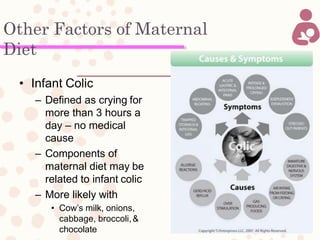
• Infant Colic
– Defined as crying for
more than 3 hours a
day – no medical
cause
– Components of
maternal diet may be
related to infant colic
– More likely with
• Cow’s milk, onions,
cabbage, broccoli,&
chocolate
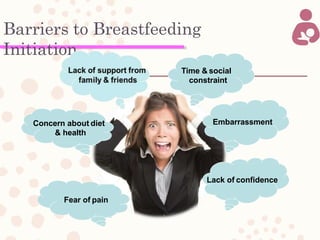
Barriers to Breastfeeding
Initiation
Time & social
constraint
Embarrassment
Lack of confidence
Concern about diet
& health
Fear of pain
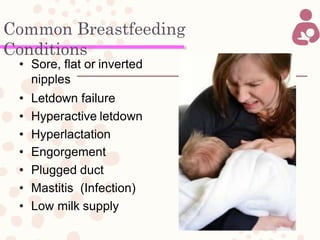
Common Breastfeeding
Conditions
• Sore, flat or inverted
nipples
• Letdown failure
• Hyperactive letdown
• Hyperlactation
• Engorgement
• Plugged duct
• Mastitis (Infection)
• Low milk supply
Absolute Contraindications
of Breastfeeding
• Infant is diagnosed with classic galactosemia, a rare
genetic metabolic disorder.
• Mother is infected with the HIV.
(Note: recommendations about breastfeeding and HIV
may be different in other countries)
• Mother is infected with human T-cell lymphotropic
virus type I or type II (HTLV – 1/2)
• Mother is using an illicit street drug, such as PCP
(phencyclidine) or cocaine
• Mother has suspected or confirmed Ebola virus
disease (CDC, 2019)
Maternal Energy and Nutrient
Needs During Lactation
• Nutrient needs vary during the course
of lactation.

• Overall, nutrient needs can be met with
well balanced, adequate and healthy
diets consisting of basic food
components.
Energy and Nutrient Needs
During Pregnancy
• Energy requirements in lactation:
 Breastfeeding mothers generally need more
calories to meet their nutritional needs while
breastfeeding.
 approximately 2,300 to 2,500 kcal per day
for breastfeeding women verses 1,800 to
2,000 kcal per day for moderately active,
non-pregnant women who are not
breastfeeding (CDC, 2019).
Exercise and
Breastfeeding
• No evidence that moderate or vigorous
exercise undertaken by healthy women
is harmful
• Exercise recommendation for pregnant
women
– 3-5 times each week for 20-30 minutes at
60-70% VO2 max
Carbohydrat
es
• Carbohydrate intake (50-60%)
• Basic foods such as
– vegetables, fruits, and whole grains with fibers =
best choice
• Precautions
– Limit refined sugar intake (sweet beverages and
foods) that can increase risk of GDM
Protei
n
• Protein requirements (15-20%)
– Average intake of typical lactating female
~78 g/d
• Precaution
– Commercial protein supplements are not
recommended
Fa
t
• Fat requirements (20-30%)
~ 57-85 g/day
– SFA: <30%
– MUFA: 12-15%
– PUFA: 5-7%
Omega-3 Fatty Acids, EPA, and
DHA During Pregnancy
• Omega-3 (PUFA): important for baby’s
brain and eye development.
• Eicosapentaenoic acid (EPA) is an omega-3
fatty acid. It's found in the flesh of cold-
water fish, including mackerel, tuna and
salmon.
• Docosahexaenoic Acid (DHA) is plentiful in
oily fish, such as salmon
• Adequate EPA & DHA during pregnancy &
lactation linked to higher intelligence, better
vision & more mature CNS for babies.
Dietary Supplements
During Lactation
• Multivitamin and Mineral Prenatal
Supplements
– Nutrient needs should be met by a well-
balanced diet
– Recommended for inadequate diets,
multifetal pregnancy, smokers, drinkers,
vegans, or diagnosed nutrient deficiencies
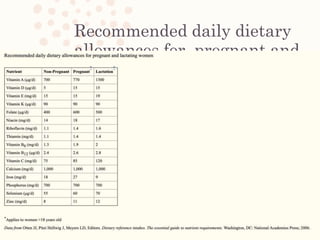
Recommended daily dietary
allowances for pregnant and
lactating women
Vitami
ns
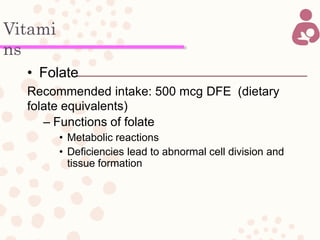
• Folate
Recommended intake: 500 mcg DFE (dietary
folate equivalents)
– Functions of folate
• Metabolic reactions
• Deficiencies lead to abnormal cell division and
tissue formation
Vitami
ns
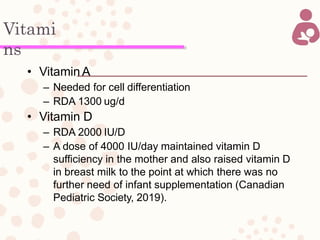
• Vitamin A
– Needed for cell differentiation
– RDA 1300 ug/d
• Vitamin D
– RDA 2000 IU/D
– A dose of 4000 IU/day maintained vitamin D
sufficiency in the mother and also raised vitamin D
in breast milk to the point at which there was no
further need of infant supplementation (Canadian
Pediatric Society, 2019).
Minera
ls
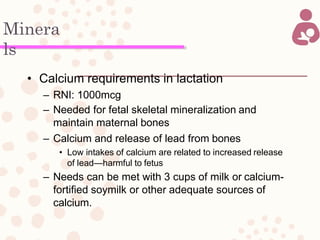
• Calcium requirements in lactation
– RNI: 1000mcg
– Needed for fetal skeletal mineralization and
maintain maternal bones
– Calcium and release of lead from bones
• Low intakes of calcium are related to increased release
of lead—harmful to fetus
– Needs can be met with 3 cups of milk or calcium-
fortified soymilk or other adequate sources of
calcium.
Minera
ls
• Fluoride
– Limited amount of fluoride transferred from
mother
– Not recommended to supplement
Minera
ls
• Iron
– RDA in lactation: 9 mg/day
– Iron deficiency anemia:
• a condition marked by low hemoglobin with
signs of iron deficiency plus paleness,
exhaustion and rapid heart rate
Iron
Supplementation
• Recommendations related to iron
supplementation in lactation
– 60-180 mg/day for iron deficiency anemia
– Women with ferritin >30 ng/mL
will not need supplement
Iron
Supplementation
• Pros & Cons of Iron Supplementation
– Iron is absorbed better from supplements
containing iron only than when mixed with
other minerals
– Side effects-nausea, cramps, gas &
constipation
Iron
Supplementation
• Pros & Cons of Iron Supplementation
– >free radicals in GI tract- cause
inflammation & mitochondrial damage to
cells
– May interfere with zinc absorption
Other Mineral
Concerns
• Iodine
– Required for thyroid function & energy
production and for fetal brain development
• Sodium
– Plays a critical role in maintaining body’s
water balance
– Restrictions for control of edema or high
blood pressure
Caffeine Use in
Lactation– Caffeine passes from the mother to infant in small
amounts through breast milk.
– RDA is about 300 milligrams or less per day, whichis
about 2 to 3 cups of coffee).
– Irritability, poor sleeping patterns, fussiness, and
jitteriness have been reported in infants of mothers with
very high intakes of caffeine, about 10 cups of coffee or
more per day.
– Common dietary sources of caffeine include the
following: coffee, sodas, energy drinks, tea and
chocolate.
The Need for
Water
• Met by increased levels of thirst
– Average consumption ~10 cups (~ 2.5 L)
water per day
– Recommend water, diluted fruit juice, iced
tea, and other unsweetened beverages
THANK YOU
Question
time

Dr shoukri breastfeeding_lecture

  • 1.
    Fundamentals of Breastfeeding and MaternalNutrition By Dr. M. Shoukri MD, M.Sc., International Board- Certified Lactation Consultant (IBCLC)
  • 2.
  • 3.
    Lactation Physiology Mammary gland Source ofmilk for offspring, the breast Alveoli Rounded or oblong shaped cavity present in breast Myoepithelial cells Line the alveoli & can contract to cause milk to be secreted into ducts Lobes Rounded structures of mammary glands Oxytocin Hormone produced during letdown that causes milk to eject into ducts Prolactin necessary for milk production Lactogenesis Term for human milk production Secretory cells Cells in acinus (milk Ahormone gland) that are responsible for secreting milk components into ducts
  • 4.
    Breast of aLactating Female
  • 5.
    Functional Units ofthe Mammary Glands
  • 6.
    Mammary Gland Development •During puberty, the ovaries mature with increases in estrogen & progesterone • Primary hormones contributing to breast development and lactation are: – Estrogen – Human growth hormone —Progesterone —Prolactin – Human placental lactogen —Oxytocin
  • 7.
  • 8.
  • 9.
  • 10.
    Hormonal Control ofLactation PROLACTIN  Stimulates milk production  Released in response to suckling, stress, sleep, & sexual intercourse OXYTOCIN  Stimulates letdown  Tingling of the breast may occur corresponding to contractions in milk duct  Causes uterus to contract, seal blood vessels, & shrink in size
  • 11.
  • 12.
    Human Milk Composition •Human milk is the only food needed by the majority of healthy infants for ~ 6 months – It nurtures & protects infants from infectious diseases • The composition changes over a single feeding, over a day, based on age of the infant, presence of infection in the breast, with menses, & maternal nutrition status
  • 13.
    Colostrum The first milksecreted during the first few days postpartum
  • 14.
    Colostrum Composition of 100mL colostrum (days 1-5 postpartum) and mature milk (day 15 postpartum)
  • 15.
    Water and Energyin Human Milk WATER – Major component in human milk – Isotonic with maternal plasma ENERGY – ~0.65 kcal/mL – Calories may vary with fat, protein and carbohydrate composition – Lower in calories than human milk substitute (HMS)
  • 16.
    Lipids in HumanMilk • Lipids—provide ½ the calories in human milk • Effect of maternal diet on fat composition – Fatty acid profile reflects dietary intake of mother – Very  fat diet with adequate CHO & protein, milk is  in medium-chain fatty acids
  • 17.
    DHA, Trans FattyAcids, and Cholesterol in Human Milk DHA (docosahexaenoic acid) Essential for retinal development. Associated with higher IQ scores. Trans fatty acids Present in human milk from maternal diet. Cholesterol Higher in human milk than HMS. Early consumption of cholesterol through breast milk appears to be related to lower blood cholesterol levels later in life.
  • 18.
    Proteins in HumanMilk Total proteins Lower than in whole cow’s milk (0.32 vs. 0.96 g/fl oz) Have antiviral & antimicrobial effects Casein Main protein in mature human milk Facilitates calcium absorption
  • 19.
    Proteins in Human Milk –A soluble protein that precipitates by acid or enzyme – Some minerals, hormones & vitamin binding proteins are part of whey – Includes lactoferrin, an iron carrier Whey Non-protein nitrogen ~20-25% nitrogen in human milk Used to make non- essential amino acids
  • 20.
    Milk Carbohydrates Lactose Dominant CHO Enhances calcium absorption Oligosaccharides Amedium-length CHO Prevent binding of pathogenic microorganisms to gut, which prevents infection & diarrhea
  • 21.
    Fat-Soluble Vitamins in HumanMilk Vitamin A Content in colostrum is ~double that of mature milk Yellow color from beta-carotene Vitamin D Most as 25-OH2 vitamin D and D3 Content reflective of mother’s exposure to sun
  • 22.
    Fat-Soluble Vitamins – ~5%of breastfed infants at risk for K deficiency based on clotting factors – Infants who did not receive K injection at birth may be deficient Vitamin E Level linked to milk’s fat content Level not adequate to meet needs of preterm infants Vitamin K
  • 23.
    Water-Soluble Vitamins in HumanMilk Water soluble in general  Content reflectiveof mother’s diet or supplements  Vitamin most likely to be deficient is B6 Vitamin B12 and folate  Bound to wheyproteins  Low B12 seen in women who:  Have hypothyroidismor latent pernicious anemia  Are vegansor malnourished  Have hadgastric bypass
  • 24.
    Minerals in HumanMilk • Minerals contribute to osmolality – Content related to growth of infant – Concentration decreases over first 4 months, except for magnesium • Bioavailability – Most have high bioavailability – Exclusively breastfed infants have very low risk of anemia despite low iron content of human milk
  • 25.
    Minerals in HumanMilk • Zinc – Bound to protein & highly available – Rare defect in mammary gland uptake of zinc may cause zinc deficiency that appears as diaper rash • Trace minerals – Copper, selenium, chromium, manganese, molybdenum, nickel, fluoride – In general, trace minerals are not altered by mother’s diet, except fluoride
  • 26.
    Taste of HumanMilk • Flavor of foods in mother’s diet influences taste of breast milk – Infants seem more interested in mother’s milk if flavor is new • Exposure to a variety of flavors may contribute to infant’s interest & acceptance of new flavors in solid foods
  • 27.
  • 29.
    Benefits of Breastfeedingfor Infants 1. Nutritional benefits – Widely recognized – HMS (Human Milk Subs) use human milk as a standard – Nutrients are balanced – Human milk is isosmotic – Meets infants’ protein needs without overloading the kidneys – Contains soft, easily digestible curd – Provides generous amounts of the right lipids – Minerals more bioavailable
  • 30.
    Benefits of Breastfeedingfor Infants 2. Immunological benefits – Lower infant mortality in developing countries – Fewer acute illnesses 3. Reductions in chronic illnesses – Reduce risk of celiac disease, IBS, leukemia – Reduce risk of allergies and asthmatic disease 3. Breastfeeding & childhood overweight – Typically breastfed infants are leaner at 1 year ofage
  • 31.
    Benefits of Breastfeedingfor Infants 5. Cognitive benefits – Studies show an increase in cognitive ability even after adjusting for family environment 5. Analgesic effects – Reduction of infant pain 5. Socioeconomic benefits – Decreased need for medical care
  • 32.
    Breast Milk Supplyand Demand • Can women make enough milk? Milk synthesis is related to: How vigorously an infant nurses How much time the infant is at the breast How many times per day infant nurses
  • 33.
    Breast Milk Supply and Demand •The size of the breast does NOT limita woman’s ability to nurse • Is feeding frequency related to the amount of milk a woman makes? – Rate of milk synthesis is variable between breasts & between feedings
  • 34.
    Breast Milk Supply and Demand•Pumping or expressing milk – Several different methods are available • Manually • Hand pumps • Commercial electric pumps • Hospital grade electric pumps – To stimulate adequate milk may require 8-12 expressions per day
  • 35.
  • 36.
  • 37.
  • 38.
    The Breastfeeding Infant • Reflexes –Gag reflex—prevents infant from taking food and fluids into lungs – Oral search reflex—infant opens mouth wide when close to breast & thrusting tongue forward – Rooting reflex—infant turns to side when stimulated on that side • Also requires appropriate positioning , adequate letdown and milk production
  • 39.
  • 40.
    The Breastfeeding Infant • Feeding frequency 10-12feedings/day are normal for newborns • Stomach emptying occurs in ~1½ hours
  • 41.
    Identifying Breastfeeding Malnutrition • Normalweight loss for newborns – ~7% of birthweight in 1st week – Weight loss of 10% needs evaluation by lactation consultant • Malnourished infants become sleepy, non- responsive, have a weak cry, & wet few diapers – By day 5 to 7, infants should have 6 wet diapers & 3-4 soiled diapers
  • 42.
    Maternal Energy Balance andMilk Composition • Protein-calorie malnutrition – Results in reduction in milk volume but not quality • Weight loss during breastfeeding – the caloric DRI assume a loss of 0.8 kg/month – Most women do not reach pre-pregnancy weight by 1 year after birth – Modest or short-term energy reductions do not decrease milk production
  • 43.
    Other Factors ofMaternal Diet • Infant Colic – Defined as crying for more than 3 hours a day – no medical cause – Components of maternal diet may be related to infant colic – More likely with • Cow’s milk, onions, cabbage, broccoli,& chocolate
  • 44.
    Barriers to Breastfeeding Initiation Time& social constraint Embarrassment Lack of confidence Concern about diet & health Fear of pain
  • 45.
    Common Breastfeeding Conditions • Sore,flat or inverted nipples • Letdown failure • Hyperactive letdown • Hyperlactation • Engorgement • Plugged duct • Mastitis (Infection) • Low milk supply
  • 46.
    Absolute Contraindications of Breastfeeding •Infant is diagnosed with classic galactosemia, a rare genetic metabolic disorder. • Mother is infected with the HIV. (Note: recommendations about breastfeeding and HIV may be different in other countries) • Mother is infected with human T-cell lymphotropic virus type I or type II (HTLV – 1/2) • Mother is using an illicit street drug, such as PCP (phencyclidine) or cocaine • Mother has suspected or confirmed Ebola virus disease (CDC, 2019)
  • 47.
    Maternal Energy andNutrient Needs During Lactation • Nutrient needs vary during the course of lactation. • Overall, nutrient needs can be met with well balanced, adequate and healthy diets consisting of basic food components.
  • 48.
    Energy and NutrientNeeds During Pregnancy • Energy requirements in lactation:  Breastfeeding mothers generally need more calories to meet their nutritional needs while breastfeeding.  approximately 2,300 to 2,500 kcal per day for breastfeeding women verses 1,800 to 2,000 kcal per day for moderately active, non-pregnant women who are not breastfeeding (CDC, 2019).
  • 49.
    Exercise and Breastfeeding • Noevidence that moderate or vigorous exercise undertaken by healthy women is harmful • Exercise recommendation for pregnant women – 3-5 times each week for 20-30 minutes at 60-70% VO2 max
  • 50.
    Carbohydrat es • Carbohydrate intake(50-60%) • Basic foods such as – vegetables, fruits, and whole grains with fibers = best choice • Precautions – Limit refined sugar intake (sweet beverages and foods) that can increase risk of GDM
  • 51.
    Protei n • Protein requirements(15-20%) – Average intake of typical lactating female ~78 g/d • Precaution – Commercial protein supplements are not recommended
  • 52.
    Fa t • Fat requirements(20-30%) ~ 57-85 g/day – SFA: <30% – MUFA: 12-15% – PUFA: 5-7%
  • 53.
    Omega-3 Fatty Acids,EPA, and DHA During Pregnancy • Omega-3 (PUFA): important for baby’s brain and eye development. • Eicosapentaenoic acid (EPA) is an omega-3 fatty acid. It's found in the flesh of cold- water fish, including mackerel, tuna and salmon. • Docosahexaenoic Acid (DHA) is plentiful in oily fish, such as salmon • Adequate EPA & DHA during pregnancy & lactation linked to higher intelligence, better vision & more mature CNS for babies.
  • 54.
    Dietary Supplements During Lactation •Multivitamin and Mineral Prenatal Supplements – Nutrient needs should be met by a well- balanced diet – Recommended for inadequate diets, multifetal pregnancy, smokers, drinkers, vegans, or diagnosed nutrient deficiencies
  • 55.
    Recommended daily dietary allowancesfor pregnant and lactating women
  • 56.
    Vitami ns • Folate Recommended intake:500 mcg DFE (dietary folate equivalents) – Functions of folate • Metabolic reactions • Deficiencies lead to abnormal cell division and tissue formation
  • 57.
    Vitami ns • Vitamin A –Needed for cell differentiation – RDA 1300 ug/d • Vitamin D – RDA 2000 IU/D – A dose of 4000 IU/day maintained vitamin D sufficiency in the mother and also raised vitamin D in breast milk to the point at which there was no further need of infant supplementation (Canadian Pediatric Society, 2019).
  • 58.
    Minera ls • Calcium requirementsin lactation – RNI: 1000mcg – Needed for fetal skeletal mineralization and maintain maternal bones – Calcium and release of lead from bones • Low intakes of calcium are related to increased release of lead—harmful to fetus – Needs can be met with 3 cups of milk or calcium- fortified soymilk or other adequate sources of calcium.
  • 59.
    Minera ls • Fluoride – Limitedamount of fluoride transferred from mother – Not recommended to supplement
  • 60.
    Minera ls • Iron – RDAin lactation: 9 mg/day – Iron deficiency anemia: • a condition marked by low hemoglobin with signs of iron deficiency plus paleness, exhaustion and rapid heart rate
  • 61.
    Iron Supplementation • Recommendations relatedto iron supplementation in lactation – 60-180 mg/day for iron deficiency anemia – Women with ferritin >30 ng/mL will not need supplement
  • 62.
    Iron Supplementation • Pros &Cons of Iron Supplementation – Iron is absorbed better from supplements containing iron only than when mixed with other minerals – Side effects-nausea, cramps, gas & constipation
  • 63.
    Iron Supplementation • Pros &Cons of Iron Supplementation – >free radicals in GI tract- cause inflammation & mitochondrial damage to cells – May interfere with zinc absorption
  • 64.
    Other Mineral Concerns • Iodine –Required for thyroid function & energy production and for fetal brain development • Sodium – Plays a critical role in maintaining body’s water balance – Restrictions for control of edema or high blood pressure
  • 65.
    Caffeine Use in Lactation–Caffeine passes from the mother to infant in small amounts through breast milk. – RDA is about 300 milligrams or less per day, whichis about 2 to 3 cups of coffee). – Irritability, poor sleeping patterns, fussiness, and jitteriness have been reported in infants of mothers with very high intakes of caffeine, about 10 cups of coffee or more per day. – Common dietary sources of caffeine include the following: coffee, sodas, energy drinks, tea and chocolate.
  • 66.
    The Need for Water •Met by increased levels of thirst – Average consumption ~10 cups (~ 2.5 L) water per day – Recommend water, diluted fruit juice, iced tea, and other unsweetened beverages
  • 67.
  • 68.