MANAGEMENT OF GESTATIONAL
DIABETES MELLITUS
Presenter:
DR SANGEETHA VIJIAN
MInTFM Trainee
HSIJB
DEFINITION
PRECONCEPTION
COUNSELLING
ANTENATAL CARE
01
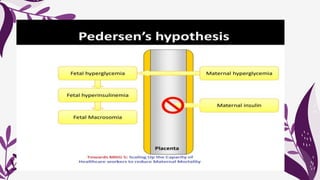
PATHOPHYSIOLOGY MATERNAL
/FETAL
COMPLICATIONS
02 03
04 05
OUTLINE
INTRAPARTUM
MANAGEMENT
REFERENCES
CASE
DISCUSSION
06
POSTNATAL CARE POSTNATAL CARE
07 08
09 11
OUTLINE
DEFINITION
01
• Carbohydrate intolerance resulting in
hyperglycaemia of variable severity, with onset or
first recognition during pregnancy
• Applies whether insulin or only diet modification is
used for treatment and whether or not the
condition persists after pregnancy.
• Does not exclude the possibility that
unrecognised glucose intolerance may have
antedated or begun concomitantly with the
pregnancy.
PREVALENCE
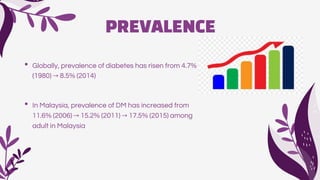
• Globally, prevalence of diabetes has risen from 4.7%
(1980) → 8.5% (2014)
• In Malaysia, prevalence of DM has increased from
11.6% (2006) → 15.2% (2011) → 17.5% (2015) among
adult in Malaysia
PREVALENCEOFGDM
According to an article published in Malaysian Family
Physician 2017, it is estimated that
• Globally, GDM ranges from <1% to 28% of antenatal
mothers
• Malaysia, ranged from 18.3% to 24.9%
• Prevalence of GDM is expected to increase
PATHOPHYSIOLOGY
02
• 1st trimester:
• Increase insulin sensitivity → higher risk of hypoglycemia
• 2nd and 3rd trimester:
• Insulin resistance with a nearly 50% decrease in insulin
mediated glucose disposal
• Hormonal changes associated with high insulin
resistance
• Human Placental Growth Hormone (HPGH), Human
Placental Lactogen, Progesterone, Tnf-alpha
MATERNAL/FETAL
COMPLICATIONS
03
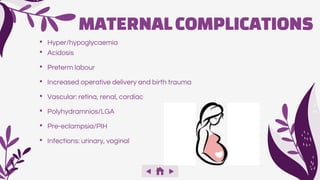
• Hyper/hypoglycaemia
• Acidosis
• Preterm labour
• Increased operative delivery and birth trauma
• Vascular: retina, renal, cardiac
• Polyhydramnios/LGA
• Pre-eclampsia/PIH
• Infections: urinary, vaginal
MATERNALCOMPLICATIONS
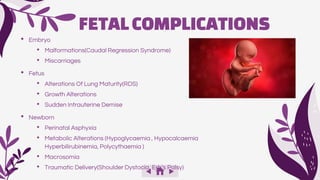
• Embryo
• Malformations(Caudal Regression Syndrome)
• Miscarriages
• Fetus
• Alterations Of Lung Maturity(RDS)
• Growth Alterations
• Sudden Intrauterine Demise
• Newborn
• Perinatal Asphyxia
• Metabolic Alterations (Hypoglycaemia , Hypocalcaemia
Hyperbilirubinemia, Polycythaemia )
• Macrosomia
• Traumatic Delivery(Shoulder Dystocia, Erb’s Palsy)
FETALCOMPLICATIONS
HAPOTRIAL
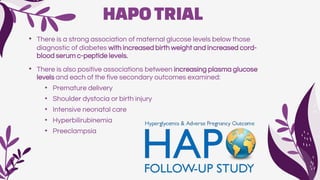
• There is a strong association of maternal glucose levels below those
diagnostic of diabetes with increased birth weight and increased cord-
blood serum c-peptide levels.
• There is also positive associations between increasing plasma glucose
levels and each of the five secondary outcomes examined:
• Premature delivery
• Shoulder dystocia or birth injury
• Intensive neonatal care
• Hyperbilirubinemia
• Preeclampsia
SCREENING
• Pregnant women should be screened if they have any one of the following
risk factors:
• BMI > 27kg/m2
• Previous macrosomic baby weighing 4kg and above
• Previous history of gestational diabetes
• First-degree relative with diabetes
• Previous unexplained stillbirths, recurrent miscarriages, birth defects
• Glycosuria at the first or any prenatal visit
• Current obstetric problems: hypertension, polyhydramnios, suspicious
macrosomia and use of steroids
• However, in view of the significance of HAPO study
• All pregnant women should be screened for GDM at 24 to 28 weeks of
gestation
WHENTOSCREEN
• Risk factors at booking - screen at after 12 to 14 weeks of gestation
• Screening at an earlier stage of gestation depends on the degree of
suspicion and at the physician's / obstetrician's request
• Women whose MOGTT is normal but have significant risk factors, a
repeat test may be performed at 28 - 32 weeks gestation
• After 28 weeks, if any current obstetric risk factors such as essential
hypertension, pregnancy induced hypertension, polyhydramnios
and current use of steroids
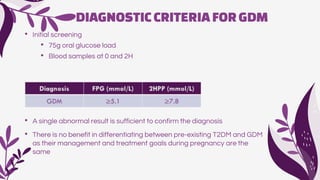
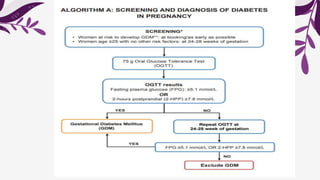
DIAGNOSTICCRITERIAFORGDM
• Initial screening
• 75g oral glucose load
• Blood samples at 0 and 2H
• A single abnormal result is sufficient to confirm the diagnosis
• There is no benefit in differentiating between pre-existing T2DM and GDM
as their management and treatment goals during pregnancy are the
same
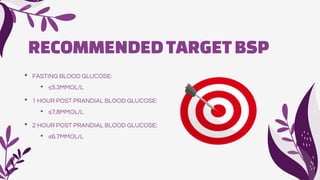
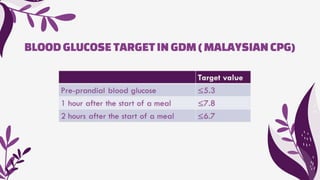
RECOMMENDEDTARGETBSP
• FASTING BLOOD GLUCOSE:
• ≤5.3MMOL/L
• 1 HOUR POST PRANDIAL BLOOD GLUCOSE:
• ≤7.8MMOL/L
• 2 HOUR POST PRANDIAL BLOOD GLUCOSE:
• ≤6.7MMOL/L
GESTATIONAL
DIABETESMELLITUS
04
PRE CONCEPTION COUNSELLING
PRECONCEPTIONCOUNSELLING
• Referral to physician/diabetologist/dietician/diabetic nurse educator for
further management
• Pregnancy has to be planned.
• The importance of smoking cessation.
• The time, commitment and effort required by the patient in both self-
management and engagement with the health care team.
• The importance of notifying the health care team without delay in the event
of conception.
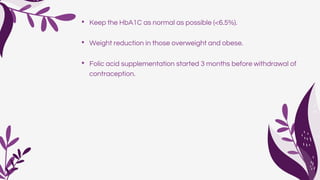
• Keep the HbA1C as normal as possible (<6.5%).
• Weight reduction in those overweight and obese.
• Folic acid supplementation started 3 months before withdrawal of
contraception.
• OAD(S) Can be switched to insulin for better glycaemic control
• Insulin treated women should be on multiple daily doses (basal-bolus) of
insulin.
• Multiple daily doses of short-acting human insulin have been used
safely and effectively
• Rapid acting insulin analogues may be used to achieve better 1-
hour postprandial glycaemic control with less hypoglycaemia
although perinatal outcomes are similar to human insulin
• Insulin detemir has similar efficacy as NPH insulin but with less
nocturnal hypoglycaemia
• Insulin glargine has no RCT data but observational data suggest
no adverse effects on pregnancy
• Screen for diabetic retinopathy
• Screen for diabetic nephropathy prior to pregnancy.
• Satisfactory BP control of <130/80 mmhg before pregnancy is
necessary
• Choices of anti-hpt; ACE-I/ ARB is contraindicated
• Statin should be discontinued during pregnancy as the safety is not
known.
• Patient with multiple cardiovascular risk factors should undergo cv risk
assessment prior to withdrawal of contraception.
GESTATIONAL
DIABETESMELLITUS
05
ANTENATAL CARE
OBJECTIVES
• A GOOD GLYCAEMIC CONTROL
• ANTE PARTUM FETAL SURVEILLANCE
• DELIVERY AT THE APPROPRIATE TIME
• OPTIMAL NEONATAL SUPPORT
• Achieve and maintain ideal glucose levels
• Start aspirin 75mg at 12 weeks
• Advise women with insulin-treated diabetes of the risks of hypoglycaemia
and hypoglycaemia unawareness in pregnancy, particularly in the first
trimester
• HbA1c (8 - 12 weekly)
• Close blood glucose monitoring is required (individualise frequency of
monitoring):
• On diet therapy:
• Pre-breakfast
• 2 hour PPG levels (fortnightly – 4 weekly)
• On insulin therapy:
• Pre-meal (breakfast, lunch, dinner) and
• Pre-bed (weekly -fortnightly).
• Once premeal glucose levels are achieved, ppg testing is recommended
for fine-tuning of insulin dose
BLOOD GLUCOSE TARGETIN GDM( MALAYSIANCPG)
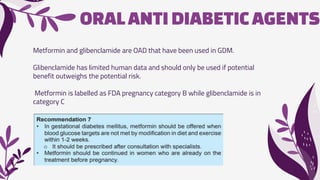
ORALANTIDIABETICAGENTS
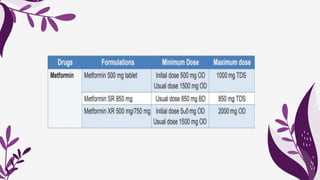
Metformin and glibenclamide are OAD that have been used in GDM.
Glibenclamide has limited human data and should only be used if potential
benefit outweighs the potential risk.
Metformin is labelled as FDA pregnancy category B while glibenclamide is in
category C
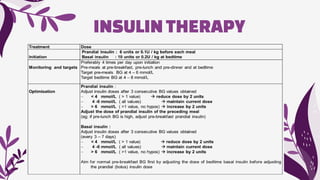
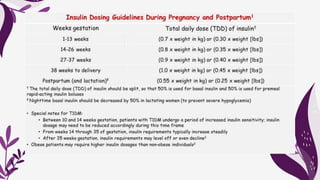
INSULINTHERAPY
ANTENATALCARE
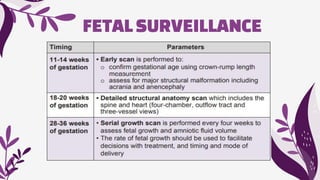
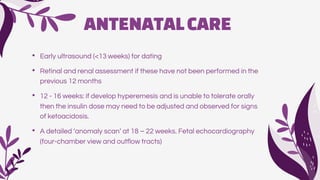
• Early ultrasound (<13 weeks) for dating
• Retinal and renal assessment if these have not been performed in the
previous 12 months
• 12 - 16 weeks: if develop hyperemesis and is unable to tolerate orally
then the insulin dose may need to be adjusted and observed for signs
of ketoacidosis.
• A detailed ‘anomaly scan’ at 18 – 22 weeks. Fetal echocardiography
(four-chamber view and outflow tracts)
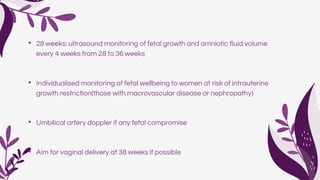
• 28 weeks: ultrasound monitoring of fetal growth and amniotic fluid volume
every 4 weeks from 28 to 36 weeks
• Individualised monitoring of fetal wellbeing to women at risk of intrauterine
growth restriction(those with macrovascular disease or nephropathy)
• Umbilical artery doppler if any fetal compromise
• Aim for vaginal delivery at 38 weeks if possible
FETALSURVEILLANCE
RETINALASSESSMENT
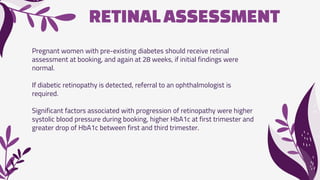
Pregnant women with pre-existing diabetes should receive retinal
assessment at booking, and again at 28 weeks, if initial findings were
normal.
If diabetic retinopathy is detected, referral to an ophthalmologist is
required.
Significant factors associated with progression of retinopathy were higher
systolic blood pressure during booking, higher HbA1c at first trimester and
greater drop of HbA1c between first and third trimester.
RENALASSESSMENT
Referral to a nephrologist should be considered when:
• serum creatinine is abnormal (120 µmol/L or more); estimated
glomerular filtration rate should not be used during pregnancy
• the urinary albumin: creatinine ratio (ACR) >30 mg/mmol
• total protein excretion exceeds 0.5 g/day
**Thromboprophylaxis should be considered for women with nephrotic
range proteinuria above 5 g/day (ACR >220 mg/mmol)
Pregnant women with pre-existing renal disease should be managed in a
combined clinic by multidisciplinary specialists.
HYPOGLYCAEMIAINPREGNANCY
HYPOGLYCAEMIADURING
PREGNANCY
• Evidence is conflicting
• Animal studies –hypoglycemia is potentially teratogenic during
organogenesis
• Clinical studies have not established any association
• Hypoglycemia in utero may have long term effects on offspring
(neuropsychological defects in offspring)
• Coma, seizure, death in mother
NUTRITIONAL
RECOMMENDATIONS
• The total calories advised is 25 – 35 kcal/kg per day of the present
body weight
• Obese - 25 kcal/kg per day
• Non obese - 30 - 35 kcal
• A high fibre & low fat diet is beneficial
EXERCISEIN PREGNANCY
• 15-30 min exercise, mainly upper body and not involving the trunk
• Effect of exercise only evident after 4 wk
• Daily exercise can decrease insulin requirement
EXAMPLESOFSAFE
PHYSICALEXERCISE
 BRISK WALKING
 SWIMMING
 LOW IMPACT AEROBICS
 MODIFIED YOGA/PILATES
 STRENGTH TRAINING
ABSOLUTE CONTRAINDICATION OFAEROBIC EXERCISE
 Haemodynamically significant heart disease
 Restrictive lung disease
 Cervical incompetence with or without cerclage
 Multiple gestation at risk for premature labour
 Persistent second or third trimester bleeding
 Placenta praevia after 26 weeks gestation
 Threatened preterm labour
 Ruptured membranes
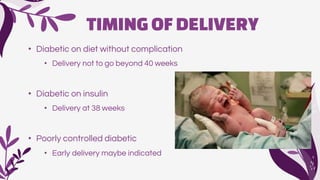
TIMINGOFDELIVERY
• Diabetic on diet without complication
• Delivery not to go beyond 40 weeks
• Diabetic on insulin
• Delivery at 38 weeks
• Poorly controlled diabetic
• Early delivery maybe indicated
ELECTIVEDELIVERYIN
GDMPATIENTS
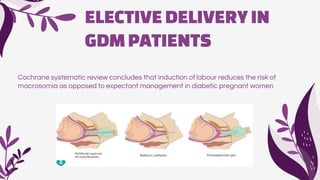
Cochrane systematic review concludes that induction of labour reduces the risk of
macrosomia as opposed to expectant management in diabetic pregnant women
PRETERMLABOUR
• Antenatal steroids for fetal lung maturation if early elective delivery is
planned-monitor the glucose levels after steroids and adjust the
insulin dose accordingly
• Tocolysis is allowed if indicated to suppress labour (but NO beta-
mimetics) - use nifedipine or atosiban - ideally
GESTATIONAL
DIABETESMELLITUS
06
INTRAPARTUM MANAGEMENT
INTRAPARTUMMANAGEMENT
• Monitoring of glucose hourly and maintain at 4 - 7mmol/L and every 30
minutes if a general anaesthetic is used.
• Intravenous dextrose and insulin (gik regime) for women with type 1
diabetes and when the glucose cannot be maintained between 4 - 7
mmol/l
• GIK regime- a method for controlling blood-sugar levels in diabetic
patients who are being fasted. It involves infusing a solution of glucose
(G), insulin (I), and potassium (K) chloride intravenously over a standard
period using a sliding scale
GESTATIONAL
DIABETESMELLITUS
08
POSTNATAL CARE
POSTNATALCARE
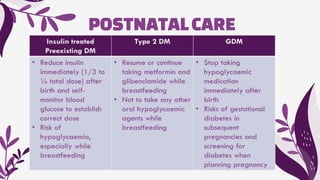
POSTNATALCARE
Encourage
• Healthy nutrition
• Planned physical activity
• Weight reduction
• Contraception
• MGTT at the 6-week postnatal appointment, then annually (fasting plasma
glucose)
• Screening for diabetes when planning for future pregnancy
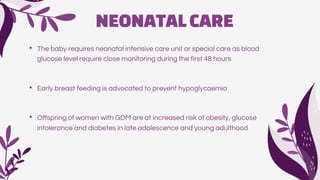
NEONATALCARE
• The baby requires neonatal intensive care unit or special care as blood
glucose level require close monitoring during the first 48 hours
• Early breast feeding is advocated to prevent hypoglycaemia
• Offspring of women with GDM are at increased risk of obesity, glucose
intolerance and diabetes in late adolescence and young adulthood
TAKEHOME
MESSAGE
• Diabetes in pregnancy confers a significant risk of maternal and neonatal
complications
• Blood glucose levels are positively associated with adverse outcomes in
diabetic pregnancy
• Strict glycaemic control should be strived for in pregnant women with type
1 or type 2 diabetes
• Insulin is required for the treatment of type 1 and type 2 diabetes in
pregnancy, and is recommended for gestational diabetes mellitus if
glycaemic targets are not reached
• Basal–bolus or CSII regimens are recommended in pregnant women with
type 1 or type 2 diabetes
CASE
DISCUSSION
10
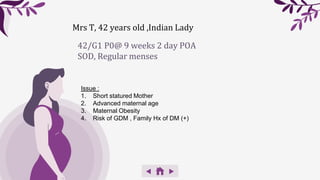
42/G1 P0@ 9 weeks 2 day POA
SOD, Regular menses
Issue :
1. Short statured Mother
2. Advanced maternal age
3. Maternal Obesity
4. Risk of GDM , Family Hx of DM (+)
Mrs T, 42 years old ,Indian Lady
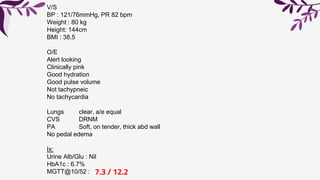
V/S
BP : 121/76mmHg, PR 82 bpm
Weight : 80 kg
Height: 144cm
BMI : 38.5
O/E
Alert looking
Clinically pink
Good hydration
Good pulse volume
Not tachypneic
No tachycardia
Lungs clear, a/e equal
CVS DRNM
PA Soft, on tender, thick abd wall
No pedal edema
Ix:
Urine Alb/Glu : Nil
HbA1c : 6.7%
MGTT@10/52 : 7.3 / 12.2
BSPCHART
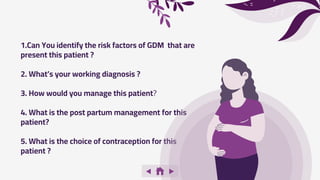
1.Can You identify the risk factors of GDM that are
present this patient ?
2. What’s your working diagnosis ?
3. How would you manage this patient?
4. What is the post partum management for this
patient?
5. What is the choice of contraception for this
patient ?
REFERENCES
• CPG Management Of GDM – Edition 2017
• Obstetrics Ten Teachers
• NICE guidelines
THANKYOU

GESTATIONAL DIABETES MELLITUS

  • 1.
    MANAGEMENT OF GESTATIONAL DIABETESMELLITUS Presenter: DR SANGEETHA VIJIAN MInTFM Trainee HSIJB
  • 2.
  • 3.
  • 4.
  • 5.
    • Carbohydrate intoleranceresulting in hyperglycaemia of variable severity, with onset or first recognition during pregnancy • Applies whether insulin or only diet modification is used for treatment and whether or not the condition persists after pregnancy. • Does not exclude the possibility that unrecognised glucose intolerance may have antedated or begun concomitantly with the pregnancy.
  • 6.
    PREVALENCE • Globally, prevalenceof diabetes has risen from 4.7% (1980) → 8.5% (2014) • In Malaysia, prevalence of DM has increased from 11.6% (2006) → 15.2% (2011) → 17.5% (2015) among adult in Malaysia
  • 7.
    PREVALENCEOFGDM According to anarticle published in Malaysian Family Physician 2017, it is estimated that • Globally, GDM ranges from <1% to 28% of antenatal mothers • Malaysia, ranged from 18.3% to 24.9% • Prevalence of GDM is expected to increase
  • 9.
  • 10.
    • 1st trimester: •Increase insulin sensitivity → higher risk of hypoglycemia • 2nd and 3rd trimester: • Insulin resistance with a nearly 50% decrease in insulin mediated glucose disposal • Hormonal changes associated with high insulin resistance • Human Placental Growth Hormone (HPGH), Human Placental Lactogen, Progesterone, Tnf-alpha
  • 11.
  • 12.
    • Hyper/hypoglycaemia • Acidosis •Preterm labour • Increased operative delivery and birth trauma • Vascular: retina, renal, cardiac • Polyhydramnios/LGA • Pre-eclampsia/PIH • Infections: urinary, vaginal MATERNALCOMPLICATIONS
  • 13.
    • Embryo • Malformations(CaudalRegression Syndrome) • Miscarriages • Fetus • Alterations Of Lung Maturity(RDS) • Growth Alterations • Sudden Intrauterine Demise • Newborn • Perinatal Asphyxia • Metabolic Alterations (Hypoglycaemia , Hypocalcaemia Hyperbilirubinemia, Polycythaemia ) • Macrosomia • Traumatic Delivery(Shoulder Dystocia, Erb’s Palsy) FETALCOMPLICATIONS
  • 15.
    HAPOTRIAL • There isa strong association of maternal glucose levels below those diagnostic of diabetes with increased birth weight and increased cord- blood serum c-peptide levels. • There is also positive associations between increasing plasma glucose levels and each of the five secondary outcomes examined: • Premature delivery • Shoulder dystocia or birth injury • Intensive neonatal care • Hyperbilirubinemia • Preeclampsia
  • 16.
    SCREENING • Pregnant womenshould be screened if they have any one of the following risk factors: • BMI > 27kg/m2 • Previous macrosomic baby weighing 4kg and above • Previous history of gestational diabetes • First-degree relative with diabetes • Previous unexplained stillbirths, recurrent miscarriages, birth defects • Glycosuria at the first or any prenatal visit • Current obstetric problems: hypertension, polyhydramnios, suspicious macrosomia and use of steroids • However, in view of the significance of HAPO study • All pregnant women should be screened for GDM at 24 to 28 weeks of gestation
  • 17.
    WHENTOSCREEN • Risk factorsat booking - screen at after 12 to 14 weeks of gestation • Screening at an earlier stage of gestation depends on the degree of suspicion and at the physician's / obstetrician's request • Women whose MOGTT is normal but have significant risk factors, a repeat test may be performed at 28 - 32 weeks gestation • After 28 weeks, if any current obstetric risk factors such as essential hypertension, pregnancy induced hypertension, polyhydramnios and current use of steroids
  • 18.
    DIAGNOSTICCRITERIAFORGDM • Initial screening •75g oral glucose load • Blood samples at 0 and 2H • A single abnormal result is sufficient to confirm the diagnosis • There is no benefit in differentiating between pre-existing T2DM and GDM as their management and treatment goals during pregnancy are the same
  • 19.
    RECOMMENDEDTARGETBSP • FASTING BLOODGLUCOSE: • ≤5.3MMOL/L • 1 HOUR POST PRANDIAL BLOOD GLUCOSE: • ≤7.8MMOL/L • 2 HOUR POST PRANDIAL BLOOD GLUCOSE: • ≤6.7MMOL/L
  • 20.
  • 21.
    PRECONCEPTIONCOUNSELLING • Referral tophysician/diabetologist/dietician/diabetic nurse educator for further management • Pregnancy has to be planned. • The importance of smoking cessation. • The time, commitment and effort required by the patient in both self- management and engagement with the health care team. • The importance of notifying the health care team without delay in the event of conception.
  • 22.
    • Keep theHbA1C as normal as possible (<6.5%). • Weight reduction in those overweight and obese. • Folic acid supplementation started 3 months before withdrawal of contraception.
  • 23.
    • OAD(S) Canbe switched to insulin for better glycaemic control • Insulin treated women should be on multiple daily doses (basal-bolus) of insulin. • Multiple daily doses of short-acting human insulin have been used safely and effectively • Rapid acting insulin analogues may be used to achieve better 1- hour postprandial glycaemic control with less hypoglycaemia although perinatal outcomes are similar to human insulin • Insulin detemir has similar efficacy as NPH insulin but with less nocturnal hypoglycaemia • Insulin glargine has no RCT data but observational data suggest no adverse effects on pregnancy
  • 24.
    • Screen fordiabetic retinopathy • Screen for diabetic nephropathy prior to pregnancy. • Satisfactory BP control of <130/80 mmhg before pregnancy is necessary • Choices of anti-hpt; ACE-I/ ARB is contraindicated • Statin should be discontinued during pregnancy as the safety is not known. • Patient with multiple cardiovascular risk factors should undergo cv risk assessment prior to withdrawal of contraception.
  • 25.
  • 27.
    OBJECTIVES • A GOODGLYCAEMIC CONTROL • ANTE PARTUM FETAL SURVEILLANCE • DELIVERY AT THE APPROPRIATE TIME • OPTIMAL NEONATAL SUPPORT
  • 28.
    • Achieve andmaintain ideal glucose levels • Start aspirin 75mg at 12 weeks • Advise women with insulin-treated diabetes of the risks of hypoglycaemia and hypoglycaemia unawareness in pregnancy, particularly in the first trimester • HbA1c (8 - 12 weekly)
  • 29.
    • Close bloodglucose monitoring is required (individualise frequency of monitoring): • On diet therapy: • Pre-breakfast • 2 hour PPG levels (fortnightly – 4 weekly) • On insulin therapy: • Pre-meal (breakfast, lunch, dinner) and • Pre-bed (weekly -fortnightly). • Once premeal glucose levels are achieved, ppg testing is recommended for fine-tuning of insulin dose
  • 30.
    BLOOD GLUCOSE TARGETINGDM( MALAYSIANCPG)
  • 31.
    ORALANTIDIABETICAGENTS Metformin and glibenclamideare OAD that have been used in GDM. Glibenclamide has limited human data and should only be used if potential benefit outweighs the potential risk. Metformin is labelled as FDA pregnancy category B while glibenclamide is in category C
  • 33.
  • 35.
    ANTENATALCARE • Early ultrasound(<13 weeks) for dating • Retinal and renal assessment if these have not been performed in the previous 12 months • 12 - 16 weeks: if develop hyperemesis and is unable to tolerate orally then the insulin dose may need to be adjusted and observed for signs of ketoacidosis. • A detailed ‘anomaly scan’ at 18 – 22 weeks. Fetal echocardiography (four-chamber view and outflow tracts)
  • 36.
    • 28 weeks:ultrasound monitoring of fetal growth and amniotic fluid volume every 4 weeks from 28 to 36 weeks • Individualised monitoring of fetal wellbeing to women at risk of intrauterine growth restriction(those with macrovascular disease or nephropathy) • Umbilical artery doppler if any fetal compromise • Aim for vaginal delivery at 38 weeks if possible
  • 37.
  • 38.
    RETINALASSESSMENT Pregnant women withpre-existing diabetes should receive retinal assessment at booking, and again at 28 weeks, if initial findings were normal. If diabetic retinopathy is detected, referral to an ophthalmologist is required. Significant factors associated with progression of retinopathy were higher systolic blood pressure during booking, higher HbA1c at first trimester and greater drop of HbA1c between first and third trimester.
  • 39.
    RENALASSESSMENT Referral to anephrologist should be considered when: • serum creatinine is abnormal (120 µmol/L or more); estimated glomerular filtration rate should not be used during pregnancy • the urinary albumin: creatinine ratio (ACR) >30 mg/mmol • total protein excretion exceeds 0.5 g/day **Thromboprophylaxis should be considered for women with nephrotic range proteinuria above 5 g/day (ACR >220 mg/mmol) Pregnant women with pre-existing renal disease should be managed in a combined clinic by multidisciplinary specialists.
  • 40.
  • 41.
    HYPOGLYCAEMIADURING PREGNANCY • Evidence isconflicting • Animal studies –hypoglycemia is potentially teratogenic during organogenesis • Clinical studies have not established any association • Hypoglycemia in utero may have long term effects on offspring (neuropsychological defects in offspring) • Coma, seizure, death in mother
  • 42.
    NUTRITIONAL RECOMMENDATIONS • The totalcalories advised is 25 – 35 kcal/kg per day of the present body weight • Obese - 25 kcal/kg per day • Non obese - 30 - 35 kcal • A high fibre & low fat diet is beneficial
  • 43.
    EXERCISEIN PREGNANCY • 15-30min exercise, mainly upper body and not involving the trunk • Effect of exercise only evident after 4 wk • Daily exercise can decrease insulin requirement
  • 44.
    EXAMPLESOFSAFE PHYSICALEXERCISE  BRISK WALKING SWIMMING  LOW IMPACT AEROBICS  MODIFIED YOGA/PILATES  STRENGTH TRAINING
  • 45.
    ABSOLUTE CONTRAINDICATION OFAEROBICEXERCISE  Haemodynamically significant heart disease  Restrictive lung disease  Cervical incompetence with or without cerclage  Multiple gestation at risk for premature labour  Persistent second or third trimester bleeding  Placenta praevia after 26 weeks gestation  Threatened preterm labour  Ruptured membranes
  • 46.
    TIMINGOFDELIVERY • Diabetic ondiet without complication • Delivery not to go beyond 40 weeks • Diabetic on insulin • Delivery at 38 weeks • Poorly controlled diabetic • Early delivery maybe indicated
  • 47.
    ELECTIVEDELIVERYIN GDMPATIENTS Cochrane systematic reviewconcludes that induction of labour reduces the risk of macrosomia as opposed to expectant management in diabetic pregnant women
  • 48.
    PRETERMLABOUR • Antenatal steroidsfor fetal lung maturation if early elective delivery is planned-monitor the glucose levels after steroids and adjust the insulin dose accordingly • Tocolysis is allowed if indicated to suppress labour (but NO beta- mimetics) - use nifedipine or atosiban - ideally
  • 49.
  • 50.
    INTRAPARTUMMANAGEMENT • Monitoring ofglucose hourly and maintain at 4 - 7mmol/L and every 30 minutes if a general anaesthetic is used. • Intravenous dextrose and insulin (gik regime) for women with type 1 diabetes and when the glucose cannot be maintained between 4 - 7 mmol/l • GIK regime- a method for controlling blood-sugar levels in diabetic patients who are being fasted. It involves infusing a solution of glucose (G), insulin (I), and potassium (K) chloride intravenously over a standard period using a sliding scale
  • 51.
  • 52.
  • 53.
    POSTNATALCARE Encourage • Healthy nutrition •Planned physical activity • Weight reduction • Contraception • MGTT at the 6-week postnatal appointment, then annually (fasting plasma glucose) • Screening for diabetes when planning for future pregnancy
  • 54.
    NEONATALCARE • The babyrequires neonatal intensive care unit or special care as blood glucose level require close monitoring during the first 48 hours • Early breast feeding is advocated to prevent hypoglycaemia • Offspring of women with GDM are at increased risk of obesity, glucose intolerance and diabetes in late adolescence and young adulthood
  • 56.
  • 57.
    • Diabetes inpregnancy confers a significant risk of maternal and neonatal complications • Blood glucose levels are positively associated with adverse outcomes in diabetic pregnancy • Strict glycaemic control should be strived for in pregnant women with type 1 or type 2 diabetes • Insulin is required for the treatment of type 1 and type 2 diabetes in pregnancy, and is recommended for gestational diabetes mellitus if glycaemic targets are not reached • Basal–bolus or CSII regimens are recommended in pregnant women with type 1 or type 2 diabetes
  • 58.
  • 59.
    42/G1 P0@ 9weeks 2 day POA SOD, Regular menses Issue : 1. Short statured Mother 2. Advanced maternal age 3. Maternal Obesity 4. Risk of GDM , Family Hx of DM (+) Mrs T, 42 years old ,Indian Lady
  • 60.
    V/S BP : 121/76mmHg,PR 82 bpm Weight : 80 kg Height: 144cm BMI : 38.5 O/E Alert looking Clinically pink Good hydration Good pulse volume Not tachypneic No tachycardia Lungs clear, a/e equal CVS DRNM PA Soft, on tender, thick abd wall No pedal edema Ix: Urine Alb/Glu : Nil HbA1c : 6.7% MGTT@10/52 : 7.3 / 12.2
  • 61.
  • 62.
    1.Can You identifythe risk factors of GDM that are present this patient ? 2. What’s your working diagnosis ? 3. How would you manage this patient? 4. What is the post partum management for this patient? 5. What is the choice of contraception for this patient ?
  • 63.
    REFERENCES • CPG ManagementOf GDM – Edition 2017 • Obstetrics Ten Teachers • NICE guidelines
  • 64.