Doubled-Up Legumes in Malawi: An Innovation for Sustainable Rain-Fed Cereal Production in Developing Countries 
Sieglinde Snapp1, Regis Chikowo1,2, Wezi Mhango3, Vicki Morrone1, Mateete Bekunda2, and Irmgard Hoeschle-Zeledon2 
1Michigan State University,2IITA, 3Lilongwe University of Agriculture and Natural Resources 
Tropentag 2014, Prague, Czech Republic -17-19 September, 2014
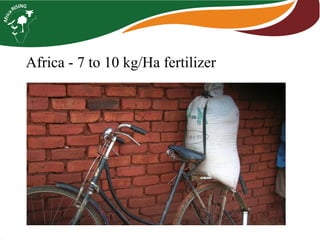
Africa -7 to 10 kg/Ha fertilizer
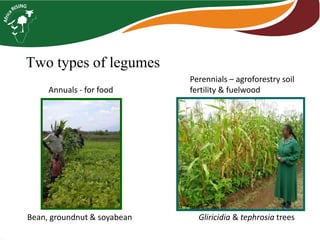
Two types of legumes 
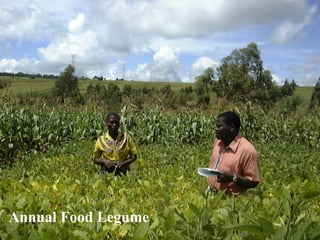
Annuals -for food 
Perennials –agroforestry soil fertility & fuelwood 
Bean, groundnut & soyabean 
Gliricidia& tephrosiatrees
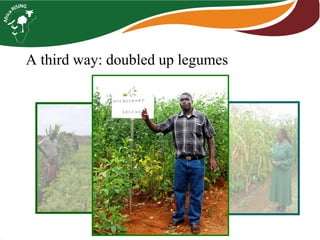
A third way: doubled up legumes
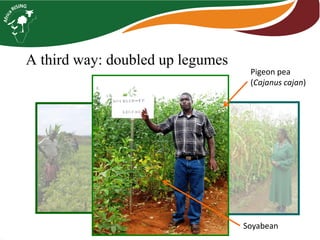
A third way: doubled up legumesPigeon pea(Cajanuscajan) 
Soyabean
Karonga 
ADD 
Mzuzu 
ADD 
Kasungu 
ADD 
Lilongwe ADD 
Machinga 
ADD 
Blantyre 
ADD 
Shire 
Valley 
ADD 
Mzuzu 
Lilongwe 
Blantyre 
Zomba 
Kasungu 
Karonga 
Mchinji 
Chitipa 
Salima 
Lower Shire Valley: 
< 200 m elevation 
Lakeshore, Middle & 
Upper Shire: 200 - 760 m 
Highlands: 
> 1300 m 
Mid-elevation Upland 
Plateau: 760 - 1300 m 
T. Benson; 10/98 
MALAWI 
Nsanje 
Salima 
ADD 
Mzimba 
Mangochi
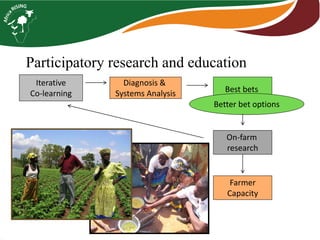
Participatory research and educationIterativeCo-learning 
Diagnosis & 
Systems Analysis 
Best bets 
On-farm 
research 
Farmer 
Capacity 
Better bet options
Annual Food Legume
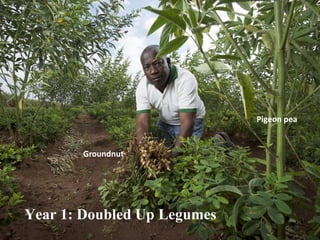
Groundnut 
Pigeon pea 
Year 1: Doubled Up Legumes
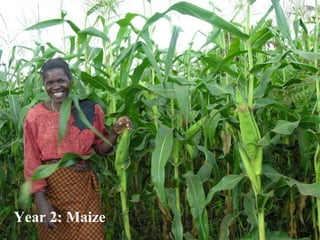
Year 2: Maize
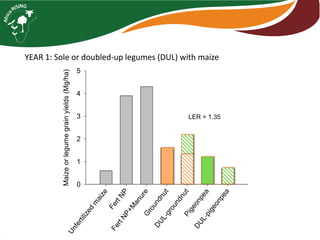
LER = 1.35 
Unfertilized maize 
Fert NP 
Fert NP+Manure 
Groundnut 
DUL-groundnut 
Pigeonpea 
DUL-pigeonpea 
Maize or legume grain yields (Mg/ha) 
0 
1 
2 
3 
4 
5 
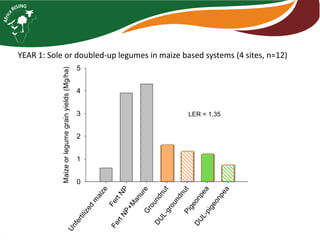
YEAR 1: Sole or doubled-up legumes in maize based systems (4 sites, n=12)
LER = 1.35 
Unfertilized maize 
Fert NP 
Fert NP+Manure 
Groundnut 
DUL-groundnut 
Pigeonpea 
DUL-pigeonpea 
Maize or legume grain yields (Mg/ha) 
0 
1 
2 
3 
4 
5 
YEAR 1: Sole or doubled-up legumes (DUL) with maize
LER = 1.35 
Unfertilized maize 
Fert NP 
Fert NP+Manure 
Groundnut 
DUL-groundnut 
Pigeonpea 
DUL-pigeonpea 
Maize or legume grain yields (Mg/ha) 
0 
1 
2 
3 
4 
5 
Unfertilized maize 
Fert NP 
Fert NP+Manure 
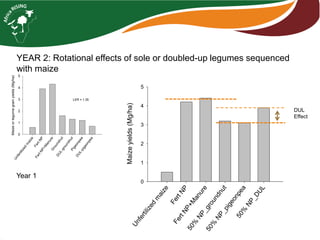
50% NP_groundnut 
50% NP_pigeonpea 
50% NP_DUL 
Maize yields (Mg/ha) 
0 
1 
2 
3 
4 
5 
DUL 
Effect 
Year 1 
YEAR 2: Rotational effects of sole or doubled-up legumes sequenced 
with maize
Mz+Fert 
Mz+Ppea+Fert 
Mz+Comp 
Mz+Beans 
Mz+Gnuts 
PPea+Beans 
PPea+ Gnuts 
PPea+Soy 
√ 
√ 
√ 
√ 
√ 
√ 
√ 
√ 
√ 
√ 
√ 
√ 
√ 
√ 
√ 
√ 
√ 
√ 
√ 
√ 
√ 
√ 
√ 
√ 
√ 
√
Year 1: Pigeonpea + grain legume 
Year 2: Regrowing pigeonpea + Fert. Maize 
Year 3: Fertilized Maize 
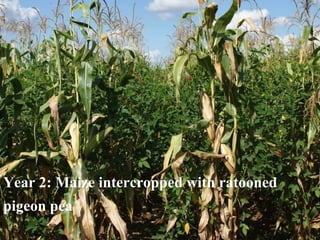
Year 2: Maize intercropped with ratooned 
pigeon pea
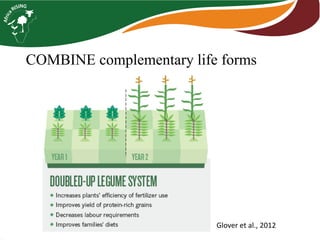
COMBINE complementary life forms 
Glover et al., 2012
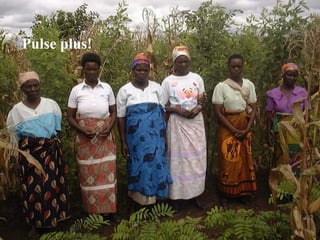
Pulse plus!
Africa Research in Sustainable Intensification for the Next Generation 
africa-rising.net 
The presentation has a Creative Commons licence. You are free to re-use or distribute this work, provided credit is given to ILRI. 
Thank You

Doubled-Up Legumes in Malawi

  • 1.
    Doubled-Up Legumes inMalawi: An Innovation for Sustainable Rain-Fed Cereal Production in Developing Countries Sieglinde Snapp1, Regis Chikowo1,2, Wezi Mhango3, Vicki Morrone1, Mateete Bekunda2, and Irmgard Hoeschle-Zeledon2 1Michigan State University,2IITA, 3Lilongwe University of Agriculture and Natural Resources Tropentag 2014, Prague, Czech Republic -17-19 September, 2014
  • 3.
    Africa -7 to10 kg/Ha fertilizer
  • 5.
    Two types oflegumes Annuals -for food Perennials –agroforestry soil fertility & fuelwood Bean, groundnut & soyabean Gliricidia& tephrosiatrees
  • 6.
    A third way:doubled up legumes
  • 7.
    A third way:doubled up legumesPigeon pea(Cajanuscajan) Soyabean
  • 8.
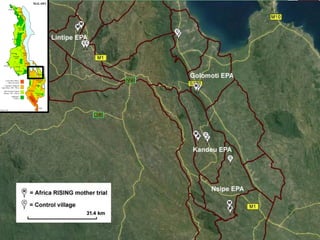
    Karonga ADD Mzuzu ADD Kasungu ADD Lilongwe ADD Machinga ADD Blantyre ADD Shire Valley ADD Mzuzu Lilongwe Blantyre Zomba Kasungu Karonga Mchinji Chitipa Salima Lower Shire Valley: < 200 m elevation Lakeshore, Middle & Upper Shire: 200 - 760 m Highlands: > 1300 m Mid-elevation Upland Plateau: 760 - 1300 m T. Benson; 10/98 MALAWI Nsanje Salima ADD Mzimba Mangochi
  • 9.
    Participatory research andeducationIterativeCo-learning Diagnosis & Systems Analysis Best bets On-farm research Farmer Capacity Better bet options
  • 10.
  • 11.
    Groundnut Pigeon pea Year 1: Doubled Up Legumes
  • 12.
  • 13.
    LER = 1.35 Unfertilized maize Fert NP Fert NP+Manure Groundnut DUL-groundnut Pigeonpea DUL-pigeonpea Maize or legume grain yields (Mg/ha) 0 1 2 3 4 5 YEAR 1: Sole or doubled-up legumes in maize based systems (4 sites, n=12)
  • 14.
    LER = 1.35 Unfertilized maize Fert NP Fert NP+Manure Groundnut DUL-groundnut Pigeonpea DUL-pigeonpea Maize or legume grain yields (Mg/ha) 0 1 2 3 4 5 YEAR 1: Sole or doubled-up legumes (DUL) with maize
  • 15.
    LER = 1.35 Unfertilized maize Fert NP Fert NP+Manure Groundnut DUL-groundnut Pigeonpea DUL-pigeonpea Maize or legume grain yields (Mg/ha) 0 1 2 3 4 5 Unfertilized maize Fert NP Fert NP+Manure 50% NP_groundnut 50% NP_pigeonpea 50% NP_DUL Maize yields (Mg/ha) 0 1 2 3 4 5 DUL Effect Year 1 YEAR 2: Rotational effects of sole or doubled-up legumes sequenced with maize
  • 16.
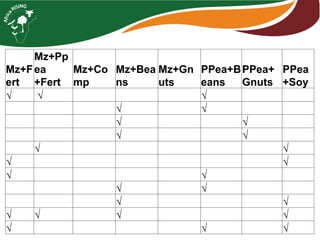
    Mz+Fert Mz+Ppea+Fert Mz+Comp Mz+Beans Mz+Gnuts PPea+Beans PPea+ Gnuts PPea+Soy √ √ √ √ √ √ √ √ √ √ √ √ √ √ √ √ √ √ √ √ √ √ √ √ √ √
  • 17.
    Year 1: Pigeonpea+ grain legume Year 2: Regrowing pigeonpea + Fert. Maize Year 3: Fertilized Maize Year 2: Maize intercropped with ratooned pigeon pea
  • 18.
    COMBINE complementary lifeforms Glover et al., 2012
  • 19.
  • 20.
    Africa Research inSustainable Intensification for the Next Generation africa-rising.net The presentation has a Creative Commons licence. You are free to re-use or distribute this work, provided credit is given to ILRI. Thank You

Editor's Notes

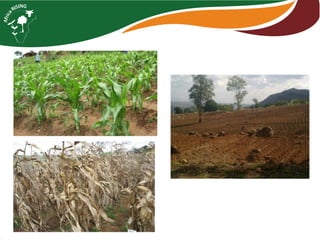
  • #3 Continuous maize production with nil inputs has led to serious soil degradation
  • #4 Fertilizer subsidies up and down, in southern Africa have increased smallholder farmer access to about half a bag but still, ver modest levels used – 5 to 10 fold more expensive input than in the USA as no fertilizer manufacturing capacity on the continent
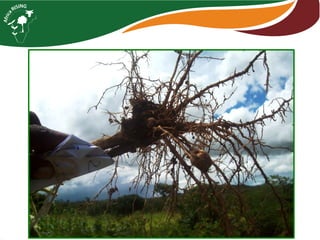
  • #6 Now I want to turn to which types of legumes are ‘best bets’ Not all legumes are alike, annuals provide food and agroforestry systems rely on perennial tress. For sustainable intensification the intermediate ‘sweet spot’ is the multipurpose, long-lived legumes that provide immediate returns, food and fodder, plus vegetative growth and deep roots for 10 or more months of N fixation and P solubilization.
  • #7 Now I want to turn to which types of legumes are ‘best bets’ Not all legumes are alike, annuals provide food and agroforestry systems rely on perennial tress. For sustainable intensification the intermediate ‘sweet spot’ is the multipurpose, long-lived legumes that provide immediate returns, food and fodder, plus vegetative growth and deep roots for 10 or more months of N fixation and P solubilization.
  • #8 Now I want to turn to which types of legumes are ‘best bets’ Not all legumes are alike, annuals provide food and agroforestry systems rely on perennial tress. For sustainable intensification the intermediate ‘sweet spot’ is the multipurpose, long-lived legumes that provide immediate returns, food and fodder, plus vegetative growth and deep roots for 10 or more months of N fixation and P solubilization.
  • #14 Preliminary data from mother trials
  • #17 Example of range of technologies being adapted and tested by farmers (about 1000 baby farmers involved, 110 or more per each of the 8 mother trial sites).
  • #18 Farmer adaptation, interested in ratooning pigeonpea so grows for two years as a perennial agroforestry innovation with doubled up legumes year one, pigeon pea+ maize intercrop in second year and sole maize with inputs for sustainable intensification in year three after rehabilitation.