The woman has no right to sell livestock
The role of gender norms in Northern Ghana’s small ruminant value chains
and implications for transformative interventions
Kipo Jimah and Gundula Fischer
International Institute of Tropical Agriculture
Cultivating Equality: Advancing Gender Research in Agriculture and Food Systems. A virtual conference
12-15 October 2021
Outline
• Context of the study
• Methodology
• Outline of actors involved
• Selling of small ruminants
• Constraining gender norms
• Implications and recommendations
Context of the study
• Research gap: Participation and benefits of women and youth in livestock
value chains
• Objectives
• To assess women and youth’ participation in and benefits from value
chain activities
• To capture social norms and institutions that promote or hinder
equitable value chain participation and benefits
• To inform discussions and decisions on gender transformative strategies
and practices that will facilitate and increase inclusiveness
Context of the study
Map of Ghana showing the study area
Leaf stripping
Fodder cultivation
Feeding troughs
Methodology
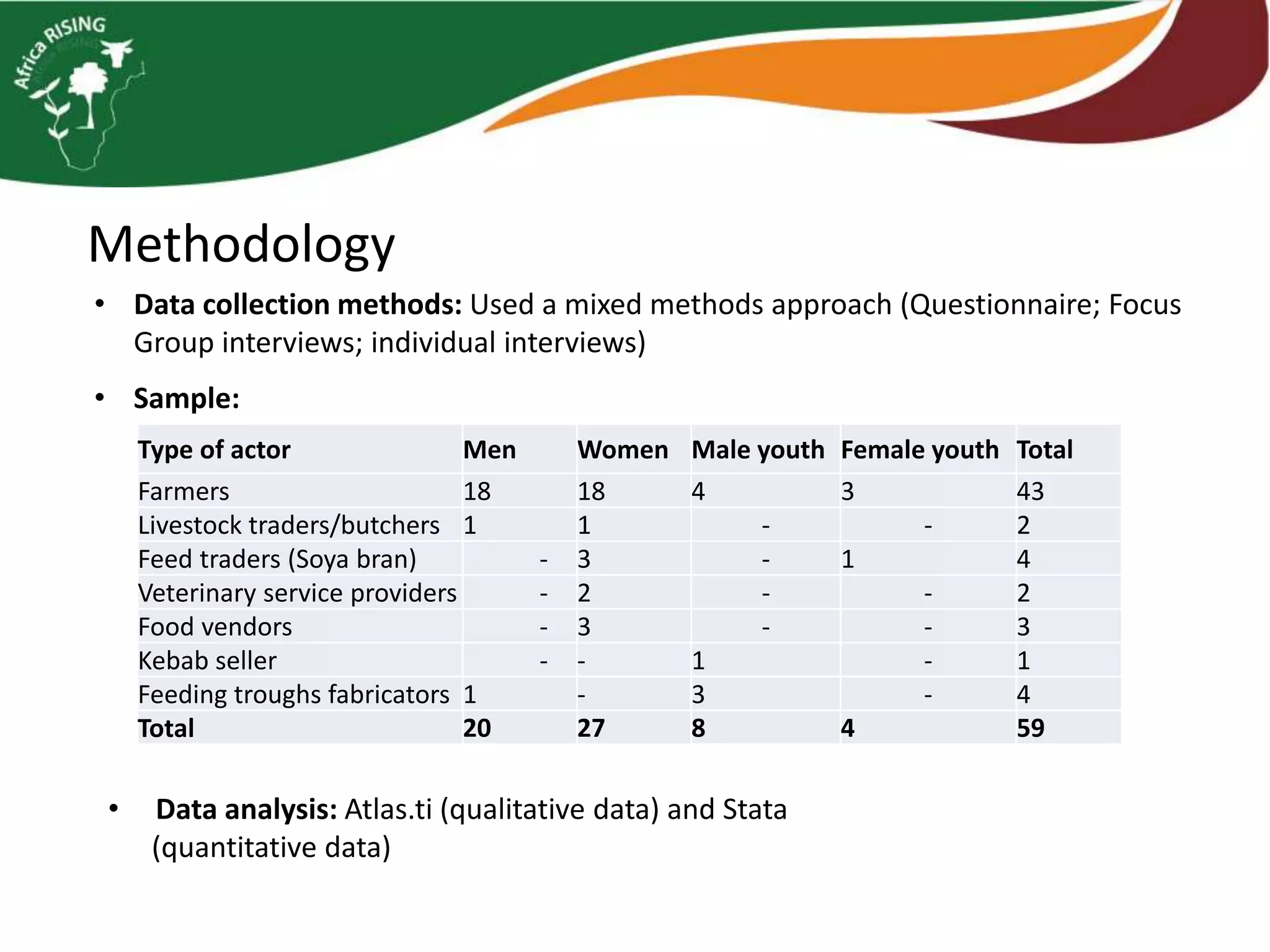
• Data collection methods: Used a mixed methods approach (Questionnaire; Focus
Group interviews; individual interviews)
• Sample:
Type of actor Men Women Male youth Female youth Total
Farmers 18 18 4 3 43
Livestock traders/butchers 1 1 - - 2
Feed traders (Soya bran) - 3 - 1 4
Veterinary service providers - 2 - - 2
Food vendors - 3 - - 3
Kebab seller - - 1 - 1
Feeding troughs fabricators 1 - 3 - 4
Total 20 27 8 4 59
• Data analysis: Atlas.ti (qualitative data) and Stata
(quantitative data)
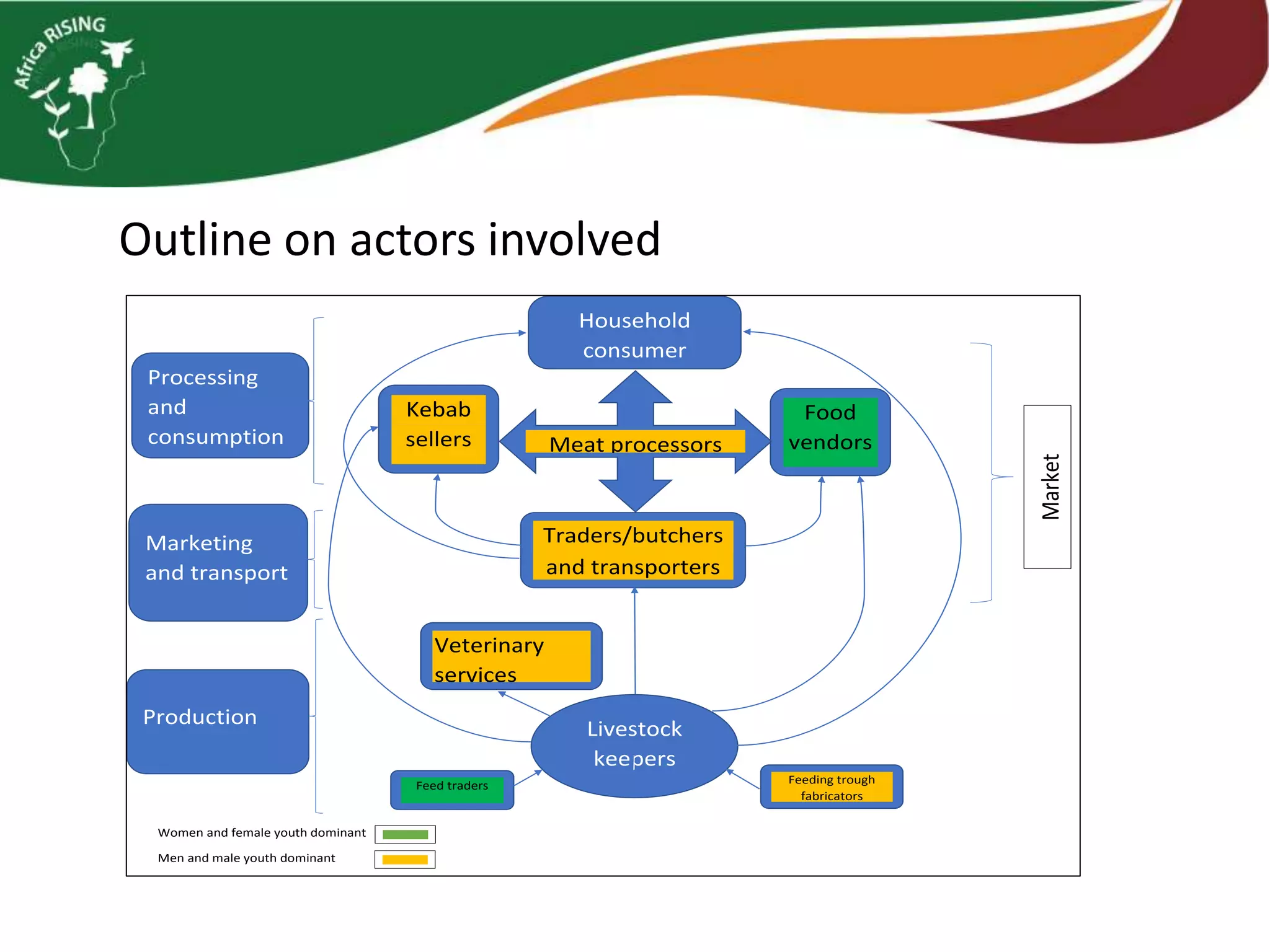
Outline on actors involved
Women and female youth dominant
Men and male youth dominant
Livestock
keepers
Food
vendors
Traders/butchers
and transporters
Kebab
sellers
Veterinary
services
Processing
and
consumption
Marketing
and transport
Household
consumer
Meat processors
Production
Market
Feed traders Feeding trough
fabricators
Selling of small ruminants
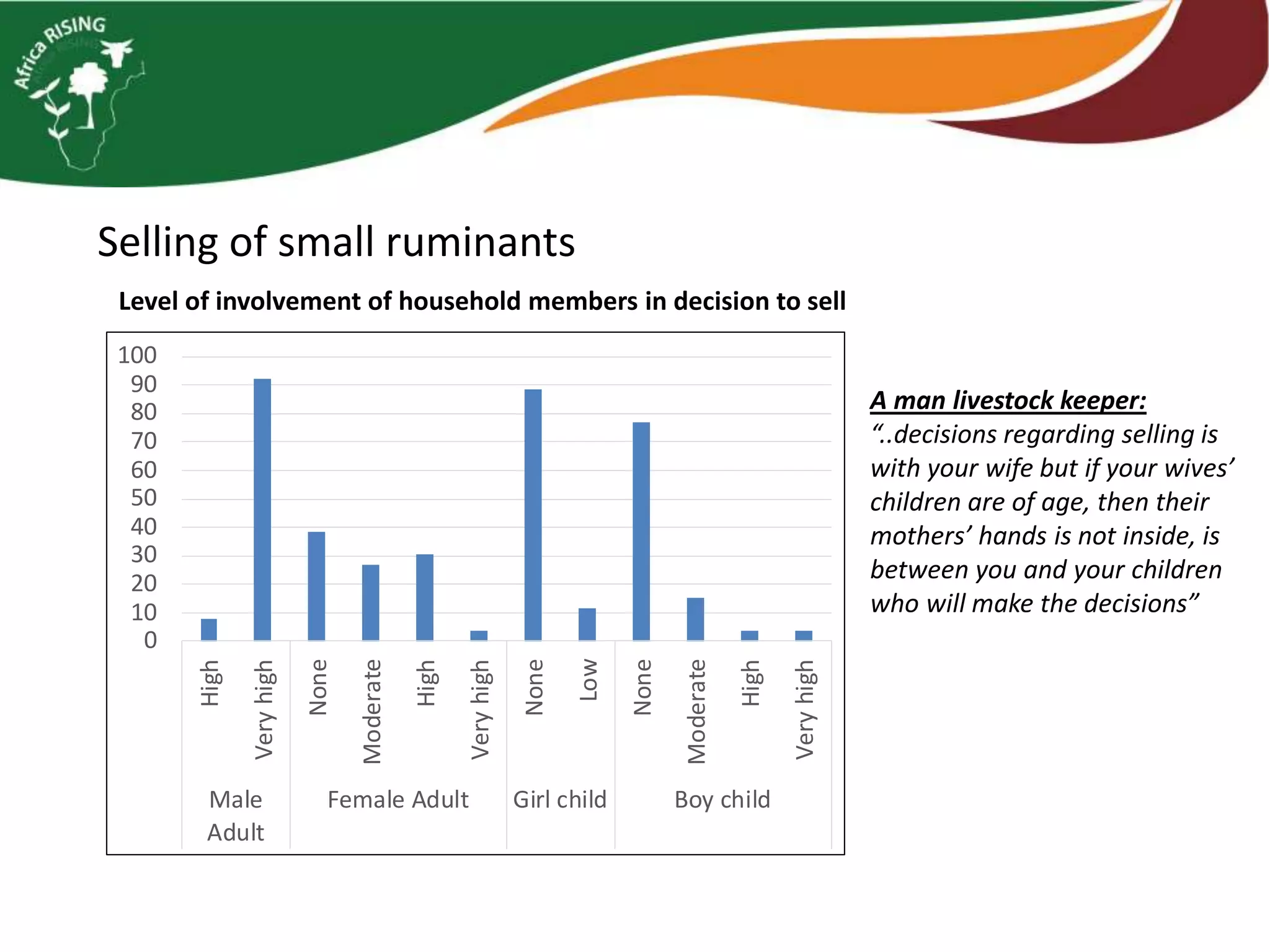
A man livestock keeper:
“..decisions regarding selling is
with your wife but if your wives’
children are of age, then their
mothers’ hands is not inside, is
between you and your children
who will make the decisions”
Level of involvement of household members in decision to sell
0
10
20
30
40
50
60
70
80
90
100
High
Very
high
None
Moderate
High
Very
high
None
Low
None
Moderate
High
Very
high
Male
Adult
Female Adult Girl child Boy child
Selling of small ruminants
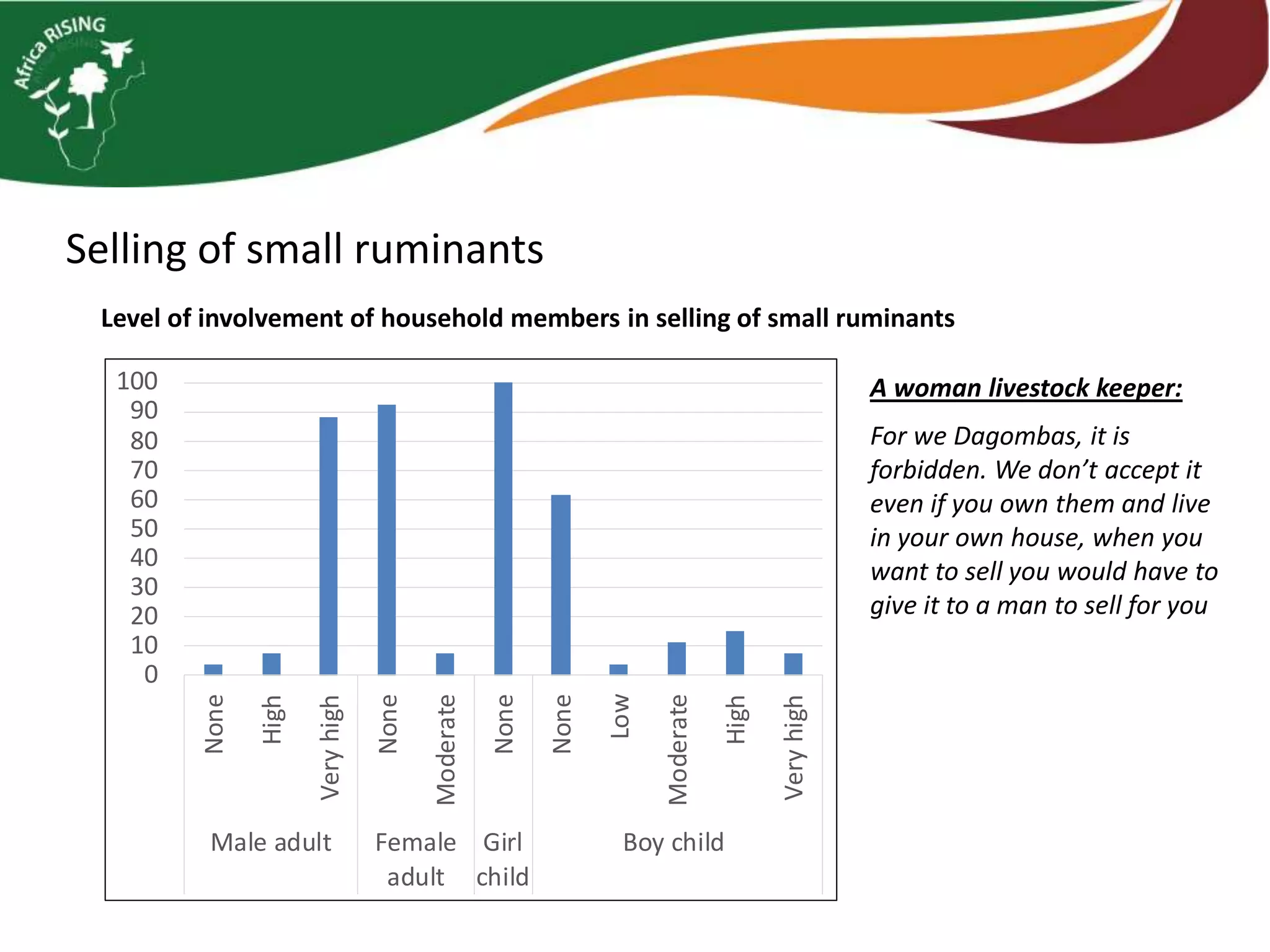
A woman livestock keeper:
For we Dagombas, it is
forbidden. We don’t accept it
even if you own them and live
in your own house, when you
want to sell you would have to
give it to a man to sell for you
Level of involvement of household members in selling of small ruminants
0
10
20
30
40
50
60
70
80
90
100
None
High
Very
high
None
Moderate
None
None
Low
Moderate
High
Very
high
Male adult Female
adult
Girl
child
Boy child
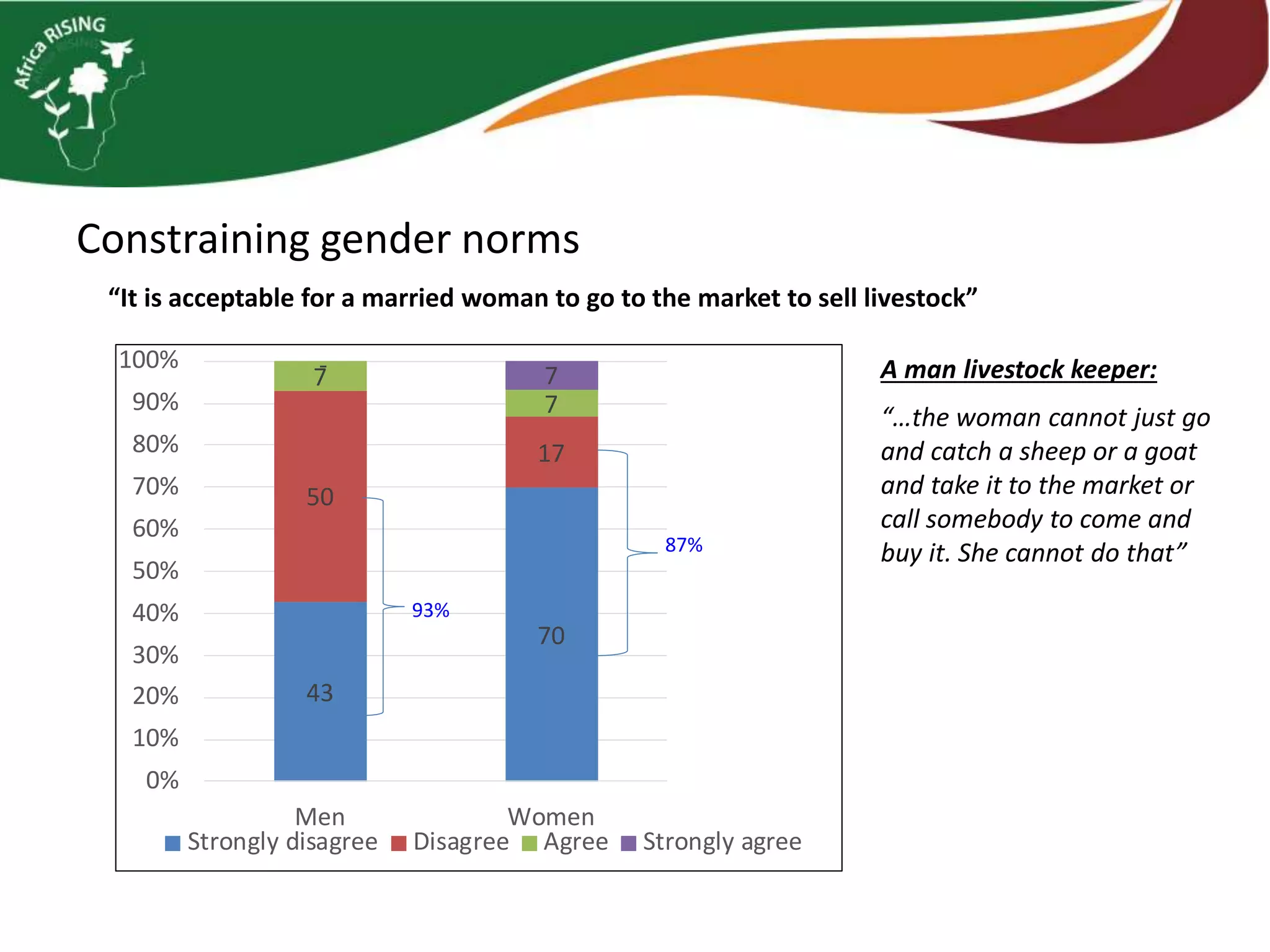
Constraining gender norms
“It is acceptable for a married woman to go to the market to sell livestock”
A man livestock keeper:
“…the woman cannot just go
and catch a sheep or a goat
and take it to the market or
call somebody to come and
buy it. She cannot do that”
43
70
50
17
7
7
- 7
0%
10%
20%
30%
40%
50%
60%
70%
80%
90%
100%
Men Women
Strongly disagree Disagree Agree Strongly agree
93%
87%
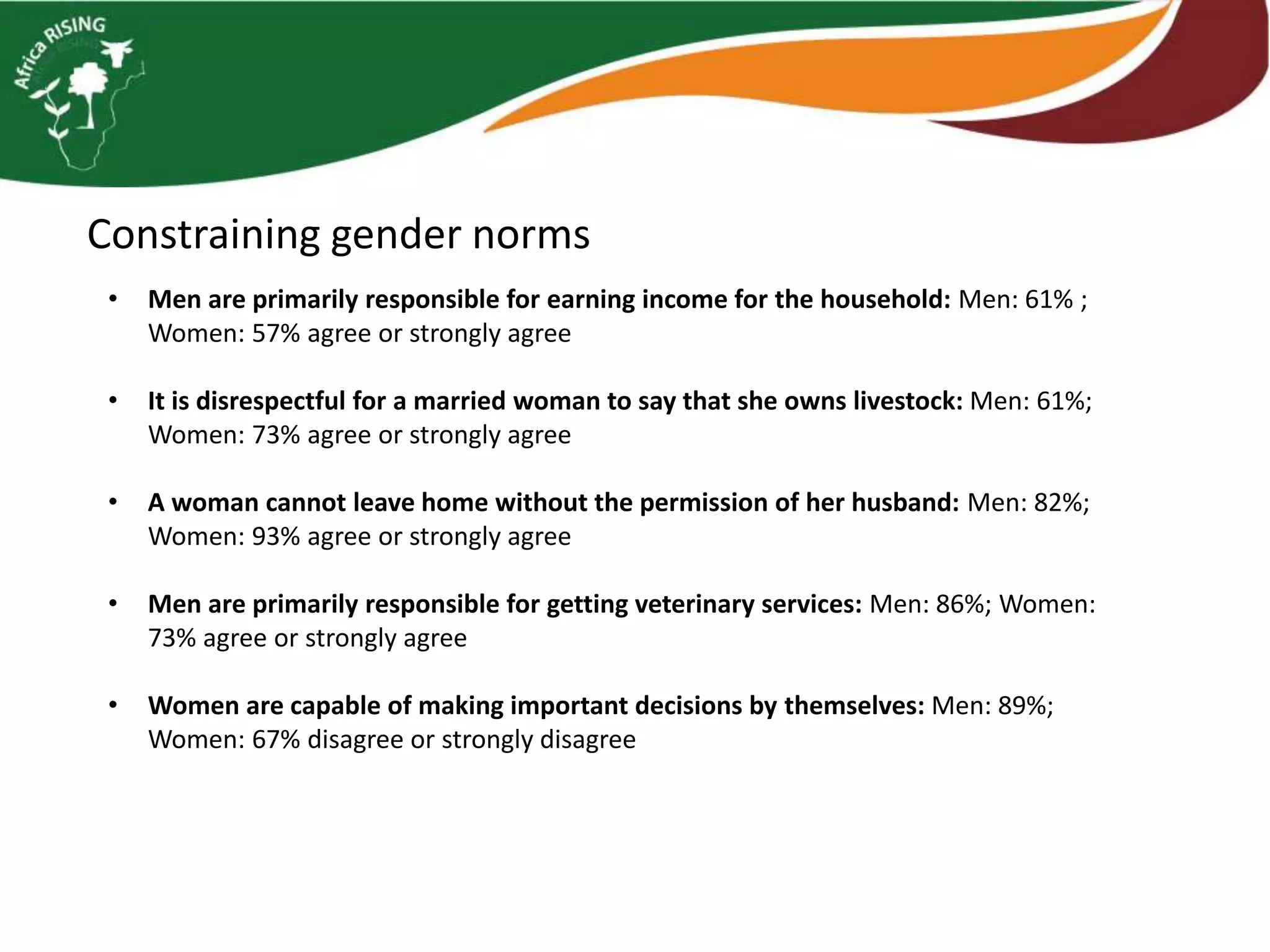
• Men are primarily responsible for earning income for the household: Men: 61% ;
Women: 57% agree or strongly agree
• It is disrespectful for a married woman to say that she owns livestock: Men: 61%;
Women: 73% agree or strongly agree
• A woman cannot leave home without the permission of her husband: Men: 82%;
Women: 93% agree or strongly agree
• Men are primarily responsible for getting veterinary services: Men: 86%; Women:
73% agree or strongly agree
• Women are capable of making important decisions by themselves: Men: 89%;
Women: 67% disagree or strongly disagree
Constraining gender norms
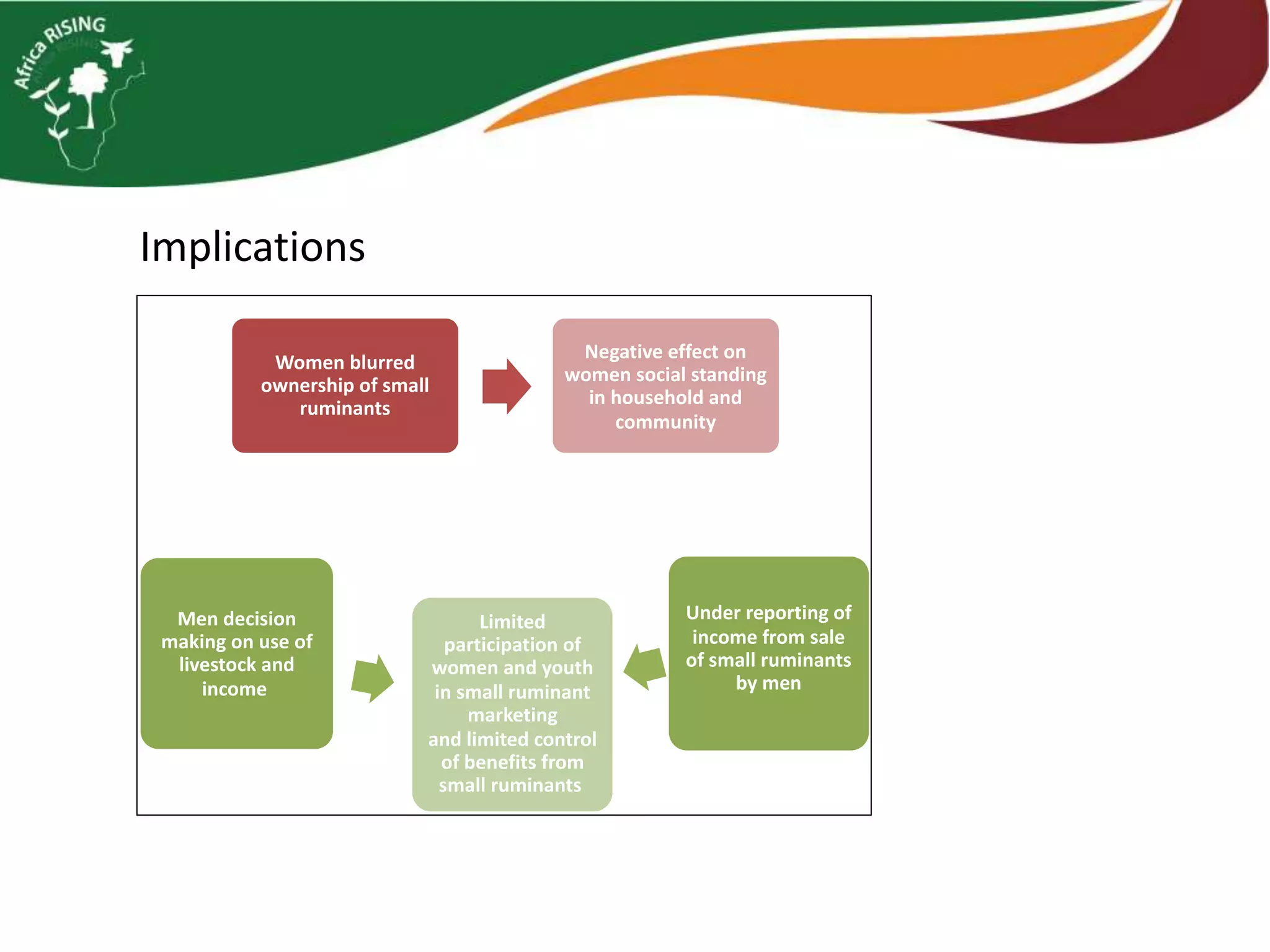
Implications
Men decision
making on use of
livestock and
income
Limited
participation of
women and youth
in small ruminant
marketing
and limited control
of benefits from
small ruminants
Under reporting of
income from sale
of small ruminants
by men
Women blurred
ownership of small
ruminants
Negative effect on
women social standing
in household and
community
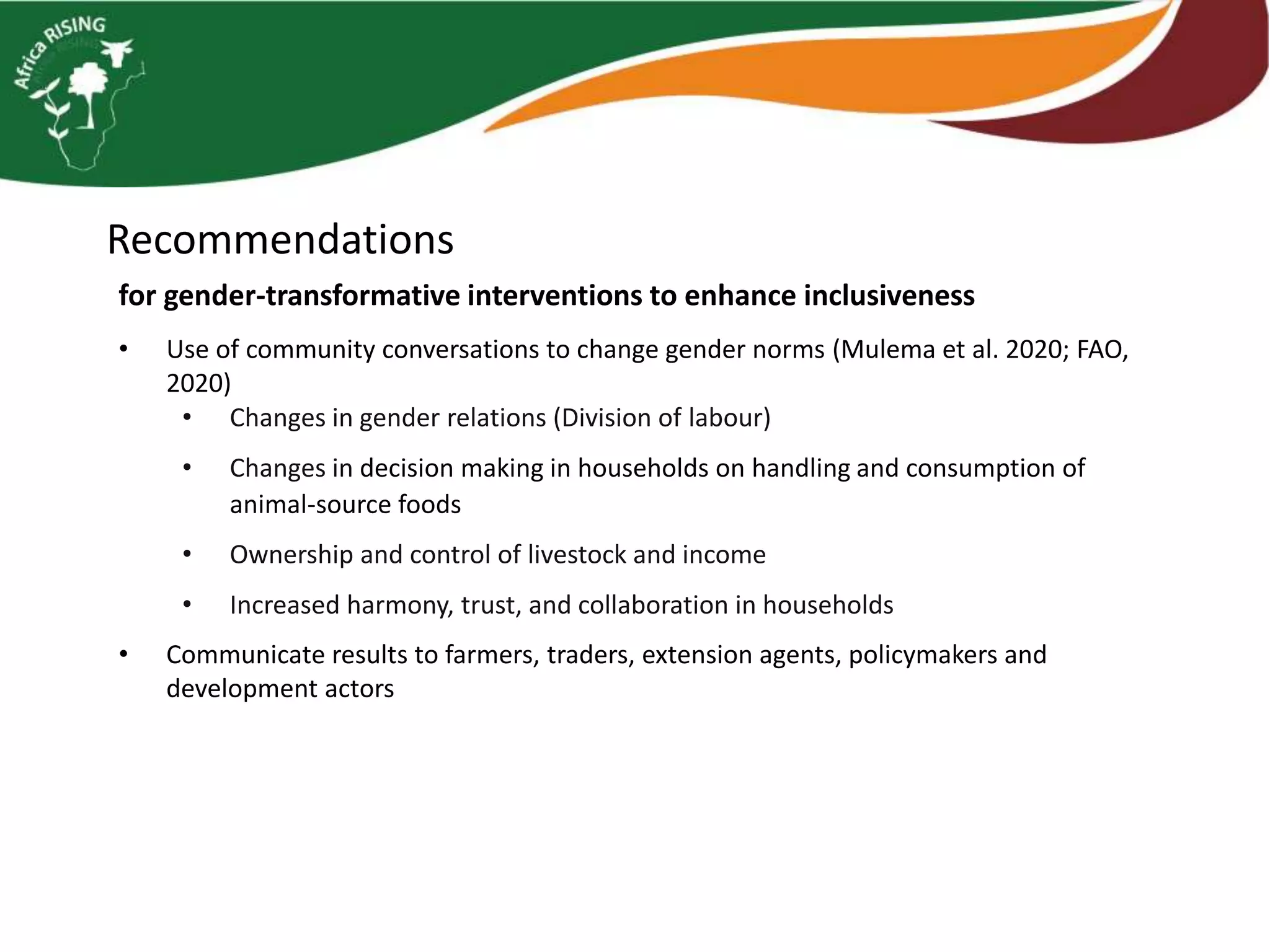
Recommendations
• Use of community conversations to change gender norms (Mulema et al. 2020; FAO,
2020)
• Changes in gender relations (Division of labour)
• Changes in decision making in households on handling and consumption of
animal-source foods
• Ownership and control of livestock and income
• Increased harmony, trust, and collaboration in households
• Communicate results to farmers, traders, extension agents, policymakers and
development actors
for gender-transformative interventions to enhance inclusiveness
Thank you

The woman has no right to sell livestock: The role of gender norms in Northern Ghana’s small ruminant value chains and implications for transformative interventions

  • 1.
    The woman hasno right to sell livestock The role of gender norms in Northern Ghana’s small ruminant value chains and implications for transformative interventions Kipo Jimah and Gundula Fischer International Institute of Tropical Agriculture Cultivating Equality: Advancing Gender Research in Agriculture and Food Systems. A virtual conference 12-15 October 2021
  • 2.
    Outline • Context ofthe study • Methodology • Outline of actors involved • Selling of small ruminants • Constraining gender norms • Implications and recommendations
  • 3.
    Context of thestudy • Research gap: Participation and benefits of women and youth in livestock value chains • Objectives • To assess women and youth’ participation in and benefits from value chain activities • To capture social norms and institutions that promote or hinder equitable value chain participation and benefits • To inform discussions and decisions on gender transformative strategies and practices that will facilitate and increase inclusiveness
  • 4.
    Context of thestudy Map of Ghana showing the study area Leaf stripping Fodder cultivation Feeding troughs
  • 5.
    Methodology • Data collectionmethods: Used a mixed methods approach (Questionnaire; Focus Group interviews; individual interviews) • Sample: Type of actor Men Women Male youth Female youth Total Farmers 18 18 4 3 43 Livestock traders/butchers 1 1 - - 2 Feed traders (Soya bran) - 3 - 1 4 Veterinary service providers - 2 - - 2 Food vendors - 3 - - 3 Kebab seller - - 1 - 1 Feeding troughs fabricators 1 - 3 - 4 Total 20 27 8 4 59 • Data analysis: Atlas.ti (qualitative data) and Stata (quantitative data)
  • 6.
    Outline on actorsinvolved Women and female youth dominant Men and male youth dominant Livestock keepers Food vendors Traders/butchers and transporters Kebab sellers Veterinary services Processing and consumption Marketing and transport Household consumer Meat processors Production Market Feed traders Feeding trough fabricators
  • 7.
    Selling of smallruminants A man livestock keeper: “..decisions regarding selling is with your wife but if your wives’ children are of age, then their mothers’ hands is not inside, is between you and your children who will make the decisions” Level of involvement of household members in decision to sell 0 10 20 30 40 50 60 70 80 90 100 High Very high None Moderate High Very high None Low None Moderate High Very high Male Adult Female Adult Girl child Boy child
  • 8.
    Selling of smallruminants A woman livestock keeper: For we Dagombas, it is forbidden. We don’t accept it even if you own them and live in your own house, when you want to sell you would have to give it to a man to sell for you Level of involvement of household members in selling of small ruminants 0 10 20 30 40 50 60 70 80 90 100 None High Very high None Moderate None None Low Moderate High Very high Male adult Female adult Girl child Boy child
  • 9.
    Constraining gender norms “Itis acceptable for a married woman to go to the market to sell livestock” A man livestock keeper: “…the woman cannot just go and catch a sheep or a goat and take it to the market or call somebody to come and buy it. She cannot do that” 43 70 50 17 7 7 - 7 0% 10% 20% 30% 40% 50% 60% 70% 80% 90% 100% Men Women Strongly disagree Disagree Agree Strongly agree 93% 87%
  • 10.
    • Men areprimarily responsible for earning income for the household: Men: 61% ; Women: 57% agree or strongly agree • It is disrespectful for a married woman to say that she owns livestock: Men: 61%; Women: 73% agree or strongly agree • A woman cannot leave home without the permission of her husband: Men: 82%; Women: 93% agree or strongly agree • Men are primarily responsible for getting veterinary services: Men: 86%; Women: 73% agree or strongly agree • Women are capable of making important decisions by themselves: Men: 89%; Women: 67% disagree or strongly disagree Constraining gender norms
  • 11.
    Implications Men decision making onuse of livestock and income Limited participation of women and youth in small ruminant marketing and limited control of benefits from small ruminants Under reporting of income from sale of small ruminants by men Women blurred ownership of small ruminants Negative effect on women social standing in household and community
  • 12.
    Recommendations • Use ofcommunity conversations to change gender norms (Mulema et al. 2020; FAO, 2020) • Changes in gender relations (Division of labour) • Changes in decision making in households on handling and consumption of animal-source foods • Ownership and control of livestock and income • Increased harmony, trust, and collaboration in households • Communicate results to farmers, traders, extension agents, policymakers and development actors for gender-transformative interventions to enhance inclusiveness
  • 13.