An overview of Africa RISING project in the
Ethiopian highlands: Achievements and
challenges from
2017 to 2021
Kindu Mekonnen and Peter Thorne
Africa RISING/ILRI
Ethiopia
Africa RISING progress update and planning workshop with CGIAR
partners
18-19 Nov 2021
Content of the presentation
1. Research achievements
2. Publications
3. Capacity development
4. Scaling achievements
5. Challenges remaining
6. Next steps for Africa RISING
1. Research achievements
a) Research for development - examples
o Cultivated forages, and agronomic and utilization practices
o Selection of improved cereal, food legume, oil crop and enset
varieties
o Productivity/yield and quality of HVFTs
o Use options of small-scale mechanization (2 WT based
technologies)
o Fertilizer blends, ISFM practices
o Water management and application
b) Generic and methodological (diagnostic, validation, evidence
generation) - examples
o Nutrition studies (contribution of nutrition education and
project interventions)
o Gender studies (women farmers’ participation in the ag
research process: Implications for sustaining agriculture and
food security)
2. Publications
 Over 252 project outputs have been produced since 2017, of
which 34 are journal articles
 Examples of peer reviewed and highest profile journal
publications:
o Assessing smallholder sustainable intensification in the
Ethiopian highlands(Hammond et al. 2021, Agricultural
Systems)
o Landscape positions dictating crop fertilizer responses in
wheat-based farming systems of East African Highlands
(Amede et al. 2020, Renewable Agriculture and Food
Systems)
o Feed and forage development in mixed crop–livestock
systems of the Ethiopian highlands: Africa RISING project
research experience (Mekonnen et al. 2021, Agronomy
Journal)
o Multilevel innovation platforms for development of
smallholder livestock systems: How effective are they? (Lema
3. Capacity development
7958
7325
4835
3264
6899
0
1500
3000
4500
6000
7500
9000
2017 2018 2019 2020 2021
Number of beneficiaries
Years
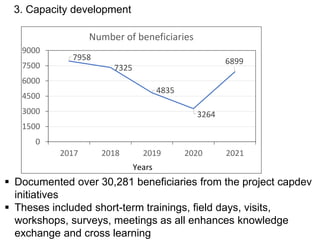
 Documented over 30,281 beneficiaries from the project capdev
initiatives
 Theses included short-term trainings, field days, visits,
workshops, surveys, meetings as all enhances knowledge
exchange and cross learning
AR Phase
Degree
type Men Female Total
Phase I MSc 18 7 25
PhD 2 2 4
Phase I
Total 20 9 29
Phase II MA 1 1
MSc 4 3 7
PhD 15 2 17
Phase II
Total 19 6 25
Grand Total 39 15 54
Student attachment
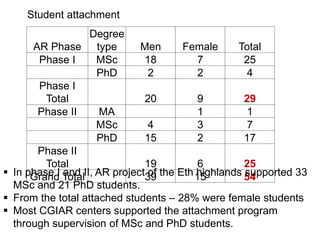
 In phase I and II, AR project of the Eth highlands supported 33
MSc and 21 PhD students.
 From the total attached students – 28% were female students
 Most CGIAR centers supported the attachment program
through supervision of MSc and PhD students.
4. Scaling achievements
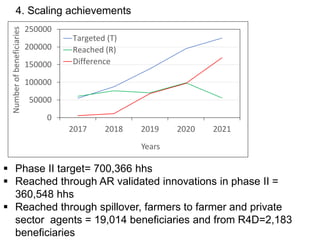
 Phase II target= 700,366 hhs
 Reached through AR validated innovations in phase II =
360,548 hhs
 Reached through spillover, farmers to farmer and private
sector agents = 19,014 beneficiaries and from R4D=2,183
beneficiaries
0
50000
100000
150000
200000
250000
2017 2018 2019 2020 2021
Number
of
beneficiaries
Years
Targeted (T)
Reached (R)
Difference
5. Challenges remaining
 Covid 19 pandemics
 Security concerns
 Mismatch of planning of activities and release of
project funds
 Tracking and documenting informally disseminated
AR-validated technologies within and outside Africa
RISING operational areas
 Strengthening, testing and validating M and E
approaches (most notably the SIAF) to improve the
credibility of the evidence base for SI.
6. Next steps for Africa RISING
 Undertake studies to strengthen the evidence base
for Africa RISING outcomes and benefits; e.g.
RHoMIS, gender, and other studies
 Produce Africa RISING legacy products
 Generate information on farming systems priorities
and gaps for guiding future SI research and
investments for the Ethiopian Highlands
 Explore options/opportunities that enhance wider
use/application of Africa RISING project success
stories (approaches, validated innovations)
 Design Africa RISING project exit strategies
Africa Research in Sustainable Intensification for the Next Generation
africa-rising.net
This presentation is licensed for use under the Creative Commons Attribution 4.0 International Licence.

Ar overview 2021

  • 1.
    An overview ofAfrica RISING project in the Ethiopian highlands: Achievements and challenges from 2017 to 2021 Kindu Mekonnen and Peter Thorne Africa RISING/ILRI Ethiopia Africa RISING progress update and planning workshop with CGIAR partners 18-19 Nov 2021
  • 2.
    Content of thepresentation 1. Research achievements 2. Publications 3. Capacity development 4. Scaling achievements 5. Challenges remaining 6. Next steps for Africa RISING
  • 3.
    1. Research achievements a)Research for development - examples o Cultivated forages, and agronomic and utilization practices o Selection of improved cereal, food legume, oil crop and enset varieties o Productivity/yield and quality of HVFTs o Use options of small-scale mechanization (2 WT based technologies) o Fertilizer blends, ISFM practices o Water management and application b) Generic and methodological (diagnostic, validation, evidence generation) - examples o Nutrition studies (contribution of nutrition education and project interventions) o Gender studies (women farmers’ participation in the ag research process: Implications for sustaining agriculture and food security)
  • 4.
    2. Publications  Over252 project outputs have been produced since 2017, of which 34 are journal articles  Examples of peer reviewed and highest profile journal publications: o Assessing smallholder sustainable intensification in the Ethiopian highlands(Hammond et al. 2021, Agricultural Systems) o Landscape positions dictating crop fertilizer responses in wheat-based farming systems of East African Highlands (Amede et al. 2020, Renewable Agriculture and Food Systems) o Feed and forage development in mixed crop–livestock systems of the Ethiopian highlands: Africa RISING project research experience (Mekonnen et al. 2021, Agronomy Journal) o Multilevel innovation platforms for development of smallholder livestock systems: How effective are they? (Lema
  • 5.
    3. Capacity development 7958 7325 4835 3264 6899 0 1500 3000 4500 6000 7500 9000 20172018 2019 2020 2021 Number of beneficiaries Years  Documented over 30,281 beneficiaries from the project capdev initiatives  Theses included short-term trainings, field days, visits, workshops, surveys, meetings as all enhances knowledge exchange and cross learning
  • 6.
    AR Phase Degree type MenFemale Total Phase I MSc 18 7 25 PhD 2 2 4 Phase I Total 20 9 29 Phase II MA 1 1 MSc 4 3 7 PhD 15 2 17 Phase II Total 19 6 25 Grand Total 39 15 54 Student attachment  In phase I and II, AR project of the Eth highlands supported 33 MSc and 21 PhD students.  From the total attached students – 28% were female students  Most CGIAR centers supported the attachment program through supervision of MSc and PhD students.
  • 7.
    4. Scaling achievements Phase II target= 700,366 hhs  Reached through AR validated innovations in phase II = 360,548 hhs  Reached through spillover, farmers to farmer and private sector agents = 19,014 beneficiaries and from R4D=2,183 beneficiaries 0 50000 100000 150000 200000 250000 2017 2018 2019 2020 2021 Number of beneficiaries Years Targeted (T) Reached (R) Difference
  • 8.
    5. Challenges remaining Covid 19 pandemics  Security concerns  Mismatch of planning of activities and release of project funds  Tracking and documenting informally disseminated AR-validated technologies within and outside Africa RISING operational areas  Strengthening, testing and validating M and E approaches (most notably the SIAF) to improve the credibility of the evidence base for SI.
  • 9.
    6. Next stepsfor Africa RISING  Undertake studies to strengthen the evidence base for Africa RISING outcomes and benefits; e.g. RHoMIS, gender, and other studies  Produce Africa RISING legacy products  Generate information on farming systems priorities and gaps for guiding future SI research and investments for the Ethiopian Highlands  Explore options/opportunities that enhance wider use/application of Africa RISING project success stories (approaches, validated innovations)  Design Africa RISING project exit strategies
  • 10.
    Africa Research inSustainable Intensification for the Next Generation africa-rising.net This presentation is licensed for use under the Creative Commons Attribution 4.0 International Licence.