DOMESTICATION OF PLANTS
Alejandro, Mariana A., Mariana G., Fany, Olaf
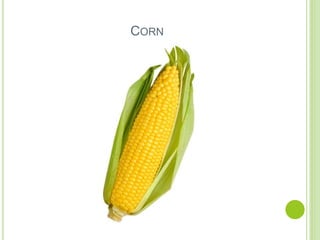
CORN
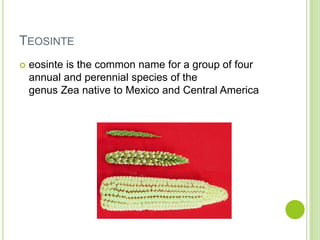
TEOSINTE
 eosinte is the common name for a group of four
annual and perennial species of the
genus Zea native to Mexico and Central America
WHEN WAS MAIZE DOMESTICATED?
 The best estimate is that maize was domesticated
between 6,000 and 10,000 years ago. First, the
oldest archaeological maize specimen to be
"directly dated" has an age of 6,000 years ago .
Direct dating involves getting a carbon-14 date for
the actual maize specimen.
HOW WERE THEY DOMESTICATED?
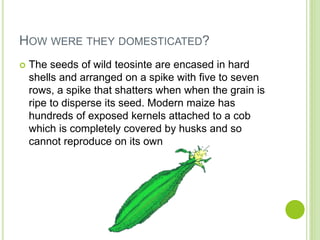
 The seeds of wild teosinte are encased in hard
shells and arranged on a spike with five to seven
rows, a spike that shatters when when the grain is
ripe to disperse its seed. Modern maize has
hundreds of exposed kernels attached to a cob
which is completely covered by husks and so
cannot reproduce on its own
WHERE WAS CORN DOMESTICATED?
 We can have a relatively high degree of confidence
that maize was domesticated in southern Mexico.
The evidence for this statement comes from
archaeological and genetic data.
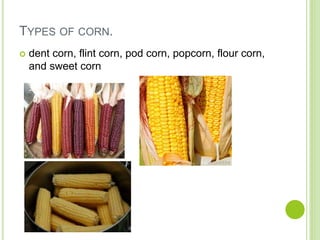
TYPES OF CORN.
 dent corn, flint corn, pod corn, popcorn, flour corn,
and sweet corn
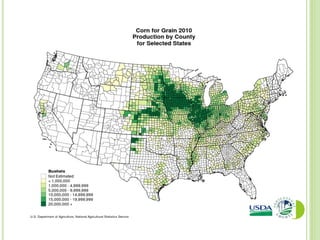
WE ARE NOT THE ONLY ONES THAT LIKE CORN
POTATO
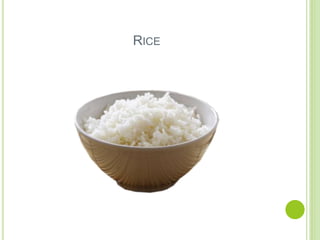
RICE
HISTORY
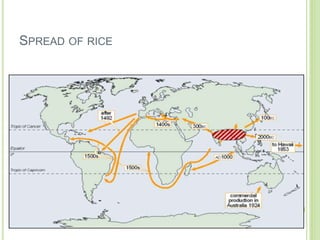
 8,200–13,500 years ago the domestication of rice
occurred in the Pearl River valley region
of China based on the genetic evidence. From East
Asia, rice was spread to South and Southeast Asia.
Their 15,000-year-old age challenges the accepted
view that rice cultivation originated in China
about12,000 years ago.
SPREAD OF RICE
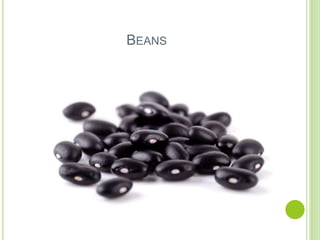
BEANS
Top ten dry bean producers—2013
Country Production (tonnes) Footnote
Myanmar 3,800,000 F
India 3,630,000
Brazil 2,936,444 A
People's Republic of China 1,400,000 *
Mexico 1,294,634
Tanzania 1,150,000 F
United States 1,110,668
Kenya 529,265 F
Uganda 461,000 *
Rwanda 438,236
World 23,139,004 A
HISTORY
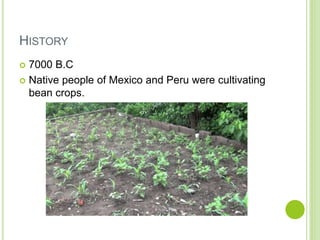
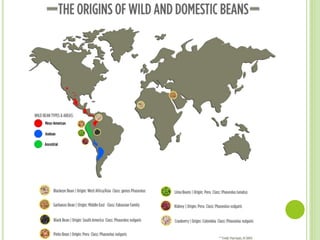
 7000 B.C
 Native people of Mexico and Peru were cultivating
bean crops.
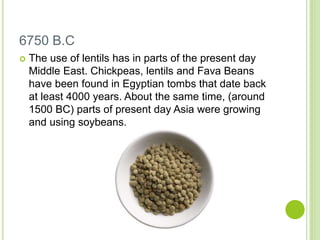
6750 B.C
 The use of lentils has in parts of the present day
Middle East. Chickpeas, lentils and Fava Beans
have been found in Egyptian tombs that date back
at least 4000 years. About the same time, (around
1500 BC) parts of present day Asia were growing
and using soybeans.
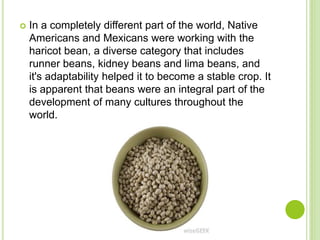
 In a completely different part of the world, Native
Americans and Mexicans were working with the
haricot bean, a diverse category that includes
runner beans, kidney beans and lima beans, and
it's adaptability helped it to become a stable crop. It
is apparent that beans were an integral part of the
development of many cultures throughout the
world.
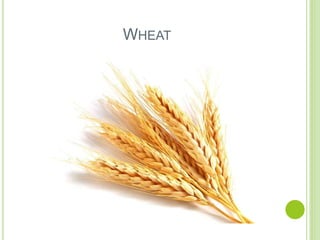
WHEAT
WHEAT THROUGT THE AGES
 10,000 B.C
 Wheat grain has been used for thousands of years
to provide food for humans.
 6,700 B.C
 In the stone age, man ground grains of wheat with
rocks to make flour. Man understood that he could
grow food as well as hunt food.
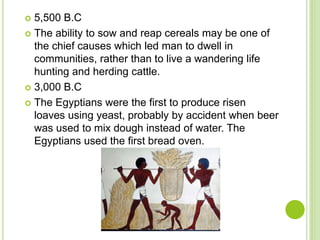
 5,500 B.C
 The ability to sow and reap cereals may be one of
the chief causes which led man to dwell in
communities, rather than to live a wandering life
hunting and herding cattle.
 3,000 B.C
 The Egyptians were the first to produce risen
loaves using yeast, probably by accident when beer
was used to mix dough instead of water. The
Egyptians used the first bread oven.
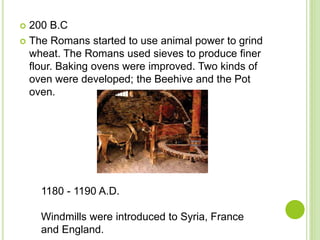
 200 B.C
 The Romans started to use animal power to grind
wheat. The Romans used sieves to produce finer
flour. Baking ovens were improved. Two kinds of
oven were developed; the Beehive and the Pot
oven.
1180 - 1190 A.D.
Windmills were introduced to Syria, France
and England.
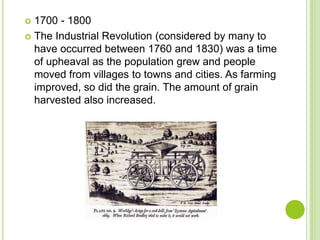
 1700 - 1800
 The Industrial Revolution (considered by many to
have occurred between 1760 and 1830) was a time
of upheaval as the population grew and people
moved from villages to towns and cities. As farming
improved, so did the grain. The amount of grain
harvested also increased.
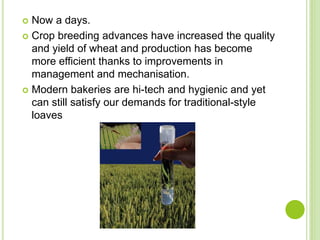
 Now a days.
 Crop breeding advances have increased the quality
and yield of wheat and production has become
more efficient thanks to improvements in
management and mechanisation.
 Modern bakeries are hi-tech and hygienic and yet
can still satisfy our demands for traditional-style
loaves

Domestication of plants

  • 1.
    DOMESTICATION OF PLANTS Alejandro,Mariana A., Mariana G., Fany, Olaf
  • 2.
  • 3.
    TEOSINTE  eosinte isthe common name for a group of four annual and perennial species of the genus Zea native to Mexico and Central America
  • 4.
    WHEN WAS MAIZEDOMESTICATED?  The best estimate is that maize was domesticated between 6,000 and 10,000 years ago. First, the oldest archaeological maize specimen to be "directly dated" has an age of 6,000 years ago . Direct dating involves getting a carbon-14 date for the actual maize specimen.
  • 5.
    HOW WERE THEYDOMESTICATED?  The seeds of wild teosinte are encased in hard shells and arranged on a spike with five to seven rows, a spike that shatters when when the grain is ripe to disperse its seed. Modern maize has hundreds of exposed kernels attached to a cob which is completely covered by husks and so cannot reproduce on its own
  • 6.
    WHERE WAS CORNDOMESTICATED?  We can have a relatively high degree of confidence that maize was domesticated in southern Mexico. The evidence for this statement comes from archaeological and genetic data.
  • 8.
    TYPES OF CORN. dent corn, flint corn, pod corn, popcorn, flour corn, and sweet corn
  • 9.
    WE ARE NOTTHE ONLY ONES THAT LIKE CORN
  • 10.
  • 11.
  • 12.
    HISTORY  8,200–13,500 yearsago the domestication of rice occurred in the Pearl River valley region of China based on the genetic evidence. From East Asia, rice was spread to South and Southeast Asia. Their 15,000-year-old age challenges the accepted view that rice cultivation originated in China about12,000 years ago.
  • 13.
  • 14.
  • 15.
    Top ten drybean producers—2013 Country Production (tonnes) Footnote Myanmar 3,800,000 F India 3,630,000 Brazil 2,936,444 A People's Republic of China 1,400,000 * Mexico 1,294,634 Tanzania 1,150,000 F United States 1,110,668 Kenya 529,265 F Uganda 461,000 * Rwanda 438,236 World 23,139,004 A
  • 16.
    HISTORY  7000 B.C Native people of Mexico and Peru were cultivating bean crops.
  • 17.
    6750 B.C  Theuse of lentils has in parts of the present day Middle East. Chickpeas, lentils and Fava Beans have been found in Egyptian tombs that date back at least 4000 years. About the same time, (around 1500 BC) parts of present day Asia were growing and using soybeans.
  • 18.
     In acompletely different part of the world, Native Americans and Mexicans were working with the haricot bean, a diverse category that includes runner beans, kidney beans and lima beans, and it's adaptability helped it to become a stable crop. It is apparent that beans were an integral part of the development of many cultures throughout the world.
  • 20.
  • 21.
    WHEAT THROUGT THEAGES  10,000 B.C  Wheat grain has been used for thousands of years to provide food for humans.  6,700 B.C  In the stone age, man ground grains of wheat with rocks to make flour. Man understood that he could grow food as well as hunt food.
  • 22.
     5,500 B.C The ability to sow and reap cereals may be one of the chief causes which led man to dwell in communities, rather than to live a wandering life hunting and herding cattle.  3,000 B.C  The Egyptians were the first to produce risen loaves using yeast, probably by accident when beer was used to mix dough instead of water. The Egyptians used the first bread oven.
  • 23.
     200 B.C The Romans started to use animal power to grind wheat. The Romans used sieves to produce finer flour. Baking ovens were improved. Two kinds of oven were developed; the Beehive and the Pot oven. 1180 - 1190 A.D. Windmills were introduced to Syria, France and England.
  • 24.
     1700 -1800  The Industrial Revolution (considered by many to have occurred between 1760 and 1830) was a time of upheaval as the population grew and people moved from villages to towns and cities. As farming improved, so did the grain. The amount of grain harvested also increased.
  • 25.
     Now adays.  Crop breeding advances have increased the quality and yield of wheat and production has become more efficient thanks to improvements in management and mechanisation.  Modern bakeries are hi-tech and hygienic and yet can still satisfy our demands for traditional-style loaves