Plants Domestication
Teacher: Mr. Mark.
Students: Emiliano Sánchez Gómez
Gretha Marcial Sánchez
Laura Natividad Santiago Vignon
Valeria Hernández Martínez
Fernando Olvera López
What is plant domestication?
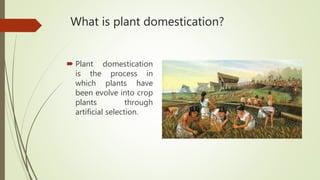
 Plant domestication
is the process in
which plants have
been evolve into crop
plants through
artificial selection.
How did it started?
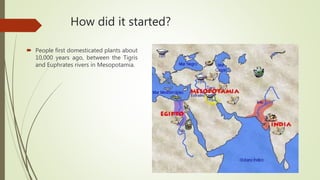
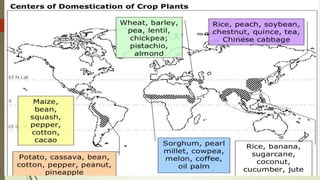
 People first domesticated plants about
10,000 years ago, between the Tigris
and Euphrates rivers in Mesopotamia.
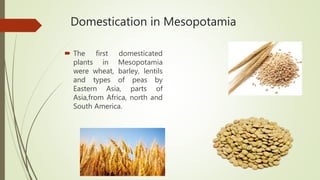
Domestication in Mesopotamia
 The first domesticated
plants in Mesopotamia
were wheat, barley, lentils
and types of peas by
Eastern Asia, parts of
Asia,from Africa, north and
South America.
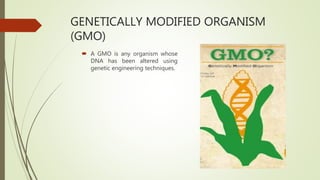
GENETICALLY MODIFIED ORGANISM
(GMO)
 A GMO is any organism whose
DNA has been altered using
genetic engineering techniques.
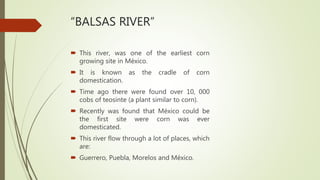
“BALSAS RIVER”
 This river, was one of the earliest corn
growing site in México.
 It is known as the cradle of corn
domestication.
 Time ago there were found over 10, 000
cobs of teosinte (a plant similar to corn).
 Recently was found that México could be
the first site were corn was ever
domesticated.
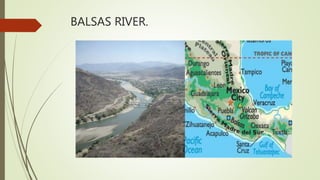
 This river flow through a lot of places, which
are:
 Guerrero, Puebla, Morelos and México.
BALSAS RIVER.
BALSAS RIVER
 Balsas river is a very important lace in the story oif domestication of plants,
because it is the cradle of one of the most important things that now we use as
food as fuel as a material for bags, and a lot of things that now we use.
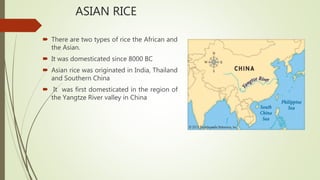
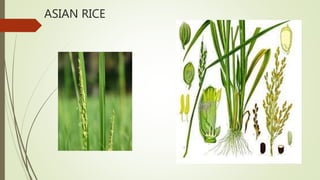
ASIAN RICE
 There are two types of rice the African and
the Asian.
 It was domesticated since 8000 BC
 Asian rice was originated in India, Thailand
and Southern China
 It was first domesticated in the region of
the Yangtze River valley in China
ASIAN RICE
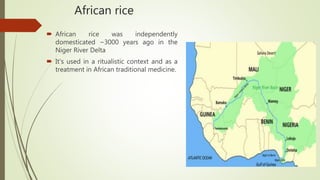
African rice
 African rice was independently
domesticated ~3000 years ago in the
Niger River Delta
 It's used in a ritualistic context and as a
treatment in African traditional medicine.
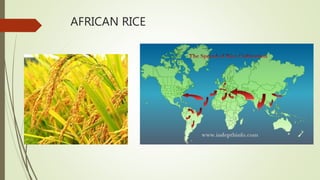
AFRICAN RICE
Did you know…?
 That rice is known as the oldest food still consumed today
 There are over 40,000 varieties of rice
 Asia consumes and produces a 90% of the rice
 September is National the “Rice month”
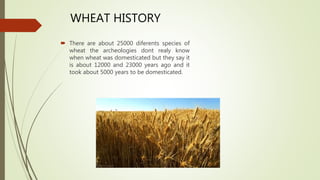
 There are about 25000 diferents species of
wheat the archeologies dont realy know
when wheat was domesticated but they say it
is about 12000 and 23000 years ago and it
took about 5000 years to be domesticated.
WHEAT HISTORY
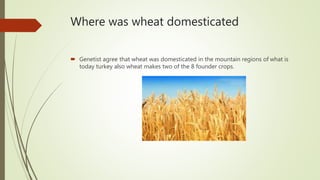
Where was wheat domesticated
 Genetist agree that wheat was domesticated in the mountain regions of what is
today turkey also wheat makes two of the 8 founder crops.
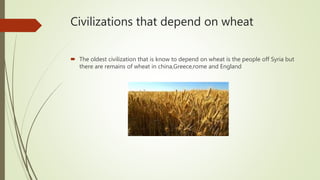
Civilizations that depend on wheat
 The oldest civilization that is know to depend on wheat is the people off Syria but
there are remains of wheat in china,Greece,rome and England
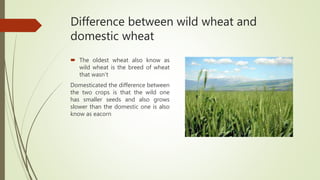
Difference between wild wheat and
domestic wheat
 The oldest wheat also know as
wild wheat is the breed of wheat
that wasn’t
Domesticated the difference between
the two crops is that the wild one
has smaller seeds and also grows
slower than the domestic one is also
know as eacorn
CORN
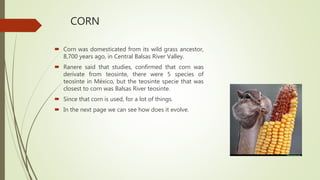
 Corn was domesticated from its wild grass ancestor,
8,700 years ago, in Central Balsas River Valley.
 Ranere said that studies, confirmed that corn was
derivate from teosinte, there were 5 species of
teosinte in México, but the teosinte specie that was
closest to corn was Balsas River teosinte.
 Since that corn is used, for a lot of things.
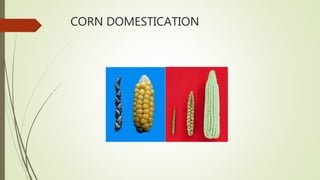
 In the next page we can see how does it evolve.
CORN DOMESTICATION
CORN DOMESTICATION.
 In the last page, we could se how does the corn evolve.
 The first thing we could saw that the first plant was so different to the corn that we
actually know.
 And the second thing was the actual corn, it has been a lot of changes, form the
teosinte to the corn we know now, and what cause this changes is what we call
plant domestication.
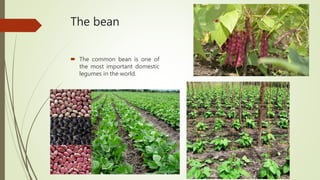
The bean
 The common bean is one of
the most important domestic
legumes in the world.
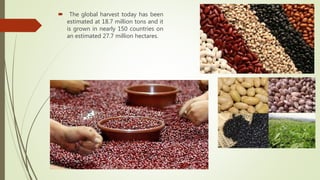
 The global harvest today has been
estimated at 18.7 million tons and it
is grown in nearly 150 countries on
an estimated 27.7 million hectares.
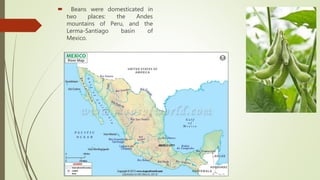
 Beans were domesticated in
two places: the Andes
mountains of Peru, and the
Lerma-Santiago basin of
Mexico.
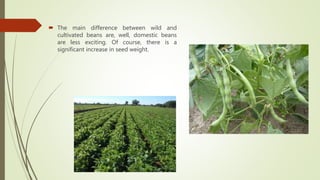
 The main difference between wild and
cultivated beans are, well, domestic beans
are less exciting. Of course, there is a
significant increase in seed weight.
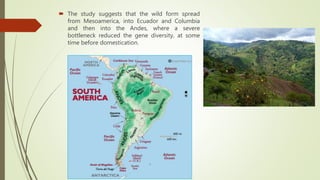
 The study suggests that the wild form spread
from Mesoamerica, into Ecuador and Columbia
and then into the Andes, where a severe
bottleneck reduced the gene diversity, at some
time before domestication.
POTATO DOMESTICATION
 The potato as we know it today
is far different than the plant
first seen by humans many
years ago.
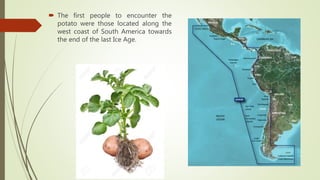
 The first people to encounter the
potato were those located along the
west coast of South America towards
the end of the last Ice Age.
Did you know…?
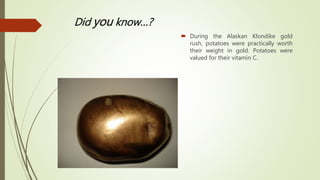
 During the Alaskan Klondike gold
rush, potatoes were practically worth
their weight in gold. Potatoes were
valued for their vitamin C.
 In October 1995, the
potato became the first
vegetable to be grown
in space.
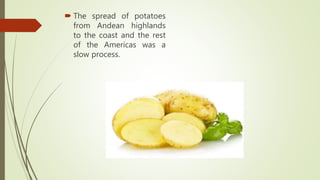
 The spread of potatoes
from Andean highlands
to the coast and the rest
of the Americas was a
slow process.
CONCLUSION
 Plant domestication was clearly one of the most important advancements of the
man, once agriculture developed it spread all around the world and it let nomads
to be sedentaries.
 Thats how nomads stop walking around and stay in one place and plant their own
food and let small groups grow bigger to what we are now.
Plant domestication 18 05-16 geo

Plant domestication 18 05-16 geo

  • 1.
    Plants Domestication Teacher: Mr.Mark. Students: Emiliano Sánchez Gómez Gretha Marcial Sánchez Laura Natividad Santiago Vignon Valeria Hernández Martínez Fernando Olvera López
  • 2.
    What is plantdomestication?  Plant domestication is the process in which plants have been evolve into crop plants through artificial selection.
  • 3.
    How did itstarted?  People first domesticated plants about 10,000 years ago, between the Tigris and Euphrates rivers in Mesopotamia.
  • 4.
    Domestication in Mesopotamia The first domesticated plants in Mesopotamia were wheat, barley, lentils and types of peas by Eastern Asia, parts of Asia,from Africa, north and South America.
  • 5.
    GENETICALLY MODIFIED ORGANISM (GMO) A GMO is any organism whose DNA has been altered using genetic engineering techniques.
  • 6.
    “BALSAS RIVER”  Thisriver, was one of the earliest corn growing site in México.  It is known as the cradle of corn domestication.  Time ago there were found over 10, 000 cobs of teosinte (a plant similar to corn).  Recently was found that México could be the first site were corn was ever domesticated.  This river flow through a lot of places, which are:  Guerrero, Puebla, Morelos and México.
  • 7.
  • 8.
    BALSAS RIVER  Balsasriver is a very important lace in the story oif domestication of plants, because it is the cradle of one of the most important things that now we use as food as fuel as a material for bags, and a lot of things that now we use.
  • 10.
    ASIAN RICE  Thereare two types of rice the African and the Asian.  It was domesticated since 8000 BC  Asian rice was originated in India, Thailand and Southern China  It was first domesticated in the region of the Yangtze River valley in China
  • 11.
  • 12.
    African rice  Africanrice was independently domesticated ~3000 years ago in the Niger River Delta  It's used in a ritualistic context and as a treatment in African traditional medicine.
  • 13.
  • 14.
    Did you know…? That rice is known as the oldest food still consumed today  There are over 40,000 varieties of rice  Asia consumes and produces a 90% of the rice  September is National the “Rice month”
  • 15.
     There areabout 25000 diferents species of wheat the archeologies dont realy know when wheat was domesticated but they say it is about 12000 and 23000 years ago and it took about 5000 years to be domesticated. WHEAT HISTORY
  • 16.
    Where was wheatdomesticated  Genetist agree that wheat was domesticated in the mountain regions of what is today turkey also wheat makes two of the 8 founder crops.
  • 17.
    Civilizations that dependon wheat  The oldest civilization that is know to depend on wheat is the people off Syria but there are remains of wheat in china,Greece,rome and England
  • 18.
    Difference between wildwheat and domestic wheat  The oldest wheat also know as wild wheat is the breed of wheat that wasn’t Domesticated the difference between the two crops is that the wild one has smaller seeds and also grows slower than the domestic one is also know as eacorn
  • 19.
    CORN  Corn wasdomesticated from its wild grass ancestor, 8,700 years ago, in Central Balsas River Valley.  Ranere said that studies, confirmed that corn was derivate from teosinte, there were 5 species of teosinte in México, but the teosinte specie that was closest to corn was Balsas River teosinte.  Since that corn is used, for a lot of things.  In the next page we can see how does it evolve.
  • 20.
  • 21.
    CORN DOMESTICATION.  Inthe last page, we could se how does the corn evolve.  The first thing we could saw that the first plant was so different to the corn that we actually know.  And the second thing was the actual corn, it has been a lot of changes, form the teosinte to the corn we know now, and what cause this changes is what we call plant domestication.
  • 22.
    The bean  Thecommon bean is one of the most important domestic legumes in the world.
  • 23.
     The globalharvest today has been estimated at 18.7 million tons and it is grown in nearly 150 countries on an estimated 27.7 million hectares.
  • 24.
     Beans weredomesticated in two places: the Andes mountains of Peru, and the Lerma-Santiago basin of Mexico.
  • 25.
     The maindifference between wild and cultivated beans are, well, domestic beans are less exciting. Of course, there is a significant increase in seed weight.
  • 26.
     The studysuggests that the wild form spread from Mesoamerica, into Ecuador and Columbia and then into the Andes, where a severe bottleneck reduced the gene diversity, at some time before domestication.
  • 27.
    POTATO DOMESTICATION  Thepotato as we know it today is far different than the plant first seen by humans many years ago.
  • 28.
     The firstpeople to encounter the potato were those located along the west coast of South America towards the end of the last Ice Age.
  • 29.
    Did you know…? During the Alaskan Klondike gold rush, potatoes were practically worth their weight in gold. Potatoes were valued for their vitamin C.
  • 30.
     In October1995, the potato became the first vegetable to be grown in space.
  • 31.
     The spreadof potatoes from Andean highlands to the coast and the rest of the Americas was a slow process.
  • 32.
    CONCLUSION  Plant domesticationwas clearly one of the most important advancements of the man, once agriculture developed it spread all around the world and it let nomads to be sedentaries.  Thats how nomads stop walking around and stay in one place and plant their own food and let small groups grow bigger to what we are now.