MAIZE
B.MOHANAPRIYA
2017600808
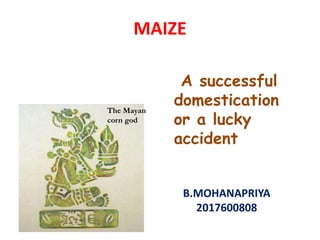
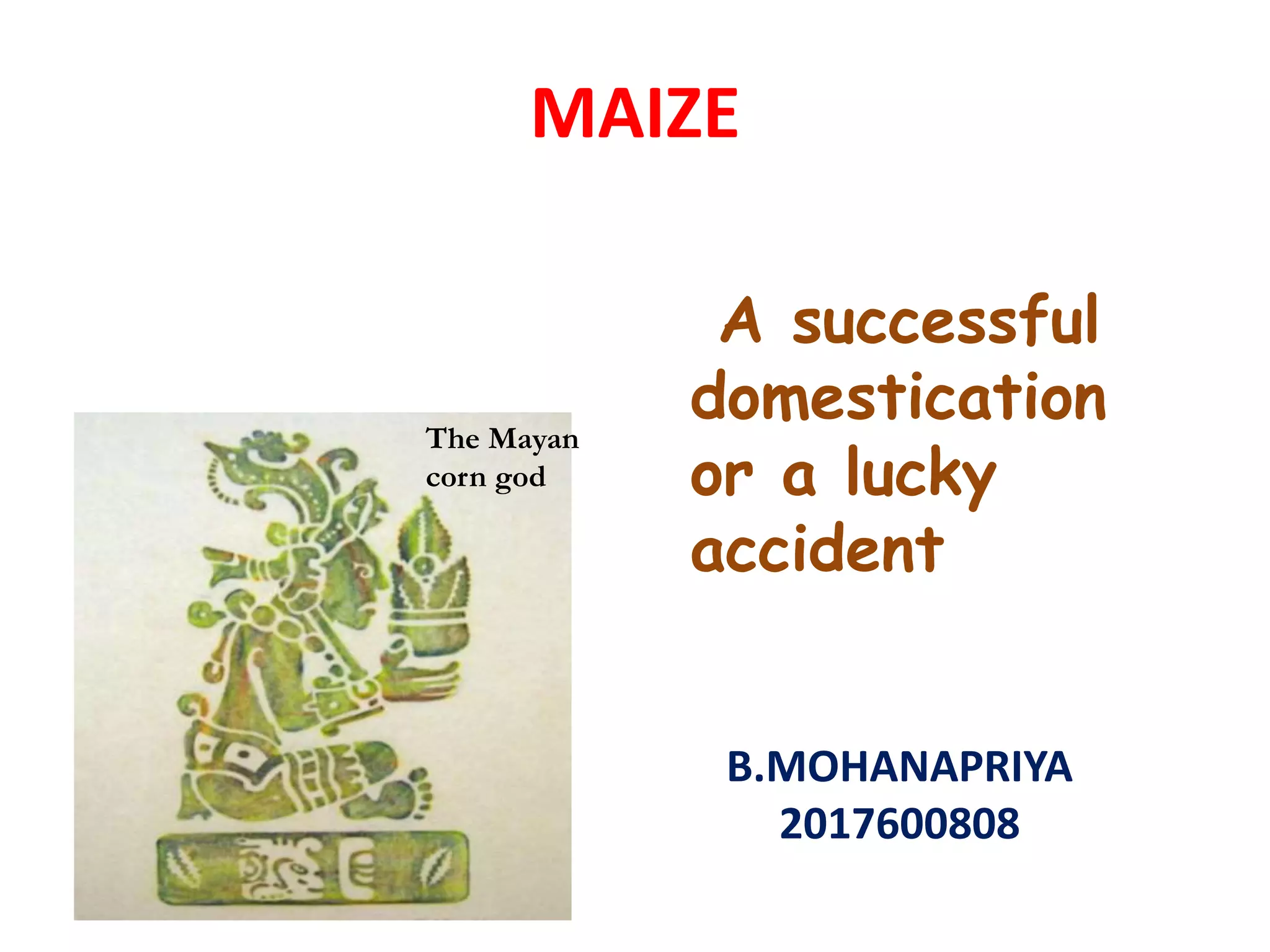
The Mayan
corn god
A successful
domestication
or a lucky
accident
Ancient Maize
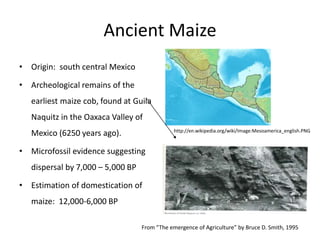
• Origin: south central Mexico
• Archeological remains of the
earliest maize cob, found at Guila
Naquitz in the Oaxaca Valley of
Mexico (6250 years ago).
• Microfossil evidence suggesting
dispersal by 7,000 – 5,000 BP
• Estimation of domestication of
maize: 12,000-6,000 BP
From “The emergence of Agriculture” by Bruce D. Smith, 1995
http://en.wikipedia.org/wiki/Image:Mesoamerica_english.PNG
Where does the
the corn comes
from …..?
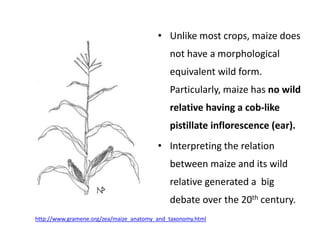
• Unlike most crops, maize does
not have a morphological
equivalent wild form.
Particularly, maize has no wild
relative having a cob-like
pistillate inflorescence (ear).
• Interpreting the relation
between maize and its wild
relative generated a big
debate over the 20th century.
http://www.gramene.org/zea/maize_anatomy_and_taxonomy.html
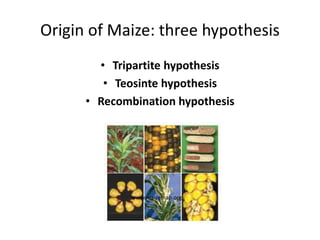
Origin of Maize: three hypothesis
• Tripartite hypothesis
• Teosinte hypothesis
• Recombination hypothesis
www.maizemap.org
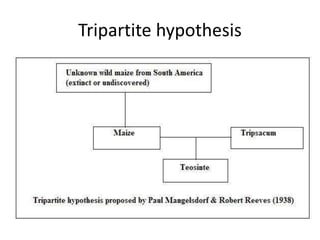
Tripartite hypothesis
Counter arguments
• Differences in chromosome number and
constitution between Zea (10 chromosomes)
and Tripsacum (18 or 36 chromosomes).
• Basing their assumption on a “missing wild
maize”
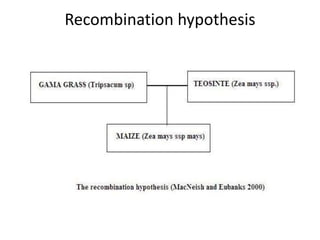
Recombination hypothesis
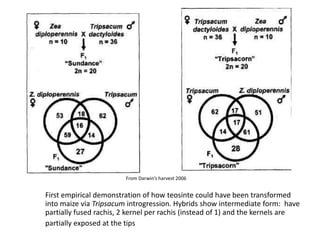
First empirical demonstration of how teosinte could have been transformed
into maize via Tripsacum introgression. Hybrids show intermediate form: have
partially fused rachis, 2 kernel per rachis (instead of 1) and the kernels are
partially exposed at the tips
From Darwin’s harvest 2006
Counter arguements
• 23% of the molecular markers are not found in either
progenitor 120 point mutations/gene (3 million times the
normal rate of mutation: 6 x 10⁻⁹ substitutions per site per
year)
• Only 1 sp of Z.m ssp parviglumis included
Teosinte hypothesis
• Ancient people cultivated teosinte because it provided a
useful food source
• During cultivation, mutations that improved teosinte’s
usefulness to humans arose and were selected
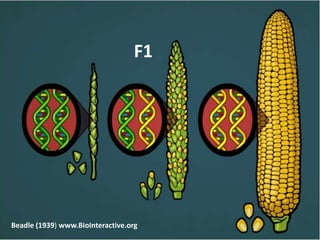
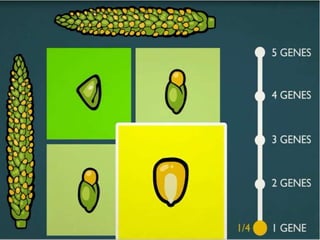
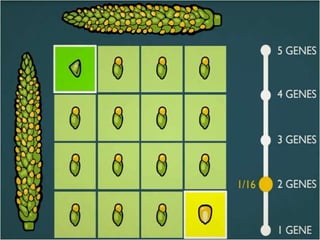
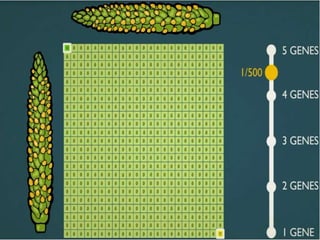
• As few as 5 major mutations would be sufficient to convert
teosinte in a primitive form of maize
• Over the course of time, humans selected additional major
mutations plus many minor ones
As stated by Beadle (1939)
Beadle (1939) www.BioInteractive.org
F1
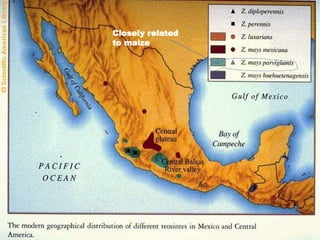
Closely related
to maize
Genetics of maize evolution, J. Doebley 2004
(www.BioInteractive.org )
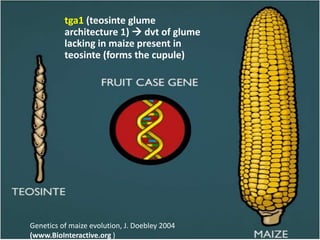
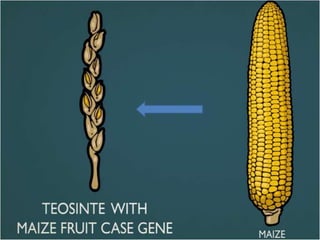
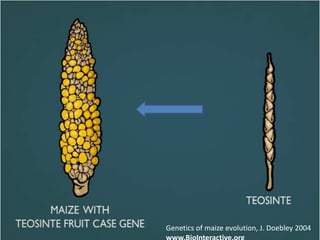
tga1 (teosinte glume
architecture 1)  dvt of glume
lacking in maize present in
teosinte (forms the cupule)
Genetics of maize evolution, J. Doebley 2004
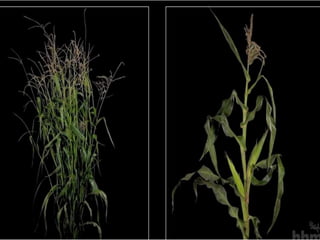
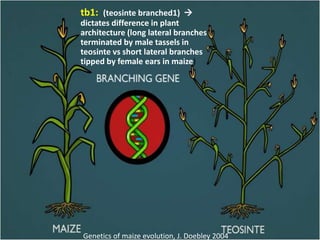
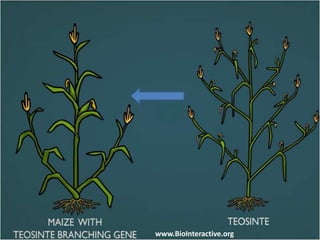
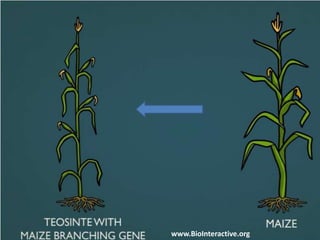
tb1: (teosinte branched1) 
dictates difference in plant
architecture (long lateral branches
terminated by male tassels in
teosinte vs short lateral branches
tipped by female ears in maize)
www.BioInteractive.org
Genes under current investigation
• shattering vs solid cobs
• single vs paired spikelets
• distichous vs polystichous condition
Modern Argument
• With more molecular analysis and archaeological
findings, teosinte appears to be sufficiently similar on a
genetic level to maize:
– Cytological evidence: same chromosome numbers, complete
chromosome pairing, full fertility (Emerson & Beadle 1932) .
Chromosome arm length, centromere position, sizes in annual
teosintes are identical to those in maize (Longley 1941). Longley
(1941) & Kato (1976) later suggested that from all teosintes,
mexican were the more similar to maize.
– Evidence at the protein level: classification of teosinte populations
based on isozyme allele frequencies. It allowed to pinpoint the
mexican teosinte that had allele frequencies “essentially
indistinguishable” from maize: Z. mays ssp parviglumis. (Doebley et al
1984).
– Evidence at the molecular level: a study of the microsatelite diversity
in maize and teosinte (Matsuoka 2002) confirmed the isozyme results.
They also demonstrated a single domestication event, and that Balsas
teosinte diverged. Jaenicke-Despres (2003): ancient DNA studies
support that teosinte was rapidly transformed into maize around
9000-7000 years ago.
THANK YOU

Maize evolution

  • 1.
    MAIZE B.MOHANAPRIYA 2017600808 The Mayan corn god Asuccessful domestication or a lucky accident
  • 2.
    Ancient Maize • Origin:south central Mexico • Archeological remains of the earliest maize cob, found at Guila Naquitz in the Oaxaca Valley of Mexico (6250 years ago). • Microfossil evidence suggesting dispersal by 7,000 – 5,000 BP • Estimation of domestication of maize: 12,000-6,000 BP From “The emergence of Agriculture” by Bruce D. Smith, 1995 http://en.wikipedia.org/wiki/Image:Mesoamerica_english.PNG
  • 3.
    Where does the thecorn comes from …..?
  • 4.
    • Unlike mostcrops, maize does not have a morphological equivalent wild form. Particularly, maize has no wild relative having a cob-like pistillate inflorescence (ear). • Interpreting the relation between maize and its wild relative generated a big debate over the 20th century. http://www.gramene.org/zea/maize_anatomy_and_taxonomy.html
  • 5.
    Origin of Maize:three hypothesis • Tripartite hypothesis • Teosinte hypothesis • Recombination hypothesis www.maizemap.org
  • 6.
  • 7.
    Counter arguments • Differencesin chromosome number and constitution between Zea (10 chromosomes) and Tripsacum (18 or 36 chromosomes). • Basing their assumption on a “missing wild maize”
  • 8.
  • 9.
    First empirical demonstrationof how teosinte could have been transformed into maize via Tripsacum introgression. Hybrids show intermediate form: have partially fused rachis, 2 kernel per rachis (instead of 1) and the kernels are partially exposed at the tips From Darwin’s harvest 2006
  • 10.
    Counter arguements • 23%of the molecular markers are not found in either progenitor 120 point mutations/gene (3 million times the normal rate of mutation: 6 x 10⁻⁹ substitutions per site per year) • Only 1 sp of Z.m ssp parviglumis included
  • 11.
    Teosinte hypothesis • Ancientpeople cultivated teosinte because it provided a useful food source • During cultivation, mutations that improved teosinte’s usefulness to humans arose and were selected • As few as 5 major mutations would be sufficient to convert teosinte in a primitive form of maize • Over the course of time, humans selected additional major mutations plus many minor ones As stated by Beadle (1939)
  • 14.
  • 18.
  • 19.
    Genetics of maizeevolution, J. Doebley 2004 (www.BioInteractive.org ) tga1 (teosinte glume architecture 1)  dvt of glume lacking in maize present in teosinte (forms the cupule)
  • 21.
    Genetics of maizeevolution, J. Doebley 2004
  • 22.
    Genetics of maizeevolution, J. Doebley 2004 tb1: (teosinte branched1)  dictates difference in plant architecture (long lateral branches terminated by male tassels in teosinte vs short lateral branches tipped by female ears in maize)
  • 23.
  • 24.
  • 25.
    Genes under currentinvestigation • shattering vs solid cobs • single vs paired spikelets • distichous vs polystichous condition
  • 27.
    Modern Argument • Withmore molecular analysis and archaeological findings, teosinte appears to be sufficiently similar on a genetic level to maize: – Cytological evidence: same chromosome numbers, complete chromosome pairing, full fertility (Emerson & Beadle 1932) . Chromosome arm length, centromere position, sizes in annual teosintes are identical to those in maize (Longley 1941). Longley (1941) & Kato (1976) later suggested that from all teosintes, mexican were the more similar to maize.
  • 28.
    – Evidence atthe protein level: classification of teosinte populations based on isozyme allele frequencies. It allowed to pinpoint the mexican teosinte that had allele frequencies “essentially indistinguishable” from maize: Z. mays ssp parviglumis. (Doebley et al 1984). – Evidence at the molecular level: a study of the microsatelite diversity in maize and teosinte (Matsuoka 2002) confirmed the isozyme results. They also demonstrated a single domestication event, and that Balsas teosinte diverged. Jaenicke-Despres (2003): ancient DNA studies support that teosinte was rapidly transformed into maize around 9000-7000 years ago.
  • 29.