DOMESTIC HAZARDS AND
SAFETY PRECAUTIONS
Dr. SHIVANGI DIXIT
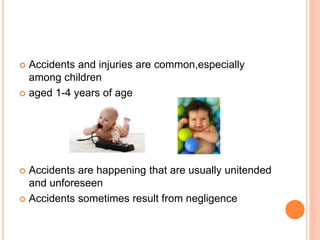
 Accidents and injuries are common,especially
among children
 aged 1-4 years of age
 Accidents are happening that are usually unitended
and unforeseen
 Accidents sometimes result from negligence
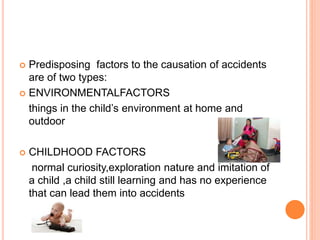
 Predisposing factors to the causation of accidents
are of two types:
 ENVIRONMENTALFACTORS
things in the child’s environment at home and
outdoor
 CHILDHOOD FACTORS
normal curiosity,exploration nature and imitation of
a child ,a child still learning and has no experience
that can lead them into accidents
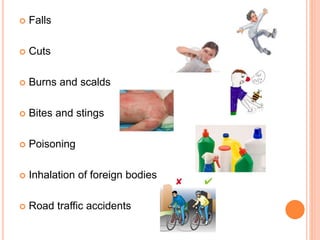
 Falls
 Cuts
 Burns and scalds
 Bites and stings
 Poisoning
 Inhalation of foreign bodies
 Road traffic accidents
WHAT IS CHILDPROOFING?
 Almost all injuries can be prevented
 The act of making an environment or an object
relatively safe for children.
 To reduce risk of injuries to a considerable level and
to offer safety solutions suiting the specific
requirements.
 LET US EXPLORE THE HOME THROUGH A
CHILD’S EYE…
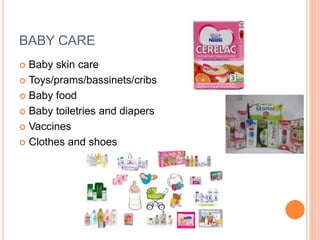
BABY CARE
 Baby skin care
 Toys/prams/bassinets/cribs
 Baby food
 Baby toiletries and diapers
 Vaccines
 Clothes and shoes
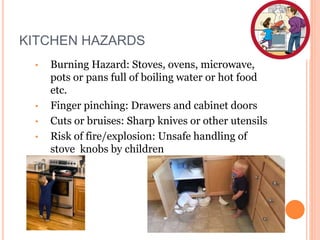
KITCHEN HAZARDS
• Burning Hazard: Stoves, ovens, microwave,
pots or pans full of boiling water or hot food
etc.
• Finger pinching: Drawers and cabinet doors
• Cuts or bruises: Sharp knives or other utensils
• Risk of fire/explosion: Unsafe handling of
stove knobs by children
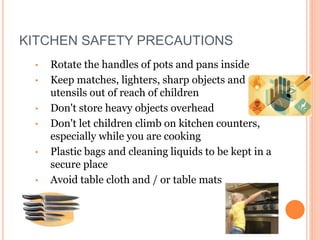
KITCHEN SAFETY PRECAUTIONS
• Rotate the handles of pots and pans inside
• Keep matches, lighters, sharp objects and
utensils out of reach of children
• Don't store heavy objects overhead
• Don't let children climb on kitchen counters,
especially while you are cooking
• Plastic bags and cleaning liquids to be kept in a
secure place
• Avoid table cloth and / or table mats
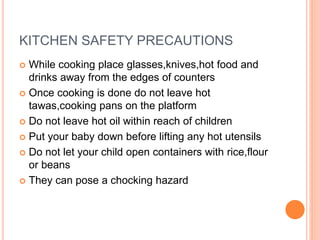
KITCHEN SAFETY PRECAUTIONS
 While cooking place glasses,knives,hot food and
drinks away from the edges of counters
 Once cooking is done do not leave hot
tawas,cooking pans on the platform
 Do not leave hot oil within reach of children
 Put your baby down before lifting any hot utensils
 Do not let your child open containers with rice,flour
or beans
 They can pose a chocking hazard
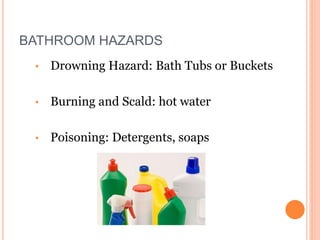
BATHROOM HAZARDS
• Drowning Hazard: Bath Tubs or Buckets
• Burning and Scald: hot water
• Poisoning: Detergents, soaps
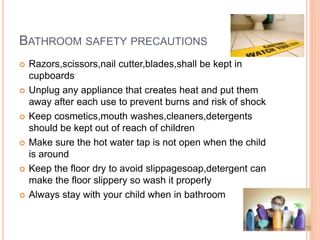
BATHROOM SAFETY PRECAUTIONS
 Razors,scissors,nail cutter,blades,shall be kept in
cupboards
 Unplug any appliance that creates heat and put them
away after each use to prevent burns and risk of shock
 Keep cosmetics,mouth washes,cleaners,detergents
should be kept out of reach of children
 Make sure the hot water tap is not open when the child
is around
 Keep the floor dry to avoid slippagesoap,detergent can
make the floor slippery so wash it properly
 Always stay with your child when in bathroom
BATHROOM SAFETY PRECAUTIONS
• Check the bath water before placing your child
• Keep toilet lids shut and use toilet locks
• Drain the tub immediately once bath is over
• Empty all buckets and containers after use and
store them upside down
• Prepare yourself before heading into the
bathroom
• Keep bathrooms doors closed when not in use
• Never leave electrical appliances plugged in
near water
• No child should ever be left alone in the tub
• OUT OF SIGHT;OUT OF MIND
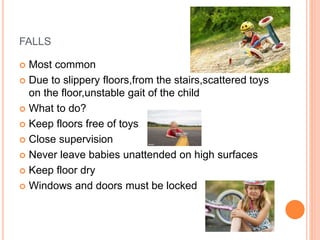
FALLS
 Most common
 Due to slippery floors,from the stairs,scattered toys
on the floor,unstable gait of the child
 What to do?
 Keep floors free of toys
 Close supervision
 Never leave babies unattended on high surfaces
 Keep floor dry
 Windows and doors must be locked
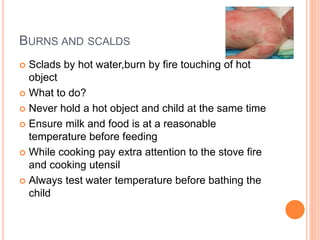
BURNS AND SCALDS
 Sclads by hot water,burn by fire touching of hot
object
 What to do?
 Never hold a hot object and child at the same time
 Ensure milk and food is at a reasonable
temperature before feeding
 While cooking pay extra attention to the stove fire
and cooking utensil
 Always test water temperature before bathing the
child
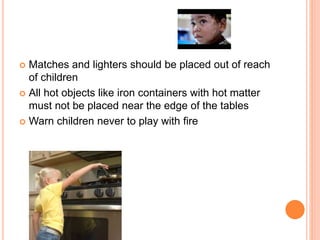
 Matches and lighters should be placed out of reach
of children
 All hot objects like iron containers with hot matter
must not be placed near the edge of the tables
 Warn children never to play with fire
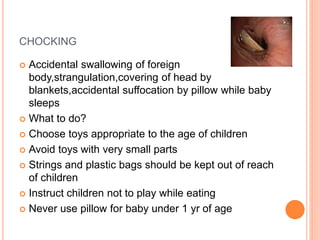
CHOCKING
 Accidental swallowing of foreign
body,strangulation,covering of head by
blankets,accidental suffocation by pillow while baby
sleeps
 What to do?
 Choose toys appropriate to the age of children
 Avoid toys with very small parts
 Strings and plastic bags should be kept out of reach
of children
 Instruct children not to play while eating
 Never use pillow for baby under 1 yr of age
 Do not use large or heavy blanket for covering a
child
 Bucket filled with water must be covered and keep
children away from it
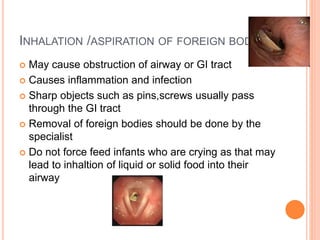
INHALATION /ASPIRATION OF FOREIGN BODIES
 May cause obstruction of airway or GI tract
 Causes inflammation and infection
 Sharp objects such as pins,screws usually pass
through the GI tract
 Removal of foreign bodies should be done by the
specialist
 Do not force feed infants who are crying as that may
lead to inhaltion of liquid or solid food into their
airway
PREVENTION
 Cut food into small pieces and then feed
 Disccourage talking,laughing or playing while taking
meals
 Keep small objects out of reach of children
HEIMLICH MANEUVER
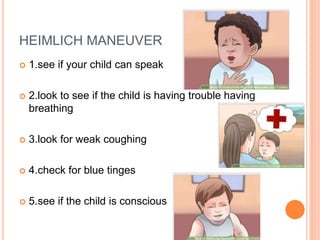
 1.see if your child can speak
 2.look to see if the child is having trouble having
breathing
 3.look for weak coughing
 4.check for blue tinges
 5.see if the child is conscious
STEPS…
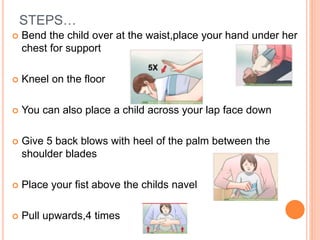
 Bend the child over at the waist,place your hand under her
chest for support
 Kneel on the floor
 You can also place a child across your lap face down
 Give 5 back blows with heel of the palm between the
shoulder blades
 Place your fist above the childs navel
 Pull upwards,4 times
POISONING
 Food poisoning,accidental swallowing of
drugs,detergents,insecticides
 What to do?
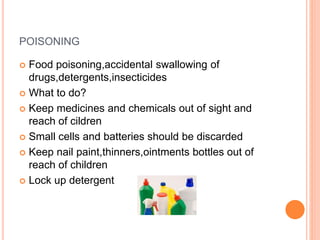
 Keep medicines and chemicals out of sight and
reach of cildren
 Small cells and batteries should be discarded
 Keep nail paint,thinners,ointments bottles out of
reach of children
 Lock up detergent
ANIMAL BITE,BEE STING ,SNAKE BITE
 Dog/cat bite-wash the wound gently with
soap/detergent and water
 Apply pressure with a clean towel to the bleeding
area
 Keep the injury elevated above level of heart visit
the nearest hospital immediately
 Take the vaccination-tetanus,rabipur
 Apply antibiotic ointment
 Keep the wound open
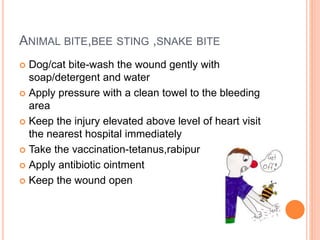
 Bee sting-Remove the stinger.It should not be pulled out
but scrapped because that will avoid spreading of venom
 Wash the area with cold water and soap
 Antiseptic like dettol or savlon can be applied
 Apply calamine lotion
 Pain can be relieved by applying cold compress on the
spot for 15 mins
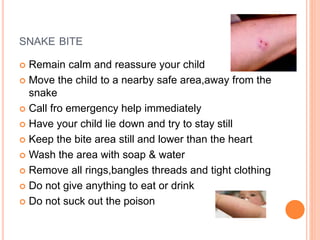
SNAKE BITE
 Remain calm and reassure your child
 Move the child to a nearby safe area,away from the
snake
 Call fro emergency help immediately
 Have your child lie down and try to stay still
 Keep the bite area still and lower than the heart
 Wash the area with soap & water
 Remove all rings,bangles threads and tight clothing
 Do not give anything to eat or drink
 Do not suck out the poison
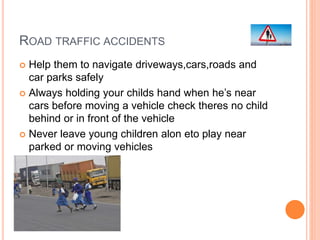
ROAD TRAFFIC ACCIDENTS
 Help them to navigate driveways,cars,roads and
car parks safely
 Always holding your childs hand when he’s near
cars before moving a vehicle check theres no child
behind or in front of the vehicle
 Never leave young children alon eto play near
parked or moving vehicles
 Q.FACTORS RESPONSIBLE FOR DOMESTIC
ACCIDENTS IN CHILDREN?
 Q.TYPES OF DOMESTIC ACCIDENTS
 HOW TO TAKE CARE IN CASE BABY DIAPER
RASHES?
 Q.7 SAFETY PRECAUTIONS IN KITCHEN?
 7 SAFETY PRECAUTIONS IN BATHROOM?
 STEPS OF HEIMLICH MANEUVER…
 What to do in case of a dog bite?
 What to do in case of a bee sting?
 What to do in case of a snake bite?
 Q.safety precautions to avoid road traffic
accidents?
Domestic hazards

Domestic hazards

  • 1.
    DOMESTIC HAZARDS AND SAFETYPRECAUTIONS Dr. SHIVANGI DIXIT
  • 2.
     Accidents andinjuries are common,especially among children  aged 1-4 years of age  Accidents are happening that are usually unitended and unforeseen  Accidents sometimes result from negligence
  • 3.
     Predisposing factorsto the causation of accidents are of two types:  ENVIRONMENTALFACTORS things in the child’s environment at home and outdoor  CHILDHOOD FACTORS normal curiosity,exploration nature and imitation of a child ,a child still learning and has no experience that can lead them into accidents
  • 4.
     Falls  Cuts Burns and scalds  Bites and stings  Poisoning  Inhalation of foreign bodies  Road traffic accidents
  • 5.
    WHAT IS CHILDPROOFING? Almost all injuries can be prevented  The act of making an environment or an object relatively safe for children.  To reduce risk of injuries to a considerable level and to offer safety solutions suiting the specific requirements.
  • 6.
     LET USEXPLORE THE HOME THROUGH A CHILD’S EYE…
  • 7.
    BABY CARE  Babyskin care  Toys/prams/bassinets/cribs  Baby food  Baby toiletries and diapers  Vaccines  Clothes and shoes
  • 8.
    KITCHEN HAZARDS • BurningHazard: Stoves, ovens, microwave, pots or pans full of boiling water or hot food etc. • Finger pinching: Drawers and cabinet doors • Cuts or bruises: Sharp knives or other utensils • Risk of fire/explosion: Unsafe handling of stove knobs by children
  • 9.
    KITCHEN SAFETY PRECAUTIONS •Rotate the handles of pots and pans inside • Keep matches, lighters, sharp objects and utensils out of reach of children • Don't store heavy objects overhead • Don't let children climb on kitchen counters, especially while you are cooking • Plastic bags and cleaning liquids to be kept in a secure place • Avoid table cloth and / or table mats
  • 10.
    KITCHEN SAFETY PRECAUTIONS While cooking place glasses,knives,hot food and drinks away from the edges of counters  Once cooking is done do not leave hot tawas,cooking pans on the platform  Do not leave hot oil within reach of children  Put your baby down before lifting any hot utensils  Do not let your child open containers with rice,flour or beans  They can pose a chocking hazard
  • 11.
    BATHROOM HAZARDS • DrowningHazard: Bath Tubs or Buckets • Burning and Scald: hot water • Poisoning: Detergents, soaps
  • 12.
    BATHROOM SAFETY PRECAUTIONS Razors,scissors,nail cutter,blades,shall be kept in cupboards  Unplug any appliance that creates heat and put them away after each use to prevent burns and risk of shock  Keep cosmetics,mouth washes,cleaners,detergents should be kept out of reach of children  Make sure the hot water tap is not open when the child is around  Keep the floor dry to avoid slippagesoap,detergent can make the floor slippery so wash it properly  Always stay with your child when in bathroom
  • 13.
    BATHROOM SAFETY PRECAUTIONS •Check the bath water before placing your child • Keep toilet lids shut and use toilet locks • Drain the tub immediately once bath is over • Empty all buckets and containers after use and store them upside down • Prepare yourself before heading into the bathroom • Keep bathrooms doors closed when not in use • Never leave electrical appliances plugged in near water • No child should ever be left alone in the tub • OUT OF SIGHT;OUT OF MIND
  • 14.
    FALLS  Most common Due to slippery floors,from the stairs,scattered toys on the floor,unstable gait of the child  What to do?  Keep floors free of toys  Close supervision  Never leave babies unattended on high surfaces  Keep floor dry  Windows and doors must be locked
  • 15.
    BURNS AND SCALDS Sclads by hot water,burn by fire touching of hot object  What to do?  Never hold a hot object and child at the same time  Ensure milk and food is at a reasonable temperature before feeding  While cooking pay extra attention to the stove fire and cooking utensil  Always test water temperature before bathing the child
  • 16.
     Matches andlighters should be placed out of reach of children  All hot objects like iron containers with hot matter must not be placed near the edge of the tables  Warn children never to play with fire
  • 17.
    CHOCKING  Accidental swallowingof foreign body,strangulation,covering of head by blankets,accidental suffocation by pillow while baby sleeps  What to do?  Choose toys appropriate to the age of children  Avoid toys with very small parts  Strings and plastic bags should be kept out of reach of children  Instruct children not to play while eating  Never use pillow for baby under 1 yr of age
  • 18.
     Do notuse large or heavy blanket for covering a child  Bucket filled with water must be covered and keep children away from it
  • 19.
    INHALATION /ASPIRATION OFFOREIGN BODIES  May cause obstruction of airway or GI tract  Causes inflammation and infection  Sharp objects such as pins,screws usually pass through the GI tract  Removal of foreign bodies should be done by the specialist  Do not force feed infants who are crying as that may lead to inhaltion of liquid or solid food into their airway
  • 20.
    PREVENTION  Cut foodinto small pieces and then feed  Disccourage talking,laughing or playing while taking meals  Keep small objects out of reach of children
  • 21.
    HEIMLICH MANEUVER  1.seeif your child can speak  2.look to see if the child is having trouble having breathing  3.look for weak coughing  4.check for blue tinges  5.see if the child is conscious
  • 22.
    STEPS…  Bend thechild over at the waist,place your hand under her chest for support  Kneel on the floor  You can also place a child across your lap face down  Give 5 back blows with heel of the palm between the shoulder blades  Place your fist above the childs navel  Pull upwards,4 times
  • 23.
    POISONING  Food poisoning,accidentalswallowing of drugs,detergents,insecticides  What to do?  Keep medicines and chemicals out of sight and reach of cildren  Small cells and batteries should be discarded  Keep nail paint,thinners,ointments bottles out of reach of children  Lock up detergent
  • 24.
    ANIMAL BITE,BEE STING,SNAKE BITE  Dog/cat bite-wash the wound gently with soap/detergent and water  Apply pressure with a clean towel to the bleeding area  Keep the injury elevated above level of heart visit the nearest hospital immediately  Take the vaccination-tetanus,rabipur  Apply antibiotic ointment  Keep the wound open
  • 25.
     Bee sting-Removethe stinger.It should not be pulled out but scrapped because that will avoid spreading of venom  Wash the area with cold water and soap  Antiseptic like dettol or savlon can be applied  Apply calamine lotion  Pain can be relieved by applying cold compress on the spot for 15 mins
  • 26.
    SNAKE BITE  Remaincalm and reassure your child  Move the child to a nearby safe area,away from the snake  Call fro emergency help immediately  Have your child lie down and try to stay still  Keep the bite area still and lower than the heart  Wash the area with soap & water  Remove all rings,bangles threads and tight clothing  Do not give anything to eat or drink  Do not suck out the poison
  • 27.
    ROAD TRAFFIC ACCIDENTS Help them to navigate driveways,cars,roads and car parks safely  Always holding your childs hand when he’s near cars before moving a vehicle check theres no child behind or in front of the vehicle  Never leave young children alon eto play near parked or moving vehicles
  • 29.
     Q.FACTORS RESPONSIBLEFOR DOMESTIC ACCIDENTS IN CHILDREN?
  • 30.
     Q.TYPES OFDOMESTIC ACCIDENTS
  • 31.
     HOW TOTAKE CARE IN CASE BABY DIAPER RASHES?
  • 32.
     Q.7 SAFETYPRECAUTIONS IN KITCHEN?
  • 33.
     7 SAFETYPRECAUTIONS IN BATHROOM?
  • 34.
     STEPS OFHEIMLICH MANEUVER…
  • 35.
     What todo in case of a dog bite?
  • 36.
     What todo in case of a bee sting?
  • 37.
     What todo in case of a snake bite?
  • 38.
     Q.safety precautionsto avoid road traffic accidents?