Reward Management

Managing Human Resources
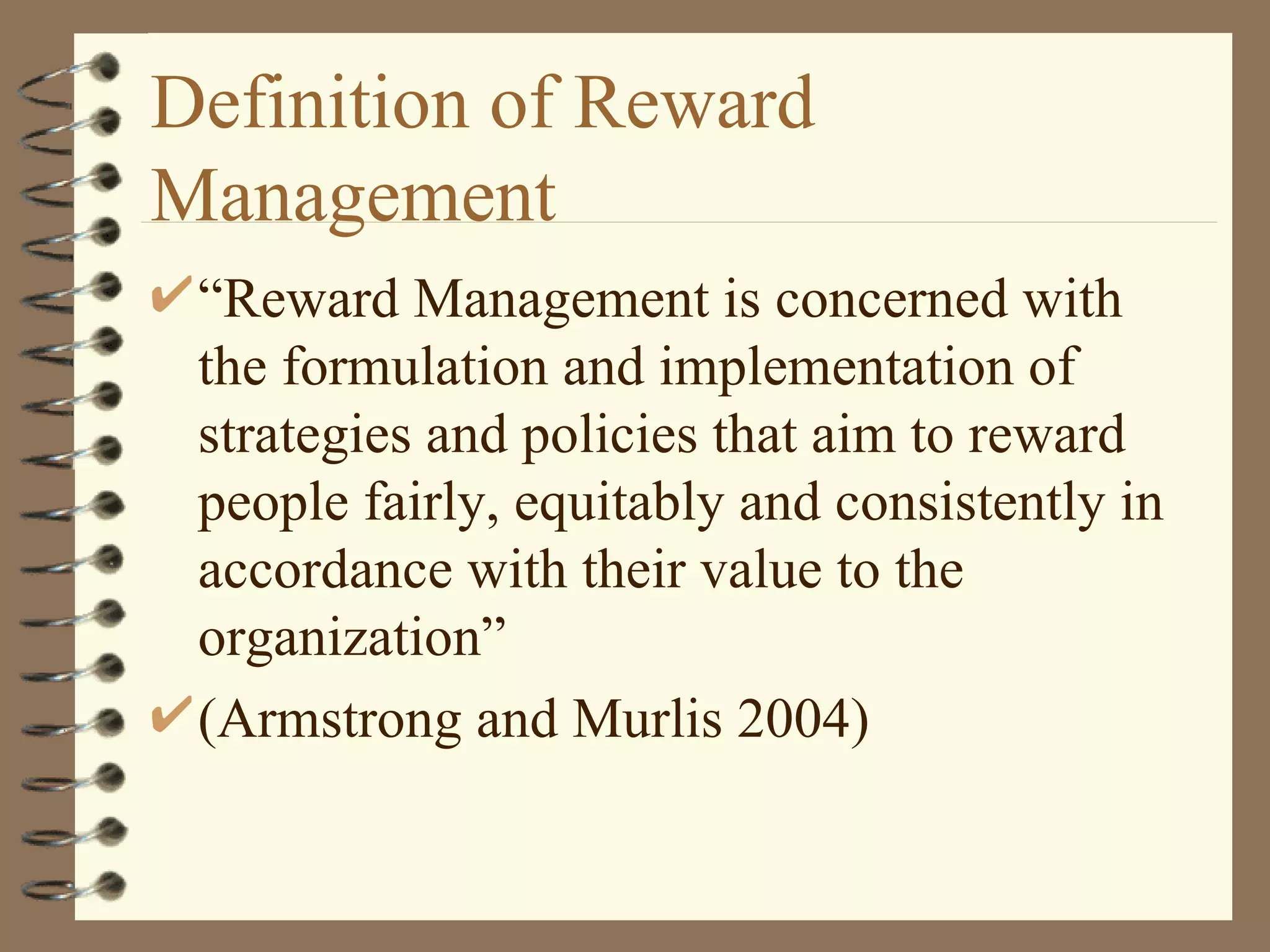
Definition of Reward
Management
 “Reward Management is concerned with
 the formulation and implementation of
 strategies and policies that aim to reward
 people fairly, equitably and consistently in
 accordance with their value to the
 organization”
 (Armstrong and Murlis 2004)
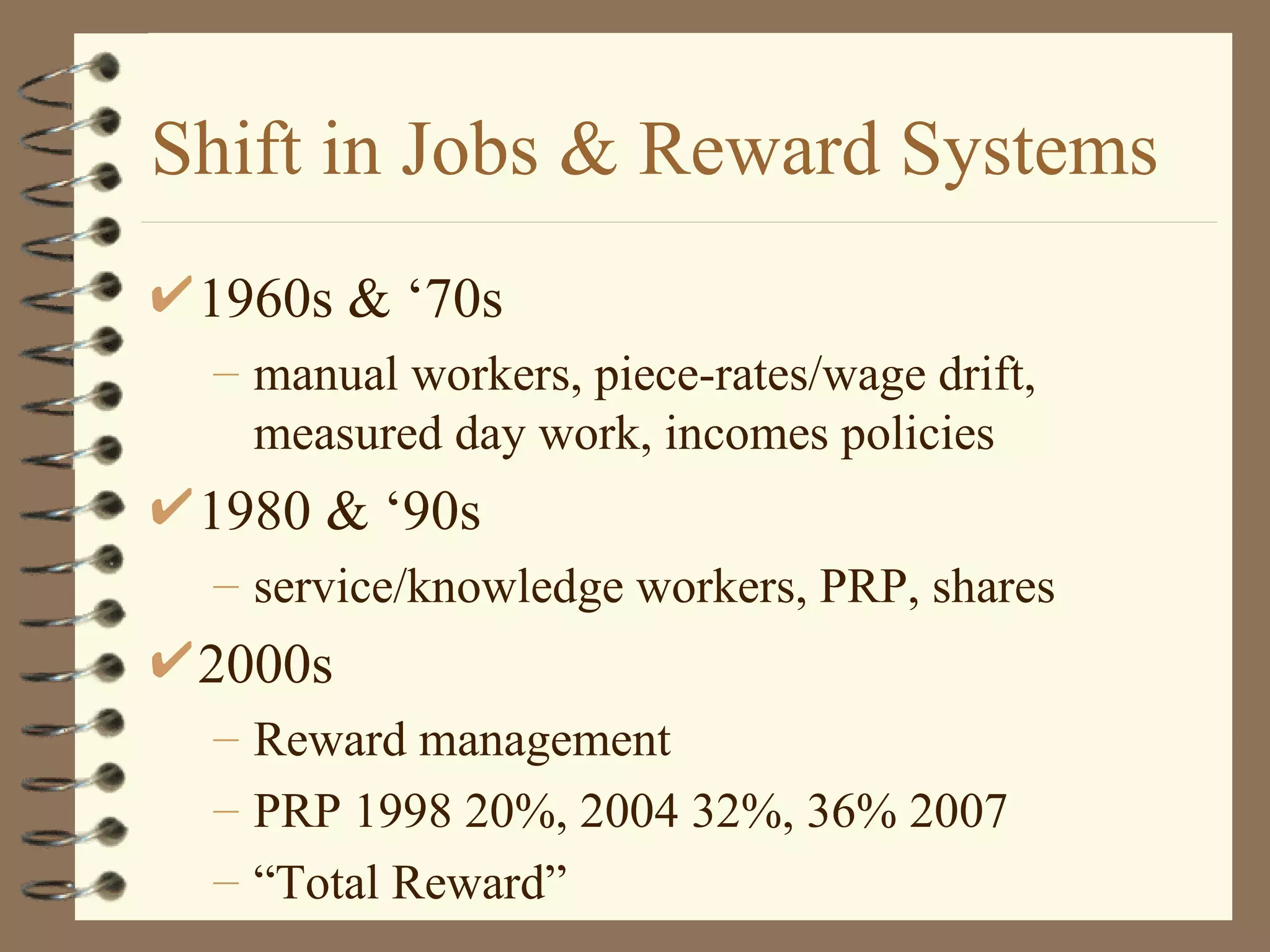
Shift in Jobs & Reward Systems
 1960s & ‘70s
 – manual workers, piece-rates/wage drift,
   measured day work, incomes policies
 1980 & ‘90s
 – service/knowledge workers, PRP, shares
 2000s
 – Reward management
 – PRP 1998 20%, 2004 32%, 36% 2007
 – “Total Reward”
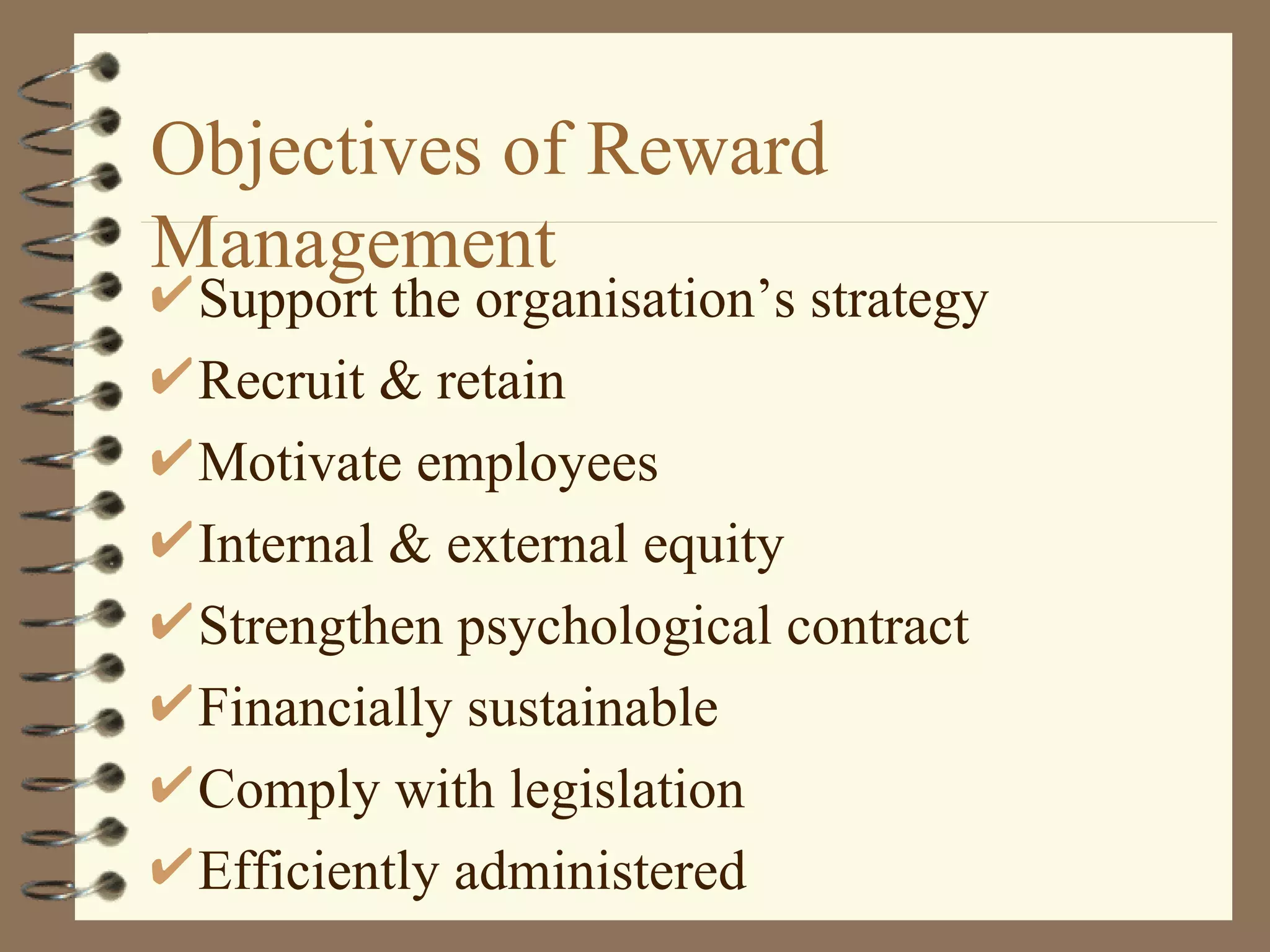
Objectives of Reward
Management
 Support the organisation’s strategy
 Recruit & retain
 Motivate employees
 Internal & external equity
 Strengthen psychological contract
 Financially sustainable
 Comply with legislation
 Efficiently administered
Basic Types of Reward
 Extrinsic rewards
 – satisfy basic needs: survival, security
 – Pay, conditions, treatment
 Intrinsic rewards
 – satisfy higher needs: esteem,development
Reward Options
 Base pay--fixed or minimum wage/salary
 Plussage--capability, qualification
 Premia/Overtime
 Performance related pay
 Indirect pay--benefits, non-cash, shares
 Non-monetary: recognition, advancement
 “Total Reward” Pay, non-pay, flexible
 hours, cafeteria benefits
Rewards by Individual, Team,
Organisation
 Individual: base pay, incentives, benefits
 – rewards attendance, performance, competence
 Team
 – team bonus, rewards group cooperation
 Organisation
 – profit-sharing, shares, gain-sharing
Motivation theories I
 Maslow’s hierarchy of needs
  – Physiological, safety, social, esteem, self-
    actualisation
 Herzberg
  – Hygiene, motivators (e.g.,sense of
    achievement)
 McClelland
  – Learned needs
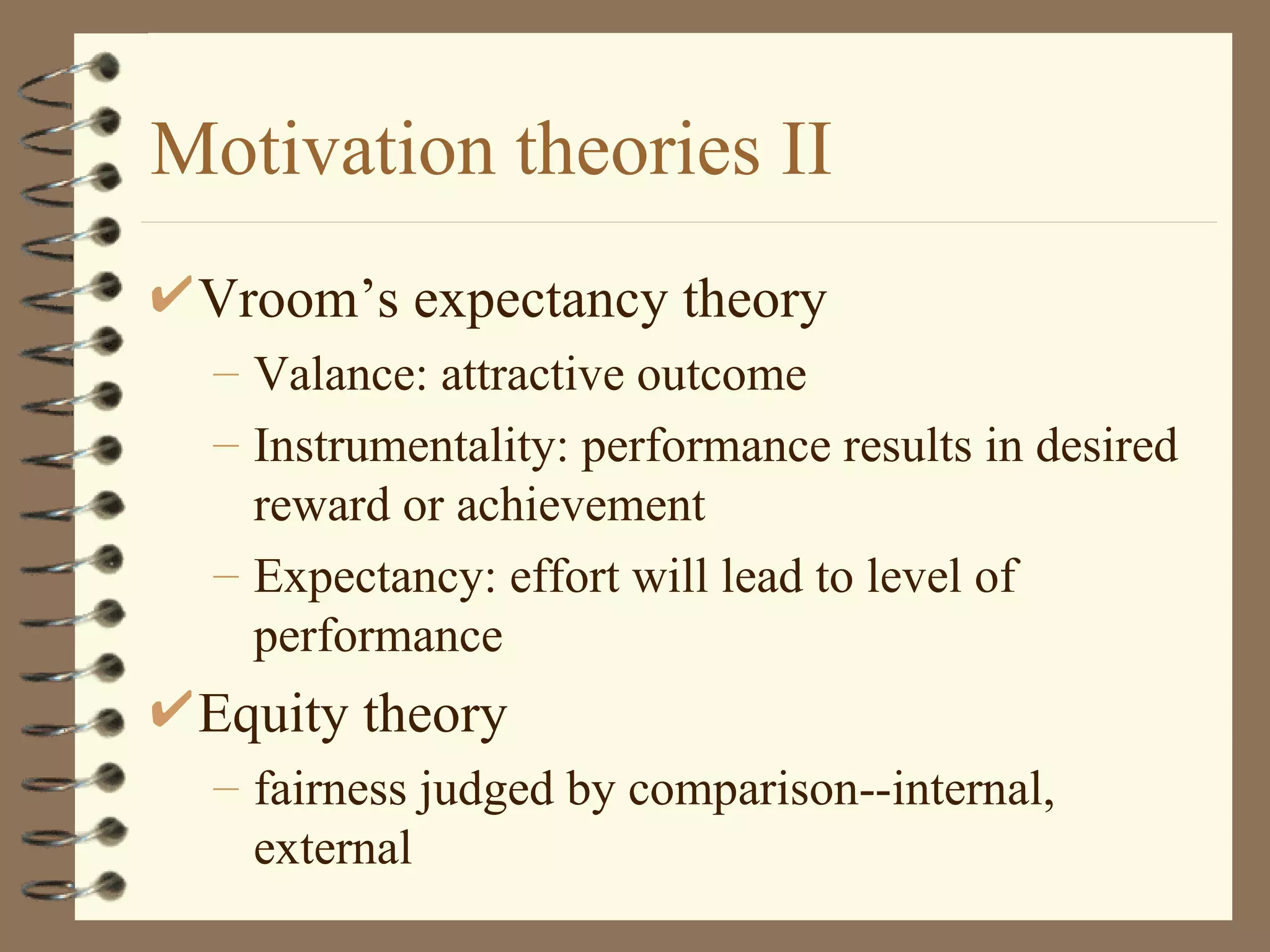
Motivation theories II
 Vroom’s expectancy theory
  – Valance: attractive outcome
  – Instrumentality: performance results in desired
    reward or achievement
  – Expectancy: effort will lead to level of
    performance
 Equity theory
  – fairness judged by comparison--internal,
    external
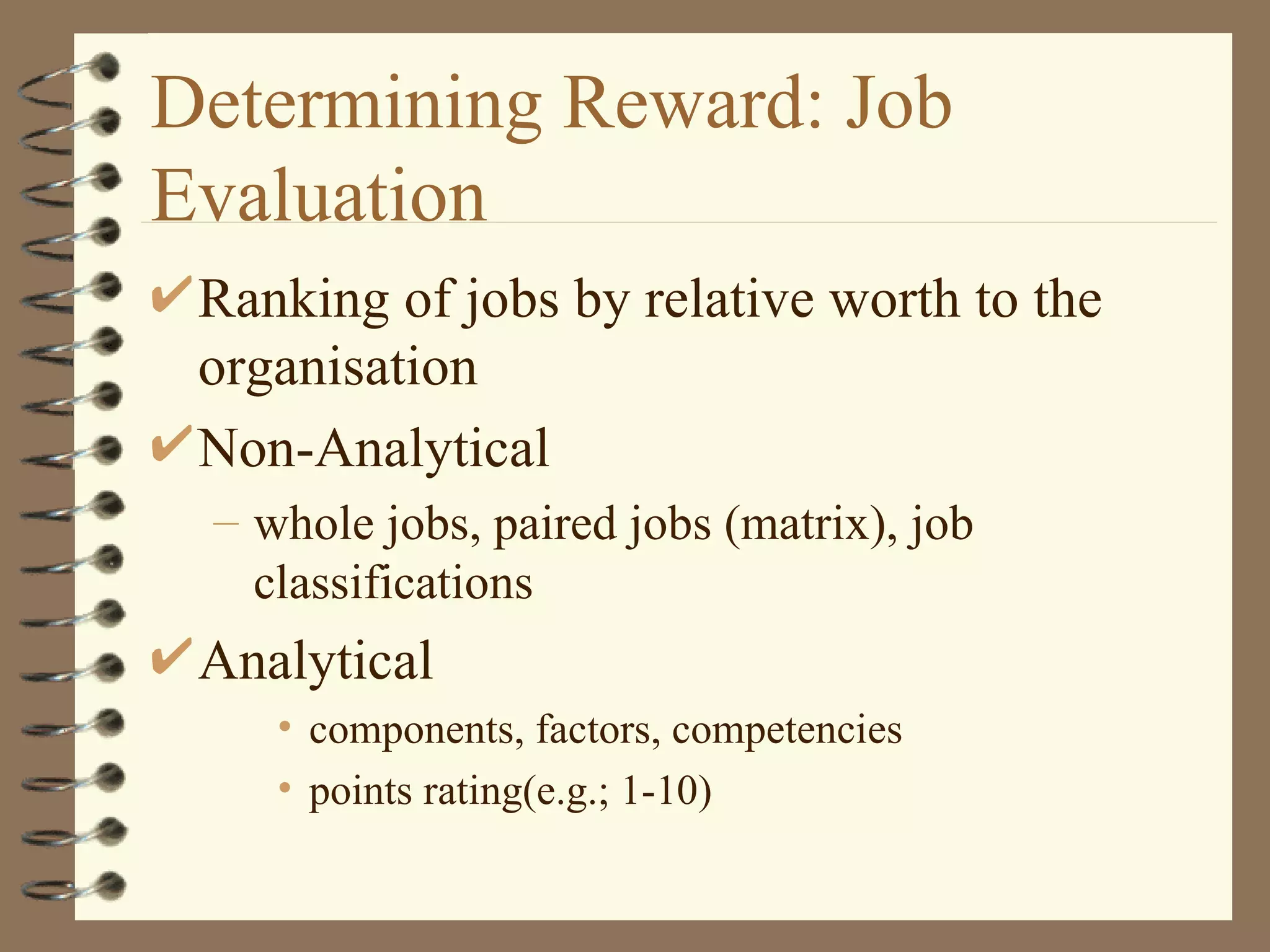
Determining Reward: Job
Evaluation
 Ranking of jobs by relative worth to the
 organisation
 Non-Analytical
 – whole jobs, paired jobs (matrix), job
   classifications
 Analytical
    • components, factors, competencies
    • points rating(e.g.; 1-10)
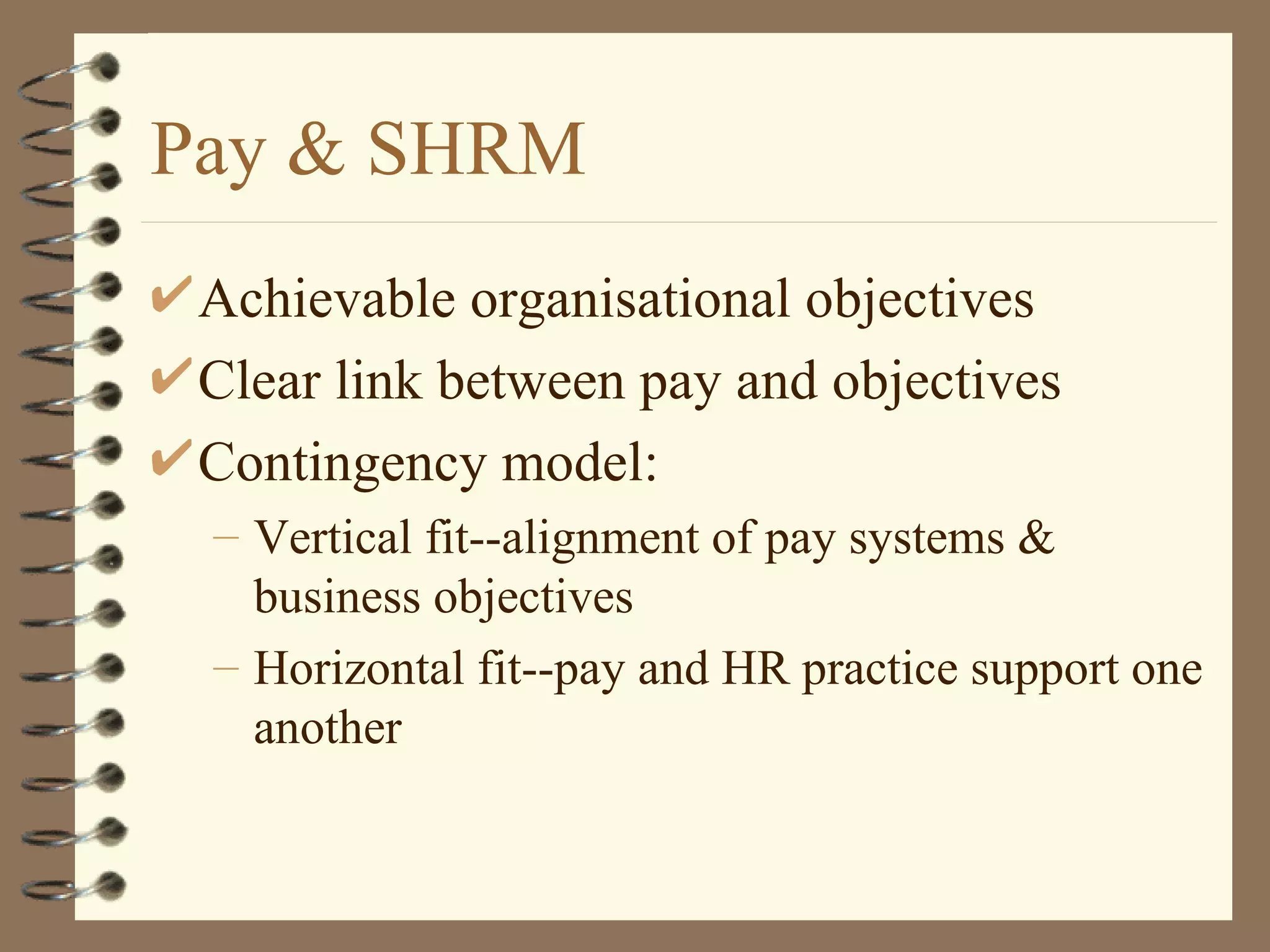
Pay & SHRM
 Achievable organisational objectives
 Clear link between pay and objectives
 Contingency model:
 – Vertical fit--alignment of pay systems &
   business objectives
 – Horizontal fit--pay and HR practice support one
   another
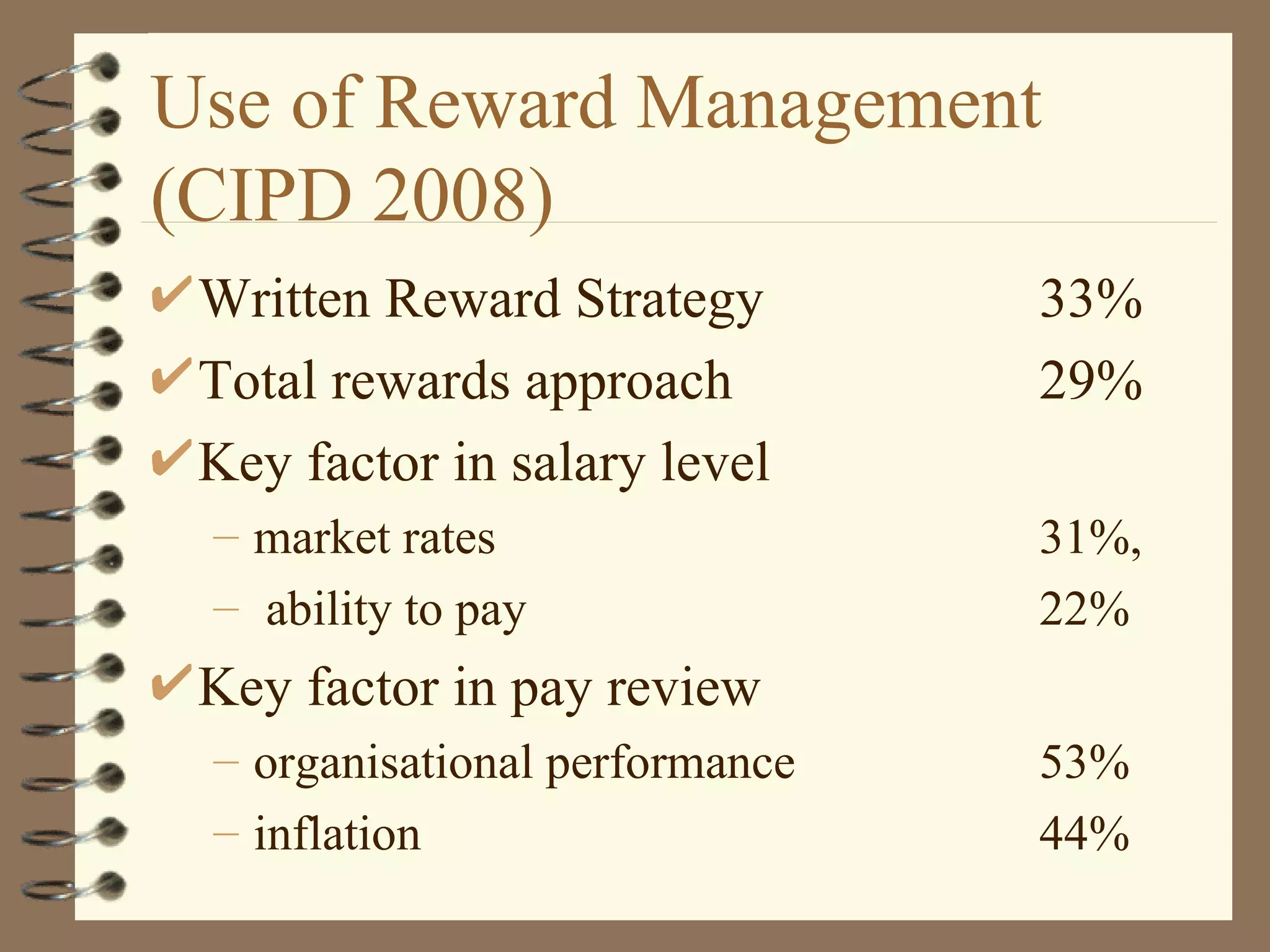
Use of Reward Management
(CIPD 2008)
 Written Reward Strategy        33%
 Total rewards approach         29%
 Key factor in salary level
 – market rates                 31%,
 – ability to pay               22%
 Key factor in pay review
 – organisational performance   53%
 – inflation                    44%
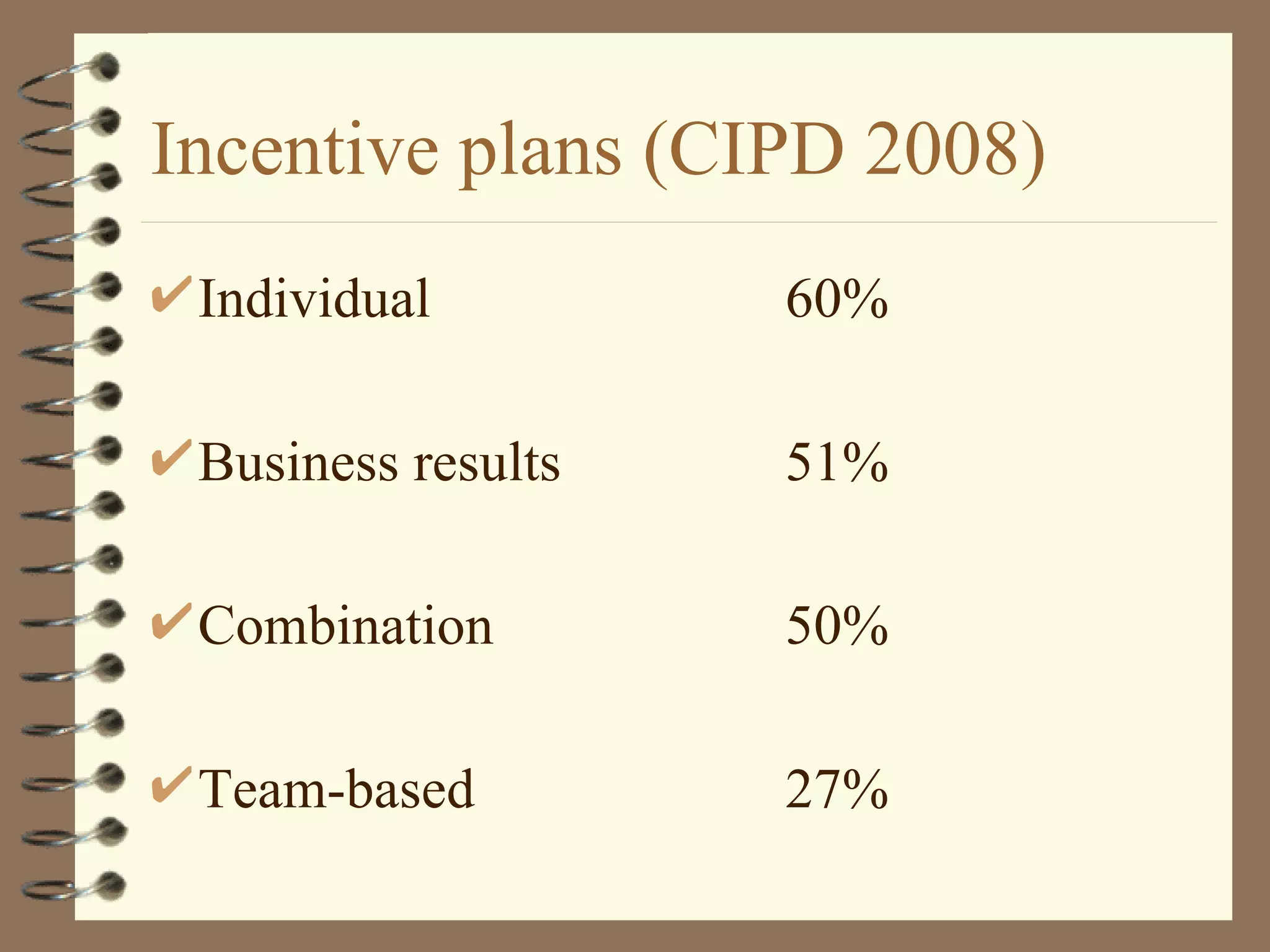
Incentive plans (CIPD 2008)
 Individual         60%

 Business results   51%

 Combination        50%

 Team-based         27%
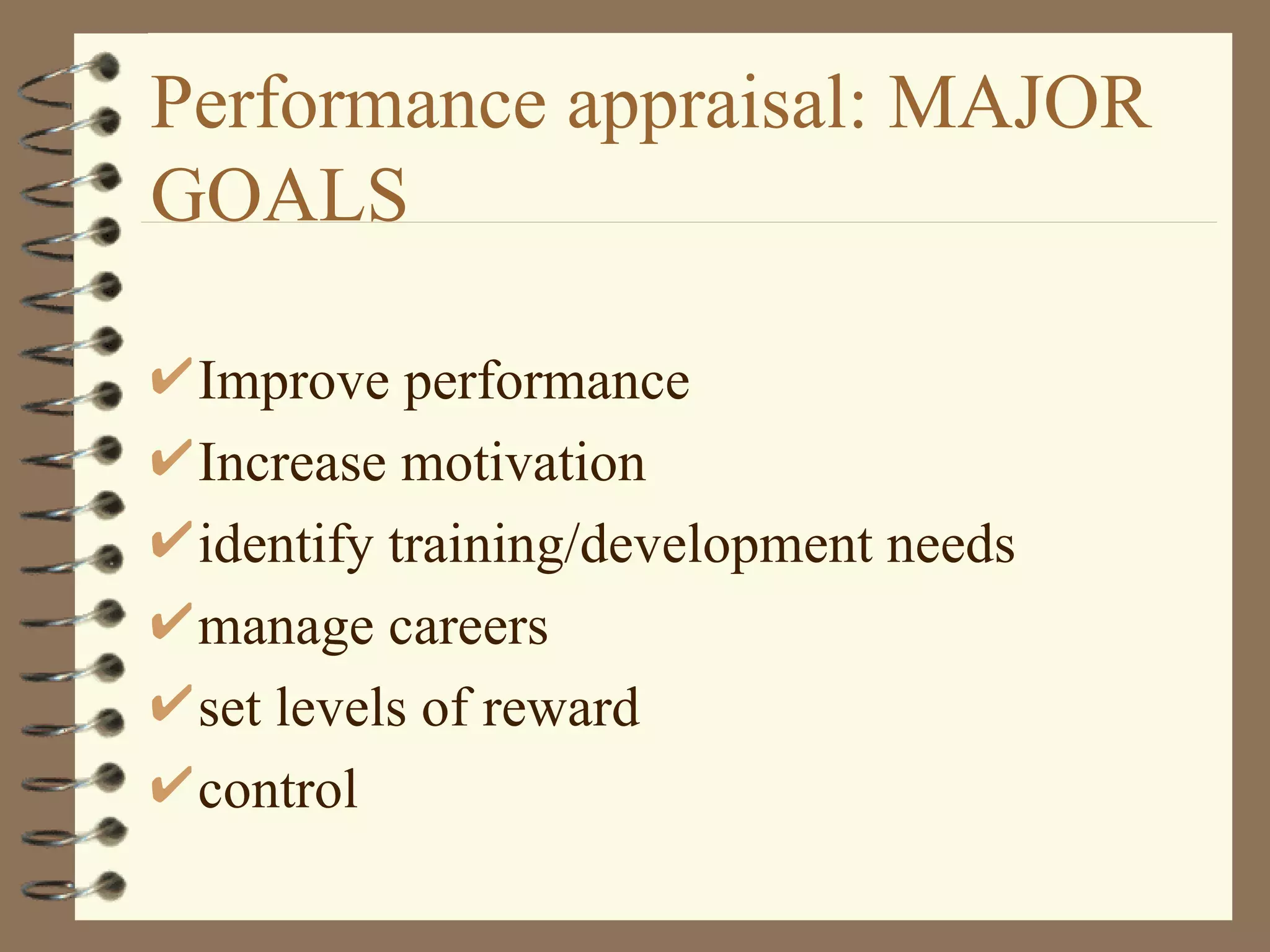
Performance appraisal: MAJOR
GOALS

 Improve performance
 Increase motivation
 identify training/development needs
 manage careers
 set levels of reward
 control
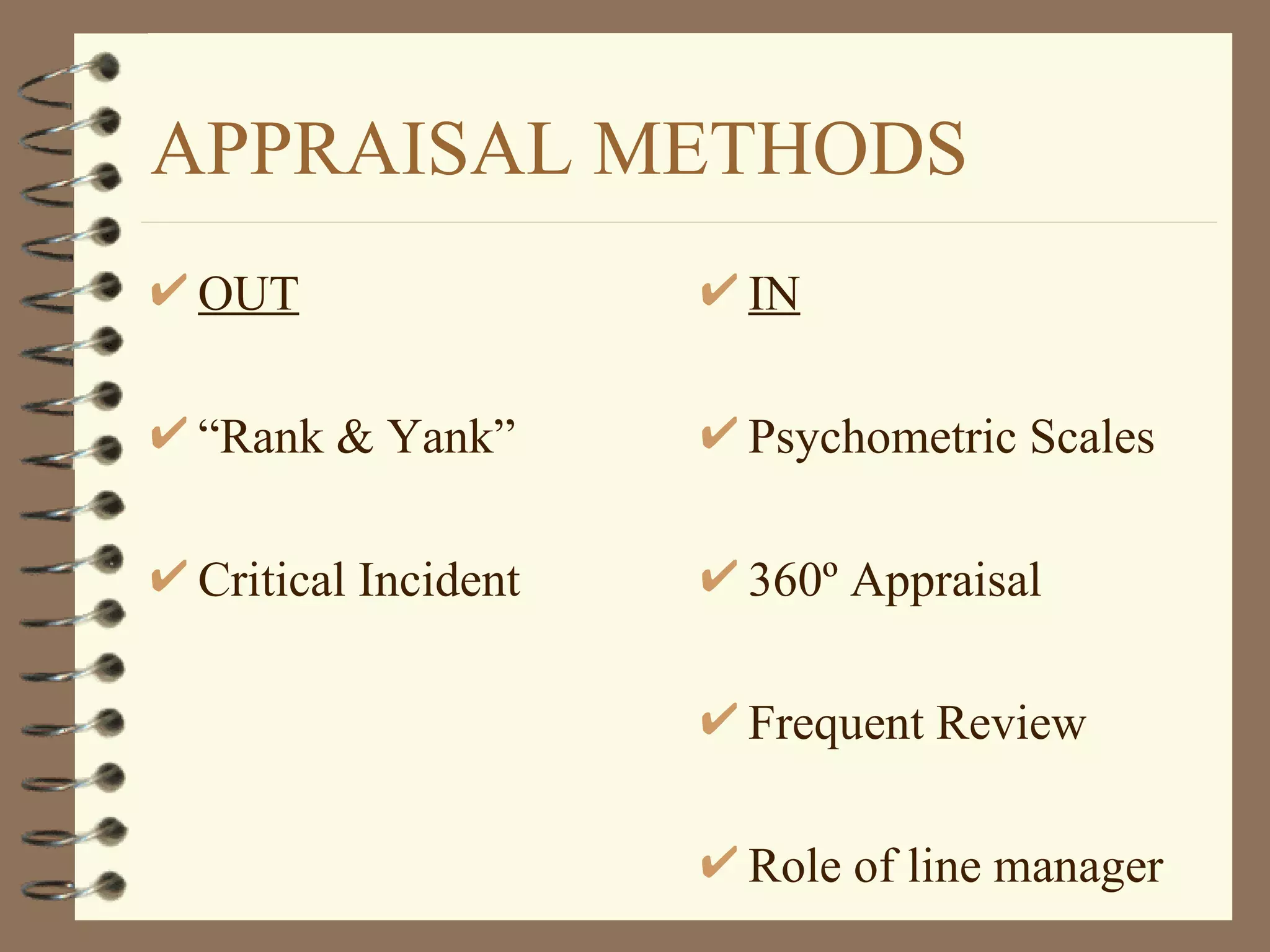
APPRAISAL METHODS
OUT                 IN

“Rank & Yank”       Psychometric Scales

Critical Incident   360º Appraisal

                    Frequent Review

                    Role of line manager
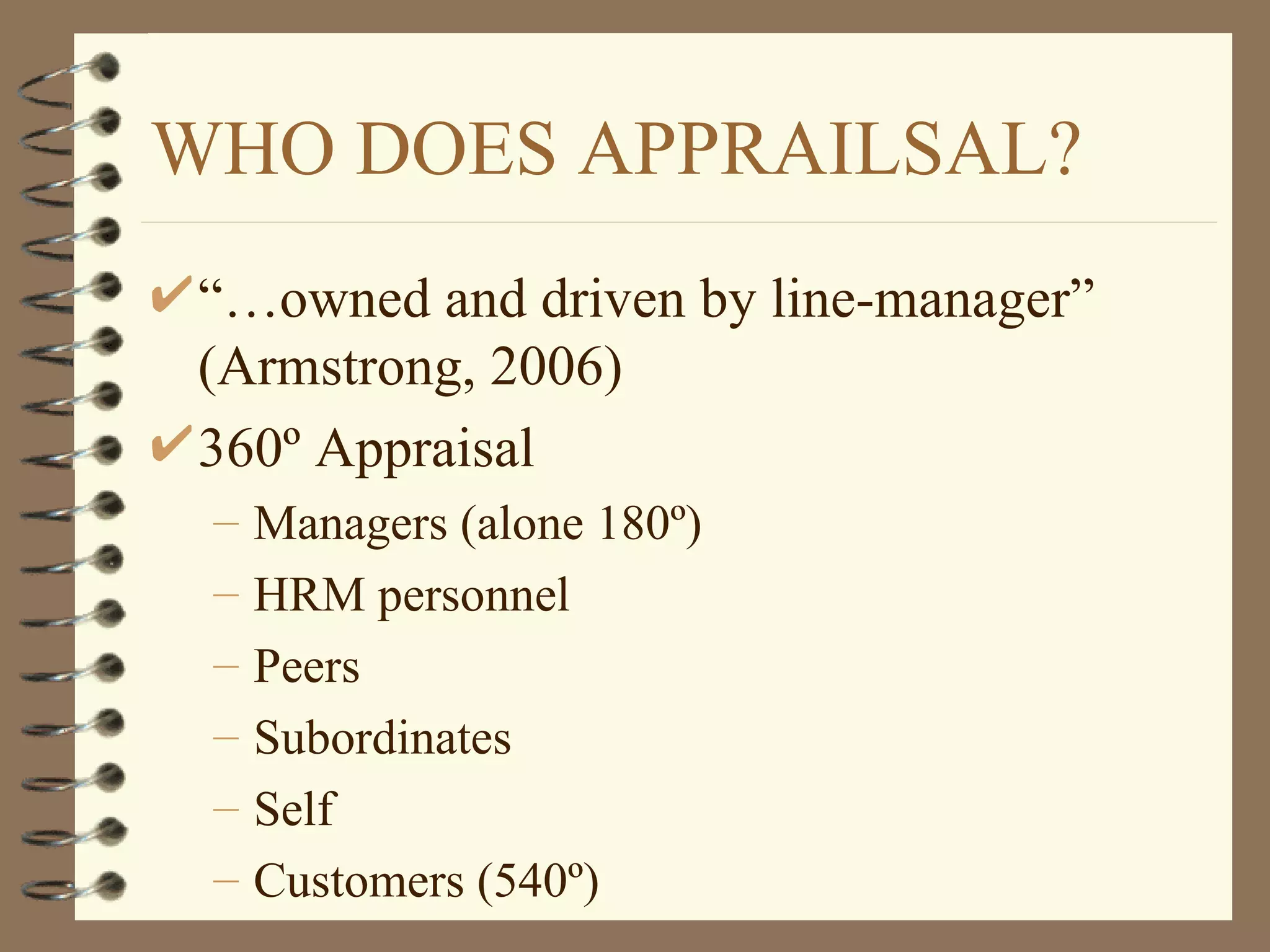
WHO DOES APPRAILSAL?
 “…owned and driven by line-manager”
 (Armstrong, 2006)
 360º Appraisal
 –   Managers (alone 180º)
 –   HRM personnel
 –   Peers
 –   Subordinates
 –   Self
 –   Customers (540º)
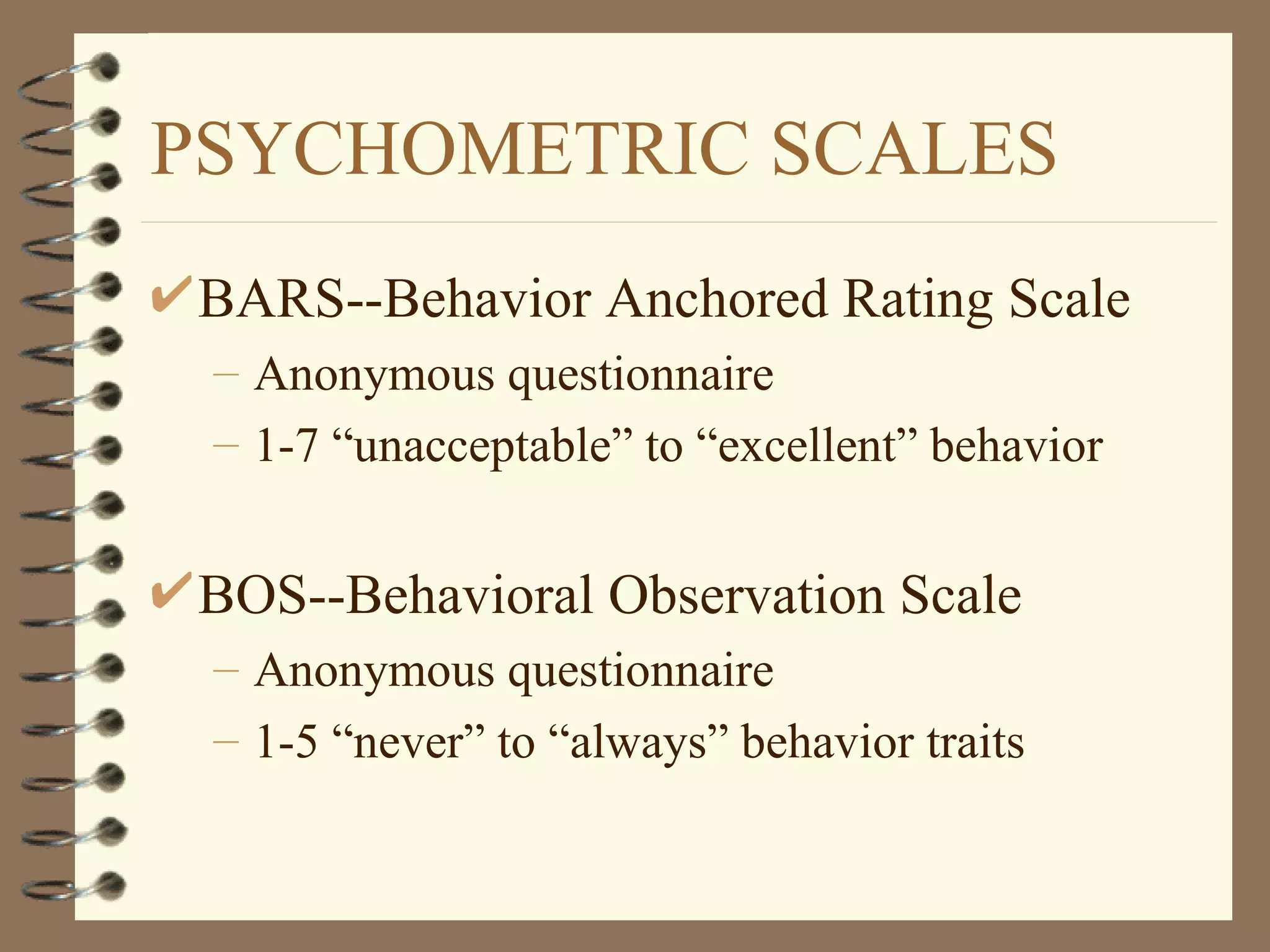
PSYCHOMETRIC SCALES
BARS--Behavior Anchored Rating Scale
 – Anonymous questionnaire
 – 1-7 “unacceptable” to “excellent” behavior


BOS--Behavioral Observation Scale
 – Anonymous questionnaire
 – 1-5 “never” to “always” behavior traits
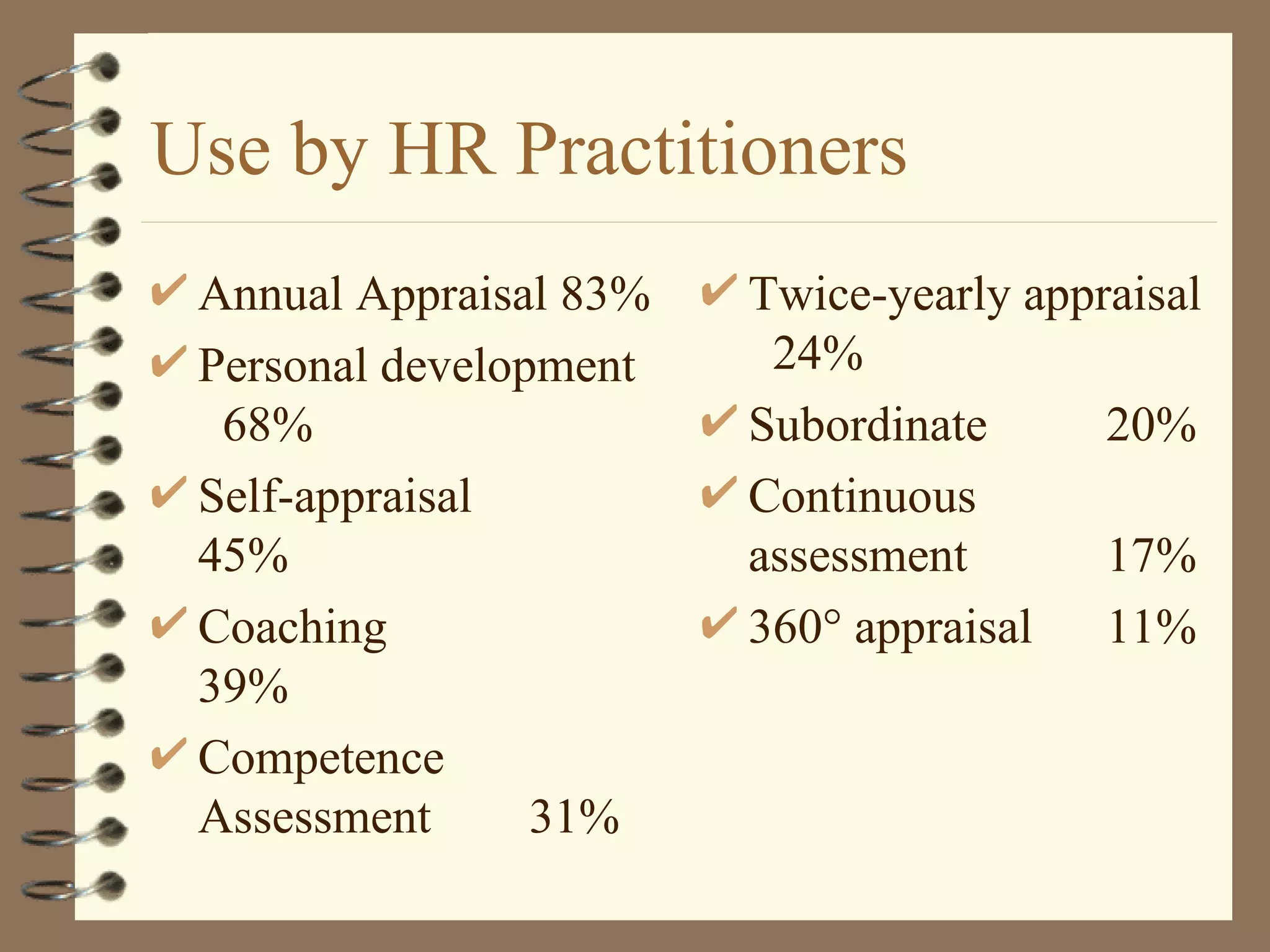
Use by HR Practitioners
 Annual Appraisal 83%   Twice-yearly appraisal
 Personal development    24%
  68%                   Subordinate      20%
 Self-appraisal         Continuous
 45%                    assessment       17%
 Coaching               360° appraisal 11%
 39%
 Competence
 Assessment      31%
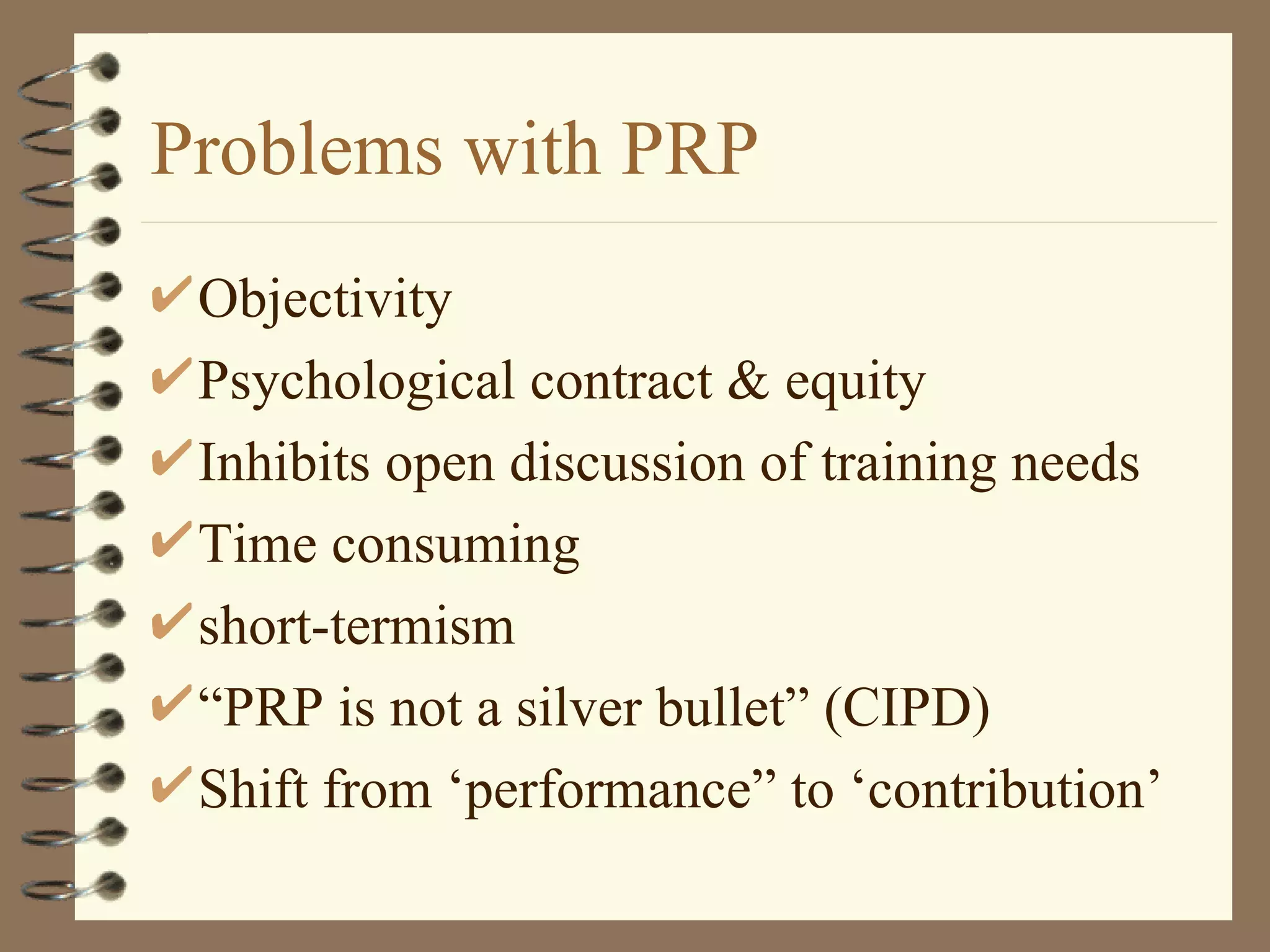
Problems with PRP
 Objectivity
 Psychological contract & equity
 Inhibits open discussion of training needs
 Time consuming
 short-termism
 “PRP is not a silver bullet” (CIPD)
 Shift from ‘performance” to ‘contribution’

Doc reward 102539

  • 1.
  • 2.
    Definition of Reward Management “Reward Management is concerned with the formulation and implementation of strategies and policies that aim to reward people fairly, equitably and consistently in accordance with their value to the organization” (Armstrong and Murlis 2004)
  • 3.
    Shift in Jobs& Reward Systems 1960s & ‘70s – manual workers, piece-rates/wage drift, measured day work, incomes policies 1980 & ‘90s – service/knowledge workers, PRP, shares 2000s – Reward management – PRP 1998 20%, 2004 32%, 36% 2007 – “Total Reward”
  • 4.
    Objectives of Reward Management Support the organisation’s strategy Recruit & retain Motivate employees Internal & external equity Strengthen psychological contract Financially sustainable Comply with legislation Efficiently administered
  • 5.
    Basic Types ofReward Extrinsic rewards – satisfy basic needs: survival, security – Pay, conditions, treatment Intrinsic rewards – satisfy higher needs: esteem,development
  • 6.
    Reward Options Basepay--fixed or minimum wage/salary Plussage--capability, qualification Premia/Overtime Performance related pay Indirect pay--benefits, non-cash, shares Non-monetary: recognition, advancement “Total Reward” Pay, non-pay, flexible hours, cafeteria benefits
  • 7.
    Rewards by Individual,Team, Organisation Individual: base pay, incentives, benefits – rewards attendance, performance, competence Team – team bonus, rewards group cooperation Organisation – profit-sharing, shares, gain-sharing
  • 8.
    Motivation theories I Maslow’s hierarchy of needs – Physiological, safety, social, esteem, self- actualisation Herzberg – Hygiene, motivators (e.g.,sense of achievement) McClelland – Learned needs
  • 9.
    Motivation theories II Vroom’s expectancy theory – Valance: attractive outcome – Instrumentality: performance results in desired reward or achievement – Expectancy: effort will lead to level of performance Equity theory – fairness judged by comparison--internal, external
  • 10.
    Determining Reward: Job Evaluation Ranking of jobs by relative worth to the organisation Non-Analytical – whole jobs, paired jobs (matrix), job classifications Analytical • components, factors, competencies • points rating(e.g.; 1-10)
  • 11.
    Pay & SHRM Achievable organisational objectives Clear link between pay and objectives Contingency model: – Vertical fit--alignment of pay systems & business objectives – Horizontal fit--pay and HR practice support one another
  • 12.
    Use of RewardManagement (CIPD 2008) Written Reward Strategy 33% Total rewards approach 29% Key factor in salary level – market rates 31%, – ability to pay 22% Key factor in pay review – organisational performance 53% – inflation 44%
  • 13.
    Incentive plans (CIPD2008) Individual 60% Business results 51% Combination 50% Team-based 27%
  • 14.
    Performance appraisal: MAJOR GOALS Improve performance Increase motivation identify training/development needs manage careers set levels of reward control
  • 15.
    APPRAISAL METHODS OUT IN “Rank & Yank” Psychometric Scales Critical Incident 360º Appraisal Frequent Review Role of line manager
  • 16.
    WHO DOES APPRAILSAL? “…owned and driven by line-manager” (Armstrong, 2006) 360º Appraisal – Managers (alone 180º) – HRM personnel – Peers – Subordinates – Self – Customers (540º)
  • 17.
    PSYCHOMETRIC SCALES BARS--Behavior AnchoredRating Scale – Anonymous questionnaire – 1-7 “unacceptable” to “excellent” behavior BOS--Behavioral Observation Scale – Anonymous questionnaire – 1-5 “never” to “always” behavior traits
  • 18.
    Use by HRPractitioners Annual Appraisal 83% Twice-yearly appraisal Personal development 24% 68% Subordinate 20% Self-appraisal Continuous 45% assessment 17% Coaching 360° appraisal 11% 39% Competence Assessment 31%
  • 19.
    Problems with PRP Objectivity Psychological contract & equity Inhibits open discussion of training needs Time consuming short-termism “PRP is not a silver bullet” (CIPD) Shift from ‘performance” to ‘contribution’