Building Internally Consistent
Compensation System
Dr. G C Mohanta, BE, MSc(Engg), MBA, PhD(Mgt)
Professor
Al-Qurmoshi Institute of Business Management
Hyderabad
1
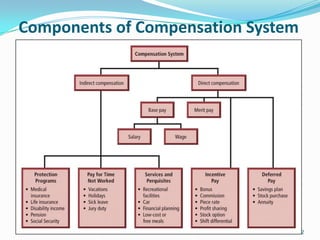
Components of Compensation System
2
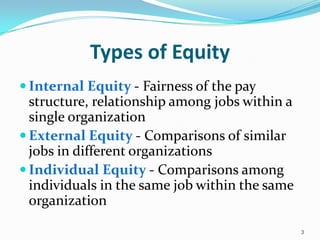
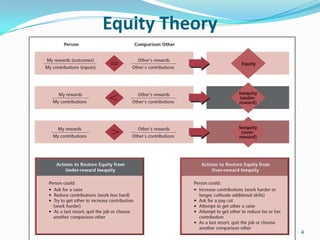
Types of Equity
 Internal Equity - Fairness of the pay
structure, relationship among jobs within a
single organization
 External Equity - Comparisons of similar
jobs in different organizations
 Individual Equity - Comparisons among
individuals in the same job within the same
organization
3
Equity Theory
4
Creating Internal Equity through
Job Analysis and Job Evaluation
5
Internal Equity in Practice
Job analysis
Collecting data about jobs
Job evaluation
Valuing jobs
6
Job Analysis
 The systematic, formal study of the duties and
responsibilities that comprise the job
 The process seeks to obtain important and relevant
information about the nature and level of the work
performed
 It Can be used to identify/determine:
• Skill levels
• Compensable job factors
• Work environment (e.g., hazards; attention; physical effort)
• Responsibilities (e.g., fiscal; supervisory)
• Required level of education
Wednesday, October 09, 2013 7
Types of Data Collected Through Job
Analysis
 Work Activities – work activities and
processes; activity records; procedures used;
personal responsibility
 Worker-oriented activities – human
behaviours, such as, physical actions and
communications on the job; elemental motions
for methods analysis; personal job demands,
such as, energy expenditure
Wednesday, October 09, 2013 8
Types of Data Collected Through Job
Analysis (Contd.)
 Machines, tools, equipment, and work aids
used
 Job-related tangibles & intangibles –
knowledge dealt with or applied; materials
processed; products made or services
performed
Wednesday, October 09, 2013 9
Types of Data Collected Through Job
Analysis (Contd.)
 Work performance – error analysis; work standards;
work measurements, such as, time taken for a task
 Job context – work schedule; financial and nonfinancial
incentives; physical working conditions; organizational
and social contexts
 Personal requirements for the job – personal
attributes, such as, personality and interests; education
and training required; work experience
Wednesday, October 09, 2013 10
Job Analysis Result
• Job Description
– Job based
– Tasks
– Work performed
• Job Specification
– Employee based
– Knowledge, skills & abilities
– Experience
11
Job Description
 Output from job analysis used to develop job
description and job specification
 It defines the responsibilities, requirements,
functions, duties, location, environment, conditions
and other aspects of jobs
 It may be developed for jobs individually or for the
entire job families
 It describes and focuses on job itself and not on any
specific individual who might do the job
Wednesday, October 09, 2013 12
Job Specification
 It defines worker characteristics (i.e.,
knowledge, skills and abilities) required to
perform the job competently
Wednesday, October 09, 2013 13
Job Evaluation
 Methods and practices for ordering jobs or
positions with respect to their value or worth
to the organization
 A system for comparing jobs for purpose of
determining appropriate compensation
levels for individual jobs or job elements
14

Building Internally Consistent Compensation System by Dr. G C Mohanta

  • 1.
    Building Internally Consistent CompensationSystem Dr. G C Mohanta, BE, MSc(Engg), MBA, PhD(Mgt) Professor Al-Qurmoshi Institute of Business Management Hyderabad 1
  • 2.
  • 3.
    Types of Equity Internal Equity - Fairness of the pay structure, relationship among jobs within a single organization  External Equity - Comparisons of similar jobs in different organizations  Individual Equity - Comparisons among individuals in the same job within the same organization 3
  • 4.
  • 5.
    Creating Internal Equitythrough Job Analysis and Job Evaluation 5
  • 6.
    Internal Equity inPractice Job analysis Collecting data about jobs Job evaluation Valuing jobs 6
  • 7.
    Job Analysis  Thesystematic, formal study of the duties and responsibilities that comprise the job  The process seeks to obtain important and relevant information about the nature and level of the work performed  It Can be used to identify/determine: • Skill levels • Compensable job factors • Work environment (e.g., hazards; attention; physical effort) • Responsibilities (e.g., fiscal; supervisory) • Required level of education Wednesday, October 09, 2013 7
  • 8.
    Types of DataCollected Through Job Analysis  Work Activities – work activities and processes; activity records; procedures used; personal responsibility  Worker-oriented activities – human behaviours, such as, physical actions and communications on the job; elemental motions for methods analysis; personal job demands, such as, energy expenditure Wednesday, October 09, 2013 8
  • 9.
    Types of DataCollected Through Job Analysis (Contd.)  Machines, tools, equipment, and work aids used  Job-related tangibles & intangibles – knowledge dealt with or applied; materials processed; products made or services performed Wednesday, October 09, 2013 9
  • 10.
    Types of DataCollected Through Job Analysis (Contd.)  Work performance – error analysis; work standards; work measurements, such as, time taken for a task  Job context – work schedule; financial and nonfinancial incentives; physical working conditions; organizational and social contexts  Personal requirements for the job – personal attributes, such as, personality and interests; education and training required; work experience Wednesday, October 09, 2013 10
  • 11.
    Job Analysis Result •Job Description – Job based – Tasks – Work performed • Job Specification – Employee based – Knowledge, skills & abilities – Experience 11
  • 12.
    Job Description  Outputfrom job analysis used to develop job description and job specification  It defines the responsibilities, requirements, functions, duties, location, environment, conditions and other aspects of jobs  It may be developed for jobs individually or for the entire job families  It describes and focuses on job itself and not on any specific individual who might do the job Wednesday, October 09, 2013 12
  • 13.
    Job Specification  Itdefines worker characteristics (i.e., knowledge, skills and abilities) required to perform the job competently Wednesday, October 09, 2013 13
  • 14.
    Job Evaluation  Methodsand practices for ordering jobs or positions with respect to their value or worth to the organization  A system for comparing jobs for purpose of determining appropriate compensation levels for individual jobs or job elements 14