Chapter Objective
• To understand:
–Total Reward System
–Money as Economic and Social
Medium of Exchange
–The Role of Money in Motivational
Models
–Behavioral Considerations in
Performance Appraisal
In the 19th and 20th
centuries employees were
presumed to want primarily
money; therefore, money
was believed to produced
direct motivation. The more
money offered, the more
motivation.
Roethlisberger and his
followers successfully buried
this idea by showing that
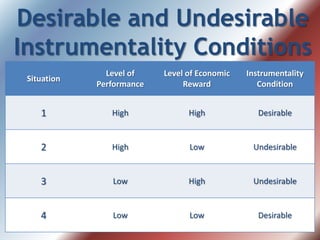
economic rewards operated
through the attitudes of the
workers in the social system
to produce an indirect
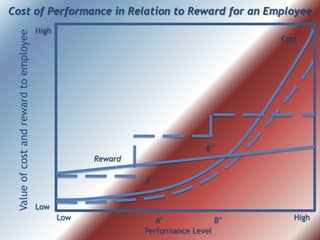
incentive.
In this chapter we discuss the
Complex Relationship between
economic reward systems and
organizational behavior. This
chapter focuses on how incentives
are combined with other parts of
wage administration to build a
complete reward system that
encourage motivation.
Economic Reward System
Based Pay
Performance Rewards
Profit Sharing
Based Pay
Motivate employees to
progress jobs of higher skill
and responsibility.
Performance Rewards
Is an incentive to improve
performance on the job.
Profit Sharing
Motivates workers toward
teamwork to improve an
organization’s performance
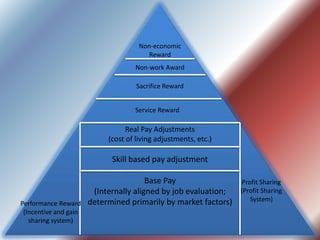
Real Pay Adjustments
(cost of living adjustments, etc.)
Skill based pay adjustment
Base Pay
(Internally aligned by job evaluation;
determined primarily by market factors)
Profit Sharing
(Profit Sharing
System)
Performance Reward
(Incentive and gain
sharing system)
Service Reward
Sacrifice Reward
Non-work Award
Non-economic
Reward
Other Payments
Primarily non-incentive in
nature, are added to the
incentive foundation.
Seniority Pay – adjustment
are made up to reward workers
for extended service and to
encourage them to remain with
their employer.
Money as means of Rewarding
Employees
Money is important to
employees for a number of
reasons. Certainly, money is
valuable because of goods
and services that it will
purchase.
This aspects its economic
value as medium of
exchange for allocation of
economic resources. Money
is a social medium of
exchange.
Application of
Motivational Models
Drives
Needs
Expectancy
Drives
Achievement-oriented
employees maintain a
symbolic scorecard in their
minds by monitoring their
total pay and comparing it
with that others.
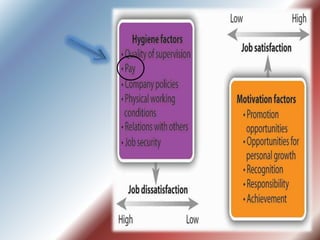
Needs
In the Herzberg model,
pay is view as a hygiene
factor, although it may have
at least short-term
motivational value as well.
Expectancy
Valence X Expectancy XInstrumentality
=Motivation
This means that if money
is to act a strong motivator,
an employee must want more
of it (valence),
must believe that effort
will be successful in
producing desired
performance (expectancy),
and must trust that the
monetary reward will follow
better performance
(instrumentality).
Behavior Motivation
Two desired conditions for
applying contingent rewards
under behavior modification
principles are shown in figure
6.2 as situations 1-4.
In each case employees can
see that there is a direct
connection between
performance and reward. The
undesirable states are
situation 2-3,where rewards
are withheld from high
performance or given to low
performers.
Situation
Level of
Performance
Level of Economic
Reward
Instrumentality
Condition
1 High High Desirable
2 High Low Undesirable
3 Low High Undesirable
4 Low Low Desirable
Desirable and Undesirable
Instrumentality Conditions
Equity
There is no simple answer
for employers in their attempts
to create workable systems of
economic rewards for increase
productivity, but they must at
least to understand the
employee’s perspective.
The employee’s approach
to this complex problem is
to make rough type of Cost-
Reward Comparison,
similar to break-even
analysis that is used in
financial assessments.
Valueofcostandrewardtoemployee
High
High
Low
Low
Performance Level
A’
A’
B’
B’
Reward
Cost
Cost of Performance in Relation to Reward for an Employee
Additional Consideration in
the Use of Money
Extrinsic & Intrinsic Rewards
-Money is essentially an
extrinsic reward rather than
an intrinsic one, so it is
administered in behavior
modification programs.
Compliance with the Law
Labor Code of the Philippines
PD. 442
A decree instituting a labor code
thereby revising and Consolidating
labor and social laws to afford
protection To labor, promote
employment and human resources
Development and insure industrial
peace based on social Justice
Organizational Behavior
and Performance Appraisal
Organization require
consistent levels of high
performance from their
employees in order to survive
in a highly competitive global
environment.
(MBO)
Management by Objectives
is cyclical process the often
consist of four steps as a way to
attain desired performance:
Objective Setting,
Action Planning,
Periodic Reviews,
Annual Evaluation
Objective Setting
Joint determination by
manager and employee
appropriate levels of future
performance of employee,
within the context of overall
unit goals and resources.
Action Planning
Participate or even
independent planning by the
employee as to how to reach
those objectives.
Periodic Reviews
Joint assessment of
progress toward objectives
by manager and employee,
performed informally and
sometimes spontaneously.
Annual Evaluation
More formal assessment
of success in achieving the
employee’s annual
objective, coupled with a
renewal of the planning
cycle.
Performance Appraisal
Plays a key role in reward
system. It is the process of
evaluating the performance
of the employee, sharing
that information with them,
and searching for ways to
improve their performance.
Appraisal is necessary to:
1.Allocate resources in dynamic env’t.
2.Motivate and reward employees.
3.Give employees feedback about
their work.
4.Maintain fair relation within groups.
5.Coach and develop employees.
6.Comply with regulations.
The Performance Appraisal System
• Is an organizational necessity
• Is based on well-defined, objective criteria
• Is based on careful job analysis
• Uses only job-related criteria
• Is supported by adequate studies
• Is applied by trained, qualified raters
• Is applied by objectively throughout the org.
• Can be shown to be non-discriminatory as
defined by law
Appraisal Philosophy
A generation ago, appraisal
programs tended to emphasizes
employees traits, deficiencies,
and abilities, but modern
appraisal philosophy emphasizes
present performance and future
goals.

Hbo appraising and rewarding performance

  • 2.
    Chapter Objective • Tounderstand: –Total Reward System –Money as Economic and Social Medium of Exchange –The Role of Money in Motivational Models –Behavioral Considerations in Performance Appraisal
  • 3.
    In the 19thand 20th centuries employees were presumed to want primarily money; therefore, money was believed to produced direct motivation. The more money offered, the more motivation.
  • 4.
    Roethlisberger and his followerssuccessfully buried this idea by showing that economic rewards operated through the attitudes of the workers in the social system to produce an indirect incentive.
  • 5.
    In this chapterwe discuss the Complex Relationship between economic reward systems and organizational behavior. This chapter focuses on how incentives are combined with other parts of wage administration to build a complete reward system that encourage motivation.
  • 6.
    Economic Reward System BasedPay Performance Rewards Profit Sharing
  • 7.
    Based Pay Motivate employeesto progress jobs of higher skill and responsibility.
  • 8.
    Performance Rewards Is anincentive to improve performance on the job.
  • 9.
    Profit Sharing Motivates workerstoward teamwork to improve an organization’s performance
  • 10.
    Real Pay Adjustments (costof living adjustments, etc.) Skill based pay adjustment Base Pay (Internally aligned by job evaluation; determined primarily by market factors) Profit Sharing (Profit Sharing System) Performance Reward (Incentive and gain sharing system) Service Reward Sacrifice Reward Non-work Award Non-economic Reward
  • 11.
    Other Payments Primarily non-incentivein nature, are added to the incentive foundation. Seniority Pay – adjustment are made up to reward workers for extended service and to encourage them to remain with their employer.
  • 12.
    Money as meansof Rewarding Employees Money is important to employees for a number of reasons. Certainly, money is valuable because of goods and services that it will purchase.
  • 13.
    This aspects itseconomic value as medium of exchange for allocation of economic resources. Money is a social medium of exchange.
  • 14.
  • 15.
    Drives Achievement-oriented employees maintain a symbolicscorecard in their minds by monitoring their total pay and comparing it with that others.
  • 16.
    Needs In the Herzbergmodel, pay is view as a hygiene factor, although it may have at least short-term motivational value as well.
  • 18.
    Expectancy Valence X ExpectancyXInstrumentality =Motivation This means that if money is to act a strong motivator, an employee must want more of it (valence),
  • 19.
    must believe thateffort will be successful in producing desired performance (expectancy), and must trust that the monetary reward will follow better performance (instrumentality).
  • 20.
    Behavior Motivation Two desiredconditions for applying contingent rewards under behavior modification principles are shown in figure 6.2 as situations 1-4.
  • 21.
    In each caseemployees can see that there is a direct connection between performance and reward. The undesirable states are situation 2-3,where rewards are withheld from high performance or given to low performers.
  • 22.
    Situation Level of Performance Level ofEconomic Reward Instrumentality Condition 1 High High Desirable 2 High Low Undesirable 3 Low High Undesirable 4 Low Low Desirable Desirable and Undesirable Instrumentality Conditions
  • 23.
    Equity There is nosimple answer for employers in their attempts to create workable systems of economic rewards for increase productivity, but they must at least to understand the employee’s perspective.
  • 24.
    The employee’s approach tothis complex problem is to make rough type of Cost- Reward Comparison, similar to break-even analysis that is used in financial assessments.
  • 25.
  • 26.
    Additional Consideration in theUse of Money Extrinsic & Intrinsic Rewards -Money is essentially an extrinsic reward rather than an intrinsic one, so it is administered in behavior modification programs.
  • 27.
    Compliance with theLaw Labor Code of the Philippines PD. 442 A decree instituting a labor code thereby revising and Consolidating labor and social laws to afford protection To labor, promote employment and human resources Development and insure industrial peace based on social Justice
  • 28.
    Organizational Behavior and PerformanceAppraisal Organization require consistent levels of high performance from their employees in order to survive in a highly competitive global environment.
  • 29.
    (MBO) Management by Objectives iscyclical process the often consist of four steps as a way to attain desired performance: Objective Setting, Action Planning, Periodic Reviews, Annual Evaluation
  • 30.
    Objective Setting Joint determinationby manager and employee appropriate levels of future performance of employee, within the context of overall unit goals and resources.
  • 31.
    Action Planning Participate oreven independent planning by the employee as to how to reach those objectives.
  • 32.
    Periodic Reviews Joint assessmentof progress toward objectives by manager and employee, performed informally and sometimes spontaneously.
  • 33.
    Annual Evaluation More formalassessment of success in achieving the employee’s annual objective, coupled with a renewal of the planning cycle.
  • 34.
    Performance Appraisal Plays akey role in reward system. It is the process of evaluating the performance of the employee, sharing that information with them, and searching for ways to improve their performance.
  • 35.
    Appraisal is necessaryto: 1.Allocate resources in dynamic env’t. 2.Motivate and reward employees. 3.Give employees feedback about their work. 4.Maintain fair relation within groups. 5.Coach and develop employees. 6.Comply with regulations.
  • 36.
    The Performance AppraisalSystem • Is an organizational necessity • Is based on well-defined, objective criteria • Is based on careful job analysis • Uses only job-related criteria • Is supported by adequate studies • Is applied by trained, qualified raters • Is applied by objectively throughout the org. • Can be shown to be non-discriminatory as defined by law
  • 37.
    Appraisal Philosophy A generationago, appraisal programs tended to emphasizes employees traits, deficiencies, and abilities, but modern appraisal philosophy emphasizes present performance and future goals.