Downloaded 13 times

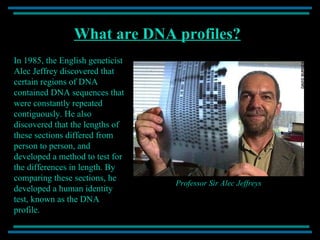
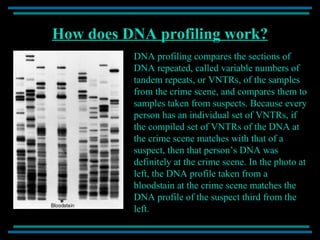
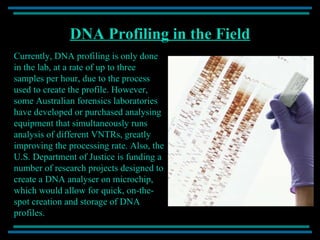
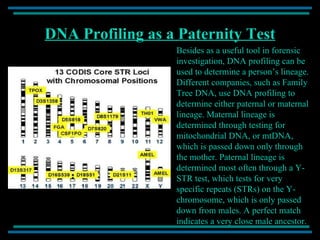


DNA profiling compares variable numbers of tandem repeats (VNTRs) in DNA samples from crime scenes and suspects. If the VNTRs match, then the suspect's DNA was at the crime scene. DNA profiling can also determine paternity by testing mitochondrial DNA passed maternally or Y-chromosomes passed paternally. While very accurate, DNA profiling has social implications like falsely convicted persons being freed or family issues when true paternity is discovered.


